

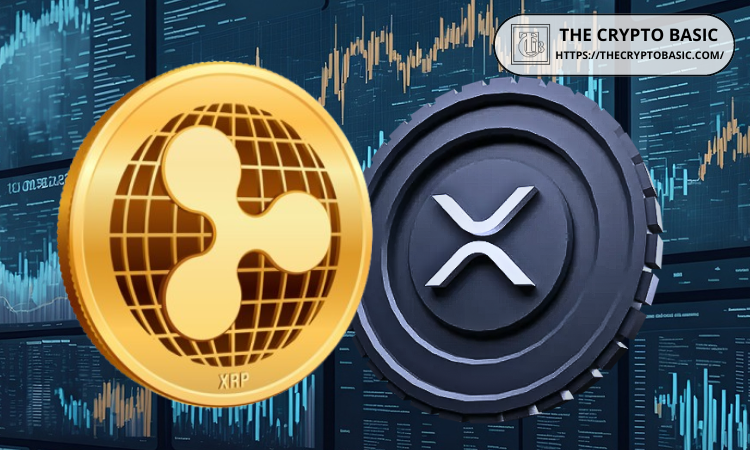

A new CNBC report highlights how Ripple is rapidly transforming from a leading crypto company into a full-scale financial services force while XRP sits at the heart of the push.
Speaking at Ripple Swell 2025 in New York, CEO Brad Garlinghouse said the company is now targeting traditional finance directly. Ripple aims to merge blockchain infrastructure with established financial systems, positioning XRP Ledger technology as a key settlement layer for institutions.
Garlinghouse noted that Ripple wants to “get ahead of where the market’s going,” with recent acquisitions to bridge the gap between crypto and global finance. The company is betting that deeper institutional adoption will define the next phase of the industry.
$4 Billion Acquisition Spree to Build a Financial Powerhouse
According to CNBC, Ripple has already spent nearly $4 billion this year acquiring major firms. Its purchases include prime brokerage Hidden Road for about $1.3 billion and treasury-software leader GTreasury for over $1 billion.
Last week, Ripple launched Ripple Prime, a U.S. institutional brokerage offering OTC access to several digital assets, including XRP. Additionally, it secured $500 million in new funding, which pushed the company’s valuation to $40 billion.
Ripple’s moves arrive at a time when the SEC and CFTC have softened their stance on digital assets under President Trump, a shift Garlinghouse calls one of the most overlooked developments in the market.
Meanwhile, major banks, including Bank of America, Citigroup, and JPMorgan, are exploring stablecoins, custody services, and blockchain-based payment rails. These moves signal a wave of institutional integration with crypto.
XRP Ledger Partnerships Could Be a Game-Changer
Beyond acquisitions, CNBC reports that Ripple wants to license XRP Ledger to major institutions for their blockchain strategies. Garlinghouse said widening XRPL utility is central to strengthening the XRP ecosystem, especially as XRP continues to trade sideways in 2025 while Bitcoin and Ethereum reach record highs.
Ripple believes real-world financial utility, namely faster, cheaper transactions, will be the catalyst that lifts XRP. High-profile partnerships could also pull the token into the next wave of institutional adoption.
Regulatory Roadblocks Still Stand in the Way
Despite accelerating progress, Ripple’s next phase hinges on regulation. CNBC notes that dealmaking in traditional finance remains difficult due to stalled U.S. crypto legislation. Hopes for the long-awaited Clarity Act have faded as the government shutdown enters its sixth week.
Garlinghouse said banks need legislative certainty before they can fully commit to blockchain integrations. Until then, the path to mass adoption of XRP-powered solutions will be slower than many expect.
In Garlinghouse’s words, “It’s going to be hard until we have that [regulatory clarity].”
Still, Ripple’s aggressive expansion shows it’s building for a future where XRP plays a pivotal role at the center of global finance.