

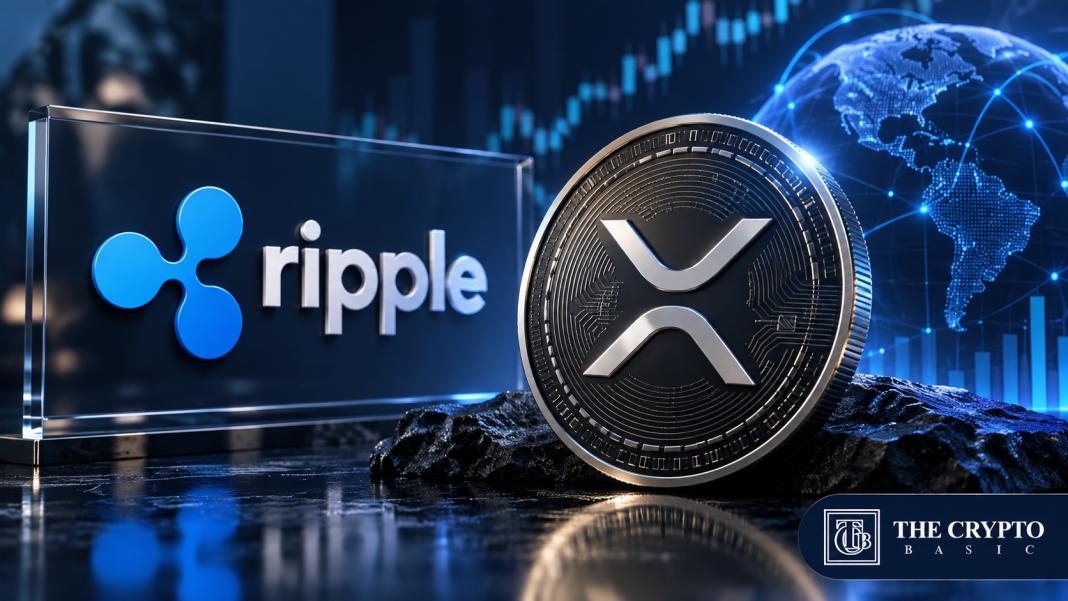

Collective Shift founder Ben Simpson names XRP among six altcoins he would avoid, arguing that Ripple’s business growth does not directly reward XRP holders.
Collective Shift founder and CEO Ben Simpson has identified XRP as one of six altcoins he would avoid investing in during 2026, arguing that Ripple’s growing business does not provide sufficient financial benefits to XRP holders.
In a recent video discussing his investment strategy, Simpson questioned whether XRP’s valuation is justified by its economic activity, particularly after years of institutional partnerships, regulatory developments, and exchange-traded fund launches.
6 altcoins I wouldn't touch with a 10-foot pole in 2026:
1) Ripple (XRP) pic.twitter.com/HaTcHagP8R
— Ben Simpson (@bensimpsonau) November 22, 2026
His main concern is value capture, or how the financial success of a company or blockchain ecosystem translates into value for its native token.
Simpson acknowledged XRP’s ability to facilitate fast, inexpensive transactions but argued that its investment case remains weak.
Ripple’s Business Success Does Not Guarantee Returns for XRP Holders
Simpson’s central argument concerns the difference between owning XRP and holding equity in Ripple.
“Ripple is doing great, but you can’t own Ripple by owning XRP,” he stated.
He explained that shareholders in a traditional company have ownership rights and may benefit from dividends or other distributions of corporate profits.
XRP holders, however, do not own shares in Ripple and have no contractual entitlement to its earnings.
The distinction has become increasingly important as Ripple expands into payments, custody, stablecoins, and institutional financial services.
As The Crypto Basic previously reported, Ripple expects to reach a $900 million annualized product revenue run rate by the end of 2026.
However, that growth does not automatically create equivalent revenue for XRP holders.
Simpson also criticized the absence of a systematic mechanism linking Ripple’s profits to XRP buybacks or token-holder distributions.
Notably, Ripple has historically purchased XRP on secondary markets to support payment liquidity. Those operational purchases are different from a corporate profit-sharing buyback program.
XRP Ledger Fees Raise Questions About Valuation
Simpson also questioned XRP’s valuation relative to the fees generated by the XRP Ledger.
He cited approximately $36,000 in network fees over 30 days and around $200,000 accumulated during 2026, comparing those figures with XRP’s then-market capitalization exceeding $80 billion.
However, the figures reflect an earlier reporting period.
By November 23, DefiLlama recorded approximately $49,634 in XRP Ledger transaction fees over 30 days, while XRP’s market capitalization stood near $59 billion.
Another distinction is that XRPL transaction fees are permanently burned rather than distributed as income.
As The Crypto Basic previously explained, former Ripple CTO David Schwartz has acknowledged that transaction-fee demand alone is unlikely to become a significant driver of XRP’s price.
Instead, Schwartz believes XRP’s broader value could emerge from its liquidity role, unique position on XRPL, and increasing network adoption.
Simpson Questions XRP Performance Despite Major Catalysts
Simpson also challenged the longstanding expectation that Ripple’s legal progress, banking partnerships, and ETF launches would produce sustained XRP price appreciation.
He noted that XRP had underperformed Bitcoin over extended periods despite these developments.
During the recorded discussion, Simpson referenced XRP trading around $1.30, approximately 45% below its 2026 high near $2.35 and nearly 30% lower year-to-date.
He also described XRP as having gained only around 9% compared with a late-2021 reference point. Those comparisons reflect the prices and periods used in his assessment, rather than current market returns.
XRP has since fallen further, trading around $0.93 on November 23.
Why Simpson Prefers Hyperliquid Over XRP
Simpson contrasted XRP’s token economics with revenue-generating ecosystems such as Hyperliquid and Pump.fun.
He cited approximately $80 million in 30-day fees for Hyperliquid and highlighted the protocol’s use of trading revenue to purchase HYPE through its Assistance Fund.
He also pointed to Pump.fun’s substantial application revenue as an example of economic activity supporting an investment thesis.
His broader evaluation considers paying users, growing revenue, whether value reaches token holders, potential token dilution, and whether current valuations already anticipate substantial future growth.
Similar questions about XRP’s value capture have been raised previously by other crypto commentators. Cardano founder Charles Hoskinson has also suggested that Ripple introduce revenue-linked XRP buybacks.
Simpson acknowledged that XRP could still rally during a broader crypto bull market, driven by speculation and positive sentiment. However, he distinguished short-term price appreciation from the ability to capture economic value over several years.
His position is that Ripple can develop a successful business while XRP investors remain dependent on market demand rather than receiving a direct share of the company’s financial success.