

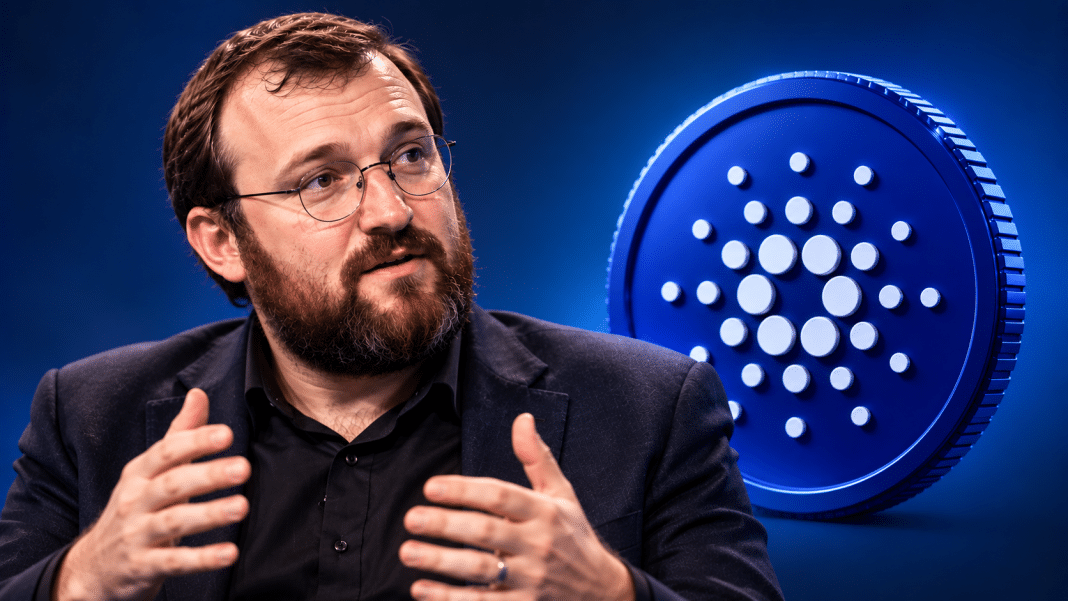

Cardano founder Charles Hoskinson has rejected allegations that Midnight is centralized, closed source, and controlled by its founders.
His response followed criticism from Cyber Capital founder Justin Bons, who questioned Midnight’s decentralization, code transparency, token distribution, and capacity to support meaningful decentralized finance activity.
The dispute emerged shortly after the Cardano founder predicted that Midnight could outperform Zcash. He cited the network’s selective disclosure capabilities, private agents, and broader privacy and interoperability architecture as key advantages.
Cyber Capital Founder Raises Concerns Over Midnight
In a follow-up commentary, Bons challenged Midnight’s decentralization, source-code accessibility, and token distribution.
He alleged that Midnight validators switched to closed-source code on September 25 without notifying the public. According to him, the alleged change contradicts the project’s commitment to open-source development.
Bons also questioned the distribution of NIGHT, claiming that two founding entities collectively control approximately 50.25% of the token’s total supply.
He claimed the Midnight Foundation currently holds 8.4 billion NIGHT, representing 35% of the total supply, adding that Midnight TGE Ltd holds another 3.66 billion NIGHT, equivalent to 15.25%.
Furthermore, Bons argued that the absence of binding lockup restrictions on these holdings creates additional risks related to token concentration and governance. He also raised concerns about Midnight’s transaction activity, progress on decentralization, and DeFi capabilities.
Hoskinson Rejects Allegations That Midnight Is Closed Source
Hoskinson pushed back against Bons’ accusations, dismissing them as “FUD” and rejecting the claim that Midnight operates as a closed-source blockchain.
“Midnight is not closed source,” Hoskinson said.
He explained that Midnight currently operates in a federated mode as the project works toward greater node decentralization. He also compared this approach with Cardano’s early development, arguing that Midnight is following a similar path but on an accelerated timeline.
Additionally, Hoskinson disputed the claim that the founders control most of NIGHT’s supply, pointing to the distribution mechanisms the team introduced.
NIGHT Distribution Counters Founder-Control Claims
Midnight’s NIGHT distribution strategy is central to Hoskinson’s response to allegations of concentrated ownership.
The project launched its Glacier Drop initiative to distribute NIGHT to eligible participants across eight blockchain networks. The program included holders of assets such as Bitcoin, Ethereum, XRP, Solana, and Cardano who met its eligibility requirements.
Midnight subsequently introduced the Scavenger Mine, which allowed additional participants to earn NIGHT by completing computational tasks. Through these initiatives, users have claimed more than 2 billion NIGHT tokens, expanding participation beyond the founding entities.
Meanwhile, community members challenged Bons’ characterization of Midnight’s development model, with supporters highlighting the broader open-source approach associated with Hoskinson’s projects.
Midnight Launched Its Mainnet Under a Federated Model
Midnight’s network architecture provides further context for the disagreement over decentralization.
The blockchain launched its mainnet in March 2026 under a federated model, with major enterprise participants, including Google Cloud and Worldpay, serving as validators.
The federated launch represents an initial stage of the network’s development rather than its intended final decentralization model. Notably, Midnight’s Mōhalu and Hua phases are designed to advance decentralization and expand cross-chain capabilities.
Consequently, the central issue in the dispute is whether Midnight’s current operating structure, code accessibility, and token distribution align with its long-term decentralization goals. While Hoskinson maintains that the project is progressing toward a more decentralized network, Bons’ allegations raise questions about its present governance and ownership structure.