




CryptoQuant reviews Bitcoin’s gains after the last three U.S. midterms, while the 2018 cycle shows BTC can still suffer sharp losses before recovering.
Bitcoin has finished higher 12 months after each of the last three U.S. midterm elections, a pattern CryptoQuant is revisiting ahead of the 2026 vote.
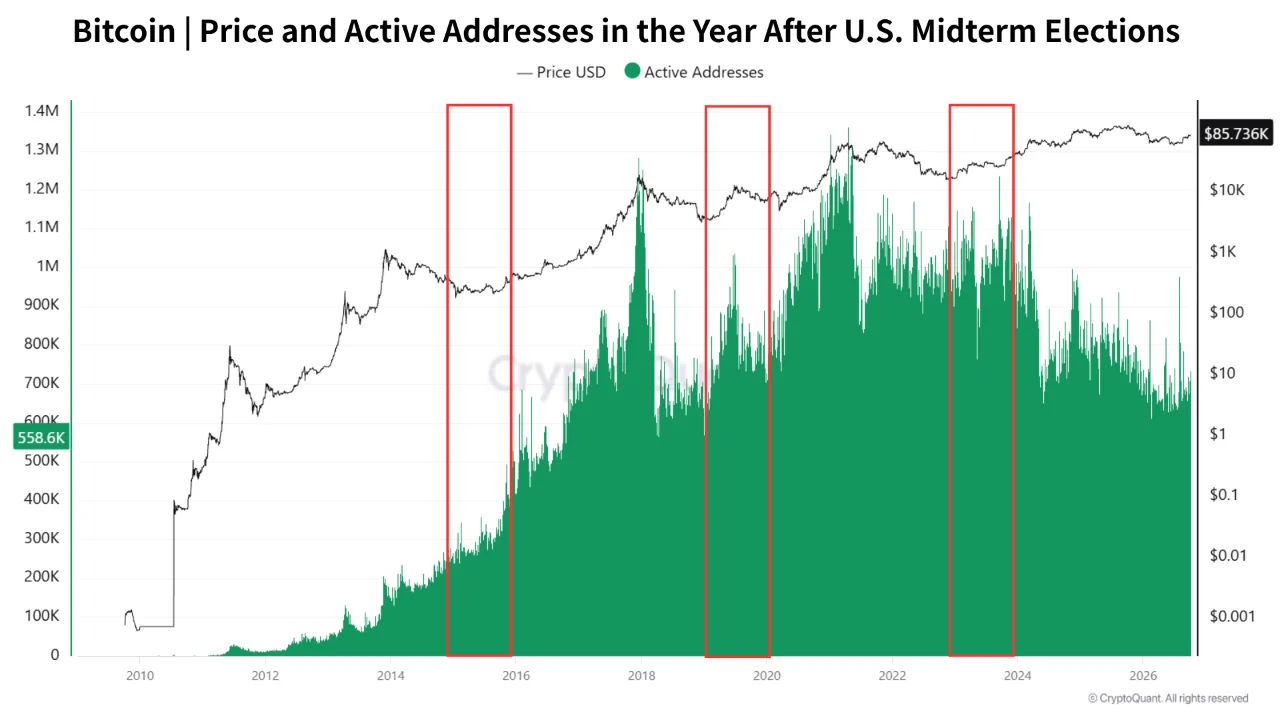
The record looks bullish at first glance, but one earlier cycle also shows why the period immediately after an election can still be rough for BTC.
CryptoQuant puts Bitcoin’s 12-month gains following the 2014, 2018 and 2022 midterms at 24.5%, 44.9% and 92.3%, respectively.
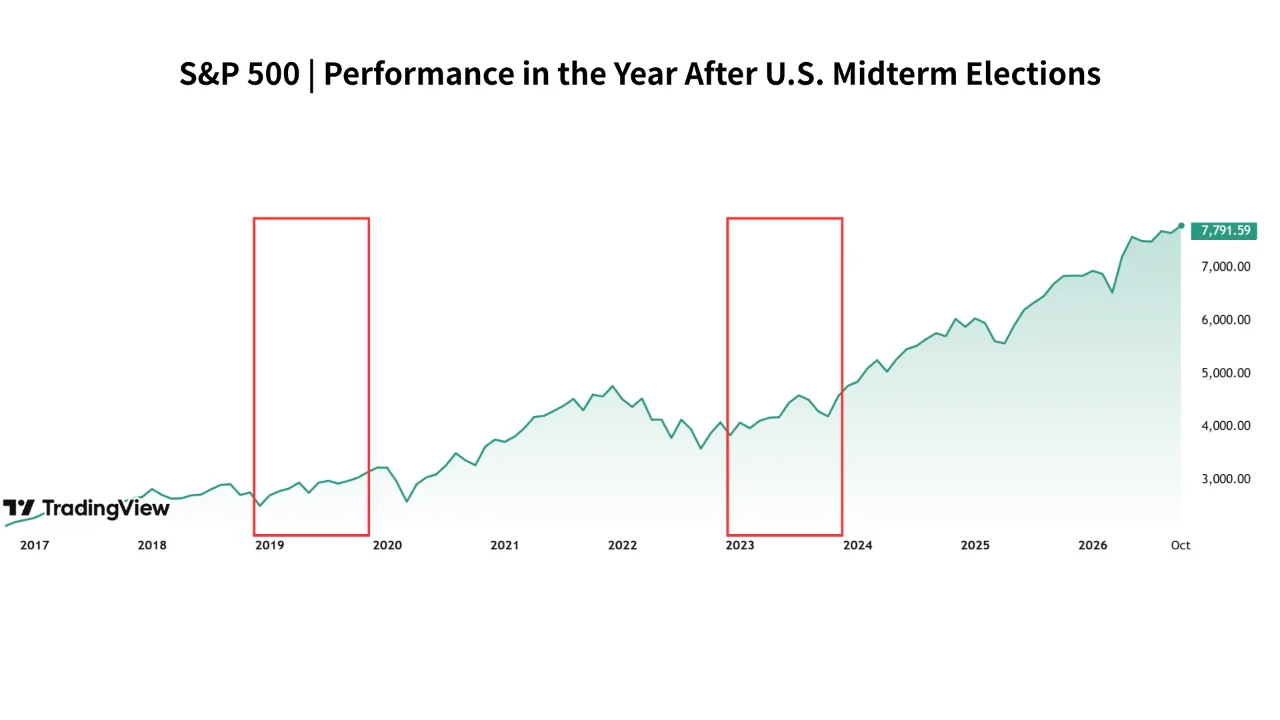
The comparison comes alongside a much longer equity-market pattern. Since 1950, the S&P 500 has reportedly finished higher in all 19 twelve-month periods following U.S. midterm elections, with an average gain of about 15.4%.
Bitcoin’s Positive Record Came With Sharp Drawdowns
Bitcoin’s three-for-three record does not mean price rose smoothly after election day.
The clearest example came in 2018. BTC dropped roughly 45.5% during the first month following the midterm election, yet still finished the full 12-month window with a 44.9% gain.
That difference matters. A favorable one-year historical comparison does not rule out a major decline before any recovery develops.
With only three completed Bitcoin midterm cycles available, the sample is also too small to establish a dependable trading rule.
Why Midterms Could Matter for Bitcoin
One possible link is reduced political uncertainty.
Once an election is settled, investors have more clarity over the makeup of Congress and the policy environment ahead. Historically, that period has coincided with strong equity performance, potentially creating a better backdrop for risk assets.
Bitcoin, however, has other forces to contend with.
The U.S. 10-year Treasury yield stood at 5.28% on Oct. 2, leaving borrowing costs elevated. Higher yields can make safer interest-bearing assets more competitive against riskier investments.
Regulatory uncertainty also remains. The Senate failed to advance the CLARITY Act in September, leaving a major piece of U.S. crypto market-structure legislation unresolved.
ETF Demand Will Be Another Test
Buying demand after the election could offer a clearer signal than the political calendar alone.
U.S. spot Bitcoin ETFs recorded about $241.1 million in net inflows from Sept. 28 through Oct. 2. That was positive, but considerably below the roughly $2.39 billion recorded during the previous week.
CryptoQuant’s chart also shows that Bitcoin price and active addresses have not always moved together. Active addresses represent network activity, not individual buyers, and they do not capture ETF demand directly.
For the post-midterm pattern to matter again in 2026, the more immediate signals will be whether Treasury yields stabilize, investment demand persists and the regulatory backdrop improves. History has favored Bitcoin over the following year, but 2018 shows that the route there can still include substantial losses.