


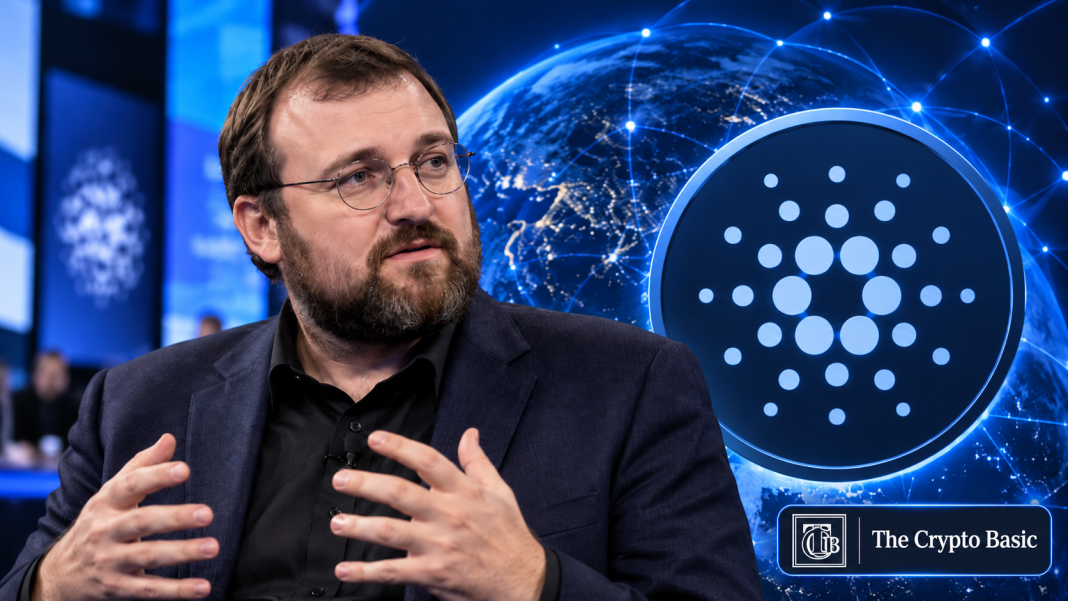

Cardano founder Charles Hoskinson has rejected calls for him to compensate victims of the SecondFi hack.
The Cardano founder made this known after an X user suggested that he could allow affected SecondFi users to reclaim their lost airdrops if RealFi’s sUSDrf stablecoin reaches $1 million in Strike Finance’s liquidity vault.
The proposal presented the move as an opportunity to help affected users recover their losses and rebuild trust in Cardano’s decentralized finance (DeFi) ecosystem.
However, Hoskinson distanced himself from the suggestion, dismissing any obligation to reimburse victims.
“I have nothing to do with SecondFi. It’s not my responsibility to bail you guys out,” Hoskinson stated.
SecondFi Hack Drained 16.1 Million ADA
The dispute follows a major security breach at SecondFi in June, when attackers drained 16.1 million ADA, worth $2.6 million at the time. Investigations linked the attack to North Korea’s Lazarus Group.
In response, SecondFi took emergency measures to prevent further losses. The platform rescued and transferred 129 million ADA to an independent third-party custodian to protect the funds from additional attacks.
Although Hoskinson previously expressed sympathy for affected users, he also described the incident as a fundamental win for ADA holders. He argued that the breach could accelerate security improvements across the ecosystem and encourage wallet providers to adopt stronger safeguards.
SecondFi Begins Recovery Process for Affected Users
Meanwhile, SecondFi launched an asset recovery initiative earlier this month to help affected users reclaim eligible assets. However, the program operates under specific conditions and does not guarantee full reimbursement for every loss.
In a recent update, the team disclosed that users had transferred more than 100 million ADA and 22 million NIGHT tokens to designated addresses through recovery requests since the recovery tool launched on October 7.
Furthermore, SecondFi plans to introduce fully automated processing through recovery smart contracts to speed up the handling of outstanding eligible claims.
The team clarified that recovery amounts and eligibility depend on recorded incident data, relevant snapshots, and the program’s terms. As a result, the initiative does not cover every asset or loss associated with affected wallets.
NIGHT airdrop distributions remain tied to users’ original wallets, while the recovery of external DeFi positions depends on the policies of the individual protocols involved.
Despite Hoskinson’s refusal to accept responsibility for compensating victims, SecondFi’s recovery initiative remains underway, offering eligible users a path to reclaim certain assets lost in the attack.