Home Blog Page 147

Shiba Inu: 31,740,200,000 SHIB Hits Exchanges, but Price Rises Instead

0

Shiba Inu is facing renewed selling pressure from token holders, but its price has refused to fall below key support levels.

Uncertainty has been the theme for Shiba Inu (SHIB) over several weeks now. Prices have dropped massively from prior highs, with SHIB losing its place as the second-largest meme coin by market cap. While its price has stabilized lately, the token has not found the momentum to recover as much as some other cryptocurrencies.

Key Points

  • CryptoQuant data shows a net inflow of 31.74 billion SHIB into exchanges in the past 24 hours.
  • Although this does not translate to an immediate sale, it could boost immediate selling pressure.
  • However, the 7-day moving average of mean SHIB inflows into exchanges has dropped by 14.5% to 697.8 million tokens.
  • At the same time, OI has crashed 6% and volume by 24% in the past 24 hours.
  • The SHIB price has risen over 1% to remain above the crucial $0.0000060 level instead of succumbing to this pressure.

Shiba Inu Sees Fresh Exchange Inflows

CryptoQuant data shows a net inflow of 31.74 billion SHIB into exchanges in the past 24 hours, as deposits outpaced withdrawals. This suggests that holders are increasingly moving the token from self-custody or third-party systems to centralized platforms.

Although this does not translate to an immediate sale, it increases the chance of these investors liquidating their positions, as these tokens are in platforms where selling is easier. Consequently, it adds selling pressure to Shiba Inu’s price and affects market sentiment.

The move also increased exchange reserves slightly to 81.0039 trillion. A growing exchange reserve means more supply availability, which may neutralize demand. In a market where digital assets are struggling to see demand, more token supply could be detrimental to prices.

Shiba Inu Trending Metrics/CryptoQuant

However, the 7-day moving average of mean SHIB inflows into exchanges has dropped by 14.5% to 697.8 million tokens. This decline shows that, while exchange inflows still exist, investors depositing large amounts of the token at once have recently declined.

OI, Volume Drops, but Price Increases Instead

At the same time, market participation is also dropping considerably. Open interest has reduced by 6.1% in the past 24 hours to $57.5 million, as derivative traders pull back to observe price development. Trading volume has also declined, dropping 24% to $114.7 million.

Shiba Inu On-Chain Metrics/Coinglass

However, the SHIB price showed resilience. Instead of succumbing to this pressure, it rose by over 1% to remain above the crucial $0.0000060 level. This has seen it outperform assets like Bitcoin and Ethereum in the same timeframe.

Further, the token has held a key moving average, keeping hopes of a rebound alive. Despite uncertainties, Shiba Inu is trading above the 50-day MA at $0.00000591, an indicator that lies between bullish and bearish momentum. Maintaining this level supports high prices when market conditions return to the market. Analysts see a Shiba Inu uptrend targeting $0.000014 if key levels hold.

Meanwhile, funding rates stand at 0.0064%, indicating a mildly bullish market sentiment as long positions are paying fees to short holders.
There’s No “Gap” Between XRP Price and Real Demand — Ripple SVP Explains the Shift

A perceived disconnect between XRP market price and its real-world demand may not actually exist, according to Markus Infanger, Senior Vice President at Ripple.

In a recent interview with Japanese media, Infanger countered the idea that XRP’s valuation fails to reflect its growing use in payments and financial infrastructure.

“I don’t necessarily see it as a gap,” Infanger said. He stressed that while XRP continues to attract investment interest, its practical utility is steadily expanding behind the scenes.

Key Points

  • Markus Infanger rejects claims of a gap, saying XRP demand and market price are evolving together.
  • He highlights XRPL growth, with tokenized assets rising from $100M–$200M to over $2B in a year.
  • Infanger says XRP ETFs boost liquidity, strengthening XRP’s role as a fast and efficient settlement asset.
  • He explains that RLUSD complements XRP, expanding liquidity and unlocking new financial use cases.

From Speculation to Financial Infrastructure

According to Infanger, the overall crypto narrative is evolving beyond price-driven investment toward real financial infrastructure. Institutions and businesses are using the XRP Ledger (XRPL) for payments, collateral transfers, and tokenized real-world assets.

Specifically, he noted that tokenized assets on XRPL have grown significantly, increasing from around $100–200 million last year to over $2 billion. This expansion confirms strong institutional engagement and suggests that blockchain technology is becoming part of the core financial system.

XRP ETFs and Liquidity Growth

The launch of XRP spot ETFs in the United States has further strengthened XRP’s position, not just as an investment asset, but also as a liquidity layer for payments.

Infanger argued that institutional participation via ETFs enhances liquidity, which in turn improves XRP’s efficiency as a settlement asset. Rather than creating tension between speculation and utility, he sees both forces evolving together.

RLUSD and XRP: Complementary, Not Competitive

Infanger also addressed the rise of stablecoins like RLUSD, Ripple’s U.S. dollar-backed digital asset. Contrary to concerns that stablecoins could replace XRP, he said RLUSD will actually strengthen the ecosystem.

“RLUSD is about increasing options and redundancy, not replacing XRP,” he explained. Meanwhile, Infanger added that XRP continues to function as a bridge asset and gas token within XRPL. The interaction between XRP and RLUSD could boost overall liquidity and unlock new financial use cases.

Japan Expansion and Institutional Focus

Meanwhile, Ripple is expanding RLUSD in Japan through partnerships with SBI Group and its crypto arm, SBI VC Trade. The initiative is progressing from pilot to full-scale deployment, with regulatory coordination underway.

Infanger highlighted Japan’s clear regulatory framework as a major advantage, noting that the country has long supported digital assets within its financial system.

Transitional Phase for Crypto

Addressing the question of price versus demand directly, Infanger sees the situation as a transition rather than a mismatch. Notably, XRP is already used in Ripple’s payment flows and in institutional products for collateral and liquidity management.

According to him, the market is moving toward a phase in which utility-driven assets gradually integrate into the global financial infrastructure. This could reduce the dominance of speculation over time. In that context, what some perceive as a “gap” may simply reflect an industry still evolving.

Shiba Inu: BONE Holder Count Surpasses 93K as Weekly Growth Surges 87%

0

BONE, the official gas token of Shiba Inu Layer-2 blockchain Shibarium, is entering a strong growth phase as its holder base reaches a new milestone. 

Taking to X, the Shibarium team has highlighted a sharp increase in BONE holder addresses following a surge in weekly network activity.

Key Points 

  • The total number of BONE holders, the gas token on Shiba Inu’s L2 blockchain, Shibarium, has surpassed 93,000 addresses. 
  • BONE has added 5,653 new holders within the past seven days. 
  • Large holders, particularly addresses holding over 1 million BONE, increased their holdings by 4.2% in April. 
  • Despite growth in adoption, BONE remains under price pressure, down 99.86% from its all-time high. 

BONE On-Chain Addresses Cross 93K 

According to the @Shibizens X account, operated by the team behind Shiba Inu’s L2 blockchain Shibarium, BONE’s holder count has now surpassed 93,000 addresses. The network reached this milestone by adding 5,653 new holders over the past seven days, an 87% increase from the previous week. 

Data from Etherscan supports this figure, showing total BONE holders at 93,010 at the time of publication. Shibizens attributes this rapid growth primarily to validator re-delegations on Shibarium.

Moreover, on-chain data reveals strengthening fundamentals, according to Shibizens. Specifically, BONE tokens are steadily moving off centralized exchanges into non-custodial wallets.

In parallel, transaction activity is rising, and the active user base continues to expand. Typically, these trends signal growing user confidence and reduced short-term selling pressure.

Large Holders Increase Holdings by 4.2% in April 

Meanwhile, large holders are quietly increasing their exposure. Shibizens reports that wallets holding at least 1 million BONE have expanded their positions by 4.2% this month. As a result, these large addresses now control approximately 58% of the total supply.

Notably, top wallets continue to demonstrate long-term conviction. They maintain an average holding period of around 412 days, indicating that major participants are not reacting to short-term volatility but are instead aligned with Shibarium’s long-term growth.

BONE Sees Massive Dip 

This sustained conviction persists despite BONE’s recent price struggles. Currently, the token is down 2.5% over the past 24 hours, trading at $0.05766. In addition, it has declined 10.18% over the past month and recorded a year-to-date loss of 28%, reflecting the broader market downturn. 

Looking at the bigger picture, BONE remains significantly below its all-time high of $41.67, recorded in September 2021. At press time, the token was down 99.86% from that level. However, its trading volume has skyrocketed by 51.77% over the past 24 hours to $1.7 million. 

Schwartz Says No Big Secret XRP Adoption News Hidden in Ripple’s 1,700 NDAs

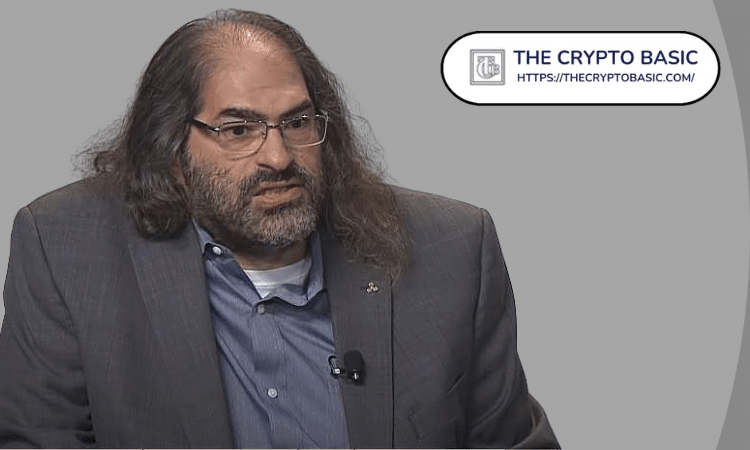
Ripple CTO Emeritus David Schwartz has said there are no big secret XRP projects hidden behind nondisclosure agreements (NDAs).

In a recent podcast, Schwartz clarified that while NDAs are common in Ripple’s business dealings, they are largely standard practice. He stressed that they are not evidence of hidden, “earth-shattering” developments waiting to be revealed.

Key Points

  • Ripple CTO David Schwartz says no hidden XRP breakthroughs are buried in Ripple’s 1,700 NDAs.

  • He explains NDAs are standard business practice, not proof of secret, game-changing XRP adoption plans.

  • Schwartz dismisses claims of hidden government or multi-year XRP catalysts as unfounded speculation.

  • He urges investors to focus on visible Ripple progress instead of conspiracy-driven price expectations.

Ripple’s 1,700 NDAs

Back in 2025, Ripple’s 1,700 NDAs with financial institutions gained attention. Notably, the NDA topic became public knowledge during Ripple’s lawsuit with the SEC.

Since then, XRP holders have speculated that something hidden around these agreements could boost the XRP price once revealed.

However, Schwartz has now put an end to those speculations. He explained that most agreements the company signs include confidentiality clauses simply because partners want to keep their business private.

According to him, the idea that these agreements conceal long-running, game-changing XRP adoption plans is largely misplaced.

Schwartz emphasized that “what you see is what you get” in most cases, adding that rumors from unofficial channels are typically either false or become public within a short time if they hold any truth.

He noted that, to his knowledge, there is no long-standing secret initiative involving XRP, nor any coordinated government plan tied to the asset.

No “Hidden Catalyst” Driving XRP

The former CTO also warned investors against relying on conspiracy narratives when making decisions about XRP. He stated that anyone basing expectations on the belief that a major secret event will suddenly boost XRP is likely misleading themselves.

While acknowledging that he has visibility into developments at Ripple and within parts of the XRP ecosystem, including the XRPL Foundation, Schwartz added that he does not have insight into every external entity.

Still, he maintained that there is no evidence of a hidden, multi-year plan waiting in the background.

Follow-Up Post Reinforces Message

Following the podcast, Schwartz doubled down on his stance in a post on X amid rising questions from community members.

He clarified that while “lots of secrets” do exist due to NDAs, they should not be confused with sweeping theories circulating online.

Schwartz stressed that claims suggesting something massive is about to happen, or that governments are preparing a major XRP-related move, are “almost always completely false”. He added that investing time, money, or emotional energy based on such narratives is misguided.

Community Reactions

Community figure Daniel Keller suggested the remarks could either mark the end of ‘XRP riddles’ or the beginning of a new phase of interpretations.

Meanwhile, crypto founder Mr. Cauliman sided with Schwartz, saying it was a reality check many XRP holders needed. Just because some information isn’t public doesn’t mean every theory is true.

Another user, Ocean, also agreed with Schwartz’s stance and mocked people who would still treat his words as hidden messages.

In sum, Schwartz’s remarks encourage individuals to focus on real, visible progress instead of rumors and speculation about Ripple and XRP, especially when making investment decisions.

Cardano Quietly Builds Base for Price Expansion to This Key Resistance

0

Cardano now targets a notable resistance area after building a strong base within an expanding ascending channel on a lower timeframe.

Analyst Lingrid highlighted this trend in her recent TradingView analysis. She noted that Cardano (ADA) has remained relatively quiet while broader market attention shifts toward macro headlines.

Geopolitical developments such as the extension of the Iran ceasefire and the prospects of a “Trump Pump” have become the new obsession in the global market. Beneath the surface, however, ADA has been forming a steady base, supported by notable on-chain activity and ongoing network upgrades.

Key Points

  • Cardano is currently trading within an ascending broadening wedge on the 4-hour chart.
  • ADA has tested the lower boundary of this formation, sitting near the $0.245 area multiple times over the past month.
  • Large holders have accumulated hundreds of millions of ADA throughout April.
  • If the current structure develops further, the next area of interest lies near the upper boundary of the wedge, around the $0.278 to $0.280 region.

Cardano Price Structure Signals Potential Rebound

From a technical perspective, Lingrid highlighted that Cardano is currently trading within an ascending broadening wedge, a structure that reflects expanding price swings but also repeated shuffling between upper resistance and lower support. This pattern has been forming since March 30 on the 4-hour chart.

Cardano Within Ascending Broadening Channel/Lingrid

Notably, ADA has tested the lower boundary of this formation, sitting near the $0.245 area multiple times over the past month, and it has continued to hold. For context, after the high of $0.268 on April 17, the coin tested this lower band three times between April 19 and 23, but bulls have defended this area diligently.

This consistent defense suggests that buyers are consistently stepping in at these levels, preventing further downside. Momentum indicators also point to a cooling of selling pressure, with the relative strength index (RSI) stabilizing around the neutral zone after earlier declines. As a result, the current setup leans toward a possible short-term recovery if support remains intact.

Whale Accumulation Adds to Optimism

The analyst further noted that recent data show large holders have accumulated hundreds of millions of ADA throughout April, taking advantage of the extended consolidation phase. 424 whales bought over 819 million ADA ($214 million) last month, strengthening demand while reducing available supply.

Meanwhile, this accumulation has continued. Coinglass data shows that in the past 214 hours, spot outflows from exchanges have surpassed inflows, as ADA holders are increasingly moving their tokens off trading platforms for long-term holding.

Cardano Spot Flow/Coinglass

At the same time, developments within the ecosystem, including the Van Rossum hard fork and Midnight mainnet debut, have reinforced confidence in the network’s technical foundation. This combination has helped stabilize Cardano’s price action even as momentum across the broader crypto market remains unstable.

Cardano Eyes Move Toward Upper Resistance

According to Lingrid, if the current structure develops further, the next area of interest lies near the upper boundary of the wedge, around the $0.278 to $0.280 region. From the current price of $0.248, this represents a 12% to 13% increase.

The analyst highlighted that previous interactions with this support zone have led to a retest of the expanding macro resistance, and a similar reaction could unfold if market conditions remain stable.

However, the setup depends heavily on ADA continuing to hold the lower boundary. A decisive close below the $0.24 range on the 4-hour timeframe would weaken the structure and open the door to a deeper pullback toward lower support levels.

XRP Trapped Within Short-Term Triangle: Analyst Identifies When a Breakout Could Occur

0

XRP currently trades within a tightening triangle after the recent relief bounce, but a breakout could ensue within the next few weeks.

XRP has struggled to maintain its upward momentum following the recent relief bounce that coincided with a broader market recovery. As of press time, the value has stalled at $1.42 amid slowing momentum, with price action staying tight over the past few days.

Key Points

  • XRP has stalled at $1.42 after a relief bounce amid continued range-bound price action.
  • A symmetrical triangle has formed since the $1.11 low in February 2026.
  • The triangle apex suggests a likely breakout window between mid and late May.
  • A confirmed breakout could target the $1.70-$1.80 resistance zone.
  • Loss of support may push XRP back toward $1.12 levels.

XRP’s Triangle Formation

Market analyst Chart Nerd called attention to this structure in a recent video commentary. Looking at the daily chart, XRP continues to trade within a narrowing range.

Chart Nerd explained that the price is moving between a downward-sloping resistance line and an upward-sloping support line. This pattern has been forming for months, especially since XRP recovered from its February 2026 low of $1.11, leading to a symmetrical triangle.

Possible Breakout Timeline

The analyst noted that the triangle is nearing its apex, with price action expected to reach a key point between the middle and end of May. According to Chart Nerd, a breakout could happen sooner in either direction, but for now, there is no clear confirmation of where the trend is heading.

XRP Triangle Pattern Chart Nerd
XRP Triangle Pattern | Chart Nerd

He pointed out that for a true bullish signal, XRP needs to break above the resistance trendline around $1.50 and then hold that level as support. Without this playing out, any move upward remains uncertain. 

If buyers manage to push through, the next target sits in an important zone around $1.70 to $1.80. For context, XRP once stayed above $1.80 for over 400 days, which makes the $1.70 to $1.80 range a strong resistance area now, even though it previously acted as support. If XRP moves higher, this range could act as a short-term target and a major turning point. 

XRP Still Faces Downside Risk

However, the structure also carries risks on the downside. Chart Nerd highlighted the series of higher lows forming along the support line. If the price keeps tightening but then breaks below this support and confirms it as resistance, a sharp drop could follow.

In that case, XRP could fall back toward $1.12, which matches the earlier lows where the current pattern began. This makes the ongoing squeeze toward the triangle’s apex especially important, as it will likely decide the next major move.

Besides the short-term pattern, Chart Nerd also noted that since XRP reached its all-time high of $3.6 in July 2025, the price has continued to form lower highs, showing that the overall trend remains bearish. This pattern is still visible even within the current triangle.

He also referenced XRP’s push from $1.80 to $2.4 in early January 2026 before it later pulled back. This shows that even if XRP breaks out now, it could still form another lower high before turning down again. As a result, he advised investors to remain cautious instead of assuming a strong upward trend will follow soon.

Ripple ‘Working With 30 Central Banks’ for XRP: David Schwartz Responds to Claims

Ripple’s David Schwartz has responded to longstanding claims that the company is quietly working with dozens of central banks on XRP adoption.

In a podcast, Schwartz dismissed conspiracy-style narratives suggesting that “something big” is coming for XRP based on NDAs.

He stressed that while Ripple does have confidential partnerships, most claims of a major hidden rollout involving XRP are false.

Notably, he confirmed that many partners operate under non-disclosure agreements. However, that doesn’t mean there are secret, game-changing events waiting to be revealed.

“Ripple’s partners insist on NDAs to keep their business confidential,” Schwartz said.

Key Points

  • Schwartz dismisses claims of a secret XRP rollout, saying most NDA theories are false.
  • Ripple’s central bank ties are real but largely known, not hidden conspiracies waiting to be revealed.
  • Earlier claims of 30 central bank engagements reflect discussions and pilots on CBDCs, not confirmed XRP adoption.
  • Schwartz warns investors against relying on conspiracy theories when making XRP investment decisions.

What About the 30 Central Banks Ripple Is Working With?

Expectedly, Schwartz’s statement stirred unease in the XRP community. Notably, community figure Mickle referenced earlier statements from Ripple board director James Wallis, who previously said Ripple was engaging with close to 30 central banks.

According to those remarks, Ripple had:

  • Five publicly announced partnerships
  • Five unannounced collaborations
  • Over 20 central banks in active discussions

Mickle questioned how these claims align with Schwartz’s stance that there are no major hidden developments. He asked whether such large-scale engagements should have been public by now.

Schwartz Clarifies: Public Partnerships vs. Speculation

Responding directly, Schwartz clarified that Ripple’s relationships with central banks are not secret conspiracies. Instead, he stressed that the partnerships referenced by Wallis are broadly known or have been disclosed over time.

Meanwhile, he added that the real misconception is assuming central banks will back their currencies with XRP based on those partnerships.

Overall, Schwartz’s statement draws a clear line between real business deals and speculation, where many XRP holders tend to focus.

Ripple’s CBDC Push Across 30+ Countries

Back in July 2023, James Wallis revealed that Ripple was in discussions with more than 30 countries regarding its central bank digital currency (CBDC) platform.

These efforts span multiple regions, with Ripple confirming partnerships across continents, including its collaboration with Montenegro on CBDC exploration.

At the time, the scale of engagement suggested that over 15% of the world’s countries were at least exploring Ripple’s technology for digital currency infrastructure.

Not Hidden Catalysts for XRP

Essentially, while Ripple is working globally, central bank deals usually take years due to regulation and testing before anything goes public.

Schwartz’s comments suggest that even though Ripple is actively working with major institutions, the idea of governments suddenly adopting XRP is unrealistic.

He stressed that those investing time and money based on conspiracy theories about hidden deals are only deceiving themselves.

Cardano Founder Says NIGHT Is Among Crypto’s Most Traded Assets, Teases Busy Year for Midnight

0

Cardano founder Charles Hoskinson comments on the rapid rise of Midnight’s native token, NIGHT, describing it as one of the most actively traded assets.

In a recent commentary, Hoskinson pointed to strong liquidity growth since late 2025 and increasing exchange adoption as signs of accelerating market traction for NIGHT.

Moreover, he signaled that Midnight’s development is entering a high-activity phase. Consistent progress, partnerships, and ecosystem expansion are set to follow throughout the year.

Key Points

  • Cardano founder Charles Hoskinson described Midnight as one of the most actively traded assets in the crypto industry.
  • Since its December debut, the token has already secured listings on Binance, Kraken, KuCoin, Bitget, and OKX, among others.
  • NIGHT’s trading volume surged by 102% in 24 hours, reaching approximately $39.66 million.
  • He framed the coming months as a critical growth phase, stating that it would be a very busy year for Midnight.

Midnight Among the Most Traded in the Industry

The Cardano founder has highlighted the growing prominence of Midnight, noting that NIGHT has quickly become one of the most-traded assets in the crypto industry.

According to him, liquidity for NIGHT began in December 2025, marking a key milestone in the project’s market debut. Since then, the token has secured listings on major exchanges, including Binance Spot and Kraken, as well as several other trading platforms.

This rapid expansion in availability has significantly boosted trading activity, positioning NIGHT as an actively traded asset within a relatively short timeframe. Amid rising trading activity, NIGHT’s market cap surpassed $1 billion within a few days of its launch.

Although its valuation has dropped to around $600 million, its trading activity has continued to accelerate. Notably, NIGHT’s volume has skyrocketed by 102% over the past 24 hours to $39.66 million. The vast majority of this volume stems from Bitget, KuCoin, and Binance.

Midnight Trading Volume

A Busy Year Ahead for Midnight

Beyond trading activity, Hoskinson emphasized that Midnight’s development pipeline is accelerating. He noted that the project’s guarded mainnet had launched last month, marking a transition into a more advanced deployment phase.

He further highlighted a pattern of steady progress, with meaningful updates and milestones emerging approximately every three months.

“It’s just been remarkable to see how every three months, major progress is made, major partnerships and collaborations come on board,” Hoskinson stated, adding that “it’s going to be a very busy year.”

Indeed, Midnight has been gaining momentum over the past few months. It has secured major links with Google, Telegram, and the UK-based bank Monument Bank Limited. Despite these milestones, Hoskinson is teasing more partnerships for the project, potentially making the year a busy one for Midnight.

Market Updates: Binance.US Slashes Spot Trading Fees to Almost Zero, Aave Sees $15B Outflows After Kelp DAO Exploit, Crypto Bill Passes First Reading in Russia

0

Latest Market Updates: As of 23rd April 2026.

Crypto markets experienced significant developments today, ranging from aggressive fee cuts by Binance.US to major liquidity outflows at Aave following a high-profile exploit. At the same time, Russia advanced its crypto regulatory framework, while Kraken called for reforms to US tax reporting rules.

Binance.US Near-Eliminates Fees for Spot Crypto Trades

Binance.US has introduced a near-zero fee model for spot trading. Specifically, the platform has set maker fees to zero and reduced taker fees to 0.02%, applying these rates across all trading pairs and user accounts.

In addition, the exchange removed its previous tier-based structure, eliminating requirements linked to trading volume or paid subscription levels.

According to the company, the change could cut trading costs by up to 98% compared to competitors. That positioning appears aggressive when measured against industry benchmarks. For instance, Coinbase typically charges between 0.40% and 0.60% for lower-volume users, while Kraken fees start around 0.25% to 0.40% and decline with higher volume.

Overall, the move signals a push by Binance.US to compete on price in an increasingly fee-sensitive market.

Aave Loses $15 Billion in Deposits Post Kelp DAO Hack

Meanwhile, decentralized lending protocol Aave faced substantial liquidity pressure, with approximately $15 billion withdrawn within three days.

In particular, data from Aavescan shows total deposits fell from $45.8 billion on Saturday to $30.8 billion by Wednesday.

This sharp decline followed an attack involving Kelp DAO, in which roughly 116,500 rsETH, valued at about $293 million, was drained via a LayerZero-linked bridge. Subsequently, the attacker used part of these funds to borrow assets on Aave, increasing the protocol’s exposure.

According to the Aave incident report, 89,567 rsETH were ultimately deposited into the system, resulting in potential losses of $123 million to $230 million.

Institutional trading firm Talos linked the outflows to fears of bad debt and contagion. These concerns prompted broader capital flight from DeFi platforms.

Talos also noted that Aave’s v3 WETH pool briefly reached full utilization, limiting immediate liquidity for users. Consequently, confidence in lending protocols came under pressure.

Total supply on Aave over the past 3 months

Russian Lawmakers Advance Crypto Oversight Bill in Initial Vote

On the regulatory front, Russia has moved closer to formalizing its crypto framework after its lower house approved a key bill in the first reading on Tuesday.

The draft law, titled “On Digital Currency and Digital Rights,” aims to channel trading through licensed intermediaries under the supervision of the Bank of Russia. If enacted, the framework could take effect as early as July. Meanwhile, unlicensed platforms may face a ban starting in July 2027.

The bill introduces strict listing criteria, requiring cryptocurrencies to meet thresholds for market capitalization, liquidity, and trading history.

Retail investors would also face tighter oversight, including mandatory qualification tests and an annual purchase cap of 300,000 rubles per intermediary.

While the framework permits crypto purchases via foreign accounts if reported to tax authorities, it maintains a ban on using cryptocurrencies for payments, reinforcing Russia’s cautious stance toward digital assets.

Kraken Urges US to Ease Crypto Tax Reporting Rules

Alongside these developments, Kraken has called for reforms to US crypto tax reporting after submitting extensive data to the Internal Revenue Service (IRS).

Specifically, in a Wednesday blog post, the exchange revealed it issued more than 56 million 1099-DA forms for 2025. Notably, a large portion of these filings involved very small transactions.

Kraken reported that 18.5 million transactions were under $1, while about 28 million were $10 or less. Overall, roughly 75% of reported transactions fell below $50. This, the company argues, creates unnecessary administrative burden.

To address this, Kraken proposed a de minimis exemption to exclude small transactions from capital gains reporting. It also criticized taxing staking rewards before sale, arguing that it effectively taxes unrealized income.

According to Kraken, such reforms would benefit around 55 million Americans and better align tax rules with current digital asset usage.

Cardano Founder: “I’m Still One of ADA Largest Holders Despite 75% Drawdown in Six Months”

0

Despite a sharp decline in the value of his holdings, Cardano founder Charles Hoskinson has reaffirmed his long-term commitment to ADA. 

Speaking during a recent IOG treasury proposals X Spaces session, he addressed the downturn in ADA’s market performance. He offered a reflection on both his personal losses and broader ecosystem sentiment.

His commentary comes at a time when persistent market volatility continues to weigh on investor confidence across the crypto sector, placing added pressure on projects like Cardano to prove resilience and long-term value.

Key Points

  • Charles Hoskinson disclosed that his ADA holdings have declined by over 75% in the past six months.
  • Despite the steep losses, he suggests that he remains one of the largest holders of ADA.
  • He attributed the downturn to broader market conditions rather than internal issues within Cardano.
  • He emphasized that sustained investment in Cardano’s ecosystem is key to restoring growth and reclaiming a top 10 position in global crypto rankings.

“I Remain One of ADA’s Largest Holders”: Hoskinson

In a display of personal transparency, Hoskinson revealed that he has absorbed significant financial losses during the recent market downturn. Specifically, he confirmed he is down by more than 75% in his ADA portfolio, stressing that no one has lost more than he has.

Although he did not disclose a precise figure in this instance, he previously indicated losses exceeding $3 billion following ADA’s earlier 92% decline. Nonetheless, Hoskinson continues to hold a substantial position in ADA, reinforcing his conviction in the asset.

“[…] No one has lost more money than me, but I’m still one of the largest ADA holders,” he stated.

“It’s Not Cardano’s Fault”

Meanwhile, Hoskinson rejected the idea that ADA’s losses stem from internal weaknesses. Instead, he attributed the downturn primarily to market forces. He emphasized that Cardano has not experienced any catastrophic failures or major technical setbacks that would justify such a steep price decline.

Meanwhile, ADA has not been alone in this trend. Like many digital assets, it has shed significant value amid macroeconomic pressures, including geopolitical tensions in the Middle East.

For context, ADA opened the year at $0.3328 and has since declined roughly 25% year-to-date. By comparison, Bitcoin and Ethereum have fallen about 11% and 22%, respectively, from their opening prices of $87,508 and $2,967.

Calls for Continued Investment, Not Retrenchment

Amid these losses, Hoskinson has pushed back against calls for excessive caution, particularly regarding treasury spending. This follows the submission of nine treasury proposals for 2026 by Input Output Global (IOG).

While the firm has already reduced its funding request by half compared to last year, critics continue to question the need for further investment.

In response, Hoskinson argued that cutting back during a downturn is both counterproductive and potentially harmful. He warned that scaling down development or limiting funding would stall innovation and weaken the ecosystem at a critical moment.

Instead, he positioned continued investment as a strategic necessity, one that could ultimately help propel Cardano back into the top 10.

Notably, Hoskinson has previously expressed ambitions to push ADA toward the number one position on CoinMarketCap. However, he cautioned that such a goal remains unattainable without strong internal investment and commitment.

Defining Moment for Cardano

Ultimately, Hoskinson framed the current environment as a pivotal test for the Cardano community. The decision now, he suggested, is whether stakeholders still believe in the project’s long-term vision.

If that conviction holds, he argued, the ecosystem’s best days could still lie ahead. However, without sustained commitment and investment, reclaiming a leading position in the crypto market will remain an uphill battle.