Home Blog Page 153

Cardano Founder Says XRP Holders Don’t Benefit from Ripple’s Asset Growth

0

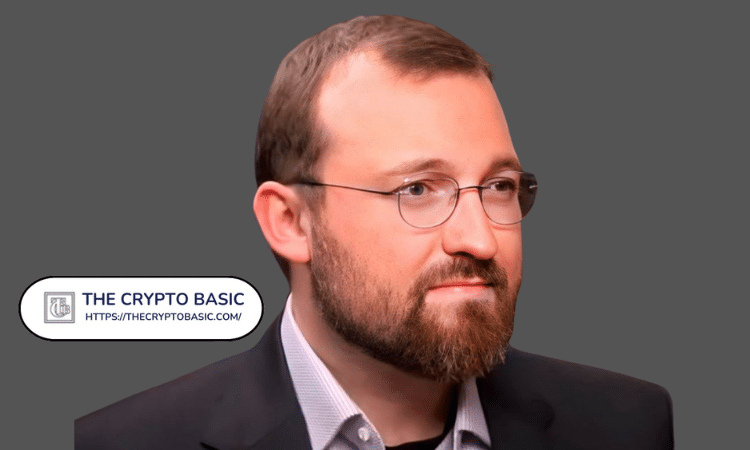
Charles Hoskinson, founder of Cardano, has stirred a new debate around XRP, criticizing its structure and value model in a recent podcast.

Hoskinson argued that there is “nothing” within the Ripple network that naturally creates buy demand for XRP. According to him, the token does not have built-in mechanisms, such as staking rewards or ownership rights, that would directly drive long-term price appreciation.

He stressed that XRP holders do not gain any legal claim over Ripple’s business, assets, or revenue, describing the company as a private entity with its own shareholders.

Key Points

  • Cardano’s Hoskinson says XRP has no built-in demand drivers or holder benefits.
  • He argues Ripple controls most XRP supply and benefits from its sales strategy.
  • XRP sales fund Ripple’s acquisitions and business expansion efforts.
  • Hoskinson compares XRP investors to market participants holding USDT.

Ripple Sells XRP to Strengthen Its Business

Notably, the Cardano founder raised concerns about XRP’s initial distribution. Specifically, he stated that a large portion of the supply, between 70% and 80%, was allocated to Ripple.

He described a cycle in which Ripple sells XRP on the market for cash, then uses the proceeds to fund acquisitions and expand its business operations. In his view, this creates a “value transfer” toward the company rather than token holders.

Hoskinson added that even as Ripple builds new products or acquires firms, XRP holders do not benefit directly from these developments financially.

To back his claim, Hoskinson referenced past disclosures in the U.S. SEC case involving Ripple, noting that XRP sales and liquidation events had been documented.

According to him, these sales, ranging from hundreds of millions to billions of dollars annually, are part of Ripple’s operational strategy. The proceeds fund expansion, including recent acquisitions such as GTreasury for $1 billion and Hidden Road for $1.25 billion.

Hoskinson Compares Holding XRP to Holding USDT

Meanwhile, in his remarks, Hoskinson compared XRP’s structure to Tether’s. He pointed out that value generated within the ecosystem primarily accrues to the issuing entity rather than to token holders.

He argued that, similar to how stablecoin reserves benefit the issuing company, Ripple’s business growth does not necessarily translate into gains for XRP investors.

In his words:

“Just like Tether, value doesn’t accrue to USDT holders. One company gets all the value, while holders only get an instrument and access to the network. They don’t actually get any price appreciation from that.”

Debate Continues

Hoskinson’s comments add to ongoing criticism of the XRP ecosystem. Many critics have described XRP as centralized due to Ripple’s large token holdings, while some, like ZachXBT, argue that retail token holders effectively serve as liquidity for Ripple without receiving proportional benefits from price appreciation.

Meanwhile, XRP supporters often point to the XRP Ledger’s built-in features and real-world utility in cross-border payments, as well as partnerships with financial institutions, as positive factors supporting its long-term relevance.

XRP Breaks Below Descending Triangle, But Here’s Why $9-$13 Is Still in Play

0

XRP has broken below a descending triangle structure, but market analysis shows why the token’s bullish upside target remains in play.

According to a recent market exposition from EGRAG Crypto, a renowned chartist, the Bifrost Bridge, a long-standing ascending channel that has guided XRP’s price action since 2014, remains relevant. With XRP still within this channel, he believes the $9 to $13 target remains in play.

Key Points

  • XRP underwent 14 months of accumulation, after which it broke below a descending triangle, as the market expected.
  • EGRAG argues that the triangle breakdown was an effort to sweep downside liquidity, not a trend failure.
  • XRP remains within the Bifrost Bridge, a multi-year ascending channel that has guided its price action since 2014.
  • As long as the Bifrost Bridge remains relevant, XRP’s upward targets of $9 to $13 remain in play.

XRP Descending Triangle Breakdown

EGRAG’s recent bullish commentary comes despite XRP’s current price struggles. For context, since hitting $3.6, the altcoin has continued to face turbulence alongside the rest of the crypto market. This has resulted in six consecutive monthly declines, with XRP initially eyeing a seventh loss at the start of this month.

Data from EGRAG’s chart shows that the downtrend led to a breakdown below an existing descending triangle. Notably, after XRP hit $3.4 in January 2025, its price action entered an accumulation phase that, according to EGRAG, lasted for 14 months.

During the accumulation, XRP formed a descending triangle structure as it dropped from the $3.6 all-time high in July 2025. The market analyst noted that descending triangles statistically have a 60% to 70% chance of breaking down. 

XRP 1M Chart EGRAG Crypto
XRP 1M Chart | EGRAG Crypto

This bearish expectation played out when XRP closed the February 2026 monthly candle below $1.6, the level that aligns with the triangle’s lower trendline. Since then, XRP has continued to trade below the descending triangle.

Bifrost Bridge Still Relevant

However, while the market currently witnesses bearish conditions, EGRAG pointed out that XRP still trades within the ascending channel structure he calls the Bifrost Bridge. Data from his chart shows that this channel has guided XRP’s price movements since 2014.

According to him, the Bifrost Bridge will continue to act as his guide, and the structure maintains a bullish outlook. EGRAG suggested that as long as XRP remains within the Bridge, its overall bullish trend remains intact, and the upward move that started in November 2024 has not ended. 

The analyst insists that triangles typically highlight short-term moves, but channels are what define the overall cycle. He noted that the longer the accumulation, the more explosive the ensuing expansion will be. 

XRP witnessed a whopping 14 months of accumulation, and EGRAG believes this compression only acts as fuel for the imminent upward push. With this, EGRAG expects the rally to eventually result in a $9 to $13 target, which he has maintained for some time. From the current price of $1.41, XRP would need to rise 538% to 822% to reach the target range.

Market Updates: Aave TVL Slides $8B After Kelp DAO Protocol Breach; Saylor Teases Bigger BTC Accumulation; Jenner Memecoin Cleared of Securities Status

0

Latest Market Updates: As of 20th April 2026.

Crypto markets experienced a volatile weekend, marked by a major DeFi exploit, continued institutional Bitcoin accumulation, a significant U.S. legal ruling on memecoins, and the launch of a landmark tokenized gold fund in Southeast Asia.

Aave Hit by Fallout from $293M Kelp DAO Exploit

The most significant disruption emerged from the DeFi sector, where Aave faced a sudden liquidity crunch.

The turmoil began on April 18, when attackers exploited Kelp DAO’s LayerZero bridge, draining 116,500 Restaked ETH (rsETH), worth roughly $293 million. The attackers then moved quickly, using the stolen assets as collateral on Aave v3 to borrow wrapped Ether (wETH), according to Lookonchain.

Subsequently, this maneuver left the protocol saddled with approximately $195 million in bad debt.

The fallout was immediate. Users rushed to withdraw funds, causing Aave’s total value locked (TVL) to plunge from $26.4 billion to $18.6 billion within 24 hours, per DeFiLlama. Consequently, Aave lost its position as the largest DeFi protocol, underscoring the scale of the disruption.

As the borrowing pressure intensified, liquidity conditions worsened across Aave’s pools. In particular, lending pools for USDT and USDC reached full utilization.

This development means that over $5.1 billion in stablecoins is currently unavailable for withdrawal. Users must now wait for loan repayments or new deposits to restore balance.

At the same time, market sentiment weakened in response to the crisis. The Aave token declined nearly 20%, falling from $112 on April 19 to around $92.40.

Meanwhile, platforms connected to the affected infrastructure, including Curve Finance, BitGo’s Wrapped Bitcoin service, and Ethena, temporarily paused LayerZero bridge activity to mitigate risk.

Strategy Signals More Bitcoin Buying

While DeFi markets faced turbulence, activity in the institutional space pointed in a different direction. Strategy co-founder Michael Saylor hinted at another potential Bitcoin purchase.

According to company disclosures, Strategy acquired 13,927 Bitcoin between April 6 and April 12, spending approximately $1 billion at an average price of $71,902 per coin.

Building on that momentum, Saylor posted “Think Even Bigger” on April 19 via X, alongside a chart of past purchases. Historically, such posts have preceded new buying announcements, suggesting that another move could be imminent.

Additionally, the company is refining its financial strategy to attract investors. CEO Phong Le recently outlined plans to increase dividend frequency to twice monthly, on the 15th and at month-end.

This would bring total annual distributions to 24 at the current 11.5% rate. According to Le, the goal is to stabilize stock performance, reduce volatility, and improve liquidity.

U.S. Court Rules Jenner Memecoin Is Not a Security

Amid these market developments, regulatory clarity continues to evolve in the United States. A federal court recently ruled in favor of US media personality and former Olympian Caitlyn Jenner in a case involving her memecoin project.

Judge Stanley Blumenfeld Jr. ruled on April 16 that, under the relevant legal definition, the JENNER token cannot be treated as a security. He explained that the plaintiffs failed to establish the existence of an investment contract.

Specifically, the ruling hinged on two main findings: that investor funds were not pooled and that the token was not tied to any underlying product or technological development. Instead, court filings characterized it as an entertainment-driven memecoin, with value largely derived from Jenner’s public persona.

The case originated in November 2024, when investors filed a class-action lawsuit over losses following a price decline. Although the complaint was amended after an initial dismissal in May 2025, the court ultimately upheld its position.

Southeast Asia’s First Tokenized Gold Fund Goes Live

Meanwhile, innovation in regulated digital assets continues to gain traction. OCBC, Lion Global Investors, and DigiFT have jointly launched GOLDX, Southeast Asia’s first tokenized gold fund. Built on Ethereum and Solana, the product targets institutional and accredited investors.

GOLDX enables subscriptions and redemptions using either stablecoins or fiat currency, offering greater flexibility for participants. It is backed by a physical gold portfolio managed in Singapore, currently valued at approximately SGD 669 million.

Importantly, the fund operates under the oversight of the Monetary Authority of Singapore, reinforcing its regulatory compliance and signaling growing confidence in tokenized real-world assets.

Shiba Inu Returns to Key Support Zone That Previously Sparked 1,660% Rally: Analyst 

0

Analyst Crypto Patel suggests that Shiba Inu has returned to a crucial support zone that has previously triggered explosive rallies of up to 1,660%. 

He identifies this level as a historically reliable launchpad for major price expansions. Specifically, Patel shows that SHIB is trading within a clearly defined accumulation range labeled “Support Zone (Accumulation Zone 1).”

In the past, buyers entered this zone aggressively, which drove strong rallies in both 2021 and 2024. As a result, the current setup places Shiba Inu at a technically significant inflection point.

Key Points

  • Shiba Inu has returned to a historically significant accumulation zone that previously sparked major rallies.
  • This range drove a 1,660% surge in 2021 and a 746% rally in 2024 as buyers stepped in aggressively.
  • As SHIB now mirrors this structure, it could target a move toward $0.00008789, representing over 2,200% upside if momentum builds.
  • Accumulation is strengthening, as data from CryptoQuant shows net outflows of 41.67 billion SHIB from exchanges over the past day.

Shiba Inu Mirrors Earlier Setups for Massive Rally

For context, Patel highlights the price range between $0.000004 and $0.000005 as the primary accumulation zone. Historically, this level has produced substantial upside moves.

His chart indicates that SHIB surged by 1,660% in late 2021 and later climbed 746% in 2024 after rebounding from similar conditions.

Building on this, Patel argues that SHIB’s current structure closely mirrors those earlier setups. The token continues to consolidate around support, suggesting that accumulation may be underway.

Moreover, the chart showed that a descending resistance trendline, compressing volatility over time, has capped Shiba Inu’s price action. As this compression nears its end, the probability of a breakout increases, especially if buying pressure strengthens near support.

Potential 20x Rally?

Looking ahead, Patel outlines a bullish scenario in which SHIB rebounds from the $0.000004 support level and enters a parabolic uptrend.

Under this projection, he suggested that the token could rise by as much as 2,200%, reaching approximately $0.00008789. This target implies a 1,364% gain from the current price of around $0.000006.

However, Patel tempers expectations by questioning whether a full 20x rally is realistic, even during a strong altcoin season.

Image

Is a Rebound to $0.00008 Feasible?

Notably, SHIB last traded near $0.00008 in 2021, when it hit its all-time high of $0.00008845. Since then, the token has struggled to rebuild that momentum. Even during the March 2024 rally, the token peaked near $0.000045 before pulling back.

Therefore, while the accumulation zone could support another upward move, the scale of any rally is uncertain. It will likely depend on market conditions, including macroeconomic trends and retail interest in meme coins.

Without these factors aligning, SHIB may still rebound, but with less impressive momentum.

SHIB Accumulation Spikes

In the meantime, investors are gradually accumulating SHIB. Notably, Shiba Inu’s exchange netflow has turned negative, indicating that traders withdrew more tokens from exchanges than they deposited over the past day.

According to CryptoQuant data, the net outflow stands at 41.67 billion SHIB. As a result, this can ease immediate selling pressure and help stabilize the price.

Nonetheless, the number of tokens that are left on exchanges is nothing compared to the 81.62 trillion currently available across these trading platforms.

Cardano Long Term “Looks Absolutely Perfect”: Analyst Shares Bull Run Target of $6.30

0

While the Cardano short-term momentum remains constrained, an analysis suggests the asset has significant prospects in the mid- to long-term.

Cardano (ADA) is down over 80% from the cycle’s high of $1.32, mirroring the broader market’s bearish trend. However, the next bullish phase holds promising price action for the altcoin if recent analysis proves true.

Key Points

  • Analysis suggests that the mid- to long-term looks “absolutely perfect” for Cardano despite the short-term trend.
  • Cardano has held above a key support area around $0.221 on the weekly chart.
  • The price is also on the cusp of breaking above a multi-month descending trendline.
  • The midterm target for this bullish setup is the upper band of the price range Cardano has traded within since March 2022, aligning with $1.178.
  • Meanwhile, the bull cycle target is a new all-time high of $6.30, a 2,461% rise from the current market price.
  • For all of this to happen, ADA must remain above the $0.22 support area.

Cardano Still Perfect

This analysis comes from Celal Kucuker, who, in a recent X post, noted that the mid- to long-term outlook looks “absolutely perfect” for Cardano despite the short-term trend. While ADA trades near previous cycle lows and over 90% down from its all-time high, the analyst maintains a bullish disposition.

An accompanying chart further highlights why this is so. Cardano has held above a key support area on the weekly chart, and the commentary believes this is positive. This demand zone lies around $0.221, where ADA last visited on February 6. Interestingly, other analysts view that move as a double bottom formation, targeting a massive rebound when conditions improve.

Cardano Breakout Imminent/Celal Kucuker

Furthermore, Kucuker’s chat shows a descending trendline emerging from the August 2025 high of $1.019. This neckline resistance has suppressed ADA’s price from the high until recently. The analyst noted that a breakout occurred on the daily chart when the coin rallied to the intraday high of $0.268 on April 17.

While that momentum has not sustained, the compression from the trendline and the horizontal support lower suggests that a breakout is on the horizon.

ADA Mid- and Long-Term Targets

The analysis suggests that these bullish setups are why the current consolidatory trend might be temporary. As such, Kucuker recommends patience, claiming that it will come with great reward. Additionally, he highlighted mid- and bull cycle targets for ADA with this setup.

The midterm target is the upper band of a price range that Cardano has traded within since March 2022. The area aligns with the $1.178 price mark, representing a 379% surge from the current price of $0.246.

Meanwhile, the bull cycle target is a new all-time high of $6.30, a 2,461% rise from the current market price. This target aligns with the tip of a multi-year ascending channel on the weekly chart.

Notably, for all of this to happen, ADA must remain above the $0.22 support area. Falling below weakens the setup and paves the way for further price decline.

Cardano Founder Compares XRP to Tether, Says Ripple’s Model Has No Benefit to XRP Holders

Charles Hoskinson, the Cardano founder, recently compared XRP to Tether, arguing that Ripple’s business model does not benefit XRP holders.

According to Hoskinson, XRP holders do not have any actual stake in Ripple’s business and do not benefit from how the company makes money, even though Ripple sells XRP regularly to fund its operations.

Key Points

  • Charles Hoskinson compared Ripple to Tether, arguing that the company’s model does not benefit XRP holders.
  • He said Ripple’s acquisitions and development of institutional tools show the company is moving into “Web2.5,” like Tether.
  • According to Hoskinson, Ripple has continued to sell XRP while using the proceeds to acquire assets.
  • He warned that Brad Garlinghouse is pushing for policies that could favor established assets and treat new entrants as securities.

Hoskinson Says Ripple Pushing into Web 2.5 Like Tether

Hoskinson shared these views during an interview on The O Show with host Wendy O. He spoke about the emergence of what he calls Web 2.5, which involves a combination of blockchain and traditional business models.

According to him, firms like Circle, currently building Arc, and projects such as Canton are pushing into this Web 2.5 system. He believes much of the market’s future growth will happen in this area and said Ripple may be moving in the same direction.

Specifically, Hoskinson explained that Ripple is entering the Web 2.5 space through major business moves and a focus on institutional clients. 

He mentioned Ripple’s $1.2 billion acquisition of Hidden Road and its efforts to build privacy tools that could allow automated compliance for institutions. He also mentioned Ripple’s development of the RLUSD stablecoin and suggested that this was a “Tether-like approach.”

“None of the Value Accrues to XRP”

According to him, these efforts could bring in large profits for Ripple, but they do not necessarily benefit XRP holders. He said the value created by these activities stays within the company instead of flowing to the token. 

Hoskinson used Tether as an example, where the issuing company keeps the financial gains instead of passing them on to token holders. 

“None of the value has to accrue to XRP; it goes to the Ripple company. Just like all the Tether value doesn’t accrue to Tether holders; it goes to Paolo’s [Ardoino] pockets,” the Cardano founder said.

XRP Does Not Get Any Price Appreciation from Ripple’s Efforts

Wendy pointed out that strong media coverage of Ripple’s developments and a bullish market could still push XRP’s price higher, which could help holders.

In response, Hoskinson said that since Ripple holds a large amount of XRP, they typically build attention, drive the price up, sell XRP, and then use the money to buy other assets. He stressed that XRP holders do not have any legal claim to these assets, which remain under Ripple’s control.

Speaking further, he pointed out that XRP does not offer features like staking rewards or direct participation in the company’s earnings. To him, the whole system just moves a large amount of value to Ripple. 

“It’s basically like Tether from that perspective,” Hoskinson said, “One company gets all the value and the holders, they get some instrument, and they get some network, but they don’t actually get any price appreciation from that.”

Interestingly, XRP proponents have pushed against this claim, arguing that XRP has indeed appreciated considerably over the past few years, including a 20,000% spike in the last decade.

Regulatory Concerns

Hoskinson suggested that Ripple’s model is also similar to what Block.one does with EOS. Notably, Block.one raised $4 billion, with its balance sheet rising to $11 billion in Bitcoin and Ether. He noted that despite this, the EOS network itself did not achieve similar success or receive any benefit.

According to him, unlike Ripple, he did not pre-mine 80% of Cardano’s supply or design a system that involves selling billions of dollars’ worth of tokens each year. He also argued that Ripple does not back XRP, saying the company sells its holdings instead.

Finally, Hoskinson claimed that the Ripple CEO, Brad Garlinghouse, is pushing for rules that would treat most new crypto projects as securities by default. 

He claimed that this would favor established assets like XRP, Bitcoin, Ethereum, and Cardano, while making it harder for new projects to compete, and this could create a market structure similar to traditional finance, where a few projects dominate.

Cardano Could Hit $10, but This Needs to Happen: Prominent Analyst

0

Cardano is struggling at the moment, but analysts believe it could target double-digit prices if it asserts itself in the crypto market more.

One such analyst sharing this narrative is Zach Humphries, a prominent market analyst and content creator. Speaking in a recent commentary, he highlighted the struggles that Cardano (ADA) has faced recently and what needs to change for a rally to unprecedented prices.

Key Points

  • Besides a recent recovery attempt from Cardano, the broader direction has been downward, declining 81.8% from its December 2024 high of $1.32.
  • Despite this, Cardano still has strong structural support, holding key demand zones even as it exhibits price weakness.
  • When it does recover from this level, ADA could bounce hard, potentially to unprecedented prices.
  • However, the question remains whether Cardano would attract the liquidity required to push its price higher, given the strong competition from newer blockchains.
  • As such, Cardano needs to “solidify itself” and deliver on a particular use case with massive prospects of real-world adoption.

Cardano Back to 2022 Lows

Aside from a recent recovery attempt from Cardano, the broader direction has been downward. The altcoin has declined 81.8% from its December 2024 high of $1.32 and 76% from its August 2025 high of $1.019.

The downtrend has seen it retest its previous cycle lows. After reaching a local floor of $0.220 on February 6, its lowest price since June 2023, ADA has consolidated around this level, aligning with the late 2022 and 2023 lows.

Humphries views this as a lackluster move, given his expectations for Cardano. While it has come a long way from the lows in its early days, when it traded around a penny, it has not reached the projected price levels, given how long it has been around.

ADA Maintaining Structure

Despite these, the analyst notes that Cardano still has some great structural support. It has remained above a key demand zone, keeping the hopes of a rebound alive. When it does recover from this level, ADA could bounce really hard.

Humphries added that he wants to see the coin between $5 and $10, aligning with analyses from several market analysts, including Dan Gambardello. Both prices mark new all-time highs for Cardano, representing an increase of 1,983% to 4,066% from the current market price.

But Cardano Needs to Do This

However, Humphries questioned whether Cardano would attract the liquidity required to push its price higher. According to him, there are several newer blockchains that pose a threat to the ADA ecosystem’s adoption. As such, the blue-chip network must offer something unique to users to thrive in the current market.

He said Cardano needs to “solidify itself” and deliver on a particular use case with massive prospects of real-world adoption. Considering its perks as a very secure network, Humphries suggested use cases such as using the network for voting in the United States or for uploading users’ birth certificates on chain.

Notably, the Cardano ecosystem is building on expanding its use case, but seems focused on DeFi and real-world asset (RWA) tokenization. Last year, it committed 8-figure ADA tokens to boost stablecoin liquidity and oversaw the minting of the first x402 on Cardano to enhance tokenization.

Market Updates: Bitcoin Slides to $74K Amid Escalating US–Iran Tensions; Crypto Futures Log $384M in 24-hour Liquidations; Anthony Scaramucci Says BTC Aligns with Money Definition

0

Latest Market Updates: As of 20th April 2026.

Crypto markets opened the week on a cautious footing, as escalating tensions between the United States and Iran dampened investor sentiment and triggered a pullback across major assets.

Bitcoin Drops to $74K as US-Iran Conflict Escalates

Bitcoin fell about 2% to trade near $74,190 on Monday. This decline followed reports that US forces seized an Iranian cargo vessel, raising concerns about the stability of an already fragile ceasefire.

Notably, the drop marks a sharp reversal from Bitcoin’s strong performance just days earlier. On Friday, the asset surged past $78,300, its highest level since early February. However, optimism faded over the weekend as geopolitical risks intensified.

At first, prices slipped into the $75,000–$76,000 range after Iran warned it could shut down critical oil routes in the Strait of Hormuz. This warning added fresh concerns about global energy supply and economic stability.

By late Sunday, the situation escalated further. Bitcoin briefly dipped below $74,000 after the US military confirmed it had opened fire on, and later seized, an Iranian vessel. US officials said the ship attempted to breach a blockade, while Tehran accused Washington of violating the ceasefire agreement.

At the same time, Iranian state media reported that Tehran rejected planned peace talks in Islamabad and retaliated by firing multiple drones at U.S ships. The current ceasefire, which had helped stabilize markets and ease oil prices, is due to expire on Wednesday. This looming deadline has added to market uncertainty.

Crypto Futures Liquidations Top $384M in 24 Hours

As prices moved lower, the impact was quickly felt in leveraged markets. The crypto derivatives sector recorded $384.46 million in liquidations over the past 24 hours, according to Coinglass data.

Notably, long positions accounted for $302.43 million, significantly outweighing the $82.23 million in short liquidations. This imbalance suggests that bullish traders were largely caught off guard by the sudden decline.

Breaking it down further, Bitcoin futures led the losses at $124.85 million, with Ethereum following at $120.51 million.

Crypto Liquidations in Past 24 Hours

Analysts Flag Weakness in Current Bitcoin Cycle

Amid this short-term volatility, some analysts are reassessing the strength of Bitcoin’s current market cycle. Alex Thorn, head of research at Galaxy Digital, pointed out that the current cycle appears more subdued than previous ones.

He compared the post-halving performance following April 2024 with earlier cycles in 2012, 2016, and 2020. Specifically, according to his analysis, the latest cycle shows lower volatility and more limited upside.

Bitcoin peaked above $126,000 in October 2025, an increase of roughly 97% from its halving level near $63,000. By comparison, prior cycles delivered significantly higher returns: approximately 9,294% in 2012, 2,950% in 2016, and 761% in 2020.

Given these observations, Thorn raised the possibility that this moderation could reflect a structural shift in the market, rather than a temporary slowdown.

Institutional Support Fuels Long-Term Optimism

Despite these concerns, long-term sentiment remains constructive among prominent investors. In particular, SkyBridge Capital founder Anthony Scaramucci continues to express a bullish outlook, emphasizing Bitcoin’s core monetary properties.

He argues that Bitcoin’s decentralized structure and lack of centralized control strengthen its credibility, while drawing parallels to traditional fiat systems, which also rely on trust rather than intrinsic value.

In addition, Scaramucci pointed to increasing institutional participation as a key driver of adoption, citing involvement from major firms such as Morgan Stanley and Goldman Sachs.

Looking ahead, he highlighted Bitcoin’s fixed supply of 21 million coins and its efficiency relative to gold as fundamental strengths.

Based on these factors, Scaramucci projects the asset could reach $150,000–$200,000 within the current cycle, with the potential to exceed $1 million over the next decade if it approaches gold’s market scale.

Aave TVL Plunges $9B Within 48 Hours Amid KelpDAO’s Exploit

0

A sharp liquidity shock has hit the decentralized finance (DeFi) ecosystem, with Aave alone losing nearly $9 billion in TVL in just 48 hours. 

The disruption, triggered by an exploit linked to KelpDAO, quickly cascaded across the ecosystem. As a result, total DeFi TVL plunged by more than $13 billion, falling from roughly $99.49 billion to $85.80 billion.

Key Points 

  • Aave lost nearly $9 billion in total value locked (TVL) within 48 hours following an exploit involving KelpDAO. 
  • Large investors and institutions, including MEXC and Abraxas Capital, were behind these withdrawals. 
  • Total DeFi TVL dropped by over $13 billion, falling from about $99.49 billion to $85.80 billion. 
  • AAVE’s price also reflected the decline, plunging 5% over the past week to $92.

Over $13B Withdrawn from DeFi Platforms Amid KelpDAO Exploit

The crisis began with a $292 million exploit involving KelpDAO’s bridge, where attackers accessed unbacked rsETH tokens over the weekend.

Afterward, they deposited these compromised tokens, typically used as liquid restaking collateral, into lending platforms like Aave.

Using this invalid collateral, the exploiter borrowed more than 82,600 Ethereum (ETH), leaving protocols exposed to bad debt once the collateral’s legitimacy came into question. In effect, analysts suggested the attackers secured loans using assets with no real backing.

As the issue unfolded, DeFi platforms began freezing affected markets. At the same time, large investors and institutions rapidly withdrew funds to minimize exposure, thereby accelerating liquidity outflows. 

Aave’s TVL Slides by Nearly $9B

Before the incident, Aave’s TVL stood at approximately $26.39 billion. It has since dropped sharply to around $17.52 billion, a decline of $8.87 billion in two days, according to data from DefiLlama. 

Aave TVL Dips to $17B from $26B

Data from Lookonchain shows that major entities led the withdrawals. Notably, MEXC pulled $431 million, a wallet linked to Nonco withdrew about $405 million, and Abraxas Capital removed roughly $392 million. In addition, several large holders exited their positions, contributing to a nearly $9 billion decline in Aave’s TVL.

Meanwhile, the impact spread beyond Aave. Other protocols, including Euler Finance and Sentora, also recorded significant losses, particularly in lending, restaking, and yield strategies tied to the affected collateral. 

AAVE Price Reacts to Market Stress

Capital outflows have also influenced AAVE’s price. Over the past week, the token has declined by about 5.34%, trading near $92.54. Although it posted a slight 0.93% gain in the last 24 hours, it remains down 17.29% over the past 30 days.

In response, Aave issued an update reassuring users that rsETH remains fully backed on the Ethereum mainnet. However, as a precaution, the protocol has frozen the asset across its V3 and V4 markets while implementing measures to limit further exposure.

XRP Use Case Expands as Tottori Bank Partners SBI Remit for Cross-Border Payments 

A new banking partnership in Japan is adding to the steady expansion of Ripple-powered payment infrastructure, with implications for XRP in global remittances.

Key Points

  • Tottori Bank joins SBI Remit, expanding Ripple-powered remittance services in Japan’s growing foreign worker market.
  • The partnership focuses on faster, cheaper, 24/7 cross-border payments with support for e-wallet payouts and multilingual access.
  • Ripple’s blockchain infrastructure underpins the system, enabling secure and low-cost transfers across multiple corridors.
  • XRP remains a bridge asset, strengthening its role in liquidity where access to traditional currencies is limited.

Tottori Bank Joins SBI Remit Network

Tottori Bank has officially launched international money transfer services in collaboration with SBI Remit, starting April 20, 2026. With this agreement, Tottori becomes the 26th financial institution to join SBI Remit’s growing network of partners.

The move aims to support foreign workers in Japan, particularly in regions such as Tottori Prefecture, where international labor has become increasingly important to local economic stability.

As the number of foreign workers and employers rises to record levels, demand for faster, cheaper, and more flexible remittance options has grown significantly.

Focus on Speed, Cost, and 24/7 Access

The new service aims to meet evolving user expectations, including instant transfers, lower fees, and around-the-clock availability. It also supports modern payout methods such as e-wallets, which are becoming more common in destination countries.

SBI Remit has emphasized its use of distributed ledger technology from Ripple to power these services. The firm says this infrastructure enables secure, fast, and low-cost transactions. Notably, it also supports multilingual access for users across 12 languages.

XRP as Liquidity Bridge

While the system does not rely exclusively on XRP, the digital asset can be used as a bridge currency where liquidity is available. This means XRP may help facilitate faster cross-border settlements by acting as an intermediary between fiat currencies.

This optional use case continues to highlight XRP’s role within Ripple’s payments ecosystem in corridors where traditional liquidity is limited or costly.

Banks Seek Efficiency Amid Compliance Pressures

The partnership also highlights a major trend among financial institutions seeking to reduce operational burdens. With increasing compliance requirements, such as AML/CFT regulations and the transition to ISO 20022, outsourcing smaller remittance transactions has become an attractive solution.

By integrating SBI Remit’s services, Tottori Bank can streamline operations and offer improved services to customers.

Growing Ripple Network

This latest collaboration underscores the continued expansion of Ripple-enabled payment networks across Asia. As more banks and financial institutions adopt blockchain-based solutions, XRP’s utility as a liquidity tool strengthens.

The addition of Tottori Bank to SBI Remit’s network reinforces a gradual, steady shift toward digital-first remittance systems, with XRP among the assets benefiting as adoption deepens.