Home Blog Page 1548

Ripple not Manipulating XRP Price: Community Pundit Argues

0

An active commentator in the XRP community has presented arguments to debunk claims that Ripple has been manipulating the price of XRP.

Being the largest XRP holder, Ripple has often come under fire due to allegations that it might be manipulating the cryptocurrency’s price. These claims recently resurfaced when a crypto researcher called attention to documents detailing how the firm used bots to trade XRP.

Notably, Ripple leveraged trading bots from GSR for its past institutional sales of XRP. Some community members have argued that these sales have contributed to XRP’s historical underperformance. However, Ripple CTO debunked these claims, further confirming that the firm already stopped these institutional sales.

Despite the clarification, concerns of price suppression abound. Recently, Cherry, an XRP community figure, presented a fresh argument, contending that Ripple’s actions do not constitute manipulation but are merely a consequence of market dynamics.

Difference Between Manipulation and Causation

Cherry explained the distinction between manipulation and causation in the context of financial markets. According to her, manipulation involves the deliberate influence of a market or asset. 

Manipulation often involves deceptive means in an effort to gain advantage. On the other hand, causation refers to the natural outcome of events that occur due to specific triggers or actions.

To illustrate her point, Cherry presented an analogy involving apples and natural gravitational force. Notably, if someone releases an apple previously held aloft, gravity dictates its fall to the ground. This is not manipulation, it is causation. 

Similarly, she addressed a common misconception in the stock market, where a company’s decision to sell and then repurchase shares is often misinterpreted as manipulation. Cherry clarifies that while such actions can affect the market price, they do not equate to controlling it, as prices are ultimately governed by supply and demand.

Ripple Not Manipulating XRP Price

She leveraged this argument to contend that Ripple’s sales of XRP, though they had an impact on price, do not translate to price manipulation. surrounding Ripple’s operations.

Cherry emphasized that extensive audits and legal scrutiny have consistently shown that Ripple’s business practices are above board. Notably, the SEC did not particularly accuse Ripple of suppressing XRP’s price but trying to increase it.

In addition, Cherry claimed that a federal judge’s ruling, backed by evidence, has confirmed that XRP’s market movements are in sync with Bitcoin (BTC), suggesting that Ripple’s operations are not the major determinants of the price direction of XRP.


Bitcoin Records Retail Boom in South Korea As Price Premium Tops 10%

0

Bitcoin (BTC) price is seeing a major rally in South Korea as showcased by the coin’s price premium hitting 10% in the country.

Bitcoin has continued to command investor interest in South Korea. As detailed by CryptoQuant’s Founder and CEO Ki Young Ju, Bitcoin’s price premium in South Korea is now at a 2-year high, having surged to 10%.

The Price Premium, known as the Kimchi Premium or the Korea Premium Index, marks the difference between the value of Bitcoin on global exchanges and on exchanges in South Korea.

Strong Retail Presence

South Korea is historically known to command high liquidity owing to retail cash injection. Per the Kimchi Premium data on CryptoQuant, the last value is pegged at 5.61% as of the last value, down from the 10% recorded earlier as showcased by Ki Young Ju.

The Kimchi Premium has been on a steady rise since January 24 when the reading was pegged at 2.58 with the price of Bitcoin hovering at $40,080.

From here, the value increased to 2.76 as the price jumped to $43,077 on February 1. This figure even soared further to 4.88 as the coin’s price jumped to $62,413.

As of March 5, the price of Bitcoin jumped briefly to 96,734,000 South Korean Won valued at $72,504, a surge that eventually left the price at a 6.84 premium. With institutional investment in South Korea relatively lowerl, the boost in Bitcoin’s liquidity is reportedly fueled by sustained retail domination.

Bitcoin is Just Getting Started

Despite the US leading the spot Bitcoin ETF liquidity flow, the influence of American cash injection is driving the need for new strategies by investors in other countries.

With the fast-growing level of adoption and the likelihood of state-backed bodies like Arizona State’s two retirement bodies exploring Bitcoin exposure, the surge of the asset to its All-Time High (ATH) might just be a warm-up to the mega rally that many market experts have projected.

LKi Young Ju highlighted earlier that should there be a need for any correction, it is unlikely that BTC will fall below $46,376, its price when the spot Bitcoin ETF products went live in January.

Cardano Founder Calls Out Grayscale Exclusion Of ADA In New Staking Product

0

Cardano founder Charles Hoskinson has expressed surprise at the exclusion of Cardano (ADA) from Grayscale’s newly launched Dynamic Income Fund.

On Tuesday, popular crypto fund manager Grayscale announced its latest product, called the Grayscale Dynamic Income Fund (GDIF).

The fund will invest in proof-of-staked (PoS) cryptocurrencies and pay quarterly rewards in the form of yield from staked assets. Investors will also profit from the appreciation of the underlying staked asset, Grayscale’s offer page reveals.

However, Grayscale notably omitted Cardano (ADA) from its list of supported crypto assets for GDIF. Instead, the fund chose nine other PoS coins, including Coinbase Staked Ether (CBETH), Solana (SOL), Aptos (APT), Polkadot (DOT), Celestia (TIA), Near Protocol (NEAR), Osmosis (OSMO), and Sei (SEI).

The exclusion of Cardano has evidently caught the eye, as the Cardano network and its ADA currency are much older, larger and more prominent than most of the indexed assets.

Additionally, Cardano has a higher market value of $26 billion, which is significantly bigger than the market value of the listed PoS coins other than Solana (SOL).

Cardano Founder Reacts

Unsurprisingly, Cardano founder Charles Hoskinson and the project’s community have responded to Grayscale’s latest product by questioning ADA’s exclusion.

Although Grayscale did not disclose the reason for the omission, it is worth noting that the fund has the option to add more assets potentially based on investor demand and early success for the new product.

As a result, the omission of Cardano (ADA) may be temporary and does not wholly represent Grayscale’s treatment of Cardano and its ecosystem. 

For instance, Grayscale’s Crypto Sectors Fund invests in Cardano under the category of Smart Contract platforms. Additionally, the Grayscale Digital Large Cap Fund (DLCF) includes a 1.34% allocation to Cardano.

Cardano Misses Out In the Meantime

The exclusion of Cardano from the newly launched GDIF may turn out to be a short-term miss for ADA in attracting investment capital from accredited investors.

Grayscale’s DIF unlocks the asset for high-profile clients or individuals, namely firms that manage over $1.1 million in capital or people with a net worth of over $2.2 million. 

Spot Bitcoin ETF: Arizona State Pushes to Add Product to Retirement Portfolios

0

A new legislative filing from the Arizona State Senate shows the body is encouraging its two retirement bodies to gain exposure to BTC through spot Bitcoin ETF products.

A brief prepared by the Senate Research dated February 8, 2024, highlighted permissions granted to the Arizona State Retirement System (ASRS) and the Public Safety Personnel Retirement System (PSPRS) to monitor Bitcoin ETFs and explore adding them to their investment portfolios.

The Arizona State Provisions for Bitcoin

The Arizona State Senate highlighted 3 key provisions that the ASRS and PSPRS bodies can explore concerning the spot Bitcoin ETF push. 

First, it noted that they could go ahead to consider the implications of adding a crypto ETF into their investment portfolios. 

Secondly, the Senate highlighted permissions for the close monitoring of developments taking place in the spot Bitcoin ETF ecosystem.

It said the ASRS and PSPRS can explore the implications of adding the Bitcoin ETF and this exploration may feature consulting with an issuer already licensed by the United States Securities and Exchange Commission (SEC) to offer a spot Bitcoin ETF.

If the first 2 provisions are employed, the bodies may then submit a comprehensive report on the “feasibility, risk, and potential benefits” of making an allocation based on a portion of the Assets Under Management (AUM) by the retirement systems.

While this current recommendation is not binding at the moment, it stands as a major reminder that interest in the spot Bitcoin ETF is notably diverse.

Spot Bitcoin ETF: The New Price Trigger

The eventual approval of spot Bitcoin ETFs came after more than 10 years of constant lobbying. The predictions that the emergence of the new investment product would boost the price of Bitcoin turned out correct.

Notably, the recent $69,100 high in Bitcoin price is tied to the intense accumulation of BTC by the ETF issuers relative to the coin’s daily production through mining.

With the spot Bitcoin ETF market still in its infancy, there are projections of more bullish growths ahead, with CryptoQuant co-founder Ki Young Ju projecting that the coin may never retest its ETF listing price of $46,376

Ethereum: CFTC Chair Says Agency Working With Gensler On Whether ETH is a Security

0

In a recent Congress testimony, CFTC Chair Rostin Behnam revealed that his agency is working with the SEC to provide regulatory clarity for Ethereum (ETH).

The status of ETH has been the subject of much speculation throughout the years. While the Commodity and Futures Trading Commission (CFTC) has ruled that ETH is a commodity, the SEC does not have a clearly defined stance.

CFTC Chair Rostin Behnam spoke on the ETH subject in a recent Congressional hearing, reiterating that his agency views cryptocurrency as a commodity. This stance means that the CFTC should regulate entities offering ETH-related trading products, a role that the agency has played until now.

However, Prometheum, a crypto-focused company that plans to launch a trading desk and custodial product, has been at the center of much controversy.

Prometheum has secured a special purpose broker-dealer license created by the SEC and issued through the Financial Industry Regulatory Authority (FINRA), which the SEC oversees.

Being regulated by FINRA and the SEC, Prometheum claims compliance with U.S. securities law, an obligation that most crypto startups, including Coinbase, Binance, and Kraken, have pushed against because of its enormous implications for the nascent industry. 

As it is under securities laws, Prometheum automatically suggests that assets listed on its platform are securities. The firm has further pushed its controversial agenda by claiming that it will list Ether (ETH) as its first cryptocurrency, beginning with custodial services.

The planned launch could mean that ETH becomes a security under the U.S. securities laws or create a scenario where the SEC officially reveals its stance on whether Ethereum is a security or not.

Ahead of such potential revelation, CFTC’s Chairman Rostin Behnam has warned of the implications it would have on the U.S. financial markets.

Redesignation Will Create More Regulatory Hurdles, CFTC Chair

Appearing before the House Committee on Agriculture on Wednesday, Chairman Rostin Behnam told lawmakers that any action by the SEC to declare ETH as a security will have huge implications.

Among them, it will put registrants and traditional exchanges where users trade Ether-related products under the purview of the CFTC as non-compliant and require them to adopt the SEC’s requirements.

To avoid such potential loggerheads with the SEC, the CFTC Chair confirmed that both agencies are working together.

He remarked:

“I am working with Chair Gensler; we are working with his office; we are working with the agency to ensure that whatever steps are taken are deliberate. That we are involved and that they understand certainly what the consequences will be if there was a decision by the agency to determine that Ether was a security.”

In the meantime, the CFTC Chair emphasized that both agencies must focus on preserving the integrity of the U.S. financial markets and understand that the decision to classify ETH as a commodity has worked for years.

He added that the markets are functioning well “under the decision and conclusion that Ether is a commodity.”

It remains to be seen whether the SEC will proceed with pushing for the redesignation of ETH as a security. Nonetheless, Chairman Rostin Behnam’s recent comments confirm the SEC could be tilting in that direction.

Another Court Lambasts SEC, Calls Its Rules “Vague and Loosey-Goosey”   

0

SEC suffers another criticism in court as the Court of Appeals for the Fifth Circuit describes its rules as vague and “loosey-goosey.”

The United States Securities and Exchange Commission (SEC) is no stranger to criticisms, as it continues to attract condemnation from multiple United States judges. 

In a recent development, Ripple’s Chief Legal Officer (CLO) called attention to a lawsuit where a judge in the U.S. Court of Appeals for the Fifth Circuit slammed the SEC over its buyback disclosure rule. 

Ripple CLO Reacts as Court Calls SEC Rules “Vague and Loosey-Goosey 

The judge overseeing the case between the National Center for Public Policy Research (NCPPR) and the SEC described the regulator’s rule as “vague and loosey-goosey.”

According to the judge, no one seems to know whether they would be at risk if they fail to ask for clarifications about the SEC’s rules. 

Although the NCPPR v. SEC lawsuit is unrelated to crypto, Ripple’s CLO still shared it on X, looking to call attention to the SEC’s perceived inability to present clear rules.

Alderoty noted that there is a possibility that the Fifth Circuit Judge could be “on to something” for criticizing the SEC’s rules as vague. 

Background of NCPPR Case Against SEC 

For context, NCPPR sued the SEC in the Fifth Circuit, challenging the regulator’s decision to accept a proposal from Nasdaq. The proposal requires listed companies to disclose information about their board and allow specific firms access to a board recruiting service. 

Unsatisfied with the SEC’s approval, NCPPR and Alliance for Fair Board Recruitment (AFBR) filed a petition to review the rule. 

A three-judge panel of the Fifth Circuit first denied the petition last year. However, the court later granted another petition filed in February for an en banc hearing to reconsider the challenge of the approved rules. 

Courts Criticizes SEC 

Meanwhile, the NCPPR case was not the first time a U.S. judge criticized the SEC. 

Recall that in the Grayscale v. SEC lawsuit last year, the Court of Appeals for the District of Columbia Circuit slammed the SEC for acting arbitrarily and capriciously by denying the asset manager’s request to convert its Bitcoin fund into a spot BTC ETF. 

Similarly, the judge in the Ripple case called out the SEC’s lawyers for their hypocritical stance during the argument over William Hinman’s draft speech. Magistrate Sarah Netburn went a step further to slam the SEC for “lacking faithful allegiance to the law.”

In addition, a U.S. federal judge threatened to sanction SEC lawyers after they obtained a temporary restraining order (TRO) by presenting false claims against crypto startup Digital Licensing Inc. (DEBT Box). 

Ripple CLO has continued to track all cases in which U.S. judges have criticized the SEC under Gary Gensler’s leadership. He believes this bad reputation could make it difficult for Gensler to secure a job outside the SEC.  

Data Shows XRP Outperformed by 61% of Top 100 Crypto Assets

Data from a notable market tracking portal has shown the extent to which XRP underperforms among the pool of the top 100 most valuable crypto projects.

Concerns about XRP’s discouraging performance have been a recurring theme in the community, wherein notable figures routinely share new perspectives to the discourse.

Recently, pro-crypto attorney Bill Morgan called to attention data from market tracker CoinCodex on XRP’s yearly trajectory compared to its rivals. The data pertained to CoinCodex’s risk analysis concerning an asset.

XRP Among Top Worst-performing Tokens

Per the information, over the past year, XRP lagged behind 61% of the assets on the top 100 list. This suggests that XRP wallows among the 39 worst-performing tokens in the top 100.

“Not great,” Morgan remarked to the disclosure, emphasizing that “62 of the top 100 cryptos are outperforming XRP over the last year.”

Furthermore, CoinCodex stressed that the two market bigwigs, Bitcoin and Ethereum, have done better than XRP since 2023. It pointed out that XRP remains 84% away from its six-year-old all-time high, given its market value at around $ 0.62.

Meanwhile, Bitcoin has shattered its 2021 peak, reaching a new record above $69,000 this week. Conversely, Ethereum is barely 22% from its previous all-time high.

Another negative risk factor CoinCodex underscored for XRP is its yearly inflation rate of 8%. While some members of the XRP community attribute its underperformance to inflationary pressures, data suggests a different perspective compared to other assets.

For instance, CoinCodex highlighted that Solana (SOL) suffers a more significant yearly inflation of 20.16%. However, SOL has grown by 579.74% from $14.48 to over $140 since last year. Through the same window, XRP has registered only a 69% gain from a low of $0.3606.

Nonetheless, CoinCodex also notes positive aspects of XRP. It mentioned that the asset has seen 19 green days in the past month, indicating a success rate of 63%. Additionally, CoinCodex disclosed that XRP boasts high liquidity based on its market cap.

Bitcoin Price May Never Reach $46,376: Here’s Why

0

Based on historic precedence from Gold, the Bitcoin (BTC) price may never retest the $46,376 mark, as this marked the listing price for the spot Bitcoin ETF products.

According to insights from Ki Young Ju, the Co-Founder of crypto analytics platform CryptoQuant, this $46,376 mark may be the eternal floor price of Bitcoin moving forward.

He cited the case of Gold. Notably, the precious metal’s price in 2004 was around $444 when the Gold ETF (GLD) made its debut on the New York Stock Exchange (NYSE). Since then, the asset has not retested this price.

Justification for $46,376 Price Floor

Drawing on insight from May 2021, he noted that several economic factors have impacted the price of Gold since the ETF listing. Young Ju emphasized that beyond the factors, the ETF listing helped attract an inflow of funds from institutions around the globe.

While some disagreed with his thesis, the top analyst posed an analogy to counter the doubts. He asked what would become of Bitcoin if the coin existed before 2009 and its underlying ETF was listed in 2007 and gained recognition as a hedge against inflation.

He highlighted how accessibility created through an ETF is as “important as the M2 money supply,” a factor the critics argue was responsible for Gold’s parabolic surge following its NYSE debut.

Bitcoin’s Parabolic Rally Underway

With Bitcoin trading for $66,964 at the time of writing, it has grown by 44.39% since the 11 spot BTC ETFs got approved by the United States Securities and Exchange Commission (SEC) on January 11. This price level marked a correction from the All-Time High (ATH) of $69,170.63 achieved on March 5.

The supply crunch from the spot Bitcoin ETF product is already evident, as an average of 10,000 BTC is stacked up by all the issuers compared to the average of 900 BTC produced through mining per day.

Should this trend continue and be further complemented by the upcoming Bitcoin halving event, the supply-demand imbalance might help push BTC to new heights moving forward.

Traders Expect Shiba Inu Potential Rebound After Market Reset, Data Shows

0

Social data from Santiment suggests that traders expect Shiba Inu (SHIB), above other assets, to stage a recovery from the recent market correction.

Shiba Inu felt one of the biggest price impacts of the recent market reset following Bitcoin’s (BTC) ATH. Recall that BTC clinched a new all-time high above $69,000 on March 5 amid the latest bull run. However, the asset faced massive resistance at this price, leading to a slump.

The effect of this slump reverberated through the broader crypto market, leading to substantial losses. SHIB suffered some of the biggest declines, collapsing 40% from $0.00004218 to a low of $0.00002555 within seven hours on March 5. 

The Crypto Basic revealed in a report yesterday that immense selling pressure contributed to Shiba Inu’s substantial decline. Despite recovering from the $0.00002555 low, Shiba Inu is still battling to conquer the $0.00003 price territory.

Investors Expect Shiba Inu Recovery

However, Santiment recently confirmed that traders remain bullish on Shiba Inu. According to the behavior analytics resource, social data indicates that market participants are more confident of a potential recovery from Shiba Inu and dogwifhat (WIF), another meme coin.

It bears mentioning that WIF has been one of the best performers in the recent market run, rallying by a massive 640% from $0.3068 on Feb. 23 to an all-time high of $2.27 on March 6. SHIB also witnessed a similar price run, skyrocketing by 378% within the same timeframe.

These assets leveraged the meme coin mania to record their substantial runs. Now, with the latest market-wide retracement triggering a price dip, investors are more confident in their potential to recover than other assets.

Reason Behind Sustained Optimism

For Shiba Inu, bullish mentions of “SHIB” have rocked the social environment in the crypto scene, data from Santiment confirms. According to Santiments AI summary, SHIB is trending as a result of discussions around procuring the asset and holding it for the long term.

In the bullish summary, Santiment noted that the primary reason behind the increase in SHIB mentions is the recent growth recorded by its price and market cap. As earlier stated, Shiba Inu rallied 378% from Feb. 23 to March 6. 

Shiba Inu 1D Chart 4
Shiba Inu 1D Chart

Amid this surge, the asset’s market cap surged to $20.96 billion, its highest point since December 2021, allowing SHIB to enter the top 10. It bears mentioning that Shiba Inu’s market cap was a meager $5.22 billion as of Feb. 6. This means the cryptocurrency added $15.74 billion within a month.

This feat rejuvenated investor optimism in Shiba Inu, leading to sustained confidence in its potential resurgence. Meanwhile, SHIB is still down 14% over the past 24 hours, as it trades for $0.00003107. Despite the drop, the asset retains a 121% gain in the last week.

Pro-XRP Lawyer Now Accepting Crypto Donations in Campaign Against Senator Elizabeth Warren

0

Weeks after declaring the intention to run against Senator Elizabeth Warren in the upcoming Senate election, Attorney Deaton has urged his followers to support his campaign with crypto donations.

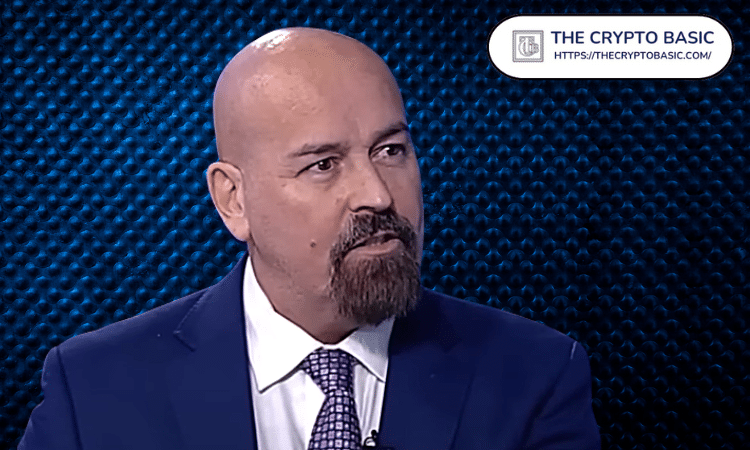
John Deaton, a pro-XRP lawyer and candidate for the U.S. Senate in Massachusetts, has announced that he now accepts crypto donations for his political campaign against anti-crypto Senator Elizabeth Warren.

The prominent crypto advocate made this known in a recent tweet, urging his over 323,000 X followers, which comprises mainly crypto enthusiasts, to support his bid to unseat the anti-crypto senator.

“I hope you will chip in and support our efforts to retire Elizabeth Warren,” he remarked. 

A Smart Move?

Deaton’s intention to accept crypto donations for his political campaign is considered to be a smart move. The Senate candidate already has a massive fan base within the crypto community.

His contributions to the legal tussle between Ripple and the SEC cannot be overemphasized. Deaton was instrumental in convincing the judge that Ripple’s programmatic sales of XRP on digital exchanges do not constitute an investment contract.

Interestingly, Judge Analisa Torres backed her decision regarding programmatic sales by citing 3K XRP holders’ affidavits collected by Deaton. These users claimed they did not know about Ripple when they first purchased XRP on digital exchanges.

Deaton also participated in the SEC’s lawsuit against LBRY in an attempt to protect the interests of retail investors. In addition, Attorney Deaton has been compiling a list of Coinbase users with the intention of applying for amici curiae status if the SEC lawsuit against the exchange does not get an early dismissal.

Furthermore, he has also joined other top crypto stakeholders in calling on the relevant authorities to establish clear regulations for the industry.

Conversely, Senator Elizabeth Warren has stood against cryptos, supporting bills that could place a blanket ban on emerging assets. She claims that her fight against crypto was to protect unsuspecting investors against scams.

Following Deaton’s significant contributions to the crypto industry and Warren’s quest to ban emerging assets, several crypto enthusiasts could donate heavily to unseating the senator who has become problematic to the industry’s growth.

Cardano Founder Supports Deaton

In the meantime, Attorney Deaton has already started getting support from prominent crypto stakeholders.

As reported earlier, Cardano founder Charles Hoskinson pledged his support for Deaton. Hoskinson donated $3,300, the maximum amount allowed to be donated to Deaton’s senate campaign, and called on other industry stakeholders to do the same.

Will Warren Accept Crypto Donations?

For context, the lawyer officially declared his intention to run against Elizabeth Warren on February 20 after several XRP enthusiasts, including Ripple CEO Brad Garlinghouse, urged him to take up the challenge.

Deaton’s declaration sent shockwaves into Senator Warren’s camp, as she immediately sent out emails seeking fiat donations to preserve her seat in the Senate.

It remains to be seen whether the senator, who is known for her antagonistic stance against cryptos, would later accept donations in the emerging assets.