Home Blog Page 1897

Uniswap Head of NFT Product Sells $1.13M UNI Tokens to Aquire Meme Coins, Rasing Eye Brows

Head of Uniswap Labs’ NFT products, Scott Gray, stirs discussion with substantial UNI token sales and meme coin purchases, drawing mixed reactions.

Scott Gray, the head of NFT products at Uniswap Labs, has found himself at the center of attention within the crypto community following his adventure into meme coins that are almost nonexistent. 

The renowned on-chain analytics resource Lookonchain took to Twitter to share Gray’s recent substantial crypto deal. Specifically, the tweet revealed that Gray sold 207,166 Uniswap tokens (UNI), earning him 579 Ethereum (ETH), equivalent to an impressive $1.13 million. Notably, the sale was executed for $5.44 per UNI coin about two weeks ago.

However, Gray did not stop there. His subsequent purchases raised further questions regarding his investment choices. Gray spent 20 ETH worth about $38k to acquire LootBot (LOOT) and an additional 24 ETH, approximately $46k, to acquire the peculiarly named meme token HarryPotterObamaSonic10Inu (BITCOIN).

According to data from CoinMarketCap, HarryPotterObamaSonic10Inu is worth $0.0000000007178, ranking at 5969 with a market cap of supposedly $196,090. A quick overview of Gray’s Twitter account shows how he exchanged ETH for the meme coin in multiple transactions. Consequently, the coin is up by 2.6% in the last 24 hours.

However, the comments section beneath Lookonchain’s tweet reflected the mixed opinions surrounding Gray’s investment decisions.

Crypto Community Reacts

One curious individual wondered why anyone would invest a pricy $50k into HarryPotterObamaSonic10Inu. Another individual was fascinated by the moves and revealed that Gray also acquired what he called the “people’s ETH” – RonWeasleyGenslerSpyro11Inu. 

The Twitter user added that Gray made an initial purchase and continued buying more of this crypto. The commenter encouraged others to closely monitor these financial movements, suggesting that tracing the money flow might provide valuable insights.

Meanwhile, an enthusiast claimed to have foreseen the potential of HartyPotterOvamaSonic10Inu a month before, speculating about the meme coin listing on Binance.

HarryPotterObamaSonic10Inu

HarryPotterObamaSonic10Inu is a joke coin based on the Binance Smart Chain (BSC) with a ticker symbol BITCOIN, likely representing Harry Potter, Barack Obama, and Sonic the Hedgehog. It is worth noting that the coin is not affiliated with Bitcoin (BTC).

Over 114K Binance Users Lock Up 10.18M BNB To Participate in ARKM Public Sale

0

ARKM’s public sale garnered significant interest, with more than 114,000 Binance users committing over 10.18M BNB coins. 

Binance, the world’s largest cryptocurrency exchange by 24-hour trading volume, has completed the public sale of Arkham Intelligence (ARKM) tokens. 

ARKM Commences Trading on Binance

Following the completion of the ARKM public sale, Binance listed the token in the innovation zone under five trading pairs – ARKM/BTC, ARKM/USDT, ARKM/TUSD, ARKM/BNB, and ARKM/TRY. Notably, ARKM trading commenced today at 12:00 (UTC). 

According to an official announcement today, users will enjoy zero maker fees on ARKM/TUSD trading pair. 

ARKM Public Sale

On July 11, Binance introduced the public sale of ARKM tokens, which took place on the Binance Launchpad. Interestingly, out of ARKM’s 1 billion total supply, 50M tokens were allocated to Binance users. 

Notably, Binance used a subscription format for the public sale, where it tracked users’ BNB balances for six days from July 11. 

The public sale of ARKM tokens attracted massive interest from crypto investors. Per Binance, a total of 114,454 users committed a whopping 10,182,983.2626 (10.18M) BNB, worth $2.43 billion at the current exchange rate. This resulted in an over-subscription rate of 990x, Binance said. 

Notably, three Binance users reached the 300,000 ARKM hard cap, while the remaining tokens were distributed to other participants. 

Furthermore, Binance users who committed 50 BNB were given an allocation of 246.1109 ARKM. Users who committed 500 BNB and 5,000 BNB received 2,461.1088 ARKM and 24,611.0879 ARKM allocations, respectively. 

The corresponding BNB tokens were deducted from users’ already-locked balances within 60 minutes of the official announcement. After the deduction, the ARKM tokens and remaining BNB have been deposited in participants’ spot wallets. 

Binance’s Efforts to Protect Users 

To protect users, Binance introduced an innovative initial price mechanism. Through this initiative, Binance set the maximum transaction price for ARKM 10 times higher than its public sale price, equivalent to $0.50. This mechanism only lasted for the first five minutes of ARKM trading. 

“After the initial five minutes, there will be no restrictions, and trading continues as normal. Note that this initial price limit mechanism is being trialed for the ARKM token launch, and it is yet to be determined if this will be an ongoing feature of all future Launchpads,” the exchange said. 

At the time of writing this line, ARKM is changing hands at $0.73, up 46% from its listing price.

It bears mentioning that ARKM is the native token of data analytics firm Arkham. As reported today, prominent Chinese reporter Colin Wu noted that Arkham differs from other data analytics firms in terms of its financing and supported chains. 

Since The Big Shapella Upgrade, Ethereum Staking Jumps ATH

0

Following the much-anticipated Shapella upgrade, validators on the Ethereum blockchain are able to recover their initial staked principal and unlock their rewards (the rewards earned from locking in or staking their assets). Unstaking requests are processed on-chain on the Ethereum network, meaning there’s no exact timeline. The upgrade was divided into two phases, namely Shanghai and Capella, to avoid disrupting the Proof of Stake algorithm. Over 1 million Ethereum has been withdrawn until now, triggering concerns about whether the demand would cause ETH to drop in price. 

Before rewards can be received, it’s necessary to have purchased coins. Owing to the growing use of the Internet, people have a much broader choice as to where and how to buy Ethereum. 32 ETH must be deposited to activate the validator software. Validators are responsible for storing data, processing transactions, and adding new blocks to the blockchain; a balance, a public key, or other properties represent them. As a direct consequence of the Shanghai upgrade, a lot of activity has been observed on the network. More than 4.4 million Ethereum tokens have been deposited since April 12.

An Influx of Enthusiastic Ethereum Validators Are Waiting for Activation  

Earlier this week, the cryptocurrency market witnessed an upsurge as Ethereum and other Layer-1 coins made considerable gains. The total amount of staked ETH has exceeded withdrawals since the Shapella upgrade, with centralized exchanges accounting for more than half of these withdrawals. It seems that liquid staking protocols have become more appealing to investors because they provide them with the convenience of earning passive rewards while still remaining in control of their assets. Crypto holders seeking to earn yields on their Ethereum tokens must wait almost a month before they can be set up as validators on the blockchain. 

The entry queue has reached its highest point since the launch of the Beacon Chain in December 2020. According to Coin Metrics, the total number of validators waiting in a queue to enter the network amounts to 64,000 – on the flip side, there are no validators wishing to withdraw. The influx of enthusiastic Ethereum validators compensates for the significant decrease in complete withdrawals, which materialized when withdrawals were first introduced. Strong demand most likely originates from large ETH holders, who have no intention whatsoever to cash out and simply want to earn income that requires minimal work. 

If Investors Continue to Stake at This Rate, Ethereum Could Lead the Next Bull Market

Right after the Shapella upgrade, demand pressure was exercised by validators whose tokens had been locked up for more than 18 months and who wanted to exit their staked positions. At present, we’re dealing with an increased demand for staking from new market participants and previous stakers curious to know if the process works seamlessly. The number of ETH locked for staking purposes exceeds 19 million tokens, representing 15% of the circulating supply. It’s argued that if crypto holders continue staking their Ethereum coins, ETH could lead the bull market this season. Ethereum is currently undervalued, trading at $1,785.68, -2.15% in the last 24 hours, according to the data shared by Binance. 

Staking affects the supply and price dynamics of Ethereum, creating deflationary pressure that puts ETH well within the list of sound money. If the deflation rate increases, individual tokens become harder to find, which could boost Ethereum’s price in the long term because it affects one of its fundamental forces. There’s a strong correlation between the Bitcoin halving that occurs every four years and the burning mechanism update for Ethereum – even if it reduces the number of rewards, it increases potential economics for ETH holders. Ethereum began burning ETH before implementing the Shapella upgrade, so it’s expected to turn deflationary as the network experiences an uptick in use. 

Ethereum market sentiment is bullish in April 2023, as shown in the development of the Network Value to Transaction Volume (NVT) ratio that dropped 49%. The NVT describes the relationship between the market cap and transfer volume. If the value is too low, it means the network is undervalued compared to the ability to transact coins as regards volume, implying a possible bullish market. To be more precise, investors could imitate the trades of whales, and the heightened demand could validate forecasting models. People who have a lot of money invested in Ethereum can move markets. 

Ethereum Staking Is Worth Is If You Plan to Hold Your Coins Over the Long Term 

Indeed, Ethereum staking isn’t a get-rich-quick scheme, yet it can be a good way to pad your portfolio and put your tokens to good use. If you have the bare minimum, you can participate in the consensus of the Proof of Stake protocol and earn staking rewards on the Ethereum blockchain. Some of the most established liquidity staking protocols for Layer-1 Proof of Stake networks are Lido DAO (LDO), Frax (FXS), and Rocket Pool (RPL). Nevertheless, let’s not forget about centralized staking providers such as Binance that offer generous rewards without requiring an on-chain wallet. You can obtain an annual percentage rate that ranges from 5% to 15%. 

Liquid staking offers the same benefits as traditional staking, the only difference being that digital assets can be used as collateral in the DeFi ecosystem. You get a receipt that takes the shape of a new token, which you can trade or use as collateral on DeFi protocols, thus unlocking their value. Even if you don’t have the minimum 32 ETH to become a validator on the Ethereum blockchain, you can still take part in block rewards thanks to liquid staking. You delegate your tokens to a validator node by pooling your cryptocurrency in a staking pool and receive derivative tokens for the underlying assets. 

Conclusion 

Ethereum staking is a rising trend, the demand resulting in waiting times of over a month for a 5% annualized yield. For the time being, ETH is below the $27,000 level, trying to recover from the 2.15% drop in price. The increase in Ethereum staking activity could fuel the demand for ETH as the supply of coins is limited. 

Ethereum Developers Are Discussing The Plan For The Dencun Upgrade

0

Not that long ago, the Ethereum blockchain underwent the Shanghai and Capella upgrades; the former impacted ETH’s execution layer, while the latter targeted the Consensus Layer. The network upgrades seem to have pushed Ethereum’s price higher, attracting a lot of investors (and speculators) in the cryptocurrency market. If you haven’t considered this asset class in the past, it’s high time you take ETH seriously. As you learn more about how to buy Ethereum, you’ll find that it’s better to purchase tokens on an exchange; it’s your responsibility to pay the gas fees.

Ethereum’s developers have proven they’re committed to steadily improving the network. The much-awaited Shapella Upgrade is live, and ETH has many more upgrades in the pipeline to enhance scalability, security, and sustainability. Surprising or not, developers are preparing for the upcoming upgrade on the Ethereum Mainnet, the Dencun upgrade, that will reduce transaction fees, expected in late 2023. If all goes as hoped, it will enable new use cases. According to Tim Beiko, Protocol Support for the Ethereum Foundation, the developers are in the final stages of planning for Dencun, having a provisional set of EIPs.

What’s New in The Recent Ethereum Upgrade?

The Dencun upgrade combines two upgrades, namely Deneb (the Execution Layer upgrade) and Cancun (the Consensus Layer upgrade). Some of the main improvement proposals considered for inclusion are:

  • EIP-4844. Also referred to as Proto-Danksharding, EIP-4844 introduces temporary “data blobs” to the Beacon Chain for a short period of time. The format will be fully compatible with that used in full sharding. This proposal will lower the gas cost of Layer 2 transactions considerably. The new transaction format, i.e., the blob, is contained within the Prismatic Client, but not the execution environment.
  • EIP-6780. It deactivates the SELF DESTRUCT opcode, which allows for creating and erasing contracts within a single transaction. The issue of not knowing what storage to delete doesn’t occur. The operation sends all the ETH in an account to the caller, excluding when SELF DESTRUCT is called within the same transaction a contract was created.
  • EIP-1153. This proposal brings about two new opcodes, namely TSTORE and TLOAD, which enable storage to be used provisionally. Transient storage is more affordable since it doesn’t require disk access and allows better smart contract designs. Use cases include single-transaction ERC-20 approvals and re-entry locks.
  • EIP-6475. Simple Serialize types are introduced to represent Optional [T] values. SSZ structures with optional values can be represented with the idiomatic types of the underlying programming languages. Using simple serialize encoding, developers guarantee transaction formats are forward-compatible.

Besides the EIPs that are formally part of the Dencun upgrade, client teams have proposals that might be included. Let’s take EIP-2537 as an example. It focuses on the BLS12-381 curve, used for signatures within Ethereum 2.0. There’s no denying that Dencun is an essential step in Ethereum’s development, but let’s not forget that it’s still a work in progress.

Ethereum Is Undergoing a Period of Tremendous Transformation

People are becoming increasingly comfortable with blockchain technology, and the more they use it, the more they rely on it. As Ethereum advances, we continue to see more changes; it’s hard, if not impossible, to anticipate its next move. Over the years, ETH has managed to adapt as new ideas have emerged from research and development, positioning itself as a powerful contender in the cryptocurrency industry. It faces regular updates meant to improve its technical capabilities, mainly realized with hard forks. Once the Dencun upgrade is live, Ethereum will undergo three critical updates: the Verge, the Purge, and the Splurge.

The Verge upgrade attempts to reduce the amount of data that validators must store on their machines; it will introduce Verkle trees for vector commitments and stateless protocols to make the Ethereum network more lightweight. As highlighted by Vitalik Buterin, it will be possible to launch nodes without having hundreds of gigabytes on your computer. The Purge upgrade is expected to remove legacy transactions and data from the post-Merge era when ETH relied on the Proof of Work consensus mechanism. Nodes will require less storage and bandwidth to sync with the network. What is more, the Purge will introduce sharding, used to disperse data among the nodes for effective management of big data.

Finally, yet importantly, the Splurge upgrade aims to boost scalability and efficiency via rollups, a type of Layer 2 solutions that perform transaction execution outside the blockchain. It can be defined as a series of smaller upgrades striving to ensure the network runs as smoothly as possible. In other words, the Splurge combines several improvements that weren’t included in the earlier upgrades. By the time the Verge, the Purge, and the Splurge are over, Ethereum will be different from what we know today.

Wrapping It Up

For the time being, it’s impossible to determine how the Dencun upgrade will impact the Ethereum network. From experience, we know that upgrades are applauded by the cryptocurrency community, so a surge in ETH deposits isn’t out of the ordinary. It’s highly unlikely there will be a decline in daily activity, but maybe there won’t be as many NFTs traded on the Ethereum network. While not quite as big as the Merge, the Dencun upgrade constitutes a significant change to ETH; the first testnet fork should be announced soon. There’s still room for other changes to the network, and only time will tell what EIPs developers will include.

As far as the timing of the Dencun upgrade is concerned, it’s impossible to make a rough estimate until the scope is finalized. Ethereum is still below the $2000 level it reached in April this year, and median gas fees hit a 12-month high due to the resurgence of meme coins. The fast rise of the pepecoin (PEPE) has turned into profit, as those undeterred by the warnings transact on Ethereum, helping the network earn more money. As gas fees increase, more tokens are burnt, which translates into the fact that Ethereum is a deflationary asset. Analysts, nevertheless, are concerned about pepecoin ownership.

Will Ethereum Give Rise To A New Trading Era?

0

While Ethereum is often pictured as the opponent of traditional finance, in reality, there’s no conflict between the two – rather than undermining the conventional finance sector, Ethereum is actually making it a lot better. It’s only a matter of time before the two systems become intertwined.

The cryptocurrency’s core value propositions, such as transparency, self-custody, and disintermediation, are all incredibly relevant to the financial sector and can fit within the regulatory frameworks. Ethereum has already started moving toward institutional adoption, and its unparalleled network decentralization will likely turn it into the primary settlement layer that facilitates financial transactions. Experts state that the cryptocurrency may reach $20,000 this year, which represents a significant increase from its actual price, making it a robust buy.

Ethereum is constantly improving

Ethereum is a well-known cryptocurrency which doesn’t only have its own token (namely ETH) but also a blockchain that hosts thousands of dApps. In the universe of NFTs and dApps, Ethereum is a leader and could transform the entertainment and business sectors down the road.

Now, Ethereum is far from being perfect (and no other cryptocurrency is), and there have been complaints about its intensive energy use, increased costs and slow transaction speed. However, Ethereum is already working on these problems by making continuous updates. It has already reduced energy use by switching to a PoS consensus mechanism, thus eliminating the strong computer power required to validate data blocks. As for now, Ethereum aims to cut costs and increase speed. Through future upgrades, the transaction costs could reach less than $0.001.

The cryptocurrency that offers trading neutrality

Ethereum doesn’t create an anonymized shadow economy – instead, it brings neutrality in a world of multipolarity. Having the role of an unbiased referee in the global financial system, this cryptocurrency has arrived just on time. Thanks to its consensus layer, Ethereum ensures that the stored data about transactions is incorruptible, spanning over 500,000 validators distributed over 10,000 physical nodes in many countries. This means Ethereum promises greater decentralization – not less, as some are concerned. It’s essential to make clear that Ethereum won’t replace traditional contracts or lawful authorities for resolving conflicts. Instead, it aims to prevent disputes from occurring.

Trustless smart contracts as a solution for the principal-agent problem

The collapse of the FTX and all the other unfortunate events that triggered the crypto winter aren’t so much about the failings of crypto than the shortcomings of traditional finance. Over-centralization and lax oversight were the main factors that worsened the principal-agent problem, and historically, regulation was the default approach to the issue. It is true that there’s a strong need for greater oversight. However, the solutions Ethereum provides are more foundational, having the potential to eliminate certain aspects of the principal-agent problem via distributed ledgers and trustless smart contracts.

With its scaling chains, Ethereum will soon be able to pervade traditional banking, setting up investors for a whole new era in trading. Smart contract technology allows for the creation of self-executing contracts, which can be used for various applications like real estate, insurance, and so on. Smart contracts are cheaper and more efficient because they eliminate the need for mediators, enabling the automation of contracts. They are the foundation of DApps, seen as potentially transformative and paving the way towards the Web3 ecosystem.

Through its blockchain technology, Ethereum enables the tokenization of assets like stocks, real estate, or bonds. This facilitates fractional ownership of an asset, creating opportunities for anyone to invest in what wasn’t once accessible to every investor. Tokenization brings more liquidity, validity and security to ownership, whether a real-world asset or digital data. DApps like decentralized exchanges can thus introduce a brand-new digital economy with incredible capacities by powering tokenized asset liquidity and trading activity.

Is it a good idea to buy the dip?

Ethereum’s PoS mechanism offers a big plus, allowing investors to stake their ETH holdings and earn passive income. This can attract new investors, including those who collect recurring payments, like dividends. But returning to the main question, is it right to purchase Ethereum on the dip or not? The answer is very personal, depending on everyone’s risk tolerance. Suppose you are a highly cautious individual; in this case, you may want to avoid crypto investing altogether. The industry is relatively new, and no one can predict what will happen in the next 5 or 10 years, so if you can’t tolerate uncertainty, it may be better to steer clear from the market.

However, if you are okay with handling risk, Ethereum is indeed a solid buy. It has already proven its capabilities so many times, attracting many users, so you can rest assured that Ethereum will likely lead the pack if crypto takes off. Ethereum may not be doing as great as it did in 2021 regarding its price, but that doesn’t mean things will be this way forever. Remember that prices are never set in stone when it comes to cryptocurrencies, and they can change unexpectedly overnight. So, there’s a good chance that things will turn out in the investor’s favor – obviously, this isn’t guaranteed, so it’s best to be prepared for both a positive and a less pleasant scenario. Overall, Ethereum is a solid long-term investment, so it may be worth buying the dip. Being supported by institutional investors, this cryptocurrency has a diverse and solid ecosystem. Moreover, its detailed road map points to significant future development, making it even more valuable.

Takeaway

It may still take a while until Ethereum reaches its fullest potential, but the building blocks already exist. There will likely be a proliferation of tokenized securities in the future, along with significant investment in ETH staking pools. Other focus areas will comprise streamlined user flows to comply with regulations and on-chain financial reporting. Protocols of Ethereum unable to adapt to the dynamic ecosystem will be removed effectively, and those that remain will successfully be integrated with the actual financial system.

This is only the beginning of Ethereum’s transformative impact on the traditional financial sector, so if you don’t want to miss out on this cryptocurrency’s evolution, keep an eye on the market.


Shiba Inu Scam Alert: Community Warned of Impostor Support Accounts and Fake Tokens

0

Scam alert issued as fake Shiba Inu support accounts and counterfeit tokens surge on Twitter, threatening unsuspecting investors.

As a slew of deceitful Shiba Inu support accounts emerges on Twitter, the ShibArmy, a lively community of cryptocurrency enthusiasts, grows increasingly wary.

The spirited community of Shiba Inu cryptocurrency investors is now treading cautiously. An alarming surge of Twitter counterfeit Shiba Inu support accounts has prompted urgent calls for vigilance and protective measures. Hence, investors are urged to remain alert and report suspicious activity in this escalating situation.

Cashing in on the magnetic allure of Shiba Inu’s global popularity, these sham accounts have one nefarious goal: to lure the unsuspecting ShibArmy into their scam. 

Subsequently, official watchdogs such as Susbarium are issuing stern warnings. Their recent tweet urged the ShibArmy to report such misleading accounts immediately, a vital action to fend off potential fraud.

One such account is @ShibaTokenHelp on Twitter, masquerading as an official support handle for the Shiba Inu ecosystem. The account has garnered hundreds of followers already. Investors are advised to not engage these accounts.

On the same note, Susbarium yesterday clarified the lack of association between the UNLEASH token and Shiba Inu. 

While UNLEASH is not a proven scam, the token’s name and creator may lead some to believe the Shiba Inu development team endorsed it. Others may also mistakenly equate UNLEASH to Doge Killer (LEASH), another token within the Shiba Inu ecosystem.

A Ray of Hope Amid Challenges

Despite these challenges, the ShibArmy can still find reasons to celebrate. Shiba Inu’s Puppynet, in its beta stage, has hit a significant milestone of 30 million transactions. 

Such an achievement is not insignificant in this fiercely competitive industry, signaling the growing influence of the SHIB ecosystem.

With a staggering total of over 17 million wallet addresses, Puppynet has processed nearly 1.7 million blocks, showcasing the technical prowess of the ShibArmy. 

Additionally, Shiba Inu’s recognition as the official title sponsor for the upcoming Blockchain Futurist Conference in Toronto, Canada, further underscores the growing significance of the SHIB ecosystem. The event is set for August.

XRP Ledger Wallet Xumm Issues Warning Over Fake Chrome Extension

0

The XRPL Labs team raises the alarm about a fake Xumm wallet Chrome extension that aims to steal users’ XRP tokens. 

Interest in the XRP Ledger native token is soaring as the asset recently gained regulatory clarity. As a result, scammers are making moves to loot market participants of their XRP holdings. 

Per a Tuesday update from the XRPL Labs team, scammers have deployed a fake Xumm wallet plugin on the Chrome Web Store. The aim is to use the fake web extension to obtain XRP users’ secret keys upon downloading the plugin and then steal their funds. 

The Xumm Wallet team clarified that they do not offer browser plugins presently and do not intend to do so in the future. The team indicated that Xumm Wallet only exists as a mobile application, urging users to be vigilant of bad players.

Notably, this disclosure comes shortly after Xumm Wallet announced the integration of SimpleSwap into its application to enable users to swap crypto assets from other blockchain networks to XRP. To minimize the risk of hacks and ensure maximum customer safety, the integration does not support outbound transactions to non-XRP ledgers. 

Rising XRP Scams

Reacting to the bogus plugin development, several users appreciated the XRPL Labs for the timely update, with many lamenting over the rising XRP-related scams. Likewise, members of the XRP community urged the Google Chrome team to take down the fraudulent web extension. 

Given that several crypto analysts have projected XRP to surge exponentially in the coming weeks or months, scammers continue to deploy diverse means to accumulate the crypto asset. 

Recall that someone recently used an account impersonating Ripple CTO David Schwartz to parade a fake XRP airdrop campaign. Consequently, Schwartz cautioned users against participating in the Brad Garlinghouse-branded 100 million XRP airdrop. 

Top Lawyer Mocks Max Kesier As XRP Receives Clarity

0

Top Australian attorney Bill Morgan mocks the principal XRP critic Max Keiser following the court’s verdict that XRP is inherently not a security.

Bitcoin (BTC) maximalist Max Keiser remains a well-known critic of XRP, the native token of the XRP Ledger (XRPL). In a recent outcome, a renowned lawyer in the XRP community Bill Morgan took a dig at Keiser over an XRP description he shared in the past week, citing Ripple’s victory against the SEC. 

Morgan noted on Tuesday that XRP is the only altcoin to gain regulatory clarity in the United States, as he sneered at Kesier for dubbing the asset “a dead coin walking” on July 10. He added that Bitcoin is no longer the only crypto asset with regulatory clarity.

Citing Keiser’s comment, Morgan remarked: “…Not only is XRP not a dead coin walking but a judge found that the XRP token itself is not a security. Bitcoin no longer has a monopoly on clarity. Oh no!” 

Keiser’s Attack on XRP 

Before the court’s ruling on July 13 in the longstanding SEC v. Ripple lawsuit, Keiser labeled the XRP token a walking corpse on July 10. 

Per the tweet, he implied that XRP would be deemed a security in the case despite the efforts from the founder of CryptoLaw, John Deaton. “Deaton will advocate tirelessly for his clients, but he must know in his heart of hearts that XRP is a dead coin walking,” Keiser said. 

Notably, this provocative statement from the El Salvador government Bitcoin adviser came in response to a report published by The Crypto Basic. In the report, Deaton conceded that the US Securities and Exchange Commission (SEC) is a “protection racket” for a few insiders in the crypto space. 

To further celebrate Ripple’s victory and XRP’s regulatory clarity, Morgan recalled these past conversations to shame Keiser. 

Regardless, the XRP critic still believes SEC Chair Gary Gensler would continue to go against XRP, ETH, and other altcoins. This explains why Keiser encourages the El Salvador government to focus more on mining Bitcoin, as the leading crypto asset has legal protection. 

Besides XRP, the SEC has continued to brand other altcoins as securities. These include assets such as Cardano (ADA) and Algorand (ALGO) in the recent court filing against Binance.

SEC May Appeal Against XRP Win as Gensler Expresses Disappointment in Court Decision

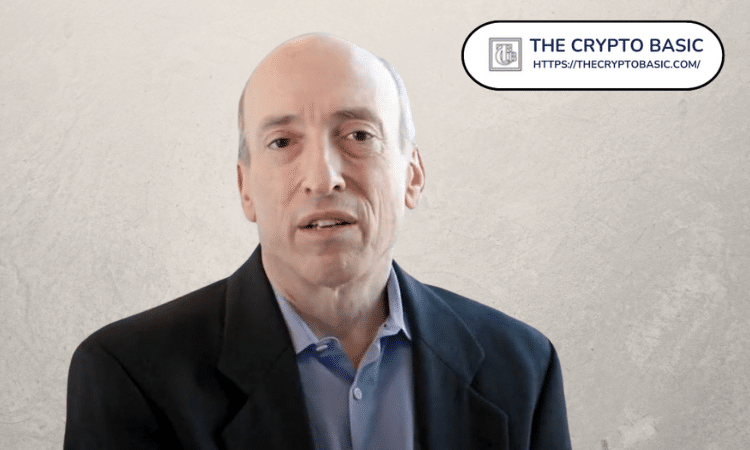
SEC Chairman Gensler addresses the implications of the Ripple case ruling regarding XRP, expresses disappointment, and hints at potential actions.

During a recent National Press Club Headliners Luncheon, Gary Gensler, the US Securities and Exchange Commission (SEC) Chairman, addressed the implications of the recent federal court ruling in the Ripple case, shedding light on the SEC’s stance and potential actions.

In response to a question about the impact of the court ruling on digital asset regulation and the need for federal legislation, Gensler stressed the SEC’s mission of investor protection and capital formation.

While pleased with certain aspects of the decision regarding institutional investors and fair notice, the chairman noted the regulator’s disappointment regarding retail investors. Gensler further stated that the SEC is assessing the decision for further action.

Gensler shared his perspective when asked about the agency’s next steps in crypto enforcement. He reflected on his involvement at MIT in 2018, where he explored the intersection of finance and technology. 

He stressed the transformative potential of artificial intelligence, contrasting it with the focus on digital currencies and crypto among the press and retail investing public. Chairman Gensler then reiterated that the SEC’s role is to protect markets and investors, ensuring compliance with existing laws enacted by Congress.

Gensler Clarifies Regulation by Enforcement 

When questioned about the SEC’s preference for regulation by enforcement rather than regulation by rule-making, Chairman Gensler explained that the agency utilizes a range of approaches and tools provided by Congress. 

According to Gensler, rules are already in place for securities offerings to the public, such as proper disclosure requirements. He said the SEC has engaged in rule-making activities regarding special purpose broker-dealers and sought public input on exchanges, safeguarding custody, and best execution. 

He also noted that enforcement actions exceeding 700 annually serve as a means to protect the market and the investing public, echoing the power conferred by Congress. However, most industry players have continued to criticize this approach.

Gensler’s View on Bitcoin ETF

Addressing a question about the potential for a spot Bitcoin ETF, Gensler acknowledged the query but emphasized that he cannot provide a definitive answer as the chair of a regulatory agency. He mentioned ongoing litigation and the need to evaluate various applications without prejudgment.

As The Crypto Basic reported recently, former SEC chairman Jay Clayton argued that it would be challenging for the US regulator not to honor Bitcoin ETF applications.

Deaton Says SEC v. Ripple Ruling Will “Be the Law of the Land” For Next 3 Years

0

Attorney Deaton asserts that Judge Torres’ decision on SEC v. Ripple case will be the law of the land for the next three years.

Pro-XRP lawyer John Deaton has highlighted the significance of the SEC v. Ripple ruling on the crypto industry. In an interview with Ash Bennington, the Crypto Editor of Real Vision, Attorney Deaton said the SEC v. Ripple ruling will remain the law of the land for the next two to three years.

Deaton explained that it may take up to three years before the case gets to the Second Circuit. Fox Business’ Eleanor Terrett shared Deaton’s remark via her Twitter handle yesterday.

SEC Disappointed With Court’s Ruling

Recall that Judge Torres issued the much-anticipated ruling on July 13. However, none of the parties got a total victory via the summary judgment.

While the judge ruled against the SEC for alleging that Ripple broke the law via its programmatic XRP sales, she ruled that Ripple’s direct past sales to institutional clients are securities. Judge Torres also ruled that XRP in itself is not a security.

Following the decision, top legal experts have speculated that one party will appeal the ruling. SEC Chair Gary Gensler expressed disappointment in the court’s decision, stating that the regulator is still assessing the ruling.

Gensler’s remarks indicate that the regulatory agency could appeal the ruling after its assessment. However, Deaton speculated that the judge would deny the SEC’s request for an appeal.

Furthermore, Deaton believes that without an interlocutory appeal, Judge Torres’ decision will remain the law of the land for the next two to three years.

Ex-SEC Director Thinks Otherwise

Meanwhile, former SEC divisional director Marc Fagel does not think so. Fagel described the ruling as a law from one district court – the Southern District of New York (SDNY) – adding that the ruling is not binding on other courts.

Notably, the ex-SEC director said the ruling could influence other crypto-related cases.

Deaton Provides Clarity

In response, Attorney Deaton provided further clarifications to his remark. Per Deaton, Judge Torres’ ruling will be the “law of the land” as regards the SEC v. Ripple case.

He also clarified that it could take up to three years before the judge will approve the SEC’s appeal request. Deaton speculated that the SEC would reference the LBRY ruling, where it recorded a total victory, to claim Judge Torres got her decision wrong.

“We all know the SDNY is a bigger deal than the federal district court in New Hampshire, but the SEC isn’t likely to concede that publicly,” Deaton added.