


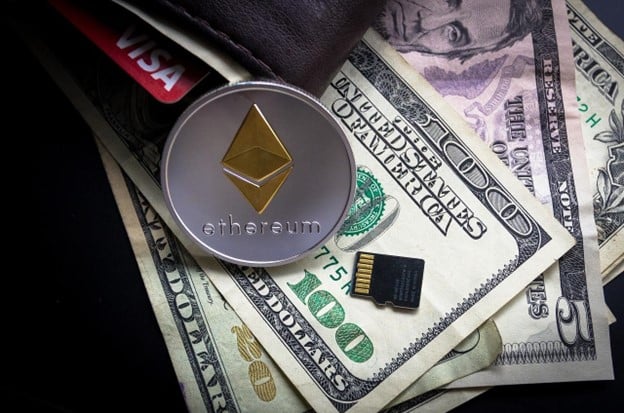

Ethereum is currently one of the most valuable digital assets in the world, although only six years have passed since its launch. Given its popularity, it’s not surprising that so many individuals want to participate in the Ethereum ecosystem. However, in order to buy and sell ETH safely, investors need to get an Ethereum wallet first.
A digital wallet, or an e-wallet, is a computer program or an app that enables you to safely store the information required to access your ETH. While it is possible to buy Ethereum on an exchange, this can be unsafe because the platform can get hacked. A wallet is safer because it is based on a private key, giving you full control over your funds.
Ethereum wallets
An Ethereum wallet allows you to manage your account on the Ethereum network. This account works similarly to an email account, only that it has some balance, and you can use it for different operations like sending transactions or creating dApps and smart contracts. Ethereum wallets are available in various sizes and shapes, and their features vary. For instance, some wallets can be solely used for the purpose of sending ETH, while others provide multiple functionalities, enabling users to create smart contracts as well.
To set up an Ethereum wallet, you must download or write down a seed phrase or a private key, which are both crucial for ensuring your funds are safe. Think of a crypto wallet as a password manager for your crypto holdings – as long as you know your seed phrase, you can easily access your funds. This is probably evident, but it’s essential not to forget your password, so consider writing it in a book to ensure it is kept safe.
While storing private keys via third-party programs can be tempting, that’s not a good idea, as malicious actors could easily access your keys if the service gets compromised.
What are the different types of Ethereum wallets?
Multiple types of Ethereum wallets are available, with some being more secure than others. Let’s look at them so you can choose the right solution to store your ETH.
- Online wallets. These wallets are available on crypto exchanges, and although they may be appealing due to their ease of use, it’s important to be aware that they involve risks, meaning that you can lose your funds if there’s a cyberattack. When using an online Ethereum wallet, users must be very careful and avoid phishing websites that can look legitimate but enable hackers to steal your crypto.
- Hardware wallets. These wallets are considered very safe because they store your private keys offline. Users must plug them into a computer and enter a password in order to access their funds. This makes it challenging for malicious actors to steal your assets. Avoid purchasing a hardware wallet from a third party, as it can be compromised.
- Desktop wallets. They run on systems like Linux, macOS, and Windows, enabling you to send and receive Ethereum, build smart contracts, etc. Generally, desktops keep keys locally, so users must use their PCs to access their Ethereum wallets. Because of this, private keys are prone to hacking. Desktop wallets rely on an Internet connection, so you must be careful and protect your computer from malicious software.
- Browser wallets. They are utilized on desktop browsers to store ERC-20 tokens, as well as ETH. More advanced users can also utilize them to interact with other digital ledgers. Browser extensions are considered a safer option than web interfaces, encrypting users’ private keys on the browsers. A password is required to access the wallet.
- Paper wallets. Just as the name suggests, a paper wallet is a piece of paper with private keys written on it. This type of wallet is accessible to anyone, given that all you need is a piece of paper and a pen. However, they may not be ideal in the long run, as they can get thrown out or destroyed.
How can you fund your Ethereum wallet?
After selecting an Ethereum wallet, the next step is to add ETH to it, of course. You can use a centralized exchange to purchase Ether and then withdraw the funds to your wallet. This involves transferring funds to a public wallet address, which is similar to the traditional financial system’s IBAN.
In order to complete a transaction, you must pay a fee to network validators. There’s no fixed amount of the fee, as it depends on the demand for the blockchain’s block space (which is the space available in each data block on the network).
Storing your ETH safely: essential aspects to keep in mind
When funds are stored in a bank account, there’s nothing to worry about in terms of their safety, as it’s improbable that a third party will access the account to steal cash. But that’s not the case for crypto wallets, as there is a significant risk of your funds being stolen. Hence, it is recommended to triple-check everything to ensure you transfer your ETH to the right address and interact with the proper apps.
You should use mobile crypto wallets only on trustworthy wireless networks, not in public spaces like shopping malls or airports. If you use a hardware wallet, make sure to store your seed phrase safely and don’t share it with anyone. On the other hand, if you have a paper wallet, you want to keep it safe from fire and water damage.
Also, remember that if your gut tells you something looks too good to be true, you should probably trust that feeling. Bad actors often promote fake giveaways and use other similar schemes to get users to send them ETH. You can avoid falling victim to such a threat by researching when you’re interested in a specific project.
Conclusion
If you’re looking to diversify your portfolio, Ethereum is a good idea, but you need to use a safe wallet to ensure no one can access your funds but you. Each Ethereum wallet has its own pros and cons, so you want to take the time to review them before selecting one. Some factors to consider are security, ease of use, compatibility with various operating systems, and other useful features.