


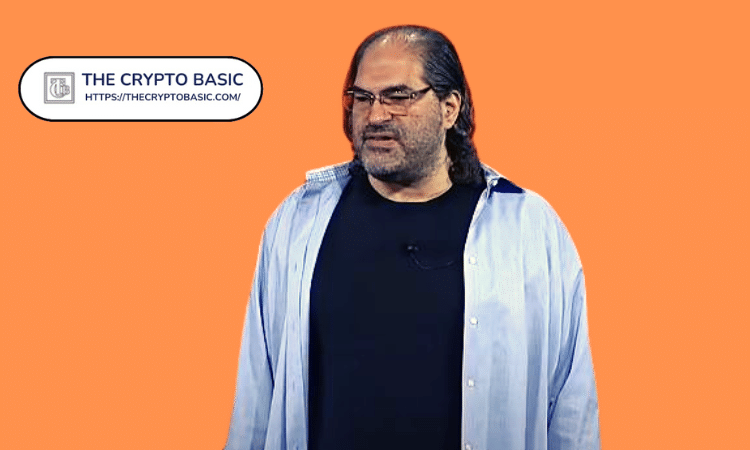

Ripple CTO David Schwartz embraces the growing trend of payments and stablecoin companies introducing their own blockchains.
In a lengthy post on X today, Schwartz acknowledged the influx of new stablecoin and payment companies launching their blockchain. He pointed out that the recent trend serves as proof that the broader market considers blockchain an integral part of financial infrastructure.
While many are just realizing the blockchain’s relevance in finance, Schwartz said Ripple has believed in this prospect for more than 13 years and has been building toward it on the XRP Ledger (XRPL) all along.
He stated that while it is challenging to launch a new blockchain, it is even more challenging to build an ecosystem with trust, liquidity, real-world usage, and developers. In his view, XRPL has gained traction and institutional adoption because of its long history of consistent updates and improvements.
Noticeable Difference Between XRPL and Most Blockchains
Schwartz pointed out that some blockchains rely on permissioned validators, which place control in the hands of a small group or a single entity. While this setup can facilitate compliance and centralized control, it also limits the network’s resilience and global reach.
On the contrary, he emphasized that XRPL is public and permissionless by default, which positions it as a core infrastructure for the world’s financial system. In addition, Schwartz revealed that the blockchain comes with optional permissioned features for regulated use cases.
Further, the Ripple CTO also highlighted some core features of XRPL, including the fact that it offers low and predictable fees.
Unlike most blockchains, Schwartz said XRPL does not have a separate gas token. According to him, users can pay for transactions using XRP, with the token also serving as a bridge asset for global payments.
Newer Chains Adopting Core XRPL Features
Moreover, he expressed excitement seeing newer chains adopt certain features inherent in XRPL, particularly its deterministic finality and Proof-of-Authority (PoA) consensus mechanism. He viewed this trend as evidence of growing alignment in the industry around the need for predictable, reliable settlement for financial use cases.
As a co-creator of XRPL, Schwartz expressed excitement for the network’s next phase of innovation. He expects future upgrades to enhance programmability, expand liquidity, and introduce compliance-grade capabilities for institutional use.
In the meantime, he welcomed new blockchain developers to “the party,” suggesting that the crypto industry is expanding rapidly.