

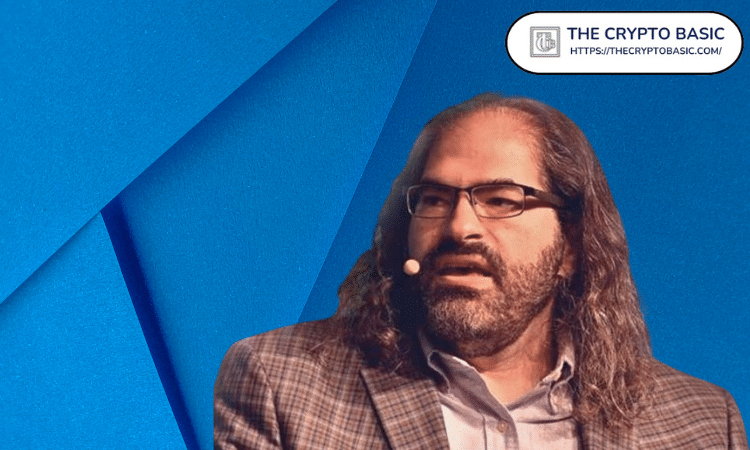

David Schwartz, former Ripple CTO, highlighted a 2014 email from the Epstein document that he believes reveals the hostility toward Ripple and Stellar during the early years of crypto development.
Schwartz shared the email following the release of new documents related to the Jeffrey Epstein scandal. Notably, the email shows an aggressive attitude that went beyond normal business competition, with Schwartz suggesting it may only be the tip of the iceberg.
Key Points
- Former Ripple CTO, David Schwartz, has interpreted an email from the newly released Epstein documents as an aggressive attitude toward Ripple and Stellar.
- Austin Hill sent the July 2014 email to Jeffrey Epstein and Joichi Ito, and criticized Stellar while raising concerns about Jed McCaleb.
- Hill said Stellar and Ripple created problems for Blockstream and suggested that investors should not support competing blockchain projects at the same time.
- The email revealed that Blockstream co-founders discussed reducing or removing investment allocations tied to Epstein and Ito.
- The email has re-ignited XRP community theories that Bitcoin maximalists have persistently worked against Ripple.
Details of the 2014 Email
The email in question was written by Austin Hill on July 31, 2014. Hill was a co-founder of Machine Phase Systems and also a co-founder of Blockstream, a Bitcoin-focused infrastructure company that was founded that same year.
The message carried the subject line criticizing Stellar and was sent directly to Jeffrey Epstein and Joichi Ito. Reid Hoffman, a well-known entrepreneur and investor, appeared on the email as a copied recipient.

In the email, Hill acknowledged that the recipients had likely already reviewed Stellar’s public information. He then raised concerns about Stellar and its direct connection to Jed McCaleb. Hill explained that this situation had become a serious problem for him and his company, requesting a phone conversation to explain his concerns in more detail.
Hill also revealed that the other co-founders at Blockstream had asked him to scale back or completely remove the recipients’ allocation. This allocation appeared to relate to an investment or ownership stake in Blockstream.
He justified this by arguing that Ripple and Stellar, including McCaleb’s involvement in both projects at different times, were harmful to the ecosystem Blockstream aimed to build. He argued that it damaged the company to have investors supporting competing blockchain projects, describing the situation as backing two competitors at once.
Background on the Figures and Projects
At the time the email was sent, Stellar had only just launched earlier in 2014. Specifically, Jed McCaleb had founded Stellar shortly after leaving Ripple, which itself had been operating for about two years by then. Blockstream, the company Hill represented, was also established in 2014.
Jeffrey Epstein and Joichi Ito were both connected to Blockstream as investors or potential participants. Joichi Ito was the co-founder of Digital Garage, a Japanese technology company that invested in Blockstream. He also served as an advisor to the Stellar Development Foundation during that same year.
Reid Hoffman, who was copied on the email, held a board position at Blockstream at the time, further highlighting the concentration of influential figures involved in the discussion.
Schwartz’s Reaction
After Schwartz shared the email, Marshall Hayner, the Chief Executive Officer of Metallicus, questioned what Hill meant by the phrase “backing two horses at the same time.”
In response, Schwartz suggested that Hill viewed Ripple and Stellar as threats to the ecosystem he wanted to build. According to Schwartz, Hill treated anyone who supported XRP or XLM as an opponent.
He meant that because he felt Ripple and Stellar were bad for the ecosystem, anyone who supported either XRP or XLM was an opponent/enemy.
— David 'JoelKatz' Schwartz (@JoelKatz) February 1, 2026
In a separate comment, Schwartz expressed his disappointment with this mindset, arguing that the crypto community is “all in this together.” He stressed that this sort of attitude involving hostility between projects ultimately harms everyone involved.
Renewed XRP Community Theories
The email has resurrected beliefs within the XRP community, as some proponents argue that Bitcoin and Ethereum maximalists have actively opposed Ripple and the XRP ecosystem for years.
They extend this to the U.S. SEC lawsuit against Ripple, which began in 2020 and lasted nearly five years. According to these theories, Ethereum-aligned interests orchestrated the legal action as part of a campaign against Ripple. However, these claims remain speculative with no actual, undeniable proof.