


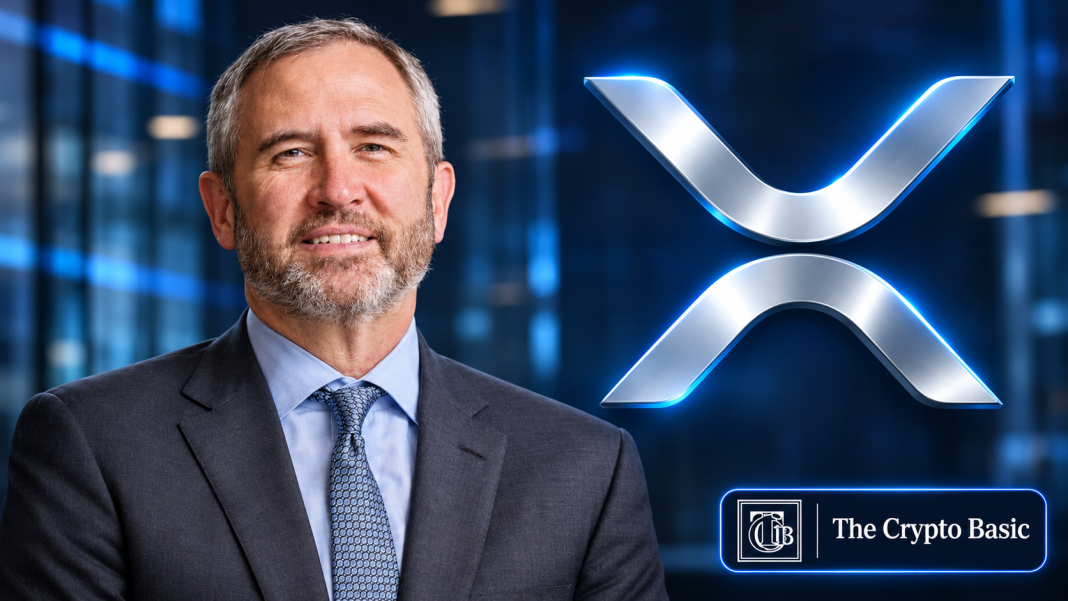

Ripple CEO Brad Garlinghouse faces backlash after citing SpaceX and Anthropic IPOs when asked why XRP remains weak despite Ripple’s expansion.
Ripple CEO Brad Garlinghouse has drawn criticism from XRP supporters after offering an unexpected explanation for why XRP continues struggling despite Ripple’s significant business expansion.
During a November 19 interview with Bloomberg Television’s Haslinda Amin at the Singapore FinTech Festival, Garlinghouse was directly questioned about the disconnect between Ripple’s growing business and XRP’s disappointing market performance.
Amin asked why XRP was not reflecting the growth and value Ripple was creating.
Rather than focusing immediately on how Ripple’s expansion translates into demand for XRP, Garlinghouse pointed to broader cryptocurrency market weakness and investors redirecting funds toward major technology IPOs.
His response has since attracted negative reactions from some XRP community members.
Ripple CEO Points to SpaceX and Anthropic IPOs
Responding to Amin’s question, Garlinghouse explained that cryptocurrencies remain risk-on investments whose performance is affected by broader investor sentiment.
He specifically highlighted two major public offerings: SpaceX and Anthropic.
SpaceX began trading publicly in June 2026, while Anthropic completed its stock market debut on November 19. According to Garlinghouse, investors sold liquid cryptocurrency holdings to raise capital for these high-profile listings.
He argued that the SpaceX IPO coincided with significant downward pressure on the cryptocurrency market, with similar behavior occurring around Anthropic’s debut.
The Ripple CEO believes this movement of capital contributed to the weakness experienced by XRP and other digital assets. However, he did not provide specific figures demonstrating how much capital had moved from XRP into either offering.
Consequently, the explanation remains his interpretation of market behavior rather than an independently established cause of XRP’s decline.
XRP Community Criticizes Garlinghouse’s Explanation
The comments have generated frustration among some XRP supporters, who questioned whether the response adequately addressed the relationship between Ripple’s growth and XRP’s valuation.
X user JohnKandy9 described the explanation as a “pathetic excuse,” dismissing Garlinghouse’s reasoning.
Another user, RazAguul, also criticized the response, accusing the Ripple CEO of speaking without substance. Meanwhile, cien_siempre questioned the credibility of the explanation, describing it as sounding like “some BS.”
A separate response from danowen798 expressed even stronger personal hostility toward Garlinghouse.
The criticism reflects concerns among these commenters that Ripple’s expanding institutional presence has not translated into sustained price appreciation for XRP.
Ripple’s Business Expands While XRP Struggles Below $1
The disagreement comes as Ripple continues reporting substantial business growth.
As The Crypto Basic previously reported, Ripple expects its annualized product revenue run rate to reach $900 million by the end of 2026.
The company has expanded across payments, custody, treasury management, stablecoins, and institutional brokerage services.
However, XRP has continued declining despite these developments. As of November 24, XRP trades around $0.94, approximately 75% below its historical high of $3.84.
Importantly, owning XRP does not provide equity ownership in Ripple or direct entitlement to its corporate profits. This distinction has become a growing topic of discussion.
Recently, Collective Shift founder Ben Simpson questioned XRP’s value-capture model, arguing that Ripple can generate substantial business revenue without automatically rewarding XRP holders.
Garlinghouse Expects Utility to Separate Crypto Winners
Despite the criticism, Garlinghouse remains optimistic about the cryptocurrency industry’s longer-term prospects.
During the Bloomberg interview, he predicted that digital assets would increasingly diverge in performance rather than moving together.
He expects actual utility and demand to become more important factors in determining which cryptocurrencies outperform.
Previously, Garlinghouse described XRP as foundational to Ripple’s long-term institutional strategy, while acknowledging that the company also uses stablecoins and traditional payment infrastructure where appropriate.
However, his latest explanation centered on market-wide liquidity conditions rather than identifying how Ripple’s corporate expansion would translate into additional buying demand for XRP.
That distinction remains central to the criticism surrounding his Bloomberg remarks.