Home Blog Page 131

What Is RLUSD? Ripple’s Stablecoin Explained

0

Amid the growing popularity of Ripple USD (RLUSD), we’ve outlined everything you need to know about the stablecoin. 

Over the past few years, stablecoins have emerged as one of the most important segments of the cryptocurrency industry. They combine the speed and flexibility of blockchain with the price stability of traditional assets such as fiat currencies.

Unlike volatile cryptocurrencies like XRP or Bitcoin, stablecoins maintain a peg to assets such as the U.S. dollar. As a result, they are better suited for trading, payments, remittances, and institutional settlement.

Although Ripple USD (RLUSD) launched more than a year ago, many market participants still regard it as one of the newest entrants in the stablecoin sector. Since launch, RLUSD has continued to gain traction across the crypto market, securing multiple exchange listings and attracting institutional adoption. As momentum around the stablecoin grows, here is everything you need to know about RLUSD. 

What Is RLUSD Stablecoin?

RLUSD is a U.S. dollar-backed stablecoin created by Ripple and issued through its subsidiary, Standard Custody & Trust Company, LLC. The stablecoin maintains a stable value of one U.S. dollar per token. Consequently, users and institutions can move funds across blockchain networks without exposure to the volatility commonly associated with cryptocurrencies.

Ripple developed RLUSD to enhance its payment solution and improve the efficiency of moving money globally. Notably, the stablecoin acts as a bridge between traditional banking infrastructure and blockchain-based settlement systems.

One of the key problems RLUSD seeks to solve is the inefficiency of international payments. Traditional cross-border transfers often rely on multiple intermediaries, delayed settlement times, high transaction costs, and limited transparency. RLUSD addresses these issues by enabling near-instant settlement on blockchain networks. 

Why RLUSD Matters: Bridging Banking and Blockchain

RLUSD represents Ripple’s broader effort to connect traditional finance with blockchain infrastructure in a compliant and institution-friendly manner.

Over the years, Ripple has built payment technology for banks, fintech firms, remittance providers, and enterprise payment companies. With the introduction of RLUSD, the company has expanded its blockchain-based settlement tools to better align with the needs of regulated financial institutions.

The stablecoin offers several benefits for banks and payment providers, including:

  • Faster cross-border settlement
  • Lower transaction costs
  • Improved liquidity management
  • 24/7 transaction capability
  • Greater transparency on blockchain networks

In addition, fintech companies can use RLUSD for remittances, merchant payments, treasury management, and tokenized asset settlement.

Regulatory compliance remains another major focus for Ripple. Institutional users often prioritize transparency, reserve backing, and legal clarity before adopting stablecoins. Therefore, Ripple has positioned RLUSD as a compliance-focused stablecoin by emphasizing reserve quality, regulatory standards, and enterprise integration.

How RLUSD Works

RLUSD operates through several core mechanisms, including its dollar peg, reserve backing, minting and redemption processes, and blockchain support.

Dollar Peg Mechanism

The stablecoin has a 1:1 peg to the U.S. dollar. In other words, each RLUSD token is intended to remain redeemable for one U.S. dollar, helping preserve price stability across markets and payment systems.

Supported Networks

Currently, RLUSD operates on two major blockchain networks: the XRP Ledger and Ethereum. In addition, Ripple is testing deployments on multiple Layer-2 networks, including Optimism, Base, Ink, and Unichain.

Reserve Backing

Ripple backs RLUSD with reserves that include:

  • Cash deposits
  • Cash equivalents
  • Short-term U.S. Treasury instruments

This reserve structure ensures that sufficient liquid assets exist to support all circulating RLUSD tokens. As a result, reserve management and custodial arrangements play a critical role in maintaining trust in the stablecoin.

Transparency and Audits

To strengthen transparency and compliance, Ripple publishes monthly independent third-party attestations of RLUSD reserves. The company currently works with Deloitte, one of the Big Four accounting firms.

Notably, Deloitte recently confirmed that RLUSD’s reserves exceed its circulating supply. According to the March 30, 2026, attestation, RLUSD’s 1.237 billion tokens were backed by reserves valued at $1.31 billion. 

RLUSD Reserve Report

Regulatory Compliance

RLUSD currently operates under both state and federal oversight. Ripple secured approval from the New York Department of Financial Services (NYDFS) in December 2024, shortly before launch. The company later obtained conditional approval from the Office of the Comptroller of the Currency (OCC) to issue the stablecoin under a federal charter. 

Minting and Redemption

Ripple issues RLUSD through a minting process in which users or institutions deposit an equivalent amount of dollars into the reserve system. In return, Ripple creates and distributes new RLUSD tokens.

When users redeem RLUSD, Ripple removes the tokens from circulation through token burns and returns the equivalent fiat value. This mechanism helps maintain the stablecoin’s peg and circulating supply balance.

For example, Ripple burned $120 million worth of RLUSD on the XRP Ledger on May 1, marking the second-largest burn in the stablecoin’s history.

RLUSD Key Facts at a Glance

Issuer: Ripple through its subsidiary, Standard Custody & Trust

Type: U.S. dollar-backed stablecoin

Peg: 1 RLUSD = $1

Reserve Backing: Cash and cash equivalents

Supported Networks: XRPL and Ethereum

Launch Date: December 2024

Main Use Cases: Payments, settlement, liquidity

What Makes RLUSD Different From USDT and USDC?

Since launch, analysts have frequently compared RLUSD with leading stablecoins such as USDT and USDC.

RLUSD vs USDT

USDT remains the world’s largest stablecoin by market capitalization, currently valued at $189.64 billion. In comparison, RLUSD has a market valuation of $1.55 billion, ranking eighth among stablecoins.

Despite the large gap, RLUSD differentiates itself in several ways. Ripple designed RLUSD primarily for enterprise and institutional payment flows rather than retail crypto trading activity.

The company has aligned RLUSD with regulated financial infrastructure and a compliance-focused adoption approach. This approach reflects the company’s state and federal regulatory approvals.

RLUSD vs USDC

USDC, issued by Circle, ranks as the second-largest stablecoin with a market valuation of $78.37 billion. While RLUSD shares similar compliance ambitions, Ripple focuses more directly on enterprise payments through the Ripple Payments Infrastructure. Meanwhile, USDC remains heavily integrated into DeFi protocols and crypto trading markets.

RLUSD Key Competitive Advantage

RLUSD’s primary advantage lies in its direct integration with Ripple’s payment infrastructure and the XRP Ledger ecosystem. Consequently, institutions can access blockchain-based liquidity and settlement tools through Ripple’s already established enterprise payment network.

What Does RLUSD Mean for XRP?

Since RLUSD launched, many community members have questioned its significance for XRP.

Notably, RLUSD could increase activity on the XRP Ledger by driving more transactions, liquidity, and institutional usage to the network. Every RLUSD transaction on XRPL relies on XRP for network fees, which are automatically burned and contribute to XRP’s deflationary mechanism.

In addition, Ripple executives have repeatedly emphasized that XRP and RLUSD play complementary roles. Under this structure, XRP continues to function as a bridge asset for liquidity and settlement optimization, while RLUSD provides a stable-value option for dollar-denominated transfers.

Rather than competing directly with XRP, RLUSD could strengthen the broader XRPL ecosystem by attracting new enterprise users and financial applications.

RLUSD Use Case

RLUSD supports multiple use cases across payments, settlement, trading, and tokenization.

Cross-Border Payments

RLUSD can improve international payments by enabling faster, cheaper transfers than traditional banking systems. Businesses and remittance providers may use the stablecoin to reduce settlement delays and foreign exchange friction.

Institutional Settlement

Financial institutions can also use RLUSD for real-time settlement, treasury operations, and corporate payment flows. Moreover, institutions view stablecoins as tools for improving settlement efficiency across capital markets and enterprise finance.

DeFi and Tokenization

In addition, RLUSD could play an important role in decentralized finance and tokenized asset markets. Potential applications include liquidity pools, lending and borrowing services, and tokenized securities settlement.

Merchant and Payment Integration

Merchants, fintech applications, and payment platforms may also integrate RLUSD for digital payments and e-commerce transactions. Since RLUSD maintains a stable value, it is more practical for everyday payments than highly volatile crypto assets.

Is RLUSD Safe?

Like other regulated stablecoins, RLUSD’s safety depends on several important factors.

Regulatory Oversight

Ripple’s compliance-focused strategy could strengthen institutional confidence and reduce regulatory uncertainty. Currently, RLUSD operates under both NYDFS and OCC oversight.

Transparency and Audits

Stablecoin users generally expect transparent reserve reporting, independent attestations, and reliable custodial management. Ripple addresses these expectations through monthly reserve attestations conducted by Deloitte.

Most recently, Deloitte confirmed that RLUSD’s reserves exceeded its circulating supply during the March 31 attestation.

Risks Tied to Stablecoins

Despite their stability goals, stablecoins still carry risks, and RLUSD is no exception. Potential concerns include depegging events, regulatory changes, and liquidity pressures. The collapse of Terra’s UST stablecoin remains one of the most notable examples of stablecoin failure.

Therefore, despite Ripple’s reputation and regulatory approvals, users should still approach RLUSD with caution and proper risk awareness.

Where to Buy RLUSD

RLUSD is currently available on several cryptocurrency exchanges, including Binance, Bitget, Kraken, Bybit, Bitmart, and Bitstamp. Last month, the stablecoin launched on OKX with support for 280 trading pairs.

In addition, wallets compatible with XRPL and Ethereum, such as Xaman and MetaMask, allow users to store and transfer RLUSD. As adoption grows, more exchanges and payment providers are expected to integrate support for the stablecoin.

Future Outlook for RLUSD

RLUSD reflects Ripple’s broader ambition to expand beyond payments infrastructure and into the rapidly growing stablecoin and tokenized finance market. Going forward, adoption could accelerate as institutional demand for blockchain settlement and real-time global payments continues to grow.

However, RLUSD also faces intense competition from dominant stablecoins such as USDT and USDC. Nonetheless, its long-term success may depend on Ripple’s ability to leverage its enterprise relationships, payment network, and XRP Ledger infrastructure to deliver meaningful real-world utility.  

To stay updated on the latest RLUSD developments, The Crypto Basic provides extensive coverage of key events, partnerships, market trends, and the latest support for the stablecoin. 

Ripple CEO Says Ripple May Do “Something Special” for XRP Holders After IPO

Ripple CEO Brad Garlinghouse has hinted that XRP holders could receive “something special” if Ripple eventually becomes a public company.

This revelation came during a recent interview on the Crypto In America podcast with journalist Eleanor Terrett. Garlinghouse discussed Ripple’s stance on an IPO and explained why the company is currently in no rush to go public.

Key Points

  • Ripple CEO Brad Garlinghouse hinted XRP holders could receive “something special” if Ripple goes public.
  • Garlinghouse said Ripple is not rushing into an IPO, citing weak performance from crypto public listings.
  • The Ripple CEO said XRP adoption and ecosystem growth remain central to Ripple’s long-term strategy.
  • XRP community members viewed Garlinghouse’s IPO comments as a bullish sign for future holder benefits.

Ripple Not Prioritizing IPO Right Now

Garlinghouse said Ripple has not made an initial public offering a major priority, pointing to the recent struggles of crypto-related IPOs.

According to him, firms like BitGo and Gemini have not performed particularly well in the public market environment. He also referenced reports that Kraken has delayed its own IPO plans.

Meanwhile, the Ripple CEO added that there are also advantages to remaining a private company. He joked that staying private allows him to speak more freely without immediate pressure from regulators or legal teams.

Still, Garlinghouse acknowledged that Ripple may eventually explore going public, though he stressed that this is not an immediate focus for the company.

“Something Special” for XRP Holders

The conversation then shifted to what XRP holders stand to gain from a Ripple IPO. Specifically, Eleanor Terrett asked whether XRP holders could directly benefit from Ripple’s success if the company eventually launches an IPO.

Garlinghouse responded by saying he already hopes XRP holders benefit from Ripple’s efforts to grow the ecosystem and increase XRP adoption globally. However, he went further by hinting at the possibility of additional benefits in the future.

According to Garlinghouse, there could be a scenario in which Ripple does “something special” for XRP holders if and when the company goes public. However, he emphasized that such discussions are not part of Ripple’s immediate plans. In his words:

“If and when Ripple goes public, would we do something special for people who hold XRP? Maybe, but that’s not in the immediate term.”

XRP Community Reacts

The statement drew attention within the XRP community because it is one of the rare occasions where the Ripple CEO has openly discussed the possibility of rewarding XRP holders in connection with a future IPO.

Community figure Xaif highlighted Garlinghouse’s remarks on social media, saying the Ripple CEO had “casually mentioned” doing something special for XRP holders. He interpreted the remarks as a bullish sign for the long-term relationship between Ripple and XRP holders.

“We Always Consider XRP Holders”

During the interview, Garlinghouse also stressed his support for the XRP community, describing it as a major driving force behind Ripple’s decisions.

He explained that Ripple considers the impact on XRP adoption when making acquisitions, partnerships, and external investments.

Garlinghouse also referenced Ripple’s support for high-quality digital-asset treasury firms. He cited Evernorth as an example of the type of company Ripple wants to help grow within the ecosystem.

Notably, Evernorth has taken steps toward establishing the largest XRP treasury with Ripple’s backing. According to Garlinghouse, Ripple believes these efforts benefit XRP holders, the community, and Ripple shareholders at the same time.

“We think that’s good for the community. It’s good for Ripple shareholders. It’s good for everybody.”

New Daily XRP Addresses Drop from 18,000 in December 2024 to 2,700 Today

0

Daily new addresses on the XRP Ledger have dropped sharply from the December 2024 highs, driven by a decline in speculative momentum.

XRP network activity has slowed since the explosive rally that dominated the market in late 2024. As price action turned negative, new address creation and monthly active supply dropped with it, highlighting a cautious stance among market participants.

Key Points

  • Network activity on the XRP Ledger has dropped sharply from December 2024 highs as speculative momentum fades.
  • New daily XRP addresses drop 85% from 18,000 in December 2024 to 2,700 today.
  • XRP active supply has also dropped from 7.45 billion to 2 billion per day.
  • The decline in activity does not necessarily indicate long-term weakness for XRP.

New Wallet Creation Drops 85%

Recent on-chain data from Glassnode shows a steep decline in both wallet creation and active token movement, signaling that much of the speculative momentum behind the late 2024 price surge has cooled.

For the uninitiated, XRP surged from around $0.50 in November 2024 to above $3 within months on the back of President Donald Trump’s election victory. Naturally, that type of rapid expansion attracted heavy speculative inflows across the network.

The data shows that one of the clearest shifts appears in new wallet creation across the XRP Ledger. In December 2024, the network added roughly 18,000 new addresses per day during the height of the rally. Today, that figure has dropped to approximately 2,700 new addresses per day, marking an 85% decline over the past several months.

85% Drop in XRP New Address Creation/Glassnode

XRP Active Supply Also Shows Declining Participation

At the same time, XRP’s monthly active supply metrics paint a similar picture. During the late-2024 rally, active supply averaged around 7.45 billion XRP per day as trading activity and capital rotation accelerated across the ecosystem.

However, current readings indicate that the figure has fallen to roughly 2 billion XRP per day. The sharp slowdown suggests that fewer participants are actively moving tokens across the network compared to the highly speculative conditions seen during the Donald Trump-inspired rally.

XRP Active Supply Decline/Glassnode

Such a decline in network activity is in the likeness of a typical post-bull-market uptrend. As volatility declines, short-term traders usually step back, leading to lower transaction activity and reduced speculative participation.

XRP Price Resilient as Accumulation Grows

Notably, the decline in activity does not necessarily indicate long-term weakness for XRP. Instead, it reflects how quickly speculative demand can aggressively fade.

Meanwhile, despite the slowdown, the XRP price has shown resilience. While it remains well below its July 2025 peak of $3.66, it has retained some of the gains. The coin is still up 176% from the November 2024 price, despite intense bearishness.

Moreover, buying pressure for the next rally is beginning to emerge. A recent report highlighted that the XRP reserve on leading crypto exchange Binance is shrinking massively, matching levels last seen in March

Whales are responsible for over 90% of these outflows, adding another layer of positivity. Such positioning highlights the conviction that XRP’s long-term trajectory remains bullish.

XRP Expands Institutional Footprint with Dubai License, UBS ETF Exposure, and JPM-Mastercard Pilot

A fresh roundup shared by crypto exchange Bitrue highlights how 2026 has become a major year for XRP adoption.

It featured new partnerships and integrations spanning banking, payments, tokenized assets, and global financial infrastructure. Specifically, the developments involve major players such as Rakuten, UBS, Mastercard, J.P. Morgan, and Moscow Exchange.

Key Points

  • Bitrue believes 2026 is shaping up as a breakout year for XRP, with Rakuten, DTCC, UBS, Mastercard, and JPMorgan driving adoption.
  • Rakuten added XRP to its ecosystem, enabling payments and trading for over 44 million users in Japan.
  • Ripple joined DTCC’s tokenized asset initiative tied to a 2026 launch for real-world asset markets.
  • Moscow Exchange launched an official XRP index as Ripple secured a major crypto license in Dubai.
  • Ondo, Ripple, Mastercard, and JPMorgan completed a tokenized treasury settlement on XRP Ledger.

Rakuten Brings XRP to Millions of Users in Japan

In April, Rakuten Wallet announced the integration of XRP for users in Japan. The integration allows users to convert Rakuten Points into XRP, trade the asset directly inside the app, and spend XRP through Rakuten Pay across more than 5 million merchant locations.

According to Bitrue’s summary, the rollout could expose XRP to Rakuten’s massive ecosystem of 44 million users and over $23 billion in loyalty points. This makes it one of the largest retail-focused XRP payment deployments to date.

Ripple Joins DTCC Tokenized Securities Initiative

Ripple’s institutional expansion continued on May 4 when the company joined a tokenized securities working group led by the Depository Trust & Clearing Corporation (DTCC).

The DTCC is one of the most influential financial infrastructure organizations globally, reportedly overseeing custody for more than $114 trillion in assets.

The working group will support a production launch for tokenized real-world assets (RWAs) in 2026. This move further strengthens Ripple’s involvement in the tokenization sector.

Moscow Exchange Launches Official XRP Index

On May 5, Moscow Exchange (MOEX), Russia’s largest exchange, announced the launch of an official XRP price index called MOEXXRP.

The real-time XRP index is scheduled to go live on May 13. This move also represents another step toward broader institutional tracking and monitoring of XRP markets.

Ripple Secures Major Dubai Regulatory License

Ripple also achieved a regulatory breakthrough in the Middle East on May 6 after securing a comprehensive license within the Dubai International Financial Centre (DIFC).

The approval from the Dubai Financial Services Authority (DFSA) covers payments, custody, crypto token activities, and money services.

The license could strengthen Ripple’s position in cross-border payment corridors across the Middle East and surrounding regions.

UBS Reveals XRP ETF Exposure

Meanwhile, Swiss banking giant UBS recently disclosed exposure to XRP investment products through SEC 13F filings. The holdings include positions in the Grayscale XRP Trust and the Volatility Shares XRP ETF.

Market participants view this disclosure as another signal that institutional investors are increasingly gaining exposure to XRP. Notably, global investment bank Goldman Sachs also recently disclosed exposure to XRP via ETFs.

Ondo, Ripple, Mastercard, and JPMorgan Complete Treasury Pilot

One of the most notable developments came on May 6 through a collaboration involving Ondo Finance, Ripple, Mastercard, and J.P. Morgan Kinexys. The pilot enabled near-real-time cross-border redemption of tokenized U.S. Treasuries, known as OUSG, on the XRP Ledger.

According to the details, Ondo redeemed tokenized treasuries on-chain, Mastercard routed the transaction, and J.P. Morgan settled the fiat side within seconds using its 24/7 infrastructure.

The pilot is another example of how the XRP Ledger is increasingly being tested for real-world institutional settlement use cases involving tokenized assets and cross-border payments.

Cardano Will Fall Out of the Top 15 Cryptos by Market Cap This Year: Critic

0

Cardano criticisms have resurfaced, as claims that the token will drop further in the cryptocurrency ranking by market cap emerge.

Cardano (ADA) currently ranks 13th in the crypto market with a market cap of $9.45 billion. This marks a step forward for ADA, which fell to 14th place at some time this year. The latest positive push comes amid recent bullish price action, which saw it rise by over 6% in two days, briefly reclaiming $0.27. 

However, Cardano is still outside the top 10 by market cap, a position it had maintained for a long time, with Hyperliquid (HYPE), Zcash (ZEC), and UNUS SED LEO (LEO) displacing it. A recent outlook sees newer assets and narratives further pushing ADA lower in the ranking before the end of the year.

Key Points

  • Analyst Shah believes ADA could slip out of the top 15 digital assets before the end of the year.
  • The analyst argues that on-chain activity around Cardano remains relatively quiet compared to rival networks.
  • Cardano’s price underperformance has added to concerns that investor enthusiasm around the ecosystem has weakened.
  • Projects such as Zcash (ZEC), Toncoin (TON), Monero (XMR), and Avalanche (AVAX) could eventually overtake Cardano.

Cardano to Drop Out of Top 15

Widely followed market enthusiast “Shah” has predicted that Cardano would fall lower in the market cap ranking as the broader market shifts focus toward ecosystems showing stronger user activity and faster momentum.

The market commentator believes ADA could slip out of the top 15 before the end of the year if current conditions continue. Notably, the coin’s valuation would have to drop by $2.12 billion for this to happen, taking its price to $0.202.

This bearish outlook centers on concerns surrounding network usage, ecosystem visibility, and price performance. According to the critic, Cardano has struggled to generate the same level of engagement as competing blockchains, despite remaining one of the largest crypto assets by market capitalization.

Cardano Faces Pressure from Newer Narrative

First, the analyst argues that on-chain activity around Cardano remains relatively quiet compared to rival networks. This continues to push the “dead chain” narrative, which recent data prove wrong. 

For context, the leading global staking platform Everstake described Cardano as a healthy network, citing growing DeFi usage. The blockchain’s TVL recently surged to an over-one-year high, suggesting increased user participation.

Shah also points to declining social discussion and weaker speculative momentum as signs that market attention has shifted elsewhere.

At the same time, ADA continues to trade far below its 2021 peak. While several major cryptocurrencies, such as Bitcoin and XRP, revisited or exceeded their previous highs during the last cycle, Cardano didn’t even come close to those levels. That underperformance has added to concerns that investor enthusiasm around the ecosystem has weakened.

Cardano Drops Significantly from ATH

Cardano’s Potential Replacements

The analyst didn’t stop at predicting Cardano’s downfall; he also mentioned cryptocurrencies that could replace it in the top 15. According to him, projects such as Zcash (ZEC), Toncoin (TON), Monero (XMR), and Avalanche (AVAX) could eventually overtake Cardano if momentum continues shifting in their favor.

Notably, ZEC has already climbed above ADA at 11th, although the lead is still dicey. However, XMR ranks 15th, TON 17th, and AVAX 24th. It could be a long shot for Monero, Toncoin, and particularly Avalanche to flip Cardano, as their valuation sits at least $2 billion below ADA’s.

Cardano Supporters Remain Optimistic

Despite the criticism, Cardano still maintains one of the largest crypto communities in the market, and developers continue building across the ecosystem. Supporters argue that network developments such as Ouroborus Leios and Midnight continue to put Cardano in the limelight. 

While things look slow, Cardano’s research-driven approach and emphasis on long-term infrastructure and security give it an edge.

They also note that ADA historically experiences delayed reactions during broader market recoveries. Previous cycles showed Cardano remaining quiet for extended periods before eventually recording sharp upward moves once market sentiment improved. Some even claim it will enter the top 5 in the crypto rankings by market cap.

Top 10 Cryptos to Invest In 2026 [By Market Cap]

The crypto market in 2026 is growing steadily, particularly in this second quarter, with a total value of $2.7 trillion.

Big investors are becoming more involved, Bitcoin and Ethereum ETFs are attracting billions, and regulations are becoming clearer.

Now, many are asking which cryptos are best to invest in for 2026. For most investors, a good starting point is to look at the top cryptocurrencies by market value.

This guide covers the top 10 cryptos in 2026, shows which ones lead the market, provides realistic return expectations, and helps you decide how long to hold based on your goals.

Top 10 Cryptos To Invest In 2026

Below are the top 10 cryptocurrencies ranked by market capitalization as of May 2026, along with their current prices, key use cases, and why each is worth considering.

1. Bitcoin (BTC) — The Digital Gold Standard

  • Approx. Price (May 2026): $81,500
  • Market Cap: ~$1.6 Trillion
  • Use Case: Store of value, digital gold, institutional reserve asset

Bitcoin remains the undisputed king of crypto. It commands more than 60% market dominance, meaning it accounts for well over half of the entire crypto market’s value on its own.

The launch of spot Bitcoin ETFs in the U.S. in 2024 opened the floodgates to institutional money. Since then, the institutional portfolios of these ETFs have grown to over 1.5 million BTC, worth $124 billion.

Bitcoin is one of the very few digital assets classified as a store of value, designed to preserve or increase purchasing power over time, functioning like digital gold.

Why Consider BTC: It’s the most liquid, most trusted, and most regulated crypto asset on the planet. For any portfolio, Bitcoin is the anchor.

2. Ethereum (ETH) — The Smart Contract Backbone

  • Approx. Price (May 2026): $2,374
  • Market Cap: ~$280 Billion
  • Use Case: Smart contracts, DeFi, NFTs, Layer-2 infrastructure

Ethereum holds the second spot by a wide margin and remains the foundation of decentralized finance. Its ecosystem is unmatched in depth, hosting thousands of dApps, Layer-2 scaling solutions (like Arbitrum and Base), and a growing wave of tokenized real-world assets (RWAs).

It also boasts strong institutional backing, with over $14 billion in ETF portfolios. Meanwhile, individual firms like Bitmine Immersion Technologies (BMNR) and others hold 5.18 million ETH worth over $12.3 billion.

Why Consider ETH: An unmatched smart contract ecosystem, improving Layer-2 scalability, and strong institutional engagement make ETH a foundational altcoin investment. Notably, Ethereum dominance currently sits at around 10.3% of the total crypto market.

3. Tether (USDT) — The Stability Pillar

  • Approx. Price: ~$1.00 (pegged)
  • Market Cap: ~$145 Billion
  • Use Case: Stablecoin, trading pair, on-chain settlement

Tether is the world’s most widely used stablecoin and holds its position in the top three by sheer volume and utility. The company recently made headlines by engaging a Big Four accounting firm for its first full financial audit, a move that could significantly bolster institutional trust.

Why Consider USDT: Not an investment for price gains, but an essential tool for managing risk, parking profits between trades, and maintaining liquidity in volatile markets. Moreover, it offers easy exposure for those seeking USD holdings against their local currency.

4. XRP (XRP) — The Cross-Border Payment Rail

  • Approx. Price (May 2026): ~$1.42
  • Market Cap: ~$80 Billion
  • Use Case: Cross-border payments, institutional settlement, CBDC integration

XRP has positioned itself as one of the most institution-friendly large-cap cryptocurrencies for banks and financial institutions.

This month, Ripple disclosed the scale of its treasury platform, citing 13,000 connected banks and $12.5 trillion in payment flows, boosting perceptions of XRP’s real-world utility.

On the institutional side, XRP ETFs have attracted $1.31 billion since November 2025. Firms like Evernorth have moved to establish the largest XRP treasury with over $1 billion. In April, the XRP Ledger added about $900 million in tokenized real-world assets in a single day, pushing total RWA value to a new all-time high of $3.5 billion.

Why Consider XRP: Growing adoption in institutional cross-border payments and ETF momentum make XRP a strong choice in 2026.

5. BNB (BNB) — The Ecosystem Token

  • Approx. Price (May 2026): ~$635
  • Market Cap: ~$90 Billion
  • Use Case: Binance ecosystem, DeFi (BNB Chain), trading fee discounts

BNB, formerly Binance Coin, now represents “Build and Build,” powering the BNB Smart Chain (BSC) ecosystem. It boasts a compelling deflationary mechanism via its quarterly “Auto-Burn,” aiming to reduce the total supply until only 100 million tokens remain. Remarkably, the team is more than halfway toward this goal.

On the institutional side, major asset managers, including BlackRock and VanEck, have deployed tokenized products (like VBILL) directly on the BNB Chain.

Notably, VanEck filed the first spot BNB ETF application in the U.S. in early May 2025. Additionally, Teucrium launched the first leveraged BNB futures ETF (XBNB) in late April.

Why Consider BNB: With a thriving ecosystem and accelerating growth, BNB’s pullback levels around $630 offer accumulation opportunities for investors who believe in the Binance platform’s long-term dominance.

6. Solana (SOL) — The High-Speed Layer-1

  • Approx. Price (May 2026): ~$87
  • Market Cap: ~$50 Billion
  • Use Case: High-throughput DeFi, NFTs, payments, on-chain trading

Solana has cemented itself as Ethereum’s most credible rival. It is preparing for one of its most significant upgrades yet, the Alpenglow protocol.

Alpenglow replaces Solana’s existing consensus systems with two new components: Votor (block finalization in 100–150 milliseconds) and Rotor (a faster data relay protocol).

Solana co-founder Anatoly Yakovenko confirmed at Consensus Miami 2026 that Alpenglow could go live as early as next quarter, Q3 2026.

Western Union has already launched a Solana-based stablecoin (USDPT) for 24/7 agent settlement, and J.P. Morgan partnered with Anchorage Digital on Solana stablecoin reserves, an enormous institutional vote of confidence.

Why Consider SOL: A major protocol upgrade, ETF approval optimism, and rising real-world institutional usage make SOL one of the top growth plays in 2026.

7. USDC (USDC) — The Regulated Stablecoin

  • Approx. Price: ~$1.00 (pegged)
  • Market Cap: ~$45 Billion
  • Use Case: Stablecoin, DeFi liquidity, institutional settlement

USDC, issued by Circle, is the primary competitor to Tether and is widely regarded as the more transparent and regulation-friendly stablecoin.

It plays a critical role in DeFi protocols, institutional settlement layers, and cross-chain liquidity. As regulatory frameworks tighten globally, USDC’s compliance-first approach makes it increasingly attractive to institutions.

Why Consider USDC: Like USDT, this is not a price-appreciation play; it’s a capital preservation and liquidity tool for active traders and DeFi participants.

8. Dogecoin (DOGE) — The Meme Coin With Real Momentum

  • Approx. Price (May 2026): ~$0.115
  • Market Cap: ~$19 Billion
  • Use Case: Payments, tipping, retail speculation

Dogecoin might have started as a joke, but it remains a top-10 asset by market cap, with a very real community and growing payment integrations.

ETF optimism around DOGE is rising, and Elon Musk’s interest in the token remains a powerful narrative catalyst. DOGE benefits from retail enthusiasm and moves fast and significantly in both directions.

Why Consider DOGE: Best suited for traders looking for high-volatility, high-potential assets in an altcoin cycle. Strong community support and ETF speculation continue to underpin demand.

9. TRON (TRX) — The Stablecoin Settlement Network

  • Approx. Price (May 2026): ~$0.34
  • Market Cap: ~$32 Billion
  • Use Case: Stablecoin settlement, DeFi, content creator payments

TRON has carved out a dominant niche as the number one network for USDT transfers, processing over $85 billion in on-chain stablecoin activity. Its low fees and high throughput make it the go-to rail for on-chain dollar movement globally, particularly in emerging markets.

Protocol revenue hit $1.2 billion in Q3 2025, and the SEC/CFTC’s recent token taxonomy classifies TRX as a commodity, significantly reducing legal uncertainty.

Why Consider TRX: Its stablecoin dominance and consistent protocol revenues give TRX a utility-driven investment thesis that goes beyond speculation.

10. Hyperliquid (HYPE) — The High-Throughput Trading Protocol

  • Approx. Price (May 2026): ~$44.40
  • Market Cap: ~$11 Billion
  • Use Case: Decentralized perpetuals, prediction markets, on-chain trading

Hyperliquid occupies a spot in the top 10 as of May 2026. The project is gaining traction as a high-performance trading platform, with HYPE rising on strong volume and user activity. 

Recent launches like HIP-4 prediction markets and earlier permissionless perpetuals (HIP-3) highlight rapid ecosystem expansion. Its model stands out by directing around 97% of trading fees toward buybacks and staking, directly tying platform usage to token demand.

Arthur Hayes has reportedly purchased over $1 million worth of HYPE, with a $150 price target. Whale activity remains strong, including a $7.86 million USDC deployment to accumulate HYPE at $39.30.

Why Consider HYPE: Best suited for traders and investors seeking exposure to a high-activity DeFi protocol with built-in demand mechanics.

How Much Can These Cryptos Return in 2026?

Crypto markets are difficult to forecast with precision. However, scenario-based analysis gives investors a framework for thinking about potential returns.

Expected ROI in 2026

Below are bear, base, and bull case scenarios for the major investable assets in the top 10, drawn from institutional research and analyst projections:

Projected outlooks for top 10 crypto assets

For Bitcoin, this amounts to up to 2X upside from the current price based on the bull case. Notably, the most useful insight for 2026 is not a price target but understanding which scenario you’re in and adjusting your position accordingly.

How Long Should You Hold These Cryptos?

How long you hold a cryptocurrency is just as important as which one you choose. Your holding strategy should align with your risk tolerance, financial goals, and the specific characteristics of each asset.

Short-term crypto investing typically means holding for days to weeks, capturing price momentum around news events, technical breakouts, or macro catalysts.

Best Cryptos for Short-Term Investment in 2026

The best short-term plays in 2026 are assets with high trading volumes, strong volatility, and clear near-term catalysts:

Solana (SOL): The upcoming Alpenglow upgrade and its growing roster of institutional partnerships (Western Union, J.P. Morgan, Anchorage Digital) create multiple near-term price catalysts. SOL trades around $87 and is a strong short-term accumulation candidate in the $80–$90 range.

Dogecoin (DOGE): Dogecoin is the quintessential short-term momentum trade. High retail interest and Elon Musk’s activity on X make DOGE susceptible to rapid price swings in both directions.

XRP: XRP is also worth watching for short-term moves. A daily close above $1.40 could trigger a technical breakout toward $1.80+. Ripple-related news may serve as a catalyst to monitor.

Best Cryptos for Long-Term Investment in 2026

Long-term investing means holding for one year or more, betting on fundamental adoption and ecosystem growth.

Bitcoin (BTC): Bitcoin is the definitive long-term hold. Its status as a macro hedge, the institutionalization of BTC via ETFs, and its fixed supply make it the safest long-term bet in crypto.

Long-term holders continue to accumulate through every dip, and the next major bull cycle catalyst could be geopolitical currency shifts or further sovereign adoption.

Ethereum (ETH): Ethereum is the long-term backbone of decentralized finance. Despite short-term tokenomics concerns, ETH’s ecosystem, with thousands of dApps, Layer-2 networks, and a growing tokenized asset market, is simply too large to ignore.

Analysts at firms like Fundstrat and Standard Chartered have outlined multi-year paths to the high four-figure range.

Other crypto assets with strong long-term outlooks, solid development, and active communities include BNB, XRP, and Solana.

Short-Term vs Long-Term Crypto Investing: Which Is Better in 2026?

There’s no universally correct answer. However, in 2026, the case for long-term investing is stronger than it has been in years. Here’s why:

The macro environment favors patience. The global crypto market cap has crossed $2.7 trillion on the back of improving macroeconomic conditions and institutional inflows. This is not a speculative bubble; it is a maturing asset class. Investors who panic-sold in late 2025 missed the 2026 recovery, while those who held were rewarded.

Short-term trading is harder than ever. Crypto markets in 2026 are more liquid and efficient than they were in 2020 or 2021. Arbitrage opportunities close faster, and institutional algorithms dominate intraday price action. Beating the market on short timeframes requires real skill, real-time data, and disciplined risk management.

Long-term holding has tax advantages. In most jurisdictions, holding crypto for more than 12 months qualifies for long-term capital gains treatment, which typically comes with a lower tax rate than short-term trading income.

The balanced approach most analysts favor: Hold a core position (60–70% of your crypto portfolio) in high-market-cap, long-term assets like BTC and ETH. Allocate a smaller tactical portion (20–30%) to short-term trades in high-volatility assets. Keep a cash reserve (10–20% in USDT or USDC) to deploy during sharp corrections.

Final Word

The top 10 cryptos by market cap in 2026 represent the most liquid, widely adopted, and institutionally trusted assets in the digital asset space. Bitcoin commands the market, Ethereum anchors DeFi, and a new generation of Layer-1s and payment networks is finding its footing.

Whichever strategy you choose, the biggest risk in crypto is not volatility but being underinformed. Research the assets you hold, understand their catalysts, and invest only what you can afford to hold through drawdowns.

For more on latest crypto news and market updates, visit our dedicated The Crypto Basic coverage hub.

Ripple Ranks Among the Top 10 in Prime Unicorn Index Alongside SpaceX and OpenAI

Ripple has earned a place among the top 10 companies in the Prime Unicorn Index, putting it alongside major private firms such as SpaceX.

The data from Lagniappe Labs shows that Ripple is the only crypto company in the top 10, which also includes heavyweights such as OpenAI, Anthropic, and SpaceX. This confirms Ripple’s growing position in the U.S. private market.

Key Points

  • Ripple ranks sixth in the Prime Unicorn Index with a $26.09 billion valuation and 5% weighting.
  • SpaceX led the index at $1.253 trillion, while OpenAI followed with a $917.31 billion valuation.
  • The Prime Unicorn Index tracks 232 U.S. private companies valued above $1 billion.
  • Ripple launched a $750 million buyback in March 2026, valuing the company at $50 billion.
  • The index uses secondary market and verified transaction data, explaining Ripple’s lower valuation.

The Prime Unicorn Index

The Prime Unicorn Index from Lagniappe Labs tracks the share price performance of U.S. private companies worth at least $1 billion. Notably, the index uses a modified market capitalization model and acts as a benchmark for financial products tied to private companies.

It has posted annualized volatility of 19.75% over one year, 16.12% in three years, and 16.23% across its full history. 

According to Lagniappe Labs, the index includes U.S. venture-backed private companies valued at $1 billion or more. The base date for the index is Jan. 20, 2021, while the official launch date is Jan. 17, 2024. The index undergoes reconstitution every January, April, July, and October.

At present, the Prime Unicorn Index contains 232 companies and uses a modified market cap weighting system. The combined market value of all companies in the index stands at $3.433 trillion.

Ripple Secures Top 10 Spot

As of April 15, 2026, SpaceX held the top spot in the Prime Unicorn Index, boasting a valuation of $1.253 trillion and a 10% weighting. OpenAI followed with a valuation of $917.31 billion and a 9% weighting, while Anthropic ranked third with $332.37 billion and an 8% weighting.

Databricks took fourth place with a valuation of $152.34 billion. Anduril Industries ranked fifth with a valuation of $58.19 billion and a 6% weighting. Ripple Labs secured sixth place, holding a market value of $26.09 billion and a 5% weighting.

Ripple Ranks Among the Top 10 in Prime Unicorn Index

Cerebras Systems came next with a valuation of $23.33 billion and a 1.9% weighting. People Center posted a valuation of $16.36 billion with a 1.3% weighting, while Devoted Health holds $16.01 billion. Neuralink completed the top 10 with a valuation of $15.25 billion.

Ripple’s Valuation Over the Years

Being a private company, Ripple’s valuation comes from funding rounds, tender offers, secondary market activity, and share buybacks instead of public stock trading.

In 2019, Ripple raised $200 million in its Series C round at a valuation of about $10 billion. Around early 2024, the company carried out a tender offer and buyback that valued it between $11 billion and $11.3 billion.

On Nov. 5, 2025, Ripple closed a $500 million late-stage strategic funding round involving investors such as Pantera, Citadel Securities, and Galaxy. The deal valued the company at $40 billion post-money and included partial secondary share sales.

In March 2026, Ripple launched a $750 million share buyback and tender offer that valued the company at $50 billion, marking a 25% increase from the November 2025 valuation. The tender offer continued through April 2026. 

Why the Index Shows Ripple at a Lower Valuation

While Ripple’s latest buyback valued the company at $50 billion, the Prime Unicorn Index placed Ripple’s valuation at around $26 billion in the second quarter of 2026.

The difference is due to the way the Prime Unicorn Index calculates company values. Notably, the index mainly relies on secondary market trading data and verified primary and secondary transactions. Ripple’s $50 billion figure, however, came directly from the company’s own tender offer and buyback pricing.

Bitcoin Analyst Says “Bottom Is In” Narrative Needs One Key Confirmation Level

A verified analyst at CryptoQuant, known as IT Tech, is pushing back against growing claims that Bitcoin has already bottomed.

He argues that the data still shows major resistance zones ahead of any true confirmation. The analyst said many traders are already calling a market bottom for Bitcoin, but on-chain data suggests the market still faces heavy overhead supply from underwater holders waiting to exit at break-even.

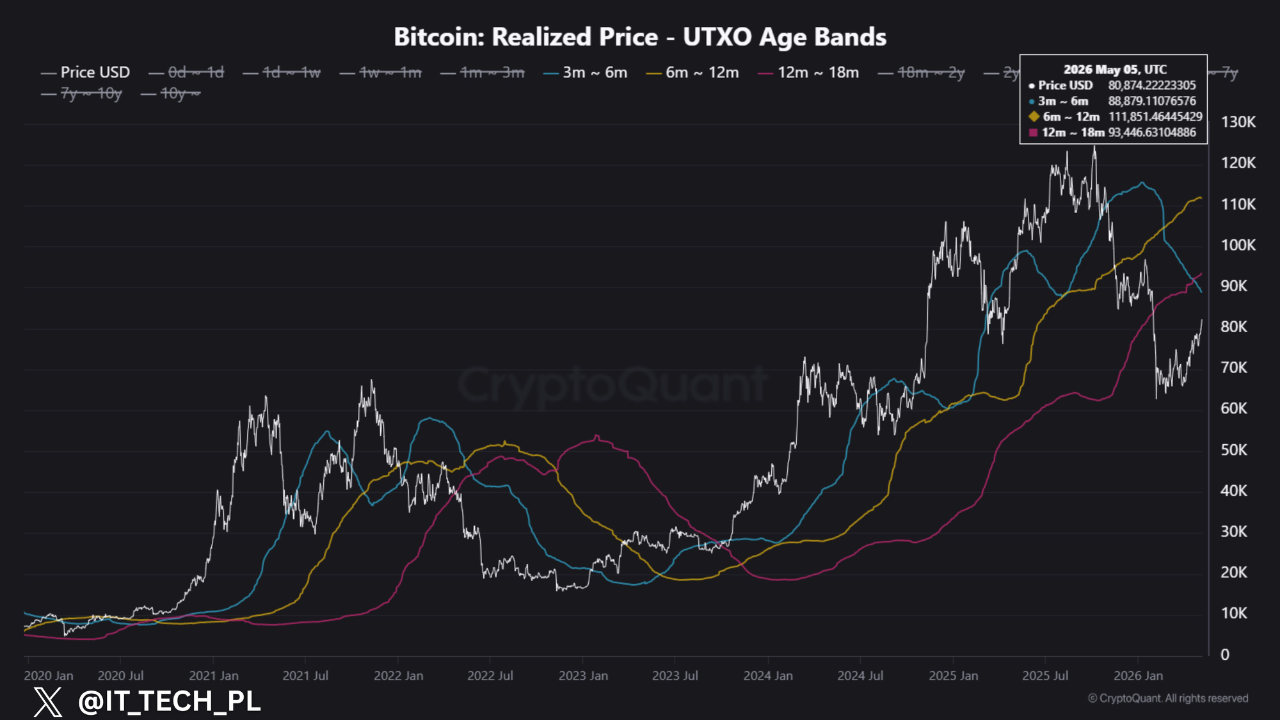
At the time of the analysis, Bitcoin was trading around $80,870.

Key Points

  • Bitcoin analyst IT Tech says BTC must reclaim and hold $88,880 to confirm a market bottom.
  • On-chain data shows major resistance zones as underwater holders may sell at break-even levels.
  • Bitcoin has rebounded over 37% since February’s $60K low, fueling fresh bottom-cycle claims.
  • The Fear and Greed Index rose from 5 to 47, signaling improving sentiment across the crypto market.

The Bottom

Notably, supporters of the Bitcoin bottom narrative believe the $60,000 price level the asset reached in February marked the lowest point BTC could fall to during this cycle.

For context, that decline represented a massive 52.5% drawdown from Bitcoin’s all-time high of $126,200. Since then, no new lows have been recorded, and the premier cryptocurrency has rebounded by more than 37%.

Given this recovery, market watchers have increasingly argued that the February low marked the cycle bottom.

Three Major Resistance Zones Above Bitcoin

Meanwhile, according to IT Tech, three important holder cohorts are currently sitting above Bitcoin’s spot price:

  • 3-month to 6-month realized price: $88,880
  • 12-month to 18-month realized price: $93,450
  • 6-month to 12-month realized price: $111,850

These realized price levels represent the average cost basis of different groups of holders who bought Bitcoin during previous market periods.

The analyst explained that these levels now act as psychological and technical resistance zones because many trapped investors may choose to sell once the price returns to their entry point.

The heaviest concentration sits in the 6-month to 12-month cohort at $111,850, roughly 29% above Bitcoin’s current price.

Why $88.88K Is Critical

IT Tech argued that Bitcoin must decisively reclaim $88,880 before any bottom confirmation becomes credible.

According to the analyst, simply touching the level would not be enough. Bitcoin would need to break above it and hold the level successfully rather than wick through it and fall back below.

The reasoning is that reclaiming $88,880 would push the most recent underwater cohort back into profit, reducing immediate sell pressure from traders looking to exit at break-even.

Until that happens, the analyst warned that rallies into the $85,000 to $88,000 range could face strong selling pressure from buyers who entered the market late between November 2025 and February 2026.

“Bottom Calls Are Narratives”

The analyst ended the thread by cautioning traders against relying purely on sentiment-driven bottom calls. Instead, the analyst emphasized that market structure and holder data remain the more important signals.

As summarized in the post:

“Bottom calls are narratives. $88,880 reclaimed and held is data.”

Notably, the market Fear and Greed Index has moved into the neutral zone at 47, compared to 5 in February. This suggests improving sentiment and reflects a stabilizing market compared to the earlier fear of further losses.

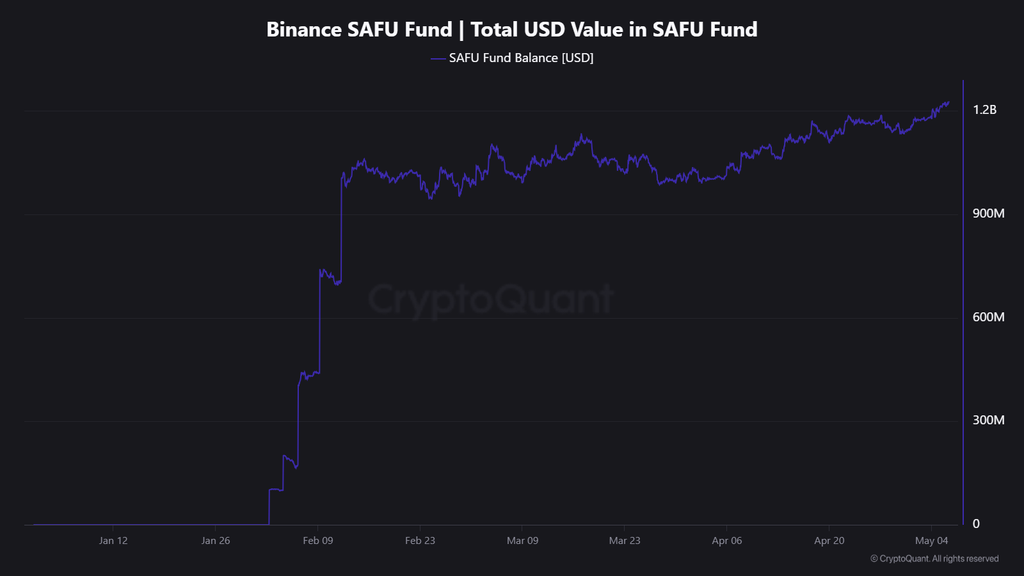
Bitcoin Rebound Above $80,000 Pushes Binance SAFU Reserve to $1.2B

The Bitcoin recovery above $80,000 has boosted the value of Binance’s SAFU reserve to approximately $1.2 billion. 

Verified CryptoQuant author JA Maartunn recently disclosed that the Binance SAFU wallet has gained around $228 million since the exchange converted the reserve into Bitcoin in February 2026.

Key Points

  • Binance completed the purchase of 15,000 BTC for the SAFU reserve on Feb. 12, 2026.
  • The exchange converted roughly $1 billion in SAFU stablecoin reserves into Bitcoin over about 30 days.
  • The SAFU reserve has gained about $228 million since the purchase occurred, as BTC reclaims $80,000.
  • Binance introduced SAFU in July 2018 to protect users during hacks and security breaches.

Binance SAFU Reserve Grows $228M as BTC Rebounds

According to Maartunn, Binance acquired 15,000 BTC worth roughly $1 billion in February 2026 to back the SAFU (Secure Asset Fund for Users) reserve. 

He noted that the exchange designed SAFU as an emergency insurance reserve that protects customers against losses resulting from unexpected incidents such as exchange hacks and security breaches. Binance announced this decision in July 2018.

Maartunn revealed that the exchange accumulated BTC for the reserve during market lows in February. Since Bitcoin has climbed nearly 30% from those levels, the SAFU position now carries an estimated unrealized profit of around $228 million. As a result, the reserve currently stands at $1.2 billion.

Binance SAFU Reserve CryptoQuant
Binance SAFU Reserve | CryptoQuant

He also pointed out that Binance previously committed to replenishing the fund back to $1 billion whenever market volatility pushed its value below $800 million. However, the recent Bitcoin recovery has made that scenario unlikely in the near term.

Binance Completed the 15,000 BTC Purchase in mid-February 

The completion date for Binance’s full 15,000 BTC acquisition occurred on Feb. 12, 2026. Earlier, around Jan. 30, 2026, Binance announced plans to convert approximately $1 billion in SAFU stablecoin reserves into Bitcoin over a period of about 30 days.

The exchange finalized the conversion on Feb. 12 with a last tranche purchase of 4,545 BTC. This final acquisition brought the total SAFU holdings to exactly 15,000 BTC. At the time of completion, the reserve carried an estimated value of $1.005 billion based on a Bitcoin price of around $67,000 per coin.

Binance carried out the purchases in staggered tranches to reduce market impact during execution. Reports placed the average entry price between roughly $67,000 and $70,000 per BTC.

Bitcoin Price Action Keeps SAFU Reserve in Profit

Despite Binance’s accumulation at the time, Bitcoin continued to face downward pressure after the mid-February announcement. The leading cryptocurrency dropped to around $62,000 in late February before rebounding to approximately $76,000 by mid-March.

The recovery in March gained momentum partly because of developments surrounding the U.S.-Iran conflict, which helped fuel renewed activity in the crypto market. However, Bitcoin failed to maintain the upward trajectory through the end of the month.

By March 29, Bitcoin had fallen again to $64,900, pushing the SAFU reserve to $973 million. BTC later resumed its recovery trend and reclaimed the $80,000 level on May 4. Two days later, Bitcoin surged above $82,000 before meeting resistance at that price point.

Bitcoin Recovery Since March 29

Although Bitcoin has since experienced a slight pullback, the cryptocurrency continues to trade above $80,000. This sustained strength keeps Binance’s SAFU reserve in a substantial unrealized profit position following the February accumulation campaign.

Why XRP Only Rose 2.5% While ONDO Surged 29% Amid the First Near Real-Time US Treasury Redemption

0

XRP saw limited price reaction following yesterday’s cross-border US treasuries settlement on the XRP Ledger, while ONDO rallied considerably.

A major institutional blockchain test took place on Wednesday. Specifically, Ondo Finance, Ripple, JPMorgan, and Mastercard completed what participants described as the first near-real-time cross-border redemption of tokenized U.S. Treasuries on the XRP Ledger.

The transaction settled in less than five seconds and immediately attracted attention across the digital asset market. However, the price reaction revealed a familiar pattern in crypto markets. While XRP barely moved, ONDO captured most of the momentum.

Key Points

  • Ondo Finance, Ripple, JPMorgan, and Mastercard completed the first near-real-time cross-border redemption of tokenized U.S. Treasuries on the XRP Ledger.
  • While XRP barely moved, ONDO captured most of the momentum.
  • The difference highlights how markets often separate infrastructure from the applications built on top of it.
  • This structure mirrors what happened within the Telegram and TON ecosystem.
  • The muted XRP response does not necessarily diminish the pilot program’s significance.

ONDO Got the Trade, While XRP Got the Headline

Santiment data highlighted this disparity in price action in an X post on Thursday. The platform reported that over the past week, ONDO climbed from roughly $0.27 to $0.348, representing a 29% increase. 

Much of that move came after the announcement, including a sharp 8% candle shortly afterward. Meanwhile, XRP moved from around $1.38 to $1.41 during the same period, translating to a gain of only about 2.5%.

XRP vs. ONDO Price Action/Santiment

The difference highlights how markets often separate infrastructure from the applications built on top of it.

In this case, the XRP Ledger acted as the settlement rail, providing the speed and low-cost execution required for the transaction. However, ONDO represented the actual tokenized Treasury product at the center of the activity.

As a result, traders focused more heavily on the protocol directly tied to issuance, redemption, and yield exposure rather than on the blockchain that handles the settlement layer beneath.

“The rails got the headline. The protocol got the trade,” Santiment concluded.

Similar Case Between Telegram and TON

This structure mirrors what happened within the Telegram and TON ecosystem. Telegram drove mainstream attention through its massive user base and crypto integrations. Yet, much of the market value flowed toward Toncoin and projects operating directly within that network. 

Most recently, Telegram founder Pavel Durov announced that Telegram has replaced the TON Foundation as TON’s largest validator. The coin has since doubled, growing 90% in the past seven days to $2.48.

This event draws the conclusion that the infrastructure created access, but the ecosystem assets captured stronger speculation and capital inflows. The same dynamic now appears within institutional tokenization.

XRPL Validates Institutional Utility Despite Limited XRP Reaction

Importantly, the muted XRP response does not necessarily diminish the pilot program’s significance. The event demonstrated that the XRP Ledger can support institutional-grade settlement for tokenized real-world assets in near real time.

That matters because tokenized Treasuries continue gaining traction across financial markets. Faster settlement, continuous market access, and lower operational friction remain key themes for institutions exploring blockchain infrastructure.

Still, markets often reward the protocols tied directly to revenue generation, asset issuance, or user demand rather than the underlying rails themselves. ONDO benefited because its ecosystem sits closer to the economic activity surrounding tokenized Treasury exposure.

Meanwhile, the XRP Ledger functioned more as the enabling layer behind the scenes. Although the blockchain received the headline visibility, the stronger market reaction flowed toward the asset associated with the product itself. Still, industry leaders claim that XRP is the cleanest way of investing in tokenization

Moreover, the move emphasizes the growing use case for tokenization in the crypto industry. Data shows that $31.12 billion in real-world assets have been tokenized on blockchains, highlighting the steady adoption of blockchain rails to bring tangible assets on-chain.