Home Blog Page 1627

Ripple CTO Reveals He Went For Ripple Shares Rather than XRP

0

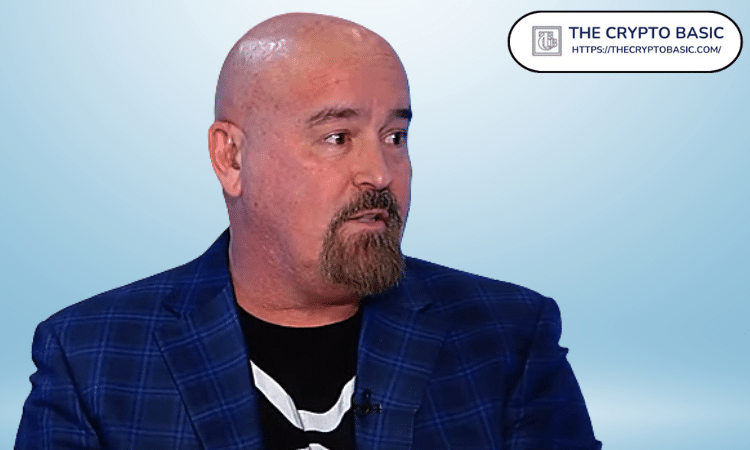
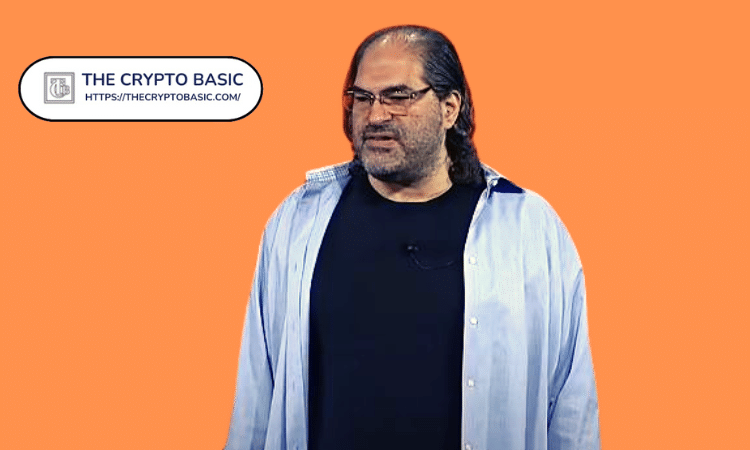
David Schwartz, the Ripple CTO, recently disclosed that he opted to receive Ripple shares instead of an XRP allocation.

Schwartz revealed this in a recent discussion surrounding Ripple’s substantial XRP holdings. Notably, the firm’s Q3 2023 XRP Markets Report, released last November, showed that it held 46.55 billion XRP as of September 2023, representing 46.5% of the asset’s max total supply of 100 billion tokens. 

Of the 46.55 billion tokens in its custody, Ripple held a spendable balance of 5.258 billion XRP, with 41.3 billion XRP in escrow. The company typically releases 1 billion XRP from escrow every month but relocks 800 million shortly after.

Ripple Continues to Sell XRP

Ripple has continued to sell off its spendable XRP balance in an elaborate effort to reduce its XRP holdings.

The firm sold 892 million XRP in Q3 2023, per the latest XRP markets report. The constant XRP sales have raised concerns of sustained price suppression on XRP. 

These concerns have resulted in calls for a different approach, such as the incineration of Ripple’s escrow balance. In the latest discussion, an individual with the X name “GPD.Burn the Escrow” asked if Ripple’s business model would always involve XRP sales.

The Ripple CTO Schwartz jumped on this question, emphasizing that the firm has two options with its XRP holdings. According to him, they could continue to hold these tokens, or they could systematically sell them to reduce their holdings. 

Schwartz stressed that the firm does not have a third choice. However, he confirmed that they have a goal to reduce their holdings as quickly as they can. This mission might explain the increased rate of XRP sales in recent times.

When asked if burning the escrow would not be feasible, Schwartz noted that he could not conceive any event that would actually make this even viable.

He further asserted that it would not bring any benefits. The Crypto Basic called attention to this comment in a previous report.

Ripple CTO Preferred Ripple Shares to XRP

Amid the sustained discussion, another community member asked if Schwartz actually opted to receive Ripple shares instead of XRP.

The Ripple CTO disclosed that this is true. According to him, he preferred to get some portion of the Ripple shares rather than an allocation of XRP.

However, Schwartz noted that he is still not sure if that decision was the right one. According to him, if he had received XRP tokens instead of Ripple shares, his holdings would have been more liquid right now.

Notably, the market valuation of Ripple’s shares currently stands at around $11.3 billion. The Crypto Basic recently disclosed that the firm intends to buy back $285 million worth of its shares. Ripple CEO Brad Garlinghouse noted that the firm does not plan to IPO anytime soon.
Tether Grows Its Bitcoin Holdings to 66.48K After Purchasing 8.8K BTC in Q4 2023 

0

Tether continues to strengthen its stablecoin (USDT) reserve as it purchases 8,888 BTC in Q4 2023, bringing its total Bitcoin holdings to 66,485. 

Tether, the world’s largest stablecoin issuer, has increased its Bitcoin holdings following its acquisition of a significant amount of BTC. According to reports, Tether purchased a whopping 8,888 BTC, equivalent to $380 million, at the end of Q4 2023.  

Following the recent purchase, Tether’s Bitcoin stash has grown to a massive 66,465 BTC. CryptoQuant’s CEO and founder, Ki Young Ju, also confirmed the development in a tweet today. 

At the current exchange rate of $42,353, the monetary value of Tether’s total Bitcoin holdings is worth $2.81 billion. 

Tether’s Bitcoin Accumulation Spree 

Notably, Tether has been using a portion of its profit to purchase Bitcoin every quarter since 2022 to strengthen its stablecoin reserve. The move comes as the company shifts its stablecoin reserves from U.S. government debt to crypto.  

Interestingly, the company began purchasing Bitcoin in September 2022 (Q3 2022), with an initial buy of 33,980 BTC. 

At the end of Q1 2023, Tether made another hefty purchase of 15,915 Bitcoin. Despite consistently buying BTC at the end of every quarter, Tether’s recent purchase of 8,888 BTC marks the company’s third-largest buy to date. 

Tether Still Ranks as 11th Largest Bitcoin Holder 

Since Tether embarked on an accumulation spree for the world’s largest cryptocurrency by market cap, the company has not officially revealed the address holding the coins. 

In an August tweet, famous crypto analyst Tom Wan posted a Bitcoin address he claims belongs to Tether. At the time of the tweet, Wan claimed that the address held 55,022 BTC (worth $1.6 million), making it the 11th-largest Bitcoin holder. 

As a result of its BTC purchase in Q3 and Q4 2023, the company’s Bitcoin stash has soared to 66,465 BTC. According to on-chain data, Tether is still ranked as the 11th-largest Bitcoin holder despite its recent purchase. 

The addresses in the top 10 ranking are owned majorly by crypto exchanges, including Binance and Bitfinex. At the press time, Tether’s Bitcoin address now holds 0.339% of the entire Bitcoin in circulation. 

Analyst Warns of Potential 20% Dip in Bitcoin Price, Targets $34,000 Before Halving

0

While Bitcoin struggles to maintain its footing at $42,500, a longstanding technical analyst has argued that BTC could be heading towards a consequential decline, potentially tanking to $34,000.

The foundation of the bleak outlook rests on suggestions from Bitcoin’s historical pattern, particularly those established before halving cycles. Notably, Bitcoin’s next halving is just three months away.

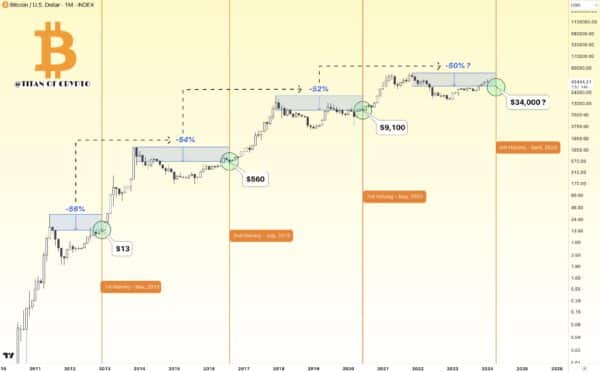
In a recent post on X, technical analyst “Titan of Crypto” highlighted a recurring pattern in Bitcoin’s price performance surrounding halving events.

Specifically, the analyst pointed out that Bitcoin traded at approximately 50% of its previous all-time highs at the point of halving in the past cycles.

Bitcoin Prices at Past Halving

Data from market tracking resources indicated that ahead of Bitcoin’s 2012 halving, the cryptocurrency had reached its peak at $26.9 in November 2011.

Nonetheless, when the halving occurred on November 28, 2012, the asset had retreated to $12.53, marking a decline of approximately 53.4%.

Remarkably, the 2012 halving event laid the foundation for Bitcoin’s subsequent peak at $1,238 a year later. However, the asset experienced a downturn.

It had a price between $550 and $663 in July 2016, coinciding with another reduction in Bitcoin mining rewards. This was essentially another 50% drop in its price from the previous height of $1,200.

A similar pattern of 50% reduction repeated in the build-up of Bitcoin’s most recent halving.

Bitcoin halving patterns
Bitcoin Halving Patterns | Titan of Crypto

Last Chance to Stock BTC at Low Price

With this pattern holding true for Bitcoin’s past events, the technical analyst suggested that Bitcoin could be poised for a significant correction. He sees the asset gravitating around $34,000 by the time of the next halving. Note that Bitcoin hit a peak of $69k in 2021. 

With the next halving anticipated in April, it implies the leading cryptocurrency could experience a 20% decline from its current value of $42,500, aligning with the expected 50% decrease historically associated with such events.

Ultimately, Titan of Crypto emphasized that the $34,000 could represent the last opportunity for investors to accumulate Bitcoin at such a comparatively lower price point. 

This implies that the next three months could be crucial for investors looking to increase their Bitcoin holdings before the anticipated price surge following a halving event.

Contrarily, another market expert has presented a divergent perspective based on Bitcoin’s historical patterns. This expert contends that Bitcoin might undergo a noteworthy bullish trajectory leading up to the April halving.

CryptoQuant: Staked Ethereum (ETH) Rises to 24% of Supply

0

The amount of Ethereum (ETH) staked in smart contracts has seen an impressive jump despite the withdrawal allowance ushered in by the Shapella Upgrade.

According to data insight shared by Ki Young Ju, the CEO of CryptoQuant, the Ethereum locked-on staking protocols now stand at 24% of the total supply. Data from CryptoQuant puts this figure at 29.02 million tokens. According to Ki Young Ji, of the Ethereum tokens staked, only 11% are locked on exchanges

Ethereum and Staking Embrace: The Journey

The Ethereum network started as the first smart contracts platform in the crypto ecosystem but as a Proof of Work (PoW) blockchain that employs miners to validate transactions.

To reduce its Carbon footprint and chart a better path for scalability, it transitioned to Proof-of-Stake (PoS) through The Merge event. 

As a result, the network pivoted to the staking mechanism for transaction validation. In the early days of the completed transition, Stakers were unable to withdraw their assets, a bottleneck that was solved with the Shapella Upgrade that was ushered in on April 12, 2023.

With this upgrade, withdrawals of locked Ethereum were anticipated and Ki Young Ju noted how he expected significant unstaking activities following the Shapella Upgrade. However, the ETH lock-up kept increasing, as has been historically showcased before.

One interesting trend in the staking chart as seen on CryptoQuant is that the lock-up of Ethereum has grown over time irrespective of the slump in the price of ETH.

For instance, from March 29, 2022, to June 16 of the same year, the price dropped from $3,401 to $1,067, and the percentage of staked Ethereum grew from 9.56% to 11.38%.

Is Ethereum Staking Paying Off?

Locking Ethereum through staking helps secure the protocol and aid its growth over time. To keep the system sustainable and attractive, the stakers are incentivized.

According to Ki Young Ju, Ethereum stakers are currently enjoying a 25% profit, as the current price of Ethereum, which stands at $2,519, surpasses the realized price for staking inflows, at $2,014. 

The Ethereum Staking profitability stems from the growth in the price of ETH from $1,891.95 as of the activation of the Shapella Upgrade to $2,532.40 at the time of writing. Ethereum’s market cap is down 0.98% to $303,564,797,511 while trading volume has plunged 13.08% to $9,959,822,893.

Are Crypto Phones The Next Big Thing?

0

Crypto phones, also known as blockchain phones, go beyond the conventional features of traditional devices by integrating blockchain technology at either the software or hardware level. This integration facilitates the creation of decentralized networks that prioritize enhanced security, privacy, and user control.

Enhanced Security Features

One of the defining features of crypto phones is their commitment to security. These devices come equipped with military-grade encryption, ensuring that communication remains confidential and protected against hacking attempts. Encryption and decentralization work together, creating a robust defense against unauthorized access to sensitive information. This heightened security is particularly crucial in an age where concerns about online privacy and data security have become increasingly prevalent.

Decentralization and Privacy

Crypto phones distinguish themselves by offering decentralized networks that prioritize user privacy. The integration of blockchain technology decentralizes data storage and processing, reducing the risk of centralized breaches. This not only enhances the privacy of individual users but also offers a level of control that is unprecedented in traditional smartphones. Users can enjoy a greater sense of ownership and authority over their data, mitigating concerns about surveillance and unauthorized data access.

Perks of Having a Crypto Phone

The advantages of crypto phones over traditional smartphones are evident. These devices provide heightened privacy, robust protection against cyber threats, and secure transaction capabilities. As the digital landscape evolves, the choice of a crypto phone becomes increasingly crucial for individuals and organizations seeking to navigate this dynamic and often risky environment.

As the technology behind crypto phones continues to evolve, future developments are anticipated to include advanced features, increased usability, and broader integration with blockchain technologies. The ongoing innovation in this space will redefine the standards of mobile technology, further solidifying the importance of crypto phones in the digital era.

The LFi One Smartphone

Among the emerging crypto phones, the LFi One stands out as a notable example. Developed by LFi, this smartphone exemplifies the commitment to secure communication and digital asset handling. The LFi One integrates cutting-edge features, offering users a glimpse into the future of secure and privacy-focused mobile technology. Moreover, it also allows users to effortlessly oversee their digital assets and seamlessly mint tokens.

The advent of crypto phones represents a paradigm shift in mobile technology, addressing the growing concerns surrounding online privacy and data security. With their emphasis on encryption, decentralization, and user control, these devices offer a glimpse into a future where individuals can communicate and transact with unprecedented levels of security and privacy. As the technology matures, the trajectory of crypto phones points towards a future where these devices become indispensable tools for those navigating the complexities of the digital landscape.

About LFi

LFi is a blockchain technology company that aims to empower the global fintech movement with new and innovative offerings, including cutting-edge hardware devices powered by next-generation software. 

Website

Telegram 

Twitter

Facebook

Instagram

YouTube 

Blog

XRP Risks Falling to $0.34 If This Support Breaks

0

XRP runs the risk of dropping as low as $0.34 unless bulls can fight back as the cryptocurrency faces a crucial support level. 

XRP has had a less-than-stellar start to 2024, dropping over 9% from its yearly open value of $0.62. However, there could be more losses ahead unless bulls can rally to push the cryptocurrency above the critical $0.55 level.

Prominent crypto trader Ali Charts highlighted XRP’s recent struggles in a post on X, including how low XRP could fall if the current support fails to hold. Specifically, he noted that XRP faces a sell-off scenario that could see its price fall as low as $0.34.

Meanwhile, it is worth noting that the $0.34 support forms at the lower range of the falling wedge pattern. The charts reveal a support level between $0.48 to $0.46, from which the bulls could also stage a comeback if the crucial $0.55 level is lost.

XRP 1D Chart Ali Martinez 3
XRP 1D Chart | Ali Charts

The $0.55 threshold currently rests at the lower trendline of an ascending parallel channel that XRP has continued to trade in since 2022. Breaking below the $0.55 level would result in a breach below the lower trendline of the channel.

Crypto Market Faces Crucial Moment Post ETF Hype

It is noteworthy that XRP’s latest struggles bear a semblance to most of the crypto market, with Bitcoin especially also holding on to a critical support level. The more popular cryptocurrency has barely managed a stay above the $42,000 level, briefly dropping as low as $41,800 earlier this week.

Thus, barring any sudden development, XRP’s fate, as well as that of most leading crypto assets, could be largely defined by BTC’s ability to turn the $42,000 mark into a springboard for a strong recovery. Bitcoin trades at $42,570 at the time of writing, with XRP hanging in at a $0.56 price.

A market rally that was largely led by anticipation for spot Bitcoin ETFs in the United States has since stalled as investors await the next catalyst for bullish price action. Ideally, the upcoming Bitcoin halving and huge inflows into Bitcoin ETFs could be the next big talking point if the market stages a reversal.

Just In: VeChain Official X Account Suffers Exploit

0

The X account of leading blockchain-based protocol VeChain has suffered a hack, with the exploiters leveraging the account to promote a scam giveaway.

The official X account of the VeChain protocol was hacked by malicious actors a few minutes ago today, Jan. 18, and used to promote a scam giveaway promising double of whatever investors send to the provided “contribution address.”

Content of the VeChain Scam

The hackers posted a tweet from the compromised account, claiming to offer generous rewards for VeChain (VET) and Ethereum (ETH) holders.

The post asked users to send a certain amount of VET or ETH to a specified address, promising to send back double the amount. They promised to send back 2 ETH for any 1 ETH sent, claiming to have up to 800 ETH for the scam event.

The post also stressed that investors would need to send between 100,000 VET to 5,000,000 VET to qualify for the giveaway, claiming that those who send 100,000 VET will receive 200,000 VET while those who send 5,000,000 VET will be awarded 10,000,000 VET. 

VeChain Scam Post
VeChain Scam Post

The crypto community quickly identified the scam, raising alarm that the project’s X account has suffered an exploit.

This pattern is an age-old scam scheme, where malicious actors convince market participants to send tokens to a particular address and receive a multiplied figure of what they’ve sent.

However, amid growing enlightenment, investors have become more aware of these schemes. Data from Etherscan confirms that the supposed “contribution address” presented by the scammers has not received any assets as of press time.

Notably, VeChain has recovered the account, a swift action that helped in preventing any financial damage to investors. The team has deleted the post as of press time. Nonetheless, they have not issued any statements on the incident.

A Trend of Hacks and Scams

The VeChain hack is the latest in a series of cyber attacks that have plagued the crypto space in recent months.

In November 2023, the XRP community called attention to a deep fake video ad on YouTube, which used the likeness of the Ripple CEO Brad Garlinghouse to announce a scam giveaway.

In addition, the scourge of cloned and hacked X handles has grown in recent times. Last July, some malicious actors cloned the X handle of  Ripple CTO David Schwartz to promote a scam 100 million XRP giveaway. 

In May 2023, the account of Shiba Inu lead developer Shytoshi Kusama was cloned to announce another scam. Pro-crypto attorneys Jeremy Hogan and John E. Deaton also suffered an exploit on their respective X accounts from last June to July. 

These incidents highlight the need for extra caution when it comes to financial dealings. Experts advise users to do their own research, verify the authenticity of the sources, and use reputable platforms and wallets to protect their funds.

Deaton Reacts as SEC Criticizes Ripple Ruling Again During Latest Coinbase Hearing

0

Attorney John Deaton says the SEC classified Ripple’s XRP sales under several categories, emphasizing that Judge Analisa Torres only ruled accordingly.

The cryptocurrency community has continued to comment on the just-concluded hearing of Coinbase’s motion to dismiss the SEC’s lawsuit.

SEC Criticizes Judge Torres Ruling

As expected, the SEC did not disappoint XRP community members as it criticized Judge Analisa Torres’ summary judgment decision in the Ripple case.

In a tweet yesterday, Fox Business journalist Eleanor Terrett noted that the SEC’s lawyers commented on the merits of Judge Torres’ decision, especially as she ruled differently on Ripple’s programmatic sales on exchanges and institutional sales.

“Where we disagree with Judge Torres is that there’s no need to create two categories of people because whether you’re sophisticated or not, at the end of the day, you’re still buying the same token,” Terrett tweeted, citing comments from SEC’s lawyers.

Deaton Reacts

Terrett’s tweet sparked reactions from crypto enthusiasts, including XRP community attorney John Deaton.

Reacting to Terrett’s tweet, Attorney Deaton pointed out that Judge Torres only followed the complaint and argument made by the Securities and Exchange Commission in the lawsuit.

According to Deaton, the SEC divided Ripple’s sales into different categories. The first category in the SEC’s complaint focused on Ripple’s institutional sales to sophisticated investors, like Banks, Venture Capitalists (VCs), and Hedge Funds.

In the second category, the SEC considered Ripple’s programmatic sales through crypto exchanges to be securities.

Lastly, the regulatory agency alleged that the company’s other distributions of XRP, including giveaways, donations to charity organizations, and XRP paid to Ripple employees, developers, and contractors, were investment contracts.

Attorney Deaton, who represents thousands of XRP holders in the Ripple lawsuit, said the SEC made the above-mentioned arguments, adding that the judge ruled accordingly.

Terra Judge Backs SEC Argument

It can be recalled that Judge Torres issued the Ripple summary judgment in July 2023. While she found that Ripple violated the law via its direct past institutional sales of XRP, she declared that the company’s programmatic sales through exchanges and other distributions were not securities.

The SEC’s concerns about Judge Torres’ decision were also backed by comments from Judge Jed Rakoff, who presided over the SEC v. Terra lawsuit.

Judge Rakoff disagreed with Judge Torres’ reasoning in the Ripple case, criticizing her distinction between institutional and retail sales of XRP. The Terra judge stated that the Howey test, a longstanding security test in the U.S., did not distinguish between buyers using the origin of their coins.

Unsatisfied with Judge Torres’ ruling, the SEC moved to certify an interlocutory appeal to enable it to challenge the decision in the U.S. Court of Appeals for the Second Circuit.

However, Judge Torres denied the SEC’s interlocutory appeal bid, ordering the regulator to wait until all pending issues are resolved.

SEC May Appeal Ripple Victory

The SEC’s recent argument in Coinbase’s hearing suggests that the securities agency may move to appeal the Ripple decision once Judge Torres issues her final judgment.

In the meantime, the Ripple lawsuit is currently in the discovery phase of the remedies litigation. The SEC recently filed a motion to compel Ripple to hand over its audited financial statements from 2022 to 2023 and contracts related to its institutional sales of XRP.

The commission also wants the court to order Ripple to disclose the proceeds of its institutional sales since the complaint was filed. Ripple is expected to file its response to the motion by tomorrow, January 19.

With the last motion with respect to remedies expected to be filed on April 29, several legal experts have predicted that the judge might issue her decision in early summer.

Once Judge Torres issues her final judgment, the SEC will decide whether to file a full appeal at the Second Circuit or agree on a settlement with the crypto payments company.

Cardano (ADA) Outshining Ethereum (ETH) in This Unique Way

0

Cardano (ADA) has proven that it can outshine Ethereum (ETH), the industry’s largest smart contract network, in one of the most understated ways.

According to data from crypto analytics platform IntoTheBlock (ITB), the 30-day volume of large transactions on Cardano has far outstripped that of Ethereum. This update comes in the wake of the general market push to wriggle out of the current bearish situation that is playing out in the ecosystem thus far.

Cardano’s market price and capitalization are down by 2.56% in the past 24 hours to $0.5177 and $18,322,533,885, respectively, as the trading volume has dropped by 15.56% to $285,507,234. Ethereum has a milder growth rate, having slipped by 0.85% in 24 hours to $2,516.35.

The Cardano Advantage

Over the past few months, Cardano has always recorded massive inflows from market whales. Despite the dampened sentiments overall, the IntoTheBlock data showed that a total of $13 billion in large transactions is settled on the Cardano blockchain on average daily. By definition, the platform considers ADA transactions above $100,000 in fiat value as ‘Large.’

By comparison, Ethereum only records a total of $5 billion in whale transactions on average per week. At the moment, the bearish sentiment in the market has subtly tilted the whale transaction trend in Ethereum’s favor per rate of change over the past 24 hours. 

The data from IntoTheBlock shows that Ethereum’s large transactions have soared by 6.74% to $4.16 in 24 hours. Cardano on the other hand maintains a larger volume pegged at $11.24 billion but with an 8.74% slump within the same period.

Will Cardano Flip Ethereum?

Just the way there is a fight for dominance in the memecoin world, so also is there a foundational tussle amongst Layer-1 networks to outshine one another. One of the biggest ambitions of Cardano community members is to see the protocol flip Ethereum in market capitalization in the long term.

This is a distant dream, considering Cardano’s $18.3 billion market cap is just a fraction of Ethereum’s $302,549,903,898 capitalization. For the foreseeable future, Cardano may need to relish its areas of strength, including whale volume and developer activity.

Experts See Solana Outperforming ETH by 500% this Season

0

The founders of prominent crypto analytics firm Glassnode have projected Solana outperforming Bitcon’s top contender, Ethereum (ETH), by 500%.

Jan Happel and Yann Allemann, the co-founders of Glassnode, operating under X account Negentropic, have argued the potential of the third largest altcoin Solana (SOL) to outperform Ethereum. 

Happel and Allemann’s optimistic outlook on Solana reflected a recent interview featuring macroeconomist Henrik Zeberg and Global Macroinvestor CEO Raoul Pal, who discussed the potential for a remarkable rally in the SOL/ETH chart.

During the interview, the host directed a question to Raoul Pal and Henrik Zeberg, focusing on Ethereum and Solana in terms of risk-adjusted returns. Specifically, he inquired about their crypto preferences for a $10,000 investment over a 12-month period. 

Examining Solana’s recent performance trend, Pal and Zeberg strongly believe that Solana exhibits significant momentum. They expressed confidence in Solana’s ability to maintain its upward trajectory, surpassing Ethereum, as illustrated by the SOL/ETH chart. 

According to their assessment, Solana appears poised for continued success in the coming weeks, making it a favorable candidate for their $10,000 investment.

Solana Rallying 500% Over Ethereum

Following the bullish sentiments from the financial experts, the founders of Glassnode moved to answer the intriguing question of how much Solana could outperform Ethereum from an analytics perspective.

According to insights from Glassnode’s analytics, the current SOL/ETH ratio stands at around 0.14. The co-founders anticipate a significant increase in the ratio, suggesting that it could rise to approximately 0.76.

In particular, this chart projection implies a potential four to five-fold outperformance of Solana compared to Ethereum as the crypto market progresses in the bull season.

“In other words, SOL may outperform ETH by 4-5X into the Crypto top,” Negentropic remarked.

SOL ETH chart
SOL ETH Chart | Negentropic

Meanwhile, Negentropic did not see an isolated rally for SOL as observed in the past weeks. The market experts see Ethereum itself experiencing a significant bullish rally. 

Solana and Ethereum

At press time, Solana is trading at $98.55, reflecting a 4.7% decline over the past week. In parallel, Ethereum exchanges hands at $2,516, also experiencing a similar 4.7% decrease during the same timeframe.

Despite the recent weekly decline, Solana’s one-year trajectory remains notably robust at 340.43%, having surged from $20. In contrast, Ethereum’s one-year trajectory is comparatively lower at 59%, indicating growth from $1,515.