Home Blog Page 186

Ripple CEO Provides New Timeline for CLARITY Act to Pass

0

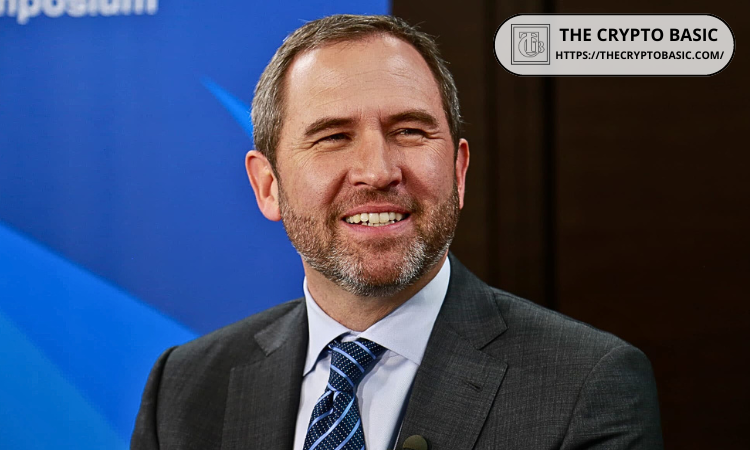
The Ripple CEO, Brad Garlinghouse, has revised his timeline for the passing of the CLARITY Act due to recent developments.

Brad Garlinghouse recently spoke on FOX Business with host Maria Bartiromo. During the interview, he discussed the current state of crypto regulation in the United States and updated his timeline for the passing of the CLARITY Act to the end of May 2026.

Key Points

  • Ripple CEO Brad Garlinghouse pushed back his prediction for the CLARITY Act from the end of April to the end of May.
  • Garlinghouse said unresolved issues, especially around crypto rewards, are slowing progress, but compromise is likely.
  • He stated that clear regulation would ease concerns around future regulators like Gary Gensler and encourage major banks to engage more with crypto.
  • Ripple has already seen strong growth, increasing headcount by 50% and completing two major acquisitions.
  • Garlinghouse revealed that this year, the company will focus on integrating and strengthening what it has already built.

Garlinghouse Revises Timeline for CLARITY Act

During the segment, Bartiromo emphasized the need for clear laws from Congress. She called attention to the Genius Act, which is already in place, and said it should not be reopened. She then turned to the CLARITY Act, asking how important both laws are and what they could mean for Ripple and the broader crypto industry.

Garlinghouse explained that he had earlier expected the CLARITY Act to be signed by the end of April. However, he now sees that the timeline has changed slightly. He said a more realistic expectation would be the end of May, adding about 30 extra days. Even with this delay, he made it clear that discussions are still ongoing and that progress is being made.

Garlinghouse noted that one of the main sticking points in the discussions is how rewards in the crypto space should be handled. While he said Ripple is not directly affected by that issue, he emphasized that resolving it is important for the industry as a whole.

Still Optimistic

He warned that without clear rules, the United States risks losing businesses and investment to other countries. In his view, passing the CLARITY Act would help keep innovation and capital within the country and make the U.S. more competitive globally.

Garlinghouse also shared that he recently attended a dinner in Washington, D.C., where he spoke with people who understand how laws are made. 

He called the process messy and sometimes frustrating, but said those conversations gave him more confidence that the bill would eventually pass. He added that when negotiations become most difficult, it often means a deal is getting closer because people start to compromise.

The Ripple CEO also called attention to strong support from the current White House, saying that leadership there is helping move things forward. Overall, he remains confident that the CLARITY Act will pass, even if it takes a bit longer than first expected.

What CLARITY Means for Ripple and Banks

When Bartiromo asked what would change for Ripple once the law is passed, Garlinghouse said it would not have a major direct effect on the company’s day-to-day business. Instead, the bigger impact would be on banks, especially in the United States.

He explained that many banks have been cautious about getting involved in crypto because of unclear rules and the fear that future regulators, like Gary Gensler, could change the direction again. Clear laws would remove that uncertainty and make banks more comfortable entering the space.

Garlinghouse added that banks already recognize Ripple’s legal progress, including its win confirming that XRP is not a security. He also mentioned another positive development from the previous week. Still, he believes that putting clear rules into law would push even more large financial institutions in the U.S. and around the world to get involved.

Ripple’s Focus for 2026

Looking ahead to 2026, Garlinghouse said Ripple plans to focus more on strengthening what it has already built instead of expanding. He noted that the company completed two major acquisitions last year and increased its workforce by 50%, which means there is now a need to fully integrate those changes.

At the same time, Ripple will continue to look for new investment opportunities. Garlinghouse said the company has already invested over $1 billion in the past year and will keep exploring areas where it can grow further.

He called Ripple Prime a major focus, explaining that the company wants to use its stronger balance sheet to grow its prime brokerage business. He also pointed to Ripple Treasury, where demand from companies is rising quickly.

Garlinghouse said the prime brokerage unit has already tripled its revenue run rate. He explained that this growth is partly because Ripple now has more financial strength, which allows it to work with bigger partners. In the past, some large institutions were hesitant to deal with Hidden Road when it was smaller. 

Now, under Ripple Prime, those same institutions feel more confident and are more willing to do business, helping Ripple expand its reach.

Cardano Targets Historic Support Retest Amid Rejection from 1D Mitigation Block

0

Cardano could further retest lower levels as its structure remains bearish, with strong liquidity areas below acting as price magnets.

Cardano may have shown short-term momentum, but data suggests bears are still dominating proceedings. After a clear higher-price rejection mid-last week, ADA has glided lower, but a positive start to the week during the Asian trading session has sparked optimism. However, a combination of market structure and sell-side liquidity points to further downsides.

Key Points

  • Cardano may have shown short-term momentum, but analysis suggests bears are still dominating proceedings.
  • The price has faced rejection at a 1-day mitigation block lying between $0.248 and $0.249.
  • The rejection in the mitigation zone suggests weak price momentum, with the bearish lower high formation further confirming a bearish structure.
  • Liquidity blocks often serve as price magnets, and the closest sell-side liquidity lies around $0.246.
  • There is a draw-on liquidity area at $0.2203, an area where Cardano would fill institutional orders if it fell to it.

Cardano Rejection from 1D Mitigation Block

Specifically, this mitigation block lies between $0.248 and $0.249. Its lower boundary closely aligns with the lows of March 23, where Cardano found support temporarily before bouncing to an intraday high of $0.276 on March 25. What has followed this has been a drop to far lower prices.

A look at the 4-hour chart shows that the coin recently made a fresh lower high formation on March 28, when it rebounded to $0.253. Notably, this formation was within the 1-day mitigation block, with the short-term recovery fading quickly.

Cardano 1D Mitigation Area and Liquidity Levels

Now, ADA has dropped out of this support block, following its over 2% drop on Sunday, recording its second successive weekly candlestick. The rejection in the mitigation zone suggests weak price momentum, with the bearish lower high formation further confirming a bearish structure.

Strong ADA Liquidity Lower

Liquidity blocks often serve as price magnets, with market whales often dragging prices to those levels to grab liquidity. For Cardano, the analysis shows it has sell-side liquidity lower.

These are areas where large sell orders and traders’ stop-loss orders are, making them attractive places to shake out retail traders. Per the analysis, the closest sell-side liquidity is around $0.246, near the current market price.

Meanwhile, there is more draw-on liquidity lower, an area where Cardano would fill institutional orders if retested. The level is at $0.2203, slightly below its February 6 low. Notably, this area is a strong support area for ADA and served as the price bottom during the previous cycle’s bear market.

Cardano would have to fall 10.4% from its current market price to reach this low. How it reacts from that level now depends on the broader market conditions and whether buying pressure returns.

However, a 4-hour close above $0.269 would invalidate the prospect of a revisit of the $0.2203 support level.

Cardano at Opportunity Zone

Despite the overall bearish momentum and expectations, analysts still believe this might be the best time to start buying into ADA. One such outlook recently came from Santiment, which noted that the coin is in an “opportunity zone.”

The firm highlighted that periods of increasing bearishness are the best time to buy into assets like ADA. When the average return among holders is at its weakest, selling pressure begins to fade and a market reset ticks closer. Additionally, the market always tends to go in the opposite direction when massive negative bets build.

XRP EMA Crossover Shows When XRP Could Bottom This Cycle

0

Historical XRP data surrounding the bearish crossover between the 21 EMA and 200 EMA could determine when the price will bottom in this cycle.

XRP has returned to a bearish phase after a short recovery between Feb. 28 and March 17, when prices climbed to $1.6 before losing strength. The asset has since dropped to $1.35, marking a 15% decline.

Amid the weakness, market data shows a major signal involving the 21 EMA crossing above the 200 EMA, a pattern that has previously led to additional declines before a bottom forms. Based on past trends, this crossover suggests XRP could bottom in mid-April.

Key Points

  • XRP rallied to $1.6 by March 17 before falling 15% to $1.35 as the broader market weakened.
  • Amid the ongoing downtrend, the 21 EMA has crossed above the 200 EMA.
  • Historical data confirms that whenever this bearish crossover occurs, XRP often faces further downside before a bottom forms.
  • If XRP records steeper declines after the crossover, it could potentially drop 14% to $0.93 from the $1.1 February low.
  • Data points to mid-April as the likely timeframe for XRP to establish this bottom if the current pattern holds.

EGRAG Crypto Highlights Key EMA Signal

Crypto analyst EGRAG Crypto called attention to this important signal in his latest analysis. He noted that the 21 EMA has crossed above the 200 EMA, a pattern that has often led to further price drops before the market finally bottoms out.

He stressed that market structure matters more than short-term movements and asked whether this setup will play out the same way it did in the past. His analysis suggests that when similar signals appear, they often lead to similar outcomes.

Speaking further, EGRAG Crypto mentioned what happened in May 2022 after the collapse of the Terra ecosystem. At that time, XRP had already fallen heavily and was trading at $0.3365, which was an 85% drop from its April 2021 high of $1.96.

XRP 5D Chart EGRAG Crypto
XRP 5D Chart | EGRAG Crypto

After the 21 EMA crossed above the 200 EMA in May 2022, XRP dropped further by about 14.6%, reaching a low of $0.2870 in June 2022. This final drop took place over about four 5-day candles, or roughly 20 days, before XRP found its bottom.

This past pattern now acts as some sort of guide for what could happen next, as EGRAG has identified similarities between that period and the current market setup.

Current XRP Setup Shows Similar Pattern

EGRAG Crypto explained that the same EMA crossover has already happened again in March 2026, which suggests that XRP may be following a similar path. He also noted that XRP reached a low of $1.1 in early February. If the same 14.6% drop happens again from that level, the price could fall to around $0.93, which he sees as a possible bottom for this cycle.

He also highlighted that the timing looks similar. The earlier cycle took about 20 days, and the current setup points to a similar timeframe. Based on this, he identified mid-April as an important period when XRP could decide its next direction.

Next Important Levels to Watch

EGRAG highlighted several important price levels that could determine what happens next. He said that if XRP can move back above $1.60, it could regain bullish momentum. This level is important because it once acted as support but later turned into resistance after XRP dropped below it in February.

Since then, XRP has tried several times to break above $1.6 but has not been able to stay above it. The latest attempt came earlier in March, when XRP reached $1.6075 before facing resistance and falling back to $1.35.

According to him, if XRP breaks above $1.60 and then moves past $2.05, it would confirm a stronger upward trend. On the other hand, if the price drops below the $1.1 low from February, it could fall further toward the $0.93 level.

EGRAG believes that mid-April could be the most likely time for XRP to form its bottom, if the current pattern continues to follow the past. After that, he expects the market to move into a new phase, possibly starting another upward trend.

Did Coinbase Demand Millions from Ripple to List XRP? David Schwartz Comments

Fresh discussion in the XRP community has reignited questions about whether Coinbase once demanded millions of dollars from Ripple to list XRP.

XRP community figure Diana pointed to a series of posts by Ripple CTO Emeritus David Schwartz. The posts suggest there may have been more going on behind the scenes during XRP’s listing process on Coinbase.

Key Points

  • Questions emerge over whether Coinbase once demanded millions from Ripple to list XRP.
  • David Schwartz cited a hypothetical case to show how complex listing talks can be misread as pay-for-listing deals.
  • He stressed that legal disputes can twist narratives, with claims repeated publicly even when not proven.
  • Coinbase delisted XRP after the 2020 lawsuit but relisted it in 2023 following Ripple’s court victory.

Hidden Truth?

Back in May 2023, Schwartz hinted that the full story behind XRP’s listing on Coinbase was something he wished he could openly share but couldn’t. That statement alone left room for speculation.

Weeks later, during a heated exchange with a user known as ScamDetector, Schwartz addressed allegations that Ripple had paid millions to multiple exchanges, including U.S.-based platforms, to list XRP. He pushed back on the claim, stressing that such narratives often oversimplify complex situations.

To explain, Schwartz introduced a “completely made-up hypothetical,” emphasizing that it was not based on actual facts but intended to illustrate how events could be misinterpreted.

“Millions to List XRP”

In that hypothetical scenario, Schwartz described a situation in which an exchange refuses to list XRP despite clear business incentives. According to the example, the exchange allegedly demands a large payment in the millions, which Ripple declines.

A prolonged standoff follows, with neither side willing to budge. Eventually, a deal is reached, XRP gets listed, and it quickly becomes a major revenue driver for the exchange.

The key point in Schwartz’s explanation was that such a situation could later be framed as Ripple “paying for listings,” even if the reality was far from that. In his words:

“Had we not existed, the exchange would have listed XRP months ago. We paid money to not let our existence hurt the XRP ecosystem.”

Meanwhile, Schwartz highlighted how legal disputes, particularly in the now-concluded U.S. SEC case, can shape narratives. He noted that litigation adversaries often present facts in the most unfavorable light possible, as long as those interpretations do not directly contradict the evidence.

He stressed that this can lead to public misunderstandings, where allegations are repeated as if they were proven facts.

Clarifications

The resurfacing of these comments has fueled fresh speculation that Coinbase demanded millions of dollars to list XRP. However, it is important to note that Schwartz never confirmed that such a scenario actually occurred. His framing was meant to explain how complex negotiations could be mischaracterized, especially during lawsuits.

Even so, the idea suggests that XRP listings may have involved tough negotiations or financial demands.

Notably, following the Ripple lawsuit filing in December 2020, Coinbase delisted XRP. However, after the court victory in July 2023, the exchange relisted XRP, and it continues to trade there today.

Cardano Founder Says Ripple Didn’t Need Financial Help in SEC Fight, Questions Its Industry Advocacy

0

Cardano founder Charles Hoskinson addresses fresh criticism from the XRP community over his lack of support for Ripple during its legal battle with the SEC.

Amid his continued criticism of the Clarity Act and Ripple’s backing of the bill, Hoskinson pushed back against claims that he ignored Ripple’s legal struggles.

Key Points

  • Charles Hoskinson stressed that he publicly opposed the U.S. SEC lawsuit against Ripple.
  • He added that Ripple did not need financial backing, as its large pre-mined XRP holdings, valued at billions of dollars, already provided the resources to fund its legal defense.
  • Hoskinson argued that Ripple is not acting in the industry’s interest, criticizing its support for the Clarity Act, which he described as deeply flawed.
  • XRP community members question why he rarely addresses Ethereum’s ICO token distribution, despite his early involvement in the project.

Ripple Didn’t Need Financial Support to Fight SEC: Hoskinson

Addressing the controversy in his latest livestream, Hoskinson argued that critics have misrepresented his stance during the lawsuit. He explained that he publicly opposed the SEC’s decision to sue Ripple and expressed this position in several interviews and recorded discussions at the time.

However, some members of the XRP community maintained that public comments were insufficient. Instead, they argued that influential crypto leaders should have offered direct financial support to help Ripple defend itself.

In response, Hoskinson rejected the view and pointed to Ripple’s substantial financial resources. He emphasized that the company has a massive XRP pre-mine that gives it sufficient financial strength. To further reinforce the point, he noted that the company funded the $1.2 billion Hidden Road acquisition using these resources.

As a result, Hoskinson argued that Ripple already had more than enough capital to manage its legal battle without relying on financial backing from leaders in other blockchain ecosystems.

Ripple Not Fighting for the Industry

Meanwhile, Hoskinson broadened the discussion to address industry politics and regulatory advocacy. He argued that Ripple is not promoting policies that benefit the entire digital asset sector, citing its support for the Clarity Act.

According to Hoskinson, the current version of the Clarity Act could shield Ripple and XRP while leaving smaller projects exposed. In particular, he warned that the bill may classify newer projects as securities while protecting established networks.

Furthermore, he cautioned that passing the legislation in its current form could reduce competition in the crypto sector. He also suggested that some provisions could expose open-source developers to unlimited legal liability.

Given these concerns, Hoskinson argued that Ripple’s continued support for the Clarity Act stems primarily from its own interests rather than from efforts to defend the broader industry.

XRP Community Pushback

Hoskinson’s remarks triggered another round of debate among XRP supporters. Some critics challenged his claim that Ripple allocated over 70% of the XRP supply to itself.

They questioned why he rarely discussed token distribution during the Ethereum ICO, an early project he co-founded. For context, critics have often raised concerns about the actual size of founders’ allocations in early blockchain projects, suggesting the amounts may be larger than publicly reported.

Moreover, XRP supporters accused Hoskinson of criticizing Ripple out of competitive rivalry, suggesting that XRP could benefit more from the Clarity Act than ADA.

Hoskinson Warns of Declining Industry Discourse

Amid this backlash, Hoskinson expressed concern that the crypto industry is losing the ability to engage in meaningful debate. He argued that years of social media propaganda, sensationalized coverage, and polarized narratives have weakened the public’s capacity to critically analyze complex issues.

Meanwhile, Ripple and its CEO, Brad Garlinghouse, have continued to support the Clarity Act, even as recent moves have prohibited stablecoin yields. To them, “clarity is better than chaos.”

Garlinghouse has previously indicated that he expects the legislation to pass as early as the second quarter of the year.

However, it remains unclear whether this projection will materialize amid growing pushback from industry stakeholders such as Hoskinson and Coinbase CEO Brian Armstrong.

XRP Price in 2045 if Bitcoin Hits $1.9 Million

Altcoin Daily recently shared bold 2045 targets for major assets, including Bitcoin at $1.9 million, but notably omitted a price target for XRP.

This has led market participants to ask AI models like ChatGPT and Grok to estimate where XRP could land by 2045, assuming the multimillion-dollar Bitcoin prediction holds.

Key Points

  • XRP could hit $40 by 2045 if it maintains its current ratio to Bitcoin at $1.9M.
  • AI projections suggest XRP may reach $140–$234 if it follows Ethereum, Solana, or BNB growth.
  • Grok warns extreme prices require massive adoption; realistic range is $10–$100+ by 2045.
  • XRP’s future depends on adoption and utility, with potential to track Bitcoin or become a top altcoin.

Anchoring XRP to Bitcoin Growth

One of the simplest ways to estimate XRP’s future price is by maintaining its current relationship with Bitcoin. At present, XRP trades around $1.30, while Bitcoin sits near $66,000. This places the XRP/BTC ratio at roughly 0.000021.

If Bitcoin reaches $1.9 million by 2045 and XRP simply holds that ratio, the result points to a price near $40. This creates a baseline range between $30 and $50, assuming XRP grows but does not significantly outperform Bitcoin.

This conservative case suggests steady adoption without major shifts in market dominance.

Altcoin Expansion Could Push XRP Higher

However, Altcoin Daily’s projections for other assets tell a different story. Ethereum is forecast to surge to $340,000 (170x from today’s $2,000), Solana to $15,000 (180x from today’s $83), and BNB to $60,000 (100x from today’s $600).

Meanwhile, Bitcoin’s growth from today’s $66,000 to $1.9 million represents only an approximately 29x increase.

Essentially, these projections imply that altcoins will outperform Bitcoin over time. If XRP follows a similar trajectory, the numbers change dramatically.

Applying a similar 100x to 180x growth multiple to XRP’s current price places it between $140 and $234.

In this scenario, XRP would not just track Bitcoin but evolve alongside other high-growth networks.

Grok’s Perspective

According to Grok, XRP’s long-term trajectory is closely tied to its role in global payments, particularly within the Ripple ecosystem.

Unlike Bitcoin, XRP has a much larger supply, around 100 billion tokens, which makes extreme price levels harder to achieve without a massive market capitalization. For XRP to reach even $100, it would require a valuation in the trillions.

Grok notes that while some speculative projections stretch into the thousands, such scenarios would require near-universal adoption across cross-border payments, CBDCs, and banking infrastructure. Many argue this remains far-fetched at the moment.

Grok’s more realistic forecasts place XRP between $10 and $100+ by 2045, depending on how much real-world utility it captures.

In Sum

While Altcoin Daily’s full XRP prediction remains undisclosed, the framework suggests that if Bitcoin reaches $1.9 million, the entire crypto market would be significantly larger than it is today.

In that environment, XRP’s price could range anywhere from $30 to over $200, depending on whether it simply follows Bitcoin or emerges as a major utility-driven winner. This highlights just how wide the range of possibilities remains nearly two decades into the future.

The Calm Before the Storm? XRP Price Down Despite Increased Bullish Events

0

XRP could be witnessing a “calm before the storm” situation as its price has remained under pressure amid bullish developments.

XRP continues to face price pressure despite a wave of strong developments across the XRP Ledger ecosystem. While the broader market downturn has dragged XRP lower, on-chain data and DeFi growth show rising activity and adoption.

This disconnect between XRP’s falling price and improving fundamentals has led multiple community figures to see the current phase as a buildup period. According to these individuals, XRP could be witnessing the “calm before the storm.”

Key Points

  • The XRP price has dropped 27.3% this year and 2.91% in March despite an impressive growth in network activity.
  • XRP burn rate surged to 1,851 on March 19, marking a 270% increase from the 500 daily average since August 2025.
  • Successful transactions climbed to 3.111 million on March 23, the first time above 3 million in over a year.
  • Average transactions per ledger jumped 129% from 83 on March 7 to 190 on March 23.
  • AMM pools on the XRPL have grown from 24,462 at the start of 2026 to 27,860, adding 3,398 pools.
  • Amid these improving network metrics, community figures believe XRP’s price downturn indicates a “calm before the storm.”

Surge in XRP Burned as Fees

One major sign of increased activity appeared in XRP’s fee-burning system. On March 19, the total number of XRP tokens burned as fees rose to 1,851. This figure stands above the usual daily average seen in recent months.

Specifically, since August 2025, the network had maintained an average of 500 XRP burned per day. The jump to 1,851 marks a 270% increase from that level. 

XRP Burned as Fees XRPScan
XRP Burned as Fees | XRPScan

This kind of rise usually indicates more transactions taking place or a sudden cluster of activity within a short time that raised fees higher. Either way, it shows that more users are interacting with the network, which suggests growing adoption.

XRP Transaction and AMM Growth

Transaction data also shows an upward trend. On March 23, the number of successful transactions reached 3.111 million, moving past the 3 million mark for the first time in over a year. This represents an upsurge compared to the period between August 2025 and December 2025, when daily transactions stayed around 1.6 million.

Successful XRP Transactions Executed XRPScan
Successful XRP Transactions Executed | XRPScan

At the start of 2026, activity began to increase steadily. Transactions sometimes crossed 2 million and mostly stayed above 1.9 million. Notably, the gradual rise continued until the sharp jump above 3 million on March 23.

The network has also become more active at the ledger level. The average number of transactions per ledger reached 190 on March 23. This represents a 129% increase from the low of 83 recorded on March 7. Before this jump, the average had stayed close to 90 transactions per ledger each day.

No of Transactions Per Ledger XRPScan

Meanwhile, the DeFi side of the ecosystem has grown. The number of automated market maker (AMM) pools increased from 24,462 at the beginning of the year to 27,860 at press time. This means 3,398 new AMM pools were added within the first three months of 2026.

XRP Seeing Institutional Adoption 

At the same time, institutional interest has also increased. Recent regulatory filings show that more than 30 institutions now hold positions in XRP ETFs worth a total of $210 million. Leading the group is Goldman Sachs, with $153.81 million in exposure.

Other firms involved include Jane Street, Logan Stone Capital, DRW Securities, and Millennium Management. Each of these holds XRP ETF positions worth millions of dollars.

“The Calm Before the Storm”

Despite these positive developments, XRP’s price has continued to move with the broader market. At the start of the year, it rose from $1.84 to a high of $2.41 by Jan. 6. However, the rally faced a roadblock, as the wider market downturn pulled the price down to $1.1 by Feb. 6.

After this drop, XRP saw some recovery but stayed below the key $1.5 level. It later climbed to $1.6 on March 17 amid the Iran conflict, but failed to break past that resistance. The price then fell again and now sits at $1.33.

At this level, XRP is down 27.3% since the start of the year and has fallen 2.91% in March alone. It is also on track to record its sixth straight monthly loss, something not seen in 12 years. Still, many in the community believe the steady growth in activity and adoption shows XRP’s price is in a “calm before the storm” phase. It remains to be seen if this suggestion is accurate.

XRP Ledger Sees Massive Activity Surge as TPS Hits 120, Blocks Reach 600–700 Transactions

The XRP Ledger is witnessing a notable spike in activity, with large transaction blocks processed at a rapid pace. 

Recent observations from XRPL validator Vet highlight a sustained throughput exceeding 120 transactions per second (TPS). This signals a period of intense on-chain movement.

Key Points

  • XRP Ledger activity surged past 120 TPS, with blocks processing 600–700 transactions, signaling heavy usage.
  • Most transactions stem from DEX offer cancellations, showing traders adjusting positions, not opening new ones.
  • The spike acts as a stress test, proving XRPL can handle high throughput and real-time transaction loads.
  • Despite strong activity, experts say network usage doesn’t directly impact price but strengthens future readiness.

Heavy Throughput Driven by XRPL DEX Activity

According to the validator, the network is currently handling transaction blocks ranging between 600 and 700 transactions each. This level of throughput points to strong network utilization, even as fee levels remain stable and within normal ranges.

A closer look at the transaction flow reveals that most activity comes from decentralized exchange (DEX) operations. Specifically, the majority of transactions are from offer cancellations, with a smaller portion tied to new offer creations. This suggests that traders are actively adjusting positions rather than aggressively opening new ones.

To illustrate the spike, the validator shared a dynamic visual capturing roughly 35 seconds of live transaction flow on the XRPL. The footage highlights the density and speed of transactions, offering a real-time glimpse into the network’s current load and responsiveness.

Community Reactions Highlight Mixed Interpretations

The surge quickly drew attention across the XRP community. Community figure BankXRP described the activity as “the internet of value,” suggesting the network is fulfilling its long-term vision.

However, Vet clarified that while the activity is significant, it is largely driven by cancellations. He noted that the value lies more in the usage itself, especially for those submitting the transactions, rather than representing meaningful value transfer at scale.

An XRP holder, Amanda, questioned what the cancellations imply. Vet responded by explaining that they simply reflect users canceling previously placed DEX trading offers.

Meanwhile, Mayukha Vadari reacted with an emoji, hinting at interest from within Ripple’s development ecosystem.

Network Performance Takes Center Stage

Vet emphasized that the current surge serves as a valuable stress test for the XRPL. According to him, this kind of activity provides insight into how the network handles large volumes of transactions in real time.

He added that such transaction intensity is likely to compound during bull market conditions. This gives developers time to further optimize performance and refine the Unique Node List (UNL) ahead of increased demand.

XRP Price Expectations Called Into Question

Meanwhile, not everyone was impressed. A critic, @thefitappa, mocked the development, questioning its impact on XRP’s price.

In response, Vet dismissed the expectation that such activity should directly influence price action. He stressed that the focus should be on network performance, noting that the XRPL is successfully processing and settling large transaction volumes instantly.

Ultimately, while the surge may not translate into immediate price movement, it reinforces the XRPL’s ability to handle high throughput efficiently.

With DEX usage and continuous load testing, the network is laying the groundwork for more intense activity in future market cycles.

Expert Sets $1.70 as Make-or-Break Level for XRP ATH Breakout

0

Tradeship University founder Cameron Scrubs identifies a critical level XRP must overcome to initiate a major upward move toward new all-time highs (ATH).

In a recent market commentary, Scrubs emphasized that XRP now sits at a pivotal technical juncture. He explains that the asset could begin a broader rally toward new ATHs by Q2 2026, provided it decisively clears and sustains momentum above a crucial price threshold.

Key Points

  • Tradeship University founder Cameron Scrubs identifies $1.70 as the key resistance level XRP must overcome to reach a new all-time high. 
  • He expects this projection to play out as early as April or May 2026. 
  • XRP currently needs a 30% rally to break above $1.70 and 187% to register a new all-time high. 
  • Despite bullish expectations, XRP’s trajectory remains dependent on overall macroeconomic and crypto market conditions. 

$1.70 Emerges as Key Trigger for ATH Rally 

Scrubs centers his prediction on the $1.70 resistance level. He argues that once XRP breaks above this barrier, it would mark a clear shift in market structure from consolidation to expansion. 

In turn, this breakout would likely confirm renewed bullish momentum and attract both retail and institutional inflows. If XRP achieves this breakout, Scrubs expects the asset to maintain its upward trajectory and eventually reach a new all-time high by April or May 2026. 

For context, XRP last peaked at $3.84 in January 2018, a level it has yet to surpass. Although XRP came close to reclaiming this high, it failed to do so. Notably, the asset surged to $3.65 in July 2025 before experiencing a significant pullback. 

However, Scrubs maintains that XRP could finally register a new ATH in the coming months, so long as it flips the $1.70 resistance into support. 

XRP Faces Renewed Pressure 

Meanwhile, XRP currently trades well below this key level. The asset pulled back again on Friday, reflecting broader market weakness. It currently trades around $1.34, meaning it would need to rally roughly 30% to break above $1.70. 

Furthermore, from its current price, XRP would require an approximate 187% increase to surpass its previous ATH. Beyond technical factors, timing may also play a role. 

Interestingly, the projected April–May window aligns with Brad Garlinghouse’s expectations regarding the potential enactment of the Clarity Act. Analysts widely view this legislation as a key catalyst that could boost institutional confidence and channel more traditional finance capital into crypto markets, potentially benefiting assets like XRP.

Nevertheless, despite these bullish projections, XRP’s trajectory still depends heavily on broader macroeconomic conditions, which continue to influence the overall crypto market.

Mysterious Entity Accumulates $35M+ in XRP Within an Hour: Here’s Why the Price Failed to React

0

The XRP price failed to react positively despite a mysterious entity accumulating over $35 million worth of XRP in less than an hour.

XRP has remained under pressure in recent days. The price recently fell to $1.32, down from a high of $1.6 reached on March 17. The drop picked up toward the end of the week, with XRP losing 3.83% on March 26 and falling another 2.6% on March 27.

What makes this move unusual is that it happened at the same time as a major buying event. In most cases, this level of demand would help push prices higher. However, XRP kept falling this time, raising questions among investors.

Key Points

  • XRP has dropped from $1.6 on March 17 to $1.32, representing a 17.5% decline.
  • Data shows that while the price dropped 3.83% on March 26 and 2.6% on March 27, a large entity accumulated $35 million in XRP during this period.
  • The whale executed a total of 156 repeated trades of 10,000 XRP every 18.5 seconds over 48 minutes.
  • The CVD indicator surged across exchanges, reaching above 15 million XRP on Coinbase, 8.5 million XRP on Kraken, and 8 million XRP on Bitstamp.
  • However, continuous sell-side liquidity from market makers kept supply stable, preventing price increases despite strong and sustained buying pressure.

Strange Entity Scoops up $35M+ in XRP

This disclosure came from market analyst and order book expert Dom. He revealed that the unknown entity acted quickly and spread the purchases across several exchanges. Most of the activity took place on Coinbase, while Bitstamp and Kraken also showed similar patterns shortly after.

Dom pointed out that the buying included 156 identical trades of 10,000 XRP each. These orders were placed every 18.5 seconds and continued for about 48 minutes. From this pattern alone, Coinbase recorded $23.4 million in purchases. He noted that this kind of steady and structured activity is not common in the market.

The analyst also explained that these large trades were only part of the strategy. According to him, the buyer used a TWAP approach to break up larger orders into smaller ones to avoid moving the price too much.

Dom stressed that most of the $35 million+ accumulation came from repeated trades between 1,000 and 5,000 XRP, which helped reduce slippage and keep the activity less noticeable.

XRP Sees Exchange CVD Spikes

Data shared alongside Dom’s analysis showed a rise in Cumulative Volume Delta (CVD) across the exchanges involved. On Kraken, the CVD increased to about 8.5 million XRP, while Bitstamp saw a rise to around 8 million XRP. Coinbase recorded the largest jump, with its CVD climbing above 15 million XRP.

XRP CVD Across Exchanges Dom
XRP CVD Across Exchanges | Dom

This increase in CVD shows that buyers were actively taking available sell orders from the market. Normally, this kind of strong demand reduces supply and forces prices to move higher. However, in this case, the price did not react as expected.

Why the XRP Price Failed to React

After Dom shared his data, a member of the XRP community questioned why the price did not increase. Dom explained that market makers helped keep the price stable by providing liquidity.

For context, as the large buyer took existing sell orders, market makers quickly added new sell orders at similar price levels. This kept the market supplied and prevented any shortage of sellers.

Notably, prices usually rise when there are more buyers than sellers. However, in this case, the supply stayed steady because market makers kept replacing what was being bought. This meant buyers did not need to offer higher prices to complete their trades.

As a result, XRP did not move up even with strong demand. Instead, the price continued to fall, likely influenced by the overall bearish market and possible selling from other participants.