Bitcoin Is Still In Bear Territory, Says CryptoQuant.
CryptoQuant says the Bitcoin exchange inflow trend needs to change for a significant shift in market direction.
CryptoQuant, in its weekly Bitcoin highlights released today, asserts that Bitcoin remains in a downward market trend despite the crypto market rally on Wednesday following the US Consumer Price Index (CPI) release, as Bitcoin inflow to exchanges remains high.
“Exchange Inflow Spent Output Value Bands, which show the value of bitcoin addresses inflows to exchanges, demonstrate a bigger amount of bitcoin addresses moved to exchanges after the inflation date was announced,” the crypto analysis firm explains.
Additionally, the post reveals that the movement of Bitcoin to exchanges from holders of 1k to 10k BTC on Wednesday spiked beyond the normal range.
On Wednesday, the US Labor Department CPI data release revealed that inflation had cooled to 8.5% in July from 9.1% in June. Consequently, in response to the news, equity and crypto markets rallied. Bitcoin and Ethereum jumped to 60-day highs as Bitcoin closed in on $25k and Ethereum reached above $1,900.
Notably, several market participants hope that as inflation slows, the Fed will raise rates less aggressively and be able to avoid throwing the economy into a recession to get inflation under control. However, it is worth noting that the macroeconomic outlook is not clear yet. Energy concerns in Europe remain very real and could worsen in the winter as Russia threatens to cut Europe off.
According to CryptoQuant’s flow analysis, we need to see Bitcoin move from spot exchanges like Coinbase into derivative exchanges for Bitcoin to leave the bear market territory. As per the analysis, the flow of Bitcoin from spot exchanges to derivative exchanges is a crucial indicator of risk-on sentiment in the markets, implying that traders are willing to trade with leverage or use Bitcoin as collateral for other trades.
While CryptoQuant maintains that we are still firmly in bear territory, it is worth noting that several pundits believe that this will not be the case for much longer. Notably, crypto analyst Rekt Capital predicts that the market will form a price bottom in the next quarter.
Bitcoin is currently trading just below the $24k price point, down 2.38% in the last 24 hours but up 3.23% in the last seven days.
Binance Recovers 83% of Funds Stolen From Curve Finance Users’ Addresses.
Binance has once again taken the lead in helping hack victims recover their stolen funds.
Changpeng Zhao (CZ), the founder of Binance, has disclosed that the trading platform has helped Curve Finance to recover its users’ stolen funds.
According to CZ, out of the $570,000 stolen from Curve Finance, the leading trading platform has recovered $450,000, representing 83% of the total losses.
Notably, shortly after the hack earlier this week, the malefactors sent the stolen funds to Binance using different tactics.
Interestingly, Binance has been on top of the situation, monitoring and freezing the stolen funds as the hackers keep sending the funds to the exchange. Binance is now working to refund the users.
“Binance froze/recovered $450k of the Curve stolen funds, representing 83%+ of the hack. We are working with LE to return the funds to the users. The hacker kept on sending the funds to Binance in different ways, thinking we can’t catch it,” CZ said.
Binance froze/recovered $450k of the Curve stolen funds, representing 83%+ of the hack. We are working with LE to return the funds to the users. The hacker kept on sending the funds to Binance in different ways, thinking we can't catch it. ?#SAFUhttps://t.co/Ekea9moeAw
Per CZ, the exchange is currently taking significant steps to return the frozen funds to the affected victims.
Recall that earlier this week, CZ reported that hackers carried out a DNS attack on Curve Finance protocol. Hackers were able to drain $570K.
Curve. finance had their DNS hijacked in the past hour. Hacker put a malicious contract on the home page. When the victim approved the contract, it would drain the wallet. Damage is around $570k so far. We are monitoring.
Cardano developers decide on the version of the final node to be used for Vasil hard fork.
A Github document released hours ago reveals that Cardano developers have decided on version 1.35.3 of the final node for the Vasil hard fork.
“Node 1.35.3 fixes some important issues with previous versions of the node and provides some CLI enhancements. The node provides full Vasil era capabilities,“ the documentation explains.
It is worth noting that according to the documentation, the selected node version is not without its flaws. Still, developers expect none of these will obstruct the hard fork from launching successfully on the mainnet. As per the post, the technical lead, quality assurance engineer, operations team, and release manager have all signed off on moving ahead with node version 1.35.3. Developers remain confident that they can address current issues with minor updates in the future.
It is worth noting that the final node for the Vasil hard fork played a significant role in the latest delay of the upgrade. According to Input Output Global (IOG), CEO Charles Hoskinson, while testing the final node, node 1.35.0, developers found three bugs that led to the development of 3 different software versions up to node 1.35.3. Notably, at the time, Hoskinson hinted that 1.35.3 would be the likely candidate for the hard fork, as we have now confirmed.
It bears mentioning that developers launched the Vasil upgrade successfully on the testnet following the announcement of the final node 1.35.0 in June before these recent concerns. How this new iteration of the software would affect the testnet launch is yet to be seen, and whether developers would carry out another testnet launch is yet to be disclosed. However, it significantly brings the Cardano community one step closer to the Vasil era.
Notably, with the Vasil hard fork, the Cardano network expects improved scalability and smart contract functionality that would allow it to efficiently handle the volume seen on competing networks like Solana. The network has seen an overall boost in several on-chain metrics in anticipation of the upgrade.
Cardano is currently trading at the $0.5298 price point, 2.66% down in the last 24 hours but 3.91% up in the last seven days.
Stablecoins continue to play a crucial role in the cryptocurrency world. Even though recent incidents affecting Terra/UST, USDD, DEI, and NIRV have shown these assets aren’t always stable, they will remain relevant for some time to come. However, the future of stablecoins may look a bit different from what people are used to today.
What Are Stablecoins?
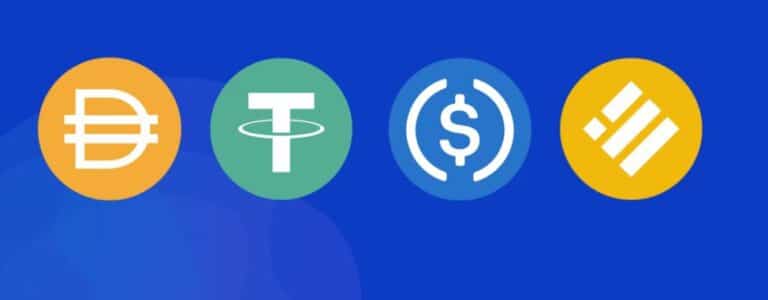
A stablecoin is a blockchain-based asset that maintains a value of $1 – or 1 EUR/GBP/whatever currency it is pegged to – at all times. Centralized stablecoins, like USDT and USDC, rely on bank reserves to ensure every asset in circulation has equivalent backing in fiat currency or other financial instruments. Even though these stablecoins involve an intermediary – Tether for USDT and Circle for USDC – they are also the “safest” stablecoin options due to their fiat currency backing.
Other projects may explore an algorithmic approach to maintain their peg. One good example is DAI, the native stablecoin of the Ethereum ecosystem. Users can supply cryptocurrency collateral to acquire DAI, although the MakerDAO protocol forces users to adhere to a 150% collateralization ratio. You need to supply $1.5 in crypto assets to acquire $1 in DAI. Over-collateralization always ensures enough reserve money to convert from DAI to crypto assets.
Users often leverage stablecoins to trade against other crypto assets – in search of a profit to repay borrowed stablecoins – or to engage in yield farming by providing liquidity on decentralized exchanges. In addition, a stablecoin can be used as a payment tool for goods and services due to them not fluctuating in value.
Unfortunately, other stablecoins attempt to maintain a peg to fiat currency without fiat currency reserves or over-collateralization. Numerous currencies attempting that approach have failed spectacularly, yet developers keep trying to achieve the impossible. That goal may not be impossible, but the approaches tried to date have failed miserably.
The Spectacular Demise Of Luna/UST
The year 2022 has been off to an interesting start for the stablecoin industry. While these pegged assets maintain a relatively high market cap – at least where USDT and USDC are concerned – the algorithmic versions pose some severe issues and risks. That became all the more obvious when UST, the algorithmic stablecoin on the Terra network, plummeted from its peg to a value below $0.01 in a matter of days.
Several factors contribute to the demise of this popular stablecoin. Ongoing market volatility was a problem, as UST was backed primarily by other cryptocurrencies. When that collateral started losing value, it became more and more difficult to maintain the market peg. Columbia Business School professor Omid Malekan went one step further and labeled UST as an “inevitable death spiral”.
More specifically, using an algorithm and sister currency – LUNA – to maintain a $1 peg is virtually impossible. Users could mint UST and see the equivalent value in LUNA destroyed. However, traders could always reduce 1 UST for $1 in LUNA, regardless of UST being worth $1. That, ultimately, became a big problem resulting in a massive LUNA inflation while UST continued to bleed value. Ultimately, both currencies lost all value], and the stablecoin was abandoned altogether.
The demise of UST was not entirely unexpected. Various stablecoins have attempted an algorithmic approach without much success. UST did last much longer than prior attempts, but the complete collapse awards the same fate. Furthermore, UST Depegging forced more users to cash out their stablecoin in favor of LUNA, inflating that asset’s value and continuing the vicious cycle.
Learning From Past Mistakes
It is evident that the issues affecting LUNA and UST should not be allowed to repeat themselves. Unfortunately, it appears that algorithmic stablecoins will not go away either. Even despite recent issues affecting NIRV and DEI, there is still hope such currencies can maintain their fiat currency peg through algorithms. Again, that is not an impossible goal, but the previous approaches clearly do not work.
Joining the ranks of crypto-collateralized stablecoins is the GTON Capital Dollar (GCD). It maintains a soft peg to the US Dollar through smart contracts and can be minted by providing cryptocurrencies as collateral. Moreover, GCD will become the gas currency of GTON Network, an Optimistic Rollup network built on Ethereum. Instead of using volatile crypto assets to cover transaction fees, they can do so with a stablecoin.
It makes sense to create a way to reduce the circulation of GCD by tying it to transaction fees. The success of that stablecoin will depend on how much interest there is in GTON Network, which will go into beta in September 202. Other Optimistic Rollups solutions and crypto-collateralized stablecoins compete for similar traction, but GCD will be the first asset to be used as a gas currency for rollups, which may give it a competitive edge.
Other projects issuing a new stablecoin include Aave Protocol (GHO, over-collateralized with crypto assets), the relaunched Beanstalk Farms stablecoin (BEAN, previously hacked for over $75 million), Stablesats (Lightning Network-based derivatives to create a Bitcoin-backed synthetic dollar), etc. The space continues to heat up and grow more competitive with various ideas and approaches, undoubtedly creating many new opportunities.
Ethereum’s Core Developer Says ETH Merge May Occur Before September 19, 2022.
ETH PoW and PoS chains may merge before the initially planned date.
Terence Tsao, the Ethereum protocol developer, has revealed that Ethereum’s mainnet merge may occur sooner than expected.
According to Tsao, the merge of Ethereum’s Proof-of-Work (PoW) and Proof-of-Stake (PoS) is “tentatively” scheduled for TTD 5875000000000000000000. This means that Ethereum enthusiasts may see the Merge mainnet upgrade occur on September 15 or September 16, 2022.
However, Tsao noted that there is a possibility that the date may change at the last minute.
“Note: nothing is final until it’s in client release, so do expect changes at the last minute due to unforeseen circumstances,” Tsao said.
Tentative Mainnet TTD ?
58750000000000000000000
Note: nothing is final until it's in client release, so do expect changes last minute due to unforeseen circumstances https://t.co/PQ0YOKpk1u
It is noteworthy that Ethereum’s mainnet Merge upgrade was initially tipped to take place on September 19, 2022. Interestingly, Tsao has revealed that the merge upgrade may occur before the initial date.
The Merge is an important aspect of the launch of Ethereum 2.0. While ETH 2.0 is widely celebrated by investors, miners do not feel excited about the upgrade. They believe that a shift from a PoW algorithm to PoS will take away their source of revenue – miners’ rewards.
As a result, top miners have indicated that they will not support ETH 2.0, with things looking like Ethereum may undergo another network fork.
Hottest DEXs on the BSC Chain, ApeSwap, and the Biggest DEXs on the OKX Chain, CherrySwap Announces Integration of FlokiFi Locker Protocol.
Floki’s newly-released, innovative crypto locker solution “FlokiFi Locker” continues to get adoption.
ApeSwap, a leading Automated Market Maker (AMM)/DEX on the Binance Smart Chain network, added support for Floki Inu, announcing that they have entered into a strategic partnership with Floki with an aim to adopt Floki’s newly-released, innovative crypto locker solution FlokiFi Locker as its main protocol for locking LP tokens of projects that launch on its premium launchpad platform.
On the other hand, the biggest Decentralized Exchange on the OKX Chain, CherrySwap, also announced the integration of “FlokiFi Locker” for locking LP tokens of projects that list on its DEX.
?Announcement ?
??We're excited to partner with #FlokiFi Locker, an innovative protocol by @RealFlokiInu!
We will be recommending projects listing on CherrySwap to lock LP tokens with FlokiFi Locker.
Formerly, RadioShack and Swapzone have announced the integration of “FlokiFi Locker” into their platform.
On July 31st, Floki Inu introduced the first-ever utility protocol, “FlokiFi Locker,” to protect investor funds from scams and hacks. The newly launched Protocol allows crypto project developers and individuals to quickly and securely lock Liquidity Pool (LP) tokens, NFTs, and fungible tokens.
Founded in 2021, ApeSwap is one of the leading DEXs on the BSC chain that offers a full suite of tools like automated market maker (AMM), yield farming, and staking platform. The exchange works with 224 partners and has a Total Value Locked (TVL) of $111.130 million.
Founded in 2021, CherrySwap is the first and the biggest AMM protocol based on OKExChain, currently boasting a TVL of over $5 million. At the bull market’s peak, Cherry Swap had an impressive TVL of $770 million. The Decentralized Exchange provides diversified functions such as liquidity mining, IFO, NFT, lottery, and DAO.
Football Giants File Joint Crypto Trademark Applications.
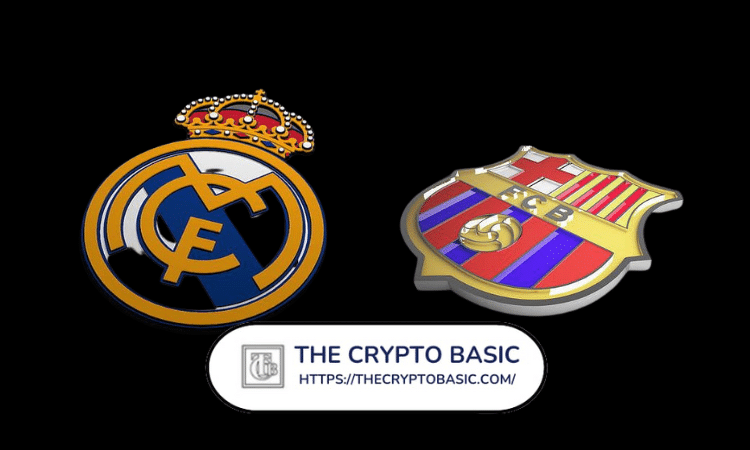
American trademark and patent attorney Michael Kondoudis disclosed on Thursday that football powerhouses Real Madrid and Barcelona had filed a joint crypto trademark application seeking to cover some of their offerings.
Real Madrid and Barcelona File for Trademark Protection
Per the Kondoudis’s disclosure on Twitter, the popular football clubs are seeking trademark protections on some of their virtual products as they plan to explore the metaverse world.
The trademark petition was filed at the USPTO on 5 August with the serial number 97536450, showing that Real Madrid and Barcelona want to protect their crypto-related applications, including Virtual reality software used to manage cryptocurrency transactions on the blockchain technology.
The Spanish La Liga rivals also seek to cover their digital clothing, footwear, headwear, and sportswear.
The trademark protection will also cut across its e-commerce and e-payment technology, which allows users to conduct electronic business transactions using a computer network.
Football powerhouses REAL MADRID and BARCELONA have filed a joint trademark application covering:
Earlier this year, Real Madrid entered the metaverse space to offer a series of products to its global audience, including visits to the famous Santiago Bernabeu stadium.
The Spanish football club has launched its first project in the digital universe dubbed Madrid’s Virtual World. The project provides its fans around the world access to seamlessly interact with all the activities and elements of the club through the metaverse.
Both Real Madrid and Barcelona have also launched their Fan tokens.
— ☀?Crypto Eri 204k Followers (beware of imposters) (@sentosumosaba) August 11, 2022
The move is a campaign flagged off by the bank yesterday and will run until October 31, 2022. According to the bank, new and existing customers can earn up to 8,000 Japanese Yen ($60) worth of Ripple (XRP) when they conduct various services on the platform.
Some of the services that qualify Shensei customers for XRP rewards include opening an account, making the first deposit, first-time login to the portal, etc.
For instance, a customer will be rewarded with a 500 yen ($3.72) coupon when the user opens a new account. However, performing inter-bank transfers will see the customer earn up to 2,500 yen ($18.86).
Notably, users will be given cash coupons via email. The coupon will be redeemable only in XRP and Bitcoin (BTC).
It is not surprising to see Shensei Bank add XRP to the list of crypto assets its customers can use to redeem their cash coupons. Over the years, Ripple has built a solid reputation for itself in the country.
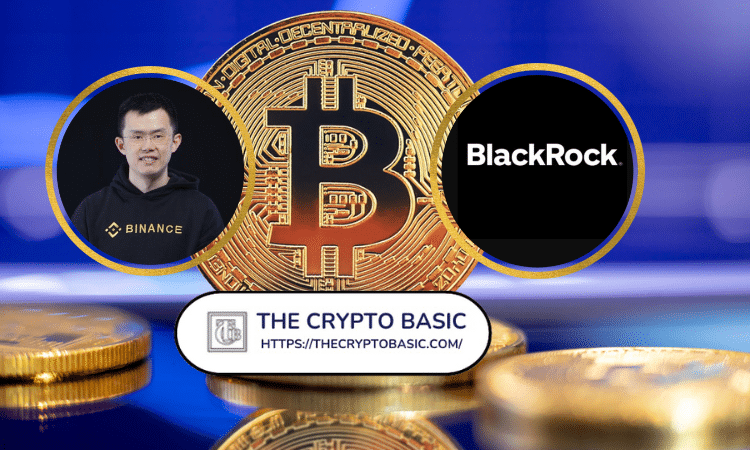
Binance CEO Changpeng Zhao “feels sad” for sellers who sold at the bottom as multi-trillion asset manager Blackrock steps deeper into crypto.
Binance CEO Changpeng Zhao today tweeted that he felt sad for those who sold when the crypto market hit bottom. The billionaire CEO tweet came after investment manager Blackrock announced it would be giving its clients private trust offering direct bitcoin exposure.
In what has been dubbed the “crypto winter” since the start of the year, the crypto market experienced extreme volatility, which wiped billions off the market. The crypto market, which hit a $3 Trillion market cap barely a year ago, dropped below $1 trillion. However, signs of a gradual recovery are emerging, indicating that the worst might be over.
Institutional interest in crypto assets
Following what was months of volatility and institutional crashes, the crypto market is recovering, although at a slow pace. Interest in the market is surging again with a slew of acquisitions, partnerships, and institutional investors’ activities.
In a recent statement, Blackrock revealed that its institutional clients are taking an interest in the crypto market. As a result, the company today, on August 11, launched a private trust that would allow them to invest in Bitcoin. Per the statement, the private trust will be accessible only to its US-based institutional clients. The BTC trust would deliver customers direct exposure to spot bitcoin.
The American multinational company is the largest investment manager in the world, with an estimated $10 trillion worth of assets under its management. Therefore, its increased activity in the market could signal more investment inflow into crypto assets.
This latest announcement comes days after the company reached a deal with crypto exchange Coinbase to offer crypto assets, especially bitcoin, to its clients. However, this sudden burst of interest, especially at a time when the crypto market is experiencing its worst, is surprising to see.
Blackrock CEO Larry Fink, in a July 2021 interview with CNBC, shoved off the possibility of its entering the crypto space, stating a lack of client interest in crypto. According to the CEO, clients are drawn more to longer time assets.
Since the start of the month, the crypto market has progressed positively despite increased regulatory scrutiny in the US. Major cryptocurrencies like Bitcoin and Ethereum have increased in value in the past weeks. The overall market cap now sits at over a trillion, according to data from CoinMarketCap.
US CFTC has approved the SBI subsidiary to offer an OTC for Bitcoin derivatives.
SBI Holdings subsidiary Clear Market has received approval from the United States Commodity Futures Trading Commission to offer over-the-counter (OTC) derivatives products with the physical settlement.
Following the approval, SBI’s Clear Market will start handling U.S. dollar-dominated BTC trading pairs with physical settlements in the United States.
According to an announcement, Clear Market will commence operations in the U.S. by first offering BTC/USD derivatives. However, the market maker will expand its offering soon.
It is worth noting that the development is the first time a crypto-related derivative will be approved as a Swap Execution Facility (SEF).
according to SBI’s official announcement:
“Clear Markets North America Inc. (CM US), which operates over-the-counter derivatives trading platforms in the U.S., U.K., and Japan, in which the SBI Group has a stake, has announced that the U.S. regulator Commodity Futures Trading Commission (CFTC) ) has given approval for over-the-counter crypto asset derivative products that are premised on physical settlement. This approval is the first case for the Swap Execution Facility (SEF)*1, a financial derivatives trading license in the United States. CM US will first start handling USD/BTC and plans to expand the products offered in the future.”
SBI Alpha to Increase Its U.S. Partners
According to the announcement, SBI Alpha has already conducted pilot transactions on the Clear Market platform. Interestingly, SBI Alpha is already planning to expand its partner in the U.S. via Clear Market.
“We will continue to focus on investing in and partnering with digital asset-related venture companies that possess high technological capabilities and will seek synergies with existing digital asset-related companies within the SBI Group,” an excerpt of the announcement reads.
SBI Intends to Build Transparency for Cryptos
Several Bitcoin derivative markets are operated by companies that have no regulatory approval from relevant authorities. Based on this, there is a need to improve transparency and supervision for the future development of the emerging market, Hence, it is necessary to seek approval for its Bitcoin ETF from the CFTC.
SBI describes CFTC’s approval of its Bitcoin derivatives as a major step toward building transparency and supervision for the industry.
It is noteworthy that SBI obtained a 12% stake in Clear Market in August 2018. At the time, SBI hinted that it would increase its stake in the company in the near future.
SBI noted then that the investment was made to establish a crypto derivative platform for institutional investors.