Home Blog Page 2295

Shiba Inu Continues To Burn In Billions, 4.7B Shib Burnt In July, 1B In Past Week, 216M In 24 Hours

0

Shiba Inu Community Burns a Whopping 4.76 Billion SHIB In July 2022, 1.13 Billion In A Week and 216.48 Million in 24 Hours.


Over 4.76 billion Shiba Inu (SHIB) tokens have been burned by the Community in July 2022, 1.13 Billion in a Week and 216.48 Million Shiba Inu (SHIB) in the past 24 hours. One of the Community-led Burning Projects has also incinerated 1250 ShibaSwap (BONE) in the month of July.

Shibburn.com recently released a Monthly Burn figure for July showing Shiba Inu Community has incinerated a whopping total of 4,762,745,494 (4.76B) SHIB tokens through 505 separate burn transactions in the past 30 days.

In another Tweet, Shibburn confirms that the SHIB Army has permanently removed a significant total of 1,138,338,325 (1.13B) SHIB tokens in the last seven days through 122 separate transactions.


1CENT Weekly BURN EVENT:

1Cent organized its Weekly Burn Event on July 25th (Monday). The 1Cent team sent a total of 40,246,445 (40.24M) SHIB to a dead wallet in one significant transaction. At the same time, the project carried out the second noticeable transaction and destroyed a total of 100 Bone.

Past 24-Hour Burn:

Besides weekly burns, a total of 216,487,142 (216.48M) SHIB have been burned by Shiba Inu Community through 32 separate transactions in the past 24 hours.

SHIB Burn Portal Hits a Significant Milestone This Week:

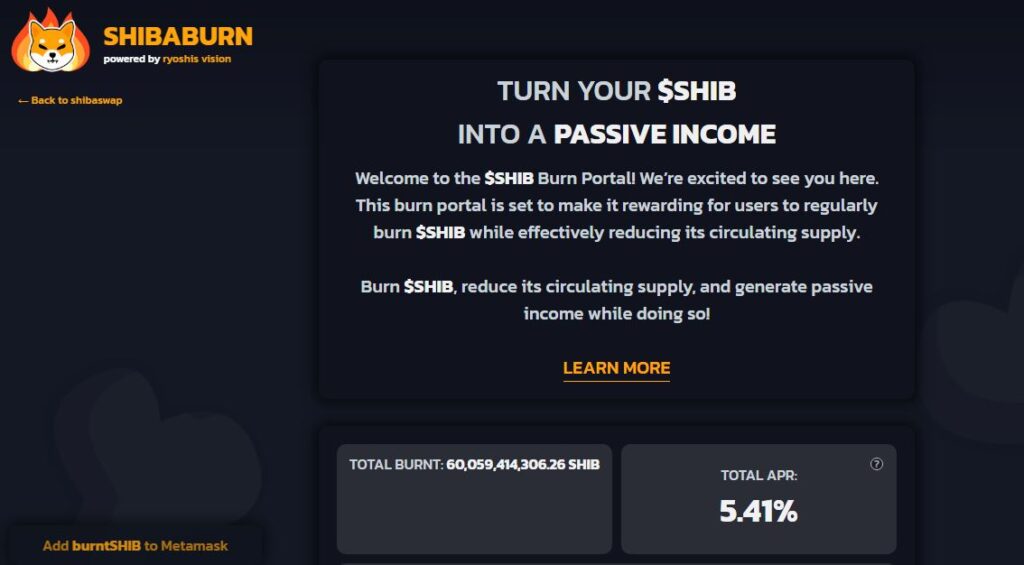
As reported by TheCryptoBasic, On July 30th (Saturday), SHIB Burn Portal reached a new milestone of burning 60 billion Shiba Inu tokens through thousand of separate transactions.

Ripple Ranked Third Among Top 100 Philanthropists in San Francisco Bay Area

0

Ripple’s philanthropic gestures have been recognized by the San Francisco Business Times. 

According to the announcement, Ripple ranked third in the San Francisco Business Times’ Top 100 Bay Area Corporate Philanthropy Awards.

The Silicon Valley tech company was recognized for its immense charitable contributions to the San Francisco Bay Area. 

“The @SFBusinessTimes has ranked Ripple #3 in their Top 100 Bay Area Corporate Philanthropy Awards. We’re proud to support the essential work of Bay Area nonprofits,” Ripple said in a tweet. 

Notably, Ripple’s charitable contributions to the San Francisco Bay Area were $54.16 million in 2021. In the ranking, Ripple was behind Google and The Sobrato Organization, who also made charitable contributions worth $57.7 million and $92.27 million, respectively, in the San Francisco Bay Area. 

Ripple’s Charitable Effort

The leading blockchain company has engaged in several philanthropic gestures across various parts of the world. In 2018, Ripple donated $25 million to foster various financial inclusion initiatives.

As reported by TheCryptoBasic, Ripple announced the completion of a playground in the Bay Area community of Oakland, California. 

“This new playground will further our shared mission to create livable playspaces and sustainable food sources for everyone as part of our deepening commitment to Bay Area communities,” Ken Weber, VP of Social Impact and Sustainability at Ripple, said. 


Nansen Unmasks The Identity and Blockchain Data of a Three Arrow Capital (3AC) Victim 

0

More details have continued to be unveiled in the aftermath of the Three Arrow Capital (3AC) collapse. 

According to a report published by blockchain analytic firm Nansen, the identity of a notorious whale, who also suffered significant losses in the Three Arrow Capital fall has been revealed. 

Mirana Corp address (0x738505fa491c972a196582176685fc790d2bdda5) was included in the list of jilted 3AC creditors. The address, which belongs to Mirana Ventures, lost $13 million in the unfortunate 3AC collapse. 

Details of the “Notorious” Whale

Nansen noted that its attention was drawn to Mirana because the company’s website listed some familiar names as investments, including BitDAO. 

Mirana also filed legal proceedings against 3AC in a Singapore Court. Although Mirana’s website looks scanty, Nansen uncovered eye-catching information about the company’s network. 

While Mirana’s current balance looks low, blockchain data shows that huge sums of Ethereum (ETH) have flowed out of the address in recent weeks. 

The top recipient of Miranda’s outgoing fund is a big DEX trader who has received over 61,000 ETH since the address was created. 

Interestingly, the heavy DEX is a counterparty to 69secrets.eth. 69secrets.eth is known as a protagonist in some of the biggest cryptocurrency farms, and rugs, over the past year. 

“Note that the chain of counterparties here isn’t ironclad, but it’s pretty close – hundreds of millions in ETH and stables flowed between these addresses without any clear “swaps,” indicating it’s not OTC activity or similar,” Nansen stated in its report, adding:  

“I think it’s a fair guess that all three are owned by Mirana and that many of the other counterparties are worth a look as well to get a clearer picture of their holdings, which I’d estimate are worth at least half a billion.” 

Three Arrow Capital’s Collapse

3AC is one of the cryptocurrency hedge funds that went bankrupt this year. The company, which at one point declared managing over $10 billion in cryptos, is considered to have crashed due to a self-inflicted crisis following an unchecked decision-making process. 

After the company crashed, 3AC’s founders went into hiding, claiming that they were being threatened by investors who suffered huge losses. 

3AC is facing a series of lawsuits as investors look to get compensated. 


150 Million Shiba inu Burnt In One Hour As Shib Burn Portal Total Reaches 60 Billion Since Launch

0


Shiba Inu’s official SHIB Burn Portal achieves a major milestone of burning 60 billion SHIB tokens in three months.


Shiba Inu Community is cheering as they have burned a total of 60,059,414,306 (60.05B) Shiba Inu, worth $748,340 (as of current price) through thousand of separate transactions in the past three months.

60B shiba inu Burnt
60B shiba inu Burnt

According to recent reports, the Shiba Inu Community is continuously sending millions of Shiba Inu tokens to “inferno” addresses every hour. Shibburn.com recently reported via tweet that a total of 155,353,699 (155.35M) SHIB tokens were incinerated through three separate transactions using the official SHIB Burn Portal in the past one hour.


Launched in April, SHIB Burn Portal was developed in collaboration with Ryoshi Vision with the aim to encourage SHIB Burns while paying rewards to Shiba Holders.

At the time of writing, the price of Shiba Inu is trading at the price of $0.00001248, up more than 4.73% over the last day, with a 24-hour trading volume of $547,746,477 ($547.74M).

5 Key Trends In The Fintech Industry

Fintech is a rapidly growing industry. It offers both, new solutions to customers and technology for financial institutions. What exactly is fintech? What are the key trends in this industry? Find answers to these and other questions in this paper.

What is fintech?

Fintech is an acronym derived from the English phrase financial technology, which refers to companies that develop digital solutions related to the money circulation. Their main feature is innovation as well as the absence of stationary branches serving customers, since fintechs operate online and offer digital solutions. What else is characteristic of fintech companies? First of all, the fact that most such entities adopt a specific business model based on the provision of one specific service. As a result, fintechs successfully operate in the field of mobile payments, online currency exchange or crowdfunding.

An important and worth of mentioning issue, when characterizing fintech companies, is flexible forms of communication with customers, or a perfectly developed User Experience (customer experience) strategy. As a result, fintechs have become real competition for banks, which is due to the fact that they offer solutions tailored to customers’ needs and they are able to modify their offer flexibly in order to match the current market situation. It is mobility, creativity and dynamism that are the main assets of fintechs, which are increasingly growing on the financial market.

What does the Polish fintech industry look like?

One should be aware that Poland is a local leader in fintech solutions, which is due to the fact that our country is home to the largest number of fintechs in Central and Eastern Europe. Currently, there are more than 300 of them and some of them have achieved international success and, consequently, are highly recognized all over the world. It is also worth noting that the Polish fintech industry has been growing dynamically, as evidenced by the fact that most Polish fintechs were established in the last 3-5 years. What characterizes them? First of all – diversity. Both in terms of the services offered and the operating model as they are start-ups and enterprises that have grown really extensively. At this point it is worth noting that these companies offer services for individual or business customers, but they also provide technologies to banks and other financial institutions. What’s more, new trends are emerging in the market all the time, determining the development of the industry.

5 key trends in the fintech industry

As already mentioned, the fintech industry has been growing rapidly and new solutions have been systematically implemented and offered to customers. What are the current trends in the industry? Here are 5 key ones that are sure to influence the future of the finance sector.

Consultants – robots

Fintech companies make efforts to optimize their operating costs. As a result, they use virtual assistants or advisors – bots that are able to guarantee the highest quality of service and a feeling that a user talks to a human. This is possible due to artificial intelligence as well as machine learning. Big data (processing huge amounts of data) is also proving useful, bots are able to predict future customer behavior and interact with them.

Technology

Providing technology to financial institutions belonging to the banking sector is also an important trend in the fintech industry. Both parties benefit from this as fintechs can implement and develop cutting-edge solutions, and large institutions can implement them into their systems using APIs. As a result, the offer expands to include innovative services, a trend confirmed by experts of X Open Hub, a fintech that provides technology to more than 100 companies in 30 countries around the world.

Fintech solutions in the B2B model have also gained popularity in recent years. Why? B2B start-ups significantly accelerate development of financial architectures of larger enterprises, frequently enabling combining innovative services with existing IT structures in an efficient and secure way due to the APIs. Comment by Sylwester Jezierski, Marketing Manager in X Open Hub

Embedded banking

One of the most significant trends in the fintech industry at the moment is embedded banking, which is solution meaning additional banking or insurance services and products offered by companies whose core business is based on something completely different. As a result, they can gain a new source of income, as well as promote customer loyalty to a particular brand. As a rule, these companies work precisely with Fintechs, which create specific solutions for them and support them on the way of offering such services to customers.

Automation of processes

Fintechs are also working to automate business processes in the financial industry, examples of which include payment monitoring, pre-approval of loan applications or many other repetitive processes. This translates into lower business costs and improved organizational efficiency. It is also worth noting that process automation is now a necessity to remain competitive.

Voice payments

Implementation and development of voice assistants is also proving its worth in the financial industry. Using a smartphone and voice-controlled services a customer can make payments and check his/her account balance or make traditional wire transfers. At this point it is worth noting that this is not only a convenient solution, but also a great convenience for blind people, who thus are no longer socially excluded.

In conclusion, it should be said that the most popular current trends in the fintech industry will certainly stay with us for a long time. This is due to the fact that they are solutions that allow not only developing financial services, but also can pose basis for cooperation between Fintechs and the banking sector.


Solana’s Biggest DeFi Lender Almost Got Rekt. Why?

0

Recently Solana’s biggest DeFi lender almost got rekt. The reason behind the incident was that Solend protocol didn’t set limits on the size of a borrower, causing a butterfly effect on the economic field. As a result, a single whale was responsible for the vast majority of Solend’s SOL guarantees and USDC loans. This guarantee was in liquidation risk if the SOL price dropped a lot. Let’s look at what caused the incident and whether it could have been prevented.

Brian Pasfield, CTO of Fringe Finance, commented on this situation:

Regarding other DeFi lending/borrowing platforms that have acquired a bad name of late, there are differences between non-custodial and many of those platforms. For example, Solana’s Solend did not have debt limits, let alone well-determined debt limits – which means it was poorly designed.

Even if debt limits are incorporated into a lending platform, the debit limits need to be determined in such a way as to properly balance protecting the platform from threats and maximizing users’ capital efficiency. The threats are price manipulation attacks and also the risk of excessive slippage when liquidators dispose of collateral assets won in a liquidation event, which would otherwise act to disincentivize liquidators and ultimately represent a risk of platform destabilization. A poorly-chosen set of lending parameters can result in a platform with little utility because, on one extreme, it could become insolvent and, on the other extreme, could offer too little capital efficiency for borrowers to warrant them using the platform.

What mechanisms does Fringe Finance offer to prevent such situations?

Fringe Finance is a platform that seeks to unlock the billions of dollars of dominant capital tied up in cryptocurrencies by offering guaranteed loans. Its team has developed a parameter modeling framework based on what they consider the sound theory to arrive at lending parameters designed to protect the platform yet maximize its utility for borrowers through relatively high capital efficiency. This solution will help platforms avoid the situations described above. The most recent published modeling is described in this article.

More about Fringe Finance

On June 24th, Fringe Finance, an all-new and inclusive DeFi lending platform, threw a stunning metaverse party to celebrate its Primary Lending Platform (PLP) launch. 

From this date, lenders can deposit $USDC to PLP to earn interest, while borrowers can take out $USDC loans against their altcoins. At the moment, the platform supports $SHIB, $LDO, $APE, $MATIC, $LINK, $TOMOE (ERC-20 $TOMO), $REN, $IOTX, $BNT, and $OGN. However, the initial release is just the beginning of a journey whereby the PLP will progressively add support for a long list of tokens as collateral. 

The First Version of Colombia’s National Land Registry Deployed on Ripple XRPL

0

Ripple partner Peersyst has produced the first version of Colombia’s National Land Registry on XRPL. 


Peersyst Technology, a Ripple partner, has announced that it has published the first version of Columbia’s National Land Registry. The document can be found on Columbia’s National Land Agency website. 

People interested in viewing the document can do so by searching its file number “11774” on the National Land Agency website.  

According to Peersyst, the document was produced in collaboration with Colombia’s National Land Agency “AgenciaTierras” and Ripple. 

“Excited to share that we just put into production the first version of the NationalLandRegistry together with AgenciaTierras and the support of Ripple, to register the first adjudication resolution in Colombia on XRPL,” Peersyst said. 


Colombia’s National Land Registry

Notably, the development is a result of a year’s work conducted by Peersyst in collaboration with Colombia’s National Land Agency and Ripple. 

The solution is built on Ripple’s XRP Ledger (XRPL). Through the solution, the Colombian government plans to register 100,000 adjudications in the short term to build citizens’ confidence in the program. 

As reported, attorney Jeremy Hogan, a Partner at Hogan & Hogan law firm, noted the significance of the solution saying the Columbian national land registry engaging Ripple showcases the perfect example of XRP utility. 

COTI Engage Five More Companies, Extends Cardano Stablecoin Djed Partnerships

0

Djed is getting more and more attraction.


As Cardano’s official stablecoin Djed edges close to its mainnet deployment, several organizations have indicated an interest in using the algorithmic stablecoin.

COTI, the official issuer of Djed, noted that it has recently inked partnership deals with five companies that will use the algorithmic stablecoin on their respective platforms. 

Trading Trent

According to an announcement, COTI partnered with Trading Trent to integrate Cardano stablecoin into its trading system.

The move will enable Trading Trent users to utilize the stablecoin in the purchase of Cardano non-fungible tokens (NFTs) and other ecosystem tokens.

Kirkstone

In a similar development, COTI also partnered with Kirkstone, an organization leveraging Cardano to revolutionize the real estate industry. 

Kirkstone partnered with COTI to integrate $Djed to its platform, to protect its clients from increased market volatility. 

Iagon

As reported by TheCryptoBasic, COTI also announced this month that it has partnered with cloud computing platform Iagon as part of growing Djed’s adoption. 

Iagon is planning to integrate Djed into its upcoming marketplace for decentralized computing resources. The algorithmic stablecoin will play an integral role in the trading process of the marketplace. 

Astarter

Similarly, COTI recently collaborated with Astarter, as part of the growing partnership for $Djed’s adoption. Astarter plans to use $Djed to bring Cardano stable market pairs to its trading platform dubbed the Astarter Decentralized Exchange (ADEX). 

Thrift

Lastly, Thrift, a decentralized finance platform, joined the list of partners willing to use the Cardano official stablecoin on its system. 

“By integrating Djed into their wallet and products like; saving goal use cases, crowd lending, P2P, fiat on-off ramp, multi-payments, and Thrift protocol, Thrift’s users can use Djed to avoid market volatility in saving, making payments, and investing,” COTI stated in an announcement. 

3 United Nations Organizations Adopt Tezos’ E-Voting Solution

0

There has been widespread adoption of a Tezos-based e-voting solution, dubbed Electis. 


In a recent announcement, three United Nations organizations are the latest to adopt the Tezos e-voting solution. 

List of UN Organizations That Adopted Electis

YOUNGO, the official children and youth constituency of the United Nations Framework Convention on Climate Change (UNFCCC) was the first UN organization to adopt the Tezos e-voting solution. 

The organization consists of a network of children below 35 years and other youth NGOs committed to ensuring youth voices are heard by the UNFCCC.  

Another United Nations organization that adopted the Tezos electronic voting solution is SDG7 Youth Constituency. The organization was launched to enable youth globally to have their voices heard in the energy sector. 

It is noteworthy that SDG7 is among the 17 Sustainable Development Goals created by the United Nations in 2015. 

The Tezos’ e-voting solution has contributed positively to the affairs of the SDG7, which prompted comments from a member of the organization:

“Electis is our trusted partner for this year’s election campaign – and hopefully for all future elections.”

Lastly, the Electis voting solution has also been tapped by the Women and Gender Constituency (WGC). The organization comprises 28 NGOs focused on ensuring women’s voices are heard in demand for the realization of their rights and priorities. 

Widespread Adoption of Electis

The adoption of Tezos’ Electis by these UN organizations further suggests the growing number of institutions that trust the blockchain. 

In September 2021, French authorities used Electis as an e-voting program, in a move that would see the solution used in local elections. 

Similarly, Electis has also been tested and adopted in 80 tertiary institutions, including Japan’s Ritsumeikan University and Kings College London. 

Electis is a voting solution that provides an encrypted and anonymous electronic voting system based on the Tezos blockchain. 

Ripple Buyback Millions of XRP Off Secondary Market As ODL ‘Gains Global Momentum’

0

As ODL adoption spikes, Ripple said it would continue to purchase XRP from secondary markets.


Leading blockchain company Ripple disclosed in its recently-published Q2, 2022 financial report that it has been buying back XRP off the secondary market. 

The blockchain company noted that the purpose of the XRP buyback initiative is to sell the acquired crypto asset to On-Demand Liquidity (ODL) businesses. 

According to Ripple, the adoption of its ODL solution has grown tremendously in the previous quarter. ODL volume surged 9x YoY, the report noted. 

Notably, ODL customers have been utilizing the solution beyond domestic remittance and individual payments to bulk payments and treasury flows.   

“Ripple has been a buyer of XRP in the secondary market and expects to continue to undertake purchases at future market prices as ODL continues to gain global momentum,” an excerpt from Ripple’s Q2 2022 financial report reads. 

Ripple ODL Sales in Q2 2022

On-demand liquidity volume grew by 9X in the second quarter of 2022.

In Q2 2022 alone, Ripple sold $408.9 million worth of XRP to ODL customers, which is up from the $273.27 million worth of XRP sold in the previous quarter. 

The total XRP sales made by Ripple to ODL customers in Q2 2022 represented 0.47% of the global XRP volume in the quarter. 

However, some XRP holders are concerned about Ripple buying XRP from exchanges (secondary market) and selling it back to its On-Demand Liquidity (ODL) clients.