
Home Blog Page 517

Shiba Inu to $1? The Hard Math Behind SHIB $1 Price Dream

0

While many investors hope to see Shiba Inu (SHIB) reach the ambitious $1 mark, the mathematical reality paints a much different picture.

Several community members and industry commentators have issued ambitious price predictions for SHIB. Targets ranging from $0.0001 to $0.001 and, in some cases, $1. Notably, the $1 prediction has elicited mixed reactions among Shiba Inu community members.

Some community members argue that Shiba Inu is capable of reaching the ambitious price milestone. For instance, Shiba Inu’s marketing lead, Lucie, previously highlighted a ChatGPT insight to suggest that the $1 target is achievable through significant utility growth and large-scale token burns.

Why a $1 SHIB Price Is Mathematically Questionable

However, stripping away the hype and applying basic math to the prediction reveals a far less encouraging reality. This is mainly due to the massive supply of Shiba Inu, which currently stands at 589.24 trillion tokens.

For context, Shiba Inu is currently trading at $0.00001211 and has a market cap of $7.14 billion. From its current price, SHIB would need to stage a rally of 8,267,538% to reach $1.

If Shiba Inu’s supply of 589.24 trillion tokens stays the same, a $1 price would translate to a staggering $589 trillion market cap. This figure is almost five times the global GDP of $114 trillion and about 148 times larger than the entire crypto market’s estimated $4 trillion capitalization.

Shiba Inu Path to Potentially Reaching $1

The math highlights that Shiba Inu’s massive token supply limits its chances of ever reaching a $1 target. Notably, Shiba Inu has made notable progress in reducing its supply through burns. However, the pace of this progress has significantly slowed in recent months.

Manual Burn

Recall that less than a year after SHIB launched, its supply dropped from the initial one quadrillion to around 590 trillion, thanks to Ethereum co-founder Vitalik Buterin’s 410 trillion SHIB burn.

Since then, the community has continued to support burns as a strategy to increase SHIB’s price. In theory, the $1 target might be reachable if the circulating supply is reduced by 99% or more.

However, recent monthly burn rates have varied between 13 million and 2.31 billion SHIB, and in the past 24 hours, only 232,829 tokens were sent to the burn wallet.

At this rate, it would take many decades to reduce the supply to the level (~7 billion SHIB) required to support a $1 price with a $7 billion market cap.

Shibarium-Powered Burns

Notably, efforts have been made to support Shiba Inu’s burn through the use of Shibarium. This L2 blockchain burns SHIB tokens using a portion of its gas fees.

While fees are paid in BONE, the burn portal converts this to SHIB and automatically sends the token to the burn contract. It has already burned billions of SHIB since launching in August 2024.

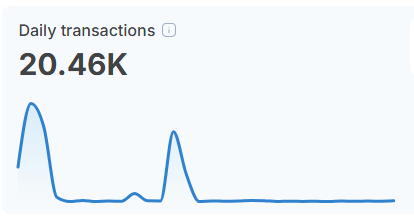
However, the effectiveness of this system depends heavily on the adoption of Shibarium’s network. Recently, Shibarium’s activity has dropped sharply, with daily transactions falling to 20,460, compared to over 4 million per day a few months ago.

Shibarium transaction volume

In Sum

Essentially, without significant adoption of Shibarium and a massive acceleration in token burns, the dream of a $1 SHIB price remains highly unrealistic.

While the community’s enthusiasm is commendable, the math simply doesn’t support such an extreme valuation under current conditions.

Cardano Foundation to Provide Eight-Figure ADA to Boost Stablecoin DeFi Liquidity

0

The Cardano Foundation has unveiled the next phase of its roadmap to boost the mainstream adoption of the Cardano (ADA) ecosystem.

The Foundation shared in a Tuesday tweet that its next focus would be on a variety of new initiatives that could enhance the appeal of Cardano. One of the standouts in the new roadmap is providing eight-figure ADA to boost stablecoin liquidity within the ecosystem.

Cardano Now Targets Its Underperforming Stablecoin Market

The stablecoin scene is one of the sectors drawing all the attention to cryptocurrencies. Institutional interest and regulatory clarity have significantly benefited the fiat-pegged industry, boosting its valuation to $307 billion at press time, per CoinMarketCap.

However, the Cardano ecosystem has not found much joy in its stablecoin market. According to DeFilLlama, the total Cardano stablecoin market cap stands at $38.9 million, which is relatively small compared to its counterparts, such as Ethereum, Solana, and BNB Chain.

The underwhelming stablecoin market has also contributed to Cardano’s poor DeFi market. Currently at $324.82 million, it ranks among the lowest among its peers. Notably, lower-ranking chains, such as Sui, Polygon, and Avalanche, boast more DeFi activities than Cardano.

As a result, the Cardano Foundation has set out to boost the network’s stablecoin liquidity, aiming to attract more DeFi activities. It pledged to commit eight figures in ADA to support Cardano native stablecoin projects.

The Foundation will also back DeFi adoption with the Stablecoin DeFi Liquidity Budget, a governance action currently in the pools. For the uninitiated, the proposal seeks to allocate 50,000,000 ADA ($40.65 million) from the treasury to increase stablecoin liquidity on Cardano.

RWA and DRep Boost for Cardano

Meanwhile, the new roadmap also focuses on backing the Web3 adoption team, with its primary focus on real-world asset (RWA) tokenization. The Foundation will commit over $10 million to RWA launches on the ecosystem to drive greater retail and institutional adoption through collaboration with MembersCap.

The Cardano Foundation will earmark an additional 220 million ADA to establish new delegated representatives (DReps) in the “Adoption and Operations” categories. It will also reduce self-delegation to 80M ADA to minimize its impact on decision-making within the network.

Additionally, the Cardano Foundation will delegate up to 2 million ADA to the Venture Hub by 2026, also to boost Cardano adoption. These approaches signal a shift in focus by the Foundation to enhance Cardano’s reach, especially in emerging narratives in the blockchain space.

Remarkably, Cardano founder Charles Hoskinson lauded the new initiative, noting it is a “good start.” He further encouraged the establishment of a community-elected board, calling it the last mile to reconciliation. Recall that Hoskinson had earlier called for these reforms, blaming the Cardano Foundation for the network’s backwardness.

For context, Hoskinson earlier disclosed ongoing negotiations to bring World Liberty Financial’s USD1 to the network. He also proposed using $100 million in ADA from the treasury to purchase native stablecoins, aiming to boost DeFi on the Cardano network.

CFTC Launches Initiative to Enable Stablecoins as Collateral in Derivatives Markets

0

The U.S. Commodity Futures Trading Commission (CFTC) has announced a landmark initiative allowing stablecoins to be used as tokenized collateral in derivatives markets.

Acting Chair Caroline D. Pham unveiled the plan as part of the CFTC’s modernization agenda. The commission aims to leverage blockchain technology and tokenized assets to improve the efficiency and transparency of derivatives trading.

Pham said the initiative will also enhance collateral management, reduce operational risks, and support greater capital efficiency.

According to Pham, the role of blockchain in financial infrastructure can no longer be considered experimental. 

“Innovation and tokenization are becoming essential for the next phase of U.S. market development,” she noted.

Origins in the Crypto CEO Forum

The initiative originated at the February 2025 Crypto CEO Forum, where regulators and industry leaders gathered to discuss the future of digital finance. Participants highlighted how blockchain could transform collateral practices in derivatives markets, allowing faster settlement and broader market access.

Many of the proposals at the forum drew from the findings of President Donald Trump’s Working Group on Digital Asset Markets. The group had previously recommended that regulators explore tokenized non-cash collateral as a way to strengthen financial stability while supporting innovation.

Guidance and Regulatory Coordination

The Working Group’s report instructed the CFTC to issue new guidance through its Global Markets Advisory Committee (GMAC) and Digital Asset Markets Subcommittee (DAMS). These committees have been tasked with examining tokenized collateral and shaping pilot programs that can later be expanded across markets.

The effort also reflects closer cooperation between the CFTC and the Securities and Exchange Commission (SEC). Earlier this month, Pham and SEC Chair Paul Atkins released a joint statement calling for harmonized rules on digital assets.

This aligns with the SEC’s “Project Crypto” and the CFTC’s “Crypto Sprint,” both aimed at providing regulatory clarity for fast-growing digital markets.

Stablecoins Take Center Stage

Stablecoins are becoming a growing focus for U.S. regulators. Under the new leadership of both agencies, they have been identified as a top priority. Their importance grew further after President Donald Trump signed the GENIUS Act, the nation’s first legislation dedicated to stablecoins.

The law establishes a regulatory framework for stablecoin issuance and oversight. It also gives agencies a stronger foundation for enforcement.

Open for Public Comments

To ensure broad input, the CFTC has opened a public comment period that runs until October 20. Stakeholders are invited to share views on recommendations from the GMAC 2024 report, potential pilot programs, and proposed regulatory changes linked to the President’s Working Group findings.

XRP Could Soar to $9.6 or $33 Depending on How This Pattern Plays Out

0

A prominent analyst expects XRP to witness an impressive run to new highs, but the extent of this run depends on the path it takes from here.

Currently, XRP has again come under selling pressure, moving in step with the broader crypto market. It recently slipped under the important $3 psychological level and now trades near $2.8. 

However, despite this pullback, analysts remain confident about XRP’s long-term prospects. One such analyst, EGRAG Crypto, has called attention to recurring chart patterns that suggest XRP could eventually explode. However, he believes the token could climb toward $9.6 or $33 if history repeats.

Historical Context

Specifically, EGRAG shared a two-week chart that tracks XRP’s price action all the way back to 2014. In his analysis, he highlighted the importance of the 21-day exponential moving average (EMA), which has acted as a decisive support level in earlier cycles. 

For instance, during the 2017 run, XRP retested the support at the 21 EMA twice toward the end of 2017. According to EGRAG, this retest set up the foundation for XRP to witness a price surge. Interestingly, by December 2017, XRP saw a massive 1,610% rally that carried it to about $3.31 in January 2018.

Meanwhile, the 2021 cycle played out differently. Specifically, the SEC lawsuit forced the market to break below the 21 EMA in December 2020. Nonetheless, once XRP managed to close back above the EMA and retest the support, it delivered a strong 414% move that pushed it to roughly $1.96 in April 2021.

XRP Faces Two Long-Term Paths

Today, the setup looks familiar. According to EGRAG’s chart, in June 2025, XRP retested the 21 EMA for the third time when it slumped to $1.9. Notably, EGRAG identified this as possibly the beginning of another major leg higher. 

XRP 2W Chart EGRAG Crypto
XRP 2W Chart | EGRAG Crypto

However, he believes there are two possible outcomes based on past performance. First, if XRP follows the same path it took in 2017, the market could see a 1,610% surge, taking the price toward $33. 

Nonetheless, if the 2021 pattern repeats, then a 414% rally would put XRP near $9.6. Importantly, both outcomes assume that the starting price is around $1.9, which lined up with XRP’s level at the time of the June retest.

For now, the market still wrestles with the $3.31 resistance line, which matches the peak from 2017. XRP currently changes hands at $2.84, just under this key level. Also, trading volume around the retests shows strong participation, indicating that these areas remain crucial for deciding the token’s long-term direction.

XRP Short-Term Price Action

Meanwhile, other analysts have discussed short-term trends. For instance, market watcher DustyBC recently described the current four-hour chart as stagnant compared to earlier updates. 

He expects XRP to stay in a sideways range for now and advises traders to stay patient. DustyBC believes the smarter move is to wait for the price to break above a confirmed buy zone before entering. According to him, this strategy has helped many avoid false starts in the past.

On the other hand, Casi Trades expects more immediate upside. She recently pointed to a double-bottom pattern near $2.70 that formed after a sharp wick down at the end of XRP’s consolidation phase. She believes the drop came from over-leveraged liquidations rather than genuine selling pressure. 

XRP 4h Chart Casi Trades
XRP 4h Chart | Casi Trades

Since then, XRP has recovered above the 0.5 Fibonacci retracement at $2.79, and candles have continued to respect that support. Casi expects another retest of $2.79, this time with a bullish divergence on the four-hour relative strength index.

If this signal appears, she believes XRP will start a Wave 3 rally with targets at $4.00 and $4.40, which align with the 2.618 and 3.618 Fibonacci extensions. However, the analyst cautions that a drop below $2.70 would reset the trend and push XRP toward the 0.618 retracement at $2.58.

Kazakhstan Central Bank Launches First National Stablecoin on Solana

0

Kazakhstan has officially entered the stablecoin market with the launch of Evo (KZTE), a digital asset tied to the national currency, the Tenge. 

The announcement was part of the National Bank of Kazakhstan’s program to test new digital assets and financial technologies in a controlled environment.

Collaborative Effort with Global Partners

Evo, a new stablecoin, is issued through a joint effort by Intebix, a crypto trading platform, and Eurasian Bank. Global tech players Solana and Mastercard are also on board.

Solana provides blockchain infrastructure, while Mastercard will connect KZTE with international stablecoin issuers and payment networks.

Intebix founder T. Dossanov calls the partnership a key milestone for Kazakhstan’s digital economy. He stressed that the project combines local financial expertise with global blockchain and payments technology.

Active Role of the Central Bank

Unlike many countries where private firms lead stablecoin projects, Kazakhstan’s central bank is directly involved. The regulator is not issuing the token itself but is providing the legal and operational framework for its development.

“This is the first time a central bank has played such a proactive role in stablecoin issuance,” Dossanov noted. Officials argue this approach strengthens regulatory oversight while allowing innovation to flourish.

Purpose and Real-World Use Cases

The Evo stablecoin seeks to create a bridge between digital assets and traditional finance. Key applications include expanding the crypto-to-fiat channel, making exchanges more seamless, and supporting transactions through crypto-linked cards.

By enabling direct use in payments, the stablecoin could help businesses, fintech firms, and consumers interact more efficiently across the financial system. The initiative also highlights Kazakhstan’s intention to promote blockchain-driven solutions that can compete on a global scale.

A Milestone for Kazakhstan’s Digital Economy

At the launch event, National Bank Governor Timur Suleimenov called Evo “Kazakhstan’s first stablecoin denominated in our national currency”. He added that blockchain technology and digital assets could enhance financial inclusion, improve payment systems, and boost economic growth.

Suleimenov also emphasized the need to strike a balance between innovation and regulatory stability. According to him, Evo’s pilot project will test both the technology and the safeguards needed to protect consumers.

Broader Strategy: From CBDC to Stablecoins

The stablecoin launch is part of a broader national strategy. In 2023, Kazakhstan introduced its central bank digital currency, the digital Tenge, which improved processes such as VAT reimbursements.

Earlier this year, authorities also approved the use of USD-pegged stablecoins, such as Tether USDT, for regulatory fee payments.

Kazakhstan has also emerged as one of the leading global hubs for Bitcoin mining. The country accounted for approximately 13% of global mining power. This position gives Kazakhstan a unique influence in the global digital finance ecosystem.

Fold Holdings Unveils Bitcoin-Only Credit Card Offering Up to 10% BTC Back on Purchases

0

Bitcoin financial services company Fold Holdings has announced the launch of its credit card, which offers rewards in BTC. 

The company announced the development in a press statement today. Notably, it partnered with financial giants Visa and Stripe to expand access to Bitcoin through everyday spending.

According to the announcement, the Fold card is issued on the Visa network and powered by Stripe Issuing.

Reward Package

Users who make purchases with the card will earn up to 3.5% back in Bitcoin rewards. Cardholders receive 2% back instantly, with the remaining 1.5% available when they pay off their balance through a Fold Checking account.

Furthermore, special deals with participating brands, such as Amazon, Home Depot, Starbucks, and Target, could offer users an additional reward of up to 10%.

According to the announcement, Fold will automatically distribute the rewards in Bitcoin to users’ accounts.

Simple Access to Bitcoin

Commenting on the launch, Fold founder and CEO Will Reeves praised the credit card initiative, noting that it simplifies access to Bitcoin. He suggested that the card eliminates the complexity often associated with most crypto-based reward systems.

According to Reeves, users are not required to stake tokens, manage spending categories, or maintain exchange accounts to access the card.

Stripe’s Head of Money Management Product, Sateesh Kumar Srinivasa, expressed excitement about powering the card through its Stripe Issuing platform.

Additionally, Cuy Sheffield, the Head of Crypto at Visa, celebrated the launch. He noted that cardholders can use the Fold Credit Card to earn Bitcoin rewards on purchases made anywhere Visa is accepted.

Fold’s Efforts in Driving BTC Adoption

As a Bitcoin financial services company, Fold Holdings provides the necessary infrastructure for businesses and individuals to save, earn, and spend BTC. Since its launch, it has introduced several products, including a custody and trading platform, a Bitcoin Gift Card, and a Bitcoin Debit Card.

It has also distributed $83 million worth of Bitcoin rewards from a total transaction volume of $3.1 billion. Following the launch of its Bitcoin Credit Card, Fold intends to expand this ecosystem by paying out BTC to users on everyday purchases.

The initiative aims to broaden Bitcoin’s adoption by simplifying access to the cryptocurrency. Rather than navigating the complexities of buying Bitcoin on exchanges, users can seamlessly earn it as rewards on everyday purchases at any merchant that accepts Visa.

Several crypto companies have previously introduced similar initiatives. As reported earlier, Gemini rolled out its credit card, enabling users to earn up to 4% back in cryptocurrencies, such as Bitcoin, on every purchase.

SEC Chair to Introduce Crypto Trading Exemptions to Speed Product Launches

0

The U.S. Securities and Exchange Commission (SEC) is planning a major policy change that could transform the crypto industry.

According to a Bloomberg report today, SEC Chair Paul Atkins plans to introduce an “innovation exemption” by December. This will allow crypto firms to launch products in the United States without facing what he calls “burdensome regulatory requirements.”

The SEC admits that current rules, made for traditional finance, are holding back new blockchain technologies. Atkins said the agency will spend the next few months writing new rules to help crypto firms enter the market more easily.

From Crypto Crackdowns to Clarity

Atkins’ latest comments continue a series of policy signals since he took office in April 2025. Earlier this month, he declared, “Crypto’s time has come,” pledging to replace surprise enforcement actions with more explicit guidance and to end what industry leaders had described as a regulatory “witch hunt.”

Meanwhile, in a September 15 interview with the Financial Times, Atkins promised firms will no longer fear regulators “bashing down their door” over technical violations. Instead, the SEC intends to give warnings and opportunities for compliance before pursuing enforcement.

Building the U.S. as a Global Crypto Hub

Atkins has consistently emphasized that the United States must compete globally in digital assets. He has praised the European Union’s MiCA framework as a model for comprehensive crypto regulation and has called for international cooperation to align global standards.

His policy vision includes encouraging the creation of crypto “super-apps” platforms where users can trade, stake, lend, and store digital assets under a single regulatory license. He also sees the convergence of blockchain and artificial intelligence as the next frontier for financial innovation.

Reversal of the Biden-Era Approach

Essentially, the planned exemption further marks another big change from the Biden administration’s tough approach, which many crypto leaders said forced innovation to move abroad. 

Under Trump’s pro-crypto policies, the Atkins-led SEC is supporting digital assets instead of strictly controlling them.

With the incoming exemption, U.S. crypto companies will launch new products much faster, helping the country become a top global center for blockchain development.

Cardano Founder Says RWA Tokenization Will Lead the Majority of Growth in Crypto Over the Next 5 Years

0

Cardano founder Charles Hoskinson has predicted that RWA tokenization will be the next narrative to drive the crypto market over the next five years.

He made this statement at the ongoing Korea Blockchain Week (KBW) 2025, which began on September 22. During an interview with CoinDesk, Hoskinson highlighted how tokenization will shape the future of blockchain technology and the role the United States will play in driving this emerging narrative.

$10T Real-World Assets Can Be Tokenized

A staggering $10 trillion—that is the value of real-world assets that Hoskinson believes can come on-chain. Currently, the total cryptocurrency market cap stands below $4 trillion, meaning that approximately 2.5 times the current market value will enter the industry in the foreseeable future.

Remarkably, the RWA tokenization niche is gaining momentum, with the prospect that it is feasible to tokenize assets existing in the traditional financial system becoming more practicable. This sector has the support of BlackRock, the world’s largest asset manager, with its CEO, Larry Fink, suggesting that everything can be tokenized.

Interestingly, Hoskinson shares this sentiment too. He asserted that this sector would send the crypto industry to newer heights over the next five years. He also believes that the United States would play a crucial role in giving the tokenization narrative the spotlight it deserves.

The United States Will Lead the Tokenization Sector

However, as lucrative as tokenization can be to the crypto sector, Hoskinson noted that the details of its execution remain unclear. The Cardano founder says this is because of an existing knowledge gap between intent and output.

“We don’t quite have the understanding of how to make securities work in the blockchain space,” Hoskinson stated.

Specifically, some of the grey areas he claims exist are disclosures, broker-dealer workings, custody, and KYC for cross-border settlements. Again, he noted that the United States is working on these details and, when it does sort them out, will power the multi-trillion-dollar sector.

“We’ll (the US) create one unified securities market across the entire world,” the Cardano founder stated, insisting it would lead most of the growth in crypto in the next five years.

Remarkably, Hoskinson’s comments align with the growing belief in the crypto industry that tokenization will power the future of blockchain. Prominent fintech firm Ripple also highlighted predictions that the RWA tokenization sector could expand to $19 trillion by 2033.

The Cleanest Way to Invest in Tokenization

While Hoskinson noted it would lead to a broader market rally, recent reports have revealed the best ways to gain exposure to the impending RWA tokenization boom. Bitwise CIO Matt Hougan revealed in a note in July that XRP and Ethereum are the “cleanest way” of investing in tokenization.

With Ripple and the XRPL Ledger appropriately positioned to lead the sector, Hougan believes XRP would benefit as tokenization grows. Ethereum’s institutional traction and robust smart contract ecosystem will also encourage tokenization, rewarding Ether holders.

Ripple Brings RLUSD to BlackRock’s BUIDL Fund

0

Ripple has formed a new partnership with Securitize, giving investors in BlackRock’s BUIDL fund and VanEck’s VBILL the ability to swap their shares directly for RLUSD. 

According to a press release today, the collaboration introduces smart contract functionality that runs nonstop, creating a reliable liquidity channel for tokenized treasury funds.

Ripple Partners with Scrutinize to Bring RLUSD to BlackRock’s BUIDL

The move is part of Ripple’s effort to connect traditional finance with blockchain-based tools, the firm said. Notably, linking tokenized funds to RLUSD gives investors a stable way to exit while still keeping access to on-chain yields and DeFi strategies.

Jack McDonald, Ripple’s SVP of Stablecoins, said the firm designed RLUSD with institutions in mind. According to him, the stablecoin boasts regulatory clarity, stability, and security, making it suitable for enterprises that need liquidity without leaving compliance behind. He added that the integration creates new flexibility and utility for tokenized assets.

Meanwhile, Carlos Domingo, chief executive of Securitize, called the partnership a major step forward in automating liquidity for tokenized products. He said it delivers real-time settlement and programmable liquidity for a new generation of compliant on-chain investments.

Also, Ripple noted that RLUSD follows strict safeguards. Specifically, the stablecoin has a one-to-one backing by highly liquid assets, protected by clear reserve rules, verified through independent attestations, and issued under the New York Department of Financial Services charter. 

According to Ripple, since its launch in late 2024, RLUSD has climbed past $700 million in circulation. This has been due to its use in the company’s payments network, decentralized finance pools, and crypto on- and off-ramps. Currently, RLUSD has a valuation of $741 million, making it the eighth-largest stablecoin in the market.

Ripple Execs and XRP Community React

Interestingly, Ripple executives also highlighted the recent milestone on X. Brad Garlinghouse, Ripple’s CEO, said holders of BUIDL and VBILL can already redeem their shares for RLUSD on Ethereum, with support on the XRP Ledger coming soon. He stressed that the new setup gives investors instant access to on-chain liquidity.

Further, Monica Long, Ripple’s president, indicated that the company has seen strong momentum around RLUSD. She highlighted the recent partnership with DBS and Franklin Templeton, which already uses RLUSD for tokenized lending and trading. 

Long suggested that the new integration with Securitize builds on that progress by opening a compliant and liquid off-ramp for BlackRock and VanEck’s tokenized funds.

Meanwhile, in the XRP camp, community figure WrathofKahneman called attention to an important speculative detail that most might overlook. 

Notably, he pointed out that Securitize is one of the few fully licensed tokenization platforms, which sets Ripple apart from rivals. According to him, if Ripple weaves Securitize into its infrastructure, the company could combine licensed securities, custody, and payments under the RLUSD umbrella. This is something Circle does not offer.

RLUSD Seeing Impressive Growth

The latest development confirms how RLUSD has grown quickly since its launch last December. Ripple introduced it globally under NYDFS supervision and later integrated it into Ripple Payments for cross-border transfers. Major exchanges like Kraken and Bitstamp added support early on. 

Shortly after, Swiss-based Amina Bank began supporting it, and distribution in Europe expanded through Luxembourg. Ripple then partnered with SBI in Japan and, most recently, rolled RLUSD out across Africa with the help of Chipper Cash, VALR, and Yellow Card.

Expert explains XRP $943 Price Scenario, Citing Ripple CEO Brad Garlinghouse

0

An analyst has broken down how XRP price could cross the $900 mark if it captures 14% of SWIFT’s $1.5 quadrillion in annual transaction flows.

For context, the suggestion that XRP could take over this much volume from SWIFT originally came from Ripple CEO Brad Garlinghouse in June.

Now, XRP analyst Diana has brought renewed attention to this claim, using it to argue for an aggressive triple-digit price target for the coin.

$210T Moving Through the XRP Ledger

Notably, Garlinghouse’s five-year outlook comes as real-world asset tokenization, stablecoin development, exchange-traded funds (ETFs), and central bank digital currencies (CBDCs) are seeing their highest levels of adoption.

Amid this, Diana suggests that XRP could benefit from a historic liquidity wave that pushes its price to unprecedented points. 

Notably, she claimed that SWIFT moves $1.5 quadrillion in annual payment flows, although reports of $150 trillion annually are more common. Using the ambitious $1.5 quadrillion figure, capturing 14% would mean about $210 trillion in transactions moving through the XRP Ledger.

To XRP proponents, such a scale of volume would be a game-changer for the coin, trading under $3 today.

“All the Money” Narrative 

Furthermore, Diana claimed that Ripple’s network is already in talks across multiple large-scale financial sectors. She cited various valuations for monetary flows that major institutions supposedly process annually.

Specifically, the analyst referenced DTCC settlements of around $3 quadrillion. Notably, Ripple’s connection here is through its acquired prime broker, Hidden Road.

Global banks (U.S. and Japan) hold $37.5 trillion in deposits. The company has widely known partnerships with firms like BNY and SBI.

Diana also mentioned Visa, Mastercard, and American Express, which handle $26 trillion in annual payments, as well as tokenization markets projected to reach trillions this decade.

To XRP supporters, these connections strengthen the argument that XRP is positioned to grow far beyond retail speculation, becoming a backbone for high-value institutional flows.

Breaking Down the XRP $943 Price Math

According to Diana’s calculations, capturing just 1% of the estimated $530 trillion in global financial flows could imply an XRP price near $96.

In a more ambitious scenario, with a 5.6 billion “effective” circulating supply and 14% of SWIFT flows, the price could theoretically surge toward $943 per XRP. 

For a coin trading under $3 today, this projects a 314x return that would turn a 2,000 XRP portfolio into over $1.8 million.

She said even smaller participation, such as 0.1% of global flows, would equate to a potential valuation of about $9.60 per token, underscoring the scale of the opportunity.

“Just Wishful Thinking”

Meanwhile, this aggressive prediction by Diana has attracted significant attention in the crypto community, with many laughing it off.

While the numbers remain speculative, the scenario highlights what many long-term XRP supporters envision. Other XRP commentators have leveraged similar analyses to even call for loftier prices beyond $10,000.

Outside the XRP community, however, many dismiss these analyses as wishful thinking or outright “BS.”