Home Blog Page 876

Bitcoin Slips Below $80K: Is a Crash Under $70K Next?

Bitcoin broke below $80k with a 24-hour low at $76,600. The short-term recovery reclaims $80k, but will the growing fear lead to a crash under $70k?

Bitcoin has witnessed a 24-hour pullback of 2.76%. The trading range of the past 24 hours in BTC extends from a low of $76,600 to a 24-hour high at $83,955. This highlights massive volatility in the BTC price trend over the past 24 hours. 

Currently, the intraday recovery in BTC keeps its price at $80,196. With Bitcoin marking five consecutive bearish candles in the daily chart, is it likely to hit the sub-$70K levels? Let’s find out.

Santiment Suggests Quick Bounce Back in Bitcoin 

However, a post by Santiment revealed that the crowd fearing a chance of a pullback below $70,000 has historically seen quick bullish bouncebacks. On February 27, the high mentions of $69K BTC price or below saw a quick bounce back.

Similarly, this pattern was repeated on March 4 and March 9. On March 10, the rise of the social volume of Bitcoin crossing below $70k signals a high possibility of a temporary bounce.

Image

Analyst Thinks It’s Just A Retest, Targets $300k

With strong optimism, technical analyst Gert van Lagen suggests that Bitcoin is simply undergoing a retest before a potential rebound. According to van Lagen, Bitcoin is currently retesting the broken neckline of an inverted head-and-shoulder pattern that has developed over a four-year period. This pattern targets a price of $300,000.

Supporting his technical analysis, the analyst notes that Bitcoin’s price trend is following a parabolic, step-like formation, which reinforces the potential for continued upward movement.

BTC Price Down at Crucial Support Trendline

Crypto analyst Ali Martinez highlights an important support trendline in Bitcoin’s 3-day price chart. Bitcoin is currently testing this crucial trendline, having pulled back by nearly 8% over the past three days.

However, Martinez also points out the possibility of a volatile market with increased uncertainty in the third year of a bull market. In this bull market, the first year underperformed, while the second year outperformed expectations. The third year, however, has followed a similar pattern to an average bull market, characterized by high volatility and potential shakeouts.

Bitcoin Price Analysis Reveals Double-Edged Action 

Per our last Bitcoin price analysis, the breakdown of a triangle pattern on the daily chart has resulted in a sharp correction. With a 24-hour low of $76,600, Bitcoin is approaching the 50% Fibonacci retracement level.

While the intraday recovery suggests a possible rebound, increased selling pressure near the 61.8% Fibonacci level at $81,855 could cause another bullish failure. Bitcoin’s price, fluctuating near the $80,000 mark, still shows a strong bullish divergence in the daily RSI line.

This indicates the possibility of a bounce in Bitcoin’s price. Based on Fibonacci levels, a daily close above the 61.8% level or below the 50% level will serve as critical price triggers.

On a bullish note, a breakout could push the price to $91,780. However, a breakdown could test the $69,699 support level.

Ethereum Whales Stare Down 9 Figures in Liquidations Amid Market Crash

0

Crashing Ethereum price sees whales scrambling to sure up large loans.

Whales, referring to crypto investors with significantly large holdings, are typically known for preempting and driving market moves. But not even this class of investors has been spared in the recent bloodbath.

Over the past 24 hours, reports from leading on-chain trackers suggest that a number of these investors with significant Ethereum holdings have been left scrambling amid the market’s most recent retreat, which has seen the asset drop 18% from a high of around $2,150 to as low as $1,750.

Ethereum DeFi Loans in Focus

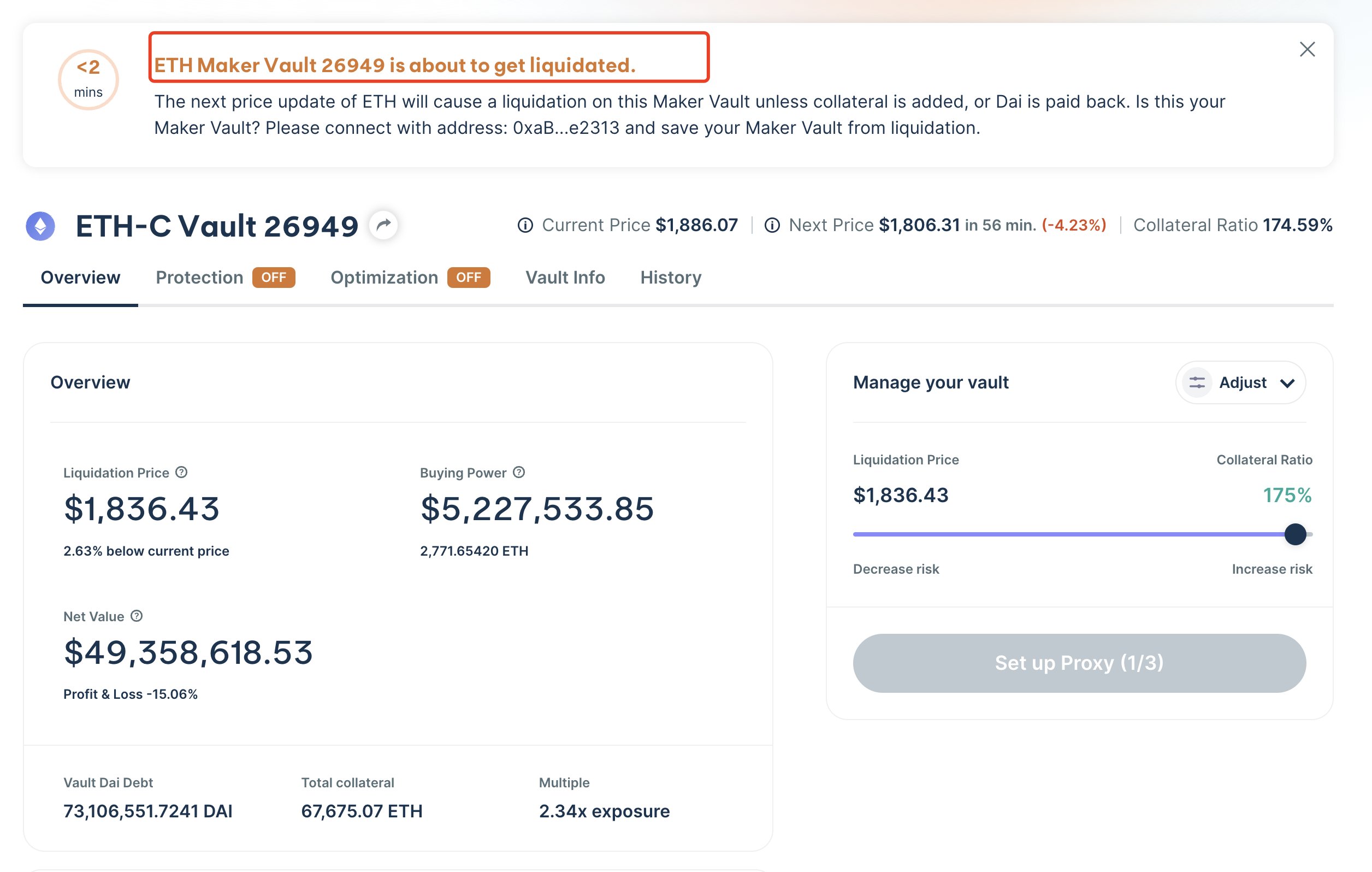
As highlighted by crypto smart money tracker Lookonchain, one whale who took out a loan of over 73 million DAI with over 67,000 ETH (nearly $122 million) in collateral on Maker should have been liquidated as ETH fell below $1800 as its liquidation price was around $1,836. 

Ethereum Whale Lookonchain on X
Ethereum Whale | Lookonchain on X

However, the whale appears to have been saved by oracle pricing inefficiencies that placed the price of ETH just below $1,900 and afforded it time to pay back some 1.53 million DAI of its debt and sell nearly 3,000 ETH of its collateral to achieve a new liquidation price of $1,781, even has ETH rebounded to $1,900 at the time of writing.

Another whale on Maker, with nearly 61,000 ETH worth $109 million in collateral and a liquidation price of $1,798.64, also appears to have been saved by oracle inefficiencies and the slight market rebound. Unlike the previous whale, this whale did not have to put up any fresh collateral or try to pay off its loan.

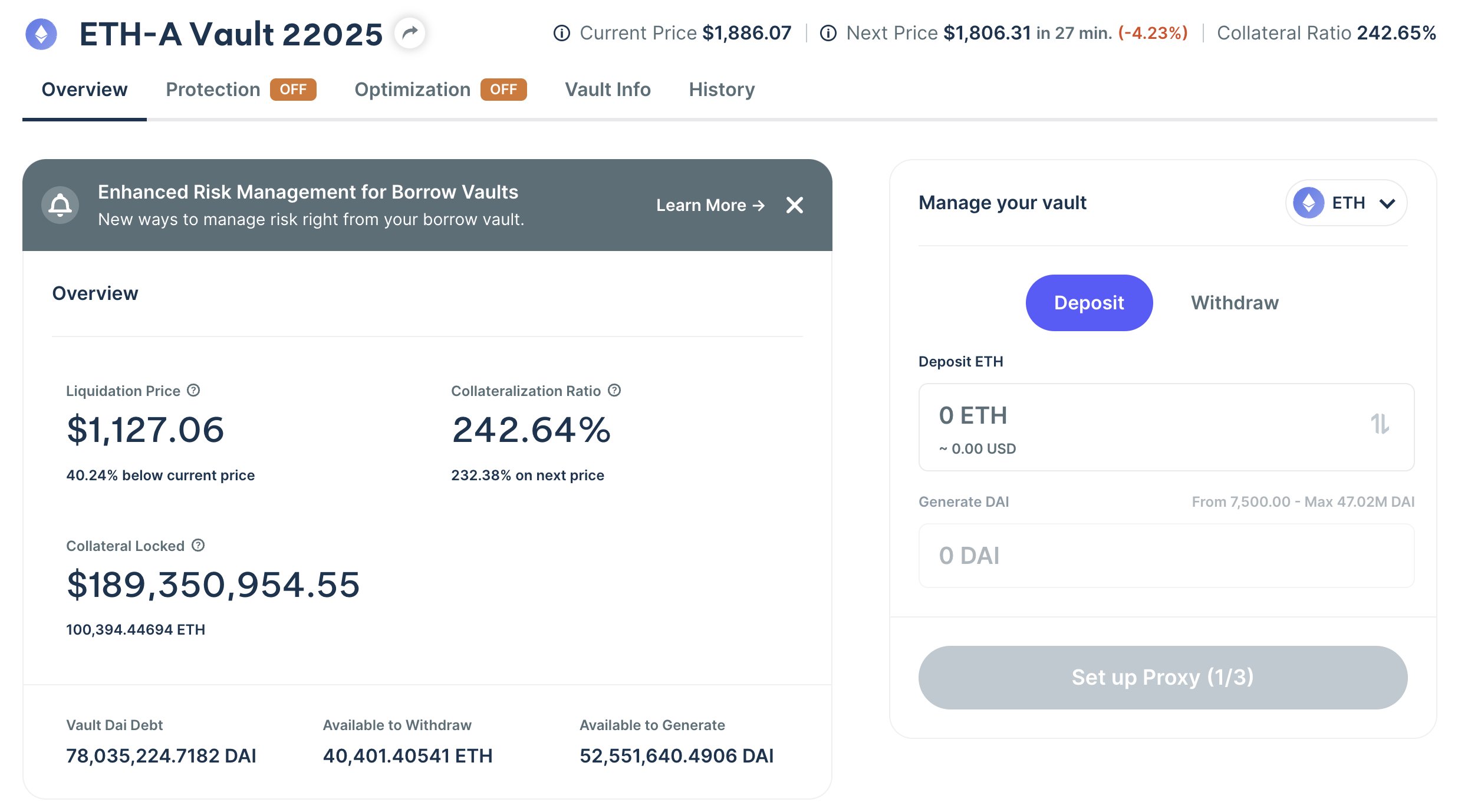
Meanwhile, a whale with ties to the Ethereum Foundation had to nearly double its risk by sending an additional 30,000 ETH worth over $56 million in collateral to Maker to bring its total collateral to over 100,000 ETH worth $182 million with a liquidation price of $1,127.06.

Lookonchain on X
Lookonchain on X

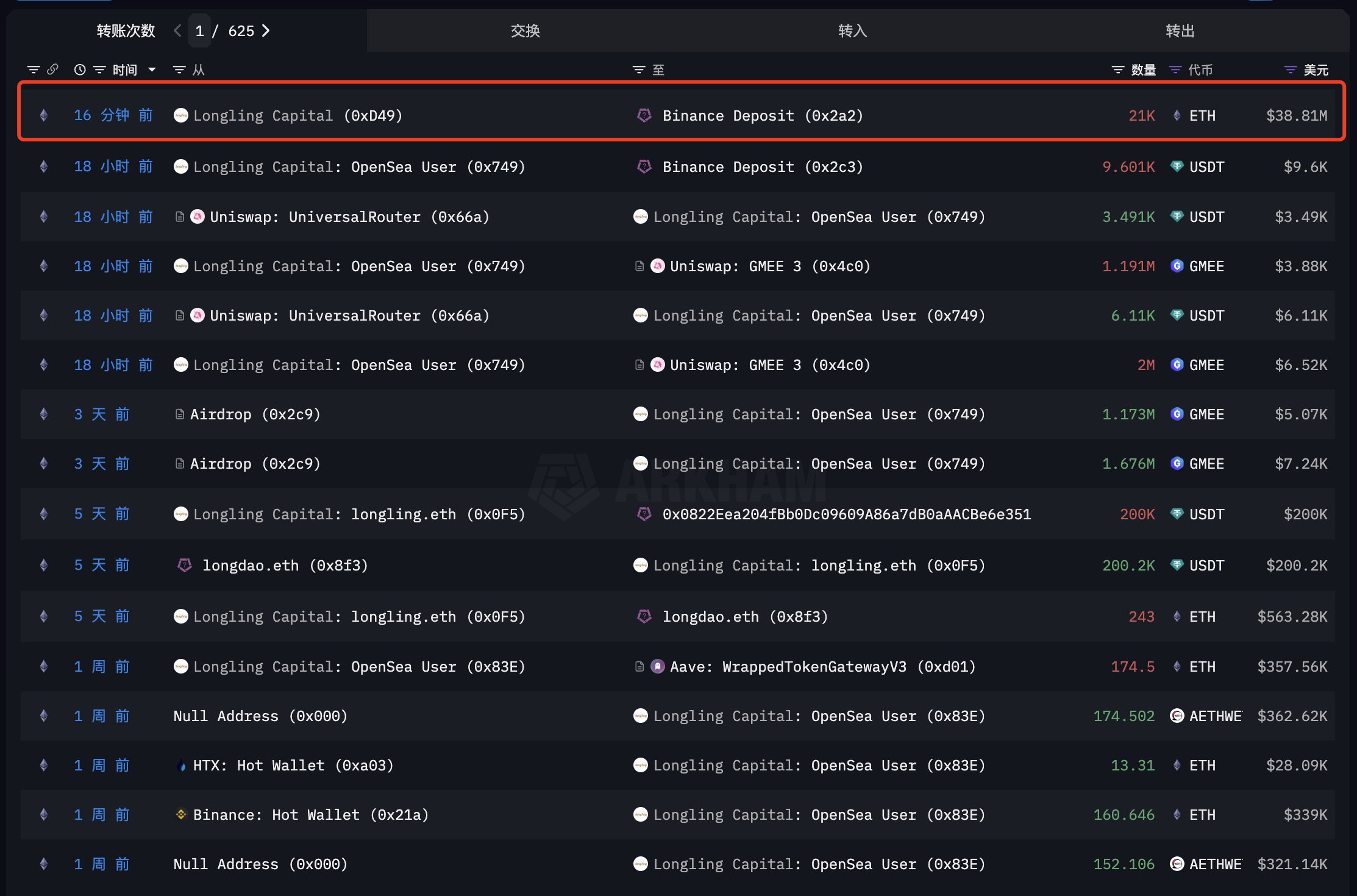
At the same time, Longling Capital, founded by Meitu founder Cai Wensheng, is also suspected to be among the whales facing liquidation risk. Over the past 24 hours, the firm has sold 21,000 ETH on Binance worth nearly $39 million and sent another 299 ETH to Aave in suspected loan rebalancing efforts.

Longling Capital
Longling Capital

The venture capital firm is no stranger to large Ethereum liquidations, as it had lost 94,000 ETH worth $114 million to liquidations in the 2022 bear market.

The recent market bloodbath comes as trade war concerns have quickly devolved into recession fears. Beyond crypto, the Nasdaq Composite fell 4% in its worst session since September 2022, while the S&P 500 dropped 2.7% to trade near 5-month lows.

ESM Chief Warns Trump’s Crypto Push Poses Threat to EU’s Strategic Autonomy

0

The European Stability Mechanism (ESM) has voiced concerns regarding the United States’ stance on crypto, citing a blow to Europe’s monetary autonomy. 

According to Pierre Gramegna, Managing Director of the ESM, the Trump administration’s endorsement of digital assets, particularly dollar-backed stablecoins, may impact Europe’s financial sovereignty. 

Speaking in Brussels on Monday, Gramegna stated that an increase in the adoption of U.S. stablecoins could lead to a resurgence of global technology firms launching payment solutions based on these assets.

President Trump Stance on Crypto

For context, the Trump administration has taken a significant step in integrating digital assets into the financial system by signing an executive order to establish a Bitcoin reserve. 

The order, signed last week, also includes a separate stockpile of various cryptos obtained through legal forfeitures. Notably, an earlier executive emphasized the need for the U.S. to dominate the stablecoin market to promote the use of the U.S. dollar globally. 

These moves underscore the Trump administration’s shift toward embracing digital currencies.

Threatening Eurozone’s Financial Stability

However, ESM’s Gramegna suggested these developments could threaten the eurozone’s financial stability by increasing reliance on dollar-backed digital currencies. The ESM has reinforced its support for the European Central Bank’s (ECB) ongoing efforts to develop a digital euro. 

The urgency behind this initiative has grown, with European policymakers now seeing it as essential to safeguarding strategic autonomy in an evolving financial landscape.

Caution on Bitcoin Reserves

Notably, the ECB remains firm against incorporating Bitcoin into its reserves. During a press conference in late January, ECB President Christine Lagarde dismissed the possibility, citing concerns over Bitcoin’s volatility and potential use in illicit activities. 

She emphasized that central bank reserves must remain liquid, secure, and free from risks associated with money laundering.

Her remarks followed statements from the Governor of the Czech National Bank, who was considering including Bitcoin in its reserves with a limited allocation of up to 5%. 

Despite this, Lagarde asserted that the ECB and its affiliated central banks remain aligned in their position that reserves should prioritize stability and security. While discussions on digital assets continue, the ECB focuses on ensuring that reserve holdings align with strict financial standards.

Pundit Patrick Bet-David Says Something Big is About to Happen for XRP, Pay Attention

Patrick Bet-David, the host of the PBD Podcast and Valuetainment, has sparked attention in the crypto community with his latest comments on XRP.

Bet-David hinted that significant developments could be on the horizon for XRP and the broader crypto space in the next few months. He encouraged his audience to closely monitor XRP, suggesting that important transformations in the crypto market are imminent.

Notably, the catalyst for Bet-David’s remarks came from the historic mention of XRP by President Donald Trump on Truth Social.

Last week, Trump revealed plans for a crypto strategic reserve for the U.S. government, similar to Fort Knox for gold. What caught Bet-David’s attention was that, in Trump’s post, XRP was mentioned first, even before Bitcoin or Ethereum.

This unusual “prioritization” has raised discussion about potential moves for XRP.

XRP Against Bitcoin

In his video, Bet-David compared Bitcoin and XRP head-to-head regarding technology and historical price performance.

He highlighted that Bitcoin takes about 10 minutes for transaction speed, while XRP processes transactions in just 3-5 seconds. In terms of cost, Bitcoin’s fees can become high during congestion, whereas XRP’s fees remain very low.

Bet-David also claimed that Bitcoin is decentralized while XRP is more centralized. As for their use cases, he pointed out that Bitcoin is primarily used as a store of value and for person-to-person payments. Meanwhile, XRP focuses on facilitating cross-border transactions.

In terms of supply, Bitcoin has 21 million coins, whereas XRP has 100 billion. Regarding energy usage, Bitcoin consumes a significant amount of energy, while XRP uses much less. Lastly, Bet-David observed that Bitcoin has broader mainstream adoption while XRP is more niche on institutional use.

Meanwhile, in terms of price, Bitcoin, at the time of the video, was around $86,000, while XRP was about $2.44. Looking back five years, Bitcoin has improved by nearly 6X from $17,000, while XRP’s price has dipped.

However, Bet-David suggested that the disparity could be due to the Ripple and XRP lawsuit, which is in its final stages.

He cited legal experts predicting a potential resolution of the case by the spring or early summer of 2025. Bet-David believes the outcome could trigger a major price move for XRP.

The Case for XRP as a Major Player

Bet-David further explored XRP’s technology and compared it with the renowned payment processor SWIFT.

First, he pointed out that Ripple’s technology, which uses XRP for its speed and low cost, has already gained traction with over 300 financial institutions worldwide, including major players like Bank of America and American Express.

He speculated that XRP’s potential to replace SWIFT as the backbone for international payments could significantly increase demand for the token.

Specifically, Bet-David noted that if XRP were to capture even 5-10% of SWIFT’s daily transaction volume—currently at $5 trillion—XRP’s price could soar to $100.

Diversification Remains Key for Crypto Investors

Given that President Trump’s announcement has further confirmed the legitimacy of the crypto space, Bet-David urged the investing public to start paying attention to crypto. He cautioned crypto investors about over-concentrating in one asset.

Meanwhile, Bet-David stressed that he is not a major holder of XRP. He emphasized that his Bitcoin investment is ten times larger than his XRP holdings. In his closing remarks, he said:

“So, when President Trump posts about XRP, it’s worth paying attention to. In the next 3, 6, or 12 months, there could be big things happening. If you don’t do your own research, diversification is a good strategy.”

US Senators Reintroduce Updated ‘GENIUS’ Stablecoin Bill: Here Are Key Details

0

A group of Senators has reintroduced an updated version of the GENIUS Act, which aims to establish a clear regulatory framework for stablecoins in the U.S. 

Tim Scott, the Senate Banking Committee Chairman, joined his colleagues and early pioneers of the bill, such as Senators Bill Hagerty (R-Tenn.), Kirsten Gillibrand (D-N.Y.), and Cynthia Lummis (R-Wyo.), to reintroduce the updated bill.  

Recall that the Senators, led by Hagerty, submitted the initial version of the GENIUS Act in early February. After extensive consultations with industry and academic experts, they reintroduced the bill yesterday. 

Key Updates 

Notably, FOX Business journalist Eleanor Terrett highlighted major updates of the bill. Notably, the update revolved mainly around the ‘Reciprocity for Payment Stablecoins Issued in Overseas Jurisdictions’ section.  

She emphasized that the updated version has been expanded beyond the text submitted in February. According to her, the section now includes reserve and liquidity requirements and sanctions compliance standards. 

Other updates include anti-money laundering (AML), counter-terrorism features, and risk control measures. These measures aim to strengthen the regulatory oversight for international stablecoins interacting with the U.S. payment system. 

It also aims to ensure that overseas stablecoins used in the U.S. comply with the country’s security measures to prevent fraudulent practices. 

Pro-XRP Lawyer Reacts 

Reacting, pro-XRP lawyer Jeremy Hogan highlighted some implications relating to the passage of the GENIUS Act. 

He emphasized that if the Senators pass the bill, it could mark the end of Tether’s USDT in the U.S. This suggests that some of the bill’s requirements, like the reserve and compliance standards, could make it difficult for Tether to operate legally in the country. 

In addition, Attorney Hogan indicates that the GENIUS Act is well-detailed, covering interactions between U.S. federal and state laws on stablecoins with foreign regulations. 

Furthermore, he asserted that the reserve and AML requirements ‘fall neatly‘ for Ripple USD (RLUSD) and Circle’s USD Coin (USDC).  

Finally, the lawyer stated that the bill aims to ensure stablecoins interact with the United States’ digital banking system. According to him, a merger between stablecoins and the digital banking system is in the works. 

However, he raised a pertinent question about whether issuers could freeze stablecoins following a successful transfer. This comes after the bill indicated that issuers must have the technological capability to freeze and burn stablecoins to prevent their transfer. 

Meanwhile, the Senate Banking Committee will vote on the GENIUS Act on Thursday, March 13. The vote will determine whether the bill will advance to the full Senate for further deliberations. 

Arthur Hayes Says Bitcoin Dipping to $70K is Normal in Bull Market

0

Arthur Hayes predicts that Bitcoin could bottom at $70K before rebounding, arguing that such a significant drop is normal for a bull market.

Bitcoin (BTC) is trading at $80,105.76, marking a slight 0.3% increase over the past hour. However, it has dropped 2.7% in the last 24 hours and 4.0% over the past week. Meanwhile, Bitcoin remains 26.37% below its all-time high of $109,786 after falling below $77,000 on Monday.

Bitcoin Price Could Fall to $70K Before Recovering

Amid this downturn, Arthur Hayes, co-founder of BitMEX, tweeted that Bitcoin could reach a bottom of around $70,000. This would represent a 36% correction from its all-time high near $110K.

He views this correction as typical in a bull market. According to Hayes, Bitcoin’s recovery depends on external economic factors, including stock market performance and financial instability within traditional finance.

Hayes believes that Bitcoin could rebound after major stock indices, such as the S&P 500 (SPX) and Nasdaq 100 (NDX), experience a sharp downturn. He suggested that a financial institution’s collapse could further accelerate market movements. 

Once central banks, including the Federal Reserve (Fed), European Central Bank (ECB), People’s Bank of China (PBOC), and Bank of Japan (BOJ), shift toward easing policies, he anticipates Bitcoin’s resurgence.

Meanwhile, he warned that traders seeking to buy the dip may experience extended sideways movement and unrealized losses if they act too soon.

Market Signals Point to Potential Volatility

Previously, Hayes forecasted Bitcoin declining to $75,000. He cautioned that a larger downturn might be imminent, citing a surge in open interest volume on options contracts around the $70,000-$75,000 range. 

He noted that if Bitcoin retests $78,000 and fails to hold, $75,000 could become the next key level. Furthermore, entering the $70,000-$75,000 range could trigger increased volatility due to the significant number of outstanding options contracts at those price levels.

Additionally, in a blog post dated March 4, Hayes highlighted unfavorable macroeconomic conditions as a contributing factor to the downward pressure on cryptocurrencies.

He pointed out that despite U.S. stock market indices hovering near record highs, Bitcoin was signaling an impending liquidity crisis. According to him, growing recession fears could drive a sharp correction in the broader financial market.

How High Can BTC Pump with Economic Policies?

In his blog, Hayes suggested potential policy changes under Donald Trump’s administration could influence Bitcoin’s trajectory. He speculated that Trump’s economic strategy might involve expanding the money supply while lowering borrowing costs.

Hayes argued that current U.S. economic growth is primarily driven by government spending. If Trump reduces government expenditures and cuts federal jobs, a recession could follow due to decreased public spending.

In such a scenario, the Federal Reserve might be forced to lower interest rates and introduce quantitative easing to stabilize the economy. These measures could weaken the U.S. dollar, potentially benefiting Bitcoin.

Looking further ahead, Hayes suggested that if Trump’s policies significantly devalue the dollar, investors may turn to Bitcoin as a store of value. He projected that Bitcoin could reach $250,000 by the end of this year and possibly $1 million before the conclusion of Trump’s presidency.

Market Expert Predicts Two Timelines for XRP to Reach Its Cycle Top

0

A prominent analyst has predicted when XRP is likely to reach its top for the ongoing cycle. 

The projection comes on the back of the prevalent uncertainty within the broader crypto market, as XRP continues to battle the bears at the $2 margin. For context, XRP dropped to as low as $1.89 earlier today, March 11, but eventually recovered to reclaim the $2 mark.

As the bearish price action persists, market commentator EGRAG Crypto recently called attention to a previous analysis he made concerning XRP’s future price trajectory. EGRAG had predicted that XRP could begin a massive price pump from July 2024, emphasizing that the uptrend might last for 1,186 days if XRP follows the 2021 to 2024 fractal.

XRP Cycle Top

A few months after his disclosure, XRP staged an impressive upsurge but remained below the $1 level. However, the analyst noted that the duration of the uptrend would likely extend beyond his earlier projection. According to him, XRP was now following the 2014 to 2018 fractal, which he called Cycle A.

Data from his chart indicates that the uptrend within this Cycle A lasted for 1,492 days, aligning with a more extended period of gains. As a result, he predicted two possible months for XRP’s cycle top, each falling within this year, 2025. 

First, EGRAG suggested that XRP could witness its top for this cycle in May 2025, essentially two months later. Nonetheless, he presented an alternate assessment, noting that if he measures the Cycle A peak from XRP’s inception, this will lead to 1,614 days. Should XRP follow this fractal instead, the top could come in by September 2025.

XRP 1M Chart EGRAG Crypto
XRP 1M Chart | EGRAG Crypto

As XRP investors continue to navigate the ongoing uncertainty, EGRAG has recently highlighted this analysis. This indicates that despite the current pullback, XRP still has room for growth, with two or six more months of uptrend in the bag. 

XRP Long-Term Target Bullish but Short-Term Position Remains Critical

Though the analyst failed to present what he believes will be the cycle top during this analysis, he had previously predicted several targets for XRP this cycle. One of the most prominent targets is $27, which he has repeatedly championed as a possible price point for the altcoin. 

Meanwhile, in the short term, market watcher Dom stressed that XRP’s inability to hold above $2.2 has brought the token back to a dangerous position. According to him, further downside could occur at this point, as XRP is currently hanging by a thread.

XRP 12h Chart Dom
XRP 12h Chart | Dom

The analyst admitted he was unsure of the depth of the downside if XRP gives up $2 but presented the $1.6 price level as an ideal area to watch. At press time, XRP currently changes hands at $2.12, having recovered by 5% today.

FTX Founder SBF Campaigns to Secure Donald Trump’s Pardon

0

After failing to secure a presidential pardon under the Biden administration, former FTX CEO Sam Bankman-Fried (SBF) aims to get one from Donald Trump. 

The former CEO of FTX has embarked on a series of initiatives to secure a pardon from President Trump. According to Fortune, part of this campaign includes featuring in an exclusive interview on the Trump-friendly Tucker Carlson Show.  

Notably, he featured in the interview from prison, where he currently serves a 25-year jail term for offenses that led to the collapse of FTX. During the interview, Bankman-Fried lauded Trump for his friendly approach to crypto as he hoped the president would fulfill them.

However, he criticized the Biden administration’s stance on crypto, characterizing the Gary Gensler-led SEC’s regulation as a nightmare. 

SBF also revealed that by late 2022, he had made significant donations to the Republican Party as much as he had to the Democratic Party. Fortune reported that the interview was unsanctioned, landing SBF in solitary confinement. 

Additionally, SBF is consulting with a legal expert close to Trump to secure a pardon. Furthermore, his father, Joe Bankman, a Stanford law professor, praised Trump’s sovereign wealth fund initiative in an opinion piece published in the Washington Post. 

Mixed Reactions About Potential Success of SBF Campaign 

Despite these efforts, political insiders referred to SBF’s quest to secure a presidential pardon from Trump as a ‘long shot.’ Specifically, an anonymous crypto lobbyist asserted that the chances of SBF’s campaign yielding success are close to zero. 

However, another lobbyist hinted that his odds of a pardon under Trump’s administration are increasing due to the president’s support for the industry. This individual suggested that SBF will only secure a pardon under Trump if the broader crypto industry prioritizes him “as it did with Ulbricht.” 

Trump has already leveraged his pardoning power to set free Ross Ulbricht, the founder of the dark web marketplace Silk Road. 

While many industry stakeholders advocated for Ulbricht’s release, SBF does not have such support due to his fraudulent practices while at FTX.

Recall that Bankman-Fried was officially sentenced to a 25-year jail term on March 28, 2024, for orchestrating a multibillion-dollar fraud scheme that led to the collapse of his crypto empire, including FTX. 

Besides seeking a presidential pardon, he is hoping that his appeal to the Second Circuit would help him reduce or dismiss his prison sentence. 

US Treasury Will Work to Maximize the Value of XRP, Bitcoin: Trump’s Crypto Czar

White House crypto czar David Sacks has revealed plans for the Treasury Department to focus on maximizing the value of XRP, Bitcoin, and other digital assets held by the U.S. government.

The announcement follows Donald Trump’s commitment to establishing a U.S. crypto reserve. Sacks outlined the strategy during a recent appearance on the All In Podcast.

He explained that the U.S. government would be consolidating its digital assets into a “crypto stockpile.” Treasury Secretary Scott Bessent, a former hedge fund manager, will oversee the portfolio’s management.

The Need to Maximize the Value of Crypto

Notably, the U.S. crypto portfolio will comprise a Bitcoin-only reserve and a stockpile of altcoins. Sacks emphasized the importance of responsible stewardship and portfolio management of the U.S. government’s growing crypto holdings.

He explained that the purpose of the stockpile is safekeeping. “The goal is to maximize the value of [the stockpile] holdings,” Sacks explained.

The move suggests a more proactive and strategic approach to managing the nation’s cryptocurrency assets, including Bitcoin, XRP, and others.

For context, the U.S. government missed out on gaining $17 billion from Bitcoin by failing to maximize its holdings. According to Sacks, the government used to have around 400,000 BTC tokens. However, in the last ten years, it has liquidated over half of the portfolio for just above $350 million.

Meanwhile, had it embraced a long-term vision to hold rather than sell, it could have been sitting on a crypto portfolio worth around $40 billion.

“If we had held all of that, just the portion we sold would be worth over $17 billion,” Sacks pointed out.

Buying More Crypto

Now, the government is seeking to change the earlier short-sighted view with a more progressive approach through the crypto reserve. Under the initiative, the government will prioritize holding earned tokens rather than selling them for quick cash.

Notably, while the U.S. government currently holds approximately 200,000 BTC tokens, it plans to increase its holdings at no extra cost to taxpayers. Industry pundits, including Senator Cynthia Lummis, have suggested the government monetize parts of its gold reserves to purchase Bitcoin.

On the other hand, the government does not plan to buy altcoins. It only intends to maintain holdings of earned altcoins without any effort at direct acquisition.

Maximizing the Value of XRP

Meanwhile, for the government to maximize the value of its potential XRP holdings, it could pursue regulations that benefit XRP and other cryptocurrencies. XRP community figure Yassin Mobarak shared this perspective in a statement.

He argued that with the government’s direct interest in seeing value grow over time, the restrictions that have long hindered XRP’s use in the U.S. could finally be lifted, allowing XRP to serve the utility it was designed for.

“As a result, we could see positive price movements for XRP,” Mobarak said.

It is worth mentioning that the government does not currently hold XRP. However, ongoing discussions in the community suggest that Ripple could gift XRP to the government.

XRP Enters Waiting Phase: Why Patience Is Key and What’s Ahead for Holders

The XRP community is entering a crucial waiting phase as key events unfold that could define its future.

Arthur, a notable figure in the XRP community, shared his thoughts on the current state of the XRP ecosystem and why holders must exercise patience during this time.

SEC Lawsuit and Crypto Frameworks

Arthur stressed that the ongoing legal battle between Ripple and the U.S. SEC is nearing its end. With most crypto-related lawsuits already dismissed or suspended, XRP holders eagerly await a resolution in Ripple’s case.

The community hopes for a complete victory for Ripple or a favorable settlement. They believe a win could send XRP’s value skyrocketing. At the same time, XRP holders expect the resolution to open more business deals for Ripple.

Meanwhile, Arthur pointed out that U.S. and global regulators are still working on defining crypto frameworks. He believes establishing guidelines will clarify XRP’s role in the digital asset landscape and help improve its appeal.

Specifically, he argued that this development could lead to a bullish outcome, boosting XRP’s adoption and value, or a bearish one that creates further obstacles to its growth.

XRP ETF Approval

Another significant development that could impact XRP is the approval of exchange-traded funds (ETFs) for the digital asset.

The SEC has acknowledged multiple XRP ETF filings. If approved, these could bring a surge of institutional demand for XRP, similar to the effects seen with Bitcoin ETFs.

However, the process is still in its early stages, and the community must remain patient as regulatory processes unfold. Specifically, the SEC’s decision on these XRP ETFs is due by the last quarter of the year.

Ripple’s Big Announcements

Furthermore, Arthur highlighted that the Ripple team is reportedly working on exciting new developments, including rumored banking partnerships in Europe.

In a recent statement, Ripple disclosed that it is accelerating crypto adoption in the European market. Among the steps it has taken, it has entered a collaboration with Unicâmbio, the most prominent currency exchanger in Portugal.

XRP holders anticipate that if Ripple makes a game-changing announcement, it could profoundly impact XRP’s value.

Impatience Could Lead to Selling Pressure

As the waiting phase continues with little new information, market sentiment is dropping fast. Presently, XRP is undergoing severe selling pressure, which Arthur attributes to the lack of major updates, leading to impatience among XRP holders.

Meanwhile, he stressed that patience is essential during this waiting phase. Arthur noted that savvy investors know that significant price movements often follow low sentiment. 

According to him, the smart money is likely taking advantage of the dips before the storm, positioning itself ahead of potential bullish moves once key developments occur.