Home Blog Page 972

iPulse Protocol Officially Launched, A New Era of Smart Health Management Is About To Arrive

0

In the era of digital transformation and the accelerated development of AI, global health management is undergoing an unprecedented revolution. From personalized health guidance to the extraction of value from health data, the global health management sector is in dire need of a profound innovation and upgrade. Today, we are excited to announce the official launch of the iPulse Protocol, marking the beginning of a new era! The iPulse Protocol not only integrates cutting-edge technologies like AI-powered predictions, DeSci collaboration, and DePIN, but also offers unprecedented ecosystem collaboration opportunities for global research institutions, healthcare providers, device manufacturers, and users.

Through the iPulse Protocol, health data will no longer remain isolated or closed. Instead, it will be transformed into intelligent, decentralized, and tradable digital assets. This means that users will not only benefit from precise health predictions and personalized guidance powered by AI and big data analysis, but also ensure the privacy and security of their data through blockchain technology, ultimately enabling data to be tokenized. At the same time, research institutions, healthcare providers, and device manufacturers will find new opportunities for collaboration within the iPulse ecosystem, jointly driving the global health management and technological innovation process.

Core Features of the iPulse Protocol: Precise Health Prediction and Personalized Guidance

The fundamental goal of the iPulse Protocol is to comprehensively and accurately analyze user health data through AI technology and provide each user with personalized health advice. By collecting data from wearable devices, medical equipment, and mobile apps, the iPulse Protocol can continuously monitor the user’s health status and predict potential health risks using adaptive AI models and advanced technologies like time-series analysis.

For instance, by analyzing users’ heart rate, blood oxygen levels, sleep quality, and other physiological data in real time, combined with their historical health status, the iPulse Protocol can predict potential health problems such as cardiovascular risks and diabetes progression. It then provides targeted lifestyle and dietary recommendations to help users take preventive measures. This approach not only helps users better manage their personal health but also supports the long-term maintenance of a healthy state.

Data Tokenization: Transforming Health Data into Tradable Digital Assets

In traditional health management systems, users’ health data typically belongs to medical institutions or enterprises and is not owned by the individual. In contrast, with the iPulse Protocol, users’ health data can be anonymized through encryption technology to ensure privacy, while blockchain technology enables the tokenization of data. This allows users to have both usage and revenue rights over their data. For example, users can authorize research institutions, insurance companies, healthcare providers, and other third parties to access their data in exchange for compensation.

The iPulse Protocol offers users a new source of income, allowing them to participate in data transactions through smart contracts, all while ensuring privacy and data security. This mechanism will further stimulate global health tech innovation, promoting the efficient circulation and sharing of health data.

DeSci Collaboration: A Global Research and Medical Data Sharing Platform

In traditional health management and medical fields, data is typically closed and regional, making it difficult to achieve effective cross-border and cross-institution collaboration. The iPulse Protocol breaks this limitation by leveraging decentralized data storage and privacy computing technologies, creating a global data-sharing platform that supports cross-border cooperation among research institutions and medical teams.

This data-sharing platform not only ensures the security and privacy of the data but also provides strong support for global scientific collaboration in the health field. For example, research institutions can use anonymized data to support drug development, disease treatment innovations, and more, advancing global health science. Moreover, governments and health organizations can analyze disease transmission trends via the platform to promptly respond to emerging health crises.

Applications of the iPulse Protocol: Bridging Personal and Global Health Management

Applications of the iPulse Protocol

The iPulse Protocol not only provides precise health management services for individual users but also has wide-ranging applications in various fields:

Personal Health Management: By continuously monitoring biological and exercise data, the iPulse Protocol provides users with personalized health reports, dietary advice, and exercise plans, even predicting potential disease risks to help users adopt healthier lifestyles.

Healthcare and Insurance Support: Medical institutions and insurance companies can utilize the iPulse Protocol to obtain precise health data analysis, optimize treatment plans, and more accurately assess health risks, enabling them to design tailored insurance products.

Global Public Health Monitoring: The iPulse Protocol offers a powerful data support platform for global public health monitoring, helping governments and health organizations analyze disease trends, develop prevention strategies, and respond to global health crises.

Global Research and Innovation: By creating a global biological database, the iPulse Protocol accelerates cross-border health data sharing. Research institutions can access anonymized health data through iPulse to support disease research, drug development, and treatment innovations.

Support for Smart Device Manufacturers: Device manufacturers can integrate the iPulse Protocol to help users achieve more accurate health management, while using the health data provided by the protocol to optimize product designs, thereby enhancing market competitiveness.

Looking to the Future: iPulse Protocol Brings a New Revolution to Health Management

With the official launch of the iPulse Protocol, we can anticipate unprecedented opportunities for global health management and scientific innovation. Through decentralized technologies, AI-powered predictions, and data tokenization, the iPulse Protocol offers a win-win ecosystem collaboration platform for users, research institutions, healthcare providers, insurance companies, and device manufacturers. Whether it’s individual health management or global health data sharing and scientific collaboration, iPulse is driving the digital transformation of the health management industry and injecting new vitality into global public health.

In the future, as the iPulse ecosystem continues to evolve, global health management will become more personalized, intelligent, and decentralized. The launch of the iPulse Protocol not only brings users a new health management experience but also provides continuous momentum for the development of global medical, research, and health industries.

Website, X, Telegram

Solana Price Prediction: Can Crypto Bulls Push Solana Towards $300 This Week?

0

Solana’s rally has hit a roadblock, with the token dipping 10% over the past week to trade around $232.  Despite the pullback, bullish investors remain hopeful that SOL can regain momentum and push toward the $300 level. 

PlutoChain ($PLUTO) could potentially change that with a Layer 2 solution that may bring DeFi, NFTs, and AI applications to Bitcoin. With 2-second block times and 43,200 daily testnet transactions, PlutoChain might address Bitcoin’s scalability problem head-on.

Let’s take a closer look at the projects shaping the market:

Analysts & Trading Indicators Point to a Bullish Rally for Solana

Solana has been in a cooling-off phase after its five-wave impulsive rally peaked at $294 on Jan. 19.

On the 4-hour chart, the Relative Strength Index (RSI) recently dipped into oversold territory, signaling that the selling momentum might be fading. For now, breaking above $246 is crucial for bulls to regain control and confirm a breakout from the wedge structure. Marty, an analyst on X, has recently sent out a tweet urging his followers to accumulate SOL while it’s under $300—which means that he believes there’s a lot of room for growth.

Can Solana Reach $900 With New Upgrades and Institutional Backing

PlutoChain ($PLUTO) may tackle some of Bitcoin’s biggest roadblocks—slow transactions, high fees, and network congestion. 

While Bitcoin revolutionized digital finance, it’s still weighed down by inefficiencies that limit its scalability and broader adoption. Energy consumption remains a concern, proof-of-work mining is resource-intensive, and its lack of built-in programmability has kept it lagging behind more flexible blockchains. 

PlutoChain could change that.

As a Layer-2 network, PlutoChain runs parallel to Bitcoin’s blockchain, potentially reducing congestion while cutting transaction costs and processing times. With 2-second block speeds, it could significantly boost efficiency compared to Bitcoin’s sluggish confirmations. Plus, because it demands less computational power, PlutoChain could make Bitcoin’s network more energy-efficient.

One of its standout features is Ethereum Virtual Machine (EVM) compatibility, meaning developers could easily bring Ethereum-based projects to Bitcoin without starting from scratch. That unlocks possibilities in DeFi, NFTs, and AI applications—areas where Bitcoin has traditionally struggled to compete. By providing streamlined tools, PlutoChain could make Bitcoin’s ecosystem more accessible to both users and developers.

Scalability isn’t just theoretical, either. During testing, PlutoChain successfully processed 43,200 transactions per day with no delays. Security is another priority, with audits from SolidProof, QuillAudits, and Assure DeFi helping to create a safe environment. The network undergoes regular stress testing and follows global compliance standards to maintain trust and reliability.

Beyond efficiency and security, PlutoChain is also focused on decentralization. The community plays a direct role in governance, voting on upgrades, partnerships, and future developments. 

Instead of relying on centralized decision-making, PlutoChain gives power back to its users, aligning with Bitcoin’s original vision while improving its functionality for modern blockchain applications.

Final Words

Solana’s path to $300 remains uncertain, with technical indicators suggesting a possible breakout while resistance levels could still pose challenges. 

Meanwhile, PlutoChain ($PLUTO) is shaping up as a potential game-changer for Bitcoin, offering solutions to its long-standing scalability and efficiency issues. 

With 2-second block speeds, 43,200 daily transactions during testing, and EVM compatibility, PlutoChain could bridge the gap between Bitcoin and Ethereum’s DeFi and NFT ecosystems.

Disclaimer: This Press release article is provided by the Client. The Client is solely responsible for this page’s content, quality, accuracy, products, advertising, or other materials. Readers should conduct their own research before taking any actions related to the material available on this page. The Crypto Basic is not responsible for the accuracy of info and any damage or loss caused or alleged to be caused by the use of or reliance on any content, goods, or services mentioned in this press release article.

Please note that The Crypto Basic does not endorse or support any content or product on this page. We strongly advise readers to conduct their own research before acting on any information presented here and assume full responsibility for their decisions. This article should not be considered investment advice.

“Synergy of Innovation And Regulation” WhiteBIT Group Founder Volodymyr Nosov On Crypto Trends In 2025

0

The year 2025 is set to be a pivotal moment for the cryptocurrency industry. Volodymyr Nosov, founder and CEO of WhiteBIT Group, shared his insights and predictions for the evolution of the crypto ecosystem in the coming year.

One of the most significant factors shaping the market will be the widespread legalization and regulation of cryptocurrencies.

“More and more countries will adopt clear legislative frameworks, providing a powerful catalyst for the global expansion of the crypto ecosystem,” Nosov explained. He emphasized that these regulatory advancements will lay the foundation for the industry’s growth in 2025.

Nosov also highlighted the increasing integration of decentralized finance (DeFi) with traditional banking systems, creating new possibilities for lending and insurance.

“Digital assets are becoming more embedded in the real economy. Businesses are already using them as payment methods, and blockchain technology is being applied across various sectors, from logistics to energy,” he noted.

The key technologies driving the industry forward, according to Nosov, include artificial intelligence (AI), GameFi, and metaverses.

“2025 will be defined by a synergy of innovation and regulation. Striking a balance between the two will foster a mature ecosystem, attract more users, and sustain growth,” he predicted.

Institutional interest in cryptocurrencies is also on the rise, and WhiteBIT is actively engaging with this segment.

“We’re observing a steady trend — banks, funds, and large corporations are integrating cryptocurrencies into their portfolios and offering crypto-related services to clients. The demand for instruments like ETFs and derivatives on cryptocurrencies continues to grow,” Nosov observed.

WhiteBIT now serves over 1,300 institutional clients and has significantly expanded its platform’s functionality to cater to this audience. These efforts have already yielded results: in 2024, the trading volume on WhiteBIT exchange reached $2.7 trillion.

From a technological standpoint, Nosov emphasized WhiteBIT’s competitive edge.

“Our platform can process over 700,000 transactions per second, making it one of the fastest in the industry,” he stated.

Looking ahead, WhiteBIT plans to expand its operations in Italy, Croatia, and Kazakhstan starting in early 2025.

“In December, we received VASP (Virtual Asset Service Provider) authorization in these countries, enabling us to deploy our products there. We are forging partnerships and establishing local infrastructure,” Nosov concluded.

XRP Strength Signals What’s to Come: Three Main Points

0

XRP has shown notable resilience amid recent market volatility, overcoming market pressure and maintaining its position.

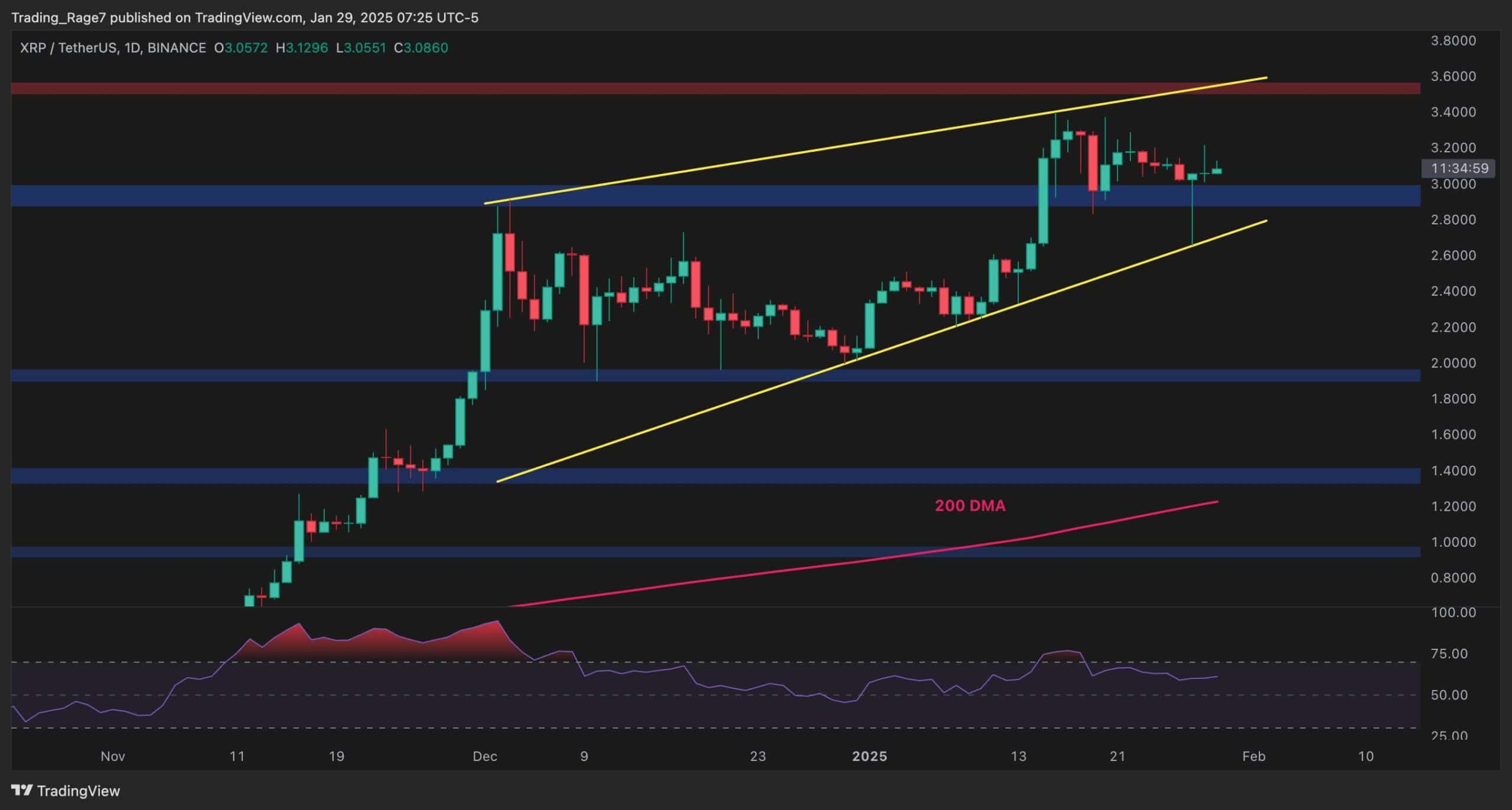
On Monday, XRP’s price dipped to $2.65, coinciding with Bitcoin’s retest of the $97K price point. However, on the same day, XRP rebounded significantly to $3, closing at $3.055. Since XRP recaptured the $3 region on January 15, it has mostly closed above this level, keeping the bullish momentum alive.

This has prevailed despite XRP coming under what community members describe as coordinated attacks from Bitcoin maximalists. Notably, the token has maintained its position in the $3 range, gathering momentum for the next surge.

Some market commentators believe this resilience points to what’s to come for XRP. X user Johnny, who has 800K followers, expressed this sentiment in a recent commentary. In his words: “XRP’s strength is telling for what’s to come.”

He went on to point out developments he believes are imminent that could bring crucial benefits to XRP.

Optimism about XRP Adoption by Elon Musk’s DOGE Initiative

Specifically, Johnny noted that it would be no surprise if the XRP Ledger became the blockchain used by Elon Musk’s Department of Government Efficiency (DOGE) under the Donald Trump administration.

Recall that Elon Musk is leading the DOGE initiative, which is exploring blockchain technology to modernize federal operations. This initiative is part of the Trump administration’s push for digital innovation and transparency in government. It aims to use blockchain to track government spending, enhance security, and streamline payments.

While discussions with blockchain experts are ongoing, the likely network remains unclear. However, some market commentators believe the XRP Ledger could be the preferred platform.

Optimism About an XRP ETF Launching This Year

Another key point Johnny highlighted for XRP’s resilience is the anticipation of an XRP ETF in 2025. 

This week, CoinShares entered the XRP ETF race by applying with the SEC to launch the product. With this move, prominent asset managers seeking an XRP ETF have risen to seven, including Bitwise, WisdomTree, and ProShares.

Amid this ETF application frenzy, optimism about an XRP ETF debuting this year continues to grow.

XRP in the US Strategic Reserve

Meanwhile, there have been ongoing discussions about the potential inclusion of XRP in the proposed U.S. national digital asset reserve. 

While Ripple executives are actively pursuing this move, they have faced strong resistance from Bitcoin maximalists who advocate for a BTC-only reserve.

XRP Outperforming Bitcoin, Ethereum

Considering these factors, commentators like Johnny are optimistic that as long as the XRP market remains bullish over the next six months, XRP could outperform Bitcoin and Ethereum by a much wider margin.

Already, XRP boasts a 48% year-to-date gain, while Bitcoin has seen a 12% increase. Meanwhile, Ethereum’s position is even worse, with a 3.34% dip.

XRP Outranking Bitcoin and Ethereum

Various Experts Predict the Timeline for XRP to Reach $4

0

After XRP has stayed around the $3 mark for a few weeks, many analysts now believe further progress to the next psychological level is imminent.

XRP reclaimed the $3 price level nearly two weeks ago, reentering this lofty price range after seven years. However, the momentum that pushed it into this region stalled once it hit $3.38 on January 16. Since then, the price has dipped by 20%, revisiting the $2 range multiple times.

Meanwhile, as the broader markets recover, XRP has re-established its presence in the $3 price channel, and analysts are predicting an imminent run to new price levels. Interestingly, some have even projected specific timelines for XRP to hit $4.

Timeline for XRP to Reach $4

According to Velo Maxi, a widely followed analyst in the XRP community, the XRP Army just needs to be patient for another seven days before XRP breaks past $4. He shared a chart showing the ongoing formation of a bullish pennant.

Notably, an earlier formation saw the breakout to the $3 price. He believes the current consolidation phase will conclude in a week, followed by another move toward $4. Per his estimation, this price target could become a reality by next Wednesday, specifically February 5.

Image
XRP chart by Velo Maxi

Other Analysts’ Views on XRP Journey to $4

However, other market commentators like Crypto Whistler argue that the XRP community may have to wait longer to see $4. Specifically, this analyst suggests that $4 might emerge by April if all goes well.

Meanwhile, others like Javon Marks, who also predict a $4 price range, haven’t provided a specific timeline. However, Marks strongly believes XRP will rally to $4.80, and it’s “only a matter of time” before that happens.

Furthermore, market watcher Fabio Zuccara has weighed in on the $4 potential, providing a detailed analysis of why XRP could reach that level soon.

He pointed out that XRP has consistently been making higher highs and lows, breaking key resistance levels on the USDT and BTC charts.

Zuccara also highlighted an ascending channel on XRP’s one-day chart, which reflects a consistent uptrend.

Accordingly, he suggests a breakout to the upside is imminent and could trigger a powerful rally, potentially pushing XRP above the $4 mark.

Image
Chart showing XRP ascending pattern

Technical Pattern Supporting XRP Major Move

In a separate analysis, using the Bollinger Bands, analyst Ali Martinez confirmed imminent price action for XRP. He observed a BB squeeze on the 12-hour chart.

With the narrowing of the Bollinger Bands, traders are anticipating a major price move. A breach above the upper band could push XRP toward an all-time high, while a drop below the lower band might lead to a deeper retracement.

Martinez has taken a long position in XRP, targeting a price of $10, and encourages a long-term perspective despite short-term fluctuations.

Bitcoin Hits Fresh Weekly High of $106K Following European Central Bank’s 25bp Rate Cut

0

The Bitcoin community has been abuzz as the European Central Bank (ECB) officially lowered interest rates by 25 basis points.

With this move, the primary refinancing rate now stands at 2.9%, while the deposit and marginal lending facility rates are set at 2.75% and 3.15%, respectively.

During the January policy meeting, ECB President Christine Lagarde explained that the Eurozone’s ongoing economic challenges drove the decision to cut rates. She emphasized that while the economy remains weak in the near term, manufacturing continues to contract, although services show signs of growth.

Lagarde also highlighted that global trade tensions could impact recovery prospects, but if they do not escalate, exports could help stabilize the economy. Inflation will fluctuate around its current level, with the ECB maintaining its long-term target of 2%. 

Notably, the ECB’s stance remains data-dependent. She emphasized that the ECB is not pre-committing to a specific rate path and that incoming data will gradually determine any changes.

Will Bitcoin Benefit from the New Monetary Policy?

For the crypto and Bitcoin community, the ECB’s latest move signals a more accommodative environment for digital assets.

Crypto markets typically thrive in liquid, low-rate environments where investors look for alternative assets to maximize returns. Historically, rate cuts have increased Bitcoin’s appeal as a hedge against monetary easing.

For example, during the 2020-2021 pandemic response, when the Federal Reserve slashed interest rates to near zero and implemented massive stimulus measures, Bitcoin’s price surged from $3,850 to $69,000.

Similarly, in September 2024, when the Fed announced a 50 basis point interest rate cut, Bitcoin was trading below $60K before the announcement. It surged to $62K on the day of the announcement. In the following weeks, Bitcoin set a new all-time high, reaching $100K by December.

Today, Bitcoin has surged past $105K following the Federal Reserve’s decision to maintain interest rates between 4.25% and 4.5%. Market participants viewed this as a dovish move that benefits the crypto market.

Now, the ECB is adding further momentum to the crypto uptrend with its notable rate cut.

“Markets were ready for this one. Watch how crypto reacts to more cheap money flowing through the system,” remarked X user Wampa in response to the news.

Crypto Market Reacts

The crypto market is already feeling the effects of the news. At press time, Bitcoin has posted a 4% gain, rallying to $106K, its highest price this week.

Other crypto assets are following Bitcoin’s lead, including Ethereum and XRP, which are also seeing notable gains.

Glassnode: Current Bitcoin Bull Run Mirrors 2015–2018 Cycle, Suggesting Further Upside

0

The current Bitcoin bull run is displaying similarities to the 2015–2018 market cycle, according to on-chain data from Glassnode. 

The firm’s latest weekly on-chain newsletter shows that current trends of Realized Cap growth, drawdown patterns and price performance mirrors what the market witnessed in previous cycles. If history repeats, Bitcoin may still have room to rally before reaching its peak.  

How Bitcoin Price Action Resembles the 2015–2018 Cycle  

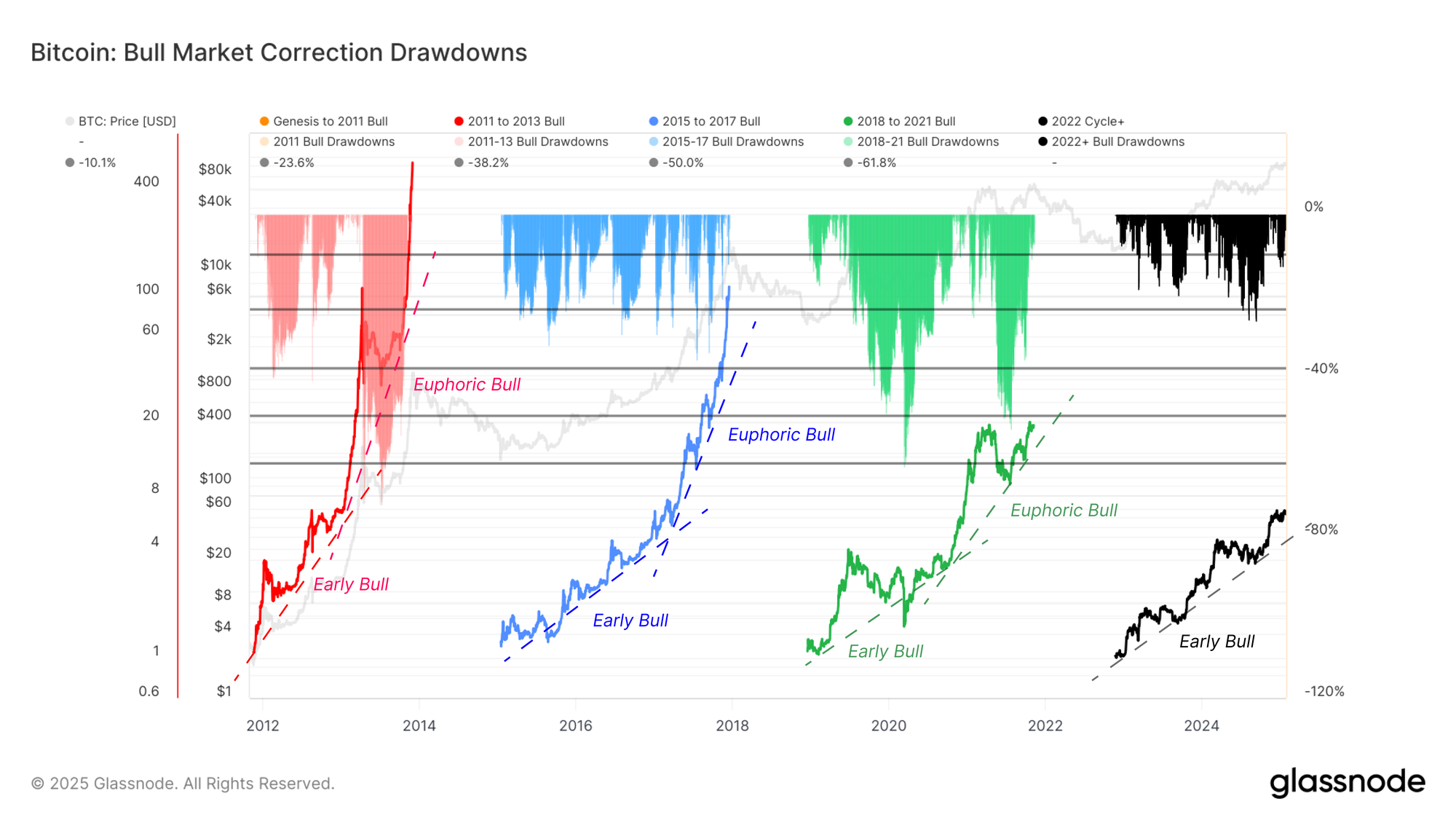
Glassnode’s data shows that Bitcoin’s price appreciation rate has slowed in each cycle, showing that the market is maturing. Meanwhile, one similarity with the 2015 to 2018 cycle is the current cycle’s drawdowns, which have ranged from 10.1% to 23.6%.

Bitcoin Bull Market Drawdowns Glassnode
Bitcoin Bull Market Drawdowns | Glassnode

Notably, past cycles have experienced a period of rapid price acceleration after a slow-growth phase marked by these drawdowns. Given the market’s current position, a similar euphoric phase could soon emerge.  

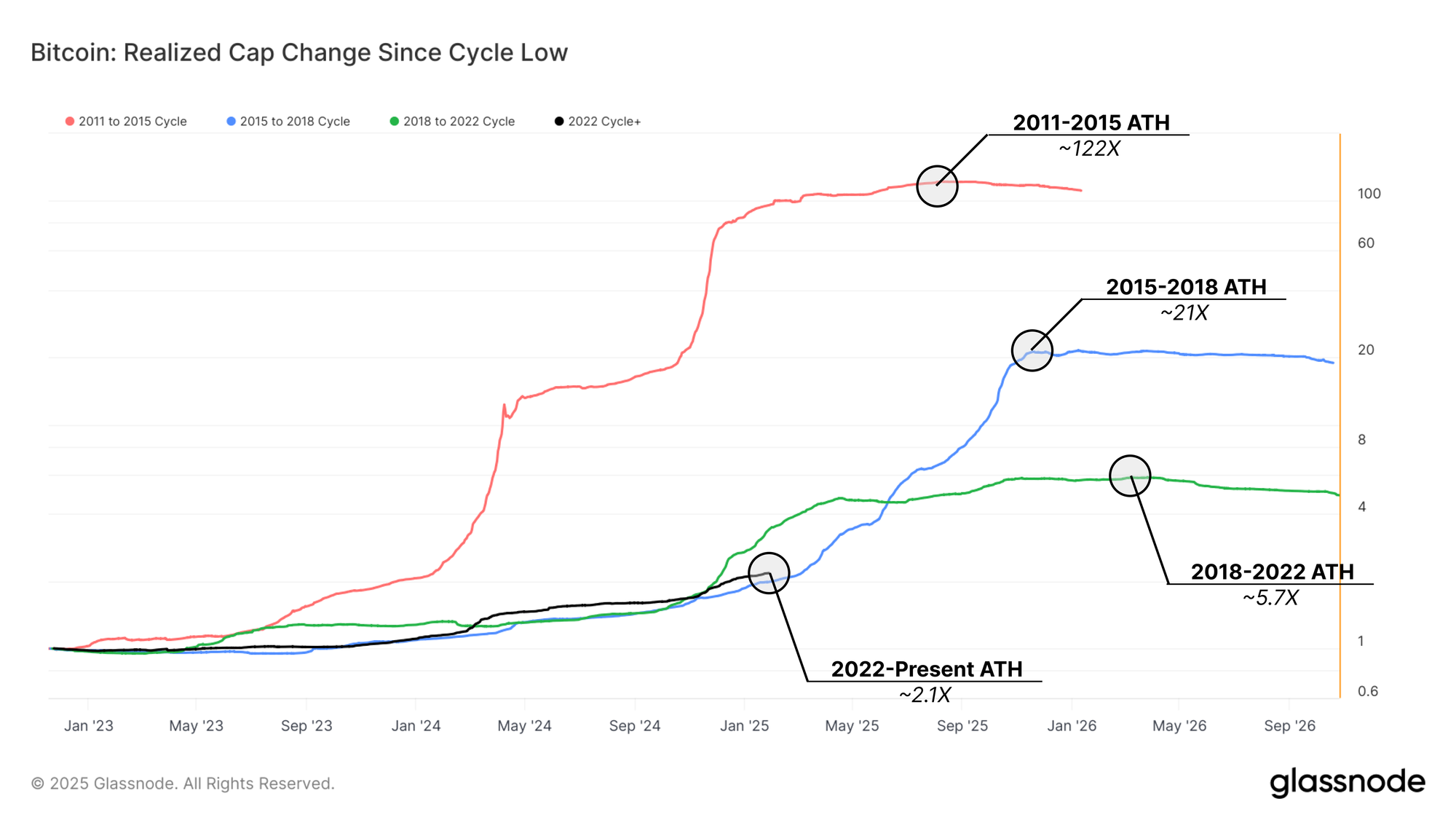
Another major similarity is Bitcoin’s Realized Cap growth. The Crypto Basic confirmed this month that this metric hit a new peak of $832 billion. So far in this cycle, the Realized Cap has expanded by 2.1 times, which is significantly lower than the 5.7x increase during the last cycle.

Bitcoin Realized Cap Growth Glassnode
Bitcoin Realized Cap Growth | Glassnode

However, it matches the growth rate seen in the 2015–2018 cycle at a comparable stage. Historically, Bitcoin’s strongest price surges have occurred when the Realized Cap begins accelerating sharply, suggesting further upside potential.  

Long-Term Holders Distributing to New Buyers  

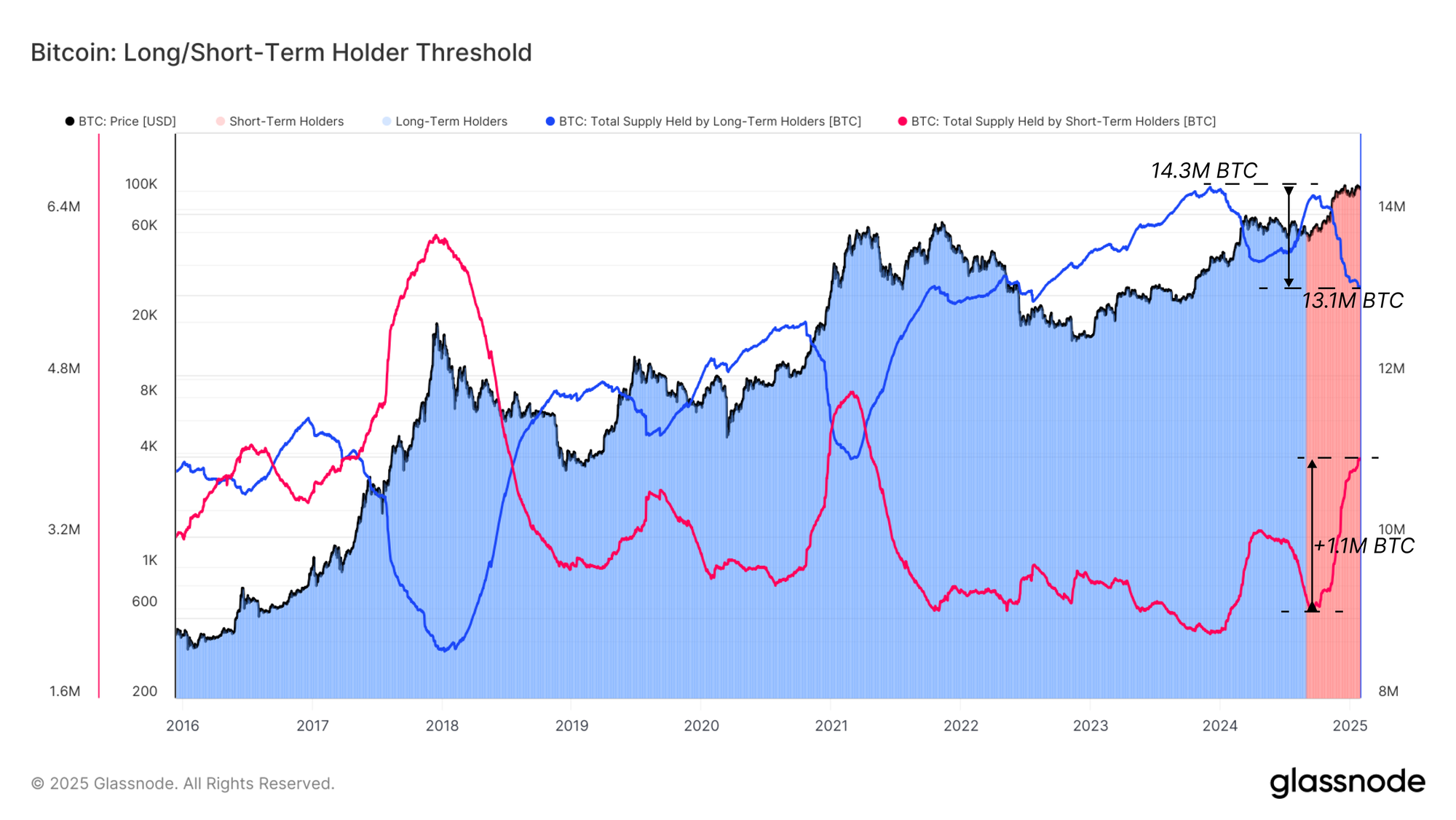
Glassnode further confirmed that Bull markets are typically driven by capital flowing from long-term holders to new investors. Notably, since December 2023, approximately 1.2 million BTC have moved from long-term holders to short-term investors. 

Long to Short Term Holder Threshold Glassnode
Long to Short Term Holder Threshold | Glassnode

This trend is similar to distribution patterns that the market observed in late 2017 and early 2021, which eventually led to continued price increases before eventual corrections. According to Glassnode, the sustainability of the current bull run will depend on whether new buyers can continue absorbing this supply. 

If demand remains strong, price momentum could push Bitcoin even higher. However, if demand weakens, the market could transition into a phase dominated by long-term holders, leading to reduced volatility.  

ETF Wallets Gulping Exchange Reserves

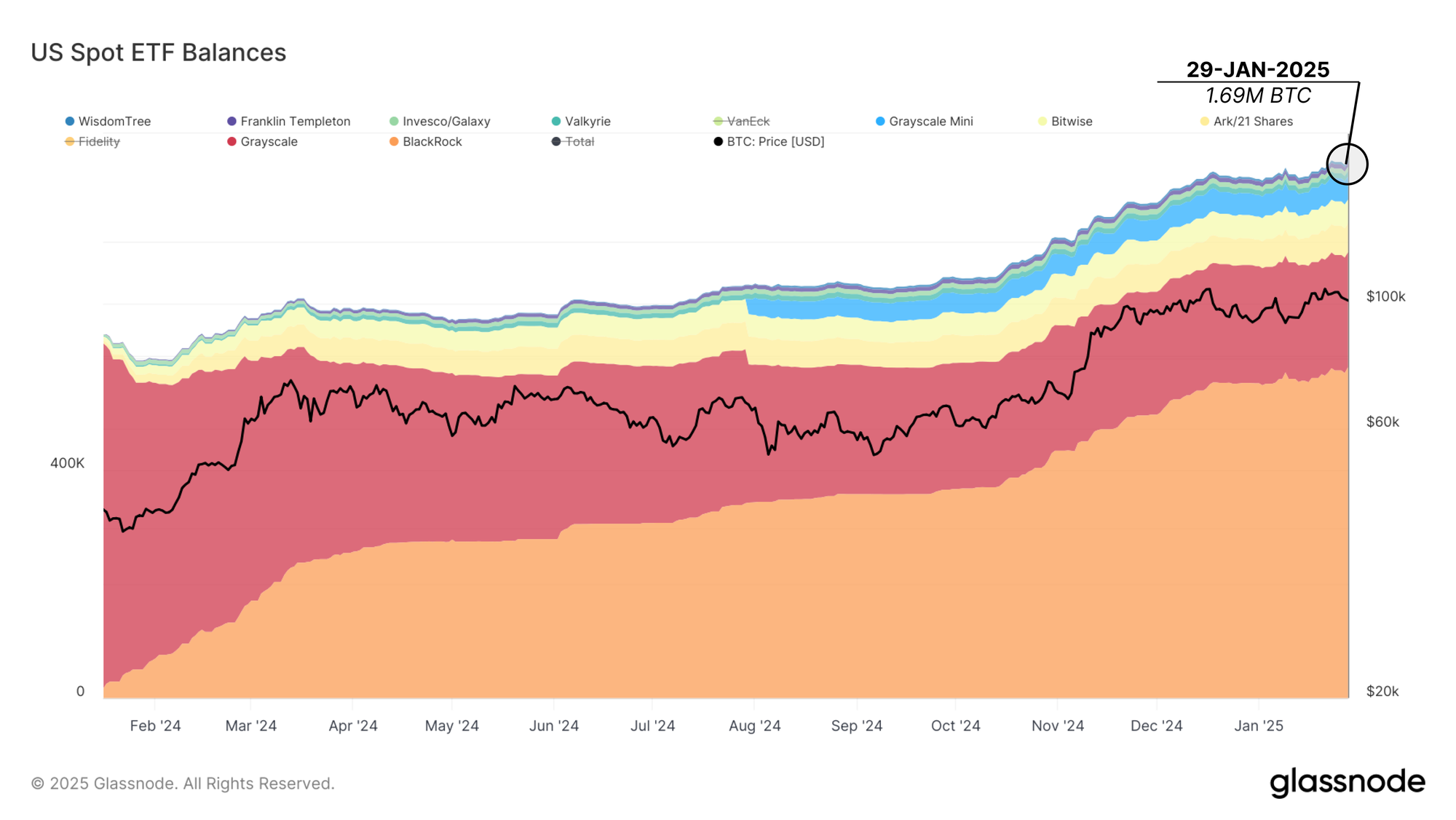
Meanwhile, in the ongoing cycle, an observable decline in Bitcoin balances on centralized exchanges has triggered speculation about a potential supply shock. However, Glassnode clarified that much of this decline comes from Bitcoin moving into ETF custody wallets.

Notably, since July 2024, exchange balances have dropped from 3.1 million BTC to 2.7 million BTC. However, when this evaluation factors BTC in ETFs, total balances have remained stable at around 3 million BTC. This indicates a change in how investors hold Bitcoin rather than a shortage of available supply.  

Bitcoin ETF Balances Glassnode
Bitcoin ETF Balances | Glassnode

“Bitcoin Not Yet at a Cycle Top”

Further, a recent analysis from market commentator IT Tech confirms Glassnode’s report. In a CryptoQuant analysis, IT Tech examined Bitcoin’s UTXO age bands and found that while new market participants are increasing their holdings, the proportion of recently moved coins has not yet reached previous cycle peak levels.  

In past bull runs, Bitcoin tops have coincided with a surge in younger UTXOs (coins moved within 1 day to 3 months). Currently, this trend is growing, but it has not yet reached the extreme levels seen in 2013, 2017, and 2021. This suggests that Bitcoin could still have room to rally before reaching a market top.  

Bitcoin Realized Cap UTXO Age Bands CryptoQuant
Bitcoin Realized Cap UTXO Age Bands | CryptoQuant

However, if short-term holder activity spikes significantly, it could indicate increased speculation and potential for a correction. He noted that investors should watch this metric to gauge whether Bitcoin is nearing its peak. At press time, BTC currently changes hands at $106,091, up 3.73% over the last 24 hours.

Grayscale Launches Bitcoin Miners ETF to Give Investors Exposure to BTC Mining Ecosystem

0

Leading crypto asset manager Grayscale has launched the Bitcoin Miners ETF (MNRS) launch, exposing investors to the mining ecosystem. 

According to a press release, the newly launched fund will invest in companies under the Indxx Bitcoin Miners Index. This index tracks the performance of companies primarily generating revenue from Bitcoin mining and other mining-related services, hardware, and software. 

Grayscale Bitcoin Miners ETF 

Notably, Grayscale emphasized the importance of the Bitcoin mining industry, particularly in maintaining the network’s security. As a result, MNRS will grant investors indirect exposure to companies focused exclusively on Bitcoin mining or related activities. 

In addition, the newly launched fund would serve as an alternative to direct Bitcoin investment. 

Grayscale’s Global ETF Head, David Lavalle, noted investors can gain targeted exposure to Bitcoin miners through the MNRS fund. 

Furthermore, Lavalle recognized Bitcoin miners’ role in securing the network. He emphasized that they are well-positioned for significant growth amid the soaring adoption of Bitcoin. Consequently, he mentioned that this growth potential makes MNRS a suitable investment vehicle for diverse investors. 

MNRS Holdings 

Data from Grayscale shows that the fund has an AUM of just $25.31 and only one outstanding share. The share is listed on the NYSE Arca Exchange and boasts a total expense ratio of 0.59% at the time of writing. 

The fund gives investors indirect exposure to 26 global Bitcoin mining companies. The top 5 companies and their weightings include Mara Holdings (16.66%), Riot Platform (11.92%), Core Scientific (9.2%), Cleanspark (4.79%), and IREN Ltd (4.3%). 

Grayscale Investments ETFs 

Following the launch of MNRS, Grayscale Investments now offers five crypto-related ETFs. They include the Grayscale Bitcoin Trust ETF (GBTC), the Grayscale Bitcoin Mini ETF (BTC), the Grayscale Ethereum Trust ETF (ETHE), the Grayscale Ethereum Mini ETF (ETH), and the Grayscale Bitcoin Miners ETF.  

The Grayscale spot Bitcoin and Ethereum ETFs are classified as crypto ETPs on the company’s website. However, according to Grayscale, MNRS launched as an equity ETF on its platform. 

In the meantime, GBTC has witnessed a cumulative outflow of $21.86 billion, while the company’s mini Bitcoin ETF has a total inflow of $1.2 billion. Similarly, while the spot Grayscale Ethereum Trust has recorded an outflow of $3.86 billion, the mini Ethereum ETF boasts an inflow of $584.6 million. 

How the MNRS fund will perform in the coming months remains to be seen.

VanEck Predicts Sui and Aptos Price for 2025

0

The native tokens of popular second-generation blockchains Sui and Aptos could witness significant growth in 2025, according to VanEck.

In a Wednesday, January 29, analysis, the $114 billion asset manager predicted that SUI would rally about 290% to the $16 price point in 2025 from current prices above the $4 level while APT would surge over 180% to about $22 from current levels just below the $8 price point.

VanEck based its predictions on two main factors. First, the firm anticipates a growth in the market capitalization of smart contract platforms. Specifically, the firm expects that this market cap will grow 43% from $770 billion to $1.1 trillion in 2025, in line with a correlation with the U.S. M2 money supply.

At the same time, VanEck expects Sui and Aptos to eventually account for a greater share of the smart contract platforms’ market share. Specifically, VanEck anticipates that Sui’s market share will jump from 2% to 5.5% while Aptos’ will surge from 0.7% to 1%.

This calculation aligns with a $61 billion market cap for SUI, which aligns with the $16 price target, factoring in its current circulating supply of 3 billion tokens. For APT, the calculation aligns with a $11 billion market capitalization, which translates to the $21 target, assuming it maintains its current circulating supply of 507 million tokens.

Sui and Aptos are second-generation blockchains that have gained popularity because they were founded by former Meta engineers and use the Move smart contract programming language.

The Move smart contract programming language is based on the popular Rust programming language, which was developed as part of Facebook’s now-defunct Diem stablecoin project.

The language is praised for being more developer-friendly and enabling more security and efficiency benefits than Ethereum’s Solidity and Cardano’s Haskell. These benefits have translated to significantly faster transaction processing capabilities, bolstering user experiences.

VanEck currently places Sui ahead of Aptos, citing performance advantages and economic metrics. However, the firm notes that this dynamic can easily change, depending on sustained innovation.

Lucky Solo Bitcoin Miner Receives $326,301 Block Reward in Rare Event

0

In a rare event, a fortunate solo miner hits the jackpot on Thursday after single-handedly processing a block on the Bitcoin network.

Bitcoin mining has grown intense over the years, spurred by heightened competitiveness and the underlying asset’s ever-increasing price. These factors have facilitated the creation of sophisticated equipment, which has discouraged small-scale, solo mining.

Meanwhile, once in a while, solo miners get lucky to win a block reward. Such an event occurred today, with the fortunate miner receiving $326,301 for successfully processing a block in the Bitcoin network.

Solo Miner Gets Lucky

Data from Mempool shows that stand-alone miner FutureBit Apollo processed a block in the Bitcoin network at block height 881423 on January 30 at 01:01 (UTC). The block processed 1,514 transactions and rewarded the miner with 3.15 BTC ($326,301).

Solo Miner Bitcoin Reward

Meanwhile, data shows that such events are rare. In fact, FutureBit Apollo has only processed two blocks on the Bitcoin network.

The solo miner’s first breakthrough came three months ago. For perspective, at block height 867760 on October 28, the miner received 3.16 BTC for processing a block of over 4,834 transactions on the Bitcoin network.

Nevertheless, another solo miner, “Solo CK,” was the last to win a block reward. The unknown Bitcoin miner received 3.19 BTC ($311,432) at block height 875750 on December 21 for its solitary effort.

More Effort for Fewer Bitcoins

Over the years, Bitcoin mining has become increasingly tasking, with mining difficulty reaching new all-time highs. Nonetheless, miners have remained committed to their goals, devising new ways to stay competitive and productive. Mining firms like Mara have dominated the scene.

Before special heavy-duty, electricity-consuming miners emerged, anybody could mine Bitcoin. Pioneers hardwired the Bitcoin network from inception to reward miners who generously contributed to the ecosystem while reducing the amount every four years.

Miners started off with 50 BTC for every block processed on the network. However, each halving event has slashed that number in two until its current 3.125 BTC reward.

Despite the halving, Bitcoin’s price has kept compensating for the reduction. For context, Bitcoin surged over 120% in 2024, with the bullish momentum spilling into this year. This spurred further upsides to an unprecedented price high of $109,312 earlier in the month.

At the time of writing, Bitcoin trades at $104,192 with a market cap of $2 trillion.