Home Blog Page 126

Ripple CEO Shares Reasons XRP is Unique in Latest Presentation

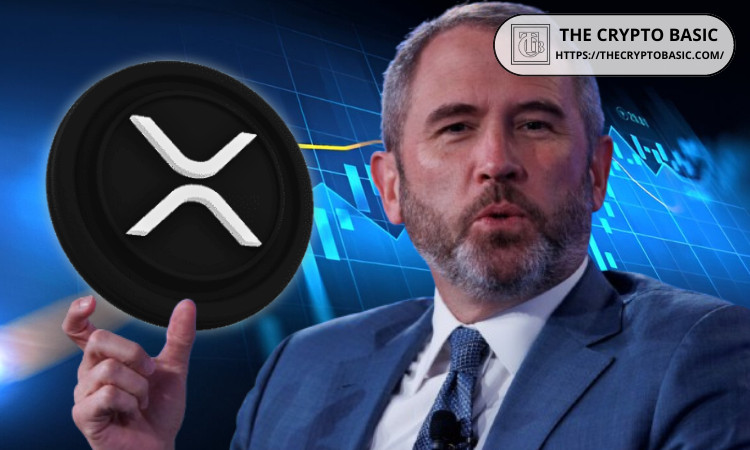
Brad Garlinghouse, the Ripple CEO, recently shared reasons XRP is unique amid the multiple assets that have emerged in the crypto ecosystem.

Garlinghouse shared his thoughts during a new episode of the company’s “Crypto in a Minute” series, recorded at the recently concluded XRP Las Vegas 2026 event and rebranded as “XRP in a Minute” specifically for the occasion.

Key Points

  • Ripple CEO Garlinghouse recently shared multiple reasons XRP is unique.
  • According to him, the original architects built the XRPL with the specific purpose of improving payments.
  • He pointed out that XRP settles transactions in 3-5 seconds with fees costing only fractions of a penny.
  • The XRP Ledger has processed over 4 billion transactions, proving its ability to scale.
  • A May 2026 pilot with JPMorgan and Mastercard settled tokenized assets in under 5 seconds.

Ripple CEO Explains Why XRP is Unique 

In the presentation, Garlinghouse pointed out the early days of the XRP Ledger. He explained that the people who created it had previously worked on the core of Bitcoin. From that experience, they saw a chance to build something more focused, something designed to solve real problems in payments.

According to Garlinghouse, this purpose is what makes XRP different. Instead of trying to handle everything, the network was built with one goal in mind: making payments faster and more efficient. This focus influenced how the system works today.

Garlinghouse mentioned speed as one of XRP’s biggest strengths. He pointed out that transactions on the network settle in three to five seconds, which makes it much faster than many other systems. He also highlighted the low cost, explaining that fees are just fractions of a penny per transaction.

The Ripple CEO added that the network can handle large volumes of activity. So far, it has processed over four billion transactions, confirming that it can scale while keeping performance steady. Essentially, these features form the core of XRP’s appeal.

He also spoke about the role of the community. He described XRP users as a strong and active group, often calling them the “XRP family,” and sometimes the “XRP army,” depending on the situation. In his view, this support helps keep the network growing and relevant.

According to him, when you combine all these factors, including speed, affordability, scalability, community, and long-term reliability, you get a system that stands out and is well placed for future growth.

Data Supports XRPL’s Capabilities

The available data backs up many of Garlinghouse’s points. The network consistently completes transactions in 3-5 seconds, which puts it close to systems like Visa that handle authorization in 2-4 seconds. 

At the same time, it is much faster than Bitcoin, which takes about 10 minutes per block and around 60 minutes for full confirmation, and also quicker than Ethereum, which often takes 13 seconds or more depending on conditions.

Meanwhile, costs remain very low, usually below $0.01, and often between $0.0002 and $0.000856. Even when activity increases, fees stay stable, and the network rarely faces major congestion issues.

The system also performs well under load. Specifically, it can handle about 1,500 transactions per second (TPS) in real conditions, with higher limits in theory. Recent data shows it has sustained over 120 TPS, with each batch processing around 600 to 700 transactions.

Rising Usage and Real-World Adoption

Also, usage of the network has grown steadily. Total transactions have passed 4 billion, in line with Garlinghouse’s statement, with reports showing about 4.28 billion by early 2026.

Daily activity has also increased, moving from 1 to 1.2 million transactions in mid-2025 to peaks between 2.7 million and 4.49 million in March and April 2026. Monthly averages have stayed above 1 million transactions in early 2026.

The XRP Ledger has been around since 2012, built to fix issues in cross-border payments such as slow processing and high costs linked to traditional banking systems. 

Unlike Bitcoin, which focuses on being a store of value, or Ethereum, which supports various application types, XRPL was designed mainly for fast and low-cost transfers. It also included features like a built-in exchange and token support from the start. Over time, it has remained reliable, closing more than 100 million ledgers.

More recently, institutions have started to test its utility. Earlier this month, Ripple worked with JPMorgan’s Kinexys, Mastercard, and Ondo Finance on a pilot involving tokenized U.S. Treasuries (OUSG). The blockchain part of the transaction settled in under 5 seconds, followed by a payout in U.S. dollars.

At the same time, the ecosystem continues to grow with stablecoins like RLUSD, more decentralized finance activity, and close to 27,000 automated market maker pools. This growth is happening as rules around crypto continue to evolve, including discussions like the CLARITY Act.
XRP Is Not Dead, It Is Compressed—Analyst Predicts Most Hated Rally

0

XRP continues to trade within a long-term structure amid years of market compression; still, analysts believe a price rally is coming.

This period of compression has cast doubt among several enthusiasts. However, a few such as Cryptollica remain optimistic. The analyst noted that XRP is not dead but is gaining momentum to continue its “most hated rally” to higher price levels.

Key Points

  • XRP has been respecting a rising support trendline that has remained intact for nearly a decade.
  • At the same time, the asset has repeatedly struggled to break through major resistance zones.
  • An analysis suggests the token is undergoing compression, as years of pressure have been trapped within a single chart.
  • History shows that the current setup has preceded a strong price uptrend, with a potential target of $20.

XRP Long-Term Setup

Cryptollica attached a 10-day chart showing that XRP has been respecting a rising support trendline that has remained intact for nearly a decade. At the same time, the asset has repeatedly struggled beneath major resistance zones, creating a prolonged compression that dates back to the 2017/2018 bull cycle.

XRP Analysis/Cryptollica

The market watcher sees a compression, not a collapse. He highlighted that years of pressure have been trapped within a single chart. This suggests that the consequence of a breakout from this long-term structure will be massive. Meanwhile, the structure itself never fully broke down, keeping the prospect of a breakout intact.

XRP Still Holds Its Multi-Year Higher-Low Structure

The chart highlights a clear sequence of higher lows forming along an ascending support trendline. Even during deeper corrections, XRP continued to defend this crucial trendline.

Above are different layers of ascending resistance trendlines that come together to form a price range. Within this channel, the upper and mid-level trendlines have acted as strong supply points for XRP.

The former marked XRP’s peak in January 2018, and the latter has repeatedly impeded further upsides. Some instances are at $0.78 in September 2018, $1.41 in September 2021, $3.40 in January 2025, and $3.67 in July 2025.

Meanwhile, within this structure is a crucial descending trendline. This dynamic resistance started forming from the January 2018 peak and capped higher prices until a breakout in November 2024.

After this breakout, XRP rallied to the January and July 2025 peaks, where it faced resistance. Currently, it seems to be retesting this descending trendline, with earlier corrective momentum pushing prices close to it.

History shows that this setup has preceded a strong price uptrend. For context, between 2014 and 2017, XRP spent years compressing within a similar formation before eventually breaking higher into a powerful expansion phase that reached the 2018 high.

What Needs to Happen Next

Meanwhile, the crypto cycle engine chart has begun to recover from oversold territory near the 44 level and is now targeting 60. Historically, similar resets appeared before stronger XRP momentum returned in previous cycles.

Currently, the XRP price remains trapped between support near the descending trendline and the midpoint resistance of the broader channel. A decisive break above the resistance currently near $5 sets the coin up for a massive parabolic expansion.

The analyst highlighted the next possible target as the following ascending resistance band near $20, representing a 1,298% increase from the current market price of $1.43. Meanwhile, the channel’s upper resistance trendline stands above $38, which is still a possible target.

In the meantime, the analyst encourages patience, noting that beliefs tend to fade during consolidation periods like these. However, it is when crypto becomes dangerously bullish again, rewarding the remaining few.

CLARITY Act Could Trigger Massive “Flywheel Effect,” Bitcoin Could Hit $150,000: Ric Edelman

Legendary investor and financial adviser Ric Edelman says the upcoming CLARITY Act could become a major turning point for the Bitcoin and crypto market.

Specifically, he said it could push Bitcoin above $150,000 before the end of 2026. He shared this view in a recent interview with John Gillen on the Milk Road podcast.

Key Points

  • Ric Edelman says the CLARITY Act could fuel Bitcoin’s next major rally.
  • Edelman believes Bitcoin could surpass $150,000 before the end of 2026 as institutions enter the crypto market.
  • He argued that traditional 60/40 retirement portfolios are outdated as investors live longer and seek growth assets.
  • Edelman said firms like Morgan Stanley could drive massive crypto inflows.

$150K Bitcoin Possible by 2026 End

Edelman said the crypto market may soon enter another powerful expansion phase once regulatory clarity arrives in the United States. According to Edelman, the passage of the CLARITY Act could mark the moment Wall Street receives the “green light” to fully engage with crypto assets.

“I would not at all be surprised to see Bitcoin end the year above $150,000,” Edelman said during the discussion. He added that he still expects Bitcoin to eventually reach $500,000 before the end of the decade.

Traditional Retirement Investing Is “Out of Date”

During the interview, Edelman explained why he believes traditional portfolio strategies are becoming obsolete due to increasing human longevity.

For decades, many financial advisers have recommended the classic “60/40 portfolio,” where investors hold 60% stocks and 40% bonds. As investors age, advisers typically reduce stock exposure and increase safer assets like bonds and treasuries.

However, Edelman argued that this model no longer works in a world where people are living much longer.

He pointed to his research with institutions such as the Stanford Center on Longevity and MIT AgeLab, noting that many financial systems still assume people will die around age 85 or 90.

According to Edelman, if people increasingly live to 100, older retirement strategies may fail because investors could run out of money before they die. Because of that, he believes investors should maintain far more exposure to growth assets throughout their lives.

Instead of the traditional 60/40 strategy, Edelman proposed what he called an “80/20” model. In this, 80% of a portfolio remains in equities and growth-focused assets even into old age.

Meanwhile, he believes crypto deserves a major role within that allocation.

“And if you’re going to have 80% of your money in equities, at least 10 of the 80 ought to be in crypto,” Edelman said. He added that younger, growth-oriented investors could allocate as much as 40% to digital assets.

Bitcoin, Ethereum, Solana — Or All Three?

Edelman also addressed how investors may approach crypto allocation. Rather than endorsing a single asset, he said investors can choose different strategies depending on their risk tolerance and market view.

He acknowledged Michael Saylor’s case for holding only Bitcoin, but also pointed to the growing use cases for Ethereum and Solana.

According to Edelman, many investors now use a market-cap weighted approach, allocating larger portions to Bitcoin while also holding Ethereum or Solana.

He also highlighted crypto infrastructure companies like Coinbase, Robinhood, and stablecoin issuers as another way investors can gain exposure to the sector.

CLARITY Act Could Open Wall Street Floodgates

Edelman believes the biggest catalyst ahead for crypto may be regulatory clarity in the United States. He argued that once the CLARITY Act is passed, traditional financial firms may rapidly expand crypto adoption across their businesses.

According to him, this could create a major “flywheel effect” similar to previous Bitcoin bull runs.

Edelman specifically pointed to Morgan Stanley, noting that the firm manages roughly $7 trillion in assets and has already encouraged advisers to begin allocating small percentages of portfolios to crypto.

He said even a modest 2% to 3% allocation across large Wall Street firms could drive enormous capital flows into Bitcoin and the broader crypto market.

“Well, 3% of $7 trillion is going to cause Bitcoin’s price to rise massively,” Edelman said.

He added that growing institutional adoption could accelerate momentum across the industry as rising prices attract more participation from investors and firms.

AI and Crypto Could Grow Together

Edelman also rejected the idea that investors must choose between artificial intelligence and crypto investments.

Instead, he argued that both industries may benefit from each other as adoption grows.

He pointed to examples of Bitcoin mining companies pivoting toward AI infrastructure and data center operations, saying the technologies are already beginning to merge in practical ways.

According to Edelman, the combination of AI growth, institutional crypto adoption, and clearer regulation could create a powerful long-term expansion cycle for digital assets.

“You ought to be engaging in it,” he said, warning investors against remaining on the sidelines while the industry evolves.

David Schwartz Warns of New Rewards Scam Targeting XRP Holders

David Schwartz warns XRP holders about a rise in fake airdrop and reward scams targeting XRP Ledger users across social platforms.

Notably, these scammers have continued to leverage impersonation, fake NFT offers, phishing sites, and deepfakes to exploit unsuspecting XRP users.

Key Points

  • David Schwartz flagged a recent surge in XRP-related rewards scams targeting users.
  • Scammers impersonate Ripple figures and promote fake rewards, claiming to double funds or distribute free XRP.
  • Fraudulent NFTs with hidden “Buy Offers” can drain wallets if users sign malicious transactions.
  • These scammers also employ deepfakes and phishing links to drain investors’ funds.
  • Users should avoid clicking on unknown links and never share private keys or approve unclear transactions.

How These XRP Rewards Scams Work

Schwartz shared the latest warning in a post on X, urging the XRP family to be extra careful. He explained that scammers are now targeting XRP holders and XRP Ledger users more aggressively across platforms like X, Instagram, and Telegram. 

The former Ripple CTO insisted that most unsolicited offers promising rewards or free tokens are likely scams. He also warned that anyone claiming to be him outside his verified X account should not be trusted.

Notably, these scams mostly involve fake airdrops, giveaways, or reward programs. They are designed to take advantage of the growing interest in XRP and activity on the XRPL. The perpetrators spread these offers through social media, where they try to reach both new and experienced users.

They promise free tokens, NFT rewards, or even to double users’ funds. However, these offers are not real. Instead, they are meant to trick users into giving up access to their wallets or sending funds. The methods rely on deception, not technical flaws from the XRPL.

Common Methods Scammers Use

One common method leveraged by these individuals is impersonation. Specifically, scammers create fake profiles pretending to be well-known figures like Schwartz or Ripple CEO Brad Garlinghouse. They also pose as projects linked to the XRPL, including those connected to Flare. 

These fake accounts are especially common on Instagram and Telegram. One XRP community member flagged a profile that fits this description on Instagram last month, urging the community to mass-report it.

Fake David Schwartz Profile on Instagram

Another tactic involves NFTs. With this, scammers send unsolicited NFTs to users’ wallets. These NFTs may look empty, have strange names, or include misleading messages suggesting verification. Wietse Wind from the Xaman wallet has warned users to cancel unknown offers immediately.

They often come with a “Buy Offer.” If a user accepts or signs this offer, it can lead to a loss of XRP or other assets. XRPL blockchain explorer Bithomp also called attention to this scam tactic a few days ago.

Phishing is also widely used, where scammers direct users to fake websites and ask them to connect their wallets or sign transactions to claim rewards. Once they do, their wallets can be drained. 

Some schemes still follow the old pattern of asking users to send XRP with the promise of receiving more in return. In one reported case, a user allegedly lost 6,000 XRP through such a scheme.

How to Stay Safe

Schwartz’s warning aligns with long-standing advice from Ripple and the XRP community. Notably, legitimate organizations do not run random giveaways or ask users to send funds, share private keys, or reveal seed phrases.

To stay safe, investors should avoid clicking on unknown links or connecting their wallets to untrusted websites. It is important to double-check all information through official and verified channels, especially announcements related to rewards or airdrops.

Users should also ignore and report suspicious messages or accounts. Wallet tools, such as those developed by Bithomp and working on Xaman, can help users review and cancel unknown offers before they cause harm. If a scam does occur, acting quickly may help limit damage, but recovery is often difficult.

Evernorth Now Seeing $490M in Paper Losses on Its XRP Holdings

Evernorth, the largest corporate XRP treasury holder, is sitting on $490 million in unrealized losses on a $1.1 billion investment.

Verified CryptoQuant author Maartunn called attention to this situation, noting that the firm only saw profits for roughly two weeks. Its losses began as XRP and the broader crypto market slipped into a deeper downturn phase that has persisted since Q4 2025.

Key Points

  • CryptoQuant analyst Maartunn flagged that Evernorth’s XRP position turned unprofitable after just two weeks.
  • Evernorth holds 473.28 million XRP, acquired for around $1.162 billion at a realized price of $2.45.
  • The company’s worst loss hit $642 million on Feb. 6, when XRP dropped to $1.10.
  • Evernorth currently sits on a $490 million unrealized loss with XRP trading at $1.42.
  • XRP needs to rise 73% to $2.455 for Evernorth to reach breakeven.
  • Strategy survived similar losses in 2022 with Bitcoin, which soared to $1.81 billion in November.

Evernorth’s XRP Holdings

In a post on X, Maartunn pointed out that Evernorth’s XRP position stayed profitable for only about two weeks before falling into unrealized losses, and has remained there ever since. His analysis suggests the company is currently down roughly $389 million on a $950 million investment.

Evernorth Seeing Paper Losses on XRP Position CryptoQuant
Evernorth Seeing Paper Losses on XRP Position | CryptoQuant

However, a look at Evernorth’s position shows the actual loss is even larger than Maartunn’s numbers indicate. His CryptoQuant data covers only the initial 388 million XRP purchased for around $950 million, and leaves out an additional 84.37 million XRP that Evernorth bought on Nov. 4, 2025, for $214.05 million at an average price of $2.54 per token.

Evernorth first built up an initial stake of around 388 million XRP last October, which it accumulated from XRP transfers initiated by contributors like Ripple and Chris Larsen.

The company then grew that position further with the Nov. 4 purchase. The transaction pushed its total holdings to 473.28 million XRP tokens, worth about $1.162 billion at the time, giving the company a realized price of $2.45 per token.

When XRP’s price moved up to $2.58 by Nov. 10, 2025, the value of Evernorth’s holdings rose to $1.221 billion, putting the company briefly in the green. However, this profitable stretch lasted only about two weeks. The broader market downturn then pulled XRP’s price back below the company’s cost basis, and the losses began.

The Scale of Evernorth’s Current Losses

Taking the full position into account, Evernorth’s holdings are currently worth around $672 million at XRP’s present price of $1.42. 

This works out to an unrealized loss of $490 million on roughly a $1.1 billion investment, which is notably larger than the $389 million figure Maartunn cited based on the partial position.

The worst point came on Feb. 6, when XRP dropped to $1.10, and Evernorth’s holdings fell to a value of just $520 million. At that low, the company was sitting on an unrealized loss of $642 million, representing a 55% drawdown and the largest paper loss it has recorded. 

By April 30, with XRP trading around $1.35, the loss had narrowed to $523 million. Since then, a modest price recovery has trimmed that figure further to the current $490 million.

What Evernorth Needs to Break Even

For Evernorth to recover its full investment, XRP would need to climb back to the company’s realized price of $2.455 per token, representing a 73% increase from where the price stands today. 

Evernorth’s situation is similar to what Strategy, the largest corporate Bitcoin holder, went through not long ago. Strategy saw its unrealized losses climb as high as $1.81 billion in November 2022 when Bitcoin was trading near $16,000. It held on through the difficult stretch, and from October 2023, the tide turned. 

Unrealized profits eventually peaked at $31 billion last October during Bitcoin’s highs. Today, Strategy holds around $5 billion in paper profit despite recent price pressure. Evernorth appears to be taking the same approach, as it holds its position and waits for the market to recover.

Why XRP Might be the Next Mover Among Altcoins

A market analyst has noted that XRP has lagged while other altcoins have recorded considerable rallies, suggesting it may be the next mover.

Sjuul Follings, the founder of AltCryptoGems, pointed out that XRP has struggled to break a crucial resistance mark as it fails to match the broader market strength.

For context, while the crypto market has gained more than 14% since the rebound campaign began in April, XRP has lagged with an 8% gain within this period.

Key Points

  • XRP has lagged behind the overall crypto market rebound, recording an 8% increase since April.
  • Among the top 10 crypto assets, XRP has witnessed the least gains.
  • Follings says XRP has failed to break through the crucial resistance area around $1.50 despite the broader market strength.
  • According to him, the price is now pushing against the resistance, suggesting it’s time to pay attention.
  • If XRP breaches this level, Follings believes it could become the next big mover.

XRP Gains 8% But Lags the Broader Market

Sjuul Follings spotlighted XRP’s current position as the crypto market attempts to recover the losses of this year. Specifically, after collapsing to $2.22 trillion by March, the broader crypto market staged a recovery effort in April, which has spilled into this month.

The market has added $460 million in valuation, pushing its cap to $2.68 trillion at press time, having gained by more than 14% since March. Specifically, the crypto market saw an 8.53% increase in April and currently records a 6.18% gain this month of May.

While all the other top 10 assets have posted double-digit gains within this period, especially Bitcoin (+18.28%), Ethereum (+10.13%), BNB (+11.03%), Solana (+15.3%), and TRON (+11.5%), XRP has only increased 8.2% and has failed to breach the pivotal resistance area around $1.50.

XRP Faces Resistance at $1.50

Data from the chart shared by Follings indicate that XRP currently trades within a parallel horizontal channel on the 12-hour timeframe that has continued to act as a roadblock to further upside.

XRP breached this resistance area during the rally in mid-March but collapsed below it again after reaching $1.60. When the price pushed to this area on April 17, XRP failed to breach it, facing a roadblock at $1.51 and then pulling back.

XRP 12h Chart Sjuul Follings
XRP 12h Chart | Sjuul Follings

Today, as the price oscillates around $1.46, XRP trades within this channel once again, looking to break above the resistance area at the upper trendline, which aligns with $1.50. “Price is pushing against it, so it’s probably time to pay attention here,” Follings said, speaking on XRP’s recent price action.

For XRP to successfully overcome this resistance area, it must secure a candle close above the channel’s upper trendline at $1.50. Follings’ chart projects a possible pullback to retest the trendline breakout before an eventual rally toward the $1.60 price area. According to him, XRP might be the next mover among altcoins.

Banking Systems Engineer Explains How XRP Could Reach $300

CharuSan, an engineer working in banking systems, has explained why he believes XRP could eventually reach $300 once U.S. crypto regulations become clearer.

XRP is currently trading at $1.45, up 1.87% over the past seven days and 9.83% over the past month. Meanwhile, investors are watching developments around crypto legislation and institutional adoption for the next catalyst.

Key Points

  • CharuSan says XRP could reach $300 if U.S. crypto rules and banking adoption align with Ripple partnerships.
  • He argues adoption may scale via providers like ACI, Volante, and Finastra instead of individual bank deals.
  • He claims higher XRP prices boost liquidity, enabling larger global payment flows across banking networks.
  • Critics say $300 would require extreme market cap growth, with some forecasts topping near $30–$100 long term.

Engineer Says XRP Adoption Could Happen Faster Than Expected

In a tweet, CharuSan argued that many investors misunderstand how banks adopt financial technology.

According to him, XRP adoption will not happen one bank at a time after the expected CLARITY Act is enacted in the United States. Instead, he said Ripple has already partnered with major infrastructure providers such as ACI Worldwide, Volante Technologies, and Finastra.

He explained that these firms already provide services to thousands of banks globally. Because of that, a single software update could potentially enable XRP-related payment functionality across large banking networks at once.

The engineer argued that Ripple would not need to individually sign agreements with all 13,000 banks for XRP usage to expand. Instead, banks connected to shared payment infrastructure could gain access much faster through centralized cloud systems.

XRP and Expanding Payment Pipes

CharuSan also compared XRP liquidity to water flowing through pipes. He argued that if XRP remained at low prices, such as $10 or $20, it would not efficiently support massive global payment flows.

According to his explanation, higher XRP prices would increase the network’s liquidity capacity, allowing larger transfers to move more efficiently across the system.

He described XRP as a payment transfer mechanism for large-scale liquidity movement rather than a traditional speculative asset.

In practical terms, the current price of $1.46 gives the network a market cap of just over $90 billion, which is insignificant in the multi-trillion-dollar financial market.

Meanwhile, a $300 price would imply a valuation of over $18 trillion, dramatically changing the equation.

While this is exciting, it is mostly theoretical. How XRP gets to triple-digit levels like $300 remains uncertain, as the valuation will not jump from $1.46 to $300 overnight.

Community Continues Debating Long-Term Valuation

Given the enormous journey, predictions of XRP reaching three-digit prices remain controversial. Supporters believe institutional payment adoption and regulatory clarity could dramatically increase demand for XRP liquidity.

Critics, however, argue that such price targets would require enormous market capitalization.

Previous industry predictions from firms like Bitwise place XRP closer to $30 by 2030 in the most ambitious scenario. Meanwhile, bullish XRP analysts argue for $100 within ten years.

The debate has intensified ahead of upcoming U.S. crypto legislation discussions, including the CLARITY Act, which many XRP supporters believe could provide a clearer framework for digital asset adoption in banking and payments.

XRP Could Rally Above $12, Analyst Points to Cup and Handle Setup

Analyst Celal Kucuker has shared a bullish long-term chart for XRP, arguing that the asset could eventually break into double-digit price levels.

The promising outlook is based on a large cup-and-handle formation developing on the weekly timeframe. Notably, the analysis comes at a time when XRP’s bullish momentum is regaining steam. The coin recently touched the elusive $1.50 level before dipping below it.

Key Points

  • XRP shows a bullish cup-and-handle pattern, with analysts eyeing a potential breakout toward higher levels.
  • Key resistance sits at $1.74 and $3.65, with a Fibonacci extension pointing to a long-term $12.10 target.
  • XRP has rebounded from $1.11 lows and is consolidating near $1.45 after briefly testing $1.50 resistance.
  • Analysts expect a breakout if momentum holds, with short-term targets near $2 and possible new ATH above $4.

Analyst Sees Cup and Handle Breakout

In a post on X, Kucuker described the current setup as “the best XRP chart”. The comment highlighted a technical formation that suggests XRP may revisit the 1.618 Fibonacci extension level near $12.10 before the cycle ends.

The chart shows XRP forming a large cup-and-handle pattern after its breakout rally in late 2024. The rounded bottom structure, followed by a downward-sloping consolidation phase, is a well-known bullish setup.

Image

According to the analysis, XRP now appears to be recovering from the handle portion of the pattern. Notably, the coin’s price dipped approximately 70% from its $3.65 peak, falling to $1.11.

XRP has since rebounded from that low, touching $1.50 a couple of times before facing resistance. Kucuker’s analysis suggests that if momentum continues, the asset could enter a stronger breakout phase over the coming months.

Key XRP Levels to Watch

Kucuker’s chart outlines several major Fibonacci levels that traders may monitor during XRP’s next move.

The first key resistance level sits around $1.74, which aligns with the 0.618 Fibonacci retracement zone. Above that, the next major level appears near $3.65, an important breakout point and its previous cycle peak.

The analyst suggests that overcoming this stubborn resistance would open the door to a double-digit XRP price. Specifically, he points to the 1.618 Fibonacci extension, which aligns with the $12.10 price level as the long-term target.

The projected move from the current range to that level represents a gain of more than 225%, based on the chart’s measurement.

At the time of writing, XRP was trading around $1.45. The cryptocurrency has gained 1.87% over the past seven days and nearly 9.83% over the last month.

What Other Analysts Are Saying

Several other analysts also believe, based on various technical observations, that XRP is set for a new breakout.

Trader Michael XBT recently predicted that XRP’s “parabola will begin any day now” and that a new all-time high is likely this year. He pointed to XRP’s tightening price structure as a sign of an imminent breakout.

His chart suggests XRP could first move toward $2 before pushing higher later in the cycle. XRP was trading around $1.41 at the time, after weeks of consolidation near $1.30.

Responding to criticism that a return to $1.80 would not be impressive compared to XRP’s previous $3.65 peak, Michael said a new all-time high above $4 is likely this year, implying nearly 3x upside from current levels.

The analyst believes many traders are too focused on Bitcoin and are ignoring XRP’s setup. He says the key resistance zone is between $1.80 and $2, with a breakout above that range potentially opening the door to $3 and a new price discovery phase.

“The Best Incentive is No Incentive,” Ex Ripple CTO Explains Why

Former Ripple CTO David Schwartz claims blockchain systems may work better without incentives, arguing against reward-based models.

Schwartz believes incentives like mining and staking introduce unnecessary costs and misaligned interests. According to him, users already have a natural motivation to keep systems working, and removing artificial rewards can lead to cheaper and fairer blockchain networks.

Key Points

  • David Schwartz recently revisited a March 2020 talk based on ideas he first developed in 2012.
  • He said blockchains need agreement on transaction order, not costly incentives, to solve the double-spend problem.
  • According to him, mining and staking make participants seek higher rewards when users want lower fees.
  • Incentive systems drive centralization, as participants with lower costs or higher capital gain dominance.
  • The XRP Ledger removes incentives, relying on simple rules and user interest to maintain fairness and low costs.

Solving the Double-Spend Problem

Notably, Schwartz discussed these ideas during a March 2020 presentation, which he recently revisited, imploring the crypto community to watch. In that talk, he explained that blockchain systems may work better when they remove artificial incentives entirely.

His argument centered around the need to solve the double-spend problem. Notably, for any network like Bitcoin to function, users must reach a point where everyone agrees that a transaction has happened. Without this shared agreement, people cannot safely exchange goods or services for digital assets.

Schwartz pointed out that blockchains already have three important features: a public record of all data, clear rules for what makes a transaction valid, and a shared understanding of what each transaction does. 

However, he said these are not enough on their own, especially when there are multiple valid ways to move forward, such as sending the same asset to different people.

Natural and Artificial Stakeholders

Speaking further, the former Ripple CTO suggested that blockchain ecosystems have two types of stakeholders: the natural and forced ones. 

According to him, natural stakeholders are users who depend on the system for real needs, such as making payments or storing value. Forced stakeholders, like miners, exist only because the system design requires them.

He argued that forced stakeholders take value from natural users, creating extra cost in the system. For example, Bitcoin miners earn rewards and fees, but the money comes from users who want their transactions processed. This creates a conflict: users want low fees, while miners benefit from higher ones.

He compared this to platforms like eBay, where the company charges fees to buyers and sellers. To him, blockchain systems were meant to reduce this kind of friction, not repeat it in a different form.

The Cost of Proof of Work

Building on this premise, Schwartz raised concerns about proof-of-work systems, especially their high cost. He explained that Bitcoin needs to generate millions of dollars every day just to keep mining running, which ties the network’s security to its market value.

According to him, honest participants must spend more to protect the system than attackers might need to break it. He sees this as a weakness. Schwartz also noted that much of this money leaves the ecosystem and goes to electricity providers and hardware makers.

He added that mining creates a “race to the bottom,” where miners must cut costs to survive. This pushes them to focus on short-term profit instead of improving the network. Over time, mining also becomes concentrated in areas with cheap power, which weakens decentralization.

Staking and Similar Incentive Models

Schwartz also questioned staking and slashing systems, which networks like Ethereum have explored. He said locking up a volatile asset comes with risk, so participants expect high rewards in return. This limits how much cheaper these systems can be compared to proof of work.

He pointed out that staking depends on native tokens, and this creates challenges for networks that handle large amounts of other assets, such as ERC20 tokens. Just like mining, staking can lead to competition that pushes the system toward centralization.

He also mentioned tax issues, since some countries treat staking rewards as income. Notably, this adds another cost for users and supports his view that incentive-based systems place extra burdens on participants.

The XRP Ledger Approach

Pointing out the decisions made in 2012, Schwartz explained how the XRP Ledger takes a different path. Specifically, it reduces the power of any single participant and removes features like transaction reordering that could be abused.

Instead, the system uses rules to decide which transactions to include and focuses on simply agreeing on their order. Schwartz said this process does not need expensive incentives because users already want the system to work properly.

He also explained that the XRP network limits the influence of bad actors and allows users to ignore them without losing anything. Since no one can profit from controlling the system, there is less reason to try to attack it.

Why “No Incentive” May Work Better

Schwartz concluded that artificial incentives bring more problems than benefits. Specifically, they can lead to centralization, create conflicts of interest, and increase costs for users.

On the other hand, systems based on natural incentives rely on users who already want the network to succeed. He called attention to Bitcoin full nodes as an example, where people support the network without direct payment.

He believes networks can offer lower fees, faster transactions, and better fairness by just removing incentives. In the end, he argued that users want systems that are reliable and affordable, not ones plagued by competition for rewards.

David Schwartz Says XRPL Consensus Was “Just Shareholder Choice,” Not XRP Staking

Ripple ex-CTO David Schwartz has clarified that the XRP Ledger’s consensus model was never designed around XRP staking or validator rewards.

Instead, XRPL relies on what he described as “shareholder choice” to maintain consensus and prevent double spending.

The comments came after Schwartz resurfaced a six-year-old presentation titled The Best Incentive is No Incentive. In it, he explained why the XRP Ledger was built without mining or staking incentives.

Key Points

  • David Schwartz said XRPL consensus was built on user trust choices, not XRP staking or validator rewards.
  • XRPL users maintain consensus by voluntarily choosing trusted validators and software implementations.
  • Schwartz argued that mining and staking rewards can increase centralization and profit-driven behavior.
  • XRPL avoids mining and staking to support low fees, fast payments, and reduced validator power.

XRPL’s “Stakeholder-Chosen Scarcity”

Responding to the video, an X user asked Schwartz about his statement that XRPL uses “stakeholder-chosen scarcity” instead of proof-of-work or proof-of-stake. The user asked whether XRP itself was the scarce resource being chosen, especially since XRPL does not use staking.

Schwartz responded that XRPL’s consensus is not based on locking up XRP or financially rewarding validators. Instead, the network depends on users voluntarily agreeing on which validators they trust to order transactions and prevent double spending.

He added that, in practice, this mostly happens “invisibly” through users choosing software implementations and validator lists maintained by groups they trust.

Why Schwartz Opposes Artificial Incentives

In his Stanford presentation, Schwartz argued that blockchain systems work best when they minimize artificial incentives like mining rewards or staking yields.

He described Bitcoin miners and proof-of-stake validators as “artificial stakeholders”. In his view, their main motivation is to maximize profits rather than to protect the network itself.

Schwartz stressed that these incentives can create centralization pressures as participants naturally compete to reduce costs, gain scale, and extract higher rewards.

He compared these participants to what he called “natural stakeholders” — users who actually depend on the network for payments, trading, liquidity, or storing value.

Schwartz believes these users already share the same goal: keeping the network secure, fast, cheap, and reliable.

XRP Ledger Was Designed to Minimize Validator Power

Meanwhile, Schwartz said the XRP Ledger was specifically designed to reduce the operational power of validators. It also removes many of the incentives that commonly exist in other blockchain systems.

Unlike proof-of-work networks, XRPL does not have mining competition, block reorganizations, or large pools of unconfirmed transactions waiting to be prioritized for profit. Validators mainly focus on agreeing on transaction order using fixed rules.

According to Schwartz, this design reduces the chances of censorship or manipulation because validators have fewer ways to profit from attacking the network.

He also said that avoiding mining and staking rewards helps XRPL maintain low fees, fast transaction speeds, decentralized exchange features, multisigning, payment channels, and pathfinding payments.

Debate Around Consensus Continues

Schwartz’s comments come as debates in the crypto industry continue over decentralization, validator rewards, and blockchain governance. Many newer blockchains now use proof-of-stake systems, while Bitcoin still relies on proof-of-work mining.

XRPL remains one of the few major blockchain networks that operates without mining or staking rewards. Instead, it relies on trusted validators and community coordination.