Home Blog Page 1410

Here’s Main Reason Why Massive Shiba Inu Surge Could Be Just Around the Corner

While Shiba Inu investors have been underwater, new on-chain metrics on exchange reserves and whale accumulation indicate a potential bullish surge.

Shiba Inu continues to struggle amid the unyielding Bitcoin-led market pullback that has persisted for the last seven days. Presently, Shiba Inu is at risk of surrendering the $0.00002 price level to the bears, having recorded an intraday low of $0.00002101, a further diminished figure from yesterday’s bottom.

At a floor price of $0.00002156, Shiba Inu has lost more than 15% of its value in the past week. However, the market intelligence platform Santiment has suggested that Shiba Inu could soon be witnessing relief.

Less Shiba Inu Available for Sale on Exchanges

In an update on Thursday, Santiment called attention to the declining amount of Shiba Inu on centralized exchanges. The report revealed that the wallets of the top ten most prominent exchanges have witnessed reduced holdings since May 27.

Specifically, their whale wallets now hold 2.4% fewer SHIB tokens than in the last three weeks. The accompanying chart depicted that from mid-May, the supply of Shiba Inu on exchanges grew, reaching a new monthly high, before a declining trend ensued in the concluding days. 

Furthermore, the withdrawal of SHIB from the exchange gained increased momentum in the first week of June, as depicted by the steeper decline on the chart. According to Santiment, exchanges held 164.63 trillion SHIB tokens as of June 12.

Santiment emphasized that decreased crypto holdings of exchange have historically been a bullish signal for an asset. 

In other words, investors have continued accumulating SHIB from exchanges amid low trading values, and the asset is primed to benefit from the buying frenzy in the next few days. These investors have persistently pulled their funds to self-custodial wallets.

Moreover, the accumulation of Shiba Inu by whales is further validated by the continuous increase in wallets holding between 10,000 and 10 million SHIB tokens since March. Currently, there are 831,548 such addresses, reflecting an addition of 36,281 new wallets since the trend gained momentum on March 5.

SHIBA INU SHIB 073215 14 Jun 2024
Shiba Inu whale wallets in uptick mode | Santiment

How High Can SHIB Go?

While Santiment refrained from predicting potential targets for SHIB amid the accumulation trend from exchanges, other market watchers have made propositions based on technical formations on the Shiba Inu chart.

Earlier this month, a Bitcoin analyst warned investors that the opportunity to buy Shiba Inu was closing. He suggested a potential 501% rally that could drive the asset to $0.00014 was imminent. 

Similarly, Shiba Inu community analyst SHIB Knight expressed a comparable sentiment. He emphasized that buying SHIB in the $0.00001859 to $0.00002322 range positions investors for a significant profit. SHIB Knight proposed a potential 300% increase to $0.0001 this month.

Here’s Cardano Price if Ethereum Surges to $22K, as Predicted by VanEck

0

With VanEck expecting Ethereum to clinch $22,000 by 2030, we’ve analyzed how much Cardano (ADA) could be worth in the same year.

VanEck Issues Bold Prediction for Ethereum

Leading asset management firm VanEck stunned the crypto community recently after forecasting that the price of Ethereum (ETH) could spike to $22,000 by 2030, six years from now.

VanEck based its prediction on the SEC’s approval of spot-based ETFs, recent readings of Ethereum’s on-chain data, and the network’s scaling progress. At the current price of $3,687, ETH must surge 496% to reach the projected $22,000 price.

Following the prediction, market participants expect similar price surges for assets in close correlation with Ethereum. Consequently, The Crypto Basic assessed how much Cardano (ADA), one of Ethereum’s major rivals, would surge if it trailed Ethereum.

Similarities Between Ethereum and Cardano

For the uninitiated, Cardano and Ethereum share similar traits. They function as decentralized platforms for developers to create and run smart contracts. Cardano was created in 2017 by Charles Hoskinson, one of the eight founders of the Ethereum network.

It is common knowledge that the values of most crypto assets, like ADA, are somewhat correlated with the price actions of Bitcoin and Ethereum.

Consequently, we analyzed how much a unit of ADA will be worth in the next six years when VanEck expects ETH to trade at $22,000.

ChatGPT Prediction

If VanEck expects the price of ETH to soar 496% from its current level of $3,687 to hit $22,000 by 2030, a similar price surge for Cardano would place ADA at $2.62 per unit.

Interestingly, leading AI chatbot ChatGPT also projects that ADA could surge to $2.63 by 2030 should ETH hit the $22,000 price projected by VanEck.

ChatGtp Cardano to $263
ChatGtp Cardano to $2.63

Changelly Forecast

However, experts from the crypto trading platform Changelly predict that ADA will trade between $6.06 and $7.04 in 2030, the same year VanEck expects ETH to change hands at $22,000.

Changelly projects an average price of $6.22 for Cardano in the same timeframe. To hit this average price, ADA must surge 1,313% from its current level. ADA currently changes hands at $0.44 at press time, representing a 9.6% decline in the daily charts.

Telegaon Eyes $8.16 Target for Cardano By 2030

Additionally, the popular crypto prediction platform Telegaon expects ADA to reach minimum and maximum targets of $7.78 and $9.08, respectively, by 2030. Telegaon’s average price prediction for ADA was set at $8.16. Notably, ADA must soar 1,754% from its current price to hit Telegaon’s $8.16 average target.

Notably, the content of this article is for informational purposes. It is imperative to conduct due diligence before making any investment decisions. There is no guarantee that ADA will hit the projected targets by 2030. However, Cardano has already shown its prowess in recording significant rallies, as seen in 2021 when its price surged to an all-time high of $3.10.

Brandt Suggests Bitcoin Might Have Already Hit Cycle Peak, Predicts Drop to $48,000

0

Contrary to multiple expert opinions, market veteran Peter Brandt says Bitcoin (BTC) might have already peaked this cycle, predicting a possible drop to $48,000.

The current market correction has triggered investor angst, with BTC struggling to reclaim $70,000. Two influential voices, Peter Brandt and Jurrien Timmer, recently shared their views on Bitcoin’s future. These insights have stirred concerns, especially Brandt’s bearish outlook.

Timmer: Bitcoin Sees Slowdown in Network Growth

In a post on X, Jurrien Timmer, Director of Global Macro at Fidelity Investments, considered Bitcoin to be like “exponential gold.” He believes Bitcoin’s price is mainly driven by its network growth, which benefits from Bitcoin’s limited supply, economic policies, and investor sentiment. 

Timmer highlighted that Bitcoin and Ethereum follow similar growth patterns seen in many technological advancements. He used a power curve to show how Bitcoin’s price oscillates around the growth of its network.

However, the market analyst called attention to a recent slowdown in Bitcoin’s network growth. Despite this, the price has continued to rise, creating a divergence that Timmer finds concerning. He suggests that for Bitcoin to hit new highs, its network growth must pick up pace again.

Brandt Suggests Market Peak Might be Behind Us

Responding to Timmer’s view, Peter Brandt, a veteran market analyst, presented a more cautious perspective. Brandt pointed out that Bitcoin’s past bull market cycles have shown diminishing returns. Notably, each cycle has delivered lower percentage gains compared to the previous one.

The 2011/2013 bull market cycle in Bitcoin experienced an 82% reduction in gains compared to the 2010/2011 cycle. This pattern continued with the 2015/2017 cycle, which saw a 79% decrease in gains relative to the 2011-2013 period. Similarly, the 2018/2021 cycle had an 82% drop in gains from the 2015/2017 cycle.

Brandt suggests that if this trend continues, the current cycle might already be over, with the $73,777 peak price standing as the highest value for the cycle. This would mean Bitcoin might not surge past this price peak, contrary to some predictions of $100,000 or even $150,000.

For instance, Mike Novogratz, CEO of Galaxy Digital, predicted in March that BTC would reach $100,000 in 2024. Robert Kiyosaki, financial commentator and author of ‘Rich Dad Poor Dad’ also shares this sentiment. Meanwhile, Standard Chartered and Binance CEO Richard Teng adjusted their targets to $150,000 and $80,000.

A Possible Bitcoin Drop to $48,000

However, if Brandt’s suggestion is apt, these price goals might not materialize in this cycle. In a separate analysis, Brandt noted Bitcoin’s current bearish position. According to him, if BTC falls through $65,000, it could drop to $60,000, and breaking that level might see it fall to $48,000.

Currently, Bitcoin has failed to confidently reclaim and hold above the $70,000 price threshold. The firstborn crypto currently changes hands at $67,112, marking a 5% drop over the past week. This decline aligns with Brandt’s bearish stance, suggesting caution for investors. Notably, Brandt had previously predicted BTC to hit 100 ounces of gold, representing a price of $234,000

Ripple Argues for Lower Fine in SEC Case, Cites Terra Settlement in New Filing

0

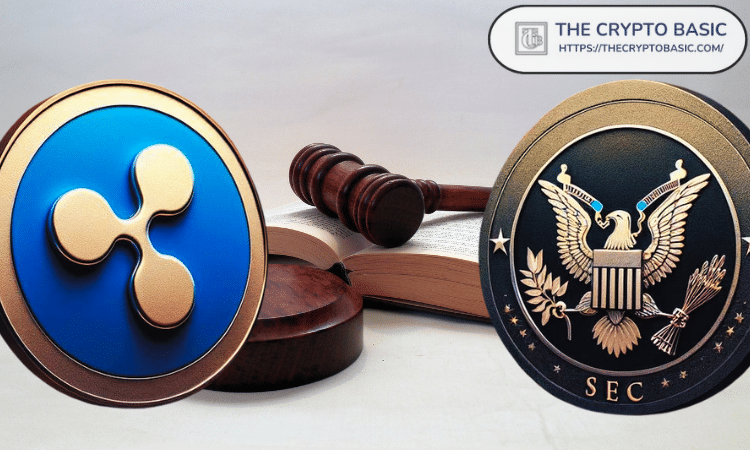
Ripple cites Terra’s consent judgment in its new filing in the SEC case to support a request to pay a $10 million fine instead of the SEC’s proposed $2 billion penalty. 

In a supplemental authority submitted in the Southern District of New York yesterday, Ripple referenced the recent Consent Judgment in the TerraForm Labs (TFL) case, whereby the SEC reached an agreement with the company for the disgorgement of over $3.58 billion and a civil penalty of $420 million. 

Comparison Between Ripple and TerraForm Cases 

According to Ripple, the agreed civil penalty in the TFL lawsuit represents 1.27% of the defendants’ gross sales, totaling $33 billion. Notably, Ripple compared the penalty in the TFL case to the SEC’s proposed fine of $2 billion following the sale of XRP to institutional investors. 

Unlike the Ripple lawsuit, the TFL judge found one of the largest securities frauds in U.S. history, involving two massive fraudulent schemes leading to the loss of $40 billion in investors’ funds. Ripple also pointed out that TFL execs touted fictitious data to lure potential investors while conducting fraudulent practices behind the scenes to support the token’s price. 

In addition to the TFL case, Ripple mentioned that the SEC usually requests a civil penalty between 0.6% and 1.8% in similar cases. 

However, Ripple said the securities regulator requested a civil penalty far more significant than this range in its case despite no evidence of fraud. Additionally, Ripple noted that institutional investors did not incur any losses. 

Top Lawyers Highlight Significance of Latest Filing  

Expectedly, the filing sparked reactions across the broader crypto community as top lawyers highlighted its significance. 

Reacting, famous pro-XRP lawyer Bill Morgan stated that Ripple’s recent filing underscores the peculiar hostility that the SEC constantly shows towards the crypto payments company. 

“The behavior of the SEC towards Ripple is very ill-motivated,” Attorney Morgan remarked. 

In response, former securities lawyer Marc Fagel suggested that the SEC’s leniency in the TerraForm lawsuit was due to the settlement status.

Moreover, he said the penalty in the TerraForm settlement is fictional, emphasizing that the money is gone. Fagel added that there is no guarantee that the SEC will receive anything close to the requested amount. 

Notably, CryptoQuant CEO Ki Young Ju questioned where Terraform Labs would get the funds to settle the SEC, seeing as it claimed to have depleted its reserves in a bid to maintain the UST peg during the Terra collapse two years back.

Current Status of SEC v. Ripple  

Meanwhile, although the SEC seeks a nearly $2 billion fine in the Ripple lawsuit, the defendant contended that the civil penalty should not exceed $10 million. The parties have submitted the necessary filings and are awaiting the court’s final verdict, which could come at any time. 

As reported yesterday, Ripple CEO Brad Garlinghouse estimated that the court would issue its final verdict before September 21, which marks the end of astronomical summer. It remains to be seen whether Garlinghouse’s projection would materialize. 

Here’s How Much Cardano You Need to Hold Now to Make $1M if ADA Hits $5.18, $15.14 or $23.26

0

Cardano investors would need to commit substantial amounts at the current price of $0.42 to make $1 million if ADA reaches ambitious targets such as $5.18, $15.14 and $23.26.

The crypto market is currently in a bearish phase, and Cardano has not escaped the predominant selling pressure. Also, ADA is witnessing a more concerning trend than the rest of the market, as it fails to capitalize on occasional market upswings but gets caught up in the corrections that follow.

Cardano’s Price Struggles

Earlier this month, Bitcoin (BTC) spiked beyond $71,000, triggering an uptrend in the broader crypto market. While most cryptocurrencies recorded similar price surges, ADA could not record a decisive move. Interestingly, Cardano rose to a two-week peak of $0.49 that day, but dropped sharply, eventually ending the day with a 1.96% collapse.

Now that Bitcoin is facing a correction from the previous spike, along with the rest of the market, ADA has also faced the impact, down 7.57% over the past week. Despite this concerning trend, some market analysts believe Cardano is capable of pulling out of the bearish situation, projecting multiple price targets. 

For instance, analyst Sebastian recently argued that Cardano is capable of reclaiming the $3 price level in 2024, outlining four major catalysts that could drive a price surge to this threshold. The market watcher further projected ADA to reach $2 by August this year, citing the upcoming Chang hard fork. 

In addition, crypto exchange Changelly has set up several ambitious price goals for Cardano, including $5.18, $15.14 and even $23.26. Analysts at Changelly have presented timelines for ADA to hit the targets.

ADA Needed to Make $1M if Cardano Hits $5.18, $15.14 or $23.26

These projections have contributed to renewed optimism among investors, with some looking to secure as much as $1 million for when Cardano records the much anticipated breakout. Consequently, The Crypto Basic recently assessed how much an investor would require now to reach this target at varying price goals.

Notably, to reach $1 million at the $5.18 value, an investor would need to hold 193,050 ADA tokens. These tokens can be procured for $81,949 at the current Cardano price of $0.4245. For this $5.18 price, Changelly sees Cardano hitting the level as its maximum price in January 2030. 

Cardano Price Prediction 2030 Changelly
Cardano Price Prediction 2030 | Changelly

Meanwhile, at the $15.14 price, investors would require much less tokens to sit on a $1 million investment, amounting to 66,050 Cardano. A market participant looking to purchase these tokens would amass them with $28,038 at the current ADA price. Interestingly, Changelly expects Cardano to clinch $15.14 in October 2032.

Cardano Price Prediction 2032
Cardano Price Prediction 2032 | Changelly

For the audacious $23.26 price target, Cardano investors must purchase 42,992 tokens to reach the $1 million investment goal, with the tokens currently valued at $18,250. Analysts at Changelly believe ADA is capable of reaching the $23.26 price in December 2033. 

Cardano Price Prediction 2033
Cardano Price Prediction 2033 | Changelly

Meter Is The First Multi-Asset Validation PoS Blockchain

0

Meter is a DeFi infrastructure that uses a multi-asset validation model. Unlike traditional blockchains that only use native tokens for network validation, Meter allows users to validate the network with blue-chip assets.

This makes the network more decentralized and secure, also, Meter has a ‘no slashing’ policy, which means validators are not punished by having their stakes reduced. This reduces the risk for validators, and more people will participate.

Traditional Blockchain Validation

In traditional blockchain networks, validators secure the network and validate transactions with the blockchain’s own tokens. They stake these tokens as collateral, so they have a financial incentive to be honest since any malicious behavior will result in losing their staked tokens.

But this has its drawbacks. Using only native tokens can lead to centralization, where a few participants accumulate a lot of tokens and gain too much control over the network. Which goes against decentralization.

Also, native tokens are limited to their own network and can’t be used elsewhere. This limits their broader application and value. This limits cross-network interaction and integration of different assets and hinders the overall growth and flexibility of the blockchain ecosystem.

Meter’s Multi-Asset Validation

Meter offers a new way to secure and validate blockchain networks through multi-asset validation. Instead of using only the network’s own tokens, Meter allows users to validate the network with other high value assets like stablecoins and major cryptocurrencies.

This way the types of assets used for validation are diversified and more people can participate even if they don’t hold the native token. This makes the network stronger by spreading the power and making it more decentralized.

By allowing different assets to be used as collateral, Meter democratizes access to validation. This reduces the risk of a few participants to gain too much control. This way we not only secure the network but also increase the value and usefulness of the assets involved and a more connected and versatile DeFi.

Multi-Asset Validation Benefits

Meter’s multi-asset validation brings many benefits to the blockchain. By allowing stablecoins and major cryptocurrencies to be used for validation, Meter is more inclusive. This means control isn’t concentrated in the hands of a few big holders of native tokens but spread among many participants, reducing centralization risks.

Using multiple assets as collateral makes the network more secure and stable. This diversity acts as a cushion against economic volatility, making the network more robust. Attacks would need to compromise multiple assets, making it more secure.

The multi-asset validation model also increases participation by aligning economic incentives with a larger user base. It invites holders of different high value assets to participate, strengthening the network with more validators.

Participants are motivated to act in the network’s best interest as their assets are directly tied to its health, creating a strong and cooperative community. This is a more connected and versatile decentralized finance.

Additionally, Meter Network has announced a major 40% token burn of the total $MTRG supply, which will enhance the long-term value and stability of the ecosystem.

Technical

Meter’s multi-asset validation allows various valuable assets, not just native tokens, for security and transaction validation. More participation, less centralization risks, more security by more validators.

Meter combines HotStuff-based Proof of Stake (PoS) with Proof of Work (PoW) for consensus. HotStuff-based PoS for fast and secure transactions, optimized for Ethereum Virtual Machine (EVM). PoW for the value of Meter’s currency MTR, for economic stability.

This hybrid approach uses the strengths of both PoS and PoW to provide a scalable, secure and efficient blockchain, for DeFi applications and multi-asset validation.

Non Native Tokens Validation

Meter’s blockchain allows high value assets like Bitcoin (BTC), Ethereum (ETH), stablecoins (USDC, DAI) to be used for validation, not just native tokens. This opens up the validation to more participants, broader validator base and more security by using more assets.

By accepting these assets, Meter is more stable and more interoperable with other blockchains, value transfer is smoother and DeFi is more connected.

This is a precedent for other chains to follow, making the blockchain landscape more diverse and robust, Meter’s network and DeFi as a whole.

Emphasis on Decentralization

Meter places an emphasis on decentralization through its multi-asset validation system. By allowing assets other than native tokens to be used for validation, the network becomes less centralized and participation becomes widespread.

This reduces the risk of centralization and enhances the security of the network. By allowing diverse assets to be accepted as collateral for staking, Meter encourages its community to participate and allows for a more democratic style governance to take place.

This boosts user participation and takes into account diverse interests of users, resulting in an increase of both adoption and trust.

By promoting participation among users from different blockchain networks, cross-network cooperation can take place, increasing adoption and boosting trust in the network.

Coordination with “No Slashing” Design

A “no slashing’ policy means that validators do not lose their staked assets because of network errors. This is unlike the majority of other proof of stake (POS) systems.

This reduces the risk of participation and makes the network more attractive and secure to use.

Not only does this policy coordinate with Meter’s multi-asset validation system, allowing multiple types of blue chip assets to be used for validation without the risk of losing vast sums of money.

It also encourages widespread participation among diverse validators, increasing decentralization and boosting network security.

Validators stand to benefit the most from this policy. They can stake up any of the blue chip assets without the risk of being slashed, making the network more attractive to them and their incentives perfectly aligned with network security.

With assets safe from slashing, they are more inclined to validate in the long term, boosting network reliability and showing that this coordination between “no slashing” and multi-asset validation results in a secure, inclusive and resilient network, allowing for widespread participation and coordination to take place, ensuring Meter’s success and sustainability.

Outlook and Upgrades

Upgrades are being planned to make Meter’s network quicker and more efficient. Firstly, better mechanisms for allowing different types of assets from diverse blockchains to be used for validation are to be introduced.

Secondly, improvements in algorithms are to be made in order to accelerate transactions and reduce transaction delay.

These upgrades will attract more users and encourage cooperation between different blockchains, resulting in a more interconnected DeFi ecosystem. Other blockchains may look to take Meter’s example and adopt its policies, resulting in greater decentralization.

Disclaimer: This article is provided by the Client. The Client is solely responsible for this page’s content, quality, accuracy, products, advertising, or other materials. Readers should conduct their own research before taking any actions related to the material available on this page. The Crypto Basic is not responsible for the accuracy of info and any damage or loss caused or alleged to be caused by the use of or reliance on any content, goods, or services mentioned in this article.

Please note that The Crypto Basic does not endorse or support any content or product on this page. We strongly advise readers to conduct their own research before acting on any information presented here and assume full responsibility for their decisions. This article should not be considered investment advice.


DeFi Taps TradFi To Accelerate The Adoption Of Tokenized Real-World Assets

0

Decentralized finance, built on blockchains, has given us a new and more efficient way to manage and leverage financial assets. With the tokenization of real-world assets such as commodities, stocks, shares, equities, bonds, real estate, fine art and more, DeFi offers an alternative approach to enhancing accessibility and boosting liquidity in financial markets.

RWAs, when represented as tokens on blockchain platforms, act as a bridge between the traditional and decentralized financial worlds, combining the efficiency and flexibility of digital transactions with the economic value of physical assets.

Meanwhile, DeFi represents an alternative to traditional financial systems that provides more security and transparency while improving accessibility. It powers innovative concepts such as decentralized lending, where blockchain facilitates peer-to-peer engagements between borrowers and capital providers. Transactions are governed by immutable smart contracts, eliminating intermediaries.

DeFi is a solution to the limitations of traditional financial systems, which are notoriously slow, and opaque and inaccessible to many.

One of the first examples of tokenization was Maple Finance, which pioneered a protocol that converted the rights to receive interest from bonds into digital tokens, which could be traded freely via decentralized marketplaces.

Early efforts like this paved the way for other forms of tokenization. It’s possible to tokenize any kind of financial asset and expand accessibility through fractional ownership. These tokenized assets help to boost inclusivity, bring more liquidity into markets and expand access to capital, and they do so in a way that’s fully transparent.

Bridging TradFi Risk Management To DeFi

RWA protocols today are built on robust blockchain infrastructures with processes in place to enable physical assets to be represented as digital tokens. As part of this tokenization process, it’s necessary to implement capabilities focused on managing risks, in order to protect investors and safeguard their capital investments.

To create these risk management systems, some of the more innovative RAW protocols – perhaps surprisingly – are following the lead set out by its peers in the traditional financial industry. TradFi has long established the best practices needed to enable secure lending, borrowing and trading of financial assets, and many of the same principles can be applied to DeFi and RWA environments.

TradFi veterans Jay Abbasi and Kristal Gruevski were among the first to realize this opportunity when they co-founded Zivoe, a real-world asset protocol that intends to disrupt the extremely predatory, high-interest consumer lending market. It has designed a protocol that aims to help victims of such predatory loans reorganize and refinance their debt repayments to obtain better terms. The platform works by pooling on-chain capital provided by investors, and lending it to consumers. Liquidity providers earn interest from these borrowers’ repayments, generating a sustainable yield on their investment.

Zivoe CEO Abbasi, who spent more than two decades working in the finance industry prior to entering the crypto space, set out to offer consumers a better deal after seeing firsthand the damage caused by traditional lenders’ predatory practices. Gruevski, an expert with over a decade of experience in financial compliance, serves as the company’s General Counsel. They’re joined by Zivoe’s risk advisor Walt Ramsey, who specializes in risk management, having overseen multi-billion dollar unsecured consumer loan portfolios at companies including JP Morgan Chase, Lloyd’s Bank and Elevate Credit.

Another key figure at Zivoe is its third co-founder, Chief Technology Officer John Quarnstrom, who previously helped Maple Finance build its groundbreaking RWA protocol.

Dream Teams Can Propel RWA Growth

This “dream team” sets Zivoe apart in the RWA space, with an eclectic mix of blockchain innovators and financial experts helping it to devise a more robust framework and facilitate secure and fair access to credit that benefits borrowers and lenders equally.

Having just launched its mainnet in the second quarter of 2024, Zivoe is well on track to originating its first consumer loans in the second half of the year. Its progress illustrates the advantages that exist when DeFi protocols tap into the expertise that abounds within the TradFi space, setting an example for others to follow.

RWA protocols can go even further by cooperating with regulators to help create the legal frameworks needed to advance decentralized lending. Such safeguards will go a long way towards encouraging the rest of the TradFi industry, including institutional investors, to participate in DeFi and RWAs and unlock the true potential of this technology.

Disclaimer: This article is provided by the Client. The Client is solely responsible for this page’s content, quality, accuracy, products, advertising, or other materials. Readers should conduct their own research before taking any actions related to the material available on this page. The Crypto Basic is not responsible for the accuracy of info and any damage or loss caused or alleged to be caused by the use of or reliance on any content, goods, or services mentioned in this article.

Please note that The Crypto Basic does not endorse or support any content or product on this page. We strongly advise readers to conduct their own research before acting on any information presented here and assume full responsibility for their decisions. This article should not be considered investment advice.

Terra Classic Community Votes on LUNC Burn Tax Allocation Change

0

The Terra Classic community is currently engaged in a pivotal vote on a proposal aimed at reviewing the LUNC burn tax to fund the Oracle pool.

The ongoing proposal has roots in an earlier proposition, Proposal 12098, presented by StrathCole in April. While the community endorsed this initial proposal, it served only to express support for the idea rather than implement it.

Background and Details of Proposal 12098

Proposal 12098 suggested a modification in the allocation of the burn tax, keeping both the tax rate and the portion designated for burning unchanged. Currently, Terra Classic imposes a burn tax of 0.5%, with 80% allocated for burning and 20% for distribution.

This distribution is further divided, with 10% set aside for rewards and another 10% to the Terra Classic Community Pool. These percentages are influenced by the current block proposer rewards, which are scheduled to be eliminated with the upgrade to SDK 0.47.

StrathCole’s proposal aims to modify the burn tax distribution to allocate 80% towards burning, 10% to the Community Pool, and 10% to the Oracle Pool instead of rewards. This adjustment seeks to create a more equitable distribution of the tax, ensuring that block rewards solely consist of gas fees.

Furthermore, the proposal would redirect the tax to rewards for staking through the Oracle Pool, potentially bringing stability to the system. The Terra Classic community widely supported this idea, with an overwhelming majority voting to approve Proposal 12098 two months ago.

Introduction of Terra Classic Proposal 12114

Building on the foundation laid by Proposal 12098, Frag, a former L1 Joint Task Force developer, introduced Proposal 12114. This proposal, if passed, will enact the changes detailed in Proposal 12098. 

Submitted on June 9, Proposal 12114’s voting period is set to conclude in three days. As of now, it has not reached the necessary voting threshold for approval, largely due to the abstention of major validators, including Allnodes, which holds 14.66% of the voting power.

Despite the hesitance from larger validators, some smaller validators have shown strong support. Of the 25 validators who have cast their votes, 24 have voted in favor, with one abstaining. This indicates a significant level of backing from a portion of the community, though the proposal’s success hinges on broader participation.

One notable supporter is Terra Classic community member Christopher, who runs the JESUSisLORD validator. He expressed his support on X, endorsing Proposal 12114 and emphasizing the importance of funding the Oracle Pool. 

Christopher pointed out that the Oracle Pool currently lacks a funding source and is being depleted. He argued that directing 10% of the burn tax to this pool is crucial for long-term staking rewards. Although this change might slightly reduce the APR, he believes the long-term benefits outweigh this drawback.

Implications of the Proposed Changes

The proposed changes aim to streamline the rewards system and achieve a fairer distribution of the burn tax. By allocating 10% of the tax to the Oracle Pool, the proposal will strengthen staking rewards for the long term, thereby decreasing dependence on block rewards that currently incorporate gas fees.

This adjustment is projected to slightly decrease the APR of staking rewards by approximately 0.5%. Moreover, the change requires an L1 coding, as it cannot be achieved through simple parameter modifications. The introduction of a new “oracle_tax” parameter, akin to the existing “community_tax” parameter, is necessary to facilitate this shift.

Meanwhile, LUNC currently changes hands at $0.00009862, having recently collapsed below the $0.0001 threshold amid a 6.3% drop over the last 24 hours. These discussions come on the back of sustained burn campaign to bolster LUNC price.

MicroStrategy Moves to Buy More Bitcoin with $500M Bond Offering

Institutional Bitcoin investor MicroStrategy has revealed plans to raise $500 million through a private offering of convertible notes. 

In a press statement today, the company announced that it intends to leverage the resulting proceeds to expand its Bitcoin holdings.

MicroStrategy $500M Bond Offering

MicroStrategy is offering the notes to qualified institutional shoppers under the amended Rule 144A of the Securities Act 1933. The company seeks to give initial clients the option to purchase an additional $75 million in aggregate principal amount of the notes within 13 days of the issuance date.

According to the report, the notes will be unsecured and senior in priority. Interest is payable every six months on June 15 and December 15, starting from December 2024. 

Furthermore, the notes will have a maturity date of June 15, 2032, unless redeemed, repurchased, or converted beforehand. MicroStrategy retains the right to redeem the investments for cash on or after June 20, 2029, though subject to conditions. 

Moreover, investors will have the right to demand that MicroStrategy repurchase their notes for cash on June 15, 2029. Additionally, at MicroStrategy’s discretion, the notes may be exchange for cash, shares of the company’s Class A common stock, or a combination of both.

The specific details of the notes, including the interest rate and initial conversion rate, will be finalized at the time of pricing. MicroStrategy anticipates that the reference price for the initial conversion will be based on the volume-weighted average price of its class A common stock on the pricing date.

Raised $500M To be Invested in Bitcoin

MicroStrategy intends to allocate the net proceeds from the note sale toward expanding its Bitcoin holdings and supporting corporate activities. At the last check, the company holds 214,400 BTCs valued at over $14.49 billion. Notably, the Bitcoin whale boasts a staggering unrealized profit of approximately $7 billion from this BTC portfolio.

Disclaimer on Note Sales

In the announcement, MicroStrategy stressed that the notes would be privately offered to institutional investors and would not be registered with the SEC or any other regulatory body, as always. 

As a result, they will not be available for sale in the United States unless registered or exempt from registration. 

Massive Shiba Inu Burn Coming Soon: Details

0

A massive Shiba Inu burn could occur today as popular community member “1c Dream” prepares to incinerate 100 million SHIB tokens.

According to a series of X posts, the hefty SHIB burn is slated to occur today, June 13, at 18:00 EST (22:00 UTC). Famous Shiba Inu enthusiast Casey Stubbs confirmed the development, claiming the burn will be a live event.  

Burns to Occur Live 

At the event, 1c Dream confirmed that he would demonstrate the transfer of the 100M SHIB to the Shiba Inu dead wallet in real time, permanently removing the tokens from circulation. In the meantime, the user encouraged interested parties to join a Telegram channel for more updates. 

With a unit of SHIB priced at $0.00002153, the USD equivalent of the 100M Shiba Inu tokens is worth $2,153. 

Shiba Inu Burn Rate Could Spike Massively 

The upcoming incineration is expected to bolster Shiba Inu’s burn rate. Data from Shibburn shows that Shiba Inu’s burn rate is down 93.67% over the past 24 hours, as only 14.78M SHIB, worth $318, were destroyed within this timeframe. 

Moreover, the forthcoming transaction will mark one of the most significant recent individual burns for Shiba Inu, as burns have witnessed a substantial decline in volume in the past few weeks.

As reported earlier, the community burned 271,470 SHIB and 7.9M tokens on June 10 and 11, respectively. However, the burn campaign gained steam yesterday, witnessing the incineration of 232M SHIB in multiple transactions, including a transaction containing over 225M tokens.  

Since Shiba Inu has recorded only 14.78M SHIB, 1c Dream’s upcoming burn could push the total tokens destroyed today to over 100M. 

Significance of Upcoming Burn

Organizing a live event to burn SHIB could inspire other community members to participate in the ongoing campaign to reduce Shiba Inu’s hefty circulating supply via burns. This could bolster the asset’s demand and price in the long run.

Out of a total supply of 1 quadrillion, over 410.72 trillion have been burned, leaving the cryptocurrency with a circulating supply of 589.27 trillion, still representing a massive mountain to climb.