Home Blog Page 1686

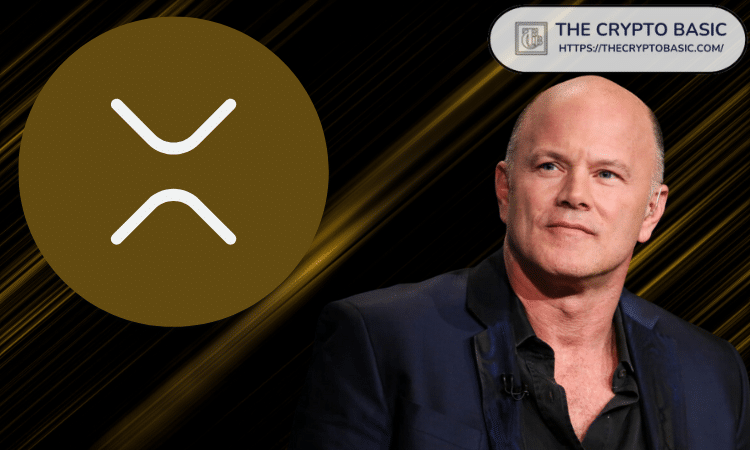
Billionaire Bitcoin Investor Mike Novogratz Says XRP Army Is Real

0

Billionaire pro-Bitcoin investor Mike Novogratz has expressed his newfound appreciation for XRP and Ripple. 

In a recent podcast, Novogratz revealed that he initially doubted XRP’s longevity in the crypto scene. Per his admission, the mistrust was due to Ripple’s significant ownership stake in XRP. However, he has now commended the XRP community for their dedication to the XRP project.

“I was skeptical that XRP would have lasting power because payment company Ripple owns 60% of XRP. And I was like, ‘that just doesn’t seem a proposition that’s going to work.’ And I’ve been dead wrong,” admitted Novogratz during the podcast.

He went on to give credit to Brad Garlinghouse, Ripple’s CEO, and the entire Ripple team. Additionally, Novogratz acknowledged Ripple’s transformation into a formidable institution in the payment landscape. 

Novogratz: XRP Army is real

Furthermore, the pro-Bitcoin investor directly acknowledged the “XRP Army,” highlighting the passionate community actively supporting and promoting the XRP ecosystem.

Besides, he drew parallels between the XRP community’s dedication and Bitcoin’s, stating that both represent places for people to store value. In his words:

“The XRP Army is real; they care about their ecosystem and their coin. Yes, it’s got a use case, but broadly, the use case is the same as Bitcoin. It’s another place for people to want to store value.”

XRP Army Reacts

Mike Novogratz’s recent acknowledgment of XRP has stirred significant attention from the XRP community. In a recent tweet, prominent XRP influencer Crypto Eri highlighted Novogratz’s comment about XRP.

A commenter to Crypto Eri’s tweet sarcastically inquired whether Novogratz has now joined the ranks of XRP investors or if there is still ‘confusion’ on his end about XRP’s purpose for existence. 

Meanwhile, in the podcast, Novogratz pondered the broader question of how many crypto ecosystems can coexist, considering the current total market cap of the crypto industry running into trillions of dollars.

He contextualized the crypto industry’s size relative to global capital markets. In particular, he pointed out that despite the immense energy, human capital, podcasts, conferences, and research papers dedicated to the crypto space, it remains tiny in comparison.

Novogratz humorously illustrated this point by envisioning a tug-of-war between all Apple employees and those in the crypto industry.

Cardano Founder Says He Has Nothing to Do With Projects Like Freya or Other NFT Plays

0

Charles Hoskinson, the founder of Cardano, denies being affiliated with any memecoin like Freya after his controversial tweet left many investors in huge losses.

Cardano founder Charles Hoskinson has denied affiliations with a memecoin crypto project, Freya, following a controversy that resulted in significant losses for many investors.

Hoskinson Accidentally Promotes a Memecoin

For context, Hoskinson took to X (formerly Twitter) yesterday to post an adorable photo of him and his dog named Freya.

While the Cardano founder hoped to provide an update about the growth of his furry friend, he mistakenly tagged an X account to a canine-themed token that shares the same name as his dog.

The team behind the Cardano-native meme coin took advantage of the tweet to promote their token, $FREYA. They claimed that Hoskinson’s X post about Freya was his way of endorsing the meme-based cryptocurrency to his nearly one million followers.

FREYA Soars 800% in Minutes

These malicious claims prompted a widespread adoption of the meme coin, as its price surged tremendously by a massive 800% to $0.1342.

However, this rally only lasted for 15 minutes as the token erased all gains and plunged to $0.00847, according to data from Dexscreener. At press time, FREYA was changing hands at $0.00842.

Expectedly, aggrieved investors who suffered significant losses following the development criticized the Cardano boss, blaming him for their woes.

To prevent a recurrence of the issue, they urged him to always conduct due diligence before tagging accounts on the X platform.

Hoskinson Reacts 

Reacting to the development, Hoskinson denied having any affiliation with the Cardano-native memecoin and other non-fungible token (NFT) plays.

While Hoskinson commended the idea of creating artworks inspired by his life, he pointed out that he does not endorse them and has not conducted any diligence.

Hoskinson expressed gratitude, acknowledging the meaningful concern from the community. He emphasized that he doesn’t capitalize on it commercially and hasn’t engaged in any collaborations for such purposes.


Contrary to Hoskinson’s claim, the Cardano boss had previously asked his followers about a meme-based cryptocurrency. As reported earlier, Hoskinson asked his followers to shed light on Snek (SNEK), a Cardano-native meme coin that gained significant popularity.

Although Hoskinson is known for always being meticulous, the recent development left many Cardano enthusiasts in awe.

XRP Price Glitch Takes XRP to $0.90 on Bittrex

0

The XRP price on Bittrex has skyrocketed to a high of $0.90 amid a price glitch on the crypto exchange triggered by its decision to shut down all trading activities.

XRP has declined 5.7% over the past 24 hours to a current price of $0.6289. While the digital asset has failed to reclaim the $0.90 price territory since slipping below it in July, charts on crypto exchange Bittrex suggest it has skyrocketed back to the threshold.

Per data from TradingView, the Bittrex XRP/USDT chart recorded massive intraday spikes from Tuesday, Dec. 5, to Friday, Dec. 8.

Notably, the XRP price surged 43.59% on Tuesday, 55.55% on Wednesday, and 124.95% on Friday. Interestingly, Thursday was missing from the chart, emphasizing the anomaly.

These surges resulted in the price of XRP rallying from $0.6266 on Dec. 5 to a high of approximately $0.90 on Friday.

XRP Price Glitch on Bittrex

However, this price position is far from the reality in the market. Realistically, XRP is only 1.2% up from its price on Dec. 5. The digital asset is also facing massive declines like the rest of the crypto market.

The recent price spikes on Bittrex are a glitch attributed to the exchange’s decision to wind down operations.

The Crypto Basic reported last month that Bittrex Global had disclosed plans to suspend all trading activities and shut down operations on Dec. 4. The decision came up shortly after the exchange’s battle with the U.S. SEC.

XRP Price Faces A History of Glitches

Several XRP community members have speculated that the current situation represents one of the multiple cases of price glitches peculiar to XRP over the past few months.

One of these instances saw XRP skyrocket to a high of $50 on U.S.-based exchange Gemini. This resulted from a thin order book, as Gemini had just listed XRP.

In October, XRP recorded another glitch, surging to a high of $34,603 on CoinMarketCap. Notably, Bitcoin’s price replaced XRP’s price on the price-tracking platform at the time. In another instance in October, the XRP community witnessed XRP rise to $5,805 on Binance. 

However, not all price glitches resulted in price surges. In mid-October, crypto exchange Bitstamp had to suspend XRP trading on its platform temporarily. Notably, several users had taken to X to highlight a strange XRP price crash on the platform from $0.50 to $0.4587.

Nonetheless, the latest situation with Bittrex is not a glitch uniquely affecting the XRP price. Instead, it is due to the winding down of trading on the exchange. Other assets, including Bitcoin, also witness prices that are different from their actual market values. 

Top 7 Tokens Under $0.30 to Watch this Unfolding Bull Market

0

This report identifies cryptocurrencies priced below $0.3 that are worth monitoring for strategic positioning in the unfolding crypto bull market.

As Bitcoin surges past the $40,000 mark for the first time in almost two years, the altcoin market is quickly catching up, mirroring the momentum of the Bitcoin-led rally. Already, numerous digital assets are experiencing comparable bullish gains.

Shiba Inu (SHIB)

Within the last week, Shiba Inu broke into the $0.00001 price range following a growth rate exceeding 22%. Interestingly, the last time Shiba Inu saw $0.00001 was more than 120 days ago.

In the last 24 hours, crypto market participants exchanged $312.84 million of Shiba Inu, putting its market valuation at $6 billion. With Bitcoin rallying to $44,000, Shiba Inu is fast mirroring the momentum, rewarding loyal investors.

While the circulating supply of Shiba Inu may pose limitations for certain investors, it is essential to acknowledge the concerted efforts by the Shiba Inu team to reduce the excess supply of SHIB.

Earlier, The Crypto Basic covered the completion of Shibarium’s inaugural hard fork to improve Shiba Inu burns. Furthermore, the team has been working on a burn mechanism to augment the quantity of SHIB tokens that can be burned via Shibarium.

VeChain (VET)

The VET token of the VeChain network is another below $0.3 digital asset that has been making waves recently. Per CoinMarketCap data, VET now trades at $0.02781 with a seven-day cumulative growth exceeding 23%. 

VET token holds a notable position given that it is the native token of VeChain, which seeks to spearhead innovation within the logistics industry by utilizing the Internet of Things, blockchain technology, and smart contracts.

Notably, as of 2022, the global logistics market was valued at $7.98 trillion. Research indicates that the supply chain market is projected to reach an estimated $18.23 trillion by 2030, with VET poised for impact.

Chiliz (CHZ)

Like Shiba Inu and VET, Chiliz has also registered an over 20% gain in its cumulative one-week performance. This mid-cap crypto token is also poised for potential impact, given its position in the sports and entertainment realms.

CHZ currently sells at a discount of $0.09152 per token for investors seeking low-priced tokens for easy entry.

Oasis Network (ROSE)

Over the last 30 days, Oasis Network’s token has seen a growth rate of 31%, putting its price at $0.0861 from 0.06544.

The project’s technical contributor, Oasis Labs, has aligned with prominent entities such as Meta and BMW Group Genetica to develop platforms and products dedicated to advancing individual privacy protection, robust data governance, and the responsible use of data.

Hedera (HBAR)

This dApp-focused crypto project has recorded a significant crypto market share growth of 6.51% in the last 24 hours. Per CoinMarketCap data, HBAR’s market cap now sits at over $2.5 billion. 

In parallel, the token now exchanges hands at $0.07565, representing a 22.68% uptick from the previous week’s value.

Hedera diverges from the conventional approach of most crypto platforms as it is not constructed atop a traditional blockchain. Instead, it introduces an innovative form of distributed ledger technology dubbed “Hashgraph.”

This unique technology enables Hedera to outperform many blockchain-based alternatives in speed, cost, and scalability. For instance, Hedera Hashgraph is reportedly capable of handling over 10,000 transactions per second.

Kaspa (KAS)

Per CoinMarketCap information, KAS has witnessed an outstanding 58.88% growth since November 12. As a result, the token now trades at $0.1285, with a market valuation of over $2.8 billion. 

Kaspa stands out for its capacity to sustain elevated block rates without compromising the security characteristic of proof-of-work environments.

Guide: How To Buy Crypto With An Amazon Gift Card

0

In a digital era where cryptocurrencies are gradually becoming a mainstream asset class, individuals are constantly looking for creative ways to acquire them; one such intriguing method is purchasing cryptocurrencies using an Amazon gift card.

This guide, brought to you by The Crypto Basic, your number one source of crypto news online, meticulously explores this innovative avenue, shedding light on the platforms that facilitate such transactions and providing a detailed walkthrough on how to seamlessly complete a purchase.

Can You Buy Crypto with an Amazon Gift Card?

Indeed, acquiring cryptocurrencies with an Amazon gift card is a possibility; this unconventional method serves as a beacon for those who prefer utilizing gift cards or have some lying around unused.

Several online platforms have recognized this niche and now offer a gateway for individuals to exchange their Amazon gift cards for a variety of cryptocurrencies such as Bitcoin and Ethereum.

The essence of this method lies in its simplicity and the fact that it opens up crypto acquisitions to those who might not have access to traditional banking systems or prefer not to use them for crypto purchases.

It’s a testament to the flexibility and inclusivity that the crypto space encourages, allowing for various entry points into the market.

Where to Buy Crypto with an Amazon Gift Card

The journey of converting your Amazon gift card into cryptocurrency begins with identifying platforms that support such transactions.

Here are a few noteworthy ones:

1.      BitValve

BitValve stands as a peer-to-peer crypto exchange platform that allows you to directly trade your Amazon gift card for cryptocurrencies with other users.

The platform boasts a user-friendly interface and a secure environment for transactions.

2.      Paxful

Paxful, akin to BitValve, operates on a P2P model, offering a plethora of payment methods including Amazon gift cards.

Its reputation for security and a vast user base makes it a viable choice for such transactions.

3.      LocalBitcoins

LocalBitcoins, a long-standing player in the P2P crypto exchange realm, also accommodates those looking to trade Amazon gift cards for crypto.

With a global user base, finding a trade becomes relatively easier.

4.      Redeeem

Redeeem presents a specialized platform for trading gift cards for cryptocurrencies; their streamlined process and focus on gift card exchanges make them a unique player in this niche.

How to Buy Crypto with an Amazon Gift Card

Venturing into the process of buying crypto with an Amazon gift card, especially on platforms like BitValve, is quite straightforward.

Here’s a comprehensive step-by-step guide:

1.      Register for an Account

Kickstart your journey by signing up on a platform like BitValve that supports Amazon gift card transactions.

2.      Verify Your Account

Complete any necessary verification processes to enhance the security of your transactions.

3.      Browse Trade Listings

Delve into the listings to find offers from sellers ready to accept Amazon gift cards; filter the listings based on your preferences to find the perfect match.

4.      Initiate a Trade

Once you find a suitable offer, initiate a trade; it’s crucial not to provide the Amazon Gift Card Code before the trade reaches an escrowed state.

5.      Escrowed State

Patiently wait for the seller to deposit and escrow the crypto before proceeding to provide your Amazon Gift Card code.

6.      Provide Amazon Gift Card Code

With the crypto in escrow, provide the seller with your Amazon Gift Card code.

7.      Verification and Release of Crypto

Upon verification of the Amazon Gift Card, the seller will redeem it and release the crypto to your account.

Safety Precautions

Engaging in transactions over the Internet, especially with cryptocurrencies, requires a heightened level of caution.

It’s imperative to use platforms with robust security features and adhere to the recommended safety guidelines provided by these platforms during the trade.

Ensuring that the platform uses an escrow service can significantly mitigate the risk of fraud.

In Conclusion

The method of buying crypto with an Amazon gift card unveils an alternative pathway into the digital asset space; although not a conventional method, it’s a viable solution for individuals with unused gift cards.

By adhering to the guidelines and steps outlined in this guide, you can navigate through the process with ease and security.

The crypto landscape continues to evolve, offering a myriad of options for enthusiasts and newcomers alike.

Stay tuned to our blog for more engaging and informative guides on crypto, crypto coins, and cryptocurrencies, as we unravel the dynamics of this fascinating digital realm.

Crypto In The UK: Plans To Regulate Industry With Legislation Are In Motion

0

Introduction

The cryptocurrency landscape in the United Kingdom is on the brink of transformation as the government gears up to introduce regulatory frameworks.

This move is seen as a stepping stone towards mainstream adoption and a mechanism to foster a conducive environment for crypto enthusiasts and investors.

In this guide, brought to you by your ultimate go-to source of crypto news, The Crypto Basic, we delve into the historical backdrop that has led to this decision, the key points in the proposed legislation, and the potential impacts on the crypto industry and its stakeholders.

How Did We Get Here?

●       The Rise of Cryptocurrencies in the UK

Cryptocurrencies have gradually found a footing in the UK, with a growing community of developers, investors, and blockchain startups.

The allure of decentralized finance and the potential for high returns have significantly contributed to the crypto adoption curve.

●       The Push for Regulation

With the proliferation of crypto assets and related activities, the UK government has recognized the necessity for a regulatory framework to ensure consumer protection and maintain financial stability.

The proposed regulations aim to provide clarity and confidence to both consumers and businesses engaged in crypto-related activities​.

●       Key Points

The UK government has outlined ambitious plans to regulate crypto asset activities robustly; one of the focal points of the forthcoming legislation is the regulation of stablecoins, particularly for retail payments.

The government also intends to extend the regulatory perimeter to cover other crypto assets and related activities over time​​.

●       Potential Impacts

The proposed regulatory framework is expected to bring the rules governing the issuance, trading, and lending of crypto tokens closely in line with the existing financial regulatory regime.

This alignment is anticipated to facilitate a safer and more structured environment for both individual and institutional participants in the crypto space​​.

The Proposed Legislation: A Detailed Outlook

The UK aims to establish a comprehensive regulatory regime for the crypto industry, covering a broad spectrum of crypto assets and related activities.

The forthcoming legislation, set to be presented in 2024, will empower the Financial Conduct Authority (FCA) with the requisite authority to oversee the crypto market, including stablecoins and other digital currencies​​.

●       Regulatory Focus on Stablecoins

The emergence of stablecoins has garnered significant attention due to their potential to act as a means of payment while maintaining price stability.

The UK government, recognizing this potential, has placed a particular focus on regulating stablecoins to ensure they adhere to equivalent standards as traditional payment methods.

This will likely include requirements around capital, governance, and investor protection to mitigate risks associated with stablecoin use.

●       Extending the Regulatory Perimeter

The proposed legislation intends to extend the regulatory boundary beyond stablecoins to encompass a variety of crypto assets and associated activities; this includes exchanges, wallets, and other intermediaries involved in the crypto ecosystem.

By broadening the regulatory scope, the UK aims to create a conducive environment for the growth and innovation of the crypto industry while ensuring a high level of consumer protection and financial stability.

●       Anti-Money Laundering (AML) and Countering the Financing of Terrorism (CFT) Measures

With the rise of crypto, concerns around money laundering and terrorist financing have also surfaced.

The proposed legislation is expected to strengthen AML and CFT measures within the crypto space, aligning with international standards set by bodies such as the Financial Action Task Force (FATF).

This will likely entail rigorous Know Your Customer (KYC) and AML procedures for crypto service providers.

Aiming for a Balanced Approach

The UK government’s approach towards crypto regulation reflects a balance between fostering innovation and ensuring consumer protection.

By providing a clear legal framework, the government aims to encourage responsible innovation within the crypto sector while mitigating the associated risks.

●       Encouraging Innovation

The structured regulatory framework is expected to provide a clear pathway for crypto businesses, startups, and investors, thus fostering innovation.

It’s anticipated that a well-regulated environment will attract more institutional investments and global crypto enterprises to operate in the UK, further propelling the growth of the crypto ecosystem.

●       Consumer Protection and Market Integrity

The core of the regulatory framework is to provide robust consumer protection; by establishing clear rules and oversight mechanisms, consumers and investors can engage in crypto activities with a higher degree of confidence and security.

This, in turn, is likely to enhance market integrity and trust in the crypto sector.

Conclusion

The move towards regulating crypto in the UK marks a significant milestone in the evolution of the crypto industry.

The proposed legislation embodies a comprehensive approach aiming to bridge the regulatory gap while fostering a conducive environment for crypto stakeholders.

As the UK steps forward into this new regulatory frontier, the global crypto community will be keenly watching the impacts and potential lessons to be gleaned.

The ongoing developments in the UK’s crypto regulatory framework underscore the growing acknowledgment of crypto’s role in the modern financial landscape.

Stay tuned to The Crypto Basic for more crypto news and updates on crypto, crypto coins, and cryptocurrencies, as we continue to delve into the unfolding regulatory scenarios around the globe.

Crypto Billionaires: How Did Mark Cuban Lose $1M And How Can You Avoid It?

0

Introduction

The world of cryptocurrencies, while laden with prospects of financial freedom and returns, is also a domain where the line between legitimate transactions and scams can sometimes blur.

The recent misadventure of billionaire entrepreneur Mark Cuban shines a spotlight on this darker facet of the crypto realm.

This article by The Crypto Basic – your source for crypto news – elucidates how Mark Cuban lost a significant amount in a crypto scam and how you can avoid falling into a similar trap.

How Did Mark Cuban Lose 1M Dollars in a Scam?

Mark Cuban, the owner of the Dallas Mavericks and a well-known tech investor, found himself amidst a crypto storm when he lost nearly $1 million to a phishing scam.

The unfortunate incident saw Cuban’s crypto wallet being hacked, and around $900,000 worth of crypto assets were stolen from it; despite his tech-savvy nature, Cuban confessed to being oblivious to how the hacker managed to gain access to his wallet.

The crypto community speculates that a lapse on Cuban’s part, possibly signing a fraudulent transaction or having his private key compromised, led to this financial debacle; the precise scenario entails Cuban likely clicking on a phishing link, which is believed to have occurred after a prolonged period of inactivity on his part​​.

Further investigation into the incident revealed that the scam stripped Cuban of $870,000 across multiple cryptocurrencies; while Cuban managed to salvage some of his crypto assets on the Polygon network, his wallet was drained of stablecoins, and other tokens like Lido staked ETH and SuperRare tokens were swept away by the scammer​​.

How Can You Avoid Making the Same Mistake?

The narrative of Mark Cuban’s loss serves as a stark reminder and a lesson to crypto enthusiasts on the importance of adhering to security best practices.

Here are some steps you can take to fortify your crypto assets against potential scams:

●       Be Wary of Phishing Attempts

Phishing remains one of the most prevalent methods employed by cybercriminals to trick individuals into revealing sensitive information, such as private keys and wallet passwords.

Being on high alert for phishing attempts is crucial – this entails scrutinizing emails, messages, and websites to ensure they are from legitimate sources before providing any personal or financial information.

●       Use a Hardware Wallet

One of the most secure ways to store your crypto assets is through a hardware wallet; unlike online wallets, hardware wallets are not connected to the Internet, making them immune to online hacking attempts.

By storing your private keys on a hardware wallet, you significantly reduce the risk of losing your crypto assets to scams.

●       Enable Two-Factor Authentication (2FA)

Two-Factor Authentication adds an extra layer of security to your online accounts, including your crypto wallets.

By requiring not only a password and username but also something that only the user has on them (like a piece of information only they should know or have immediately to hand), 2FA minimizes the risk of potential hacks.

●       Stay Informed

Keeping abreast of the latest security measures and best practices in the crypto world can go a long way in safeguarding your assets.

This includes following reputable crypto news outlets (such as yours truly), joining trustworthy crypto communities, and learning from the experiences of other crypto investors.

●       Avoid Public Wi-Fi for Crypto Transactions

Public Wi-Fi networks are often less secure and can be a breeding ground for hackers looking to intercept sensitive information.

It’s advisable to avoid conducting crypto transactions or accessing your crypto wallets on public Wi-Fi networks.

●       Regularly Update Your Wallet Software

Ensure that your wallet software is up to date with the latest security enhancements; developers continually update wallet software to patch vulnerabilities and enhance security features.

Regular updates will help in keeping your crypto assets secure.

Recovering from a Crypto Loss: Is it Possible?

Mark Cuban’s loss sheds light on the harsh reality that once crypto assets are stolen, recovering them is often a Herculean task, if not impossible.

The decentralized nature of cryptocurrencies means there’s no central authority to turn to for recovery.

However, some measures like reporting the incident to crypto exchanges and law enforcement agencies can sometimes help trace and potentially recover stolen assets.

●       Engage with the Crypto Community

The crypto community can be a valuable resource in times of crisis; engaging with community forums and reporting scams can sometimes help in tracking down the culprits or at least spreading awareness to prevent others from falling for the same scam.

●       Seek Legal Advice

In some cases, seeking legal advice might be a viable step – legal professionals familiar with digital assets and cybercrime may provide guidance on any possible recourse.

Conclusion

The tale of Mark Cuban’s million-dollar loss in the crypto space is a stark reminder of the potential risks lurking in the digital asset realm.

While the promise of high returns in the crypto world is alluring, ensuring the security of your crypto assets should never take a back seat.

Armed with the right knowledge and by adhering to security best practices, you can navigate the crypto world with a lower risk of falling prey to scams.

Stay updated with the latest crypto news, crypto coin, and cryptocurrency developments to make informed decisions in your crypto journey.

Crypto 101: What Is Staking?

0

Understanding Crypto Staking

Cryptocurrency continues to revolutionize the financial setting, offering a plethora of opportunities for investors and enthusiasts.

As you delve deeper into the universe of cryptocurrencies, you encounter various mechanisms that underpin the functionality of these digital assets; one such concept that’s gaining traction is staking, but… what is staking?

This comprehensive guide by The Crypto Basic, your primary crypto news source, explains the staking process and how you can participate in this pivotal aspect of the crypto economy.

What is Staking?

Staking is a process that allows cryptocurrency holders to earn rewards on their holdings; it’s akin to earning interest in a traditional savings account but with a crypto twist.

By locking up certain crypto coins in a blockchain network, participants can contribute to the network’s security and operations, earning rewards in return.

Staking is a key component of the Proof-of-Stake (PoS) mechanism, where instead of miners, “validators” are selected to create new blocks and confirm transactions based on the amount of crypto they commit as stake.

How to Stake

Staking can be a lucrative way to earn passive income on your cryptocurrency investments; different platforms have their own specific staking procedures, but the general steps involve choosing a coin to stake, locking up the coins in a wallet or staking pool, and earning rewards based on the staking duration and amount.

Let’s explore how to stake on some of the leading PoS platforms:

●       Ethereum

The Ethereum network’s shift from Proof-of-Work (PoW) to Proof-of-Stake (PoS) through Ethereum 2.0 has brought staking to the forefront of the Ethereum community.

To stake on Ethereum, you need to run a validator node by holding at least 32 ETH; if running a node seems daunting or you have less than 32 ETH, you can join a staking pool or use a staking service provided by various cryptocurrency exchanges.

●       Tezos

Tezos uses a unique staking process called ‘baking’; as a Tezos holder, you can become a ‘baker’ by staking 8,000 XTZ.

If that amount is too steep, you can delegate your XTZ to a baker to participate indirectly.

The Tezos network rewards bakers for endorsing and validating transactions, and these rewards are then distributed among those who have staked their coins.

●       Cosmos

Cosmos staking involves delegating your ATOM coins to one of the network’s validators; to stake in Cosmos, you can either run your own validator node or delegate to an existing validator using a cryptocurrency wallet that supports Cosmos.

The rewards are determined by the number of coins staked and the overall inflation rate within the Cosmos network.

●       Solana

Solana has made a name for itself in the staking arena with its high throughput and low fees; to stake SOL tokens, you delegate them to validators who process transactions and run the network.

Staking on Solana can be done through various wallets that support the Solana blockchain, and rewards are distributed based on the stake size and the validator’s performance.

●       Cardano

Cardano allows ADA token holders to participate in network validation through staking; you can either run your own staking pool or delegate your ADA to an existing pool.

The Cardano protocol randomly selects the pools that will produce the next block, with the chances of selection increasing with the size of the stake.

Benefits of Staking

Staking is not just about earning rewards – it also offers several benefits that align with the ethos of decentralization.

Here are some key advantages:

●       Security

By staking, you contribute to the network’s security, deterring attacks and ensuring the integrity of the blockchain.

●       Decentralization

More stakeholders mean a more distributed network, preventing centralization of control.

●       Energy Efficiency

PoS networks require less energy compared to PoW, making staking a greener alternative.

●       Governance

Some networks offer stakers voting rights, allowing them to influence the project’s direction.

Considerations Before Staking

Before jumping into staking, consider the following:

●       Liquidity

Staked coins are locked and cannot be traded, affecting liquidity.

●       Volatility

The value of staked coins can fluctuate, impacting potential rewards.

●       Slashing

In some networks, validators can be penalized for network downtime or malicious behavior, affecting staked funds.

Staking Risks

Staking, while rewarding, comes with risks:

●       Smart Contract Vulnerabilities

Staking often involves smart contracts, which can be susceptible to bugs.

●       Validator Risks

Poor validator performance or misconduct can result in penalties.

Final Thoughts

Staking has opened a new avenue for crypto news enthusiasts to participate actively in the maintenance and security of blockchain networks while earning rewards.

As the crypto paradigm continues to shift, staking represents a significant stride towards a more participatory and sustainable blockchain ecosystem.

Whether you’re holding Ethereum, Tezos, Cosmos, Solana, or Cardano, staking is a compelling way to harness the full potential of your digital assets.

Best Tips To Spot And Report Crypto Scams

0

Introduction

The burgeoning world of cryptocurrencies opens up a plethora of opportunities for investors and enthusiasts alike.

However, as with any financial domain, the crypto space is not immune to scams and fraudulent activities; it’s pivotal to arm oneself with the necessary knowledge on how to spot and report crypto scams, ensuring a secure crypto journey.

This article by The Crypto Basic, bringing you the latest crypto news, lays down the key indicators of crypto scams and elucidates the steps to report such activities, acting as your safeguard in the volatile crypto market.

Crypto Scams: What to Look For

Identifying scams in the crypto realm can be a tad challenging due to the technical nature and the anonymity feature it holds.

However, being cognizant of the following red flags can significantly mitigate the risks:

●       “Too Good to be True” Offers

Offers that promise guaranteed returns or “get-rich-quick” schemes are classic hallmarks of scams.

Crypto investments carry risks, and any assurance of guaranteed profits should be viewed with skepticism.

●       Lack of Transparency

Legitimate crypto projects are transparent about their goals, progress, and the people behind them.

On the flip side, scam projects often have opaque operations and might lack clear information on their website.

●       Unverified Smart Contracts

Smart contracts are the backbone of many crypto projects; however, unverified or unaudited smart contracts can have hidden code that may be used maliciously.

●       High Pressure Sales Tactics

Scammers often employ high-pressure sales tactics to lure victims into parting with their money; they might rush you to make investment decisions, stressing that the “opportunity” is limited.

●       Fake Social Media Profiles and Websites

Creating fake profiles on social media and counterfeit websites that mimic reputable crypto entities is a common tactic employed by scammers to trick individuals.

●       Unusual Transaction Requests

Be wary of requests to send large amounts of cryptocurrency to unknown addresses, especially if the request comes via social media or email from unverified sources.

Common Scam Types

●       Ponzi Schemes

Ponzi schemes consist of investment scams where returns are paid to earlier investors from the funds of new investors, rather than from profit earned.

●       Fake ICOs (Initial Coin Offerings)

Scammers create fake ICOs with professional-looking websites and false whitepapers to trick investors into buying nonexistent tokens.

●       Rug Pulls

Rug pulls comprise developers abandoning a project and running off with investors’ funds after a token sale.

●       Pump and Dump Schemes

The price of a cryptocurrency is artificially inflated (pumped), and once the price has risen, the scam artists sell off their holdings (dump), causing the price to plummet and investors to lose money.

Crypto Scams: How to Report

If you suspect you’ve encountered a scam, taking swift action can help protect others and may provide some recourse.

Here’s how to go about it:

●       Document Everything

Keep detailed records of your interactions with the suspect scam, including emails, website URLs, and social media profiles.

Screenshots and transaction records can serve as crucial evidence.

●       Report to Crypto Exchanges

If the scam involves a particular cryptocurrency, reporting it to the exchanges that list the coin can help protect others from falling victim.

●       File a Police Report

Reporting to your local law enforcement agency is a crucial step; while the anonymous nature of crypto can pose challenges, law enforcement agencies are becoming more adept at investigating crypto scams.

●       Notify Online Platforms

If the scam is being propagated on social media or other online platforms, reporting the fraudulent profiles or posts can help take them down and warn others.

●       Resort to Crypto Scam Reporting Websites

There are various websites dedicated to listing and reporting crypto scams – platforms like BitcoinAbuse and CryptoScamDB can be useful resources.

●       Engage with the Crypto Community

Sharing your experience with the crypto community can raise awareness and help others avoid similar scams.

Regulatory Bodies

●       The Securities and Exchange Commission (SEC)

If the scam involves a token that could be classified as a security, reporting to the SEC can be a prudent step.

●       The Commodity Futures Trading Commission (CFTC)

For scams involving cryptocurrencies as commodities, the CFTC is the relevant regulatory body.

●       The Federal Trade Commission (FTC)

The FTC acts against deceptive cryptocurrency promotions.

Conclusion

The crypto space, despite its potential for financial growth, harbors pitfalls in the form of scams and fraudulent activities.

Being vigilant, knowing what to look for, and understanding how to report crypto scams are crucial steps in fostering a safer crypto environment for all.

Stay updated with the latest crypto news, crypto coins, and cryptocurrencies to arm yourself with the knowledge needed to navigate the crypto space securely.

2023 Recap: What Happened To NFTs?

0

Introduction

The year 2023 marked a period of recalibration for Non-Fungible Tokens (NFTs) following the monumental hype they garnered in the previous years.

As the dust settled, the focus shifted from mere speculation to a more grounded assessment of value and utility.

This recap by The Crypto Basic, a prime source for crypto news and DeFi topics, seeks to traverse through the key happenings in the NFT space over the year, evaluating the highs, the lows, and the emergent trends that are likely to shape the trajectory of NFTs moving forward.

NFTs: From Riches to Rags

The fervor around NFTs saw a significant dip as market corrections took place; the illiquidity in many NFT projects became apparent, with about 70% having a floor price of zero over the last six months leading to April 2023​.

The decline in liquidity was notably sharp post-April 2022, bottoming out in September before showing signs of recovery in the first half of 2023​​.

●       How Did We Get Here?

The initial NFT euphoria was driven by speculative trading, high-profile sales, and a rush of new projects entering the market.

However, as the market matured, the disparity in quality and value among projects became evident.

The concentration of market cap within the top 1% of NFT projects highlighted the skewed distribution of value, with these projects holding over 50% of the total market cap.

The competition among NFT marketplaces intensified, with platforms like Blur and OpenSea engaging in a “royalty war” to attract creators and buyers; this war led to a significant reduction in marketplace fees, impacting the overall revenue generation from royalties.

Notably, Blur overtook OpenSea in royalty market share, showcasing the dynamic and competitive nature of the NFT marketplace arena​​.

What Is the Future of NFTs?

The future of NFTs lies in the evolution of utility, diversity of assets, and integration with broader digital ecosystems.

Here are some key trends and developments that have been observed in 2023, setting the stage for the future trajectory of NFTs:

●       Emergence of Utility-driven NFTs

The narrative has started shifting from collectibles to utility-driven NFTs; these tokens are now being used to represent a variety of assets and access rights in the digital world, ranging from virtual real estate and gaming assets to memberships and even digital identities.

For instance, Decentraland and The Sandbox have seen a growing community of users trading virtual real estate assets, while games like Axie Infinity continue to thrive on player-owned economies.

●       Cross-platform Interoperability

Cross-platform interoperability emerged as a notable trend, allowing assets from one platform to be utilized in another.

This interoperability is fostering a more integrated and cooperative digital asset ecosystem; for example, projects like Polkadot and Cosmos are working towards creating interoperable protocols that will allow NFTs to be traded across different blockchains.

●       Integration with DeFi

The integration of NFTs with Decentralized Finance (DeFi) platforms is another exciting development – by tokenizing real-world assets as NFTs, individuals can now use these assets as collateral to obtain loans or earn interest through various DeFi platforms.

This integration is bridging the gap between traditional finance and the crypto world, creating new opportunities for asset monetization and financial inclusion.

●       Enhanced Legislation and Regulation

As the NFT space matures, so does the regulatory landscape surrounding it; countries are beginning to outline regulatory frameworks to ensure consumer protection and to promote a healthy market environment.

This includes measures to combat money laundering and ensure the authenticity and provenance of digital assets.

●       Evolving Market Infrastructure

The market infrastructure is evolving to accommodate the growing and diverse needs of NFT creators and investors.

New marketplaces, better user interfaces, and more robust auction mechanisms are being developed to enhance the user experience and to cater to a broader range of digital assets.

Conclusion

The trajectory of NFTs in 2023 reflects a maturing and evolving landscape, moving beyond the initial hype towards establishing a robust infrastructure and a broader utility spectrum, as seen by our crypto news coverage.

As regulations catch up and technological advancements continue to foster cross-platform interoperability and DeFi integration, the stage is set for NFTs to become an integral part of the digital economy.

The lessons learned from the market corrections and the evolving narrative around utility and value are likely to guide the development and adoption of NFTs in the years to come.