Home Blog Page 2058

Auto-Burn and Auto-withdraw Options May Come to Terra Classic Staking

0

A proposal aiming to introduce both features on Terra Station has been submitted.

Terra Classic (LUNC) could start seeing an auto-burn and an auto-withdraw option for its staking mechanism, as a proposal to introduce the features on the Terra Station platform was recently submitted.

Proposal 11391 seeks consensus from community members to include buttons on Terra Station that allow users to burn their staking rewards at specified intervals: daily, weekly, monthly, or yearly.

Submitted six days ago, the proposal seeks to automate these activities, focusing on the burn function, to enhance Terra Classic burns. Community members can readily participate in the initiative by eliminating the need for manual burning of staking rewards.

The proposal has not passed as of press time, with most validators displaying apathy towards it. Most validators, amounting to 147 in number, have not voted on the proposal at the time of reporting. Only four validators have voted, all going for “Yes.”

Classy – a notable Terra Classic influencer and operator of the Classy’s Sphere validator – noted that his validator voted Yes to the proposal.


Furthermore, Classy took to his YouTube channel to explain why he felt the proposal was a fantastic idea that could benefit the community. He disclosed that numerous proponents had reached out to him, soliciting the addition of a burn button on Terra Station.

Notwithstanding, according to him, getting the Terra Foundation Guard (TFL) team to actually include this option could be tough, as it would require some technical smart contract work. Despite this, he insists the proposal is a good idea that would potentially help incinerate more LUNC tokens.

Moreover, Classy likened the auto-withdraw option to the auto-compounding feature observed in certain staking services. Auto-compounding is a feature that allows cryptocurrency holders to automatically reinvest their staking rewards back into the staking pool, thus increasing their earnings.

The feature will help to increase the amount of Terra Classic staked. Rex Harrison, a senior member of the TerraCVita development group, has repeatedly championed the staking initiative, highlighting its importance in Terra Classic’s rejuvenation goal.

Shiba Inu Puppynet Crossed 2K Transactions With Over 387K Blocks

0

The milestones were attained in less than a week since Kusama introduced the Shibarium public testnet.

Puppyscan is the dedicated block explorer for the Shibarium Puppynet solution. Much like Etherscan, the platform provides analytics that helps users explore the Puppynet chain and monitor network activity. This allows for proper surveillance of the testnet to gain insight into its performance.

Recall that Kusama introduced the early beta test of the Shibarium network, which he dubbed Puppynet, on Saturday. The test phase allows the community to test the functionality of the network to identify any bugs or issues for rectification before the launch of the mainnet.

Puppynet On-Chain Data

Shiba Inu’s Puppynet has successfully processed 2,163 total transactions since its inception, with up to 388,462 total blocks as of press time. These impressive heights were reached in less than a week since Shytoshi Kusama, Shiba Inu’s lead developer, unveiled the test network. According to data from Puppyscan, daily transactions on the network currently sit at 541, with total wallet addresses hitting a high of 1,382 at the time of reporting. Moreover, the average block time remains 5 seconds despite the growing cluster of transactions.

The beta test is open to the public and can be accessed by anybody through the official Shibarium site. Notwithstanding, Kusama has warned that Puppynet is intended only for testing purposes and tokens on the network are not real. Investors are advised not to buy anything or use their real assets for activities on the network.

Moreover, Kusama revealed that the amount of Shiba Inu tokens burned by the network would depend on the transactions carried out on it. He disclosed that Shiba Inu developers would put up a chart to track burned SHIB on the burn portal as part of the beta testing phase. The beta test is expected to run for a few months.

Being the brainchild of Ryoshi, Shiba Inu’s anonymous founder, Shibarium aims to provide faster and cheaper transactions for the Shiba Inu ecosystem while improving scalability and reducing congestion on the Ethereum network. The layer-2 solution can also be leveraged for dApp building and real-life business integrations. It also promises to burn SHIB tokens.

Major Whale Unstakes 800B Shiba Inu from ShibaSwap

0

Major Shiba Inu Whale unstaked $8.23 Million Worth of Shiba Inu (SHIB).

Etherscan.io data reports that a Shiba Inu Whale ranked 54th in terms of holdings, has transferred a massive 800,215,912,624 (800.21B) SHIB, worth $8,230,620  ($8.23M) from ShibaSwap DEX to its wallet in a single transaction. The transaction occurred approximately 10 hours ago from press time.

Major Shiba Inu Whale Unstaked 80021B SHIB

Whale Alert, a famous blockchain tracking platform, also confirmed this transaction.

With this transfer, the key Shiba Inu investor holdings increased to 1,084,415,912,624 (1.08T) SHIB, worth $11,288,769 ($11.28M).

The reason for this unstaking is unknown. The wallet is currently holding the unstaked tokens and not transferring them to any exchange for selling.

The SHIB token’s current supply stands at 589,610,792,299,634 (589.61T) SHIB, which includes 573,714,776,777,076 (573.71T) SHIB in circulation and 15,896,015,522,557 (15.89T) SHIB staked on the ShibaSwap DEX.

The value of SHIB has dropped by more than -8% over the last day. The selling pressure intensified after Voyager, a bankrupt lending platform, sold off 270 billion SHIB tokens, valued at $3 million, to Coinbase yesterday.

Despite this recent selloff, Shiba Inu continues to gain mainstream adoption. Binance recently launched its crypto-focused prepaid card in Colombia, allowing residents to pay for their goods and services using SHIB and 11 other crypto assets supported by the card.

As of writing, Shiba Inu is trading at $0.00001038, with a 24-hour trading volume of $391,828,822 ($391.82M).

PawZone (PAW) Token Set to Launch on ShibaSwap

0

The PawZone token (PAW) should not be confused with the Pawswap token (PAW). Both tokens have the same ticker, but the latter has already been launched.

PawZone, a Shibarium-based project, has unveiled plans to launch PAW, its native token, next week on ShibaSwap, Shiba Inu’s decentralized exchange. The PAW token is expected to introduce functionality and utility to the PawZone projects built on Shibarium.

The announcement said the launch would be fair, as it is “the most decentralized approach” for releasing the token.


As previously highlighted, PAW is expected to serve as the governance token for the PawZone DAO. Accordingly, it will be needed by community members who wish to vote on proposals in the PawZone ecosystem.

Besides the governance functionality, the PAW token will also have some utility within the PawZone projects. The PawZone team has promised that the token will not interfere with the utilities of the native Shiba Inu ecosystem tokens.

Recall that the PawZone team plans to launch its official NFT marketplace Pawzaar and the Shiba Inu Gaming Guild on the Shibarium network. Users will be able to purchase NFTs on the Pawzaar marketplace using the PAW token, in addition to several other supported assets.

Moreover, PawZone will be releasing its dedicated staking platform dubbed Pawfi. Holders of the PAW token will get an opportunity to stake their tokens on the platform, contributing to liquidity and earning rewards in PAW. Users can also earn PAW by trading on Pawzaar and participating in the Gaming Guild.

Data from the official PawZone roadmap reveals that the team plans to initiate the liquidity pool (LP) allocation to several decentralized exchanges immediately after the token’s launch. The liquidity incentive rewards will be deployed after this event, and the token airdrop distribution will follow.

The token is expected to have a total supply of 1 trillion, but 50% of its supply will be burned at launch, per information from the PawZone website. Furthermore, 20% of the supply will go into locked liquidity.

The PawZone token (PAW) should not be confused with the Pawswap token (PAW). The latter is the native token of Pawswap, an upcoming decentralized exchange on Shibarium.

Shiba Inu Lead Unveils New Metaverse Website and Branding

0

The platform provides a feature to allow users seamlessly purchase lands in the Metaverse.

Shytoshi Kusama, Shiba Inu’s lead developer, just unveiled a new website and branding for SHIB: The Metaverse. The website features the WAGMI Temple Alpha preview, allowing proponents to purchase Metaverse lands in the first land sale phase seamlessly.

Kusama made this announcement through his official Twitter handle today, soliciting the opinions of community members on the latest development.


Upon exploring the website, one can discover the opportunity to acquire Metaverse properties and preview the WAGMI Temple Alpha Flyover trailer, providing a glimpse of the forthcoming Metaverse environment.

The trailer showcases 112-second footage of the WAGMI Temple, highlighting a tranquil setting adorned with verdant greenery, majestic mountains, pristine waters, and Japanese-style temples. The stunning graphics are a testament to the utilization of the Unreal Engine.

Early Land Sale Stages

Meanwhile, land purchases can only be made by integrating a Metamask wallet. Some users have asked for diversification to include more wallet options. Notably, users will need Ethereum (ETH) to bid or purchase land, but they will also have to lock up their DogeKiller (LEASH) or SHIBOSHI tokens for the first two stages of the early sale phase.

The preliminary sales phase comprises three distinct stages: Bid Event, Holders Event, and Public Sales. The Bid Event, which will span three days, enables participants to bid on Metaverse lands. This event gives users an exclusive opportunity to secure the initial batch of lands for themselves.

During the Holders Event, which will last for 7 days, participants unable to mint lands in the Bid Event will have a chance to acquire lands without bidding. In this event, lands will be available at set prices, eliminating the need for auction-style bidding. It’s worth noting that participation in the Bid and Holders Events is exclusively for LEASH and SHIBOSHIS holders.

The Public Sale marks the third and final stage of the initial land sale phase, and it is accessible to all participants without any restrictions or prerequisites. Unlike the Bid and Holders Events, the Public Sale does not require users to hold or lock LEASH or SHIBOSHIS to participate. This stage presents an open opportunity for interested individuals to acquire Metaverse lands.

Opinion: Marlin, Paving The Way For Scalable And Secure Blockchain Networks

0

Blockchain technology has come a long way since the inception of Bitcoin over a decade ago. From a niche technology used primarily for cryptocurrency transactions, it has evolved into a versatile platform with numerous applications across various industries. However, despite its many benefits, blockchain technology still faces significant challenges that limit its widespread adoption. One of the most significant challenges is scalability, which has been a persistent problem in the blockchain industry. Fortunately, blockchain networks like Marlin are working hard to address this challenge and pave the way for scalable and secure blockchain networks.

Marlin is a layer-0 blockchain network that is pioneering scalable and secure blockchain solutions. Although not as well-known as some of the larger blockchain networks, Marlin has been steadily expanding its network and partnerships, developing groundbreaking solutions to the most pressing challenges in the industry. With its unwavering commitment to security, interoperability, and scalability, Marlin is fast becoming a key player in the future of blockchain technology.

Marlin’s innovative networking solutions are built around the concept of “cluster propagation,” which involves using gateways and receivers to facilitate faster and more efficient communication between nodes. This approach enables Marlin to handle high volumes of transactions and supports various use cases, including decentralized finance (DeFi), non-fungible tokens (NFTs), and gaming applications. Using cluster propagation, Marlin can overcome one of the biggest hurdles facing the blockchain industry: scalability.

Moreover, Marlin’s commitment to security and privacy is evident in their upcoming Marlin Oyster feature, which provides a trusted execution environment (TEE) for executing custom computational tasks or services.  TEEs allow computations to happen verifiably and securely without revealing data to the node operators. This enhances the security and privacy of the network. The Marlin Oyster feature is a significant step towards ensuring the security and privacy of transactions on the Marlin network. You can read more about it here.

In addition, Marlin’s receiver staking flow enhances the network’s security and integrity. By staking POND tokens, receivers can send tickets to clusters, which helps the network identify the best-performing clusters. This feature ensures that only genuine receivers receive rewards and that Sybil attacks are mitigated, which is an attack on the network in which a malicious entity creates many duplicate accounts to pose as real users using a single node. The receiver staking flow is a crucial feature of the Marlin network, making them more robust and reliable.

Marlin’s ecosystem is growing vastly, and the network has already formed strategic partnerships with leading blockchain networks. These partnerships enable Marlin to leverage the capabilities of these networks and integrate seamlessly with them, enhancing its interoperability and facilitating cross-chain transactions. Marlin is positioning itself as a key player in the blockchain industry. It allows developers to build decentralized applications that can interact with various networks. Marlin is definitely ahead of the game.

Furthermore, Marlin’s compatibility with different networks makes it easier for developers to build decentralized applications that can interact with various networks. This compatibility is a significant advantage for developers, as it reduces the complexities associated with developing decentralized applications that interact with different networks.

The blockchain industry is still in its early stages, and there is a long way to go before it achieves widespread adoption. However, networks like Marlin are leading the way in addressing some of the industry’s most significant challenges. With its commitment to security, interoperability, and scalability, Marlin is fast becoming a key player in the future of blockchain technology. As more and more industries begin to recognize the potential of blockchain technology, networks like Marlin will lead the way in facilitating adoption and revolutionizing the way we conduct business. So keep an eye out for the silent ones who are always building, as they may just be the key players in the future of blockchain technology!

Twitter | Website

Crypto Mining On Mobile: Rising Trend For Earning Cryptocurrency

0

The world of cryptocurrency has undergone a rapid evolution in the past years. From requiring large computation power to mine cryptocurrencies, miners (the network participants) can now mine cryptocurrencies with their own mobile devices.

In this article, we will take a closer look at how crypto mining can be done in mobile devices, its advantages and some of its difficulties that come with it.

What is Crypto Mining?

Cryptocurrency mining is a process that involves solving complex mathematical problems to validate transactions and add new blocks to a blockchain. This process is vital for the cryptocurrencies ecosystem, as it helps secure the network, distribute new coins, and keep the blockchain running smoothly.

Simply put, miners engage in the process of mining to validate the authenticity of transactions on the blockchain and maintain network security. As a result of their efforts, they receive a specific amount of cryptocurrency as a reward.

Steps in Cryptocurrency Mining

Mining is a crucial & resource-intensive process for cryptocurrencies. Mining repeatedly demands large computation power to solve a computation problem and add the next valid block to a blockchain.

The graphic below will show you the steps of crypto currency mining:

Steps in Crypto Mining

With technology advancement, miners can now mine cryptocurrencies on their smartphone. Small scale miners can join mining pools to combine their computing power, increasing their chances of successfully mining a block. However, the computing power that can be provided by smartphones is limited compared to specialized ASICs, and the rewards received by the miners will be proportional to their contribution to the pool.

How does Mobile Crypto Mining Works?

Mobile crypto mining refers to the process of extracting cryptocurrencies using the processing power of smartphones that run on iOS and Android operating systems.

Mobile Crypto Mining requires users to invest in a smartphone, download the crypto mining app and have a stable internet connection. The intense demands placed on a smartphone during the mining process can put a significant strain on the device, causing it to wear out more quickly and potentially causing damage to its hardware, rendering it unusable for any other purposes.

There are a few apps available on App Store or Google Play Store that allow for the mining of cryptocurrencies. Many of these apps however can only be found on third-party cryptocurrency mining websites. Caution should be exercised in verifying their legitimacy before using them.

How to Get Started with Mobile Crypto Mining?

With that said, here are some Mobile Crypto Mining apps that is available on App Store or Google Play Store:

Pi Network

Pi is the first digital currency for everyday people, representing a major step forward in the adoption of cryptocurrency worldwide. It aims to be more accessible and decentralised than traditional cryptocurrencies like Bitcoin.

Users can mine Pi with its mobile app, you can read more about Pi Network here.

(Pi Network is still in its early stages and is not yet available for trading on cryptocurrency exchanges)

Electroneum

Launched in 2017, Electroneum is a mobile-based cryptocurrency that aims to bring the benefits of digital currencies to the masses. Electroneum users have the ability to both send and receive ETN through their mobile apps, and also use their smartphone’s processing power to mine ETN.

Read more about Electroneum here.

Oi! Network: A Sustainable Way for Crypto Mining (Twitter Mining)

Oi! Network is a mobile first Web3 gig platform for cryptocurrencies earning. Users have the ability to earn crypto by performing social gigs provided on the mobile app. Social gigs range from Twitter Gig (Like, comment & retweet) to Hashtag Gig (Tweeting with required hashtags).

Oi! Is building an extra incentive & task layer to a traditional social media application. Advertisers and promoters can utilize Oi! Network to enhance the visibility of their products by creating social gigs, while Networkers (users) can earn rewards by sharing the products on their own pages.

Read more about Oi! Network here!

(Oi! Network Testnet will be launching soon, find out how to participate on its Twitter!)

Conclusion

Crypto mining has been criticized for being economically and environmentally harmful despite its popularity. On the bright side, crypto mining on mobile is eco-friendly, it uses much less energy compared to traditional crypto mining.

Crypto mining on mobile is a simple and accessible way to get involved in the Crypto world and earn rewards, it can also be fun and engaging to learn about the world of cryptocurrency.

Mobile mining creates tokens from thin air. The success depends on massive consensus buildup rather than pre-existing positive externalities.

Oi! Network is also a great sustainable way for crypto mining, users can earn rewards like crypto mining, but without harming the device.

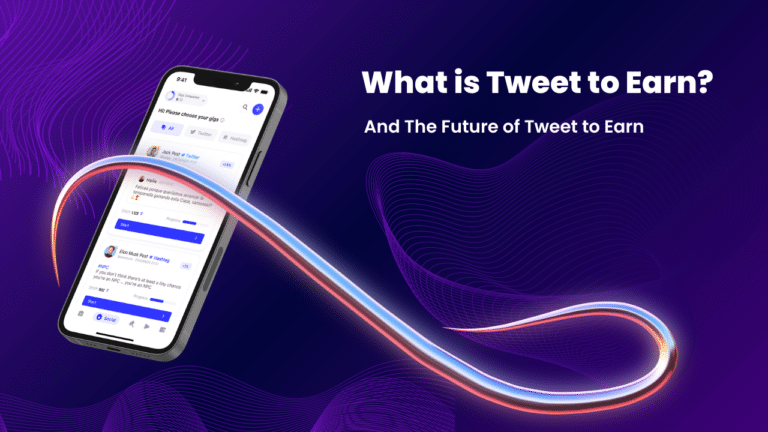
What Is Tweet To Earn & The Future of Tweet To Earn

0

X to Earn became increasingly popular since the pandemic arose. With Play to Earn projects like Axie Infinity leading the way, different types of X to Earn were soon introduced to accommodate specific needs, one of them is called Tweet 2 Earn.

What is a Tweet to Earn?

Tweet to Earn is an application or a website that rewards cryptocurrency to users who interact with Twitter posts. Specifically, like, comment, post or retweet.

Tweet to Earn helps users to earn profits by spreading the word of a project. Likewise, projects who are looking to increase their outreach can provide incentives for users who willingly share their projects on Twitter.

Is Tweet to Earn Real?

Tweet to Earn is real and you can earn money from it. The concept of Tweet to Earn is relatively new, most projects are created during 2022. 

How Tweet to Earn works is that users receive rewards in the form of crypto tokens. With the tokens, users can choose to swap into real money (To Earn).

Do note that every Tweet to Earn projects will have their own native token, the price of the token will shift dramatically depending on the supply or demand. Hence, while users can earn from Tweet to Earn projects, the amount of profits earned is still dependent on the price of the project’s crypto token.

What are the best Tweet to Earn Projects?

With Tweet to Earn emerging to the mainstream, there will be an increase of projects with similar ideas and concepts. Here are some of the outstanding Tweet to Earn projects:

Oi! Network

Oi! Network is a mobile first Web3 gig platform for cryptocurrencies earning. They are actually the first ever Tweet to Earn platform to be launched on mobile.

Users can earn $MOM by completing daily gigs, with simple tasks like retweeting & interacting with projects. Also, users can be a verifier to verify if gigs are complete with cheat or fraud.

As for the project’s founder, they can utilise and promote their projects through Oi! Network platform.

Explore Oi! Network here.

Twity

Twity is a Web3 advertising and marketing agency. To participate and earn $TTY, users first have to own a Twity NFT. Users can start earning $TTY by promoting projects found on Twity website. Users who own a higher NFT rarity have the opportunity to earn more $TTY.

If promoters wish to advertise their projects on Twity, they will have to stake a designated amount of $TTY. Once staked, promoters can start promoting their projects on Twity’s website.

Find out more about Twity here.

TwitDao

TwitDao is a Web3 social networking service with GameFi functionality, NFT is designed mainly with different fish from marine life as the design prototype. TwitDao claimed to be the first Tweet to Earn project launched on the BSC chain. 

Once user is equipped with a NFT,by tweeting with #TwitDao on Twitter, users will earn #TDT, which can either be used in-game, or cashed out for profit. 

Find out more about Twity here.

TwitFi

TwitFi is a viral marketing hub, building a new category with three components: DeFi, GameFi, and SocialFi. Projects can use TwitFi as a tool for marketing, users can use it as a game and investors can use it for reward purposes.

Similarly, to start TwitFi, users have to purchase an NFT. Once purchased, users can earn $TWT from tweeting.

$TWT can be swapped for real money or can be used as an in-game currency.

Find out more about TwitFi here.

The Challenges of Tweet to Earn

The challenges faced for Tweet to Earn are similar to many X to Earn projects. But with every challenge, there will always be a solution.

Here are some of the challenges faced for Tweet to Earn: 

High Barrier of Entry

Many Tweet to Earn projects require purchasing a NFT to start earning, this discourages users to try the application as there is a high fee to pay before earning. 

With no NFT purchase needed, Oi! Network allows users to download and start earning for free. 

Unsustainable

There are many sceptics about X to Earn projects being unsustainable due to tokens being swapped out of the economy instead of recirculating.

Oi! Network provides a genuine solution by rewarding users to stake their tokens and recirculate into the economy.

Exploitable

Many X to Earn projects are susceptible for bots farming or cheating. In Oi! Network rewards are given based on the user skill level and multiple metrics. It also has validators to verify if completed gigs are genuine and legit.

The Future of Tweet to Earn

The concept of spreading information & earning rewards from a project through Twitter seems like an interesting idea, but there will still be much improvements needed before it can take over the traditional advertising & marketing method. 

Nonetheless, it will be interesting how Tweet to Earn shifts the dynamics of advertising & marketing in the future.

News 24 Twitter Handle Potentially Hacked To Promote Ripple Giveaway Scam

The scam tries to lure users with a fraudulent 100,000,000 XRP airdrop pool.

Hackers have potentially gained access to the official Twitter account of News 24, a popular Hindi news channel.

The Crypto Basic observed that over an hour ago, the Twitter account with over 1.3 million followers was used to promote a Ripple giveaway scam. Meanwhile, at the same time, the account appears to be operating as usual, with no statement of an account breach.

Consequently, The Crypto Basic has contacted News 24 for comment but has yet to hear back. At the same time, we have also taken active steps to report the tweet and encourage other users to do so to prevent unsuspecting users from falling victim.

Notably, the scammers in a Medium-type blog post claim that Ripple Chief Executive Officer Brad Garlinghouse is offering a 100,000,000 XRP airdrop pool for “Ripple users” as a token of appreciation for their continued support. Consequently, it directs users to a potential wallet-draining website to participate in the airdrop.

“To celebrate the global power of #XRP we are proud to announce initiating the annual airdrop pool of 100 000 000 XRP to every Ripple user,” the scammers wrote. “Nothing we do at Ripple Labs would be possible without our community, and this is just a part of our efforts to assert that.”

Meanwhile, it would not be the first time scammers have impersonated the Ripple chief or promoted fraudulent giveaways on social media. Notably, a proliferation of these scams on YouTube led Ripple and its CEO to sue the social media platform in April 2020. Garlinghouse, at the time, questioned why social media platforms, with all their resources, failed to keep out frauds from their platforms. 

Twitter is often a popular choice for scammers who sometimes use spam bots and compromised verified accounts for their nefarious purposes. While Elon Musk promised to fix these issues after taking over the firm, some users have asserted that things have worsened.

LUNC Burns To Increase as Businesses Look To Adopt Terra Classic Payments SDK

0

Reducing the LUNC supply remains one of the community’s biggest goals.

According to Dan Gerchovich, a community member who developed the software development kit (SDK), businesses want to integrate the Terra Classic payments gateway.

Gerchovich revealed this in a tweet yesterday, noting that increased adoption of the solution would lead to increased on-chain volume and Terra Luna Classic burns.

“… things are finally looking up,” the developer wrote, calling for other businesses and developers interested in crypto payment gateways to contact him.

The solution is currently designed to work with existing applications, Gerchovich explained in response to inquiries. These can be any application, including games with developers looking to offer LUNC payments. According to Gerchovich, using the SDK dubbed “Terra.Net.OnChainPayments,” the application can “make calls to the gateway that handles payments.”

It bears mentioning that reducing the LUNC supply remains one of the core goals of the community-run chain. To this end, the community has debated several strategies, including promoting voluntary burns from projects and validators and implementing a 0.2% on-chain tax parameter. Per recent changes ushered in with the Terra Classic v1.1.0 upgrade, 90% of the LUNC obtained from the tax is sent to the burn wallet, while 10% is sent to the community pool to support project funding. 

However, the dwindling on-chain volumes fueled by a lack of many popular decentralized applications (DApps) and the bearish market conditions have ensured that most LUNC burns are voluntary. Per TerRarity data, the community and its supporters have sent over 48.6 billion LUNC to the dead wallet, with the on-chain tax contributing only 14.3 billion LUNC to this total. Binance remains the largest contributor, with over 28 billion LUNC.

Recall the de-pegging of the Terra dollar-pegged stablecoin, now called TerraClassicUSD, led to the minting of an excess of 6 trillion LUNC due to an underlying mint and burn arbitrage mechanism. Consequently, the hyperinflation caused the token to lose 100% of its value, dropping highs of nearly $120 to $0.0001339 at the time of writing.