Home Blog Page 2085

Scammers Deploy Dozens of Fake ChatGPT Tokens

0

Three newly-deployed tokens have been identified as honeypots, while two have a high sell tax.

Scammers recently created numerous Bing ChatGPT tokens in an elaborate attempt at defrauding unsuspecting investors through several avenues, including a honeypot mechanism, a pump and dump scheme, and a high sell tax. The tokens were deployed on the Ethereum and BNB Chain networks.

Blockchain security resource PeckShield called public attention to the recently-deployed tokens today, imploring investors to be careful.


All the tokens have the name “BingChatGPT,” with varying symbols. According to PeckShield, three tokens have been identified as honeypots. Honeypot contracts have a fake and obvious vulnerability that tricks a user into sending assets to them to exploit the vulnerability. However, the contracts are designed to prevent the tokens from being drained, essentially locking up the user’s funds.

Moreover, two of the tokens are noted to have high sell taxes of 99% and 100%. Investors cannot sell tokens with high sell taxes until they pay significant fees to sell them, which could result in massive losses. In this case, investors will have to pay fees that are 99% and 100% of the value of the tokens held to sell them.

In addition, PeckShield disclosed that two of the tokens have already declined by over 99%, indicating that they were created to engineer a pump-and-dump scheme. The security platform also revealed that 0xb583, one of the addresses involved, is known to be a serial deployer of pump-and-dump tokens.

The deployment of Bing ChatGPT scam tokens comes on the heels of massive rallies recently engineered by AI tokens amid the hype surrounding AI tech.

Myria Launches Exclusive P2E NFT Game Metarush Preview

0

Myria, a blockchain game developer, is offering a limited number of demo slots for Metarush, its first non-fungible token (NFT) game.

Myria is seeking feedback to help improve the game during the alpha development stage. Only a limited number of players will be invited to participate in the demos, and they will be given the opportunity to complete a full level of the game prior to the beta testing phase.

To apply for a demo slot, interested gamers must fill out an application form and have a PC that meets the minimum requirements.

Metarush leads Myria’s NFT gaming ecosystem

Metarush is a quirky NFT racing game developed on the Myria blockchain. The game is an obstacle runner with a battle royale twist, set across different places in a metaverse based on known and unknown galaxies. Each race has unique landscapes, inhabitants, and power-ups that players can collect to gain advantages over other players.

The goal is for players to beat the other players to reach the finish line, as only the fastest players will survive.

As NFTs are unique and not interchangeable, they have become increasingly popular in blockchain gaming to represent ownership of rare in-game items and digital assets that can be collected, used in gameplay, and traded.

Metarush players will be able to customize their runner avatars with NFT outfits, skins, and items, and in time transfer those NFTs to other Myria Studios games. Myria plans to expand its gaming ecosystem in 2023 with the release of more upcoming games.

While Metarush is still in the early development stage, Myria Studios has been providing sneak peeks of the game by posting screenshots on the Metarush Twitter account. Myria is planning to release a closed marketing demo soon, so interested players should keep an eye out for an announcement.

What makes this game even more unique is that it is “play and earn”, as opposed to “play-to-earn.” While the P2E model has popularized NFT gaming, many of the games require players to purchase NFTs before they start, creating barriers to entry when the value of NFTs rises. Metarush addresses this with its “play-and-earn” approach, allowing players to earn prizes based on their skill in-game without the need to buy NFTs upfront to enter the game.

Myria aims for seamless Ethereum scaling

Myria is an Ethereum Layer 2 blockchain solution that is built to scale digital assets, NFTs, and blockchain gaming. The blockchain uses zero-knowledge (ZK) roll-up technology to provide fast transaction processing, free NFT minting, and zero gas fees, aiming to attract the next generation of gamers with a seamless experience.

ZK-rollup technology is enabled by smart contracts on the Ethereum network. ZK rollups process transactions off the blockchain in batches, which reduces the amount of on-chain processing required and speeds up transactions.

Myria has a thriving community of over 300,000 users, and more than 220 projects are in development on the blockchain.

Deaton Reiterates Judge Sarah Netburn’s Criticism of SEC in Ripple Case

0

The attorney reiterates his belief that the SEC is acting in allegiance to its goals of expanding its control over the emerging market and not in loyalty to the law.

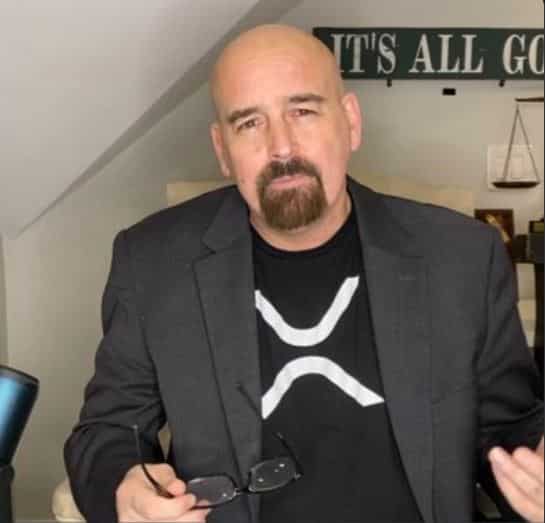
Attorney John E. Deaton recently reiterated Judge Sarah Netburn’s criticism of the United States Securities and Exchange Commission in its case against Ripple.

The lawyer representing over 75,000 XRP holders in the case as a friend of the court did this in a tweet today, quoting statements from the magistrate in July last year. It came in response to a recent Bloomberg opinion piece dubbed “The SEC Comes for Crypto Custody.”

Prominent Bloomberg columnist Matt Levine in the article, suggests that the SEC has managed to flip the script on the crypto industry. Levine asserts that regulators in the traditional finance industry create general public rules to cover all cases only for creative, higher-paid industry lawyers to find and take advantage of loopholes.

However, Levine highlights that the reverse currently appears to be the case with the crypto industry. The columnist points out that the SEC is exploiting legal provisions to gradually expand its regulatory powers in the emerging market, with industry participants consistently a step behind.

“Just an unusual situation!” Levine writes.

Levine’s piece comes as the SEC has notified centralized staking service providers with its enforcement action against Kraken.

Recall that Judge Netburn, last July, asserted that the SEC was not acting in faithful allegiance to the law but in pursuit of its goals, citing its shifting stance on the controversial Hinman documents.

Notably, the agency initially argued that William Hinman’s controversial speech in 2018, which declared Bitcoin and Ethereum non-securities represented his personal views and not the opinion of the market regulator. However, when the judge requested that the SEC hand over emails and other documents related to the drafting of the speech, the SEC alleged that attorney-client privileges protected these documents as Hinman consulted SEC lawyers in the drafting of the speech.

For context, Hinman, at the time, served as director of the SEC’s Division of Corporation Finance. Notably, the SEC’s complaint against Ripple took many by surprise, considering Hinman, just two years prior, in what is regarded as the only guidance from the SEC to the emerging markets, had asserted that Bitcoin, Ethereum, and other sufficiently decentralized networks do not represent securities.

Consequently, several crypto industry participants and market observers are curious as to the contents of the hotly contested documents. As highlighted in a recent piece by Dr. Roslyn Layton, a policy researcher and Forbes contributor who recently filed a motion for the court to unseal the document, it could clarify if Ethereum interests influenced Hinman’s speech or if regulators are confused, which could justify confusion amongst industry participants.

Notably, the market regulator wants the documents to remain sealed, arguing that opening them to public scrutiny could affect the openness of future policy deliberation processes.

As the SEC’s chair, Gary Gensler, continues to assert that traditional securities laws apply to crypto and new rules are unnecessary, the agency has continued to stretch existing laws to launch several enforcement actions against industry participants. Consequently, the market in the U.S. remains shrouded in uncertainty with no clear path to compliance despite statements to the contrary by Gensler.

VeChain Launches VeWorld, A Fully Decentralized Self-Custody Wallet

0

The newly-launched decentralized wallet is teased as the “gateway to the world of VeChain.”

VeChain, an enterprise-focused blockchain platform, has launched its native self-custody wallet dubbed “VeWorld.” The newly-launched wallet, expected to bring users a wide range of benefits, is one of the numerous developments the VeChain Foundation has up its sleeves for this year.

The Foundation announced the launch today through its Twitter account, with a link to an official Medium article unveiling the wallet. This development comes shortly after the VeChain network surpassed 2 million known addresses.


According to the announcement, “VeWorld” refers to the wallet serving as “the gateway to the world of VeChain.” The wallet allows users to access and manage their VeChain assets easily.

The Foundation has revealed that the wallet would improve the overall user experience of the VeChain ecosystem. Additionally, an extensive roadmap of features is planned for the wallet, suggesting that it will continue to evolve and improve over time. A dedicated team of developers from the Foundation will handle these upgrades every two weeks.

VeWorld will be available as a web wallet to download at veworld.net. However, there are also plans to release mobile and desktop versions of the wallet in the third quarter of the year, giving users more flexibility in how they choose to manage their assets.

The need for self-custody has been repeatedly emphasized of late by industry players following the FTX blowout that led to billions in losses. U.S. Rep Warran Davidson has been highlighting the significance of self-custody since 2021. VeChain’s wallet couldn’t have been unveiled at a more opportune time.

The wallet features a myriad of cryptocurrency-related capabilities that cater to the needs of its users. These functions include managing crypto portfolios, setting up and importing wallets, engaging in secure transactions through decentralized applications (DApps), and managing cryptocurrency assets utilizing a Ledger hardware device.

In addition to the already available features, the team behind the wallet is meticulously developing a wide-ranging set of other cutting-edge capabilities, encompassing a direct fiat on-ramp option, a carbon emissions calculation tool enabling users and businesses to monitor their environmental impact, effortless integration of native NFTs, cross-chain bridges, incorporation with DEXs, as well as numerous other functions.

The Future Looks Bright For Cardano (ADA), Avalanche (AVAX), And RenQ Finance (RENQ)

0

The future of crypto is bright; diversifying investment portfolios to hold assets like ADA, AVAX, and RENQ is one sure set up for a profitable long-term investment.

While some other tokens might be relevant at the moment, their momentum is weakening, a token like RENQ is starting to receive the same relevance and with an increased utility, making it a good investment option for the future. Similarly, Cardano and Avalanche, while not new, have a bright future due to their usefulness.

Avalanche (AVAX)

Avalanche was developed in a bid to solve the scalability and transaction speed problems that have plagued Ethereum. It is one of the few blockchain systems that supports both private blockchain networks and completely decentralized apps. It can compete effectively with Ethereum thanks to its large transaction output of up to 6,500 transactions per second.

Avalanche is currently worth $19.58. AVAX has been showing a positive long-term tendency. Avalanche is currently ranked 16 amongst all cryptocurrencies according to market capitalization.

A bright future is ahead for this coin.

BUY RENQ TOKENS HERE

Cardano (ADA)

The Cardano network is the first decentralized blockchain system to ever receive peer review. It was developed by the former co-founder of Ethereum, Charles Hoskinson, and released in September 2017. It has a maximum of 45 billion token issuance.

The Cardano network has been recognized by the World Economic Forum (WEF) as one of the most scalable systems. The network has been making rapid progress towards becoming the first chain that is peer-reviewed and flawlessly scalable.

Cardano uses ADA as its native money to power that protocol.

ADA will have a strong ride in the days ahead.

RenQ Finance (RENQ)

RENQ is a community-driven organization that was established to address a specific problem.

This problem relates to different forms of liquidity’s inability to interact with markets in a decentralized way and vice versa. In contrast to the incrementally progressive advancements that other solutions give towards the solution of the liquidity problem, RENQ is designed to gradually build a greater diversity of network effects. RENQ is not constrained to a single solution; instead, it weaves together a variety of various decentralized marketplaces and tools.

RenQ Finance is the latest development in the world of DeFi. It is a revolutionary platform that will bring cutting-edge innovations and reinvent how services are executed in the Decentralised Finance system.

RenQ Finance will be a cross-chain exchange platform for different financial assets, it has the aim to connect the isolated blockchain networks. This means that people can now trade value across the borders and limits of these networks.

The team behind RENQ is made up of blockchain network experts, technologists, business owners, and engineers who have a diverse range of educational backgrounds and skill sets.

RENQ is the native currency for governance on the platform; it is deployed on the Ethereum blockchain, i.e., ERC-20, and will be bridged across multiple blockchains after its launch.

It has a total supply of 1 billion, and its public sale is expected to release 50% into circulation. The RENQ vault, RENQ pool, RENQ farm, and Exchange listing will each hold 10% tokenomics. The other 10% goes into the liquidity and the team in equal portions.

The token is live at its presale making it a viable investment worthy of returning 8000x for capital invested; the price per unit is at $0.020 (phase 1), it is expected to keep appreciating in the prelaunch and then take off with momentum once it is officially launched.

RENQ has a huge prospect for the next few years, and you don’t want to miss out.

Website
Whitepaper
Telegram

VeChain Silently Posts Over 100% Gains Since the Start of the Year

0

The asset has been silently adding up gains and has now doubled in price.

VeChain (VET) briefly traded at the $0.03199 price point today, an over 102% gain from its price of $0.01579 at the start of the year. At the time of writing, it has pared some profits and is exchanging hands for $0.03134 on mainstream crypto exchanges, still up 98.4% year-to-date.

Like the rest of the crypto markets, the charts show that the token has received renewed interest since the start of the year. It is currently up about 9.43% in the last 24 hours alone and 39.96% in the past week, per CoinMarketCap data. It is the second-highest gainer among the top 50 crypto assets by market cap in the last 24 hours, second only to Solana.

Unsurprisingly, its silent advance has started turning heads on crypto Twitter. @1CrypticPoet, a famous crypto influencer, shared the crypto’s daily chart yesterday, commenting on the move.

A short-term price action outlook shows that the price is clearly in an uptrend, with the price retesting the previous high if the price finds support at this level, it will likely continue its upward momentum. Additionally, the price could also pull back to retest the trendline.

Chart by TradingView

The development comes as the network recently surpassed 2 million known addresses. The milestone comes five years after the enterprise blockchain launched in 2018. Current VeChain Stats data shows that this metric is growing exponentially, with over 39k addresses added in the last seven days alone, bringing the total to 2,046,612 from 2,000,433 in the previous report.

Meanwhile, the VeChain Foundation continues to pursue publicity efforts in Europe. As reported, it recently extended its partnership with the Association of Tennis Professionals (ATP) till 2025.

Whales Shuffle 645M Tokens as XRP Retests $0.40

0

The asset is currently looking to regain the losses incurred over the weekend.

XRP whale activity saw an uptick over the weekend, as deep-pocketed addresses shuffled 645 million tokens within three hours. The massive whale transactions occurred when XRP faced fierce resistance as it sought to retest the $0.40 price zone for the first time since Feb. 9.

All 645 million tokens were shuffled in six transactions, as highlighted by Whale Alert. The first whale transaction involved the movement of 264.5 million XRP ($102 million) between two unidentified wallets yesterday at 19:41 (UTC).


Barely two minutes after the transaction, the recipient wallet off-loaded all the assets in two separate transactions. One of the transactions involved the movement of 244.5 million XRP ($94.3 million) to another unidentified wallet.


This unidentified wallet then sent out all 244.5 million XRP tokens in a series of transactions to Bitstamp, Bitso, and Independent Reserve. Whale Alert picked up the three most significant of these transactions. The first noteworthy transfer saw the movement of 43 million XRP ($16.7 million) to a Bitstamp-affiliated address at 21:41 (UTC).


Four minutes later, the unidentified wallet transferred 35 million XRP ($13.5 million) to the same Bitstamp-affiliated address. The third transaction saw the movement of 30 million XRP ($11.6 million) to the Bitstamp address two minutes later. The purpose of these Bitstamp movements remains unknown, but this sort of whale transaction from Bitstamp has been prevalent of late.

Shortly after the Bitstamp transactions, an unknown whale sent 28 million XRP ($10.8 million) to a wallet affiliated with Bitso at 22:00 (UTC).


These whale movements have recently picked up amid market-wide uncertainty and speculations on the Ripple v SEC case. Last Monday, whales shuffled nearly 600 million XRP as the price declined by 3%.

Conversely, the recent whale transactions occurred when the asset maintained a 5% increase in the past week despite rejection at the $0.40 zone last Thursday. With a 1.04% gain since the start of today, the asset is attempting to print a winning candle following two consecutive losing sessions. XRP is currently changing hands at $0.3905.

Joint L1 Task Force Hints Near Launch of Terra Classic V1.1.0

0

It comes one week after it rolled out v.1.0.5.

Tobias Andersen, AKA Zaradar, has hinted that the Joint Layer 1 Task Force would be ready to roll out the Terra Classic v1.1.0 upgrade soon.

In a tweet today, the developer disclosed that the first release candidate for Terra Classic v1.1.0 is working, asserting that the upgrade should be ready to ship soon.

Notably, the Layer 1-focused development group does not appear to be resting on its oars. It successfully rolled out v1.0.5 a week ago, fixing issues in implementing previous chain upgrades.

As reported, the team, entitled to a total funding of over $141,000 on the completion of set milestones, is ahead of schedule for its Q1 goals. As highlighted in the report, there are plans to add more items by the end of the quarter.

Presently, it appears undisturbed by disputes between the two full-time developers, Zaradar and Notional Labs founder Jacob Gadikian. Confirmed features for Terra Classic v1.1.0 include security updates and a patch provided by Gadikian.

In addition, it will likely include three optional features recently introduced by Edward Kim in three signal proposals. Two of these proposals are geared toward meeting Binance’s demands to resume its voluntary burns of  Terra Luna Classic (LUNC) trading fees. Binance demands that the Terra Classic community create a separate burn wallet excluded from token re-mints and exempt its wallets from the on-chain tax for internal transfers.

As explained by Kim, there will still be a final vote, but the result of the signal proposal vote will inform developers on whether they should consider the features for v1.1.0. As reported, the proposals recently received an endorsement from TerraCVita, an independent Terra Classic development group.

Shiba Inu lead Developer Answers “But When Shibarium?” in Latest Post

0

According to Kusama, Shibarium Beta will be released after his blog post on behind-the-scenes efforts at developing the L2 network.

Shytoshi Kusama, Shiba Inu’s lead developer, has once again addressed the general question of when Shibarium, the project’s layer-2 network, will be launched. Though Kusama’s recent answer still does not give a specific date, it provides more insight into the timeline of the Beta release.


Kusama disclosed the latest information in a medium post today – the second of a series of articles through which he plans to introduce Shibarium to the world. In the latest installment, entitled “2022: The Year of Learning,” Kusama focused on the community’s notable contributions towards the development of Shibarium.

He admired Milkshake and the other team members. He admired concepts and teams like The Breeds, Welly, Shiba Eternity, Shib: The Metaverse, and John Richmond.

He also emphasized his extensive effort in bringing the project to fruition, despite facing opposition from within the camp. Nevertheless, he affirmed his commitment to pressing on and ensuring that the project progresses without being impeded by such resistance.

Kusama then tackled the critical question on many people’s minds: “But Wen Shy?” He disclosed that he plans to release another post that will delve into the behind-the-scenes work he has undertaken to ensure that Shibarium meets the standards required for public use. This upcoming post will cover various topics, including measures to safeguard the community, technical details, and other pertinent information. Afterward, the team will proceed to release Shibarium Beta. Kusama assured his audience that this would happen shortly. 

It is worth noting that Kusama had previously confirmed that the L2 solution was ready. As reported by The Crypto Basic, Kusama hinted on Feb 18th at the possibility of Shibarium launching this week starting today, which was in line with circulating speculations.

Recall that Kusama had previously revealed that Shibarium would launch before May.

XRP More Popular in Japan Than U.S. – Hong Kong Study Explains Why

0

It is the second most popular cryptocurrency in the Asian economic giant.


XRP maintains a solid supporter base in Japan and is widely viewed as the second most popular cryptocurrency in the country per a BITMAX survey from June 2020, which showed it was comparable with Bitcoin in popularity, with Ethereum coming a distant third.

A recent paper from the City of Hong Kong University, which has made the rounds on Twitter, asserting that the asset is more popular in Japan than in the United States, attempts to explain why the people of Japan favor the token. The study attributes XRP’s success in Japan to Ripple’s partnership with SBI Holdings. It is worth noting that both firms run SBI Ripple Asia, a joint venture together, with SBI Holding’s chief Yoshitaka Kitao previously serving on Ripple’s board.

Per the university paper, SBI is Japan’s most reputable venture capital firm. As explained in a World Coin Stats report from 2021, referenced by the paper, the Japanese tend to hold institutions in higher esteem, unlike the West. Consequently, SBI’s Ripple partnership gives XRP unparalleled credibility in the country.

Notably, both firms maintain close ties to date.

It is worth noting that Ripple’s extended legal battle with the U.S. Securities and Exchange Commission has not helped its popularity in the U.S. Recall that the markets regulator filed a complaint against the blockchain payments company in December 2020, asserting that XRP is an unregistered security. After over two years, the case awaits a court ruling, as both parties have submitted all required briefs.

In addition, unlike Japan which has transparent crypto and anti-money laundering crypto regulations, there are still no clear guidelines for the industry in the U.S. The SEC chair Gary Gensler, maintaining that traditional security laws are sufficient, has continued a campaign of regulation by enforcement, shrouding the market in uncertainty, with most recent actions raising questions about the viability of staking services and dollar-pegged stablecoins.

Meanwhile, due to its efficient regulatory climate, Japan has fared better than the U.S. in the wake of the FTX collapse. As reported, assets belonging to Japanese customers are safe and will be returned via a sister crypto exchange.