Home Blog Page 2260

Floki Inu (FLOKI) to Launch FlokiFi Locker on KuCoin Community Chain (KCC) Mainnet

0

The meme coin project has collaborated with KCC to launch its locker solution on the KCC mainnet. 


Leading meme-based cryptocurrency Floki Inu (FLOKI) has partnered with KuCoin Community Chain (KCC). The partnership will enable Floki to launch its FlokiFi Locker protocol on the KCC mainnet. 

Floki Inu noted in an announcement today that the KCC team provided the necessary support needed to integrate and deploy FlokiFi on the KCC mainnet. 

The announcement adds that the team behind Floki Inu and KuCoin Community Chain will continue to work together toward the growth of both ecosystems. 

“Furthermore, this partnership demonstrates Floki’s strong belief in the potential of the KuCoin Community Chain as well as our intention to continue to build on the chain,” Floki Inu said in a statement. 

The KuCoin Community Chain is an EVM-compatible chain that enables users to deploy smart contracts and decentralized applications (dApps). 

Meanwhile, KCC also announced the partnership on Twitter, saying: 

“We’re excited to work with the Floki team to launch the #FlokiFi Locker protocol on the Kucoin Community Chain. We will continue to work with innovative projects like FlokiFi to grow the KCC ecosystem and make crypto cheap and better for the people.” 

FlokiFi Locker is an innovative crypto locker solution that enables cryptocurrency project developers to lock Liquidity Pool assets, including fungible and non-fungible tokens, etc. 
CNBC Claims Only One Cofounder Directly Working On Ethereum As Merge Approaches

0

Vitalik Buterin: The Last Man Standing.


The most extensive upgrade to the Ethereum blockchain is expected to occur soon, bringing the network closer to its full potential. The eight co-founders of the Ethereum blockchain project have gone their separate ways, with only one remaining actively involved in developing the network.

Vitalik Buterin, who first proposed the Ethereum network in 2013, is the only one of the founders still directly working on the project full-time, according to CNBC. He is currently the lead developer of Ethereum 2.0, the most anticipated upgrade to the network, which is set to launch in phases over the next two years.

The other seven co-founders are not actively involved in the Ethereum project and are pursuing other projects. Both Charles Hoskinson and Gavin Wood, instrumental in developing the Ethereum network, founded their rival blockchain networks – Cardano and Polkadot.

Last year, Anthony Di Iorio, who leads a blockchain-focused software firm Decentral in Toronto, abandoned Ethereum due to personal safety concerns. The other co-founders have gone on to work in a variety of sectors.

According to CNBC, even Joseph Lubin is no longer working on Ethereum (although he and ConsenSys say they are leading the teams developing Ethereum 2).

CNBC Writes

“The Ethereum project had eight co-founders: Vitalik Buterin, Mihai Alisie, Anthony Di Iorio, Amir Chetrit, Charles Hoskinson (the original 5 Ethereum co-founders), Gavin Wood, Jeffrey Wilcke, and Joseph Lubin. Now, only Buterin is actively working for the Ethereum blockchain.”

The Merge

The Ethereum upgrade will see the network move from a Proof-of-Work (PoW) consensus algorithm to a Proof-of-Stake (PoS) algorithm. This will make Ethereum more scalable and energy efficient. The upgrade is expected to be completed in phases, with the first phase – called the “merge” – set to occur in September or October.

Despite the high-profile departures, Ethereum has continued to thrive with a large and active community of developers building applications on the network. The upcoming upgrade to Ethereum 2.0 is expected to increase interest in the platform further as it brings several significant improvements, including improved scalability and security.

With Buterin remaining at the helm, Ethereum is well placed to continue its position as the world’s leading smart contract platform.

Canada-Based Leading Payment Gateway Now Supports Baby Doge Coin (BabyDoge)

0


Canada-based leading payment gateway, ZokshPay, added support for Baby Doge Coin (BabyDoge).


ZokshPay, an innovative blockchain-based payments solution, recently announced that online merchants from across the globe can now accept Baby DogeCoin as a payment for their WooCommerce or Shopify Stores.


Founded in 2021, ZokshPay (formerly MooPay) is a leading multi-chain payment gateway on NEAR, Aurora, and many more chains. The Canada-based leading payment gateway offers its clients from all across the globe a No-Code and Non-Custodial Blockchain Payments infrastructure for their E-Commerce businesses.

ZokshPay is also cost-effective as it charges a flat fee of as low as $0.25 per transaction. Besides this, a crypto-user-friendly payment platform also offers its clients a range of payment solutions like Payment Buttons, Product Pages, SDKs, Plugins, and more. ZokshPay currently supports over 190 cryptocurrencies.

Baby Doge Coin is the third most followed canine-themed cryptocurrency on Twitter, with 1.5 million followers. BabyDoge also boasts over 1.6 million holders, more than Shiba Inu. Recently, Baby Doge Coin launched a zero-fee swap application named BabyDoge Swap.

At press time, Baby Doge Coin is trading at the price of $0.000000001288, down -4.06% over the last day, with a 24-hour trading volume of $4,770,178 ($4.77M).

Analyst Says Ethereum Set For A “Huge Short-Squeeze” – Here’s Why

0


Ethereum Funding Rates sit at a 14-month low.


CryptoQuant analyst Maartun in a Quicktake on Sunday, reveals that Ethereum’s Funding Rates are at a 14-month low, noting that the last time it was this low, there was a huge short-squeeze in the markets.

“… Funding Rates are at a 14-month low.

The last time Funding Rates were this negative was in July ’21 just before a huge short-squeeze on Bitcoin & Ethereum,” the analyst writes.

Maartun explained that the low funding rates result from short-traders paying long-traders. But, according to Maartun, it could also be the result of traders hedging their spot positions as The Merge approaches.

As The Crypto Basic reported last Thursday, Santiment Feed revealed that short sellers appear to circulate on exchanges as The Merge approaches. These sellers could get caught in the short-squeeze if history repeats itself.

Meanwhile, in a tweet today, market analyst Ali Martinez noted that Ethereum would likely move lower to the $1,335 price point. According to Martinez, the asset is already trading below two significant supply zones. The first at $1,560, where 526K addresses bought 3.44 million ETH, and the second at $1,475, where 585K addresses bought 2.81 million ETH.

In an earlier tweet, Martinez explained that Ethereum could be headed for a steep correction. Martinez noted that Ethereum’s network growth is at its lowest since March 2020, noting that a decline in network growth historically leads to a steep price correction.


Notably, the excitement surrounding the Ethereum Merge upgrade that will see the network move to the proof-of-stake (PoS) consensus mechanism has not made the asset price resistant to macroeconomic factors. For example, following Fed chair Jerome Powell’s speech last weekend, the asset plunged by 10% to trade below $1,500.

It bears mentioning that The Merge is now only over two weeks away, as developers have slated the upgrade for September 15. Ethereum is exchanging hands for $1,445.37 on mainstream exchanges, 2.52% down in the last 24 hours and 7.99% in the last seven days.

500 Million Ripple (XRP) Worth $161M Transferred From Kraken to Unknown Wallet in One Single Transaction  

0

An unknown Ripple whale transferred a whopping amount of XRP coins earlier today. 

Whale Alert, a cryptocurrency whale tracking service, observed the movement of 500 million XRP coins from an address on the Kraken exchange to an unknown wallet.  

According to leading cryptocurrency whale tracking service, the funds were worth $161.22 million at the time of the transaction. 

Whale Alert Tracking Large XRP Transfers

It is noteworthy that a transaction of this sort is considered a positive development, which suggests a rising interest in XRP among whale investors. The recent transaction adds to the list of large XRP movements that have been reported by Whale Alert.  

Whale Alert has been covering developments about large on-chain cryptocurrency transactions, and Ripple (XRP) happens to be on the list of crypto assets tracked by Whale Alert. 

This month alone, Whale Alert has tracked the movement of a huge volume of XRP running into billions of dollars. The funds have been sent from different crypto exchanges to unknown wallets, with Ripple directly involved in some of the transactions. 

Most of these massive XRP transfers are made by Ripple On-Demand Liquidity (ODL) clients. As disclosed by Ripple, demand for ODL services has skyrocketed lately, which has prompted the company to purchase XRP from secondary markets, to meet these surging demands. 

The motive behind the recent 500 million XRP transfer is unknown at the time of writing. It is not clear whether the transaction was made for ODL or investment purposes.

However, the current price of XRP is seen as a good opportunity to buy. At the time of writing, XRP is changing hands at around $0.32 across various cryptocurrency exchanges, data from Coingecko shows. Like most crypto assets in the market, XRP is down 3.7% in the last 24 hours and 6.7% in the past week. 

The possibility of a massive rally in XRP strongly depends on the development of the ongoing Ripple vs. SEC lawsuit. 

A favorable ruling for Ripple would bolster the price of XRP while a negative event in the lawsuit may cause the coin’s price to surge further. 

Acala Stablecoin (ausd) Now Trading At $0.70 After Depegging From USD

0


Acala’s Stablecoin Falls by 3.65% In 24 Hours.


Several stablecoins have had a horrible year sustaining their US dollar value peg, and Acala network’s aUSD is no different. In a tweet today, PeckShieldAlert reported the popular Ethereum-based decentralized finance (DeFi) project’s stablecoin had seen its price drop below $0.71, 3.65% in the last 24 hours.


What Caused the Price Drop?

Recently, the native stablecoin for the Acala network, aUSD, depegged and dropped by 99% after hackers created 3 billion tokens by exploiting a vulnerability in a new liquidity pool. The network identified the issue as a misconfiguration of the iBTC/aUSD liquidity pool that resulted in error mints of 3 billion, currently resting in 16 different accounts.

According to the tweet from Acala Network today, the team has located the 1.7%(amounting to 52M) of the 3.02B aUSD error mints. Acala stated that much of the trace work was geared towards analyzing txs of the involved address and movement of aUSD error mints.

Since last week’s incident, many of Acala’s services have been paused. However, the team behind the Acala network is currently investigating the incident. They have already implemented some changes to their system to prevent similar attacks from happening in the future.

What is Acala USD (aUSD)?

Acala introduced the Acala USD (aUSD) as a synthetic currency backed by a basket of decentralized assets. The platform aimed to create a price-stable cryptocurrency that could be used for transactions and payments without the volatility associated with other digital assets.

The aUSD stablecoin is minted when users deposit any of the four reserve tokens — UST (USDt), aDAI, aUSDC, and sUSD — into the Acala Network. The price of the aUSD is then algorithmically stabilized against the USD through on-chain mechanisms.

The supply of aUSD increases when more users deposit reserve tokens into the system and decrease when users redeem their aUSD for reserve tokens.

The aUSD stablecoin is an ERC20 token currently listed on several popular cryptocurrency exchanges, including Binance, Huobi Global, OKEx, and Uniswap.

Dogechain (DC) Sees Over 300% Growth in Four Days Despite Controversies

0

Despite massive controversies surrounding the newly-launched memecoin, Dogechain (DC), the cryptocurrency’s value has skyrocketed. 


Four days after its launch, the newest meme-based cryptocurrency has seen its value soar by over 200%. Yesterday, the cryptocurrency hit a new all-time high of $0.003992, according to data from Coinmarketcap. 

DC coin started trading at around $0.0009 and reached as high as $0.003992 in a few days.

What’s Fueling DC Value

Investors who missed out on the massive rally of other meme coins like Dogecoin (DOGE) and Shiba Inu (SHIB) saw the inception of DC as an opportunity to also participate in the meme coin frenzy. 

The massive rally of Dogechain came after popular cryptocurrency exchange KuCoin announced it would be listing the DC coin on its platform. 

KuCoin noted that the cryptocurrency would launch under the trading pair DC/USDT, and trading officially commenced on August 27, 2022. The exchange also announced an airdrop of 15 million Dogechain tokens for its users. 

In a similar development, another leading centralized exchange, MEXC Global, also listed Dogechain for trading. The listing of Dogechain propelled the cryptocurrency price to skyrocket to an ATH of $0.003992. 

Although the price of DC has retraced to $0.003725, the enthusiasm for digital currency is still building. 

Controversies Trail Dogechain

It is worth noting that Dogechain has had its own fair share of controversies since it went live. According to ZachXBT, 20 million units of DC were sent to a cryptocurrency wallet linked to the token’s deployer. The popular cryptocurrency investigator also noted that the wallet started dumping the tokens on investors moments after receiving the funds. 

As reported by TheCryptoBasic, Billy Marcus, the founder of Dogecoin, was allegedly offered $14 million to promote DC. However, Marcus turned down the offer as he is only committed to the Dogecoin project. 

“Billy was offered to get 10B DC from Dogechain to promote their project. That is, at the current price, 14 MILLION DOLLARS. BillyM2k turning down this much money to avoid betraying your community is worthy of our deepest respect,” a Twitter user with the username VEE said. 

Interestingly, despite these accusations, investors do not seem bothered as they continue to push its price to new levels.  

Forbes Slams SEC: Over 200 Lawsuits Against Crypto Firms Falsify SEC Claims Of Treating Crypto like Other Markets

0


Forbes Journalist Slams SEC, Says Agency Prefers ‘Regulation By Enforcement’ Rather Than ‘Regulation By Rules.’


Another top journalist slams the SEC’s crypto regulation style.

Roslyn Layton, a journalist at Forbes, has described the Securities and Exchange Commission’s “regulation by enforcement” tactic as manipulation through arbitrary decisions as well as a lack of process and rules. 

The journalist asserted in a recent article that the increased number of SEC cases against cryptocurrencies that have been settled suggests that the agency does not have clear rules. 

“Indeed, some 90 percent of SEC cases are settled rather than concluded in court. Such a high degree of enforcement and settlement suggests that SEC rules are not clear and possibly non-existent,” Layton said. 

Layton: SEC Prefers Regulation By Enforcement

She noted that the recent SEC Chair’s Op-Ed article titled “The SEC Treats Crypto Like the Rest of the Capital Markets” is unfounded, given the number of cases that have been slammed against crypto companies. 

“So many lawsuits suggest that the SEC prefers ‘regulation by enforcement (a lawsuit against a financial actor meant to extract a settlement) rather than regulation by rules,” she said. 

She further writes:

“The unit counts some 200 (Crypto) lawsuits since its founding in 2017, with fraud being the subject in at least 80 investigations. The agency also reports the restoration of $2 billion in monetary relief.”

According to Layton, the Securities and Exchange Commission has dedicated hundreds of lawyers tasked with prosecuting companies for failing to comply with the agency’s rules, which still cannot be found on the SEC’s website. 

However, Layton suggested that the agency could have urged some of these legal practitioners to draft clearer cryptocurrency regulations. 

“Crypto actors have begged Congress and the SEC for clear rules for years, but it hasn’t happened. Gensler has been on the job for a year and a half. It’s time to get this done,” Layton added.  

SEC’s Unclear Regulations Prompted Ripple Lawsuit

For Layton, while the SEC has continued to claim that all cryptocurrencies except Bitcoin are securities, it is a fact some crypto assets may be currency. 

“This question of currency or security is at the heart of SEC v. Ripple Labs and the status of the digital currency XRP,” Layton added. 

Notably, the SEC’s top leaders deliberated on whether XRP is a security for a while before William Hinman delivered the controversial ETH free pass speech. 

Unfortunately, the SEC did not conduct an inquiry or rulemaking before proceeding to charge Ripple for violating U.S. securities rules during its 2013 Initial Coin Offering (ICO). 

“The SEC further charges that Ripple should have known XRP was security from the ledger’s debut in 2013, even though the SEC itself didn’t know until it filed the suit in 2020,” she said. 

Attorney Deaton Reacts

The article has prompted a series of reactions from cryptocurrency community members, including John Deaton, the attorney representing over 72,000 XRP holders in a class action against the SEC. 

Shiba Inu Reclaims 1 Billion Weekly Burn Since July 18th

0


1.21 Billion Shiba Inu Burnt in 7 Days, 57.30 Million in Past 24 Hours.


Shiba Inu enthusiasts further reduce the circulating supply of the most popular canine-themed cryptocurrency by burning 57.30 Million Shiba Inu (SHIB) tokens in the Past 24 Hours, 1.21 Billion in a Week.

The SHIB Burn tracking platform recently released a Weekly Burn Figure for Shiba Inu. Shib Community destroyed a whopping 1,214,431,010 (1.21B) SHIB, worth $14,427 in 121 transactions during the last 7 days.

As reported by The Crypto Basic, the last time weekly burn crossed 1B was on 18th July, when Shibarmy burned above one billion coins.

Top SHIB Burner of the Week:

ShibaBae Token:

The newly emerged ShibaBae Token burned the most Shiba Inu in the past week, whereas Travis Johnson’s SHIB Super Store and 1Cent token are among the other prominent SHIB Burners project of the week.

On Saturday, August 27th, ShibaBae, the newly launched BEP20 token focused on building burn mechanisms for SHIB, became the top SHIB Burner of the week as the Community-led Burn Initiative sent a total of 160,549,026 (160.54M) SHIB to the “inferno” addresses in one significant transaction.

1Cent Token Weekly Burn Event:

1Cent, a token dedicated to burning Shiba Inu, organized its Weekly Burn Event on Monday, August 22nd. Through this event, the Community-led Burn Initiative incinerated 40,000,000 (40M) SHIB in one noticeable transaction.

Travis Johnson’s SHIB Super Store Burn Event:

On Sunday, August 28th, Travis Johnson’s SHIB Super Store organized its Weekly Burn Event. It permanently removed 46,064,765 (46.06M) SHIB from circulation in one significant transaction while using SHIB Burn Portal.

Past 24-Hour Burn:

Besides weekly burns, the Shiba Inu Community has incinerated a total of 57,304,085 (57.30M) SHIB tokens through 17 separate transactions in the past 24 hours with the help of the SHIB Burn Portal, Shibburn.com reports.

Ripple CEO Brad Garlinghouse Denies Claims That He Funded A Law Firm To Target Competitors

0


Brad Garlinghouse says he has had no contact with Kyle Roche of Roche Freedman.


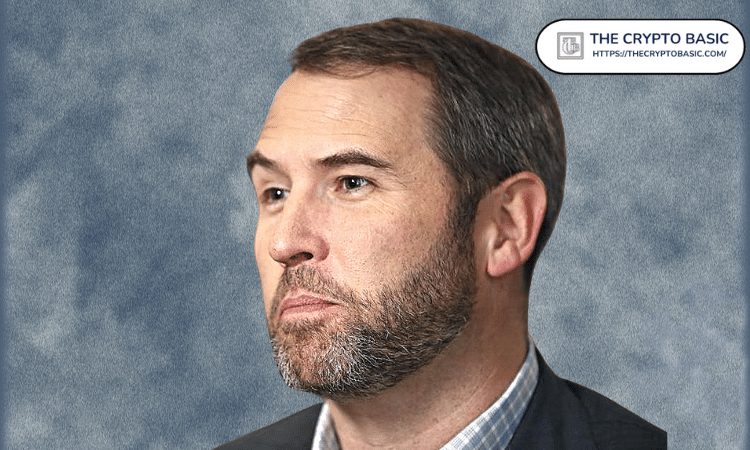
Ripple CEO Brad Garlinghouse, in a tweet on Monday, has refuted allegations by crypto whistleblower Crypto Leaks that he funded a crypto law firm run by Kyle Roche to target competing crypto firms in lawsuits to divert the attention of regulators.

“Can’t comment on the validity of the slew of allegations in here, but I can unequivocally say that I have never met or spoken to (much less invested in) Kyle Roche,” Garlinghouse writes in his tweet.


It is worth noting that in a long blog post containing several short videos that appeared to record statements from Kyle Roche, founding partner at Roche Freedman, Crypto Leaks on Friday alleged that Ava Labs, the company behind the Avalanche network, employed Roche to file lawsuits against competing firms to draw away the attention of financial regulators.

Notably, Crypto Leaks accuses Ripple Chief Brad Garlinghouse of lighting the fuse by agreeing to a proposition by Roche, an associate at the time at a firm employed by Ripple, to invest in a new law firm that would carry out the tactics outlined above.

Ava Labs founder Emin Gün Sirer described them as a ridiculous conspiracy theory in response to the allegations. Sirer asserted that the firm would never engage in such unlawful practices.

Binance’s Changpeng Zhao, in a now-deleted tweet, described the allegations as “wild,” giving room for the possibility of the videos being deep fakes. Notably, Crypto Leaks alleges that Roche Freedman recently sued Binance.US for the Terra ecosystem collapse at the behest of Ava Labs. 

While there is no public record of a partnership between Ava Labs and Roche Freedman, both Ava Labs founders and Ava Labs’ official Twitter account follow the law firm. In addition, Sirer, in a tweet in 2019, lauded Roche Freedman for a lawsuit against Tether and Bitfinex.

Notably, Garlinghouse’s Ripple remains locked in a legal battle with the US Securities and Exchange Commission, which claims XRP is unregistered security.