
Home Blog Page 23

Coldcard Theft Funds Begin Moving as Hacker Routes Bitcoin Through THORChain

0

Stolen Bitcoin from the third wave of the Coldcard wallet attacks has begun leaving the hacker’s original addresses, with part of the holdings being swapped into Ethereum through THORChain.

The movement is the first recorded departure of funds from the original attacker addresses across any of the three waves, according to Alex Thorn, Galaxy’s head of research. Thorn said Wednesday that the third-wave attacker had moved about 10% of the stolen holdings, leaving roughly 90% untouched.

Several attempts to convert the assets have not gone through as intended. Thorn said the attacker’s swap attempts through THORChain had repeatedly resulted in refunds, prompting further attempts.

Researchers following the activity on-chain were able to trace the transfers beyond THORChain to a fresh Ethereum address. Thorn said the address had been passed to relevant authorities and crypto companies. He also said the attacker’s next step remained uncertain, including whether the assets would be moved again to make them harder to follow or transferred to an exchange.

Coldcard Attackers Remain Active

The latest transfers follow a broader Coldcard exploit that Galaxy Research has linked to the loss of at least 1,789 Bitcoin across 8,865 addresses. Those assets were valued at approximately $114.7 million when they were stolen.

Blockchain security company CertiK had also reported activity involving funds associated with the exploit in August, when 64 Bitcoin and 200 Ether were sent to cryptocurrency mixers, including Tornado Cash.

The latest movement comes days after Thorn reported further evidence that the Coldcard attackers remained active. A deliberately weakened wallet set up by a researcher was swept on Aug. 28. The wallet was designed to determine whether the attackers could locate vulnerable keys.

Wyoming Adds Chainlink Onchain Reserve Verification to State-Issued FRNT Stablecoin

0

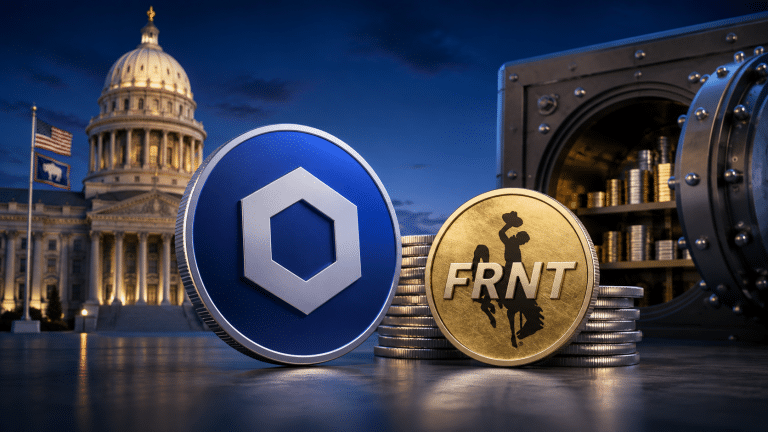
The US state of Wyoming is adding Chainlink-based reserve monitoring to its Frontier Stable Token, giving users access to verified on-chain data about the assets supporting FRNT with minimal reporting delay. The move further broadens Chainlink’s role in the state-issued stablecoin.

According to a Wednesday announcement from the Wyoming Stable Token Commission, the state has selected Chainlink’s Proof of Reserve technology to put verified data on FRNT’s reserves and circulating supply onchain. The Network Firm will independently examine the figures before the data is transmitted through Chainlink infrastructure.

The commission is seeking an additional safeguard through Chainlink’s Secure Mint feature. Once adopted, the mechanism would prevent the creation of new FRNT unless verified reserves are equal to or greater than the token’s total supply. 

Those measures build on Wyoming’s existing reserve-reporting process. FRNT already has daily reserve attestations, while the GENIUS Act calls for monthly disclosures covering reserve composition and outstanding stablecoin supply. The commission said Proof of Reserve will provide more timely visibility into movements in the token’s backing between reporting periods.

Wyoming launched FRNT in January with backing from U.S. dollars and short-term U.S. Treasurys. Interest generated by those reserves is deposited into the state’s School Foundation Program. 

The latest reserve initiative comes roughly a fortnight after Wyoming broadened its use of Chainlink for FRNT. The state moved the token away from LayerZero and onto Chainlink’s Cross-Chain Interoperability Protocol, with CCIP taking over as the exclusive system supporting FRNT’s cross-chain operations.

Chainlink Expands Financial-Market Integrations

Beyond FRNT, Chainlink has been extending its technology across tokenized securities and traditional financial infrastructure, with integrations involving Coinbase, the Depository Trust and Clearing Corporation (DTCC), and Fidelity International.

For Coinbase’s B20 tokenized equities, launched on Base in August, Chainlink supplies pricing data covering stocks including Apple, Meta, Nvidia, and Alphabet. Decentralized finance (DeFi) protocols can use those feeds to value the tokens for trading, lending, and collateral. 

Chainlink is also being incorporated into traditional market infrastructure. In May, DTCC said it planned to use the technology for a platform designed to handle tokenized collateral around the clock. Fidelity International unveiled a tokenized liquidity fund during the same month, using infrastructure from Chainlink and Sygnum, while JPMorgan supplies daily net asset value data for pricing.

The oracle network joined Project Pangea in June alongside European and South Korean banking groups. The project is exploring atomic foreign-exchange settlement between the two regions using regulated stablecoins denominated in euros and won.

LINK, Chainlink’s native token, was trading around $11.20 on Thursday after gaining more than 37% over the past month, according to CoinGecko. 

Coinbase Launches Bitcoin, Ethereum, Solana Futures in Canada With Up to 10x Leverage

0

Coinbase is expanding its Canadian product lineup with futures contracts offering leverage of as much as 10x, extending a broader push by US trading companies into the country’s digital-asset market.

Eligible Canadian clients can trade 23 perpetual and dated cryptocurrency futures covering Bitcoin (BTC), Ethereum (ETH), Solana (SOL) and other assets. Coinbase said Wednesday that its derivatives lineup also includes five commodity futures and the Coinbase 50 Index, with contracts available in nano-sized positions. 

Trading is provided by Coinbase Financial Markets, which is registered with the US Commodity Futures Trading Commission (CFTC) as a futures commission merchant. In Canada, the entity operates using foreign dealer and futures commission merchant exemptions.

The products are not available to all Canadian customers. Access includes investors with net financial assets of at least $5 million, along with registered investment advisers and dealers. Coinbase said it is the first major crypto-native platform to directly provide native crypto futures in the country. 

US Trading Firms Build Out Canadian Crypto Operations

Coinbase’s derivatives expansion follows other moves by US trading companies to broaden their cryptocurrency operations in Canada, including Webull’s addition of crypto trading this week and Robinhood’s acquisition of WonderFi earlier this year.

Webull made digital assets available to Canadian customers on Monday, adding crypto to a product lineup that already included stocks, exchange-traded funds (ETFs) and options. The online brokerage is relying on Coinbase infrastructure for cryptocurrency trading and custody. 

The expansion comes as cryptocurrency ownership in Canada has increased. Ontario Securities Commission research put ownership at 25% this year, up from 10% in 2023, a trend Webull cited as one factor behind its move into the market.

Robinhood took a different route into Canada, acquiring local crypto company WonderFi for US$180 million in June. The transaction brought exchanges Bitbuy and Coinsquare under Robinhood and added about 300,000 funded customers, along with WonderFi’s Canadian licenses and regulatory approvals.

Cardano Users Can Now Send and Receive ADA Through WhatsApp

0

Cardano is becoming more accessible to mainstream users as ChatterPay enables WhatsApp users to send and receive ADA directly through the messaging platform.

According to ChatterPay co-founder Tomás Di Mauro, WhatsApp users can now send ADA and Circle’s USDCx on Cardano to any WhatsApp contact globally. The integration brings Cardano-based payments into one of the world’s most widely used messaging platforms and could expose ADA to WhatsApp’s massive user base

Notably, WhatsApp has more than 3 billion monthly active users, giving the integration a potentially significant reach and creating another avenue through which Cardano could reach mainstream audiences.

ChatterPay Brings Cardano Payments to WhatsApp

The integration is powered by ChatterPay, a user-friendly, non-custodial WhatsApp wallet backed by Orion Fund. The wallet aims to simplify blockchain transactions for users without technical knowledge or extensive cryptocurrency experience.

Through ChatterPay, users can send ADA or USDCx directly to their WhatsApp contacts. The service aims to remove the complexity traditionally associated with creating and using blockchain wallets, making Cardano payments easier for everyday users.

How ChatterPay Works on WhatsApp

ChatterPay also simplifies the process of creating a Cardano wallet. Users can begin directly through the ChatterPay Bot on WhatsApp by sending a message such as, “Hi! I want to create an account.

Users can then enter a referral code if they have one or continue without one. The bot subsequently creates a Cardano wallet that users can use to receive funds.

Once the wallet is set up, users can manage several functions through the bot, including sending ADA, purchasing crypto, and checking their balance. 

Image

Sending ADA to WhatsApp Contacts

The process is designed to be straightforward. Users can open WhatsApp, select a contact, enter the amount they want to send, and choose ADA or USDCx.

ChatterPay then requests confirmation before processing the transaction. In addition, users can send funds to Cardano users outside WhatsApp by entering their Cardano wallet address. They can also attach customized messages to their transfers.

This approach could make blockchain payments feel more similar to sending a regular message on WhatsApp, potentially lowering the barrier to entry for people unfamiliar with traditional crypto wallets.

Beyond Cardano, ChatterPay supports other major blockchain networks, including Bitcoin, Solana, and Ethereum. Consequently, the WhatsApp wallet is positioning itself as a broader gateway for digital-asset transactions rather than a Cardano-only payment solution.

US Authorities, CrowdStrike Disrupt Sality Botnet Used to Steal at Least $150,000 in Crypto

0

The US Justice Department said an international operation involving European law enforcement and private-sector partners disrupted Sality’s operations, cutting the malware network off from its operator. Sality had been linked to cryptocurrency theft and other cyberattacks.

The Justice Department said Tuesday that authorities in Bulgaria, Hungary and Romania participated in the effort alongside CrowdStrike and the Shadowserver Foundation. According to US officials, the malware network had been infecting devices and deploying malicious software since 2003.

EggJagger Redirected Crypto Payments

Over the previous eight years, Sality’s operator used a clipjacking tool known as EggJagger to steal at least 12.1 million rubles, equivalent to roughly $150,000 in cryptocurrency, according to CrowdStrike.

EggJagger monitored device clipboards for cryptocurrency wallet addresses and replaced them with addresses controlled by the operator. As a result, payments could be redirected when victims copied Bitcoin or Ethereum addresses before making transfers.

CrowdStrike said the value of stolen digital assets that remained unspent peaked at about 147 million rubles, or roughly $1.35 million, in January 2025.

Disruption Cuts Operator Off From Infected Computers

The operation severed the Sality operator’s ability to communicate with compromised machines, according to CrowdStrike.

More than 15,000 infected computers were part of Sality’s peer-to-peer botnet. The bots checked every 40 minutes whether known peers remained online, allowing machines within the decentralized network to communicate directly with one another.

CrowdStrike said the disruption isolated those infected machines from the operator, preventing them from receiving new payload instructions or direct payload transfers.

BIS Tests XRP Ledger for Verifiable Official Statistics in New Blockchain Research

0

The Bank for International Settlements (BIS) has tested the XRP Ledger (XRPL) to make official statistics easier to verify.

The researchers created a system that uses blockchain technology to link statistical data to the organization that published it. This lets governments, banks, and automated systems verify that the data is authentic and hasn’t been changed. Notably, the team tested the system on the XRP Ledger’s development network.

The project addresses a trust problem with official statistics. Organizations commonly use SDMX to share data, but users often have no independent way to confirm that the data came from the claimed organization or remained unchanged after publication.

BIS Uses XRPL to Create a Permanent Data Fingerprint

The BIS system first creates a unique digital fingerprint, called a hash, for each statistical dataset. It can also fingerprint individual data series for more detailed verification.

The hashes are then combined into a Merkle tree, which produces one final fingerprint for a group of datasets. The system records this final fingerprint on the XRP Ledger with a timestamp. Once recorded on the ledger, it cannot be changed.

The original data stays off the blockchain. Instead, the published file contains the information needed to verify its fingerprint and confirm who published it. Users can calculate the file’s fingerprint and compare it with the fingerprint stored on XRPL.

This allows the system to prove that the data has not changed without putting the actual data on the blockchain.

In testing, the BIS system took about 3–5 seconds to publish the fingerprint and 1–2 seconds to verify the data. The results show that blockchain-based verification is fast enough for interactive applications and automated systems.

XRPL’s Role Gets Attention From the XRP Community

The research has attracted attention from the XRP and XRPL community.

XRPL validator Vet highlighted the BIS prototype’s use of the XRP Ledger’s memo field. He said the experiment demonstrates that XRPL’s public and immutable design has uses beyond conventional payments.

Vet also discussed using NFTs to store data fingerprints more permanently. NFTs remain on the ledger and can link to external storage systems such as IPFS or Arweave.

Crypto Eri also highlighted the experiment, explaining that the BIS placed a digital fingerprint of an official statistics file on the XRP Ledger. This gives users a way to check whether the file changed after publication.

Potential Uses Beyond Official Statistics

The BIS research applies beyond SDMX datasets. The system is data-format agnostic and supports other structured data formats, including XBRL, which is widely used for financial and regulatory reporting.

The researchers also analyzed the costs of using the blockchain. Because a single XRPL transaction can represent thousands of datasets, the cost of recording data fingerprints becomes negligible when datasets are grouped into appropriately sized batches. Processing and storage remain the larger costs.

The system is still a proof of concept, not a production-ready product. However, the experiment demonstrates that XRPL provides a practical way for institutions to prove that financial, statistical, and regulatory data is authentic.

For XRP holders, the development is another institutional use case for the XRP Ledger. If blockchain-based verification systems move from research into production, public ledgers such as XRPL will become part of the infrastructure used to establish trust in financial, statistical, and regulatory data.

RealFi Announces Date for Its Mainnet Launch on Cardano

0

Following its public testnet phase, RealFi has set the launch date for its decentralized finance (DeFi) platform on the Cardano mainnet.

The RealFi team announced the date while providing an update on its Pioneer Season, which has served as a testing and feedback phase ahead of the mainnet rollout. According to the team, the platform will officially launch on Cardano on October 1, 2026.

Update on RealFi Pioneer Season  

Notably, the team noted that more than 3,600 users have participated in RealFi’s Pioneer Season, completing over 40,000 quest actions on the public testnet.

The team said the testnet provided valuable insights into how users interact with the platform while helping developers identify areas for improvement. Rather than serving as a simple demonstration, the Pioneer Season allowed RealFi to collect real user activity and community feedback and use those insights to refine the platform ahead of its mainnet debut.

RealFi also clarified that the Pioneer Season will continue until the mainnet launch. However, the extension does not reflect any major problem or setback.

Instead, the team plans to use the additional time to incorporate community feedback and strengthen the platform’s overall readiness. RealFi said it wants to make the transition to mainnet as smooth and polished as possible, with more details about the launch and changes for Pioneer participants expected closer to October.

RealFi Targets Real-World Finance on Cardano

RealFi (Real Finance) aims to connect Cardano’s cryptocurrency liquidity with real-world financial activities and assets. Its broader vision includes microloans, real-world asset-backed financial products, and yield generated from productive economic activity rather than purely speculative trading.

The ecosystem’s key products include USDr, a Cardano-native dollar-pegged stablecoin backed by real-world assets, and sUSDr, a yield-bearing asset designed to generate returns from the underlying real-world asset portfolio. 

Hoskinson Expects RealFi to Boost Cardano TVL 

Meanwhile, Cardano founder Charles Hoskinson also retweeted the latest announcement, signaling his support for the project. In a recent commentary, Hoskinson highlighted RealFi as one of the initiatives that could help drive Cardano’s next phase of growth. He believes the platform could attract billions of dollars into the Cardano ecosystem.

According to Hoskinson, users deposit assets into RealFi’s smart contracts, where the funds remain locked while generating yield. As participation grows, these deposits can increase Cardano’s total value locked (TVL), while deposits, withdrawals, and yield distributions also generate additional on-chain activity. In the meantime, Cardano’s TVL currently stands at $64.23 million, up 4.99% over the past 24 hours. 

Hyperscale Data Halts Michigan Bitcoin Mining With BTC Treasury Down 79%

0

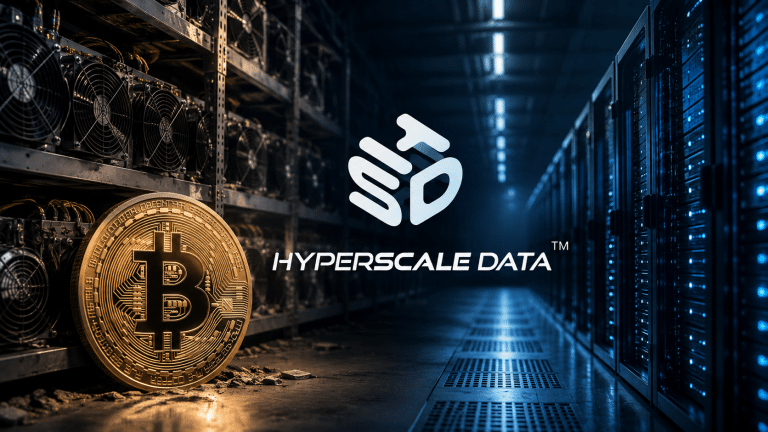
Hyperscale Data has shut down Bitcoin mining at its Michigan facility to make way for an AI data center customer, with the company’s BTC holdings now about 79% below the level cited in late July.

The company said Wednesday that it shut down all miners at the site following an inspection by the unidentified California-based neocloud provider. The company intends to sell the mining equipment associated with the Michigan operation.

The shutdown advances Hyperscale’s plan to convert the facility from Bitcoin mining to AI infrastructure. Its customer has committed to 20 megawatts of computing capacity under a master services agreement with an initial 10-year term and two optional five-year extensions.

Hyperscale estimates that the agreement could generate more than $1.2 billion in revenue if the customer exercises both extensions, taking the contract to its maximum 20-year term. The customer also has an option for another 32 MW, which could push total contract revenue above $3 billion if exercised and maintained through the extensions.

Hyperscale said the planned expansion has not been finalized and remains subject to funding, regulatory clearances, and other uncertainties. The company ultimately expects the Michigan site to support about 340 MW of power capacity.

Bitcoin Sales Help Fund Michigan Conversion

Hyperscale is partly financing the Michigan redevelopment by drawing down its Bitcoin treasury.

The company reported holdings of about 1,006 BTC on July 30, when it had also sold 100 BTC. Hyperscale also raised $5.1 million by selling roughly 65 BTC during the week through Aug. 30. It said the proceeds would help fund work at the Michigan site.

BitcoinTreasuries.NET lists the company with 215 BTC valued at about $16.7 million. Compared with the July figure, that represents a decline of about 79%. The platform ranks Hyperscale 84th among the public companies it tracks. 

Hyperscale Shares Fall to Split-Adjusted Record

The operational shift comes as Hyperscale’s shares trade near record lows.

The company’s NYSE American-listed stock fell about 17% on Wednesday, closing at $0.1984 after reaching $0.1934 intraday, according to Yahoo Finance data. The closing level marked a split-adjusted record low.

The move came shortly after Hyperscale completed a reverse stock split at a ratio of one share for every five shares outstanding. Trading on the adjusted share basis began Aug. 25, according to a filing with the U.S. Securities and Exchange Commission (SEC).

Cardano Founder Criticizes TapTools Relaunch

0

Cardano founder Charles Hoskinson has criticized the relaunched TapTools, saying the platform no longer resembles the high-quality analytics website he once used as part of his daily routine.

For context, TapTools initially announced its shutdown in June after facing significant internal and financial difficulties. As reported earlier, the platform had lost its fifth senior executive within a year, with departures involving key positions such as chief technology officer and chief operating officer, as well as co-founders.

However, TapTools later reversed its decision yesterday and announced its return with the message, “We’re back.”

The announcement initially sparked excitement among some Cardano community members. That enthusiasm quickly faded after the platform introduced a controversial requirement for users.

Hoskinson and Cardano Enthusiasts Slam TapTools’ 777 ADA NFT Requirement 

Unlike the previous version, which offered free basic charting and token-tracking features, the relaunched TapTools initially required users to mint an NFT for 777 ADA to access the platform.

The requirement triggered strong backlash across the Cardano community. Some users accused the team behind the relaunch of attempting to take advantage of ADA holders. 

Interestingly, Cardano founder Charles Hoskinson also expressed frustration with the requirement. He initially responded with a simple “Ugh” on X, signaling his disappointment with the relaunched platform.

When a community member asked why he reacted negatively to TapTools’ comeback, Hoskinson explained that the new version looks nothing like the platform he used to visit every day.

According to him, the relaunched platform is a “vibe coded memeslop” rather than the high-utility analytics website that previously made TapTools valuable to him.

TapTools Admits It “Got This One Wrong”

Following the backlash, TapTools acknowledged that its NFT sale had failed to resonate with the community.

The team explained that it viewed the sale as a way for supporters to help fund TapTools’ return. However, it admitted that it had misjudged the timing, community sentiment and likely reaction.

TapTools subsequently confirmed that all participants in the NFT sale had received full refunds. The platform also said it would not attempt to justify or force an approach that had clearly failed to gain community support. At the same time, the team emphasized that it still cares deeply about TapTools and what it built over the years.

Following the controversy, TapTools replaced the previous 777 ADA NFT-mint requirement with an “Under Construction” notice on its website. The latest developments have left the future of the Cardano-focused analytics platform uncertain. 

Hoskinson Says Cardano Must “Finish What It Started” to Unlock Next Growth Phase

0

Cardano founder Charles Hoskinson said the network must complete critical roadmap and governance milestones to unlock its next phase of growth.

Hoskinson made the comments while discussing the latest voting update for Cardano’s Constitutional Committee (CC). During his remarks, he took a moment to highlight the progress across the ecosystem, arguing that Cardano’s development looks more promising when viewed from a broader perspective.

In particular, Hoskinson highlighted the launch of RealFi and the growing potential of Bitcoin DeFi to bring substantial liquidity into the ecosystem. He suggested that RealFi could attract billions of dollars in total value locked (TVL) over the coming years. Meanwhile, he noted that Bitcoin DeFi through Pogun has already secured $600 million in soft commitments.

Cardano Must “Finish What We Started”

Despite this progress, Hoskinson stressed that Cardano must now “finish what we started.” He identified several priorities that would shape the network’s next phase of growth.

First, he emphasized the need to complete the Leios scalability upgrade. He also called for the relevant hard fork to be activated so that Cardano can advance with its planned technological improvements.

Governance, meanwhile, remains another critical priority. According to Hoskinson, the ecosystem must complete the last mile of governance while strengthening its existing institutions.

Furthermore, he wants Cardano’s institutions to develop the ability to improve continuously and operate with greater independence. In his view, the ecosystem must execute its roadmap more effectively while establishing a budget process that improves from one year to the next.

Ultimately, Hoskinson believes stronger institutions and more effective governance can help Cardano sustain development without repeatedly encountering the same obstacles.

Hoskinson Says Cardano Is “In It to Win”

Despite the challenges ahead, Hoskinson maintained an optimistic outlook on Cardano’s future. He stressed that the ecosystem is “not out of the game” and remains determined to compete at the highest level.

He has maintained this stance despite the market turbulence ADA has experienced this year. The cryptocurrency is down 40.71% year-to-date and has consequently fallen out of the top 10 by market cap.

Nevertheless, several of the major initiatives highlighted by Hoskinson remain in active development. Leios and RealFi are scheduled to launch later this year, potentially giving Cardano new avenues for scalability and liquidity growth.

Meanwhile, the Cardano community has approved the Constitutional Committee proposal, ensuring that the committee maintains more than five members. This allows it to continue voting on crucial network upgrades, including the constitutional update associated with Leios.