
Home Blog Page 452

Cardano Founder Blames ADA Users for DeFi Woes: “Our TVL Would Be $5-10 Billion Minimum”

0

Charles Hoskinson, the founder of the Cardano network, has fired a shot at the ADA community for contributing to their DeFi shortcomings.

Notably, he highlighted this in his recent podcast, as he suggested that Cardano users are contributing to the struggles in decentralized finance (DeFi). Hoskinson noted that the total value locked on the chain would be between seven and eight digits had ADA users adopted their native DeFi platforms.

Cardano DeFi Struggles: Community Part of the Problem

Notably, Cardano lags in decentralized finance compared to its status and counterparts. As a utility network, it ranks the lowest among smart contract native chains in its pedigree by a considerable margin, with new and emerging ecosystems still outperforming Cardano.

ADA ranks 10th on the cryptocurrency market cap ranking, with a valuation of $20.6 billion. No other asset in the bracket, aside from Dogecoin and XRP, which lack native DeFi functionalities, has a total value locked (TVL) of less than $5 billion. However, Cardano has just $262 million, ranking 24th by chain on DeFiLlama.

Several industry commentators, including Hoskinson, have attributed this problem to various ecosystem shortcomings. However, yesterday, the founder introduced a new perspective. Specifically, he noted that it is a “fundamental problem” that even ADA users are not using Cardano-native DeFi products.

Hoskinson questioned how they would be able to convince users of Solana, Ethereum, and other chains to “come and play in our backyard if our own people and our own ecosystem aren’t using our DeFi products.”

Cardano TVL Would Have Been Much Larger

Meanwhile, Hoskinson emphasized that this concern needs proper deliberation within the community, and the reason for the truancy needs to be explained. Notably, he cited several potential problems, including a lack of technical know-how, security issues, poor user experience, and low yields.

Furthermore, he insisted that addressing this menace would substantially boost DeFi usage. Specifically, he noted that Cardano’s TVL should be at least $5 to $10 billion, rather than the current figure.

Notably, a $10 billion ADA TVL represents an impressive 3,716% increase from the $262 million figure reported by DeFiLlama, potentially taking the chain to third in the current ranking, just behind Ethereum ($84.22 billion) and Solana ($11.17 billion).

Reactions also supported this narrative. A user highlighted that Cardano has enough users and capital to build a thriving DeFi ecosystem independently, but holders are not actively participating in the chain.

This conversation contributes to the growing effort to increase Cardano’s TVL. Recall that Cardano is working to unlock Bitcoin and XRP DeFi, teased to change their struggling state in the sector.
Popular ETF Analyst Gives New Timeline for First Spot XRP ETFs Launch

0

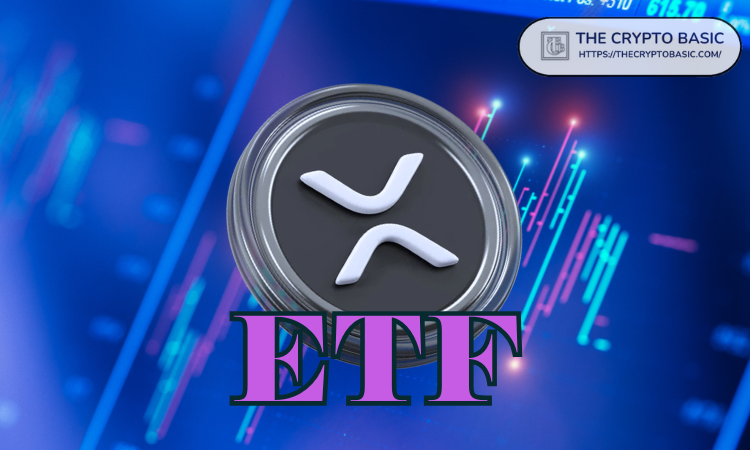
Popular ETF analyst Nate Geraci has highlighted a potential launch window for the first spot XRP exchange-traded funds in the United States. 

In his remarks, Geraci, the president of NovaDius Wealth Management, suggests that the first U.S. spot XRP ETFs will launch within the next two weeks. This places the potential rollout timeline for XRP spot ETFs around mid-November 2025.

Significance of XRP ETF Launch in the US

Notably, Geraci believes the launch of these funds would signify how far crypto assets have come in terms of regulatory acceptance in the United States. Highlighting the significance of the upcoming launch, he mentioned that the U.S. SEC had engaged Ripple in a lengthy legal battle for nearly five years, until three months ago, when the litigation was fully resolved. 

With the lawsuit over, Geraci views the anticipated XRP ETF launch as a symbolic milestone. According to him, the launch of XRP ETFs represents “the final nail in the coffin of previous anti-crypto regulators.”

Indeed, under the previous administration, the SEC leadership launched numerous enforcement actions targeting crypto firms. In contrast, the current administration under President Donald Trump has adopted a far more friendly approach toward the industry. This paved the way for the resolution of the Ripple lawsuit.

Canary’s XRP ETF to Launch on November 13

Meanwhile, Geraci’s projected two-week window aligns with the expected launch timeline for Canary Capital’s proposed XRP ETF. Last week, the asset manager amended its S-1 registration statement, removing the delay clause.

This move effectively positions the fund for a potential debut within 20 days of the amendment, or around November 13.

Notably, Canary Capital employed a similar strategy to roll out its Litecoin ETF and Hedera ETF last month, which have since attracted $1.63 million and $45.93 million in net assets, respectively.

Now, the asset manager intends to use the same method to launch its spot XRP ETF amid the ongoing U.S. government shutdown.

Crypto journalist Eleanor Terrett suggests that the potential launch of Canary’s XRP ETF hinges on Nasdaq approving the fund’s Form 8-A application and the possibility of the SEC not issuing additional comments.

First XRP ETF Sees Strong Demand

Despite Geraci’s remarks, the U.S. has already witnessed the launch of its first spot XRP ETF — the REX-Osprey ETF. It debuted in September and has since accumulated around $106 million in total assets.

Following its success, market speculation suggests that upcoming spot XRP ETFs from seven prospective issuers, including Canary Capital, WisdomTree, 21Shares, Grayscale, and Bitwise, could also experience strong investor demand upon launch.

Bitwise CIO Matt Hougan has predicted that the combined assets of these XRP ETFs could surpass several billion dollars within a few months of their trading debut.

Critic Tells Ripple CTO What XRP Is and What XRP is Not

0

In a recent discussion, a Chainlink proponent attempted to explain to the Ripple CTO, David Schwartz, what XRP is and isn’t.

The discussion began after Schwartz defended the XRP Ledger’s (XRPL) model, which avoids paying validators with fees. Responding to questions from Scott Melker (the Wolf of All Streets), Schwartz said this design removes middlemen and allows users to be their own banks.

Critic Insists Blockchains Should Charge Fees

However, Chainlink proponent Fishy Catfish disagreed. He argued that blockchain networks should collect small fees that flow back to token holders to create a sustainable value system. To him, XRP lacks this kind of structure and depends more on hype and community narratives than real utility.

The critic claimed that XRP has little that’s “stable or growing.” However, wallet count has continued to increase this year. Meanwhile, he highlighted what he described as low developer activity, weak usage metrics, and poor traction among stablecoin issuers. 

Notably, he pointed out that even Ripple deployed only a small portion of its RLUSD stablecoin on the XRPL. Data from RWA.xyz reveals that of the $972.7 million worth of RLUSD in circulation, $819.7 million, representing over 84%, resides on Ethereum, while the XRPL hosts only $153 million. 

“What XRP Is and Isn’t”

Fishy Catfish then tried to define what XRP isn’t and what XRP is. According to him, XRP isn’t a bet on “banks + blockchain” or a utility token tied to financial innovation. Instead, he claimed that XRP is “a bank-themed meme coin” driven by “confused, conspiracy-obsessed” retail investors who mistake Ripple’s announcements for token utility.

The critic argued that many investors buy XRP thinking banks will use it for payments, even though Ripple has already told regulators that this isn’t the case. Fishy Catfish described XRP as a “meme coin” driven by retail investors who confuse it with Ripple’s business success.

Meanwhile, during his previous commentary, Schwartz had suggested that a blockchain designed to run cheaply would likely win in the long run, even if it doesn’t generate large profits for validators. 

Catfish disagreed with this, claiming that Ripple’s design decisions, especially the choice to exclude smart contracts, hurt adoption. He argued that the XRPL doesn’t succeed because it relies more on online hype than real-world use.

He also accused Ripple of fueling confusion among investors. According to him, many XRP holders don’t understand DeFi tools or blockchain metrics. Instead, they rely on influencer content and promotional tweets to guide their decisions. He even claimed that Ripple encouraged this kind of speculation.

Blockchains Need Clear Incentives

Also, Schwartz had pointed out that the XRPL still functions as a decentralized exchange. However, Catfish suggested that the real issue isn’t technical but economic. He said that blockchains need clear incentives for those who maintain them. 

According to him, small fees collected across millions of transactions would create meaningful value for token holders and support long-term growth.

Schwartz questioned who benefits from small fees that might decline over time, suggesting that this model doesn’t guarantee long-term sustainability. In response, Catfish said that even small fees can add up through volume and that the shrinking margins across blockchains affect pricing, not the logic behind fee accrual.

Critic Claims XRP is Not a Utility Coin 

At one point, Schwartz also noted that by Catfish’s reasoning, one would regard almost every cryptocurrency as speculative, since most rely on expectations of future demand. 

Catfish responded that the crypto market splits into two groups: meme coins and tokens that earn revenue. He listed examples such as Ethereum, Solana, Chainlink, and Aave as projects that channel protocol revenue back into their tokens. He claimed Ripple chooses to sell XRP to fund company operations and acquisitions instead of doing this.

Responding to Schwartz’s argument that most assets offer similar functions, making it hard to separate them by utility alone, Catfish said blockchains differ widely in their design, use cases, and adoption. He pointed out that while anyone can issue a token, few can build one that aligns with real economic growth. He believes XRP lacks this quality.

Billions Coming To Purchase XRP, Pundit Says You Haven’t Seen Supply Shock Yet

0

With the new XRP treasury firm Evernorth planning an IPO next year, a market expert has suggested that the resulting purchases could lead to an XRP supply shock.

Software engineer and XRP community figure Vincent Van Code made this assertion on X while discussing the potential impact of Evernorth’s emergence on XRP price direction.

Evernorth’s Decision to Purchase XRP

For context, Evernorth, a new Ripple-backed company, announced on Oct. 20 that it would form a merger with Armada Acquisition Corp II, a special purpose acquisition company (SPAC) with the aim of going public under the “XRPN” ticker and raising $1 billion to create the largest XRP treasury.

Notably, reports confirmed Ripple would contribute to the fundraiser alongside its co-founder Chris Larsen, but these contributions were all in XRP, and not fiat. In fact, The Crypto Basic found nine days later that Evernorth had already received $1 billion worth of XRP, but all contributions were in XRP, not fiat.

Expectedly, this raised questions about the impact of the strategy on the XRP price. For context, Evernorth raising fiat and leveraging the cash to purchase XRP on the open market could trigger massive buying pressure, contributing to bullish price movements. However, the recent XRP-denominated contributions are not capable of having such an impact.

“You Haven’t Not Seen Supply Shock Yet”

Amid the concerns, XRP community figures have insisted that the fundraising for procuring XRP on the open market would actually happen later, possibly leading to the anticipated bullish impact. For one, SBI has already announced an investment of $300 million in cash, not XRP.

In his commentary, Vincent Van Code attempted to explain how Evernorth’s going public will impact XRP price. He highlighted that the next step for the new company is to go public through an IPO. The firm has already confirmed this, setting Q1 2026 for the conclusion of its merger. 

According to Van Code, this IPO will likely raise billions of dollars for the company. He suggests that they will leverage this cash for purchasing XRP in the open market. For context, such an event will possibly exert pressure on the existing XRP supply, which many experts believe is already declining.

In such a scenario, the most logical market response is a supply shock. “You haven’t seen supply shock yet,” Van Code teased, attempting to highlight the possible extent of the large-scale purchase.

According to him, the Evernorth development, which market commentator Nietzbux already believes is 100% bullish for XRP, and the launch of XRP ETFs could trigger an unprecedented supply shock in the XRP market. However, Van Code admitted that he is not sure of the timeframe.

Gold Touched $30T Cap, Here’s XRP Price if It Ever Hits This Milestone 

0

With gold recently becoming the first asset in the world to surpass a $30 trillion market cap, how much would XRP rise to if it ever attained this milestone?

While the crypto market has tumbled over the past few weeks, gold has held strong, essentially showing why many consider it a hedge against financial instabilities. Notably, the total crypto market cap dropped from a peak of $4.27 trillion on Oct. 6 to the current value of $3.59 trillion, having lost up to $680 billion within this period.

Gold Becomes First Asset to Hit a $30T Market Cap

This bearish turn of events comes on the back of tariff tension between China and the U.S., with the historical Oct. 10 crypto market crash also contributing to the losses. Meanwhile, gold has only shown strength, eventually reaching the $30 trillion milestone yesterday as its price per ounce claimed new all-time highs.

Specifically, gold hit a new peak of $4,330 per ounce on Oct. 16, pushing its market cap to $30.1 trillion. After a correction ensued, it gave up this level but eventually recovered to a new peak of $4,379 per ounce, which took its market cap to a new high of $30.45 trillion. Currently, gold has again relinquished the $30 trillion level, with its valuation sitting at $29.674 trillion.

Meanwhile, the XRP community has often compared gold to XRP, with some suggesting they share similar properties. For instance, last March, market commentator Zach Rector insisted that XRP was a commodity and a currency just like gold, citing comments from Ripple CTO David Schwartz. 

XRP Price if It Reaches the $30T Cap Milestone

Moreover, some XRP proponents have even suggested that XRP could be trailing gold’s price action, a move that would see the altcoin soar to greater heights. Amid these discussions, we recently evaluated how high XRP could go if, trailing gold’s movements, it also hit the $30 trillion market cap milestone someday.

Currently, XRP changes hands at $2.35, with a market cap of around $141 billion, considering its current circulating supply of 59.97 billion tokens. At the current position, the XRP market represents only 0.004% of the gold valuation, suggesting that it has a long way to go before it catches up to the $30 trillion mark, if it ever does.

XRP’s market cap would have to grow by an audacious 21,176% to reach the $30 trillion level. Notably, if XRP ever soared to this level, the price per XRP could reach around $300, considering the total existing supply of 99.9 billion tokens at the time of reporting.

Interestingly, while this price appears extremely ambitious and unfeasible, some analysts have predicted that XRP could reach it. For instance, Whale Guru, a market commentator, projected that XRP could reach a price of $300 in “the next pump,” while Ethereum (ETH) may hit $25,000. 

Notably, analysts at crypto resource Changelly also believe XRP could claim the $300 level, but not in this decade. According to Changelly, XRP could cross $300 by February 2040, about 15 years from now. They predict a minimum price of $381, with a maximum price of $452 for this timeline.

XRP Price Predictions Changelly
XRP Price Predictions | Changelly

Here’s Why Ripple Needs Higher XRP Price as $10 XRP Could Mean $4T for Ripple: Analyst

0

Ripple’s string of high-value acquisitions continues to spark discussion about the company’s ultimate goals and why a higher XRP price may be crucial to its long-term success.

This week, Ripple CEO Brad Garlinghouse highlighted XRP’s significance while announcing the completion of Ripple’s $1.25 billion acquisition of Hidden Road, now rebranded as Ripple Prime.

The deal marks Ripple’s fifth major acquisition in roughly two years. It followed GTreasury ($1B), Rail ($200M), Standard Custody, and Metaco ($250M). 

Together, these moves echo Ripple’s ambition to become a dominant player in global finance, spanning stablecoin payments, custody, prime brokerage, and liquidity management.

“XRP is at the core of everything Ripple does,” Garlinghouse said, reminding the community that despite the introduction of the RLUSD stablecoin, the company’s ecosystem continues to revolve around XRP.

Ripple President Monica Long also confirmed that Ripple Prime will explore integrating XRP alongside RLUSD as collateral within its brokerage offerings.

Analyst: “Ripple and XRP Go Hand in Hand”

Prominent XRP analyst and community figure CrediBULL emphasized that Ripple’s success is fundamentally tied to the value of XRP.

He noted that with Ripple controlling roughly 40 billion XRP tokens that will gradually enter circulation over the next ten years, the company has a strong incentive to ensure the asset thrives.

In parallel, CrediBULL explained that Ripple Labs benefits directly from a stronger XRP valuation. “They go hand in hand,” he said, highlighting that the success of the token and the company are closely connected.

In other words, as XRP’s value rises, it becomes easier for Ripple to generate additional value for the company. This creates a mutually reinforcing cycle between the asset and the firm.

This argument aligns with the financial reality that Ripple holds nearly $106 billion worth of XRP, including 35 billion XRP in escrow and about 5 billion in spendable wallets. Every $2 increase in XRP’s price would theoretically add around $80 billion to Ripple’s balance sheet.

Ripple’s Strategy Has Always Been About Maximizing XRP Value

Ripple’s commitment to increasing XRP’s value is not new. In fact, the company’s CTO David Schwartz stated as far back as 2017 that Ripple “spends money in a way that allows the company to get maximum value for its stash of XRP.”

Schwartz explained that if the company had an opportunity to invest $100 million to raise XRP’s price by even one cent, it would consider it worthwhile. This philosophy remains intact today.

Ripple’s growing portfolio of acquisitions and its push into institutional custody, tokenization, and liquidity services all support this objective. Specifically, these moves expand real-world XRP utility while strengthening Ripple’s corporate value.

Ripple’s Endgame: Institutional Liquidity and XRP Price Growth

While Ripple avoids discussing price targets due to regulatory caution, many analysts believe its business model inherently depends on a higher XRP valuation.

As one community analyst put it, “It’s always been about XRP price, but Ripple just cannot say it.”

Ripple’s strategic partnerships with SBI Holdings, Kraken, GTreasury, and Evernorth reinforce this notion. 

The $1 billion Evernorth initiative, designed to establish the world’s largest corporate XRP treasury, mirrors MicroStrategy’s Bitcoin accumulation model and could provide sustained demand for XRP in the years ahead.

What If XRP Hits $10?

At an XRP price of $10, Ripple’s holdings would be valued at over $4 trillion. This could instantly transform the company into one of the world’s most valuable financial entities.

Such a valuation would not only bolster Ripple’s balance sheet but also give it exceptional leverage in global finance. In particular, it would enable further billion-dollar acquisitions, ecosystem investments, and liquidity infrastructure.

While this scenario remains speculative, it highlights why Ripple’s long-term strategy, from acquisitions to stablecoin integration, may ultimately depend on a significantly higher XRP price.

Here’s What $5K Investment in Cardano Could Become in 15 Years

0

As investors increasingly focus on Cardano’s long-term potential, this analysis examines how a $5,000 investment in ADA today could evolve over the next 15 years. 

Amid the broader crypto market’s downward pressure, many investors are shifting their focus toward the long-term potential of digital assets. In view of this, investors are looking ahead to what the value of their crypto holdings could be by 2040, roughly 15 years from now. 

2040 is a long time from now, with several events expected to take place in the market that could either propel a token’s rally or lead to its eventual demise. 

Notably, members of the Cardano community remain optimistic, believing that the value of ADA will grow significantly over time. This confidence is fueled by the network’s active ecosystem development, with projects such as Midnight and Hydra, as well as upcoming ETFs tied to ADA, expected to play pivotal roles in driving long-term growth and adoption. 

Value of $5K Investment in Cardano by 2040 

Based on this optimism, investors believe now is the perfect time to purchase ADA in anticipation of a future rally. In view of this, we consulted the AI model ChatGPT to ascertain what the value of a $5,000 investment could be by 2040, roughly 15 years from now. 

The chatbot first provided insight into ADA’s current performance, noting that it trades at $0.6104, which translates to a market cap of $21.88 billion. ADA has slumped 6.05% over the past week, pushing its monthly decline to 28.27%. ChatGPT estimates that an investment of $5,000 would purchase roughly 8,190 ADA tokens. 

Bear Projection 

The analysis further outlined Cardano’s potential 2040 price under five different scenarios, ranging from bearish to hyper-bullish. In the bear case, ChatGPT envisions a situation where ADA loses relevance by 2040, with its price falling to around $0.10. In this scenario, a $5,000 investment would shrink to approximately $819, representing an 84% decline. 

Conservative Scenario 

Under a conservative scenario, the model assumes ADA’s price doubles over the next 15 years, reaching roughly $1.20 by 2040. At that level, a portfolio of 8,190 ADA would be worth $9,828, yielding an ROI of 96.6%. 

Strong Adoption Scenario 

The analysis also considers a more optimistic scenario, where Cardano sees strong adoption between now and 2040, attracts institutional investment, and emerges as a major player in decentralized finance (DeFi). 

Here, it forecasts that ADA could reach a unit price of $6.10, pushing the value of the 8,190 ADA tokens, valued at $5,000 today, to $49,959 over the next 15 years. This represents an estimated return of over 900%. 

Ethereum-Level Adoption Scenario 

In the fourth scenario, ChatGPT envisions Cardano achieving Ethereum-level adoption over the next 15 years—a development that would require ADA to match Ethereum’s current market capitalization of roughly $465 billion. 

At that valuation, ADA’s price would reach around $13, bringing the value of 8,190 ADA tokens to approximately $106,470, an impressive 2,029% return. 

Hyper-Bull Scenario 

Under the hyper-bullish scenario, the model envisions Cardano becoming a foundational layer for global finance and supply chain systems by 2040. In this case, ADA could trade at about $28 per token, boosting the $5,000 investment to a remarkable $229,320, which represents an estimated return of 4,486%. 

ChatGPT forecats Cardano 2040 price

Top Expert Says XRP Is Positioning for Trillions, Not Billions — Western Union Misses the Bigger Picture

0

As critics continue to bash XRP amid the Western Union–Solana deal, a new voice has entered the debate.

XRP supporter Dom Kwok, co-founder of EasyA, argues that the market’s focus is too narrow. He claims that headlines celebrating Western Union’s decision to launch a stablecoin on Solana overlook a much larger structural shift underway at Ripple.

In his view, the conversation shouldn’t revolve around Western Union’s “billions,” but around Ripple’s growing exposure to trillions in global payment and liquidity flows.

Trillions, Not Billions

Kwok noted that Western Union processes billions in annual volume, making its selection of Solana notable but not transformative.

According to him, Ripple is quietly aligning itself with a financial footprint several orders of magnitude larger. And unlike partnership pilots that can end abruptly, Ripple’s acquisitions give the company direct ownership and deeper influence over massive financial pipelines.

Kwok highlighted three key purchases from the past year:

  • Hidden Road, a global prime brokerage that clears $3 trillion annually.
  • GTreasury, a global treasury management firm powering trillions in yearly payment flows across 160+ countries.
  • Rail, a fast-growing payments platform that handles 10% of all stablecoin-based payment activity worldwide.

Essentially, ownership is key. Unlike partnerships, which can dissolve when corporate strategies change, acquisitions give Ripple long-term control over how these new infrastructures evolve.

XRP as the Settlement Layer

Central to Kwok’s thesis is the idea that XRP sits “at the center of it all.”

With Ripple taking full control of platforms processing multi-trillion-dollar liquidity flows, the company has both the ability and the incentive to migrate settlement activity toward the XRP Ledger over time.

“Don’t Lose Sight of the Forest for the Trees”

Meanwhile, critics commenting on the Western Union–Solana deal are questioning XRP’s relevance beyond Ripple.

Specifically, market commentator Scott Melker questioned its role in today’s payments ecosystem, as Western Union chose Solana over the XRP Ledger, despite having tested the XRP network for years.

Western Union will launch its USDPT stablecoin on Solana in 2026 to enable global stablecoin transfers and cash-outs. The company could attract over $100 billion in annual cross-border follow to Solana.

For Kwok, the focus should be on the trillions of dollars Ripple plans to handle, not billion-dollar flows.

“Don’t lose sight of the forest for the trees,” he remarked, as Ripple assembles the machinery to push XRP into the heart of trillion-dollar institutional settlements.

“Trillions, not billions,” Kwok said in closing.

Other industry leaders share Kwok’s view. Flare CEO Hugo Philion previously dismissed concerns that Western Union’s Solana partnership impacts Ripple or the XRPL. 

He stressed that Ripple is targeting trading and asset management, as demonstrated by its acquisitions of GTreasury and Hidden Road (Ripple Prime).

Moreover, Flare complements Ripple by expanding XRP’s DeFi and cross-chain capabilities.

Pundit Says a $0.60 Price Difference Won’t Matter When XRP Reaches $100

0

An XRP community figure has suggested that when XRP skyrockets to higher prices, it won’t make a difference what price he procured it today.

Over the past few weeks, XRP has been fluctuating between $2.2 and $2.6, looking to recover from the Oct. 10 market dump. After soaring to $2.69 on Monday, Oct. 27, XRP has corrected to the current price of $2.55 on the back of three intraday losses.

While XRP’s market cap has lost over $8.2 billion from the Monday peak, its unit price has only dropped by a mere $0.14. Interestingly, software developer and XRP community figure Vincent Van Code recently argued that these price fluctuations should not deter long-term investors.

A $0.6 Price Difference Won’t Matter if XRP Hits $100

Notably, for daily traders, these price movements make a lot of difference, depending on entry and exit prices, as well as their trade bias. However, Van Code’s recent comment indicates that investors who purchase XRP to hold for the long run should not show much concern about these minute price differences.

According to him, he used to complain about having to buy XRP at $0.80 because he had previously bought it for $0.20 or less. At the time, the higher price felt frustrating to him, as though he was overpaying compared to his earlier purchases. 

Vincent Van Code on X

For context, XRP, which traded for as low as $0.2095 in January 2021, eventually cost as high as $1.96 by April 2021. Its price also dropped to a low of $0.29 in June 2022 following the Terra collapse. However, by July 2023, investors had to pay a whopping $0.92 for 1 token. Today, XRP costs as much as $2.55.

Van Code confirmed that paying such higher prices for an asset he bought lower months or years back was concerning to him. However, he realized that in the long run, small differences in price, like paying $0.20 versus $0.80, would become insignificant if XRP’s value eventually rose to something massive like $100.

Could XRP Reach $100?

The pundit’s confidence comes from the optimism that XRP could reach higher prices that would make whatever price one pays today irrelevant. For instance, in 2011, Bitcoin (BTC) fluctuated between $3 and $12. Now that it changes hands for $110,000, most investors would not see much difference between buying it for $3 or $12 back in 2011, as long as they did purchase it.

Van Code believes a $100 price for XRP is plausible, and if it does materialize, it won’t matter whether an investor bought it at the lows of $2.18 on Oct. 17 or the current price of $2.55. Specifically, if you invested $50,000 into XRP at $2.18, you’d have 22,935 tokens. However, if you bought at $2.55, you’d procure 19,607 XRP.

Should the $100 prediction play out, the 22,935 tokens (bought at $2.18) would be worth $2.29 million, while the 19,607 tokens (bought at $2.55) would have a value of $1.96 million. Essentially, both investments would yield millions for their respective holders. Nonetheless, the onus rests on XRP reaching $100, which, although most analysts believe could happen, remains uncertain.

Expert Says XRP Will Become the Place People Store Most of Their Wealth

0

A growing number of voices in the XRP community now believe the coin will also become a primary means of storing wealth.

The latest commentary comes from software engineer Vincent Van Code, who suggested that “a time will come when XRP and the XRP Ledger are just where you keep most of your wealth.”

His remark comes at a moment when conversations around XRP’s long-term relevance, utility, and role in global finance are intensifying.

XRP as a Treasury Asset

Van Code’s comment reflects a broader view emerging among XRP builders and analysts. They believe the asset is shifting from a simple payment bridge to a core store of value within the XRPL ecosystem.

This view aligns with Ripple CTO David Schwartz, who argues that XRP’s real strength is in letting users act as their own banks.

He describes XRP as a neutral, borderless asset with no counterparty risk, no chance of being frozen, and no need for intermediaries. These qualities make it well-suited for long-term wealth storage, according to proponents.

Schwartz’s Defense of XRP’s Unique Position

The debate grew after Western Union chose Solana instead of the XRP Ledger to launch its stablecoin. Critics argued this showed XRP was losing relevance. Meanwhile, Ripple CTO David Schwartz disagreed, saying XRP’s true strength lies in its neutrality and independence.

He explained that the XRPL supports a financial system where users fully control their money, without middlemen, fees, or restrictions.

Schwartz contrasted this with stablecoins, which depend on central issuers and can be frozen or reversed. He also noted that while speculation currently drives most crypto value, he believes XRP’s long-term worth will come from its real-world utility.

XRP in Long-Term Wealth Protection

Furthermore, the idea of XRP as a “treasury asset” also mirrors views from other prominent community commentators.

Crypto educator Coach JV recently said he stores his family’s wealth in Bitcoin and XRP because both have fixed supplies and resist inflation.

With inflation eroding the dollar’s value by as much as 96% since 1913, he argues that deflationary assets like XRP will naturally attract long-term savers. Support for this thesis is growing:

  • XRP has appreciated by over 65,000% in the past decade.
  • Analysts like Zach Rector forecast XRP reaching $100, driven by economic instability and flight into alternative assets.
  • Broader pressures, including inflation, job losses, and shifting Fed policies, are already driving more people toward borderless, fixed-supply assets.

Essentially, Van Code’s “treasury” comment reflects this belief that XRP could evolve into a trusted store of value as confidence in traditional systems declines.

Meanwhile, critics still question XRP’s future demand. Yet many now see it evolving from a bridge asset into a financial base layer where people and institutions could ultimately store their wealth.