
Home Blog Page 457

Top Pundit Says People Care More About Midnight Than Cardano Right Now

0

The Midnight project is generating more user interest than its parent network, Cardano, according to a prominent community pundit.

Big Pey, a Cardano content creator, came to this conclusion in his recent X post. He claimed that his YouTube views suggest people are more interested in Midnight than in Cardano at the moment.

This suggests that his content on Midnight receives more views and engagement than his Cardano content; hence, his recent claims. Remarkably, this disparity comes despite the close relationship between Midnight and Cardano. Recall that Midnight is a privacy-focused Cardano sidechain and, as such, a part of the ADA ecosystem.

“People Love New Stuff”

Meanwhile, Big Pey noted that this might be because of the buzz typically associated with “new stuff.” He suggested that newer innovations usually attract early interest as users are eager to test them out. This comment was in response to a reaction noting that the interest might be due to speculations surrounding the Midnight launch.

Notably, Midnight has been generating significant buzz in the Cardano ecosystem, a sentiment that even Cardano founder Charles Hoskinson shares.  The IOG CEO, who is also an Ethereum co-founder, recently noted that the privacy-focused project has placed Cardano in the spotlight again and called the sidechain the “most transformational project in Cardano’s history.”

The optimism around Midnight further strengthens as it forges significant partnerships with prominent entities. The project has collaborated with Brave, Google Cloud, Blockchain.com, and Bitcoin.com, among others, and market users are growing increasingly confident in its trajectory.

Pundit Reveals When NIGHT Would Launch

Another reason Midnight has garnered greater interest is its NIGHT token airdrop. The project took on the largest airdrop in history, distributing 24 billion NIGHT tokens to over 34 million wallets in the Glacier Drop.

The airdrop spans over seven blockchains, including Cardano, Bitcoin, Solana, XRP, Ethereum, and BNB Chain, another factor for its popularity. Its multi-chain feature means its proponents are beyond the Cardano system, as claimants anticipate the token’s launch.

Meanwhile, Big Pey revealed when the Midnight team may likely launch NIGHT. According to him, this could happen when Cardano enters a bull market run.

“Seems like Night is going to launch as soon as the Cardano bull market starts,” he tweeted.

Remarkably, Midnight has already announced it will launch on mainnet before the end of 2025 and distribute NIGHT tokens alongside its market entrance. It recently minted all 24 billion tokens for distribution, signaling its launch is on the horizon.


Ripple CTO Explains Why XRP Has a Supply of 100B Tokens

0

Responding to questions from a curious mind, the Ripple CTO, David Schwartz, has mentioned three reasons XRP launched with a supply of 100 billion tokens.

Notably, when David Schwartz, Arthur Britto, and Jed McCaleb built the XRP Ledger in 2012, they launched XRP as the network’s gas token, with its total supply set at 100 billion coins. 

Unlike Bitcoin, which depends on constant mining, XRP’s full supply already existed at launch, with all 100 billion tokens pre-mined. However, the developers could have chosen any number, leading to questions about why they settled for 100 billion.

The decision recently came up again in the XRP community, as Diep Sanh, a well-known XRP enthusiast, asked on X why the ledger’s creators chose a 100 billion supply. He questioned why they didn’t choose something smaller or larger.

Ripple CTO Explains Why XRP Has a 100B Supply 

In response, the Ripple CTO and one of XRP’s original creators, David Schwartz, said they set the supply at 100 billion to meet three goals: to make XRP divisible enough, to fit the numbers within a 64-bit integer, and to keep the total easy for people to remember.

First, on the divisibility front, XRP’s large supply allows the token to support smaller transactions across the network. For context, each XRP divides into one million smaller units known as “drops,” making it possible to send or receive tiny amounts. 

This divisibility helps XRP function well for microtransactions. In a post he shared in March 2024, Schwartz also mentioned that XRP, like most digital assets, has a limit to how much it can divide. However, this limit still allows it to handle everyday transactions properly.

Secondly, Schwartz’s latest response confirms that the total 100 billion tokens fit inside a 64-bit unsigned integer, which can store numbers up to more than 18 quintillion. This makes it easier for the XRP Ledger to process transactions quickly, as the network avoids rounding errors.

According to Schwartz, the third reason behind the 100 billion cap is simplicity. This indicates that they wanted a round number that people could easily understand and remember. 

Is 100B Too Much or Too Little

Interestingly, several other XRP community figures have shared their opinions about the supply choice. Last December, Versan Aljarrah, co-founder of The Black Swan Capitalist, said demand for tokenized assets, stablecoins like RLUSD, and liquidity solutions keeps increasing. 

He believes this growing demand puts XRP at the center of the digital economy and that the current 100 billion supply may not be enough to meet future needs, which could lead to a supply crunch.

Meanwhile, in June, game developer Chad Steingraber pointed out that most XRP is in the hands of large holders and locked away from the market. He noted that, despite the 100 billion supply, the amount available for trading is far smaller than many realize, and as more coins move into storage, scarcity could drive up prices.

Notably, community member Dave Lui presented a similar opinion back in December 2020. He said that while 100 billion XRP might seem like a huge number, it makes sense when considering XRP’s expanding role, new projects such as Flare, and the likelihood that institutions will buy and store large amounts over time.

In March 2024, another XRP proponent known as Jack the Rippler noted that although 100 billion tokens might look excessive, it is necessary for solving a global payments problem worth trillions of dollars.

Consensys Prepares for IPO with Backing from JPMorgan and Goldman Sachs

0

Consensys, the blockchain firm behind the popular MetaMask wallet, is preparing to go public. 

The company has engaged financial giants JPMorgan and Goldman Sachs to oversee its planned initial public offering (IPO). This move represents a significant milestone for one of the most influential entities within the Ethereum ecosystem.

Notably, the development follows the recent public listings of crypto companies Bullish and Circle. Both firms capitalized on the renewed investor interest in digital assets. Specifically, Circle, known for issuing the USDC stablecoin, saw strong results in its debut.

The broader shift toward openness in crypto investment has been attributed to President Trump’s pro-crypto stance. Since taking office, his position has prompted increased engagement from traditional institutions in the digital assets sector.

MetaMask Expands with Token and New Trading Features

MetaMask, the flagship product of Consensys, has been rapidly evolving in recent months. In September, Joseph Lubin, Consensys CEO and Ethereum co-founder, confirmed that MetaMask will soon introduce its long-awaited MASK token. The confirmation was met with considerable anticipation within the community.

Following that announcement, MetaMask revealed plans to launch perpetual futures trading and a new rewards program for users. The wallet provider also hinted at an upcoming prediction markets feature through a partnership with Polymarket.

According to MetaMask, these updates align with its goal of “opening new ways for users to engage” across its growing ecosystem.

A Decade of Building the Ethereum Infrastructure

Founded in 2014 by Joseph Lubin, Consensys has played a foundational role in expanding the Ethereum network. Its portfolio includes major blockchain tools such as Infura, a leading node infrastructure service, and Linea, a Layer 2 scaling network. The company has also backed SharpLink, an ETH-focused treasury management firm.

Through these ventures, Consensys has established itself as a central force in developing applications and infrastructure that support Ethereum’s continued growth.

Looking Ahead

With experienced financial advisors and favorable market sentiment, Consensys appears poised to join a growing list of crypto firms entering public markets. 

If successful, the IPO could further validate the maturing blockchain industry and highlight the increasing convergence between traditional finance and decentralized technology.

Shiba Inu Gets First Spot ETF Filing in the US by $1.7T Asset Manager

0

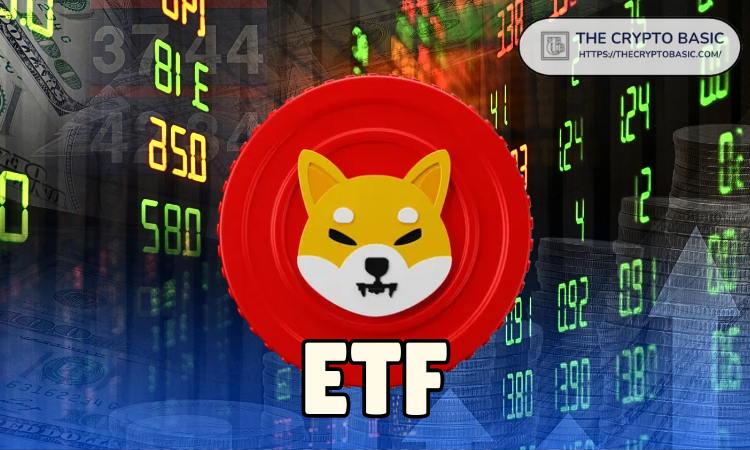
Global investment manager T. Rowe Price has made a bold move on a Shiba Inu ETF.

Specifically, the firm has filed a Form S-1 registration statement with the U.S. SEC to launch its Active Crypto ETF, a fund that will track the prices of leading crypto assets, including Shiba Inu.

Notably, the Active Crypto ETF seeks to outperform the FTSE Crypto US Listed Index ETF over the long term through an active investment strategy, rather than passively tracking a benchmark. 

With this strategy, T. Rowe will have the flexibility to adjust portfolio weightings, add new crypto assets, or reduce exposure to certain tokens based on market conditions or momentum. 

T Rowe Active Crypto ETF

Shiba Inu Listed Among Eligible Assets 

According to the filing, the proposed ETF will hold a basket of 5 to 15 cryptocurrencies. Notably, it indicated that the ETF could hold either more than 15 crypto assets or fewer than 5. 

In the meantime, it listed Shiba Inu among the assets that meet the fund’s eligibility standards. Other cryptocurrencies listed include Bitcoin, Dogecoin, Ethereum, XRP, Solana, Cardano, Avalanche, Litecoin, Chainlink, Polkadot, among others. 

If Shiba Inu is included in the fund’s initial portfolio, T. Rowe would buy and hold the token, giving institutional investors indirect exposure to SHIB for the first time through a Wall Street investment vehicle. 

Potential Impact on SHIB 

Moreover, Shiba Inu’s inclusion in an SEC filing by T. Rowe Price, a leading investment firm managing over $1.77 trillion in assets, further enhances the token’s credibility beyond its meme origins.

If selected in the initial portfolio, a portion of the fund’s inflows will be used to buy SHIB, potentially increasing demand for the token and ultimately supporting its price appreciation. 

Meanwhile, the filing offered insights into the SHIB token and the broader Shiba Inu ecosystem, describing SHIB as the most widely available token within the network. It also highlighted other ecosystem assets, including BONE, LEASH, and TREAT, as well as key projects such as Shibarium and ShibaSwap. 

T Rowe Shiba Inu ETF filing

First ETF Recognition in the US 

The filing has drawn significant attention from the Shiba Inu community since its release. While SHIB already has a regulated ETP in Europe through Valour’s SEK-denominated offering, this marks the first instance of a U.S. SEC-registered ETF recognizing SHIB as an eligible investment asset. 

U.S.-based asset managers have long overlooked SHIB in favor of assets like Bitcoin, Ethereum, XRP, and even rival meme coins such as Dogecoin and Bonk. However, the recent T. Rowe Price filing marks the first time Shiba Inu could be included in a U.S.-listed ETF. 

While SHIB does not yet have an ETF dedicated solely to it, this milestone represents a major step forward.

Analyst Says Ethereum Will Soon Explode, But Shares Why He Thinks XRP May Outperform

0

A market analyst has suggested that while Ethereum would soon explode, XRP will likely outperform the king altcoin in the near future.

This daring commentary came from CryptoBull, a prominent market watcher, on the back of the latest market recovery push. Notably, while Ethereum (ETH) recovered 9.57% to over $4,200 on Oct. 27, XRP saw a more substantial 11% rebound to $2.69 within the same period.

However, following their respective highs, both assets have since collapsed considerably. As a result, ETH is only up 1.4% from its Oct. 22 lows, while XRP has maintained a 6.1% gain, still holding firm above the pivotal $2.5 level.

An Interesting Trendline on the XRPETH Chart

Amid this difference in performances, CryptoBull rejuvenated the XRP vs Ethereum comparison that has often dominated crypto circles. The analyst suggested that the debate surrounding which of these two assets will outperform is “fascinating.”

He admitted that Ethereum will “fairly explode soon,” but noted that he had found an interesting trend on the XRP/ETH chart. Specifically, CryptoBull called attention to an important support trendline that has acted as a reliable directional indicator on the weekly timeframe.

Data from the accompanying chart shows that the XRP dropped against Ethereum in late November and early December 2017, leading to a test of this support trendline twice when the XRPETH pair collapsed to lows around 0.00048 at the time. 

XRP Ethereum Weekly Chart CryptoBull

Interestingly, this test was actually a bullish indicator, as XRP recovered against Ethereum almost immediately after it occurred. With XRP price soaring to new heights in the following months, the XRPETH pair skyrocketed, reaching a peak of 0.003850 by late December 2017. This coincided with an XRP price of $2.85 at the time.

Despite a correction from this peak, the XRPETH pair remained above the support trendline until December 2020, when XRP collapsed on the back of the SEC lawsuit against Ripple. The pair dropped below this trendline as XRP underperformed compared to ETH.

XRP Retests Support Trendline Against Ethereum

However, in November 2024, XRP recovered, leading to the XRPETH pair rebounding above the trendline for the first time in two years. Interestingly, the pair has remained above the line since then, but recently witnessed another retest during the latest market pullback. This retest was similar to the one observed in November and December 2017.

As a result, CryptoBull suggests that XRP may be on track to replicate the December 2017 rally against Ethereum. He also called attention to the fact that the recent retest of the trendline occurred with XRP reaching the apex of a falling wedge against Ethereum. Such falling wedges often break to the upside. 

“XRP may outperform in the near future with Ethereum following,” the market analyst remarked, considering these indicators. However, he insisted that only time will tell. Interestingly, another analyst, CryptoInsightUK, also highlighted a bullish divergence for XRP against Ethereum in August, suggesting that a breakout was close.

Screx: The Command Center for a Fragmented DeFi World

0

Decentralized finance, or DeFi, as it is colloquially called, was designed to be an open, transparent, and user-controlled economy. But as the market expanded, the structure weakened. What was envisioned to simplify access to finance on a global level has become a hub of isolated blockchains and incompatible protocols.

While the total value locked (TVL) in DeFi in 2025 alone ranges between $20 and $70 billion, adoption has stalled significantly. And the reason? Usability. Each platform lives in isolation, excelling at one function but failing to communicate with the rest. For example, swaps are executed in one tab, staking in another, and analytical insights are scattered across the platform. There is no connection. This creates friction, increases cost, and slows the execution process.

A United DeFi Architecture

“Every new blockchain and every new protocol was meant to solve something, yet all they’ve done is create more distance. Screx is our way of bringing this space back together.” — Tom Babiak, Screx CEO.

Screx positions itself as a command center—a platform where all DeFi functions converge. With just a single and intuitive interface, users can seamlessly swap assets, stake, lend, farm yields, bridge, and even manage accounts. Each of these modules runs as a part of a coherent system, not an isolated feature.

Screx’s idea is simple yet transformative: interoperability by design. Instead of managing assets through multiple wallets and differing interfaces, the platform connects directly to liquidity sources such as Balancer, Uniswap, Aave, Curve, etc. Screx’s proprietary Smart Routing engine automatically selects the most efficient network for every transaction, ensuring that it is fast, low-cost, and has liquidity. By actively merging fragmented operations into a single interface, Screx has eliminated the complexity barrier to DeFi participation.

Screx Features
Screx Features

Efficiency Through Automation

While traditional DeFi projects mainly rely on user micromanagement, Screx takes a different route. It deploys an AI assistant that integrates real-time data from off-chain and on-chain sources, offering contextual insights and strategy simulation. On the platform, every recommendation is grounded in analytics rather than intuition, giving both new and existing users a sense of control. Screx’s technological foundation merges data interpretation with execution. The platform becomes not just a gateway to DeFi but an intelligent layer that simplifies decision-making.

Screx dispels the cross-chain functionality barrier by running a fully interoperable architecture spanning all of the major EVM-compatible machines. It enables asset swap operations to move seamlessly between chains, and its Smart Routing engine further ensures that each transaction is performed on the most efficient and fastest available network.

Screx also introduces privacy flexibility. Leveraging ZK (Zero Knowledge) Proofs, users can effortlessly switch between public and private modes instantly. The public mode provides full on-chain auditability while the private, as the name implies, conceals transaction details without sacrificing verification. This approach enables compliance with privacy-focused platforms such as ZKMe, Synaps, and Fractal ID, thus giving users the freedom to manage both open and confidential transactions from a single wallet.

Tokenomics Built for Sustainability

At the center of the Screx ecosystem is $SCRX, an ERC-20 token that powers all of the internal operations. It serves as payment for all transactions, access to premium features, governance participation, as well as staking incentives.

$SCRX tokenomics is structured to promote long-term stability.

  • 20% for token sale
  • 17% for the team
  • 16% for exchange liquidity
  • 15% for incentives
  • 14% for long-term treasury
  • 10% for marketing operations
  • 4% for advisors
  • 4% for partnerships

Ongoing Presale Structure

The ongoing $SCRX token presale hosted on Gems.vip reflects the platform’s disciplined approach. Split into seven coordinated rounds, the price initially began at $0.035 and has progressed to $0.11 in the final phases. Each price increase demonstrates investors’ growing confidence and demand for Screx’s practical, transformative approach to DeFi.

Gems.vip’s thorough screening further adds extra layers of trust and security to the Screx ecosystem, making this presently ongoing presale one of the most credible in the entire DeFi landscape.

Momentum around $SCRX and the Screx platform continues to grow organically as people recognize the platform’s determination to provide all of the things that the current DeFi market lacks. In a space crowded with noise and speculation, Screx delivers coherence. It does not offer new layers of complexity, it eliminates them.

Here is Cardano Price If Its Market Cap Reaches Half of Bitcoin Valuation

0

The prospect of Cardano reaching half of Bitcoin’s market cap could solidify its standing among the leading cryptocurrencies, while propelling its price to new heights. 

Despite the sluggish performance of the broader crypto market in recent months, investors continue to speculate on the future potential of major assets. Among these projections is the idea that Cardano (ADA) could reach half of Bitcoin’s current market value. 

ADA Price if It Gets Half of Bitcoin Market Cap 

For context, Bitcoin is trading at $115,604 per coin with a total market capitalization of $2.3 trillion. On the other hand, ADA is currently ranked as the tenth-biggest cryptocurrency by market cap. At the current price of $0.887, ADA has a market cap of $31.76 billion. 

Reaching half of Bitcoin’s market cap would lead to a massive surge in ADA’s value, potentially driving it to a new all-time high. Moreover, such a milestone could also cement Cardano’s position as a top-tier cryptocurrency. 

With Bitcoin’s market cap hovering around $2.3 trillion, half of that figure is approximately $1.15 trillion. At this valuation, Cardano would rank as the world’s second-largest cryptocurrency, assuming other tokens like Ethereum maintain their current values. 

Given Cardano’s circulating supply of nearly 35.8 billion, this valuation would translate to a price of $32.12 per ADA. This represents a massive 3,550% jump from the current price of $0.88.  

Timeline for ADA Surge to $32

Notably, the $32 price target has been mentioned in multiple Cardano-related predictions. In 2023, analyst Jason Appleton predicted that ADA could reach this ambitious target by the end of the 2024/2025 cycle, expected to conclude this December.  

Insights from Changelly and Telegaon

However, crypto trading platform Changelly suggested that it may take longer for ADA to reach its target. According to Changelly, ADA is expected to trade around the $32 level by August 2034, precisely nine years from now. Telegaon projects that Cardano could reach the $32 price target sometime between 2036 and 2039. 

ChatGPT View 

Meanwhile, popular AI model ChatGPT also predicted the possible timelines for Cardano’s potential surge to $32 under three scenarios. 

Under its bullish scenario, the chatbot speculated that ADA could achieve this target between 2027 and 2030. The catalysts required to drive ADA to the price target include a massive market rally, Cardano’s emergence as a dominant smart contract platform, large-scale institutional adoption, and favorable regulatory conditions globally.

In a moderately bullish scenario, where Cardano grows at a steady pace, implements major protocol upgrades, and benefits from a gradually expanding crypto market, ChatGPT expects ADA to reach the $32 price mark between 2030 and 2035.

However, it suggests that ADA’s growth could be far slower under its conservative outlook. Intense competition from rival blockchains, regulatory challenges, and broader macroeconomic stress could significantly delay ADA’s progress to the $32 price target. 

In this case, ChatGPT forecasts that ADA may not reach $32 until after 2035. It also stressed that the $32 price may never come to fruition for ADA. 

Cardano potential surge to $32

Grayscale Solana ETF Goes Live on NYSE with Staking Rewards

0

Grayscale Investments has launched a new exchange-traded fund that tracks the price of Solana and provides staking rewards.

The Grayscale Solana Trust ETF (GSOL) began trading on NYSE Arca on Wednesday, marking a major step in expanding institutional access to Solana-based products.

According to Grayscale, the firm is now among the largest Solana exchange-traded product (ETP) managers in the United States, based on assets under management.

From Closed-End Trust to ETF Conversion

Grayscale first launched GSOL in 2021 as a closed-end investment vehicle. It provided investors with exposure to Solana through traditional brokerage accounts. The company converted the product into an ETF this month and introduced staking, enabling investors to earn network rewards directly.

In a statement, Inkoo Kang, Grayscale’s Senior Vice President of ETFs, said the launch highlights the firm’s belief that digital assets are an essential part of modern portfolios, alongside equities, bonds, and alternative investments.

Rising Momentum for Crypto ETFs

Grayscale’s launch follows other recent entries into the crypto ETF market. Bitwise introduced its own Solana ETF on the New York Stock Exchange just one day earlier. Canary listed Litecoin and HBAR ETFs on Nasdaq on Tuesday.

These launches reflect growing interest in regulated crypto investment products, even as U.S. government operations face disruption.

ETF Approvals Proceed Despite U.S. Government Shutdown

The new ETFs were introduced while the U.S. government remains partially operational. Many employees at the Securities and Exchange Commission (SEC), which oversees ETF listings, are currently furloughed due to stalled funding approvals in Congress. 

Despite limited staffing, the SEC issued guidance allowing firms to proceed with ETF filings by submitting S-1 registration statements without a delaying amendment. This move enables new funds to take effect automatically within 20 days of filing.

Ahead of the shutdown, the SEC also approved updated listing standards for commodity-based trust shares across multiple exchanges. This decision accelerates the approval process for dozens of pending crypto ETF applications.

Broader Implications for Solana Investors

Solana (SOL) remains one of the largest cryptocurrencies by market capitalization, ranking sixth according to CoinGecko. The new ETF gives investors another pathway to gain exposure to Solana’s ecosystem.

Kristin Smith, president of the Solana Policy Institute, said these staking-enabled products offer investors more than price exposure. According to her, participants can also support network security, contribute to developer innovation, and earn staking rewards, helping expand the asset’s role in decentralized finance.

Gold’s Value Also Relies on Belief, Just Like Bitcoin — CZ Fires Back at Peter Schiff

0

Former Binance CEO Changpeng Zhao has defended the value of Bitcoin in response to Peter Schiff’s latest criticism. 

Schiff has continued his long-running criticism of Bitcoin, taking to X to criticize its value model. In his latest post, the Bitcoin skeptic argued that the BTC price is driven purely by speculative belief, rather than intrinsic value.

According to him, Bitcoin only functions as long as new investors keep entering the market and believing the illusion that “nothing is something.”

This belief, according to Schiff, holds that BTC is valuable despite being inherently valueless. 

Meanwhile, Schiff argued that once investor demand for Bitcoin declines, its price would begin to fall, prompting former believers to lose confidence in the asset. As more people stop believing in Bitcoin, Schiff said the trend could ultimately lead to a crash in BTC’s value.

CZ Defends the Legitimacy of Bitcoin Value 

Binance’s co-founder immediately issued a rebuttal to Schiff’s criticism, noting that the same logic also applies to gold, as well as other forms of money. 

CZ pointed out that gold, an asset Schiff frequently champions as the ultimate store of value, does not derive its worth from industrial use or practical utility. Instead, he argued, gold’s value is rooted in a collective belief system, the very same principle Schiff claims applies exclusively to Bitcoin. 

In CZ’s view, assets such as gold, Bitcoin, and all forms of money are valuable only because people trust and believe in them as stores of value or mediums of exchange.

When this belief wanes, the value of the assets would also drop, irrespective of whether it is Bitcoin or the world’s most precious metal.  

CZ and Schiff Latest Exchange 

This latest exchange between CZ and Peter Schiff continues their ongoing debate over the merits of tokenized gold versus Bitcoin. The discussion began last week after Schiff announced plans to tokenize gold through his company.

According to Schiff, the initiative would allow investors to purchase tokenized gold, with the physical bullion held securely in a vault on their behalf.

However, CZ criticized the concept, arguing that similar projects have historically struggled because they depend on trust in a centralized entity for storage and redemption. He went on to label Schiff’s proposed product a “trust me, bro token.”

The back-and-forth ultimately led the two to agree to a public debate on which asset — tokenized gold or Bitcoin — serves as a better form of money and a store of value.

Interestingly, a poll of X users chose Elon Musk as the preferred moderator for the debate, though the date and time have yet to be announced. 

Michael Saylor’s Strategy Has 70% Chance of Joining SP 500 by December

0

Michael Saylor’s Bitcoin-centric company, Strategy, may soon join the S&P 500 index, according to a new report from 10X Research. 

The firm estimates a 70% probability that Strategy will join the index by December 19, 2025. The outlook is due to a projected $3.8 billion gain from its Bitcoin holdings in the upcoming third-quarter earnings report.

Strategy is expected to release its Q3 2025 earnings on October 30, which could serve as a major catalyst for S&P 500 inclusion. A profitable quarter would strengthen its eligibility based on profitability, market capitalization, and trading volume.

Bitcoin Treasury Drives Market Confidence

Since rebranding and pivoting fully into Bitcoin accumulation, Strategy has become the world’s most prominent corporate BTC holder. It holds more than 640,000 BTC worth roughly $74 billion. The company has financed its Bitcoin strategy through a mix of debt and equity offerings since 2020.

However, Strategy has seen a major slowdown in October’s Bitcoin purchases, acquiring just 778 BTC compared to 3,526 BTC in September. 10X Research noted that this is precisely the point in the market where “liquidity returns and outsized moves begin.”

The firm also reported that about $18 billion in investor losses have already been absorbed during the market correction, while volatility and trading activity are starting to rise again.

Crypto Valuations and Market Stress

Notably, 10X Research’s outlook for Strategy comes amid wider concerns around digital asset treasuries. Several firms, including Bitmine, Metaplanet, Sharplink Gaming, and DeFi Development Corp, saw their market net asset value (mNAV) dip below the key threshold of 1.

An mNAV ratio above 1 enables firms to issue new shares to buy more digital assets. On the other hand, a ratio below 1 effectively halts further accumulation. Strategy’s mNAV drop has raised doubts about its capital expansion ability, though its upcoming earnings could help restore confidence.

What Comes Next

If Strategy reports the expected Bitcoin-driven profit this quarter, it could mark a historic milestone — the first Bitcoin-focused corporation to enter the S&P 500. As 10X Research put it:

“Capitulation always feels like the end until it quietly marks the beginning.”

Essentially, while Bitcoin volatility is rising and investor sentiment is at a low, Michael Saylor’s big Bitcoin gamble may be reaching its most crucial moment yet.