
Home Blog Page 467

Argentines Turn to Stablecoins for 4% Daily Arbitrage Profits Amid Currency Controls

0

Argentines are increasingly turning to cryptocurrencies, particularly stablecoins, to safeguard their savings and profit amid renewed currency restrictions. 

According to Bloomberg, as President Javier Milei tightens foreign exchange controls ahead of Argentina’s midterm elections, traders are exploiting price differences between the official and parallel peso markets. They earn up to 4% per transaction through a crypto-based arbitrage strategy known as the “rulo.”

Matthew Sigel, Head of Digital Assets Research at VanEck, highlighted the trend on X, noting that “Argentines pile into stablecoins to score quick arbitrage profit of up to 4% on each transaction.”

The “Rulo” Trade: How It Works

The arbitrage trade begins with purchasing U.S. dollars at the official exchange rate. Argentines then convert them into stablecoins such as USDT or USDC and resell them for pesos at the market rate, which is around 7% weaker. 

The difference allows quick profits that have become especially attractive during Argentina’s latest bout of financial uncertainty.

Ruben López, a Buenos Aires-based stockbroker, told Bloomberg that he executes this trade daily as a way to “protect myself from inflation.”

The surge in demand has been noticeable across local exchanges. For instance, crypto trading platform Ripio reported a 40% weekly increase in stablecoin-to-peso sales after the central bank barred individuals from reselling dollars for 90 days. 

Similarly, Lemon Cash and Belo saw transaction volumes jump by over 50% as users rushed to exploit price gaps.

Crypto as Argentina’s Financial Lifeline

Argentina’s long history of debt defaults, inflationary shocks, and currency crises has led citizens to rely on crypto assets for stability. 

While in the U.S., investors view crypto as a speculative tool, in Argentina and other parts of Latin America, it functions as a shield against volatility and government-imposed capital controls.

Local exchanges are facilitating this new form of financial resilience. Notably, Belo CEO Manuel Beaudroit said traders were earning between 3% and 4% per transaction in recent weeks. Meanwhile, he cautioned that such profits are “highly unusual.”

Bitso’s Argentina country manager Julián Colombo added that stablecoins have become a “vehicle to get cheaper dollars”. Colombo added that the lack of clear crypto regulations has allowed this rulo trade to flourish.

Despite Milei’s efforts to stabilize the economy, bringing annual inflation down from nearly 300% to around 30%, the peso has lost about three-quarters of its value since his administration devalued the currency. 

“Stablecoins Are Here to Stay”

With elections approaching and investor confidence wavering, many Argentines are once again turning to crypto as a safe haven. Nicole Connor, head of Women in Crypto Argentina, said she avoids saving in pesos entirely:

 “I keep my savings in crypto and stablecoins and try to generate returns with them.”

However, crypto gains are not without risks. Unlike stock market profits, crypto earnings face taxes of up to 15%. Moreover, frequent transactions can trigger scrutiny from banks demanding proof of funds.

Even with regulations and taxes making things difficult, Argentina’s increasing use of digital dollars shows a larger change in how people across Latin America handle money.

López stressed that the U.S. dollar holds a powerful role in Argentine society and that stablecoins have become a lasting part of the financial landscape.

“Stablecoins are here to stay; they’ve given us a refuge from the national currency,” he said.

Binance’s CZ Dismisses Peter Schiff’s Tokenized Gold Proposal as a “Trust Me Bro Token”

0

Former Binance CEO Changpeng Zhao (CZ) has dismissed Peter Schiff’s latest plan to tokenize gold on the blockchain, warning that the initiative requires trusting a company to hold and redeem physical gold. 

In a recent interview on ThreadGuy Live, popular Bitcoin critic Peter Schiff outlined his vision to launch a gold-backed token. According to him, gold is a more suitable asset to place on the blockchain than Bitcoin, given its proven ability to preserve purchasing power. He asserted that tokenized gold could achieve all the things Bitcoin promises but has failed to achieve.

He revealed that his company, Schiff Gold, is currently developing a platform that will allow people to buy tokenized gold. While the gold would be securely stored in his company’s vault on behalf of investors, they would receive digital tokens representing ownership of the precious metal. 

The Bitcoin critic noted that users can trade these tokens and spend the gold’s value using a debit card he intends to launch. Further, he also revealed that holders can redeem the token for physical gold. 

CZ Dismisses Schiff’s Proposal 

His proposal has ignited discussion in the crypto community, with Binance founder issuing a stern warning about the initiative. In a recent statement, CZ cautioned that tokenized gold does not represent actual on-chain gold, emphasizing that such tokens merely track claims rather than the physical asset itself.

He explained that tokenizing gold requires investors to place trust in a third party to remain operational and honor redemptions, regardless of leadership changes, conflicts, or the passage of time. 

As a result, he described Schiff’s tokenized gold concept as a “trust me, bro” token, suggesting it requires trusting a custodian for storage and redemption. Notably, the Binance founder emphasized that this reliance on trust has been the primary reason most gold-backed tokens have not achieved mass adoption. 

Schiff Responds 

In response, Schiff argued that trusting a custodian to store gold is not a new concept, noting that firms like Brinks have safely held gold for clients for over 160 years. 

He asserted that tokenized gold is no different from stablecoins, as both depend on users trusting an organization to safeguard the underlying asset. Since CZ criticized his proposal on trust grounds, Schiff questioned whether CZ is also against the crypto industry. 

Meanwhile, CZ’s comment comes days after he forecast that Bitcoin’s market cap will overtake gold’s, currently valued at roughly $29 trillion. However, Schiff does not see this happening. Instead, he believes gold will more likely reach an audacious target of $1 million than Bitcoin. He has consistently called on Bitcoin investors to sell BTC, which he calls “fool’s gold,” and buy the precious yellow metal. 

JPMorgan Says the Fed Could End QT Next Week: Here’s How This Could Affect Bitcoin

0

Bitcoin could receive a liquidity boost as JPMorgan expects the Federal Reserve to end Quantitative Tightening (QT) next week.

Notably, Bitcoin has struggled in recent weeks as global markets deal with economic uncertainty and renewed tariff tensions between the U.S. and China. 

JPMorgan Expects End to Quantitative Tightening 

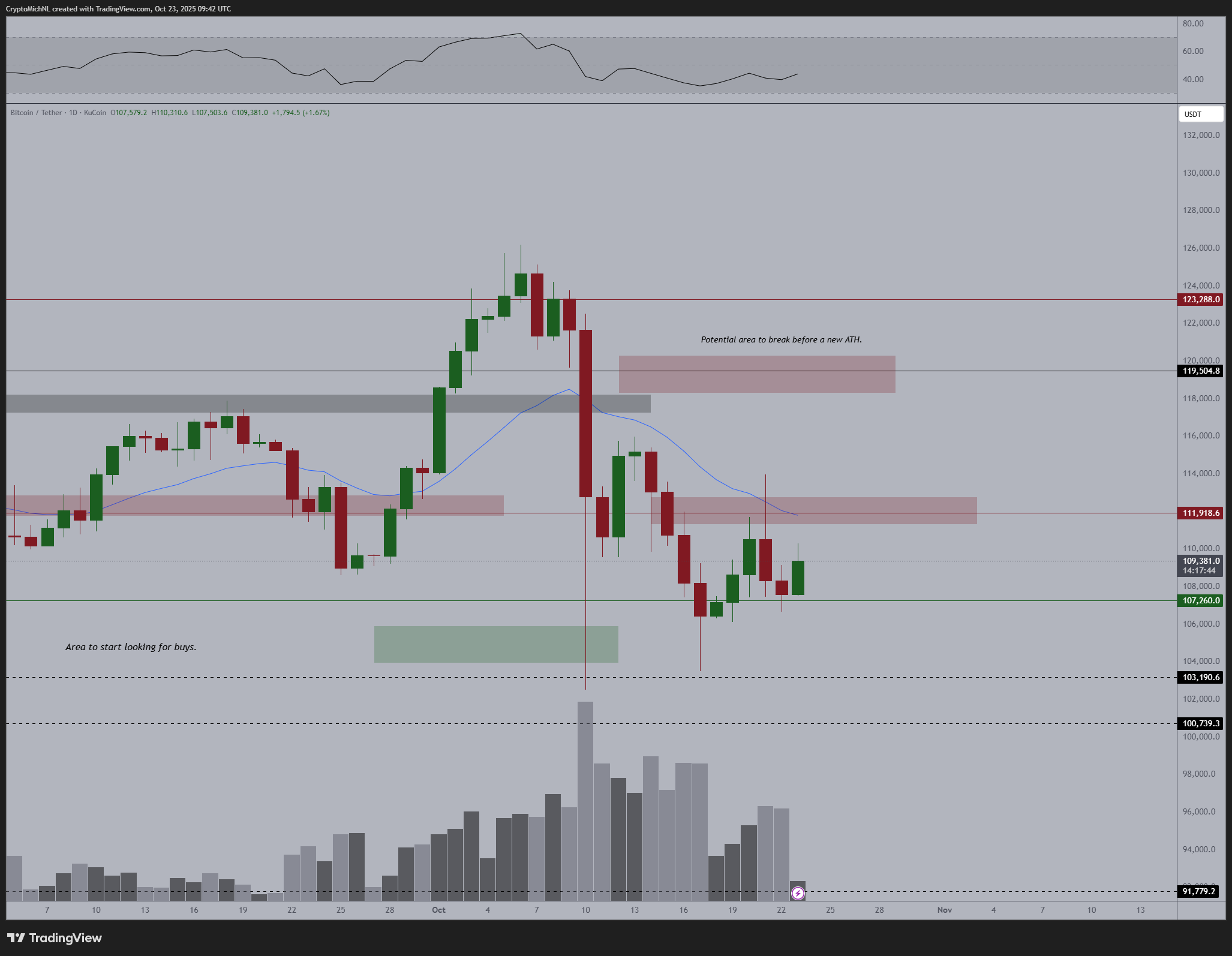
After bouncing back from the sharp Oct. 10 crash that drove prices below $110,000, the token has faced steady resistance. It now trades at about $108,900, down 4.52% this month. However, new reports suggest that market conditions could soon move in Bitcoin’s favor.

According to Bloomberg, JPMorgan strategists believe the U.S. Federal Reserve might end its ongoing quantitative tightening program as soon as next week during the October Federal Open Market Committee (FOMC) meeting. 

The bank said in a Wednesday note that tight funding conditions could push the Fed to stop reducing its balance sheet and begin temporary open market operations to ease short-term liquidity stress, especially around settlement dates and year-end funding pressure.

Interestingly, Reuters also reported three days back that several Wall Street analysts from Wrightson ICAP, Evercore ISI, and Jefferies also expect the Fed to end QT by the end of this month.

What is Quantitative Tightening?

For the uninitiated, quantitative tightening, or QT, is a monetary policy the Federal Reserve uses to drain excess liquidity from the economy. Notably, the central bank allows Treasury securities and mortgage-backed securities to mature without reinvesting the proceeds, which gradually reduces its balance sheet. 

This approach is the opposite of quantitative easing (QE), where the Fed buys assets to pump money into the system and encourage growth. QT typically pushes long-term interest rates higher, makes borrowing more expensive, and slows inflation by limiting funds available for lending and investment.

The Fed began the current QT in June 2022 to roll back the massive stimulus measures from the pandemic, which had expanded its balance sheet to almost $9 trillion. Inflation had surged to 8% that year, the highest since 1991, and the central bank wanted to cool the economy without shocking markets.

At the start, the Fed capped QT at $60 billion a month in Treasuries and $35 billion in mortgage-backed securities. However, by 2024, it cut the Treasury cap to $25 billion a month, and by March 2025, it dropped it further to $5 billion while keeping mortgage reductions steady at $35 billion. 

The program has already trimmed more than $2.2 trillion from the balance sheet, which now sits at about $6.6 trillion. Interestingly, Fed Chair Jerome Powell recently said the end of QT is “nearing” due to signs of liquidity strain in repo and money markets.

How Bitcoin Could React to the End of QT

If the Fed stops QT, it will pause the steady drain of liquidity from the financial system, leading to a looser policy stance. This would boost the amount of money available for investment, push Treasury yields lower, and increase investors’ appetite for risk. These are all conditions that usually favor Bitcoin.

Importantly, history supports this. During the Fed’s QE phase between 2020 and 2021, Bitcoin soared from roughly $7,000 to about $69,000.

Nonetheless, when QT began in 2022, the token slumped from $47,000 to $15,000 as liquidity tightened. Analysts now believe that an end to QT could spark fresh inflows into Bitcoin and potentially help the asset climb beyond multiple resistance levels.

For instance, market veteran Michaël van de Poppe pointed out that Bitcoin has moved sideways between $100,000 and $120,000 for nearly six months, suggesting a major breakout could be on the horizon. 

Bitcoin 1D Chart Michael van de Poppe
Bitcoin 1D Chart | Michael van de Poppe

He expects that the upcoming FOMC meeting, possible rate cuts, and changes in monetary policy could trigger Bitcoin’s next big move. Van de Poppe also noted that Bitcoin at $110,000 today looks cheaper compared to when it traded at $69,000 in 2021, while rates were near zero. According to him, a move toward lower rates would likely drive a strong upward impulse.

Expert Says XRP ETFs Are Not Priced In, Not at All

0

XRP community figure Zach Rector has expressed confidence that the market has not yet priced in the impact of the XRP ETFs.

His statement highlights the belief that the market has yet to fully recognize the potential impact of upcoming spot XRP exchange-traded funds (ETFs), which are now edging closer to approval. Moreover, it suggests that news of an approval could still impact the XRP price.

XRP Price as ETFs Near Final Approval

XRP has shown discouraging price action over the past few weeks, even as Ripple makes big announcements about billion-dollar acquisitions. Trading at $2.41, the coin is down 16% over the last 30 days.

Until now, market watchers have had their eyes on ETF approvals to turn things around. However, optimism has diminished following recent political events in the United States. As a result, Rector argued, “XRP ETFs are not priced in. Not at all.”

Notably, recent developments show that multiple major asset managers, including Grayscale and Franklin Templeton, have filed their final S-1 amendments for spot XRP ETFs.

These filings, many of which now include ticker symbols like GXRP and XRPZ, signal that the products are nearly ready for launch once the U.S. SEC resumes full operations. ETF analyst Nate Geraci earlier described these filings as a clear sign that “we’re getting close.”

However, the ongoing U.S. government shutdown has slowed progress. With the SEC operating on a limited basis, they have temporarily paused decisions on several ETF filings. In effect, this extends the timeline for official approval and trading debut.

Shutdown Delays, But Momentum Builds

While the shutdown has put regulatory timelines on hold, analysts agree that it hasn’t dampened enthusiasm.

Pro-XRP lawyer John Deaton recently pointed to “XRP’s cheap price,” implying that the current price lull could represent an opportunity before institutional demand floods in.

According to Santiment data, institutional wallets have accumulated nearly 30 million XRP this week. This signals quiet confidence from bigger players preparing for ETF-driven inflows.

Retail Investors May Still Be Early

Rector’s view that XRP ETFs are “not priced in” mirrors the sentiment of many in the community who see current prices as undervalued. XRP is trading at around $2.40, well below its projected post-ETF targets.

Analyst estimates suggest that once spot XRP ETFs go live, institutional investments could reach between $5 billion and $8 billion in the first year, similar to the surge that followed Bitcoin ETF approvals.

These expectations are fueling the belief that XRP could rally toward double-digit territory. In particular, some forecasts suggest prices could rise to $50 after the ETF’s debut and as liquidity deepens.

When Approval?

According to software engineer Vincent Van Code, a prominent figure in the XRP community, ETF approvals will not happen during the government shutdown. He argued that even after the government reopens, it could take another four weeks before any decisions come up.

In his view, ETF approvals will likely face delays until late November or December.

SEC Docs Confirm Ripple Will Hand Over 126,791,458 XRP to Be Locked and Traded for Company Shares

0

Ripple will hand over 126,791,458 XRP, according to details from a recent SEC filing about its role in the Evernorth Holdings deal.

XRP community figure Chad Steingraber called attention to this development in a tweet on Wednesday. 

Per the filing, the XRP tokens, worth approximately $305 million today, will be locked and exchanged for company shares as part of Ripple’s investment in the Evernorth–Armada Acquisition Corp. II merger. 

According to Steingraber, this action marks what could be a continuing pattern of Ripple leveraging XRP for strategic partnerships and equity exchanges.

Specifically, he suggested that this trend is only beginning, adding that it is “going to continue with other companies… and governments until it’s gone. Forever.”

Steingraber is speculating that XRP’s publicly available supply could diminish as the trend develops, potentially creating a supply shock that impacts price over the long term.

XRP as a Strategic Asset in Ripple’s Expansion

Meanwhile, the move suggests that Ripple is intensifying its efforts to connect with corporate and institutional partners through tokenized equity deals.

Ripple strengthens relationships with key ventures like Evernorth by converting XRP into company shares. At the same time, it is also reducing XRP’s circulating supply, an effect that could influence its long-term value.

This approach is not new. Ripple has previously used XRP for investments and acquisitions, including its stake in Tranglo and other fintech projects that enhance the XRP Ledger’s role in cross-border payments. Moreover, Ripple’s chairman has also pledged 50 million XRP as his investment in Evernorth.

Recent developments, such as GTreasury’s partnership with Ripple, further illustrate the company’s push into enterprise liquidity solutions where XRP serves a key role.

Overall, this strategy supports Ripple’s goal of making XRP a core component of global value exchange beyond payments, but also for treasury management, settlement, and tokenized assets.

Community Reactions

Within the XRP community, the revelation has sparked discussions about the potential deflationary impact of locking large amounts of XRP.

Many believe that as Ripple continues to form similar partnerships with private firms and even government entities, the available supply of XRP could tighten significantly over time.

X user “Randon Man” commented that many people are overlooking the importance of these developments: 

“I don’t think they understand the groundwork and infrastructure Ripple has been building,” he said.

Another user, RESEDARAN, added:

“Wait until all the ETFs, reserves for transfers, and companies using XRP as treasury assets take their share. Once those tokens are out of circulation, there’ll be little left for speculation. When everything starts flowing through XRPL and RippleNet, and it’s going to be wonderful.”

community reactions
Community reactions

Essentially, community members view this as a long-term bullish sign that could drive XRP’s price higher over time.

Tesla Reports $80 Million Bitcoin Gains in Q3 2025

0

Elon Musk-led Tesla Inc. recorded an $80 million profit from its Bitcoin holdings in the third quarter of 2025.

The electric vehicle maker’s latest financial report, released on October 22, shows that the company benefited from the rising value of Bitcoin without trading any of its crypto assets.

According to the filing, Tesla continues to hold 11,509 Bitcoin, now valued at approximately $1.31 billion. This marks an $80 million increase from $1.23 billion in the previous quarter, driven solely by market appreciation rather than any new purchases.

Revised Accounting Rules Boost Reported Gains

Earlier this year, Tesla began applying fair-value accounting standards to its digital assets. These rules require companies to report cryptocurrencies at their current market prices rather than historical costs.

The accounting shift allowed Tesla to recognize the $80 million gain as “other income”. It also made the third quarter the company’s strongest period for Bitcoin-related revaluation since 2021.

No Change in Holdings Since 2022

Tesla’s current holdings position it as the world’s eleventh-largest corporate holder of Bitcoin. The automaker ranks below MicroStrategy, Galaxy Digital, and Block but above Hut 8 Mining and several smaller institutions.

Tesla has not added to or reduced its Bitcoin portfolio since early 2022. The company previously sold a small portion to test liquidity before classifying the cryptocurrency as a strategic treasury asset.

Despite price volatility in recent years, Tesla has maintained a steady stance on digital assets. Its management has repeatedly described Bitcoin as “a liquid alternative to cash,” underscoring a long-term approach to holding crypto on its balance sheet.

Rising Costs Weigh on Quarterly Profits

Beyond crypto gains, Tesla’s financial results showed mixed performance. Total revenue climbed to $25.18 billion, up from the same quarter last year. Automotive revenue rose 6% to $21.2 billion. 

However, net income dropped 37% year-on-year to $1.37 billion, or 39 cents per share. The company cited lower vehicle prices and a sharp rise in operating expenses as key factors.

Operating costs increased by more than 50%, driven by substantial investment in artificial intelligence and research projects. These expenditures led to a decline in overall profitability, despite an increase in revenue.

Long-Term Crypto Commitment Amid Market Recovery

The latest report marks Tesla’s second straight quarter of Bitcoin gains, reflecting a broader market recovery in 2025. The company’s consistent crypto position stands in contrast to its cautious approach toward new purchases. 

Tesla first entered the crypto market in February 2021, when it acquired $1.5 billion worth of Bitcoin. That move made it one of the earliest major U.S. corporations to hold digital assets on its balance sheet.

Related Developments: SpaceX Bitcoin Movement

Separately, a wallet linked to SpaceX, another company led by Elon Musk, transferred around $268 million in Bitcoin earlier this week. According to Arkham Intelligence, the transfers were made to two new addresses after a three-month pause. 

On-chain analyst Ai Yi suggested the transactions likely involved internal fund management rather than asset liquidation.

Expert Says ‘Dead and Sleep Coin’ Shiba Inu Always Moves Late, Predicts Price

0

The Shiba Inu consolidatory phase may be frustrating, but analysis suggests it always makes a late and impulsive bullish move to greater heights.

Analyst MMB Trader specifically mentioned this in his recent commentary, urging Shiba Inu enthusiasts to remain patient. He noted that this prolonged period of range-bound price action typically tests the patience of holders but insisted it often precedes an explosive move.

Indeed, Shiba Inu is becoming a risky bet for millions of holders, as its price has stalled for a long time. Despite maintaining its place as the second-largest meme coin by market cap, the token is down 52% year-to-date and 18% over the past 30 days.

However, he noted that the “dead and sleep coin” Shiba Inu will recover late. This suggests that while many have written out the token, it would stun them with a late rebound.

Technical Analysis Suggests Eventual Shiba Inu Breakout

Nonetheless, MMB Trader projected a most probable breakout to the upside. His Wednesday analysis spotlighted a continued trend within a multi-year descending trendline on higher timeframes and how its breakout would signal a trend shift for the token.

For perspective, the trendline started suppressing Shiba Inu’s price from its March 2024 peak price of $0.00004567. Since then, SHIB has trended below this neckline resistance. Recently, price volatility and trading volume have also reduced drastically, as activities around the Shiba Inu ecosystem continue their downward spiral.

Nonetheless, the commentary suggests that this sideways move is often a precursor to a massive directional move. The Shiba Inu prediction highlighted a possible breakout above the resistance trendline around $0.00001740, releasing energy for a rapid upward price action.

Shiba Inu Breakout | MMB Trader

He mentioned that a breakout and retest of the trendline would confirm the bullish reversal to the three targets he identified in his analysis.

Three Breakout Targets

Upon a successful retest, the analysis projected further upsides to the first target at $0.00003364. This 235% rally from the current price of $0.00001003 would take Shiba Inu slightly above its December 2024 high of $0.00003343.

The second target for Shiba Inu is a rally to $0.000055480, representing a 453% growth from the current price. Meanwhile, the final target for the breakout is a 670% price increase to $0.00007730.

Interestingly, MMBTrader has long shared this target for Shiba Inu, insisting it would come to fruition. In an earlier analysis, he noted that SHIB would soon start surprising us with 100% weekly candlesticks again, also citing the breakout as a catalyst for this full bullish charge.

Moreover, some market watchers also believe Shiba Inu could go even higher. Analyst Javon Marks predicted an implosive move to $0.000081 for SHIB amid a sustained price breakout.

Russia’s Finance Ministry and Central Bank Agree to Allow Crypto for Global Settlements

0

After years of hesitation, Russia is taking a cautious yet significant step toward recognizing cryptocurrency, but only for international trade.

On Tuesday, Finance Minister Anton Siluanov confirmed that Russia’s Finance Ministry and the Central Bank of Russia (CBR) have reached an agreement to legalize digital assets for cross-border transactions.

Siluanov described the initiative as a practical response to ongoing financial constraints. He stated that the government aims to introduce clear regulations ensuring “order in this sector”, with oversight from Rosfinmonitoring and other control bodies.

The announcement follows the successful launch of the Experimental Legal Regime (ELR) in September 2025. The pilot tested the use of cryptocurrencies in international settlements and was deemed effective by Russian authorities.

Building on that result, Moscow plans to establish a permanent legal framework for cryptocurrencies in global trade.

Sanctions Push Russia Toward Digital Alternatives

Since 2022, Russia has faced sweeping Western sanctions that cut access to major payment networks, such as SWIFT. Moreover, the country’s use of U.S. dollars and euros has also been severely limited.

These restrictions have forced Moscow to explore alternative financial tools to sustain international trade. Crypto’s borderless and decentralized nature offers a potential workaround for trade settlements, especially with friendly or sanctioned nations.

Therefore, legalizing crypto for foreign transactions could help Russia preserve trade flows across key sectors such as energy and commodities.

From Rejection to Regulation

Russia’s approach to cryptocurrency has undergone considerable change over the past five years.

In 2020, the government passed the “On Digital Financial Assets” law, which banned cryptocurrencies as legal tender and restricted their domestic use.

Between 2022 and 2023, the Finance Ministry and CBR agreed to allow crypto for cross-border trade in limited cases. 

By July 2024, lawmakers had approved a bill enabling businesses to settle foreign transactions using digital currencies. Further developments followed: 

  • March 2025: President Vladimir Putin authorized a three-year ELR for qualified investors to trade crypto. 
  • April 2025: The state launched a crypto exchange limited to “super-qualified investors.” 
  • September 2025: The foreign trade pilot has begun, testing crypto transactions across international borders.

The success of this pilot has now led to plans for a formal legal framework governing crypto in international trade.

CBR: Stability Comes First

CBR Governor Elvira Nabiullina has clarified that the goal is to integrate crypto carefully without undermining the ruble’s stability. 

Under the upcoming regulations, only approved entities will be allowed to use cryptocurrencies for trade. Meanwhile, retail transactions and domestic crypto payments will remain prohibited.

Additionally, the new framework is expected to include strict oversight and compliance rules to prevent misuse or capital flight.

A Practical, Not Ideological, Turn

Analysts note that this shift reflects necessity, not enthusiasm. Russia aims to employ cryptocurrency as a trade instrument, rather than as a replacement for national currencies or banking systems.

By controlling access and use, the government aims to benefit from the flexibility of cryptocurrency while minimizing its speculative risks.

If successful, Russia could become the first major economy to adopt a state-regulated model for cross-border crypto trade. This approach may serve as a blueprint for other nations facing similar sanctions or financial barriers.

Here’s How Much Cardano You Need to Hold to Make $1M If ADA Reaches $10

0

Becoming a millionaire in USD through crypto investments remains a major aspiration for many everyday investors, including Cardano holders.

Despite the recent market downturn, many investors remain optimistic, hoping to make their first million through crypto assets like Cardano. With this in mind, we’ve analyzed how many ADA tokens market participants would need to hold to earn $1 million if Cardano’s price hits $10.

Cardano Drops Amid Major Sell-Off

The recent downturn has left many Cardano investors puzzled, as ADA’s price has shown extreme volatility. Earlier this month, ADA fluctuated between $0.89 and $0.33 within a single week.

Despite rebounding from the $0.33 low to $0.6403, it is still down 24% this year and 51.49% from the $1.32 it reached in December 2024. This downturn resulted from the intense selling pressure Cardano experienced during the October 10 market crash.

Popular market analyst Ali Martinez reported that whales, particularly large investors holding 100 million to 1 billion ADA, collectively sold 350 million tokens in one week.

$10 Prediction

While Cardano’s pullback is worrisome, many consider it an opportunity to buy the tokens at discounted prices in anticipation of a potential rally to ambitious targets, like $10.

The $10 prediction is not new to Cardano enthusiasts, as many experts have predicted the token’s potential surge to that level.

In July, community figure Dan Gambardello argued that the $10 price is a realistic target following his engagement with an AI model, Zero.

Stake pool operator Ssebi also predicted that ADA could be on the verge of a rally toward $10, citing increasing institutional adoption and the emergence of Bitcoin DeFi on Cardano among the five key catalysts.

Additionally, renowned crypto YouTuber ‘The Modern Investor’ suggested that Cardano could reach the $10 mark during a strong altcoin season.

How Much ADA to Make $1 Million at $10?

ADA would need to rally 1,461% from its current price of $0.6403 to reach $10. Such a surge would lift its market capitalization to approximately $358.6 billion. To make $1 million at that price level, investors would need to hold 100,000 ADA.

At the current price of $0.6403, these 100,000 tokens can be purchased for roughly $64,030. For context, those who bought the same amount on December 3, when ADA traded at $1.32, would have spent around $132,000.

Nonetheless, holding 100,000 ADA would yield $1 million if the price ever hits $10. While analysts frame $10 as a realistic milestone, there is no guarantee ADA will reach this level anytime soon.

Accordingly to Changelly’s Cardano price prediction, the coin may reach $10 by December 2031.

‘This Is Insane, I’m Super Bullish on XRP Now, More Than ETF,’ Says Top Engineer

0

XRP-focused software engineer Vincent Van Code says he has found new reasons to be bullish on XRP.

In a tweet, he shared fresh insights into why institutional adoption of XRP may be progressing slower than expected. This comes amid major developments in the ecosystem, such as Evernorth.

Van Code suggested that large firms face significant operational and compliance hurdles when attempting to directly hold XRP. According to him, major corporations can’t simply “set up a Ledger or Xumm wallet and drop $100 million in there.”

He said institutional investors require custody solutions, auditing frameworks, and regulatory compliance, which can cost as much as $300,000 per year just to maintain.

XRP Exposure Likely Through ETFs and Equity Routes

Van Code believes these challenges make XRP-backed investment vehicles, such as ETFs or public companies that hold XRP, the most practical way for institutions to gain exposure.

The analysis adds new weight to the argument surrounding the usefulness of XRP exchange-traded funds (ETFs). Many in the community already see ETFs as the next major catalyst for institutional entry into the XRP ecosystem.

Notably, seven applications for XRP ETFs are currently pending SEC decisions. However, due to the ongoing U.S. government shutdown, the filings remain on hold.

Meanwhile, announcements regarding the establishment of XRP treasuries continue to surface, with the biggest so far coming from Evernorth.

Evernorth’s Role in the Bigger Picture

Evernorth, a new venture supported by Ripple, is viewed by many as part of Ripple’s broader institutional liquidity network. The firm plans to purchase $1 billion worth of XRP to create the world’s largest institutional XRP treasury.

It will launch with over 560 million XRP after securing $1.1 billion in committed capital from participants including Ripple and SBI Holdings.

While the immediate effect of this announcement on XRP’s price has been minimal, Van Code’s comments suggest that the long-term implications could be profound. He concluded his post by expressing renewed optimism:

“This is insane. I’m super bullish now, more than ever, on ETFs and Evernorth.”

Notably, Evernorth is currently pursuing a merger set to close in Q1 2026, with XRP purchases to occur within 10 days of funding.

Ultimately, as Ripple continues to build partnerships and infrastructure through projects like Evernorth, alongside the anticipated launch of XRP ETFs, analysts believe institutions will have more accessible and compliant avenues to enter the XRP ecosystem through regulated financial products.

For the XRP Army, this signals a more mature stage of adoption where institutions can invest in XRP securely and compliantly without having to hold the token directly.