

Home Blog Page 502

VanEck Files for Lido Staked Ethereum ETF in Delaware

0

Global asset manager VanEck has officially filed for a Lido Staked Ethereum exchange-traded fund (ETF) in Delaware.

The move signals its ambition to bring Ethereum staking to a broader investor base. The filing represents an early but essential step toward mainstreaming staking products in regulated markets.

Strategic First Step in Delaware

To begin with, VanEck registered the fund in Delaware as a statutory trust, designating CSC Delaware Trust Company as its agent. Delaware has long been the jurisdiction of choice for ETF filings due to its favorable trust laws and streamlined legal framework. 

Although this registration does not guarantee approval from the U.S. Securities and Exchange Commission (SEC), it clearly indicates VanEck’s intent to expand beyond its existing crypto ETFs. 

Typically, asset managers file in Delaware first before advancing to the SEC approval stage, which ultimately determines whether the fund can be launched.

Following this development, Lido DAO’s native token (LDO) surged 3.4% to $1.24, extending an impressive 17% rally over the past week.

Why Lido’s Liquid Staking Model Stands Out

Ethereum’s proof-of-stake mechanism allows investors to earn rewards by locking up ETH to secure the network. Nevertheless, traditional staking requires coins to remain locked, restricting liquidity.

Lido addresses this problem through liquid staking, issuing stETH tokens that represent staked ETH while remaining tradeable. Consequently, investors can participate in staking without sacrificing flexibility.

By linking its ETF to Lido’s liquid staking model, VanEck is effectively lowering the barrier to entry. Investors, particularly institutions unfamiliar with blockchain mechanics, can now access staking yields in a familiar ETF wrapper, without managing validators or navigating complex protocols.

Growing Competition Among Asset Managers

Meanwhile, VanEck’s filing highlights its bid to gain an edge over traditional finance rivals. With BlackRock and Fidelity viewed as likely entrants into staking-linked ETFs, VanEck is positioning itself to be an early frontrunner.

With success in spot Bitcoin and Ethereum ETFs, which have attracted strong inflows, VanEck is leveraging its track record to act quickly in staking ETFs.

Regulatory Environment Shifts in Favor

In August 2025, the SEC clarified that certain liquid staking activities may not require securities registration, a decision widely seen as supportive for future staking products.

Shortly after, it approved a rule change allowing Grayscale’s Ethereum ETFs to operate under streamlined generic listing standards, marking a regulatory milestone for Ethereum-based investment vehicles.

Together, these developments suggest that VanEck’s filing may find a more receptive environment than in earlier years, when staking-related proposals faced heavy regulatory uncertainty

Lido DAO Prepares for Next Phase of Expansion

Meanwhile, Lido DAO has been fortifying its ecosystem. In September 2025, the DAO approved a buyback framework to support token value and reduce supply.

Specifically, the program allocates up to 70% of new inflows to token repurchases. However, safeguards ensure buybacks are suspended if reserves fall below $50 million. A test phase is scheduled to begin in December.

Additionally, Lido is actively expanding across Layer-2 networks such as Linea, while also exploring restaking opportunities and validator decentralization.
Researcher Says Thinking SWIFT Is an XRP Killer Is Hilarious

0

A widely followed XRP researcher has dismissed claims that SWIFT’s new blockchain ledger threatens XRP.

The view argues that the token’s value extends far beyond simply competing with banks. For context, global payments giant SWIFT unveiled plans earlier this week for a blockchain-based shared ledger backed by more than 30 major banks, including JPMorgan and Santander.

The initiative, developed in collaboration with Consensys, aims to create a real-time transaction log that can interoperate with both fiat and digital assets.

This development immediately reignited discussions within the crypto community, with critics suggesting the announcement marked the collapse of XRP’s long-standing narrative that it would one day replace SWIFT.

XRP Researcher Pushes Back

While some commentators were quick to declare that SWIFT had “destroyed” the XRP thesis, XRP researcher Anderson dismissed the idea. In a tweet, he wrote that thinking SWIFT is an “XRP killer” is hilarious.

His remarks reflect the view among XRP supporters that Ripple’s vision was never limited to direct competition with SWIFT. Instead, it included building liquidity solutions, remittance rails, and broader ecosystem use cases.

Why XRP Doesn’t Need to Replace SWIFT

Analysts argue that XRP’s value proposition extends far beyond replacing SWIFT’s infrastructure. These are some of the areas the token shines:

Retail Remittances: XRP is already used in migrant-heavy markets such as the Philippines and Mexico to reduce settlement times and costs. Platforms like goLance have confirmed they use XRP for freelancer payments in underserved markets.

Corporate Solutions: Small and mid-sized firms rely on efficient cross-border settlement. For instance, Japan’s SBI has already rolled out XRP-based remittances across Southeast Asia.

XRPL Ecosystem: The growth of decentralized exchanges, automated market makers, DeFi staking, and tokenization on the XRPL continues to expand XRP’s utility, regardless of bank adoption.

Digital Economy: XRP’s low fees and fast speeds make it a good fit for things like streaming, gaming, and smart devices that need quick, small payments.

Essentially, while Ripple executives have long positioned XRP as a faster and cheaper alternative to SWIFT, that narrative now faces headwinds due to SWIFT’s new blockchain ambitions. Yet, XRP’s alternative paths may prove just as significant.

As transaction fees gradually burn supply and the XRPL ecosystem grows, XRP continues to thrive in areas where traditional banking systems remain slow or costly.

Community Reactions

Meanwhile, community members responding to Anderson’s post also shared their perspectives. One commenter argued that the truly laughable claim was XRP’s original ambition of becoming a “SWIFT killer.”

This view resonated with many who believe XRP holders were misled into thinking it would replace traditional banks.

Critics said this belief was both unrealistic and overconfident, pointing out that major banks wouldn’t simply hand over control to a new player. Instead, they could improve their own systems or create their own blockchains to achieve faster transactions.

Expert Predicts Bitcoin Will Top in 2025 Despite 2020 Similarity

0

A prominent market commentator has shared an unpopular opinion on the likely timeline for Bitcoin to reach its cycle top.

Into The Cryptoverse founder and CEO Benjamin Cowen specifically stated this in his post early Friday. The top market analyst believes that despite Bitcoin closely following its 2020 price action, it is unlikely to extend its bullish run beyond this year.

Bitcoin Mirrors September 2020 Rally

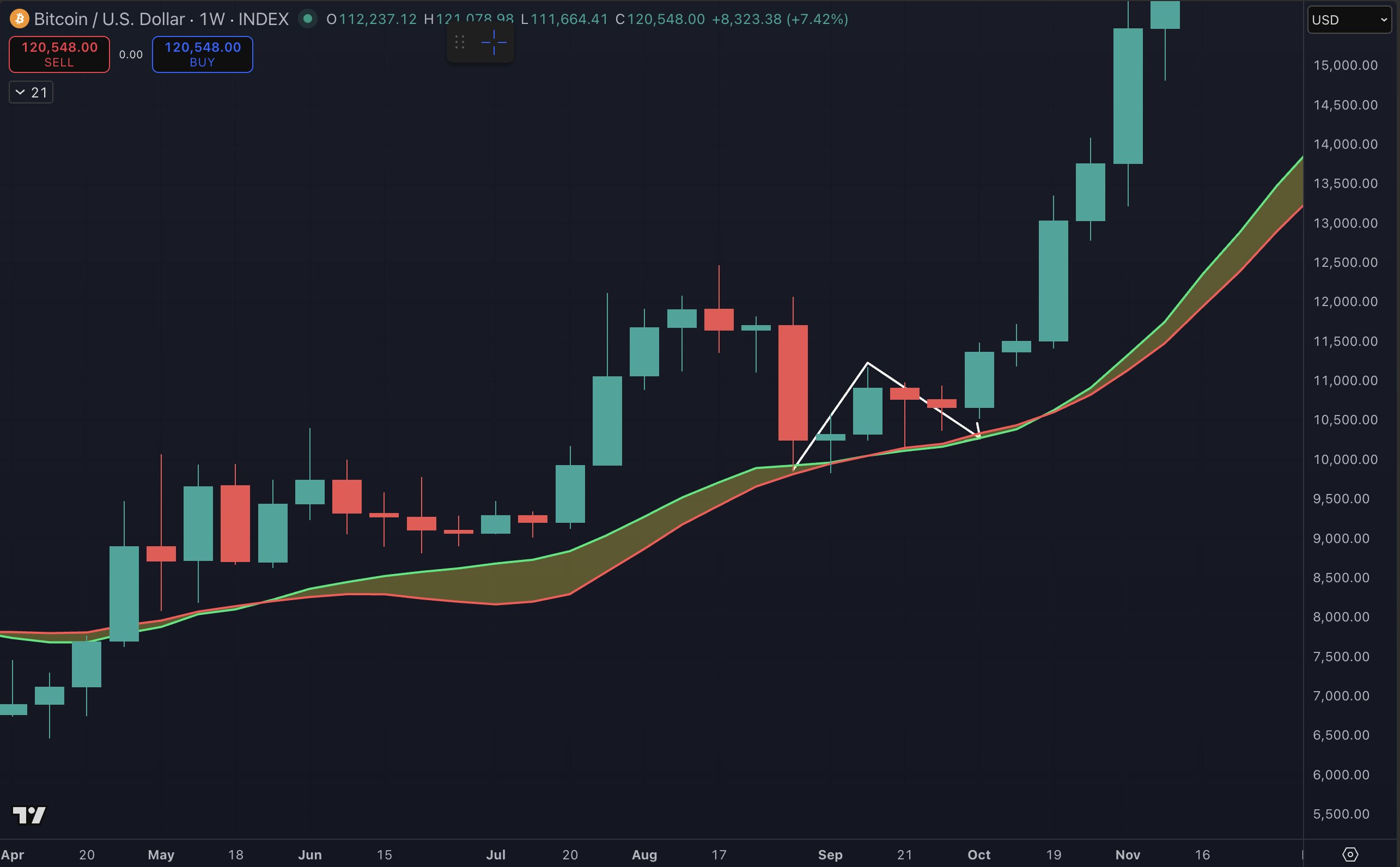
Cowen highlighted an identical price development between Bitcoin’s rally in September 2020 and last month. He noted that Bitcoin held the bull market support band throughout September, just as it did five years prior. This entailed two weeks of price growth followed by two weeks of a sideways price trend.

Bitcoin Holding the Bull Market Support Band in 2020

Interestingly, Bitcoin closed September 2020 down 7.5%, compared to the 5.30% growth it experienced last month. Nonetheless, their close relation with respect to weekly price action and trend around the bull market support band sets the pace for Bitcoin to reach new highs, as seen in 2020.

For context, BTC rallied by 168% from its September 2020 closing price of $10,779 to $28,980 in December 2020. Cowen expects a similar rally, predicting new all-time highs before the end of the year.

Bitcoin Will Reach Cycle Top in 2025

Despite the bullish outlook, Cowen believes Bitcoin will reach its cycle top this year. He has repeatedly shared this sentiment but reiterated his stance today, although he highlighted that Bitcoin was mirroring a 2020 run.

Notably, 2020 was the penultimate year in the past bull cycle. After closing the year at around $29,000, Bitcoin went on to rally to $69,000 in November 2021, marking the cycle’s top.

However, the crypto founder believes Bitcoin will not extend its bullish run to next year. He expects Bitcoin to follow its historical cycle pattern and top sometime in the fourth quarter of 2025.

Conflicting Sentiment

Meanwhile, several market analysts disagree with the predictions that Bitcoin will top this year. CryptoQuant CEO Ki Young Ju stated that the four-year cycle is dead, predicting that Bitcoin would continue to rally in 2026.

Market strategist Raoul Pal believes so too, calling this cycle a “business cycle.” He suggested an extended bull market, which will potentially peak in the second quarter of 2026.

Other prominent voices, such as Bitwise CIO Matt Hougan, Binance co-founder Changpeng Zhao, and Strategy executive chairman Michael Saylor, also share similar sentiments on the length of the current bull cycle.

Shiba Inu Developers Release Update on Shibarium Bridge Recovery

0

The Shiba Inu development team has announced the restoration of Shibarium following a major bridge exploit. 

After a nonstop, ten-day effort, the team successfully recovered assets, implemented stricter security controls, and introduced new preventive measures.

Shibarium Hack Contained and Integrity Restored

The Shiba Inu blockchain recently faced one of its most severe challenges when attackers targeted the Shibarium Bridge.

In a detailed update, lead developer Kaal Dhairya confirmed that the incident has been contained, assets safeguarded, and the network reinforced.

According to the team, the exploit was executed through three fake checkpoints submitted to Shibarium’s Ethereum contracts. This manipulation disrupted communication between Heimdall’s local state and its on-chain state, intentionally halting the system. 

Moreover, the attacker staked 4.6 million BONE tokens in an attempt to influence validator thresholds. Taken together, this combination of checkpoint manipulation and stake amplification posed a critical risk that demanded immediate intervention.

Nonstop Work Across Ten Days

In response, the Shiba Inu core team and external partners worked tirelessly for over ten days. Dhairya noted that developers operated late nights, weekends, and even through holidays to eliminate risks and restore security.

To manage the crisis effectively, the team divided the response into overlapping workstreams. Cybersecurity firm Hexens.io was brought in as an independent reviewer to mirror the team’s testing and sign off on each fix.

Furthermore, multiple daily standups, emergency syncs, and continuous log reviews ensured that no detail went unchecked.

Importantly, responsibilities were separated across distinct owners. Infrastructure, validator operations, test networks, and monitoring were all handled independently to minimize points of failure. This way, the structure allowed parallel progress while maintaining rigorous oversight.

Shiba Inu Security Reinforcements and Hardening Measures

Following containment, the team introduced several measures to harden Shibarium against future attacks. 

First, over 100 critical contracts across Shibarium, ShibaSwap, and the Shiba Inu Metaverse were migrated to secured multi-signature wallets. This step ensured that no single entity could control mission-critical assets.

Second, all validator signing keys were rotated. By replacing keys tied to the compromised state, developers introduced stronger custody rules and isolated the network from prior exposure.

Finally, a blacklist feature was added to staking operations. This mechanism enables the system to immediately block malicious addresses from staking, unstaking, withdrawing rewards, or re-bonding funds. Before deployment, each of these enhancements was rehearsed extensively on Devnet and Puppynet before being applied to Mainnet.

Recovery of 4.6 Million BONE Tokens

One of the most notable outcomes of the recovery effort was the rescue of 4.6 million BONE tokens linked to the attacker. Because the tokens were staked through a contract rather than an external wallet, the team designed a targeted recovery method.

Through the StakeManager, developers executed new procedures that corrected legacy unbonding data and restored ledger integrity. As a result, the malicious delegation was removed and the tokens secured.

At the same time, the withdrawal delay was extended from one checkpoint to approximately 30 checkpoints, around 24 hours. This change ensures the team has sufficient time to detect unusual activity before withdrawals are finalized, providing an important new layer of defense.

Checkpoint System Repaired

The fake checkpoint injection that initially triggered Heimdall’s halt required careful correction. Developers repaired the disrupted pointer and validated the fix through a structured, three-stage process. Specifically, the process began in Devnet, moved through Puppynet, and finally deployed to Mainnet. Consequently, the repair ensured checkpointing could resume safely.

With this process complete, Shibarium’s checkpoint system has returned to normal operations without further issues.

No Bounty Contract for Attacker

Initially, the Shiba Inu developers considered negotiating with the attacker and even extended a public offer for discussion. However, after receiving no response and observing that stolen assets were already being moved and sold, the team chose not to pursue this path.

As Dhairya explained, deploying a bounty contract would have created additional operational complexity and new risks. Instead, all energy was directed toward defense, asset recovery, and long-term network security.

Future SHIB Roadmap and User Protection

Looking ahead, the Shiba Inu team has laid out a cautious roadmap for restoring bridge functionality. A blacklist mechanism will soon be added to the Plasma Bridge, allowing the system to proactively block malicious addresses from initiating transactions. Once this safeguard is in place, full Plasma Bridge functionality will gradually return.

Moreover, the team is developing a plan to make sure affected users are fairly compensated. This process will include phased withdrawals, strict transaction limits, and close coordination with partners.

Importantly, developers stressed that timelines will only be communicated when it is safe to do so, avoiding over-promises and protecting sensitive operations.

Infrastructure Partnership and Documentation Overhaul

Beyond immediate recovery, Shibarium is building long-term resilience through infrastructure improvements. The team has partnered with dRPC.org to consolidate RPC services under a unified endpoint: rpc.shibarium.shib.io. This change, in turn, is expected to enhance reliability and streamline developer access.

Furthermore, the project is carrying out a comprehensive documentation update. By simplifying node setup and validator instructions, the team aims to encourage broader participation while raising the security baseline across the ecosystem.

Cardano Founder Reveals Why U.S. Government Is Planning to Hold ADA in Stockpile

0

Charles Hoskinson highlights key features that prompted the United States government to add Cardano (ADA) to its digital asset stockpile initiative. 

He revealed this while weighing in on the ongoing debate about whether Cardano should be considered sound money, following the U.S. government’s decision to include it in its digital asset stockpile. 

For context, the Trump administration announced plans to establish a Strategic Bitcoin Reserve (SBR) alongside a broader digital asset stockpile in March.

While the reserve will exclusively hold Bitcoin, the stockpile is set to feature several cryptocurrencies, including ADA. Since the announcement, critics have questioned ADA’s inclusion, arguing over whether it truly qualifies as sound money. 

Hoskinson Highlights Why US Government and Institutions Like ADA 

Reacting, Hoskinson drew parallels between Cardano and Bitcoin, arguing that both operate under a deflationary model. Moreover, he argued that Cardano’s strength lies in the resilience of its ecosystem. 

Specifically, Hoskinson emphasized that Cardano is fully decentralized, boasting millions of users globally. According to him, the blockchain has been operating continuously for eight years, running 24/7 without experiencing downtime or a single security breach. 

He noted that this level of stability is what prompted the United States government to include ADA among the cryptos it intends to hold in its digital asset stockpile. 

In addition, Hoskinson believes that these qualities also appeal to major institutional players, who increasingly view Cardano as one of the blue-chip assets in the crypto industry. 

Mechanism for Cardano Adoption Remains Unclear 

While the U.S. government has confirmed plans to include Cardano in its forthcoming digital asset stockpile, the exact mechanism for doing so remains unclear. 

According to an executive order, the reserve will be established using assets obtained through civil or criminal forfeitures, rather than new acquisition via taxpayer funds. 

Data from Arkham Intelligence indicates that the blockchain wallet linked to the U.S. government currently holds more than $24.64 billion in seized cryptocurrencies. However, ADA is not among these holdings. 

Meanwhile, the address contains over $360 million worth of stablecoins, prompting speculation that the government could convert a portion of these funds into ADA. However, it remains uncertain whether the United States will adopt this mechanism.  

Crypto Veteran Says Shiba Inu Doesn’t Look Bad Here While Dogecoin Is Already Pumping

0

Top market analyst Crypto Bullet has urged exposure to Shiba Inu at its current level before it starts pumping like Dogecoin is doing.

The self-proclaimed crypto veteran claims that Shiba Inu does not look bad at its current level, suggesting it is a good entry point. This is contrary to meme leader Dogecoin, which he highlighted is already pumping.

Shiba Inu Screaming Buy at Current Levels

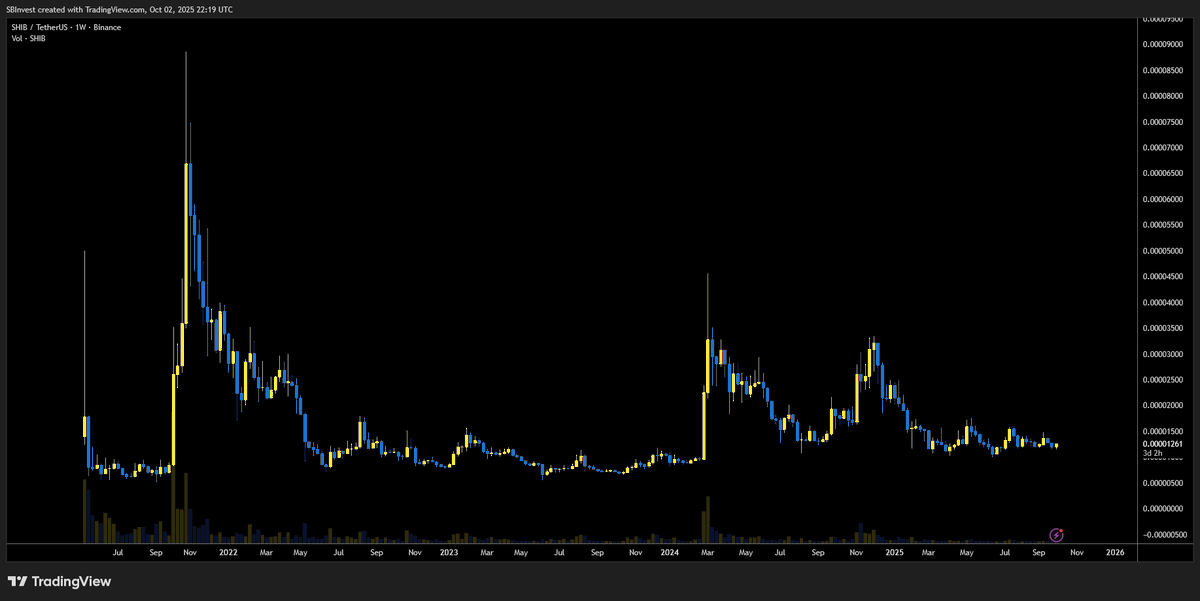
For context, Shiba Inu has been in an obvious consolidation, returning to its current base around the $0.000010 after each uptick. This pattern has continued after a retracement from its all-time high of $0.00008854 in 2021.

Shiba Inu Price Consolidation/Crypto Bullet

An analysis suggests that such accumulation may be a precursor to an uptick to unprecedented prices. However, the price of SHIB remains in its consolidatory phase, presenting a good opportunity to buy.

This contrasts Dogecoin, which is already rallying. Specifically, DOGE is on the rise, rebounding from its lows of around $0.1430 in June to the current price of $0.2580. The rally represents an 80.4% growth from the low, compared to the 24% increase from Shiba Inu’s low of $0.00001004 in June.

Also, in the short term, Shiba Inu continues to fall short of Dogecoin’s bullish trajectory. SHIB is up 7% over the past seven days, but DOGE has doubled that run with its 14% rally. The momentum difference becomes even more evident in the 30-day timeframe, as Dogecoin has increased by 19.6%, while Shiba Inu has posted a mere 1.21% rise.

As such, the analyst insinuated it is still early to buy Shiba Inu. With a better reward ratio, SHIB could benefit holders in the event of a breakout.

Shiba Inu Targets Upon Breakout

Interestingly, earlier Shiba Inu price predictions have shown the target price if the token breaks out of its current price consolidation. CryptoNuclear shared in his commentary that the meme coin could surge by 606% to $0.00008836.

MMBTrader also predicted that Shiba Inu could pump to $0.0000773 from the current support level. He shared that holding onto its current level or dropping to the support at $0.000006 is part of a potential bullish move before the 518% surge.

Several other analyses suggest a significant break from current Shiba Inu levels. YourPOP asserted a run to a new all-time high before the end of this year, expressing firm conviction that the move would be a reality.

“Tokenization Will Consume the Entire Financial System,” Says Robinhood CEO

0

Robinhood CEO Vlad Tenev has made a bold prediction that tokenization will reshape the foundations of global finance. 

Speaking at the Token2049 conference in Singapore, he compared the trend to a “freight train” that cannot be stopped. He added that, as a result, the line separating traditional finance and crypto will eventually disappear.

According to Tenev, the future of markets is one where assets of every kind, such as stocks, property, and even startup shares, exist on-chain and can be traded globally, 24/7.

Robinhood’s Tokenization Strategy

Robinhood has already begun experimenting with this vision. For instance, in Europe, the platform now allows investors to trade tokenized versions of U.S. stocks. Moreover, the company has taken steps to tokenize shares of private companies, including OpenAI, one of the most closely watched startups today.

Furthermore, Tenev argued that tokenized equities could serve the same role in global finance that stablecoins play in digital currency markets. Just as stablecoins have become the easiest way for non-U.S. users to access dollars, tokenized stocks could serve a similar purpose. In turn, they may emerge as the standard gateway to American equities for investors outside the U.S.

That is why, he explained, Robinhood chose to launch stock tokens in Europe first. For him, the model represents the future of how global markets will operate: continuous, borderless, and blockchain-based.

U.S. Faces Regulatory Lag

While the crypto industry has applauded some of the progress the United States has made in digital asset policy, Tenev believes the country remains far behind. By contrast, he stated that Europe is moving faster in establishing frameworks for tokenized trading.

To illustrate this point, he likened the situation to America’s lack of high-speed trains. In his view, the U.S. financial system functions well enough that policymakers feel no urgency to push for innovation. “Medium-speed trains get you there well enough,” he said, suggesting that this complacency will slow the shift toward 24/7 tokenized markets.

Real Estate: The Next Frontier

Robinhood’s ambitions extend beyond equities. In fact, Tenev said the company is preparing to bring real estate into the tokenized economy.

Mechanically, the process is not much different from tokenizing private companies like SpaceX or OpenAI. Assets are pooled into a structured entity, and tokens are then issued to represent ownership stakes. In light of this, property could be bought, sold, and traded with the same ease as a stock or a stablecoin.

However, the idea is not without controversy. OpenAI itself dismissed the move to tokenize its private shares as “unauthorized,” while legal experts have warned that such offerings exist in a gray area. Even so, Tenev downplayed these challenges, describing them as symptoms of regulatory lag rather than fundamental roadblocks.

A Market with Massive Growth Potential

The global market for tokenized assets is still relatively small, estimated at $32 billion, according to data from rwa.xyz. Nevertheless, the opportunity is enormous when compared to the size of traditional markets. The World Economic Forum estimated the global public stock market’s value to be more than $115 trillion in 2023. As of today, the market is over $130 trillion.

Therefore, Tenev believes that tokenization will steadily eat into this space, gradually expanding into multiple asset classes. Over time, he sees it becoming the backbone of the financial system.

“Eventually, it’s going to consume the entire system,” he said, stressing that the shift is not a question of if, but when.

Expect a Shiba Inu Pullback to Retest Breakout Before Next Rally: Top Analyst

0

Despite the broader market’s bullish momentum, Shiba Inu could pull back to retest its breakout point before the next uptrend phase.

Shiba Inu (SHIB) has climbed to the 21st spot in the cryptocurrency ranking by market cap, following its recent bullish push. The prominent meme coin has increased by over 5% in the past 24 hours, following a broader market trend.

Despite the glaring bullish momentum, analyst EhsanZeydabadi pinpointed a possible pullback in the price of Shiba Inu. He shared this in his recent TradingView post, highlighting potential levels to watch.

Shiba Inu to Retest Breakout Level

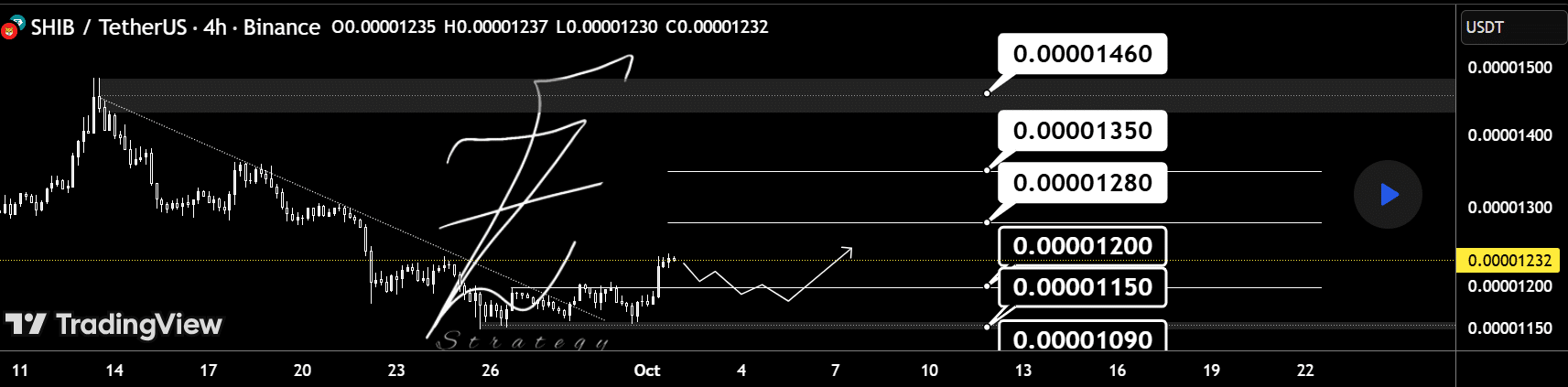
Meanwhile, the market commentator noted that Shiba Inu broke out of a descending resistance trendline on September 28 when it rallied to a high of $0.00001203. Shiba Inu has been trending below this supply line since the high of $0.00001484 on September 13, before the outburst on the 4-hour timeframe.

Following the breakout was the recent rally to an intraday high of $0.00001270 today. Meanwhile, Shiba Inu has yet to retest the structure breakout, and the market watcher expects the token to do so soon.

In his Shiba Inu price prediction, he asserted that SHIB would pull back to the breakout level, highlighted around $0.00001150 in an accompanying chart. This marks an 8.8% decrease from the current market price of $0.00001262.

Shiba Inu Analysis/EhsanZeydabadi

Bullish Targets After Retest

Notably, a successful retest will set Shiba Inu on the path for more upside. According to the market watcher’s analysis, the meme coin eyes higher targets, one of which is a push to $0.00001280.

The subsequent target is a 7% rally to $0.00001350 before reaching the final breakout target of $0.00001460. Remarkably, the 15.6% target lies close to September’s intramonth high, and a retest will pave the way for higher prices.

Shiba Inu Could Go Way Higher

Notably, commentators are now increasingly speculating on higher prices for Shiba Inu, particularly as October started on a high. This month has been widely known as bullish for the crypto market, and analysts expect Shiba Inu to join the fest.

Moreover, the drop in the amount of Shiba Inu on exchanges adds to this optimism. Exchange reserves for SHIB dropped to a 2-year low, signalling an accumulation sprint among market users, possibly to position themselves for the expected rally.

This, among other factors, fueled the conviction of Shiba Inu community figure YourPOP that the token will surpass $0.00008845 to reach a new all-time high before the end of the year.

Elon Musk’s $500B Wealth — Here’s XRP Price if Market Cap Matches It

0

How much would the XRP price need to grow for XRP’s market valuation to match billionaire Elon Musk’s $500 billion net worth?

According to a recent Forbes report, SpaceX Chief and X Owner Elon Musk recently became the first person alive to clinch a $500 billion net worth. The billionaire achieved this feat on Wednesday afternoon amid an impressive spike in Tesla shares, which added over $9 billion to his net worth.

Cryptocurrencies That Have Reached $500B Valuations

Interestingly, a comparison of Musk’s fortune with the crypto market provides a perspective on the scale of his wealth. Specifically, besides Bitcoin (BTC) and Ethereum (ETH), no other crypto asset has ever clinched the $500 billion mark in valuation. 

For context, Bitcoin first claimed a $500 billion market cap in December 2020 during the COVID-19 rally, as macroeconomic uncertainties triggered by the pandemic resulted in a mass entrance of investors who sought a safe haven. It collapsed below the $500 billion mark on the back of the Terra collapse in May 2022 but recovered it fully in October 2023.

Meanwhile, Ethereum first clinched the $500 billion market cap during the bull run in October 2021. However, it relinquished the valuation mark almost immediately and remained below it until its fortunes turned around two months ago. Today, Ethereum holds a market cap of $546 billion.

XRP Price if It Matches Elon Musk’s Wealth at $500B

Being the third-largest crypto asset in the market, XRP is naturally the next candidate to hit the $500 billion milestone. It bears mentioning that XRP’s peak valuation is $216.69 billion, a market cap it attained when its price soared to $3.66 in July 2025. 

Amid the price correction that occurred after this, XRP’s valuation slumped to a low of $160 billion in September but has since recovered to the current figure of $181.18 billion. With XRP currently featuring a circulating supply of 59.91 billion tokens, this market cap of $181.18 billion translates to a price of $3.02 per token.

However, with this same supply, we recently assessed how much the XRP price would need to grow for it to also claim the $500 billion valuation mark. Specifically, at a 59.91 billion circulating supply, XRP’s price must rise to $8.34 for the token to reach $500 billion in market cap. 

This would represent a 176.2% increase from XRP’s current price. Notably, such a rally remains within the realms of possibility for XRP, considering it spiked by a massive 283% in November 2024 alone and is up over 500% since then. Interestingly, market analyst Dark Defender is already predicting a possible XRP run to $8. 

Citibank Predicts Bitcoin to Hit $231K, Ethereum $7.5K in Months

0

Global banking giant Citibank has released new 12-month price targets for the world’s two largest cryptocurrencies — Bitcoin and Ethereum. 

In a fresh report, Citibank outlined a wide price range that reflects both bullish potential and downside risks in the crypto market. Under a 12-month bearish scenario, Citibank projects that Bitcoin could decline to $82,000, representing a 31% drop from its current price of $120,314.

However, the bank sets its 12-month base case target for Bitcoin at $181,000, marking a 51.7% increase from the current level. Interestingly, it forecasted that Bitcoin could skyrocket to an all-time high of $231,000 under bullish conditions. Based on the current price, this represents a 94% increase. 

For Ethereum (ETH), Citi’s forecast places the bear case at $2,000, with a base target of $5,400. Under favorable conditions, ETH could rally to $7,300, representing a 65.72% increase from its current price of $4,505. 

Factors Supporting Citi’s Predictions 

The 12-month horizon indicates that Citi expects the projection to be realized by October 2026. Citi emphasized that its latest forecast updates its earlier year-end targets of $132,000 for Bitcoin and $4,500 for Ethereum. The bank has now extended its outlook to a 12-month horizon.

The bank noted that its projections considered macroeconomic factors such as a stronger U.S. dollar and weaker gold prices, which could cap upside for Bitcoin in particular. At the same time, it highlighted ongoing institutional adoption and continued demand from investors as potential catalysts that could support long-term growth.

Meanwhile, Citi emphasized that it is more positive on Bitcoin compared to Ethereum. This is mainly because the premier asset has captured more institutional investments than any other cryptocurrency, including ETH. 

However, Citi noted there’s uncertainty in predicting Ethereum’s future prices because its ecosystem is still changing and it’s unclear how value will be distributed.

Image

2025 Bitcoin and Ethereum Price Predictions 

Citi’s forecast comes on the heels of a modest market rebound, with Bitcoin up 2.29% and Ethereum rising 2.58% over the past 24 hours. 

Meanwhile, optimism is building across the crypto market, with major financial institutions and stakeholders predicting that Bitcoin price could climb to between $200,000 and $250,000 by year’s end. Standard Chartered and Fundstrat’s Tom Lee are among the notable voices backing these bullish forecasts. For Ethereum, Lee predicted that it could reach an ambitious level of $15,000.