Home Blog Page 933

Here is Dogecoin Price if DOGE Market Cap is Able to Reach $200B, $500B and $1T

0

Dogecoin price could skyrocket to new heights if the DOGE market cap is able to claim levels between $200 billion and $1 trillion.

Notably, the broader market’s downside has had a bearish effect on Dogecoin price and its market cap. Dogecoin’s market cap, which soared to a 3-year peak of $71 billion in December 2024, has now collapsed to $38.9 billion at press time. This marks a 45% crash within three months.

Dogecoin Price Crash Leads to Drop in DOGE Market Cap

Dogecoin Faces Uncertainty

Since its inception, DOGE market cap has failed to claim the coveted $100 billion mark, per trading data from TradingView. For context, data suggests the meme coin’s peak market cap came up in May 2021, when it soared to $98.47 billion, aligning with the price spike to the all-time high of $0.74.

Since then, it’s been downhill for Dogecoin price and its market cap. The recent recovery, which began in September 2024, failed to provide enough momentum to push DOGE market cap to the $100 billion mark. 

However, analysts believe the latest pullback is necessary and healthy for the market, predicting an imminent recovery that could push Dogecoin price to new all-time highs. Some of the targets for this recovery include $2.29 from Javon Marks, $3.69 from Trader Tardigrade, and an audacious $42 by MyCryptoParadise.

Nonetheless, some market commentators have dismissed a few of these targets, calling them too ambitious. One recurrent argument in this discussion is Dogecoin’s circulating supply and the potential impact these targets might have on its market cap.

Dogecoin Price at $200B, $500B and $1T Market Caps

Amid these discussions, we recently evaluated how much Dogecoin price could rise if the asset claims certain market cap milestones in this bull run or in subsequent market cycles in the future.

First, should DOGE market cap finally surpass the $100 billion mark and make it to the $200 billion level, this alone would lead to a new all-time high for Dogecoin price. At a $200 billion valuation, the Dogecoin price would hit $1.35, supposing its circulating supply of 148 billion tokens remains fairly stable.

Meanwhile, if Dogecoin records a more substantial rally and claims a $500 billion market cap, its price could soar to a more substantial $3.3, still within reasonable targets. Also, this assessment assumes that Dogecoin circulating supply remains stable at 148 billion tokens.

Conclusively, a greater rally to $1 trillion market cap would have a massive impact on Dogecoin price. At this valuation, and with a 148 billion supply, Dogecoin’s price would reach $6.75.

It bears mentioning that several analysts have predicted Dogecoin to claim targets around these prices. For instance, earlier this month, analyst “Investment CEO” predicted DOGE to hit $1.5. Last month, Trader Tardigrade projected a rise to $3.8. Meanwhile, “dogegod” expects a run to $6.


Shiba Inu Lead Says the SHIB Ecosystem Will Be a Global Powerhouse in the Next 5 Years

0

Pseudonymous Shiba Inu lead developer Shytoshi Kusama has highlighted the SHIB ecosystem’s aim to become a global powerhouse in the next five years.

Speaking at the “Bill It Up” with Cypher Capital co-founder Bill Qian, Kusama stated that the Shiba Inu ecosystem is evolving rapidly. While commending the team and its strong community for the substantial progress so far, he insisted that the ecosystem has a larger adoption curve to pursue.

Specifically, he told Qian that the team aims to make Shiba Inu a global powerhouse. He called on the enthusiasts and “normies” to align with this vision of changing the course of history by bringing Web3 to Web2 users.

Kusama Says the Shiba Inu Ecosystem Is All-Rounded

Unlike most meme coins, the lead developer argued that Shiba Inu has utility, a powerful brand, and a technology powerhouse to scale its global adoption. Furthermore, he insisted that its competitors are not meme coins but ecosystems like XRP and Solana.

Kusama noted that Shiba Inu’s global scaling objective is evident with its latest partnership with the UAE Ministry of Energy and Infrastructure (MoEI). The groundbreaking collaboration, which surprised the crypto community, will see Shiba Inu provide the country with Web3 energy, infrastructure, and governance solutions.

Meanwhile, Shiba Inu is not done yet. The lead developer stated that the team’s goal is to see “powered by SHIB” everywhere, working with governments and other strategic partnerships to push the Shiba Inu technology to the global stage.

ShibaOS at the Core of Kusama’s Global Expansion Scheme

The Shiba Inu ecosystem recently completed the 36 Chambers of Technology, incorporating several technological advancements, including AI, Web3 gaming, and data encryption. Shiba Inu developers modeled these innovations into operating systems, each with unique functionalities and implementations.

Kusama suggested that these operating systems will be at the forefront of its global push. He stated that the innovation will power a variety of businesses, including large-scale and medium-scale opportunities worldwide.

Meanwhile, the lead stressed inclusivity, noting that the aim is for everyone to use Shiba Inu’s technology. This includes the underrepresented and unbanked, establishing the ecosystem as a familiar brand like Google.

Additionally, he compared Shiba Inu to Disney, noting that SHIB is Mickey Mouse’s mascot equivalent. He called Shiba Inu a Disney rebirth, asserting the ecosystem will incorporate technologies to evolve as the media did.

Binance Founder CZ Under Fire as Broccoli Memecoin Inspired by His Dog Leads to Investor Losses

0

Former Binance CEO Changpeng “CZ” Zhao faces backlash over memecoin activity driven by his antics.

An enduring concern in the crypto space is the largely unchecked ability of persons of influence to take advantage of their followers for personal gain. The latest to come under fire for this is former Binance CEO Changpeng “CZ” Zhao.

Over the past few days, the Binance founder has whipped up a frenzy with plans, albeit at the request of some community members, to reveal the name and pictures of his dog to allow the community to launch and rally behind a memecoin inspired by it.

Perhaps unsurprisingly, the outcome has been less than ideal. Some are now accusing Zhao of burning users just to drive activity on the BNB chain.

“CZ’s starting point is selfish. He will do anything to achieve his goal. He stepped on everyone’s bones to revitalize BSC, and the bricks and tiles of the Build [sic] were made with everyone’s corpses,” started one colorfully-worded translated critique of the Binance founder’s actions by an X user with a name translated as “Crypto Zen Master.”

The scathing statement came in response to the chaos sparked by the Binance founder’s teasers and the eventual unveiling of his Belgian Malinois named Broccoli, which led to the Brocolli memecoin saga.

Within moments of the great reveal, hundreds of broccoli-themed memecoins flooded memecoin generators like Solana’s pump.fun and BNB’S four.meme.

Unsurprisingly, most of these projects went to zero in apparent rug pulls. 

One of many Broccoli memecoins that crashed to zero
One of many Broccoli memecoins that crashed to zero. Source: X

“Zero Experience”

Responding to “Crypto Zen Master,” Zhao asserted that he had received the feedback, conceding to wanting to drive BNB network activity but arguing that he had “zero experience” launching a memecoin.

In another response to a similar critique, the Binance founder simply asserted:

“So, memes are not purely community-driven?”

In the fallout of yet another memecoin controversy, the question remains whether there will ever be repercussions for market participants that take advantage of their large following for personal gain in this crypto wild west and whether market participants will ever tire of the grift.

Federal Judge Officially Freezes Binance Lawsuit as SEC Reassesses Regulatory Approach

0

A federal judge in Washington, D.C., has granted the temporary halt of the U.S. SEC lawsuit against Binance, approving the joint request by both parties. 

The 60-day stay, issued by U.S. District Judge Amy Berman Jackson, follows a new development involving an SEC task force reviewing crypto regulations. The SEC and Binance sought the pause to evaluate how the task force’s findings might affect the case.

The lawsuit, filed in June 2023, accused Binance and its founder, Changpeng Zhao, of inflating trading volumes, misusing customer funds, and failing to provide transparent surveillance measures.

The regulator previously maintained that Binance listed crypto assets functioning as securities without proper registration.

SEC Task Force and Its Impact 

The SEC task force, created last month, is led by Commissioner Hester Peirce, a known proponent of cryptocurrency. The initiative hopes to influence ongoing regulatory actions, including high-profile enforcement cases.

The decision to pause the Binance case signals a potential shift in the SEC’s approach toward crypto under new leadership.

Market participants expect that the SEC could reassess its enforcement strategy under the new leadership. The lawsuit against Binance falls within this scope, making it a likely subject of review.

The SEC’s previous chair, Gary Gensler, advocated for stricter oversight, often comparing the industry’s rapid growth to a “Wild West” requiring stronger investor protections.

Meanwhile, President Donald Trump has pledged to make the U.S. a leading hub for cryptocurrency. His nomination of Paul Atkins, an attorney with crypto-friendly views, as the potential new SEC chair supports expectations of regulatory changes favoring the industry.

Another Regulatory Hurdle for Binance

It is crucial to note that French regulators have also opened an inquiry into Binance, citing potential links to fraudulent activities.

The economic and financial arm of the Paris prosecutor’s office, JUNALCO, disclosed on Tuesday that it had initiated an investigation into the exchange.

Authorities are scrutinizing Binance’s alleged involvement in various illicit operations, including facilitating money laundering, drug-related transactions, and terrorism financing. The probe spans a five-year period, covering Binance’s activities from 2019 to 2024.

French officials are also examining potential fraudulent activities beyond their borders, assessing the company’s compliance with European financial laws. The ongoing investigation marks another regulatory hurdle for Binance, which has faced heightened scrutiny from authorities worldwide.

Ripple CEO Optimistic About US Crypto Regulation After Meeting With Key Policymakers in DC

0

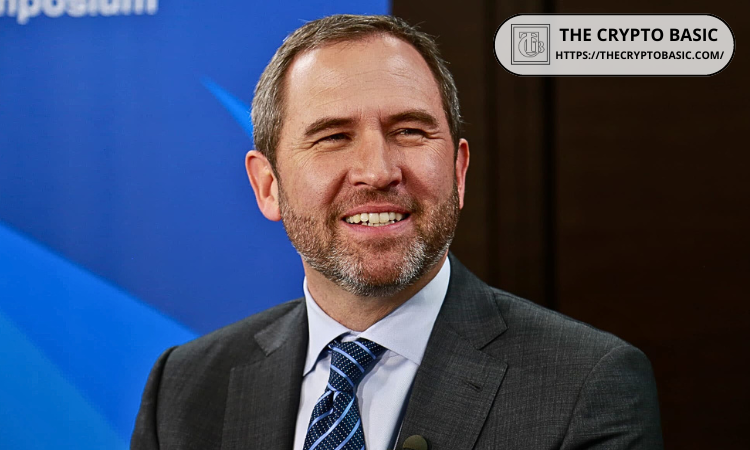
Ripple CEO Brad Garlinghouse expresses optimism about ongoing progress on crypto regulation following his recent engagement with policymakers in Washington, D.C.

Garlinghouse took to X on Thursday to disclose his recent engagement with top U.S. policymakers. He suggested that there is real momentum toward providing the crypto industry with much-needed regulatory clarity.  

Notably, he acknowledges the bipartisan cooperation, with Democrats and Republicans working to establish a pro-innovation crypto framework. 

Attendees of the Meeting  

In his latest push, Garlinghouse met with key policymakers, including the U.S. Senate Banking Committee Chairman, Senator Tim Scott, and  Rep. Ritchie Torres. 

Some meeting attendees include Rep. William Timmons, Rep. Bill Huizenga, Rep. Bryan Steil, Rep. Zach Nunn, and Rep. French Hill.

Ripple’s CEO also shared pictures of him with these policymakers, confirming the meeting. Per the pictures, Ripple CLO Stuart Alderoty was also in attendance. 

Aside from Ripple execs, whether other crypto stakeholders attended the meeting remains unclear. 

Crypto Regulation in the US 

Notably, the United States has struggled with a lack of clear regulations for crypto, creating regulatory uncertainty for businesses in the industry, including Ripple. This situation worsened during the previous administration, which saw the SEC regulate the industry through enforcement.

Despite the past administration’s aggressive stance toward the industry, Ripple execs have been pushing for regulatory clarity through meetings with policymakers on different occasions.  

However, after Donald Trump’s reelection, things began to look promising for the industry. Notably, President Trump has declared his unwavering support for crypto. He has taken major steps toward providing transparent and fair rules for the industry. This includes appointing pro-crypto advocates into top positions like Treasury, SEC, and CFTC. 

In addition, Trump created a working committee for digital assets to provide a federal regulatory framework for the industry. This group will also advise the president on whether to create a national digital asset reserve. 

As previously reported, Garlinghouse met with Trump to push for a reserve that will feature multiple cryptocurrencies rather than one centered around only Bitcoin (BTC). 

Under Trump’s leadership, Garlinghouse is confident that the U.S. crypto space will finally receive the highly anticipated regulatory clarity. His latest engagement with policymakers indicates that legislative progress toward crypto regulation may finally be on the horizon. 

XRP Surpassed Ethereum and Solana in Coinbase Q4 2024 Revenue Share: Report

0

Coinbase reports a surge in institutional and consumer transaction revenues, with XRP accounting for 14% of earnings per coin.

Leading crypto exchange Coinbase released its Q4 earnings yesterday. It revealed quarterly revenue of $2.3 billion and transaction revenue of $1.6 billion, up 88% and 172% from the previous quarter, respectively.

Meanwhile, Vet, an XRPL dUNL validator, highlighted a feature of the quarterly report that interested the XRP community. In a tweet, he pointed out that XRP outpaced assets like Ethereum and Solana in percentage contribution to Coinbase’s transaction revenue.

XRP Is One of The Most Traded Assets on Coinbase in Q4

Citing the Coinbase report, Vet’s tweet shows that XRP accounted for 14% of the transaction revenues in the exchange last quarter. For perspective, transaction revenue is generated each time customers buy and sell an asset on an exchange, and the more transactions relating to the underlying coin, the higher its transaction revenue.

XRP’s Transaction Revenue on Coinbase

This suggests that XRP is one of the most traded assets on Coinbase, indicating both institutional and retail traction for the asset. The analysis speaks volumes because trading volume and revenue from both classes of traders surged in Q4 amid easing regulatory policies.

Meanwhile, the massive attention added lining to Coinbase’s pocket, with the exchange gaining $224 million from XRP transactions in Q4, 2024. This stat looks more interesting because XRP’s transaction revenue superseded that of its major rivals.

For instance, Ethereum accounted for 10% of transaction revenues, while Coinbase failed to reveal Solana’s share.

“Headwinds are turning to tailwinds, folks,” Vet stated.

XRP’s Reemergence as a Prominent Crypto Asset

Notably, in a broad sense, XRP has retaken its place as a major asset in the crypto space, securing the third spot among the largest assets by market cap. Notably, the changing tide started with Donald Trump’s November 5 election victory.

Trump promised to sack former SEC boss Gary Gensler amid other actions to liberate XRP and the broader crypto market from regulatory tyranny. The growing ties between Ripple, an integral part of the XRP ecosystem, and the White House have further boosted confidence among enthusiasts that the years-long legal battle between the SEC and the payment giant will end soon.

Due to this imminent regulatory clarity, XRP has surged extensively since November. In January, the XRPL native token recorded its highest-ever monthly close, ending the month at $3.035.

Despite the recent correction, XRP has shown that momentum is still on its side. With a strong rebound after the hopes of an XRP spot ETF received a boost, analysis suggests the high-caliber asset could target a massive rally to $25.

Could the XRPL Become a SIFMU if XRP Makes it to US Strategic Reserve? Grok AI Shares Insights

0

Speculation around XRP inclusion in a U.S. reserve has triggered discussions about whether the XRPL could attain Systemically Important Financial Market Utility (SIFMU) status. 

The conversation sprang up after Bradley Kimes, founder of Digital Perspectives and the XRP Las Vegas Conference, posed a question to X’s AI chatbot Grok regarding the implications of this development.

Kimes asked whether adding XRP to a national reserve stockpile would elevate the XRPL to a SIFMU designation. In response, Grok assessed the situation and noted multiple factors necessary for the classification.

According to Grok, integrating XRP into a strategic reserve alongside assets like gold and oil could boost the asset’s visibility and importance. However, this alone would not automatically classify the XRP Ledger as a SIFMU. 

What the XRPL Needs to be a SIFMU

For context, A SIFMU is a financial entity that plays a major role in the stability of the financial system. The AI explained that a SIFMU designation requires an entity to be indispensable to financial markets, where its disruption could pose risks. Simply being a part of a national reserve would not fulfill this criterion.

Grok pointed out that existing SIFMUs primarily serve important financial roles such as clearing, settlement, and transaction custody at a scale large enough to impact financial stability. 

Notably, while XRPL offers fast and cost-effective cross-border payments, possibly at a better rate than these entities, it would need to expand its role massively in these core financial services to qualify for SIFMU recognition.

The AI further noted that regulatory and legal considerations are important in determining whether XRPL could achieve this status. If XRP gained recognition as a strategic reserve asset, increased regulatory scrutiny would likely follow. 

However, the case involving the U.S. Securities and Exchange Commission (SEC) and Ripple, would need resolution before any major regulatory change could occur. Interestingly, speculations that the new SEC leadership could end the case have emerged.

According to Grok, another factor is widespread adoption by financial institutions. Notably, XRP would need to move beyond being a reserve asset and integrate into national and international financial systems. 

Additionally, Grok emphasized that the Financial Stability Oversight Council (FSOC) would have to determine whether XRPL’s failure could destabilize financial markets. For this to happen, the ledger’s role would need to expand to make it an essential part of financial infrastructure globally.

XRP in a US Strategic Reserve?

Notably, discussions around XRP’s potential inclusion in the U.S. strategic reserve came as President Donald Trump signed an executive order to establish a crypto working group in his first week in office. 

Part of the working group’s responsibilities is to explore the possible establishment of a “digital asset stockpile.” Notably, the term “digital asset” instead of “Bitcoin” triggered speculation that other crypto assets could be considered for the reserve besides Bitcoin. 

Scott Melker revealed that he has heard from reliable sources that XRP is a strong contender. Also, with recent meetings between Ripple CEO Brad Garlinghouse and President Trump as well as Ripple’s donations to the Trump administration, speculations suggest XRP could be included in the reserve. Nonetheless, this remains to be seen.

First Major Sign That SEC May Soon Drop Ripple Lawsuit

0

The XRP community has spotted a major sign that the four-year-long lawsuit between Ripple and the U.S. SEC may soon come to an end.

This newfound confidence emerged amid the SEC’s recent expression of readiness to consider XRP ETFs, with pundits suggesting the Ripple lawsuit no longer holds weight.

Ripple SEC Case Losing Weight Under New Leadership

For context, the Ripple lawsuit initially ended in August 2024 following the final decision from Judge Analisa Torres, which included fines for Ripple’s violations. However, the SEC revived the case a few months later with a notice of appeal.

The matter has since progressed, with the SEC filing its opening brief earlier this year. Meanwhile, Ripple is preparing to file its own cross-appeal brief in the case, with a deadline in April.

Notably, this appeal commenced under the former SEC leadership with ex-chair Gary Gensler. Since his departure in January, crypto-friendly chair Mark Uyeda has been acting as the interim head.

In his short time in office, Uyeda has pushed out numerous pro-crypto developments that were absent under the previous administration, including deliberate efforts to provide clear rules for crypto regulations by establishing a Crypto Task Force.

Recent Developments Indicate SEC Might End Ripple Case

A recent development with more direct bearing on XRP is the SEC’s acknowledgment of Grayscale’s application for an XRP ETF.

Specifically, on Thursday, the SEC acknowledged NYSE’s application to list Grayscale’s XRP ETF. This marks the first step in the approval process.

This recognition is significant because it suggests the SEC may now consider an XRP ETF rather than reject it outright.

This move contrasts with the SEC’s earlier stance on Solana, where it rejected applications for Solana spot ETFs. The SEC will now review the application, a process that could take up to 240 days.

Bloomberg analyst James Seyffart argued that previous SEC leadership would have dismissed the XRP ETF application, citing that as recently as December, the agency denied a similar application for Solana. He added that this move slightly increases the already favorable odds of approval for the ETF.

This essentially highlights the shifting environment under the new SEC leadership. In parallel, Nate Geraci, co-founder of the ETF Institute, expressed that the acknowledgment could be a huge statement regarding the SEC’s ongoing case against Ripple.

In a follow-up commentary, Geraci expressed surprise that more people aren’t discussing the SEC’s acknowledgment of the XRP ETF filing, especially considering the ongoing litigation with Ripple.

He pointed out that the SEC easily could have rejected the filing but instead chose to accept it.

“It sends an enormous message in my opinion,” Geraci said.

The Road to a Potential End of the Ripple Lawsuit

Notably, the sentiment that the new SEC leadership could soon drop the Ripple case has been gaining traction in the community, and the latest development has fueled it even further.

Initially, commentators took inspiration from the regulator’s decision to pause the lawsuit against Binance. They argue a similar move could extend to the Ripple case.

Already, Ripple’s Chief Legal Officer Stuart Alderoty has predicted that the new SEC leadership would withdraw the ongoing appeal. However, some suggest it would take a substantive chairman to initiate the move. Currently, the nominated SEC chair, Paul Atkins, is awaiting Senate confirmation.

GameStop Stock Jumps 20% as Company Evaluates Bitcoin Strategy

0

GameStop, the video game retailer that gained attention as a meme stock, is evaluating potential investments in Bitcoin and other crypto. 

According to sources familiar with the matter, the company is considering alternative asset classes to seek new business strategies. CNBC highlighted that shares of GameStop surged by as much as 20% in extended trading following the news. 

However, the retailer has not made a final decision and is still assessing whether these investments align with its long-term plans.

GameStop’s Previous Crypto Efforts

GameStop previously ventured into the crypto space by launching digital wallets in 2022. These wallets enabled users to store and manage crypto and non-fungible tokens (NFTs).

However, in 2023, the company discontinued the service, citing regulatory uncertainty. Despite that move, the retailer appears to be reassessing its approach to the digital asset market.

The renewed speculation about GameStop’s potential involvement in Bitcoin followed a recent social media post by CEO Ryan Cohen. Over the weekend, Cohen shared an image with MicroStrategy’s Strategy Chairman, Michael Saylor.

MicroStrategy is well known for its Bitcoin acquisition strategy, having raised billions of dollars through stock and convertible bond sales to buy more Bitcoin.

GameStop’s Market Challenges 

GameStop has faced challenges in adapting to shifts in consumer spending habits. Investors have been closely watching the company’s attempts to modernize its retail strategy, especially since Ryan Cohen joined the board in 2021.

Cohen, who co-founded Chewy, became a key figure in efforts to reshape GameStop’s business approach.

Meanwhile, GameStop remains a focal point in discussions about meme stocks, a trend that saw heightened retail investor activity in 2021. During that period, traders associated with the subreddit WallStreetBets helped drive significant volatility in stocks such as GameStop and AMC alongside cryptocurrencies like Dogecoin.

Another key figure in the movement, Keith Gill—also known as “Roaring Kitty”—was widely recognized for his role in the trading frenzy.

As GameStop evaluates its position on crypto investments, Bitcoin’s market activity remains under watch. The price of Bitcoin is currently $96,761.33, reflecting a 0.75% increase over the past 24 hours.

Dogecoin ETF One Step Closer to Approval as SEC Accepts Grayscale’s Dogecoin ETF Filing

0

The U.S. SEC has confirmed the receipt of Grayscale’s Form 19b-4, a regulatory filing seeking approval for a spot Dogecoin (DOGE) exchange-traded fund (ETF). 

The filing marks a shift in how the agency approaches altcoin-based ETFs, as previous applications faced immediate rejection.

Regulatory Shift and Market Reactions

Fox Business reporter Eleanor Terrett highlighted the SEC’s acknowledgment in a tweet, stating the agency has officially received Grayscale’s DOGE ETF filing. 

She noted that the SEC’s decision to accept the application indicated a more open-minded approach compared to past rejections of similar products.

Bloomberg ETF analyst Eric Balchunas analyzed the development, emphasizing that this differs from past instances when the SEC swiftly denied altcoin ETF applications. He pointed out that while expectations for approval were already high, the SEC’s acknowledgment increased the likelihood of the ETF moving forward.

Comparison to XRP ETF Filing

ETF Store President Nate Geraci drew attention to the SEC’s acceptance of the XRP ETF filing, expressing surprise that more people were not discussing its significance. He noted that the agency has ongoing litigation with Ripple, making the acceptance of the XRP ETF filing noteworthy.

Bloomberg ETF analyst James Seyffart also commented on the SEC’s shifting stance. He noted that under previous leadership, the agency would not have even acknowledged such filings. He cited Solana ETF applications, which were functionally denied as recently as December, as an example of the SEC’s previous approach.

Dogecoin’s Market Role

Recall that Grayscale announced earlier in January the launch of a trust tracking Dogecoin’s market performance. The product provided institutional and retail investors with exposure to the meme coin through a closed-end trust.

Historically, Grayscale has introduced similar trusts before converting them into ETFs, as seen with Bitcoin and Ethereum.

Later, Grayscale submitted its 19b-4 filing through the New York Stock Exchange (NYSE) to convert the Dogecoin Trust into an ETF. The asset manager highlighted Dogecoin’s expanding role in the crypto sector, stating that it has evolved beyond its meme origins into a functional asset supporting financial inclusion and blockchain-based transactions.