Home Blog Page 1462

Cardano To Reach $9.86 If it Touches Ethereum Market Cap

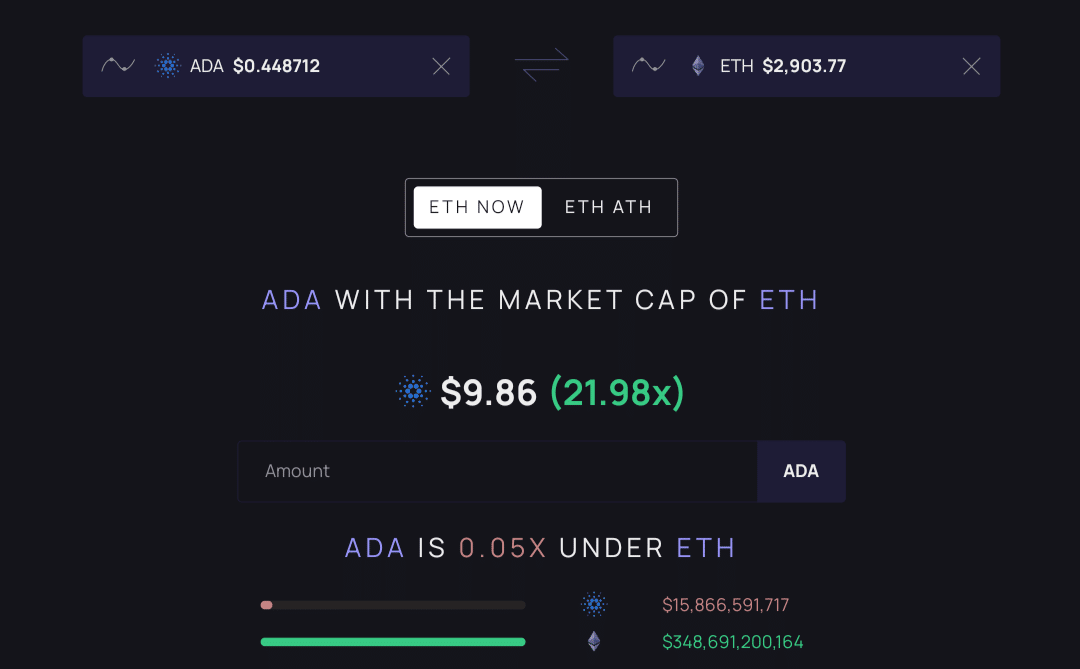
Cardano price could skyrocket to by as much as 21x to clinch a price of $9.86 if it had Ethereum’s current market capitalization.

Cardano Price at Ethereum’s Market Cap

Despite the drastic drop in Cardano price, market watchers have persisted in their lofty price targets for ADA, which would drastically increase its market valuation. Amid these projections, we assessed how much Cardano price would need to skyrocket for it to clinch the market capitalization of a cryptocurrency such as Ethereum (ETH).

Data from a market analytics tool confirms that ETH boasts a market cap of $348.6 billion, making it the second largest crypto asset, only behind Bitcoin with a $1.198 trillion valuation. Ethereum’s market cap also had an impact during the market drop, as the asset itself collapsed below the pivotal $3,000 psychological support.

However, at its current valuation, Ethereum has 21.97x the market cap of Cardano. Should Cardano spike to claim this valuation of $348.6 billion, its price would have increased remarkably to $9.86, marking a new all-time high. This assessment factors in a fairly stable circulating supply of over 35 billion ADA tokens.

Cardano Price if It Had Ethereum Market Cap

Can Cardano Hit $9.98?

While this $9.86 price might appear unfeasible to most, some market analysts have recently presented price targets around the region. Analyst Ali Martinez predicted on May 3 that Cardano has the potential to spike to a $9.9 price, citing historical patterns from the previous bull run.

Moreover, this Wednesday, The Crypto Basic presented a list of several market watchers that have projected Cardano to reach a price around the $10 threshold at multiple timeframes, including the crypto YouTube channel Altcoin Daily and notable crypto chartist Lucid. 

Meanwhile, others expect a lower price for Cardano, but the projections remain bullish. For instance, analyst Jake Gagain predicted in March that ADA would reach $7.5 next year. Chris O’Connor, founder of Cardano Ghost, asserted that ADA could hit $6.66 to $7.77 depending on its trajectory during this current cycle.

Is MEV Extraction Still A Risk Today? If So, What Is The Industry Doing About It?

0

Maximal Extractable Value is closely associated with the Ethereum network, but in fact it can be problematic for any blockchain platform. 

Known in industry parlance as MEV, the term refers to the additional value that can be extracted by block validators, or those who are responsible for creating new blocks of processed transactions that are immutably stored on the blockchain. 

MEV can be obtained by manipulating the order in which transactions are processed. In many cases, block producers will sequence transactions in a way that enhances their profits, and this practice often has a negative impact on other network users. There are many methods for doing this, including front-running attacks and sandwich attacks.  

The Dangers Of MEV

For regular blockchain users, the main risk associated with MEV is known as “front-running”, where block producers front-run a significantly-sized buy order that’s pending in the mempool with one of their own transactions. They’ll insert a similar buy order ahead of that transaction to purchase that asset at a more favorable price. Once their order goes through, and then the other large buy order is processed, it can significantly increase the value of the underlying asset. The front-runner can then sell the asset at a substantial profit. 

A related strategy is known as “sandwiching”, which is when the block producer places a buy order before, and a sell order after, a significant price-moving transaction. This enables them to benefit from the price pressure on both sides. Both of these strategies are considered to be malicious, because they extract value from innocent network users. 

The State Of MEV Today

Concerns over MEV were first raised at the time Ethereum was still being developed as the world’s first smart contract blockchain. MEV has consequently become closely associated with Ethereum, which relied on a proof-of-work consensus mechanism when it was launched. At that time, it was only miners who had the power to reorder and exclude certain transactions to obtain extra value. 

As such, the term was originally known as “Miner Extractable Value”. However, with Ethereum undergoing “the merge” upgrade in September 2022, it switched from the PoW consensus mechanism to a Proof-of-Stake algorithm, meaning it’s no longer miners that create new blocks. 

However, the switch didn’t do anything to stop MEV. Rather, it just means that the door is open to other participants – such as validators – to participate in MEV instead. With this transition, many have come to refer to MEV as “Maximal Extractable Value” instead. 

It’s fair to assume that the main beneficiaries of MEV are block producers, but actually almost anyone can – and does – participate in this process. In fact, it’s believed that the majority of the extracted value ends up not in the hands of block creators these days, but rather the “searchers”, who are dedicated individuals that use special software to analyze blockchain transactions sitting in the mempool (where they wait to be processed) to seek out profitable MEV opportunities. They then look to collaborate with block producers to share in the spoils. 

Why Is MEV Still A Problem?

Although MEV has been known about for a long time, since before Ethereum even launched, the decentralized ethos of blockchain has prevented the industry from coming up with a comprehensive fix. To strip block producers of the right to sequence transactions as they desire would go against the industry’s commitment to decentralization, which means a more technical solution is required.  

Numerous teams have been working for years to create solutions to MEV, and they have had some success. For instance, in May 2021, Ethereum miners were reported to have extracted around $140 million in MEV in just 30 days. However, the amount extracted from users in the last 30 days, as of May 10, 2024, has fallen to just $2.4 million, according to data from Flashbots.

Ethereum is the main target for MEV techniques because it frequently suffers from network congestion, which means slow block times and higher fees. In addition, it has the industry’s most extensive and mature DeFi ecosystem, which means it processes lots of complex transactions that can maximize the profit-making opportunities for those who engage in MEV. 

The bulk of MEV losses stem from DeFi protocols such as Uniswap, Aave and Compound, which are also targeted by a phenomenon known as “liquidation front-running”, where searchers attempt to find and execute liquidation transactions to secure a part of the liquidator fee, which provides a big discount on the collateral. 

How Is The Industry Fighting MEV? 

As awareness of the dangers of MEV grows, so do the strategies being implemented by the industry to prevent it from taking place. 

One approach that appears to have had a lot of success is the use of Fair Sequencing Services or FSS. This refers to a decentralized transaction ordering service that aims to ensure absolute fairness in the way transactions are ordered, eliminating the opportunity for MEV attacks. FSS is generally applied in Layer-2 rollups such as Arbitrum, enabling smart contract-based economics to scale while minimizing the consequences of MEV on individual users. 

An alternative idea is Flashbots, which is a blockchain research organization that has devised a transparent marketplace for MEV extraction. In essence, it enables searchers to send bundles of transactions directly to block producers, reducing the harmful impact of things such as gas price auctions to achieve more efficient MEV extraction. With Flashbots, block producers are prevented from being able to obtain an inordinate amount of influence. It enables any participant to extract MEV via the mev-geth client. It provides all participants, irrespective of their blockchain knowledge, to survey Ethereum’s mempool and identify MEV opportunities, so they can reorder their blocks in the most profitable way. 

A more extreme and efficient solution might be Fully Homomorphic Encryption, which introduces full encryption to blockchain data, obscuring transaction participants and amounts from the process. By introducing fully confidential transactions, Fhenix aims to eliminate the opportunity for MEV completely. The block producers will no longer be able to see any transaction details, which prevents them from being able to manipulate the order in which transactions are processed. It creates a much fairer environment for blockchain users, preserving the network’s integrity. 

The beauty of Fhenix’s FHE solution is that it enables computations to be performed on encrypted data without that information being decrypted first. This means it can even be used with the complex smart contracts that facilitate multi-step transactions in DeFi. 

The elimination of MEV will result in big benefits for the blockchain community. First and foremost, it prevents anyone from carrying out front-running and other kinds of exploitative moves that unfairly extract value from other network participants. In this way, FHE provides a strong guarantee with regard to transaction fairness. Because block producers cannot see any transaction data, they instead process transactions according to the network’s rules, rather than using their discretion. In addition, it also prevents block producers from being able to censor transactions by certain users. 

Final Thoughts

MEV might not be such a big problem today as it was, but the threat remains real. It provides an unfair advantage to those who engage in it, and it can still have enormous negative implications for some users, especially traders who make large volume transactions. 

Some continue to argue that MEV benefits blockchain ecosystems by ironing out inefficiencies in the way transactions are processed, helping to speed up the network overall. For instance, when MEV searchers race to capture value from arbitrage opportunities, their actions will quickly result in price corrections across the DEX ecosystem. Similarly, lending protocols benefit from more rapid liquidations in the event of a loan default. As searchers race to cash in on the liquidation event, it prevents the collateralization level of the defaulted loan from becoming too unbalanced. 

Despite these benefits, the unfairness of MEV remains acute. Front-running and sandwich attacks almost always result in bad outcomes for regular network users, who are required to overpay their transaction fees and execute their trades at disadvantageous rates, suffering from significant slippage. In addition, MEV also leads to higher gas fees and slower transaction processing, as the intense competition among searchers adds to network congestion.

Fortunately the blockchain industry is making good progress against MEV, and with the rise of easy to implement solutions such as FHE, we might not be far away from the day when it ceases to be a problem at all. 

Ex-Twitter CEO Says Bitcoin Will Hit “at Least” $1,000,000 Next 6 Years

Former Twitter CEO Jack Dorsey voices his optimism on Bitcoin, projecting it to surpass a $1 million value by 2030.

Dorsey conveyed this bullish sentiment during a recent interview with tech journo Mike Solana. The ex-Twitter boss cited the cooperative nature of the Bitcoin community as a significant factor in his optimistic projection for the decade.

BTC to Reach “at Least” $1M by 2030

During the interview, Mike Solana asked Dorsey to disclose his 2030 projection for Bitcoin. With a touch of humor, Dorsey responded with uncertainty.

However, he shared his belief that Bitcoin could reach “at least a million” within the next six years. He also suggested that BTC might not only reach that figure but could potentially exceed it by 2030.

Furthermore, Dorsey stated that while the price is intriguing, Bitcoin’s most remarkable aspect is its collaborative nature. He emphasized that the efforts of everyone who works on Bitcoin contribute to the betterment of the entire ecosystem. He sees these collaborative efforts as the main factor for higher price targets.

Since stepping down as Twitter CEO, Dorsey has intensified his focus on Bitcoin. His financial services firm, Block, is committing 10% of its Bitcoin-related revenue to further Bitcoin acquisitions.

Notably, the ex-Twitter CEO is not the only industry commentator anticipating a $1 million BTC price. In particular, his bold forecast echoes the sentiments of other industry pundits such as Cathie Wood of Ark Invest, financial author Robert Kiyosaki, and Michael Saylor of MicroStrategy. 

These experts all foresee Bitcoin surpassing the $1 million mark as more institutional investors treat it as a digital gold equivalent.

What it Means for Bitcoin to Clock $1M

Meanwhile, at press time, Bitcoin exchanges hands for $62,387, registering returns of more than 121% over the last year. Notably, BTC touched $73,750 two months ago, propelling its valuation to over $1.45 trillion. 

At the prevailing market value, the firstborn crypto asset must advance by 1,502% in the next six years to clinch the $1 million target. If Bitcoin’s supply remained stable at 19,696,421 coins by 2030, $1 million per BTC puts its valuation at $19,696,421,000,000 (approximately $20 trillion). 

Since Bitcoin typically accounts for more than 50% of the total cryptocurrency market cap, the global crypto market could exceed $40 trillion by then.

Notably, by 2030, Bitcoin would have undergone its fifth halving cycle, precisely by 2028, with a bull market expected to follow the next year. Widespread projections for Bitcoin’s value in this ongoing season are between $150,000 and $250,000.

Tron DeFi Ecosystem Surpasses $21.7 Billion in TVL

0

The Tron DeFi ecosystem surpasses the $21.7 billion mark led by Just Cryptos & JustLend DAO, but TRX price faces a short-term bearish trend.

Tron’s decentralized finance ecosystem has reached a significant milestone, with its Total Value Locked (TVL) exceeding $21.7 billion and extending the growth spurt. This metric, a common measure in DeFi sectors, indicates the total value of assets deposited in Tron-based DeFi protocols.

At the forefront of Tron’s DeFi landscape is “Just Cryptos,” ranking first with a TVL of $7.1 billion. Following closely is “JustLend DAO,” a lending and staking platform with a TVL of $6.4 billion. Other notable projects include “TRX Staking Governance” and “JustStable,” each offering distinct functionalities within the DeFi space.

Just Cryptos, JustLend DAO, and TRX Staking Governance have experienced positive growth in their TVL over the last 24 hours, indicating active trading and investment activity. Just Cryptos, in particular, saw a 2.31% increase.

Tron Q1 2024 Performance

Elsewhere, according to Messari, Tron demonstrated positive growth across various key metrics in Q1 2024, including market cap, revenue, DeFi TVL, stablecoin market cap, and average daily DEX volume. Notably, Tron’s revenue reached an all-time high of $128.1 million, positioning it among the top networks in terms of revenue generation.

Notably, March marked a significant increase in Daily Active Addresses (DAAs) on the Tron Network, surpassing 2 million. It is a proof of the network’s strength and popularity among users. Additionally, Tron celebrated a milestone of exceeding 216 million total accounts.

TRX Price Performance 

On the technical front, the price of Tron (TRX) has experienced some fluctuations in the past 24 hours, witnessing a slight decline of -1.22%. However, over the course of the last 7 days, TRX has demonstrated resilience with a 1.32% increase, outperforming the global cryptocurrency market.

Examining key technical indicators such as the Exponential Moving Average (EMA) and the MACD indicator reinforces the bearish outlook. The crossover of the MACD line below the signal line, coupled with the price falling below the EMA, suggests short-term bearish sentiment prevailing in the market.

Bitcoin Price Forecast: BTC Reclaims $63k, What’s Next?

0

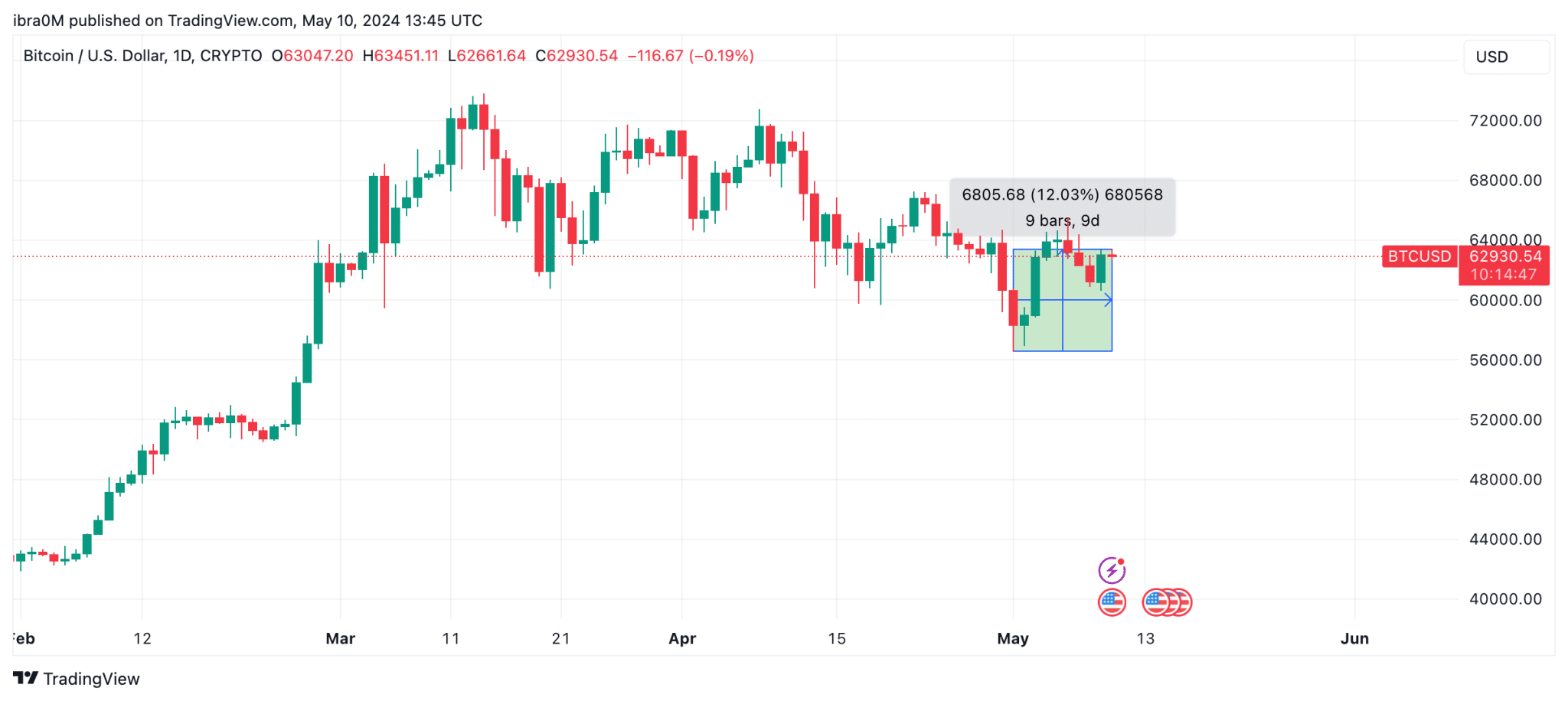
Bitcoin’s (BTC) price rebounded above $63,000 on May 10, up 12% in the last 10 days, with BTC supply on exchanges now trending at a monthly low; where could prices head next? 

Bitcoin Price Consolidates Above $63k Amid Buyers’ Fatigue

The crypto market rally in May began after US Non-Farm Payrolls rejigged investors’ optimism on imminent rate cuts in 2024. 10 days into the month, the crypto market has maintained its upward trajectory, albeit at a slowing pace.

Bitcoin price broke above $63,000 on Friday, May 10, after having oscillated within the $62,000 – $62,900 narrow channel for the better part of the last 48 hours.

Bitcoin (BTC) Price Action 
Bitcoin (BTC) Price Action

The chart above shows how Bitcoin price extended its monthly gains to 12% as prices climbed to a 24-hour peak of $63,451 on May 10, before tumbling below $62,950 again.

Demand for Bitcoin has weakened significantly, especially since Bitcoin ETFs 4-month streak of consistent capital inflows ended just before the halving in April. More so, fresh post-halving ETF approvals in Honk Kong and Australia have done very little to move the needle in the BTC markets.

Bitcoin (BTC) Holders Cut Market Supply by $320 Million

While bulls await the next major catalyst, existing BTC holders appear to have taken on a resilient stance, which could potentially drive mild price gains in the days ahead.

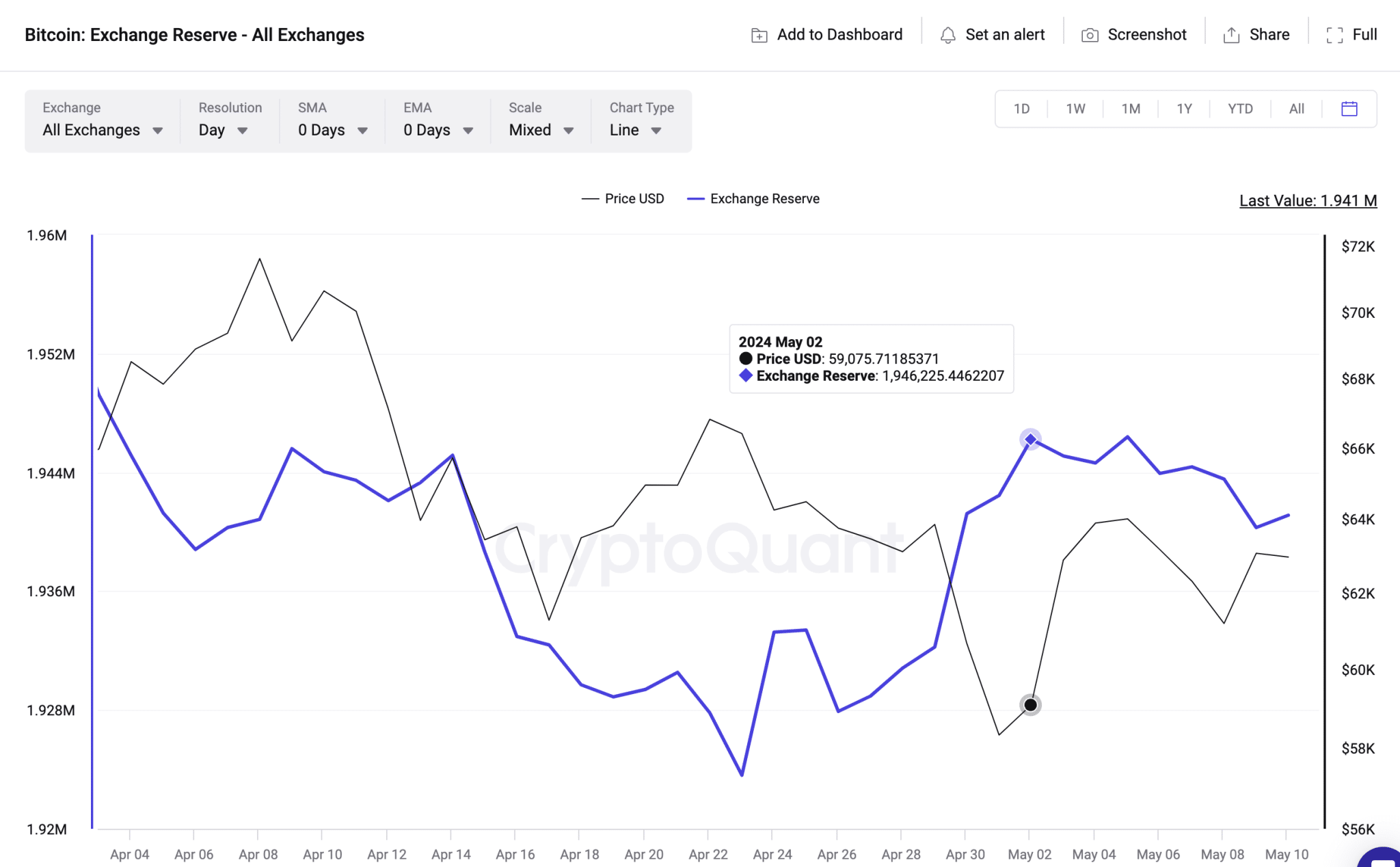
CryptoQuant Exchange Reserves chart monitors the total supply of BTC coins deposited in exchange-hosted crypto wallets and trading platforms. It essentially provides insights into changes in investors’ sentiment as well levels of active market supply.

Bitcoin Price vs. BTC Exchange Reserves | CryptoQuant

Investors held a total of 1,946,225 BTC across various crypto exchanges as the close of May 1. But since the US Bureau of Labor Statistics published the updated Non-Farm Payrolls report on May 2, existing Bitcoin holders appear to have taken on a much more positive outlook on BTC’s long-term price prospects. This outlook is underlined by the persistent decline in Bitcoin exchange supply observed since May 2.

According to the latest data on the CryptoQuant chart above, Bitcoin exchange deposits have dropped to 1,941,094 BTC at the time of writing on May 10.

Effectively, BTC holders have shifted 5,131 BTC from exchanges into long-term storage between May 2 and May 10, 2024. Valued at the current prices, investors have inadvertently removed $320 million worth of BTC from the short-term market supply.

When the market supply of an asset dips during a period of steady demand, it creates a short-term supply squeeze, driving up prices as buyers are forced to up their bids marginally. Unsurprisingly, Bitcoin price has recorded a 12% uptick during that period.

More so, historical patterns suggest the BTC is likely to continue advancing towards $65,000 if exchange supply declines further.

BTC Price Forecast: Bitcoin to Stay Above $60k Despite ETF Outflows

Bitcoin price struggled to advance above $63,000 this week as Bitcoin ETF inflows slowed considerably. But with $320 million less BTC available to be traded on exchanges, Bitcoin price looks set to avoid a major downswing below $60,000 in the days ahead.

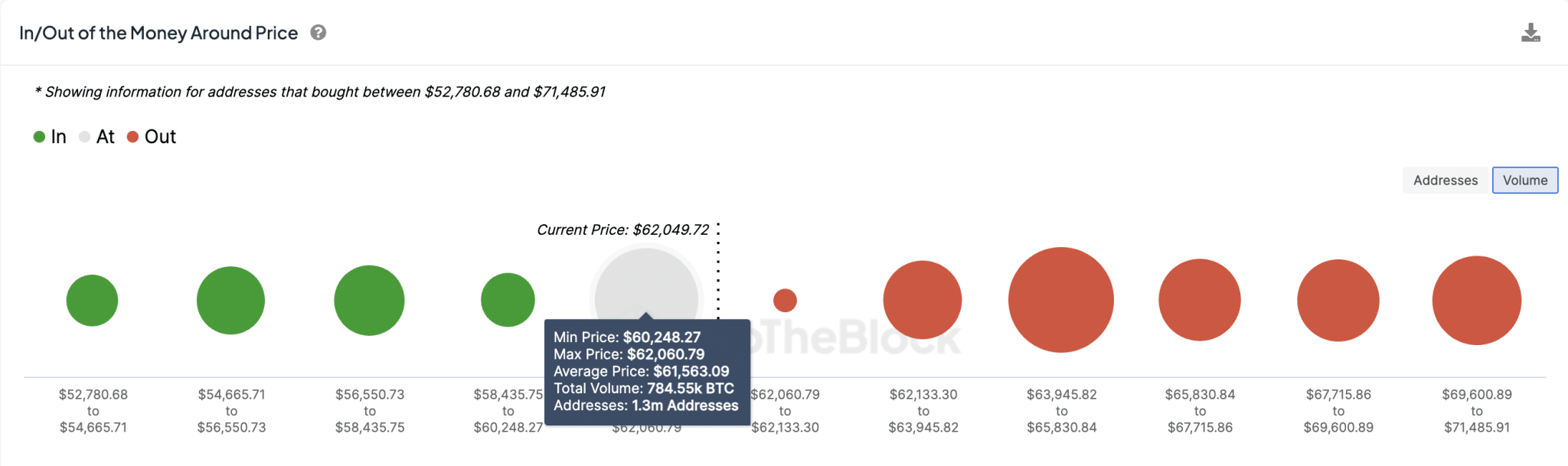
IntoTheBlock global in/out of the money chart below also affirms an optimistic Bitcoin price forecast.

Bitcoin (BTC) Price Forecast 
Bitcoin (BTC) Price Forecast

The chart above shows that BTC has a major support cluster at the $62,000 territory. At that price level, 1.3 million addresses purchased 784,550 BTC at an average price of $61,563.

With the decline in the BTC exchange supply, bears currently have a slim chance of generating sufficient sell-pressure to flip that $48 billion support cluster.

Conversely, any BTC price breakout in the near term could meet major resistance at the $65,000 level. In effect, as BTC heads into the weekend, further consolidation within the $62,000 – $65,000 appears to be the more likely outcome.

Cardano Shares Latest Updates on Conway, Smart Contract, Scaling, Catalyst, and Others 

0

Input Output Global (IOG), the development and research arm of the Cardano network, has published a new blog post, highlighting key developments that occurred within the ecosystem this week. 

Conway Era Upgrades 

According to the report, the development team responsible for performance and tracing scrutinized benchmarks for the Conway era. This led to the incorporation of Delegate Representatives (DReps), tracing DRep data, and enhancing the mechanism for reporting errors within the tx-generator.  

Additionally, the tracing and performance team worked on the expansion of the node metrics by adding new functionality such as block producer and build information. The team also completed the analysis of the benchmarks that focus on UTXO scaling scenarios. 

The IOG pointed out that the Ledger team has been actively involved in development activities over the past two weeks, focusing mainly on the Conway era. Some key features implemented in the Conway era include implementing the bootstrap phase and the governance action transition.  

Furthermore, the team introduced additional features for testing purposes and also made notable enhancements to the continuous integration (CI) setup. 

Smart Contracts, Scaling, Catalyst, & Education Updates 

Notably, Cardano’s smart contract functionality also received new updates this week. Particularly, the Plutus team improved the efficiency of the UPCL programs by enhancing the implementation of the fixed point operator. 

The Hydra team also swung into action this week. Per the report, the team identified and refactored discrepancies in the network protocol versions and integrated the relevant changes into the /commit endpoint. It also executed some minor workflow fixes to the protocol.

The report provided an update on Cardano’s Catalyst Fund 12, noting that the project is currently underway. Interested participants have been submitting their proposals from various parts of the world. This is to ensure that they beat the deadline for submission, slated for May 13 at 11 AM (UTC).

Lastly, this week, the education team also prepared content for the launch of the DRep Pioneer Program. So far, the team has released the 19th lesson for the Haskell Bootcamp. The team overseeing the education unit is also preparing the content for Mastering Cardano.

Cardano Latest Metrics

Meanwhile, the IOG also provided an update on the latest metrics on Cardano. The number of projects launched on the Cardano network has surged to 170. It bears mentioning that the figure was around 157 in January. This suggests that 13 new projects have joined the Cardano network in less than four months.

Also, the number of projects building on Cardano has soared 2.95%, from 1,319 to 1,358 in the same time frame. Similarly, the network’s native tokens have seen an increase of 5.5% since January till date. The number of native tokens on Cardano rose from 9.45 million to 9.95 million within this period.

The total transactions processed on Cardano also recorded a significant uptick, rising from 83.4 million to 90.3 million.

Fractals Point to Imminent VeChain Surge, With Target Set Toward $0.6

Crypto market analyst Ali Martinez sees VeChain (VET) skyrocketing to a $0.6 price target, citing the emergence of fractal patterns on the 1-month chart.

With VeChain now looking to recoup the losses of the past weeks, market data suggests its growth trajectory could lead to greater heights. Notably, amid the prevalent market uncertainty, VET is down 34.6% from its yearly peak of $0.0550 attained in late February, and 86.5% down from the $0.2798 all-time high.

VeChain Forms Fractals

However, these losses have not impacted its overall trajectory, with data indicating an imminent substantial upsurge. Trading veteran Martinez identified the formation of fractal patterns on the monthly VeChain chart, confirming the potential emergence of this bullish upswing.

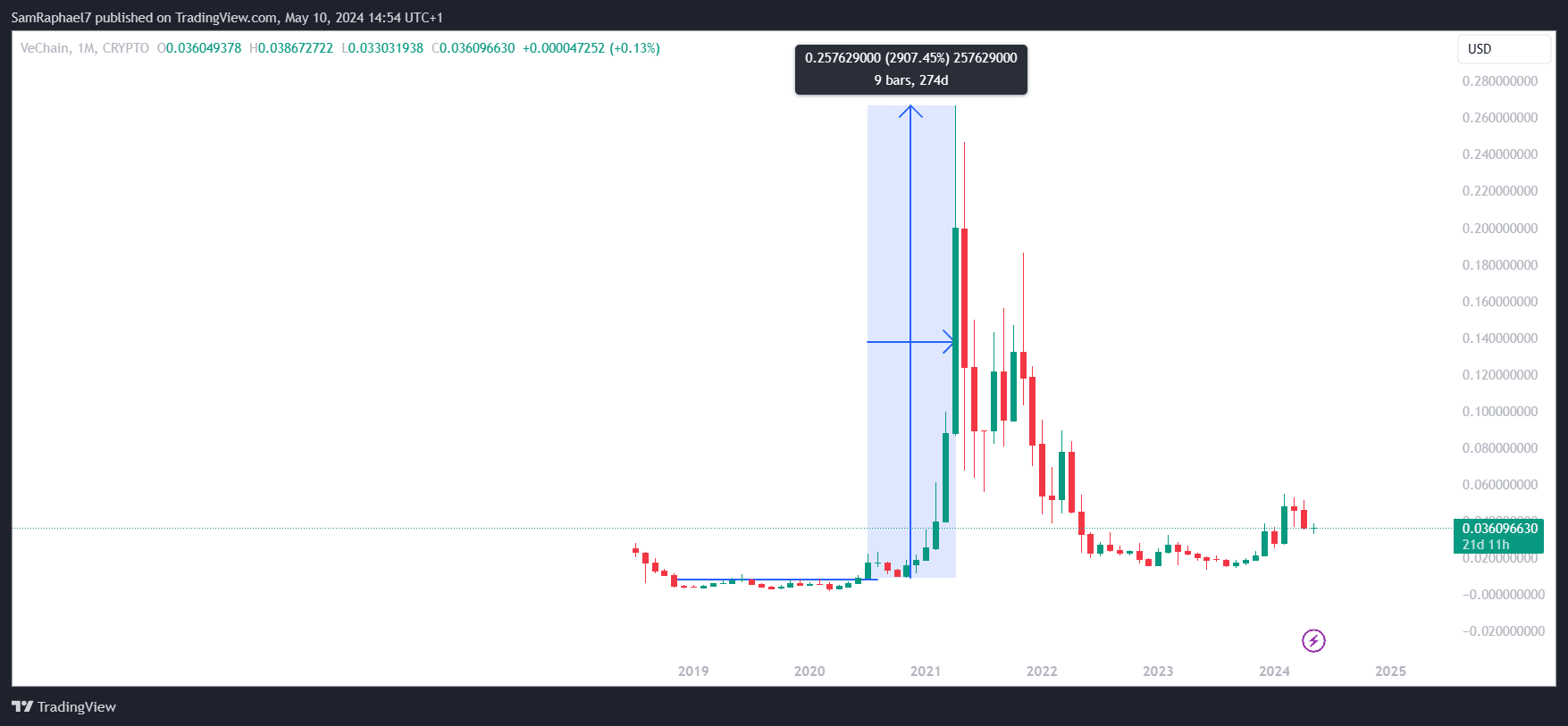
Historical data shows that this pattern first formed from Q4 2018. VET recorded five consecutive months of losses from July to November 2018, collapsing 81% during this period. Nonetheless, the first set of fractals materialized in November 2018, and lasted through 19 months, or 578 days, of intermittent price upswings and declines.

When VeChain broke above the resistance at the upper line in July 2020, it registered an impressive price rally that coincided with the 2021 bull run. Riding on the breakout and the prevalent bull market at the time, VET eventually soared to the all-time high of $0.2664 in April 2021. This marked a 2,907% spike in nine months.

VeChain 1M Chart
VeChain 1M Chart

VeChain witnessed the formation of a similar fractal pattern this cycle, when it recorded a 31% drop in June 2022. Interestingly, this pattern also lasted for 19 months, with VET staging a breakout upon the 69% monthly gain in February this year. 

VET Targets $0.60

Following this breakout, Martinez expects VeChain to secure a price rally similar to the one in the 2021 cycle. Data from his chart shows that he has already set a price target of $0.60, marking a 1,571% increase from VET’s current price of $0.0359.

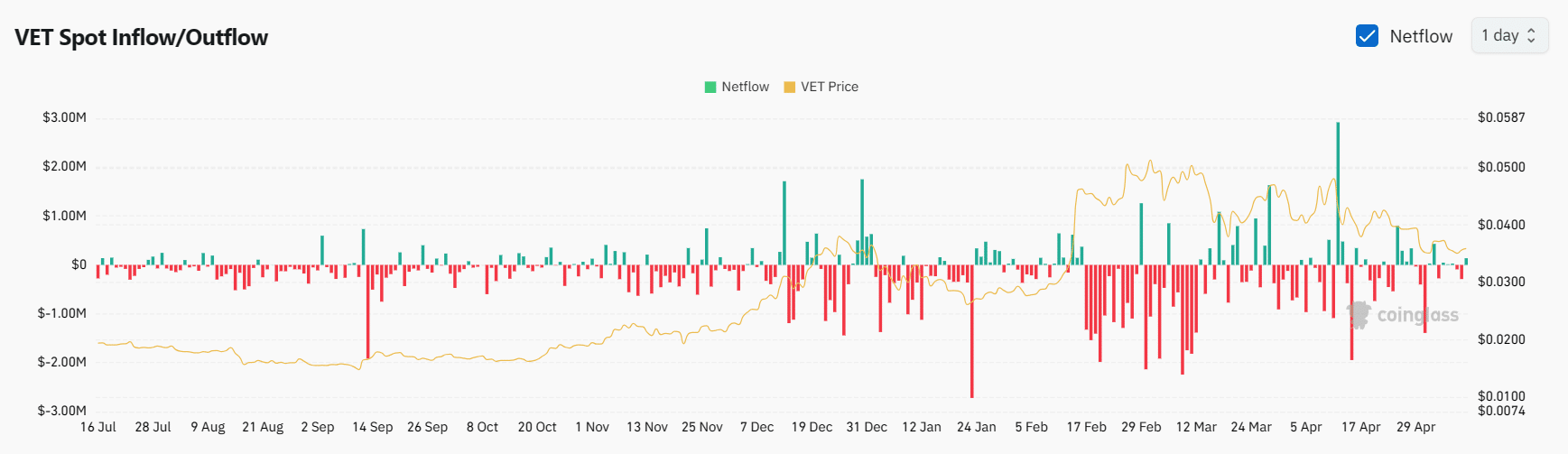
Supporting these sentiments is a cluster of development activities, partnerships and sustained withdrawals from exchanges. Coinglass data indicates that market participants have continued to take out their VET tokens from exchanges, a trend that typically leads to reduced selling pressure.

VET Exchange Netflows Coinglass
VET Exchange Netflows | Coinglass

In addition, as bullish sentiment picks up, futures and derivatives Open Interest (OI) has increased 5% over the last 24 hours to $35.69 million. Interestingly, within this period, the long/short ratio has risen to 1.0169, suggesting that VeChain currently observes a predominance of optimism.

Apple’s Latest iPad sends Render (RNDR) Price into 68% Rally

0

Render token price hit $4 on May 10, 2024, after surging 11% within the 24-hour timeframe; on-chain data suggests the rally is driven by improved social sentiment ahead of NVIDIA’s upcoming earnings call.

RNDR is the native token of the Render network, a blockchain ecosystem that provides decentralized computing resources to creators and developers. The technological convergence between blockchain technology, AI, and Big data has triggered increased demand for RNDR, another crypto AI token.

Why is the RNRD Price Going up?

RNDR price has surged by over 60% in May 2024, largely due to a rare mention of the Render service in Apple’s recent AD as well as swelling speculations surrounding Nvidia’s upcoming earnings call.

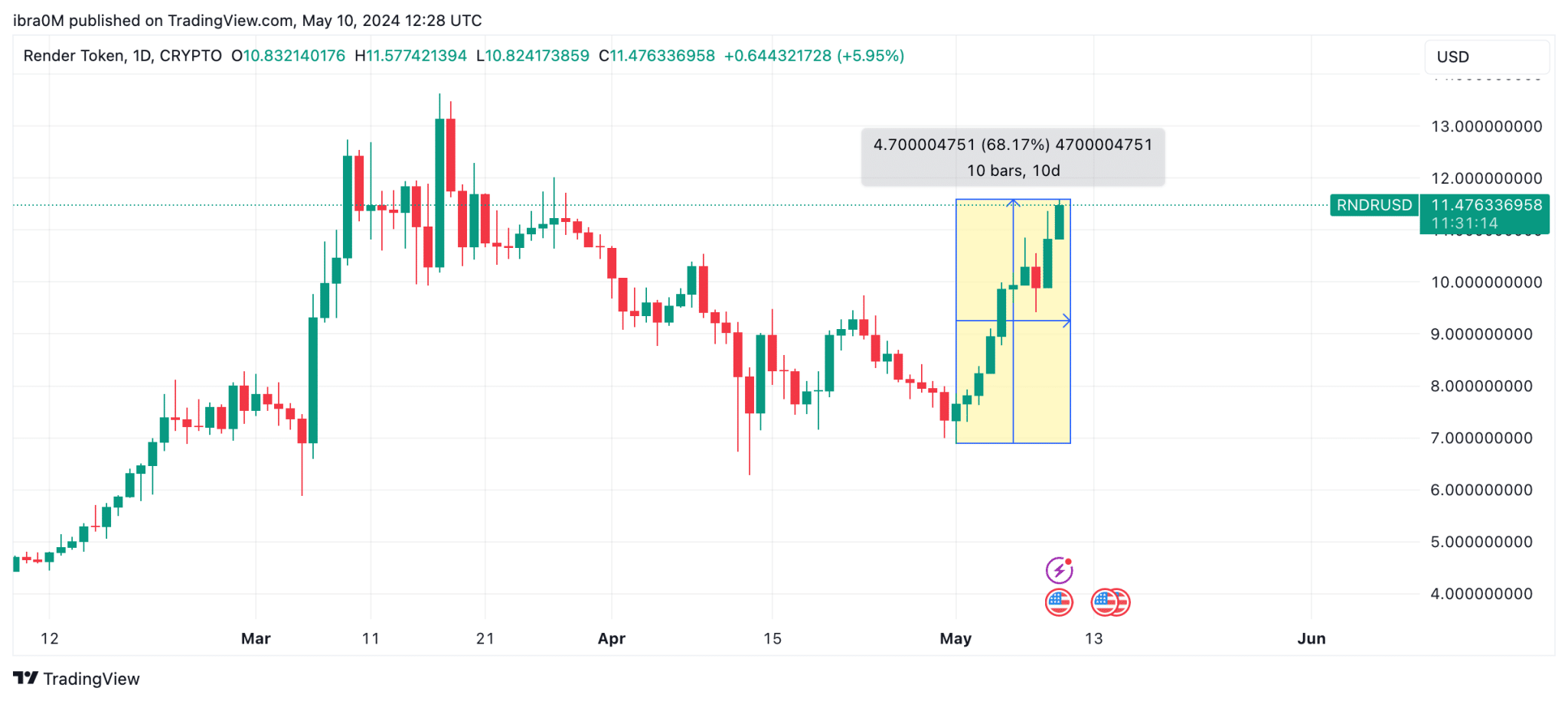
Render RNDR Price Action

As seen above, Render token price opened trading for the month around the $6.9 level. Since, then soaring market demand has triggered a 68% rally, with RNDR trading at $11.5 apiece a the time of writing on May 10.

Notably, Render Token (RNDR) had jumped 11% on May 7, after Apple briefly mentioned Octane — a 3D design software that is powered by the Render Network — in a keynote presentation while launching the M4 chip for its latest line of iPad.

RNDR price surges as Apple iPad presentation mentions Octane — a 3D design software that is powered by the Render Network

The four-minute keynote was delivered by Apple’s vice president of platform architecture, Tim Millet.

“Pro rendering apps like Octane will flat-out fly,” Millet stated, making note of the Render’s software’s performance on the new iPad.

Despite the Octane mention lasting only a brief 3-second cameo, it was enough to catch the attention of strategic RNDR traders who quickly swooped in to front-run potential upsides from Apple’s collaboration with the Render network.

“You can literally see the $RNDR logo in the video,” pseudonymous crypto trader D0c Crypto shared in a May 7 post.

With the Apple iPads powered by Render’s Octane software not hitting the markets until May 15, the RNDR price uptrend could continue to advance further in the days ahead.

Meanwhile, other prominent Crypto AI tokens have also experienced significant gains in the past week. Since the Apple event on May 7 Fetch.ai (FET) price has increased 12.88%, The Graph (GRT) gained 20.28% while SingularityNET (AGIX) also received a 16.18% boost.

RNDR Price Forecast: $14 All-time High in Focus

Render price is currently trading at $11.5 at the time of publication on May 10, reflecting monthly timeframe gains in excess of 68%. However, technical indicators suggest that the use of Render network’s Octane software in Apple’s latest iPad could propel the RNDR price to new all-time highs above $12.50 in the days ahead.

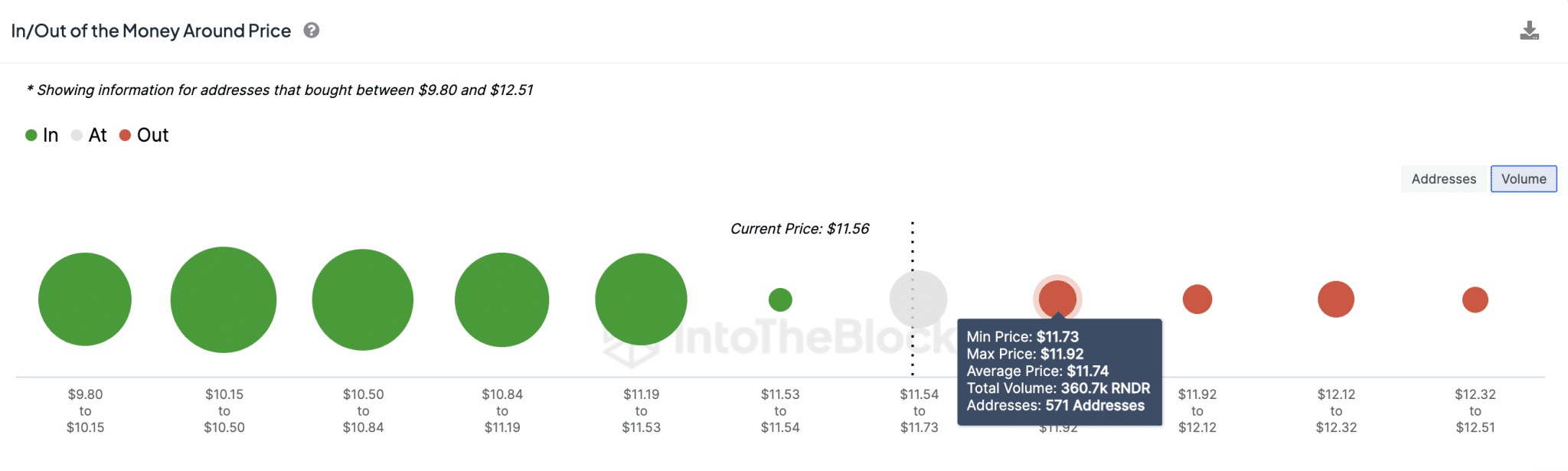
IntoTheBlock’s global in/out of the money data groups existing RNDR token holders according to their entry prices. The chart below shows that the RNDR price uptrend could hit a roadblock at the $12 level.

Render RNDR Price Forecast 
Render RNDR Price Forecast

As seen above, 517 existing holder addresses have acquired 360,700 RNDR at the maximum price of $11.92. Having held at a loss since March, those holders could opt to take profits once RNDR approaches its break-even point in the days ahead.

But it demand surge intensifies after the Apple’s iPad goes on sale on May 15, fitted with Render’s Octane software, RNDR price could enter a parabolic rally to new all-time highs above $14.

On the contrary, in the event of a pullback, RNDR’s price could find short-term support around the $10.50 level.

Bitcoin and Ethereum Options Worth $2B Set to Expire Today

0

Options data reveals that 18,000 Bitcoin (BTC) options and 280,000 Ethereum (ETH) worth $2 billion are set to expire today as weak crypto markets persist.

Options data for May 10 reveals significant impending expirations in the cryptocurrency market, according to Greeks.live. For context, options are financial contracts conferring transactional rights but not obligations to investors at a specific time and rate. 

As disclosed in a recent post from Geeks Live, approximately 18,000 Bitcoin (BTC) options and 280,000 Ethereum (ETH) options are facing expiration, with metrics indicating influence from historical data and market sentiment.

The BTC options market has a put call ratio of 0.64, signaling increased bullishness. Moreover, the max pain point stood at $62,000, indicating a potential convergence of options value around this price level. The collective notional value of these expiring BTC options amounts to $1.2 billion.

Meanwhile, the ETH options market shows a put call ratio of 0.74, suggesting a slightly higher preference for bullish positions. At $3,050, the max pain point implies a potential pull towards this price level upon expiration. Furthermore, the cumulative notional value of expiring ETH options totals $800 million.

Market Displays Weakness as Volumes Decline

This data mirrors the dip and declining volumes witnessed by crypto markets throughout the week. Geeks Live confirms that notional value of expiring BTC and ETH options last week stood at $2.4 billion, while the figure for two weeks ago was a whopping $9.3 billion.

Recall that the Bitcoin ETF recently recorded massive outflows in April. While the outflows experienced by the US BTC ETF have diminished, the market trading structure and block trade activities indicate persisting price fragility, resulting in low investor confidence.

In tandem with the market sentiment, implied volatility (IV) across major trends is downward, with IV levels trailing the mean watermark. Meanwhile, Bitcoin currently trades for $63,250, up 3% in the last 24 hours, while Ethereum has gained 1.8% to $3,025 within the same timeframe.

Wadzpay (WTK) Price Surged 180% in May, Here’s Why

0

WadzPay price has surged to a 2-year peak of $0.9 on May 10 2024, reflect monthly timeframe gains in excess of 180%: can critical project announcements from the team drive the WTK rally further?

What is WadzPay (WTK), and Why is it Going Up?

WadzPay (WTK) is a blockchain-based payments service provider that facilitates virtual asset-based transaction processing, custody, and settlement for large institutions, banks, and fintech platforms.

More importantly, this steady rise in value for WTK shows great promise for the project. In detail, the asset is up by 12.7% in the last 24 hours, up by 117% in the last 7 days, and up by 303% in the last year.

Wadzpay’s native WTK token has been in high demand in recent weeks, thanks to bullish announcements from the team, triggering a triple-digit price rally within the first 10 days of May 2024.

Wadzpay (WTK) Price Action

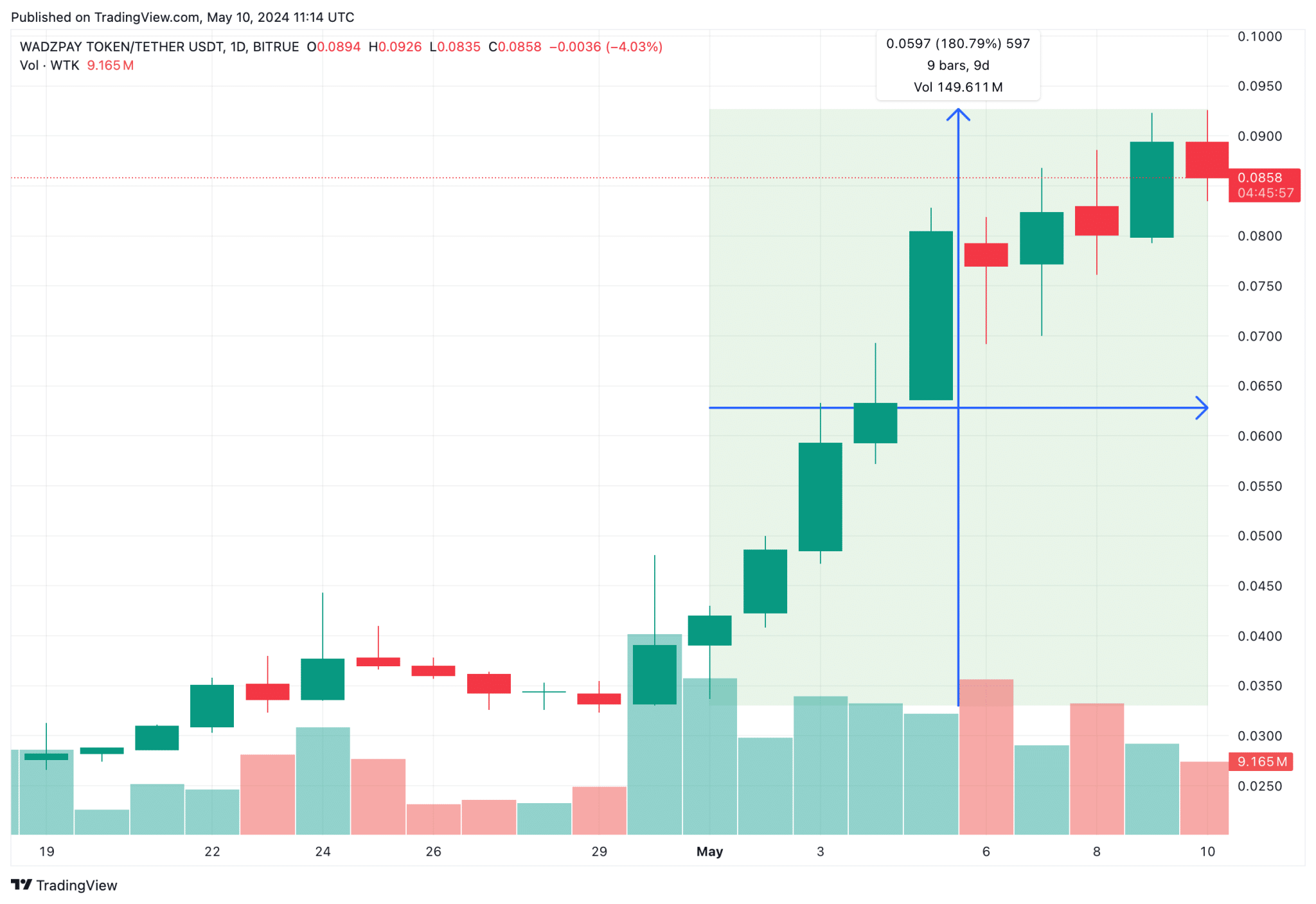
The daily WTK price chart shows that the Wadzpay native token opened trading for the month at around $0.33. But at the time of publication on May 10, WTK price has skyrocketted by more than 180% to hit a 2-year peak of $0.09.

The Wadzpay team’s recently announced a decision to launch its own stablecoin payments services. Markets reaction to WadzPay’s entry into the stablecoin market appears to have formed a major catalyst for the triple digit WTK price rally.

WadzPay, a fintech leader offering blockchain-driven digital asset payment solutions, has revealed its intentions to enter the stablecoin market. This development is expected to expand the company’s scope from its current concentration, transforming it from a payment-centred to a global blockchain financial services provider.

  • Wadzpay team.

The project is set to expand Wadzpay’s current operational scope from payments and settlements-centric solutions to include the stablecoin market. Over the years, the global stablecoin market has remained one of the fastest-growing sectors in crypto. Despite major risks and regulatory spotlight, industry leaders Circle (USDC) and Tether (USDT) continue to turn billions in operating profit.

To mitigate risks and enhance its stablecoin service, WadzPay has moved to expand its global footprint in terms of cross-border payment licenses and operating approvals. Recently, Wadzpay acquired VASP and VARA licenses and approval in Dubai, UAE, in a move that could jumpstart the execution phase of the global stablecoin project, as stated in the roadmap.

WTK Price Forecast: Erasing another Zero Could Trigger Bigger Gains

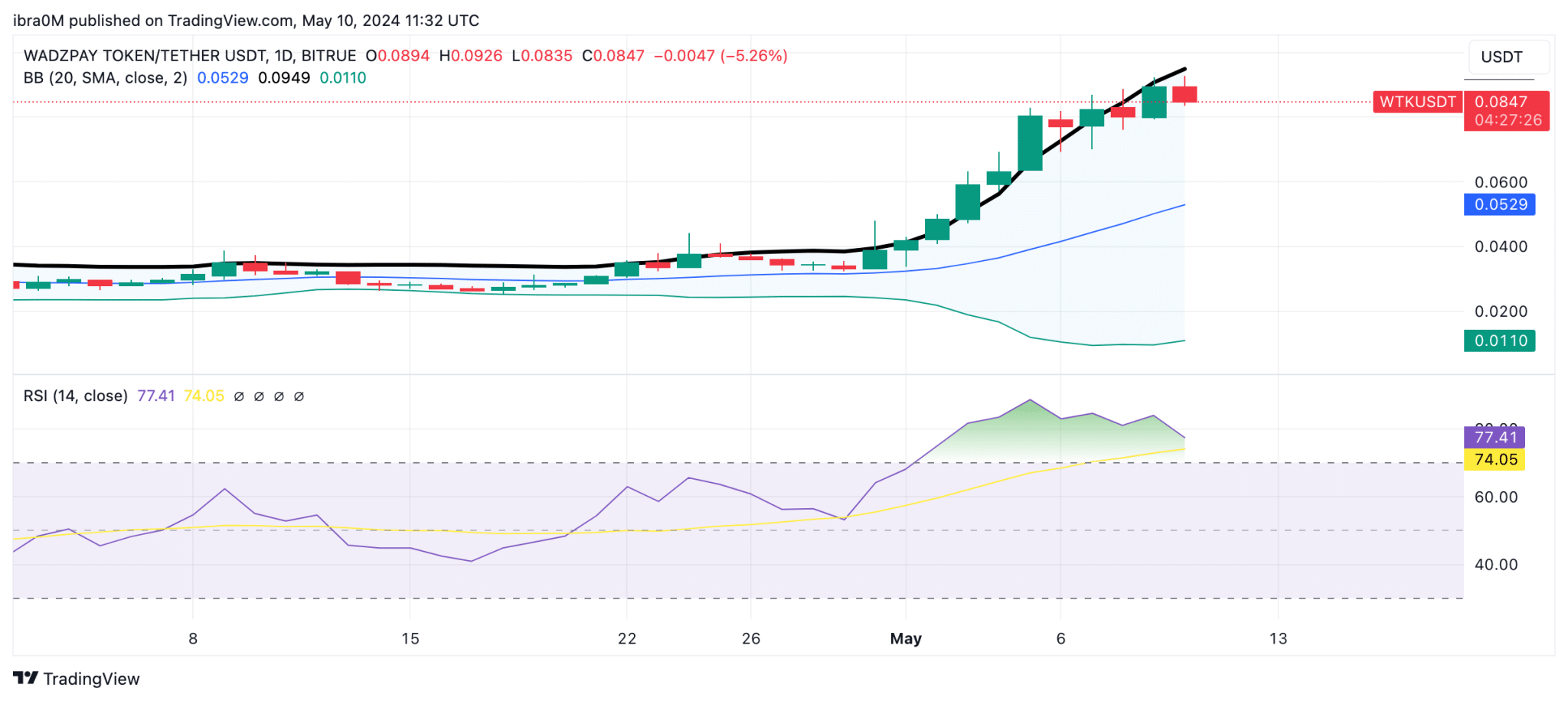
WTK price is hover around the $0.09 mark at the time of writing on May 10. In terms of short-term price action, WTK has retraced 5% in the last 24 hours after hitting a roadblock at the $0.01 milestone. Considering the psychological significance of the $0.01 resistance level, paper-handed swing traders could consider it perfect timing to book some profits.

If this scenario plays out, and holders opt to lock in some of their 180% unrealized profits in May, WTK price action could experience a rapid downswing toward the $0.08 level.

Wadzpay (WTK) Price Forecast

But on the contrary, Wadzpay’s price prospect in the mid-to-longer term horizon has a more positive outlook. Firstly, according to Coinmarketcap data, WTK has a maximum supply of 1 billion tokens, with over 500 million already in circulation.

WTK over 50% supply in circulation, and do immediate token unlocks within the next month, strategic new entrants could pay close attention to the ongoing retracement to find an entry point.

Furthermore, with the bullish catalyst Wadzpay stablecoin yet to be launched, many existing investors could opt to hold out for the full potential upside of the upcoming project.

The key factors could combine to catapult WTK price above the $0.10 territory, possibly setting the stage for a bigger rally.