Home Blog Page 1746

SEC Goes After PayPal With Subpoena on Its PYUSD Stablecoin

0

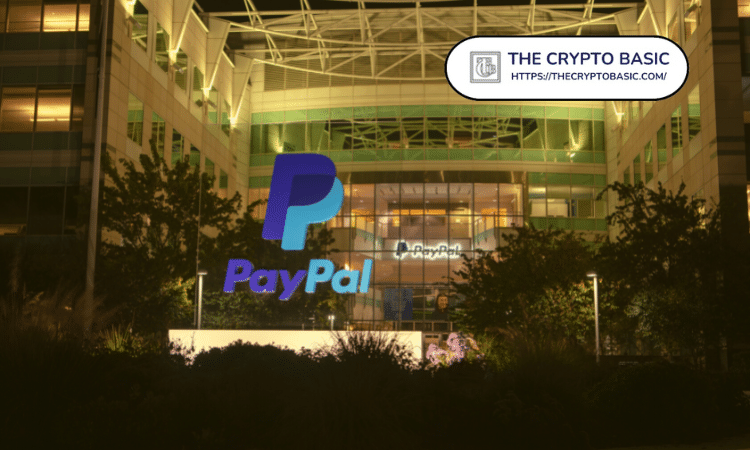
Payment processing company PayPal has received a subpoena from the U.S. Securities and Exchange Commission (SEC) in relation to its newly launched PYUSD stablecoin.

The United States Securities and Exchange Commission (SEC) has issued a subpoena to popular payment company PayPal, executives confirmed on Wednesday. The subpoena is related to the company’s PYUSD stablecoin, which launched in August 2023.

PayPal executives disclosed news of the subpoena in a post-earnings call, adding that the company is now collaborating with the regulator on the matter. An SEC subpoena is a formal request by the regulator seeking documents and other information relevant to a case that the agency is investigating.

Receiving a subpoena is considered early evidence that the SEC believes an entity has violated securities law. In PayPal’s case, the SEC may be seeking a basis to establish that PYUSD or its issuance method does not comply with its regulations.

It is also noteworthy that an SEC subpoena does not necessarily mean that a company will face a lawsuit from the agency. Instead, such notice may lead to further discussions between the company and the agency, confirming that there were no violations.

SEC Doubles Down on Crypto Enforcement Against the Odds

PayPal receiving a subpoena on its stablecoin follows a pattern of relentless enforcement actions against crypto-related firms by the SEC. The regulatory body has filed lawsuits against even the most prominent crypto companies, including Coinbase, Binance, Ripple, and Grayscale.

Notably, the regulator has also suffered a few landmark losses against Ripple and Grayscale. The United States Government Accountability Office (GAO) also recently called out the SEC for breaking the law with a rule it hastily issued about crypto custodians.

However, a potential lawsuit against an established payment company like PayPal would still catch the eye. For one thing, it would mark the first time the SEC cracked down on a mainstream company for integrated core blockchain-based products. Such a development would also discourage the adoption of crypto-related technology by other mainstream companies.

Meanwhile, it is worth recalling that a similar move by the SEC against stablecoin issuer Paxos led to the demise of the Binance USD (BUSD) token. PayPal will evidently hope to avoid a similar outcome, especially with its stablecoin project already gaining traction.

Recall that as reported by The Crypto Basic Paypal launched Crypto services back in 2021. In the lastest move, PayPal registered for cryptoasset activities in the UK as part of its post-Brexit expansion.

Ripple CEO Highlights Changes in XRP Quarterly Market Report

0

Ripple CEO Brad Garlinghouse has called attention to new changes in the XRP market reports, highlighting the threefold increase in XRPL’s DEX trading volume.

In an X post yesterday, Garlinghouse stated that the XRP quarterly report is slightly different from previous versions, following the coverage of XRPL-related activities.

The prominent crypto stakeholder made the comment following the release of Ripple’s Q3 2023 report for the markets. According to Garlinghouse, the quarterly report for XRP now tracks daily spot and the XRPL’s native decentralized exchange (DEX) trading volume.

Interestingly, Garlinghouse shed light on the massive increase in XRPL’s DEX trading volume in the previous quarter, which surged 3x quarter-on-quarter (QoQ).

XRPL Records Massive Boost in Q3

It bears mentioning that XRPL’s native DEX growth was shared in Ripple’s Q3 2023 market report. According to the report, the trading volume on the DEX spiked tremendously to $218,610,501 ($218.61 million) in Q3 2023 compared to Q2’s $51,671,864 ($51.67 million).

Besides the massive surge in the DEX trading volume, XRPL also recorded other impressive stats in the previous quarter. The leading blockchain network saw a spike in the number of new wallets, as 157,936 addresses were recorded in Q3, marking a 13.91% surge from Q2’s 138,644.

XRP Average Price Spikes 9.8%

XRPL’s bullish performance in the previous quarter also extended to the performance of its native token, XRP. Per the data, XRP closed Q3 2023 at an average price of $0.52. This represents a 9.8% increase from the $0.48 recorded in the second quarter.

Interestingly, XRP’s $0.52 close in Q3 also marks an astounding 57.5% increase in the asset’s year-to-date (YTD) price. The massive surge in XRP price in Q3 came as a result of the positive ruling in the SEC v. Ripple lawsuit.

Recall that U.S. District Judge Analisa Torres ruled on July 13 that XRP in itself is not a security. The ruling resulted in a spike in XRP price, surging to a yearly high of $0.938.

XRPL Saw Decreased Activity in Q3

Meanwhile, the XRP Ledger saw decreased activity in Q3, following in the same direction as other blockchains. In Q3 2023, the number of XRPL transactions plunged from Q2’s 99,312,734 (99.31 million) to 90,446,746 (90.44 million).

In addition, XRPL’s average daily active addresses also slumped 18.5% to 44,013.

Top Analyst Identifies What Needs to Happen for XRP to Hit $10

0

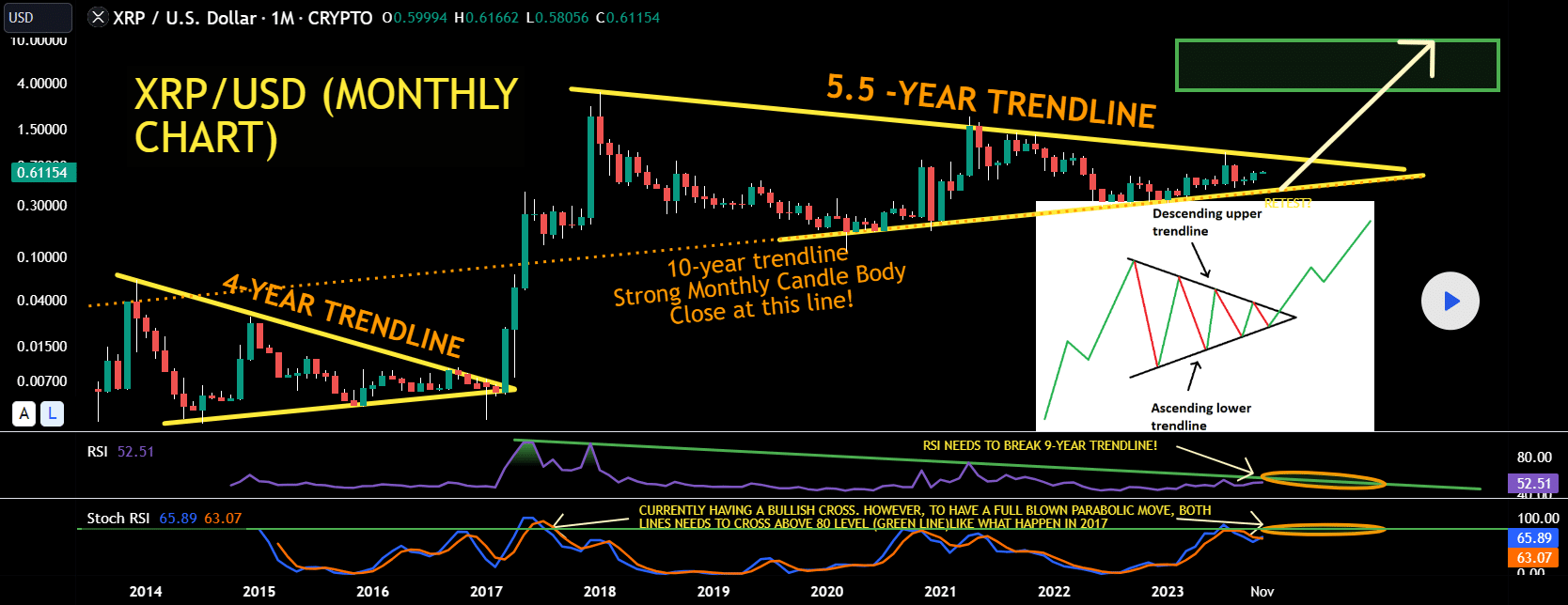
JD, a notable market analyst, recently identified two conditions necessary for XRP to rally to a $10 range in a breakout of a trendline that has dominated the asset for over five years.

According to data from a monthly chart, both conditions pertain to the movements of the Relative Strength Index (RSI) and the Stochastic Relative Strength Index (Stoch RSI). The analyst posits that these indicators need to cross over certain levels for the confirmation of an imminent breakout of the trendline.

Notably, XRP has continued to trade below the downward trendline since it dropped from the $3.31 all-time high in January 2018. Over the years, the asset has tried twice to break out of the trendline: when it rallied to $1.96 in April 2021 and when it spiked to $0.93 in July this year. Each attempt failed after meeting resistance.

Conditions for a Breakout

JD believes XRP might not be able to break the trendline until its monthly RSI crosses above a peculiar green line it has been moving under since May 2017. JD’s chart says the green line has existed for nine years, but recent data confirms it has merely lasted for six years and five months.

XRP 1M Chart JD 092235
XRP 1M Chart | JD

The green line has continued to slant downward, giving the RSI a greater opportunity to break above it. Notably, the XRP monthly RSI stood at 52.51 at the time of JD’s disclosure. Current data puts the figure at 52.35, with the indicator edging closer to a cross above the green line. 

In addition to the RSI breaking above the green line, JD called attention to another condition needed for an XRP breakout. Interestingly, he highlighted the Stoch RSI, noting that it has observed a bullish cross, as the %K line (blue) recently crossed above the %D line (orange).

However, JD emphasized that this bullish cross will not provide enough strength for an XRP breakout. According to him, both lines of the Stoch RSI (%K and %D) must also cross above 80. The 80 level is on a green horizontal line. 

JD confirmed that this move occurred in 2017 before XRP embarked on its massive rally. Currently, both lines of the Stoch RSI are a long way from the 80 level. Specifically, the %K line is at 65.46, while the %D line sits at 62.92.

XRP Targets: $3.5 to $10

JD already anticipates the fulfillment of his conditions, as he envisions an eventual breakout for XRP. The analyst has positioned a green box at his target range, with a minimum price target of $3.5 and a maximum of $10. 

Meanwhile, in the short term, XRP recently reclaimed the $0.60 territory for the first time since August. The asset trades at $0.6080, up 0.76% over the past 24 hours. With a $1.74 billion 24-hour volume, XRP retains the seventh spot in terms of largest trade volume.

Japan SBI VC Trade Makes Special Shiba Inu Announcement

0

SBI VC Trade, the crypto exchange division of the SBI Group, is inviting members of the Japanese crypto community to participate in a celebratory campaign to win Shiba Inu (SHIB) tokens.

According to SBI VC Trade, the campaign to earn Shiba Inu commemorates “Kabosu-chan’s birthday.” Notably, Kabosu-chan, the beloved internet personality who served as the inspiration behind the Shiba Inu and Dogecoin cryptocurrencies, marks her birthday on November 2.

SBI VC Trade’s celebratory campaign allows members of the Japanese crypto community to earn cryptocurrencies inspired by Kabosu-chan. The firm disclosed specific details about the promotion in a recent statement on the X platform and via its official blog.

SBI VC Trade Shiba Inu and DOGE Campaign

According to the notification, SBI VC Trade users can engage in Shiba Inu and Dogecoin transactions and participate in a coin lending initiative. In parallel, they can look forward to rewards for purchasing SHIB and DOGE during the campaign period. 

Meanwhile, the exchange outlined particular details the target participants must attain to qualify for the reward.

Per the report, the campaign targets two groups of customers. They are individuals who enter into a contract to purchase SHIB with a value of 50,000 yen or more during the campaign period. Similarly, it covers those who do the same for DOGE.

Participants in the promotion can look forward to receiving rewards based on their purchases. For SHIB transactions, the qualifying customers will receive an amount equivalent to 1% of their Shiba Inu purchase contract price in SHIB itself. The same 1% commission applies for Dogecoin transactions.

Meanwhile, SBI VC Trade pledged to offer customers who open a new account as part of the campaign a gift of “Kabosu fruit juice.” It is worth mentioning that the window SBI VC Trade offered for the SHIB-DOGE promo is from November 2 to December 1, 2023.

Top Attorney Says Lawyers Attempting to Paint SBF as a Victim Is a “Rookie Mistake”

0

Attorneys representing former FTX CEO Sam Bankman-Fried (SBF) have recently attempted to paint their client as a victim, a move that John Deaton has openly criticized. 

During a recent Manhattan courtroom hearing, the legal team defending disgraced FTX founder Sam Bankman-Fried argued strongly about how the prosecution had mistreated their client. The comments, which formed a large part of an emotional closing remark, suggested that the prosecution had attempted to bully the former FTX CEO throughout the trial.

Specifically, the legal team led by Mark Cohen argued that the prosecution had criticized SBF’s hairstyle, dress, and appearance. Sam Bankman Fried’s legal defense also claimed that the jury had attempted to paint their client as a calculating villain despite his acting “in good faith” by sharing knowledge of the case in recent testimony.

Attorney Cohen described SBF’s mistakes at FTX and Alameda Research as a genuine attempt to “start and operate two multi-billion-dollar businesses in a new market.” Cohen added that “while some decisions turned out well, [other] decisions turned out poorly.”

Crypto Attorney Criticizes Move as “Rookie Mistake”

In the aftermath of the closing remarks, experienced crypto lawyer John Deaton shared his thoughts. He described Sam Bankman-Fried’s legal team’s efforts to paint their client as a victim as a “rookie mistake.” 

Deaton expressed shock that SBF’s attorneys could share such reasoning in court, suggesting that the former FTX CEO may have written the closing remarks and instructed his lawyers to argue it. John Deaton also argued that the consequences of such rookie mistakes would show when the jury eventually hands down a sentence. 

Notably, Deaton is not the only lawyer expecting a heavy sentence for the former FTX CEO. In similar comments, criminal defense lawyer Carlo D’Angelo mentioned that SBF’s recent testimony could lead to a longer sentence.

Judge Lewis Kaplan, who is presiding over the case, is expected to announce a verdict in the coming weeks. If Sam Bankman-Fried is convicted of fraud, he faces a lengthy prison sentence that could span decades.

Suspected Early Bitcoin Miners Move Dormant 6,500 BTC After Years

0

Three Bitcoin (BTC) whale addresses suspected to belong to early miners have collectively transferred 6,500 BTC worth $230 million.

While unidentified, these three wallet addresses and the Bitcoin they contained had stayed dormant since 2017. Notably, the deposited 6,500 BTC in these wallets came on November 5, 2017.

Early Bitcoin Miners at Work?

One interesting aspect of this large Bitcoin transfer is the origin of the funds. Current permutations, according to Wu Blockchain, highlight the assets that originated from the early transfer of BTC as far back as July 2011.


Data from Bitinfocharts also showed that some of the BTC in these wallets came from addresses linked to F2Pool. F2Pool is one of the early Bitcoin mining pools still in operation. The fact that the funds could come from F2Pool has triggered the idea that the owner(s) are among early Bitcoin miners.

The recent movement underscores the thesis that the plunge into dormancy did not happen by chance but by a premeditated move. While the transfer of the 6,500 BTC might have triggered attention, it is not the first Bitcoin whale transaction recorded in recent times.

As a complement to the massive movement of Bitcoin, an address, once tagged the third largest off-exchange holder of the asset, moved 132,000 BTC to exchanges in 3 days in July 2022. More recent whale movements feature accumulations and emergence from dormancy.

Why the Recent Re-Emergence of Bitcoin Whales?

One underlying trend in recent times is the emergence of Bitcoin whales making huge transfers. A primary explanation making the rounds is the fact that most of these whales are already in profit, considering the difference in purchase and sale prices.

The emergence of wallet addresses from dormancy is also common for other altcoins as well. From Ethereum to XRP, Shiba Inu (SHIB), and Dogecoin (DOGE), the number of whales taking advantage of the current bullish market valuation is high.

4.46 Trillion Shiba Inu Moves From Bitvavo To New Wallet

0

The Mysterious Whale grabs $35 million worth of SHIB tokens as Shiba Inu Ecosystem continues to make significant advancements.

Whale Alert, a leading blockchain data tracking platform, recently uncovered the emergence of a brand-new Whale. This deep-pocketed investor acquired 4,464,530,677,374 (4.46 trillion) SHIB tokens, equivalent to $35,359,082 ($35.35 million).

According to the disclosure, the colossal acquisition took place on the renowned Netherlands-based crypto exchange, Bitvavo, in a single transaction about 15 hours ago from the time of this report.

The identity of this whale remains shrouded in mystery, but the wallet has swiftly risen to prominence, now ranking as the 25th largest holder of Shiba Inu tokens worldwide.

This development marks the third sheer-scale transfer of Shiba Inu tokens among top Whales within the past seven days. A day ago, another enigmatic wallet executed a significant transfer of 4,474,530,677,374 (4.47 trillion) SHIB, valued at $35,357,741 ($35.35 million) to an unknown wallet in a single transaction.

In another notable event on October 31, yet another mysterious wallet made headlines, moving 4,524,030,677,374 (4.52 trillion) SHIB tokens worth $36,192,482 ($36.19 million) to two undisclosed wallets.

The surge in whale activity is closely tied to the significant developments happening in the Shiba Inu Ecosystem. As reported earlier by The Crypto Basic, Shytoshi Kusama, the lead developer of Shiba Inu, unveiled a revolutionary feature on Shibarium known as Shib Name Service (SNS), marking the first step towards building Shibidentity. This innovative feature empowers the Shiba Inu community to “own and control their digital identities.”

At the same time, Welly, the real-life partner of Shiba Inu, commenced operations for its web3 restaurant on October 31, 2023.

Furthermore, Shiba Inu has forged a high-profile strategic partnership with RSTLSS, a leading creator platform. This partnership will see RSTLSS integrating the Shiba Inu blockchain, Shibarium, into its user-generated content (UGC) outlet.

Cardano Founder Defends IOG, Addresses Frustration in Cardano Community

0

Cardano founder Charles Hoskinson has defended IOG, the project’s research and engineering arm, against community backlash.

The founder of Cardano, Charles Hoskinson, has leaped to the defense of recent initiatives by Input Output Global (IOG), Cardano’s research and engineering arm. Hoskinson reiterated IOG’s commitment to onboarding millions of users into the Cardano ecosystem.

Notably, Cardano’s IOG has come under scrutiny for some initiatives it has implemented to drive the blockchain ecosystem forward in recent months.

For instance, IOG recently unveiled plans to build a privacy-focused Cardano sidechain called Midnight and acquired a popular community wallet, Nami. The Cardano division also plans to adopt CIP 1694, a proposal to give more governance power to the project’s community.

Yet, factions of the Cardano community have been unsatisfied with these initiatives, often highlighting how they tend to centralize the blockchain’s ecosystem further rather than decentralize it. As The Crypto Basic reported, certain community members noted that the Nami wallet acquisition creates further IOG monopoly.

However, Charles Hoskinson, in a recent comment, defended IOG’s latest endeavors. The Cardano founder reminded the community that IOG is like every other company building decentralized applications for the Cardano network.

“IOG is a builder,” Charles Hoskinson tweeted, adding that the company has developed a range of products and services and is “here to bring millions into the [Cardano] ecosystem.”

The Cardano founder expressed concerns about community members who are “actively hostile” to IOG’s efforts and deployment of capital to enhance growth within the Cardano ecosystem.

Further, Charles Hoskinson broke down how each of the recent initiatives contributes to the overall goals of the Cardano team. He explained that CIP 1694 creates a more decentralized ecosystem than an “oligarchy,” as certain users have claimed. 

The company’s Lace wallet is designed to onboard Bitcoin and Ethereum users to Cardano, while Midnight aims to make Cardano a leader in data confidentiality. Lastly, the recent Nami wallet acquisition is simply an attempt to “accelerate a great simple user experience.”

Cardano Founder Calls for Unity 

Alluding to Cardano’s plans to become the number one blockchain ecosystem, Charles Hoskinson called for unity of mind within the global community. Specifically, he urged the community to stop being drama queens and “focus on building, partnering, and welcoming new positive developments.”

The Cardano founder’s call for unity comes at a time when the network is seeing an uptick in stablecoin usage and a relatively stable DeFi ecosystem. If achieved, such unity would evidently help Cardano as it continues to compete against other layer-1s to become users’ preferred destination. 

UAE’s Al Maryah Bank Selects Ripple ODL Partner for Cross-Border Transfers

0

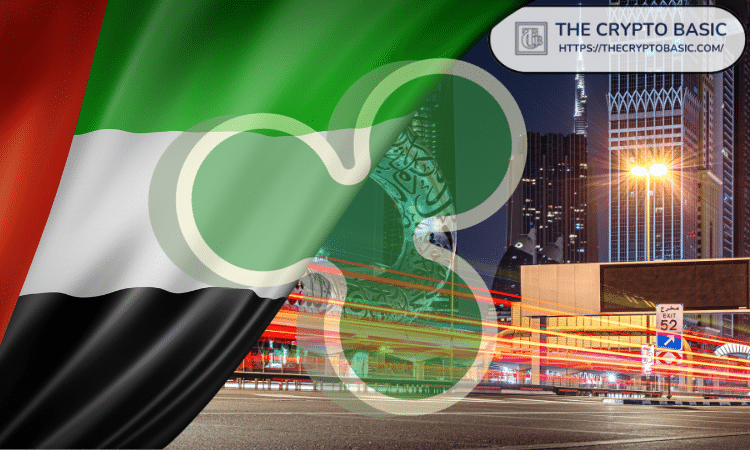
Al Maryah Community Bank has chosen to leverage the services of Ripple ODL partner LuLu to facilitate cross-border money transfers.

In a recent development, LuLu Exchange, Ripple’s business partner based in the UAE, has formed a strategic alliance with Al Maryah Community Bank (Mbank), the acclaimed first fully integrated virtual bank in the United Arab Emirates.

ZAWYA, a publishing firm focused on the Middle East region, captured this development in a report on Tuesday. 

According to the report, the LuLu-Mbank collaboration aims to facilitate real-time intercontinental payments through the Mbank Wallet app and Mbank UAE. Additionally, it seeks to empower Mbank’s users to conveniently deposit cash at any LuLu Exchange branch throughout the country.

Furthermore, the report underscored that the Ripple partner’s history of associations with virtual banks and technology firms has paved the way for the Mbank alliance. Also, it noted Al Maryah Community Bank’s commitment to revolutionizing banking services by leveraging innovative and secure technologies.

Mbank and LuLu Exchange Execs React

Saeed Mohamed Al Khoori, the Head of SME coverage at Mbank, highlighted the importance of the partnership with LuLu Exchange in advancing their banking industry objectives. He explained that, as a local bank, their collaboration with LuLu Financial Group has allowed them to diversify their financial services, particularly facilitating international cash transfer transactions through LuLu Exchange branches.

Richard Wason, the CEO of LuLu Financial Group, provided his perspective on the alliance’s significance for realizing a digital economy vision. He emphasized that their partnership with Al Maryah Bank effectively combines the strengths of their proprietary platform technology with an extensive network of branches across the country. This synergy ensures that the public can access a robust and reliable infrastructure for their financial needs.

LuLu and Ripple Collab

Notably, LuLu is an early adopter of XRP, implementing business solutions via Ripple’s On-Demand Liquidity (ODL) service (now Ripple Payments). 

In a previous press statement, the Managing Director of LuLu Financial Holdings, Adeeb Ahamed, disclosed that Ripple’s ODL facility played a pivotal role in enhancing its fund management capabilities within the APAC region, all while adhering to the established regulatory guidelines.

Ripple CLO Calls Out SEC Says ‘SEC Again Acted Arbitrarily and Capriciously’

0

Ripple Labs’ Chief Legal Officer (CLO) Stuart Alderoty expressed concerns over the pattern the US SEC exhibits in flouting the law.

The Ripple CLO is particularly concerned about the regulator’s approach to enforcement under Chairman Gary Gensler. This latest comment comes after a Federal Court of Appeals declared that the SEC acted “arbitrarily and capriciously,” violating the Administrative Procedure Act.


This latest verdict came as part of the lawsuit between the regulator and the US Chamber of Commerce, Longview Chamber of Commerce, and Texas Association of Business.

As ruled on Oct. 31, the U.S. Court of Appeals for the Fifth Circuit noted that the SEC violated the Administrative Procedure Act by choosing not to respond to earlier comments from the petitioners in addition to not carrying out an efficient cost-benefit analysis.

Reactions to SEC’s Growing Losing Streak

The SEC has not had the best year, as most of the enforcement actions and legal tussles it faced ended in one form of loss for it or another.

As reported earlier, the United States Government Accountability Office (GAO) spanked the SEC as it publicly confirmed that the regulator broke a rule concerning the guidance it offered to firms operating in the crypto ecosystem in March 2022.

This guidance, contained in the Staff Accounting Bulletin (SAB) No. 121, saw the SEC instructing crypto firms to double-count their crypto holdings on their balance sheets. While the SEC’s justification rests on the risk-on nature of crypto, the GAO noted that providing such guidance without first subjecting it to Congressional Review was unlawful.

This backlash rests on other cases that crypto proponents have called the SEC out for this year. Two prominent examples include the lawsuit against Ripple and its executives, Brad Garlinghouse and Chris Larsen, and the Grayscale Bitcoin Trust (GBTC) conversion request to Bitcoin ETF.

Important Precedents Set

In the Ripple case, the SEC they dropped the charges against both executives in October, complementing the ruling from Judge Analisa Torres on July 13 that declared the programmatic sales of XRP are not securities.

For the Grayscale ruling, the court granted the firm’s petition for review of the SEC’s rejection of its application, setting another important precedent for the industry. In what many consider good faith, the regulator refused to file an appeal to this ruling, further solidifying the confidence that the industry might be closer to securing approval for Bitcoin spot ETF.

The lawsuit’s outcome also pushed Grayscale to file an application seeking approval to convert its largest Ethereum trust product.