Home Blog Page 1886

Top Analyst Forecasts Cardano (ADA) Could Find Its Bottom Against Bitcoin in Q3 2023 

0

Prominent analyst says Cardano (ADA)current price is a repeat of its 2019 downward pattern, adding that the coin could find its bottom against Bitcoin in Q3 2023. 

Benjamin Cowen, a prominent crypto analyst, has warned that Cardano (ADA), the ninth-largest cryptocurrency, is repeating a 2019 downward pattern. 

Notably, Cowen voiced this concern in a recent strategy session focused on ADA. 

According to the analyst, ADA endured a tough time in the second half of 2019, when the coin’s price and other altcoins plummeted to new lows. 

“The second half of 2019 was probably the hardest part of the cycle because it wasn’t very exciting. You just watched the altcoin market slowly bleed out,” Cowen said. 

Cardano Unable to Sustain Occasional Pumps

Although ADA recorded occasional price pumps during this period, the price gains faded almost immediately, resulting in a massive decline for the crypto asset, the analyst said. 

Interestingly, the analyst cited an instance where ADA enjoyed a 41% spike in the latter part of 2019, which saw its price move to $0.050 from $0.035. 

He also recounted another instance where ADA surged 40% from $0.041 to $0.058 in 2019. 

However, ADA could not sustain the rally, leading to a massive plunge. Like its 2019 price action, the analyst said ADA experienced a similar rally this year when it formed double-top patterns. 

He added that the crypto asset plunged below the bull market support band. For clarity, the bull market support band is an indicator that combines both the 20-week simple moving average (SMA) as well as the 21-week exponential moving average (EMA). 

Similarities Between ADA 2019 & 2023 Market Cycle

Per Cowen, the similarities between ADA’s market performances in 2019 and 2023 include the fact that the coin slumped below the bull market support band and the formulation of a double top. 

Furthermore, the analyst highlighted how ADA reached a low point of $0.028 in 2018 and then rallied in 2019. Drawing parallels to the present, the analyst said ADA fell to a low of $0.315 in 2022 and skyrocketed this year around June. 

“We saw ADA put in a low into 2022 [at $0.315] just like it did in 2018 [at $0.028]. We saw it pump in 2023 just like it did here in 2019,” the analyst said.  

Cardano Could Find Its Bottom Against BTC in Q3

Meanwhile, Cowen also provided an analysis of ADA’s performance against Bitcoin. In 2019, ADA did not reach its bottom against Bitcoin until the third quarter of the year. 

Additionally, he said ADA endured “those lows” for six months before soaring. The analyst speculated that ADA could experience a similar scenario in the current market cycle. 

At the time of writing, ADA is changing hands at $0.3, down 1% in the past 24 hours. The ninth-largest crypto asset has also plunged 5% in the past week, according to CoinGecko data. 

Despite Cowen’s analysis, some experts still believe ADA is one of the best crypto assets to buy in the current bear market. As reported earlier, Cardano’s fans staking pool associate Pieter Nierop highlighted ten reasons investors should purchase ADA. 

Shiba Inu Official Twitter Account Updates Verified Status To Gold Checkmark

0

The verification badge on the official Twitter account for the Shiba Inu ecosystem has been updated from the blue tick to the gold checkmark.

In a welcome development, the official Twitter handle of the Shiba Inu ecosystem has received Twitter’s gold checkmark, showing it’s an officially recognized entity. The handle drew the attention of community members to the development in a recent tweet.

Following the verification changes brought to Twitter after Elon Musk’s takeover, the project frontrunners decided to update the verified badge of the official Shiba Inu ecosystem Twitter account. Notably, the project’s handle (@shibtoken) had been identified with the blue tick for years.

But earlier this week, the verified badge on the SHIB token Twitter account was updated to the gold checkmark. Accordingly, the account’s profile image dropped the circular layout for a square format. Notably, the fee for the gold checkmark is $1,000 per month, with other taxes attached.

Implications for the Shiba Inu Project

The gold checkmark indicates that the Shiba Inu ecosystem Twitter account is an officially recognized business entity on the social platform. The badge is earned after paying the subscription fee and due diligence from Twitter Verified Organizations.

The Shiba Inu community aims to place the decentralized project ecosystem as a top-class and reputable one. With this development, SHIB would be accorded a higher reputation in the crypto industry, and its social dominance could record an increase.

Also, acquiring the gold checkmark would help prevent community members from falling victim to impersonation scams. Because it would allow users easily distinguish between fake and authentic initiatives and news.

A verified checkmark is crucial, given the rising impersonation scams in different crypto communities. This explains why the ShibArmy expressed concern over Shytoshi Kusama’s temporary loss of his verification badge on Twitter. 

Upcoming Developments

Kusama has continued to lead the community, spearheading ecosystem developments. As reported by The Crypto Basic, community members expressed excitement after the pseudonymous figure was confirmed as a speaker at the upcoming Blockchain Futurist Conference. 

Apart from the expected Shibarium mainnet launch, the next welcome development in the teeming community could be the introduction of the project logo beside SHIB and Shiba Inu Twitter hashtags. Some community members have already begun pushing for this.

Data Shows XRP Now Top Traded Altcoin of the Year

Data provider Kaiko says XRP has officially secured the title of the most traded altcoin of 2023, surpassing $150 billion in cumulative volume on CEXs.

According to Kaiko, a trusted source for market data across various networks, XRP has taken the crown as the most traded altcoin of the year. The research firm revealed this information in a recent tweet showcasing the cumulative trade volume of altcoin across prominent centralized exchanges (CEXs).

Specifically, according to the graph shared, XRP’s cumulative volume on CEXs so far in 2023 has surpassed the $150 billion mark, heading toward the $175 billion territory.

“XRP is officially the top traded altcoin of 2023,” Kaiko declared.

The image also showcased the remarkable performance of other altcoins, although XRP outperformed its closest rival with over $50 billion. 

Solana (SOL), which came next to XRP, had a cumulative trade volume of $100 billion. Other notable contenders, including Dogecoin (DOGE), Binance Coin (BNB), and Polygon (MATIC), maintained a volume between $50 to $100 billion. 

Surging Interest in XRP

It is worth mentioning that the Kaiko metric excluded the trade volume of Bitcoin (BTC), Ethereum (ETH), and Stablecoins. According to data from the market tracking website, CoinMarketCap, XRP’s 24-hour trading volume is over $1.6 billion.

The renewed interest in XRP came following the US court decision two weeks ago that Ripple violated no security law selling XRP on exchanges. XRP has since remained in the spotlight of various reports as its price continuously appreciated, with the broader crypto market sharing from its glory. 

Recall that, as The Crypto Basic reported, leading news agency Reuters recently tagged XRP as the incidental force driving the altcoin market. 

Previously, Kaiko revealed that XRP accounted for at least 21% of all crypto trades on exchanges between June 17 and July 17. This figure is notably higher than the amount the iconic BTC pulled within the same period.

Ultimately, XRP’s remarkable success as the top traded altcoin of 2023 has set the crypto community abuzz as its future remains bright in light of the recent regulatory clarity.

Zaradar Alleges LUNC is Going to 0 as Terra Classic is Manipulated with Binance Help

0

Zaradar alleges that the Terra Classic (LUNC) market is under manipulation by a single entity, possibly with help from Binance and KuCoin.

In a stunning revelation, Tobias “Zaradar” Andersen, a prominent Terra Classic (LUNC) community member and former Layer-1 Task Force developer, has raised serious allegations regarding the LUNC market. 

Zaradar boldly alleged that the market is manipulated by a single actor, possibly with the assistance of major cryptocurrency exchanges such as KuCoin and Binance. The developer further insinuated that LUNC is heading to 0.

He remarked: “Maybe the question LUNC should be asking itself, is not wen 1, but rather wen 0 […] The market is clearly rigged by a single actor and I do not deem it feasible that this actor is operating without the help of KuCoin and Binance.”

LUNC Market Manipulated

Zaradar’s accusations came to light during a discussion within the LUNC community. The developer firmly believes that a solitary entity is rigging the market. He suggested this actor could be operating in collaboration with influential exchanges.

While some community members challenged Zaradar’s claims, he defended his position. Zaradar also insinuated that such practices were not entirely surprising, given the past questionable actions of some exchanges.

In response to requests for evidence to substantiate the allegations, Zaradar highlighted the difficulty in proving intricate market manipulations. However, he particularly made a striking statement about Binance Chief Changpeng “CZ” Zhao and Justin Sun, the founder of Tron. 

Zaradar called attention to when CZ warned Justin Sun to refrain from bringing significant amounts of USD to Binance for trading purposes. Recall that the Binance CEO had warned Sun and other whales against misusing the SUI airdrop in May.

Zaradar implied that such advice indicated prior occurrences of large-scale capital movements, raising questions about the frequency and timing of such actions.

Recall that the former L1JTF developer made similar claims last month. Following an impressive 36% surge in LUNC’s price, Zaradar claimed the rally resulted from a pump-and-dump scheme. Notably, LUNC dropped 16% after the rally.

Zaradar Proposes New Chain

Amidst the latest heated debate, Canadian professional football player Nicolas Boulay emphasized that mass user adoption could resolve some market issues. 

Boulay stressed that the value of any cryptocurrency lies in its use case and proposed making LUNC a globally adopted currency owned and governed by the people, which would diminish concerns about price fluctuations.

Unfazed by the debate, Zaradar appeared disillusioned with the current state of LUNC, suggesting that it might be more profitable to start afresh. “By this point why bother? It’s more profitable for us to just build a new chain,” he responded to Boulay.

The developer’s proposition for creating a new chain remains ambiguous, leaving room for speculation on whether it is intended as a jest or a serious proposal. Nevertheless, he persistently maintains that this alternative is the most viable choice under the current circumstances.

Bank of America Says It’s Difficult to Determine Implications of Ripple Ruling for US Crypto Industry

0

The top financial institution said it is difficult to determine the impact of the SEC v. Ripple ruling on the United States crypto space.

Analysts at Bank of America (BoA) commented on Judge Analisa Torres’ recent ruling in the SEC v. Ripple lawsuit.

According to a recent CoinDesk report, the American banking giant said Judge Torres’ decision did not clarify the regulatory uncertainty issue in the US crypto space.

The leading financial institution noted that it is difficult to determine the implication of the court’s ruling on the industry, even though digital asset enthusiasts embraced the decision.

“[…] Implications of the rulings are difficult to determine,” the bank said.

Notably, Bank of America made this known while highlighting the importance of regulatory clarity in driving the mainstream adoption of crypto.

US Crypto Industry Lacks Clear Rules

Unlike most developed countries, the US has not developed a comprehensive framework for its industry. Instead, the nascent industry is governed by opaque administrative guidelines and unclear rules.

The SEC has continued to tout itself as the appropriate regulator for the industry and has used aggressive enforcement actions to regulate the industry. In the eyes of the SEC, all crypto assets other than Bitcoin are securities.

It has also ignored calls to provide clear guidelines while reiterating that existing securities laws are clear enough. To this end, the agency is battling a lawsuit filed by American exchange Coinbase. The company looks to force the SEC to respond to its rulemaking petition.

Judge Torres’ Ruling Didn’t Provide Clarity

Many experts speculated that Judge Torres’ ruling could provide regulatory clarity for the emerging market. However, BoA does not think the verdict provided clear implications for the broader crypto market.

Recall that Ripple recorded a partial victory against the SEC. Aside from XRP being declared as a non-security, Judge Torres also ruled that Ripple’s programmatic sales on digital exchanges do not constitute securities.

However, the judge concluded that Ripple’s XRP sales to institutional investors violated securities laws.

Reacting, Bank of America said:

“The judge ruled that Ripple’s programmatic sale of XRP on digital asset exchanges did not constitute an unregistered offer and sale of investment contracts, but primarily because an initial unregistered offering and sale to institutional investors had already occurred that created a market.”

BoA Praises Ripple’s XRP Offerings

Meanwhile, Bank of America heaped praises on Ripple’s XRP offerings. The leading financial institution touted Ripple’s XRP offerings as “unique.”

Notably, BoA’s recent report comes a few weeks after the top financial institution recognized Ripple’s efforts in cross-border settlements.

As reported, Bank of America highlighted Ripple’s ability to facilitate cross-border settlements using blockchain technology.

Shiba Inu Community Pushes For SHIB Logo Display Beside Twitter Hashtags

0

A member of the ShibArmy continues to request the display of the project’s logo beside the Shiba Inu and SHIB Twitter hashtags.

An active participant in the Shiba Inu community, Jolt, recently initiated an unofficial but interesting Twitter petition. The aim is to boost SHIB marketing and increase its presence on the leading web2 social media platform. 

The ShibArmy member has been persistently soliciting for the display of the project’s logo beside Shiba Inu and SHIB hashtags on Twitter. Notably, today marks Day 36 of the movement. 

Earlier today, Jolt tweeted about the SHIB logo petition. He tagged Twitter owner Elon Musk and CEO Linda Yaccarino to increase reach. The user further urged fellow community members to support the movement, noting that it would bode well for Shiba Inu.

Like most crypto projects, the community wants its logo to be shown whenever SHIB or Shiba Inu are used as Twitter hashtags. he wrote. “Kindly asking Elon Musk, Linda Yaccarino, and Twitter for a cute little trademark next to SHIB…”


SHIB logo with hashtag

Notably, Jolt began the unofficial logo display petition on June 20. But to date, Twitter is yet to acknowledge or grant the request. Shytoshi Kusama, Lucie, and other top community members haven’t paraded the petition aggressively. This explains Twitter’s silence to some extent.

Sequel to this development, Shiba Inu mascot logo designer Sveinn Valdimarsson expressed displeasure over using the SHIB logo for commercial purposes.

Shibarium as Main Focus

The development team’s low involvement in the logo petition could be because of the preparation for the Shibarium mainnet launch, which represents a more important ecosystem endeavor. Recall that the L2 scaling project will go live during the Blockchain Futurist Conference in August.

In preparation for the Shibarium mainnet launch, Kusama disclosed that tons of thrilling releases and strategic updates would be introduced. Likewise, Lucie hinted at more developments coming into the Shiba Inu ecosystem.

Senator Lummis: Ripple Decision Reinforced Need for Congress to Create Regulation for Crypto

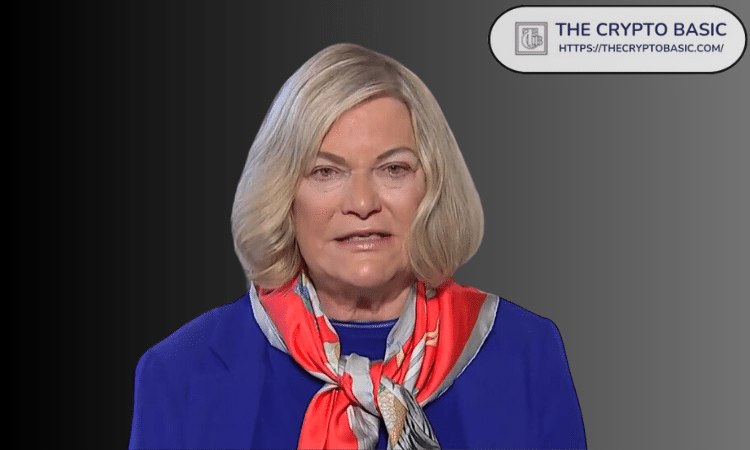
Senator Cynthia Lummis says the recent ruling in the Ripple case has further underscored the need for Congress to create a comprehensive crypto regulatory framework.

In a recent tweet, Cynthia Lummis, a US Senator from Wyoming, expressed the urgent need for Congress to establish a comprehensive regulatory framework for crypto assets. The catalyst for her call was the Ripple decision, which has raised concerns about the lack of clear guidelines surrounding digital currencies.

Teaming up with Senator Kirsten Gillibrand from New York, Lummis unveiled the Lummis-Gillibrand bill, touting it as the most comprehensive and bipartisan proposal to address the digital currency space.

The Reworked Bill

The Lummis-Gillibrand bill builds on the earlier version they introduced months before the collapse of FTX in 2022, aiming to protect consumers while fostering innovation in the industry. 

“We can put sufficient consumer protections and safeguards on this industry so that something like the failure of FTX would likely not happen in the United States,” Lummis remarked in an interview, “We know how to regulate it. We know how to safely define what is a commodity and what is a security.”

Central to their proposal is the clear differentiation between securities and commodities, with enforcement authority assigned to the appropriate regulatory bodies. 

The bill entrusts the SEC to play a more proactive role in safeguarding consumers and imposes disclosure requirements on companies. Furthermore, crypto exchanges must register with the Commodities Futures Trading Commission (CFTC) to maintain transparency and accountability under the new bill.

The two Senators expressed confidence in the SEC and CFTC’s capability to handle their role in the crypto industry to ensure compliance and growth. Senator Lummis noted that their approach had been carefully vetted through consultations with industry experts and regulators, indicating a broad consensus for moving forward.

Regulatory uncertainty has raised fears that crypto companies might seek friendlier jurisdictions abroad, potentially losing business from the United States. 

According to an NBC report, JPMorgan had urged lawmakers to establish a comprehensive framework for regulating the crypto industry and clarify the SEC’s and CFTC’s responsibilities.

While Lummis and Gillibrand’s bill gains traction, it is not the only option on the table. As The Crypto Basic disclosed, Congressman Patrick McHenry, Financial Services Committee Chairman, introduced a draft to provide cryptocurrency regulations. 

Ripple CTO Says SEC Can’t File “Immediate Appeal” Against Ripple 

0

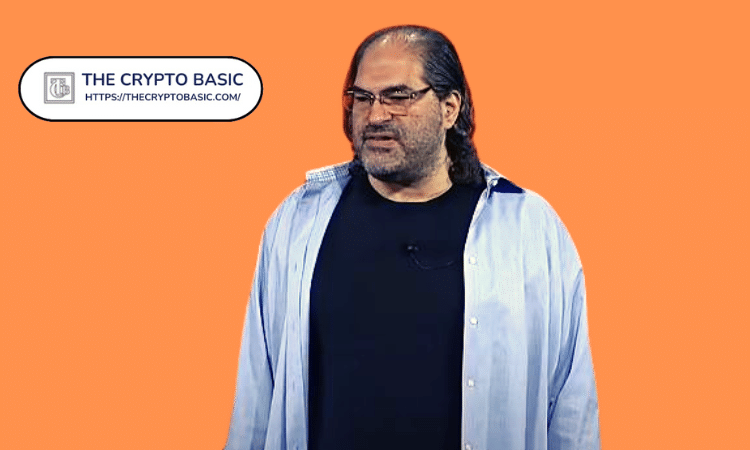
David Schwartz says the SEC cannot file an immediate appeal challenging Ripple’s victory because there are still unresolved issues between the parties.

David Schwartz, CTO at Ripple, has recently commented on the heated debate regarding the SEC’s next line of action in the Ripple case.

SEC May Consider 4 Options

As reported yesterday, prominent legal expert James “MetaLawMan” Murphy speculated that the SEC may consider four options as its next move.

Firstly, MetaLawMan said the SEC could request an interlocutory appeal. Secondly, the top legal expert mentioned that the regulatory agency could proceed with the trial regarding the aiding and abetting claim against Ripple execs Brad Garlinghouse and Chris Larsen.

Thirdly, MetaLawMan noted that the SEC could drop its claim against Garlinghouse and Larsen to file an immediate appeal, challenging Judge Torres’ ruling. The legal expert said the securities regulator would not seek permission from Judge Torres and the Second Circuit.

Lastly, MetaLawMan said the SEC could settle with Ripple- a move the expert thinks is highly unlikely.

Ripple CTO Says SEC Can’t File “Immediate Appeal”

As expected, MetaLawMan’s analysis stirred reactions from XRP enthusiasts, with Ripple CTO joining the discussion. In a tweet today, Schwartz said the Securities and Exchange Commission could not file an immediate appeal by dropping its case against Ripple execs.

According to Schwartz, Judge Torres’ decision did not fully resolve the dispute between the parties, especially the remedies aspect. Schwartz noted that the parties have not argued remedies after the court’s ruling.

With Schwartz ruling out the possibility of the SEC filing an immediate appeal, the regulator could explore any of the three options highlighted by MetaLawMan.

Ripple Lawsuit Far From Over

Although Judge Torres ruled on major parts of the lawsuit, the case is far from over in the Southern District of New York. It bears mentioning that the judge ruled that Ripple’s programmatic XRP sales on digital exchanges, worth over $720M, are not securities. However, she found Ripple’s direct XRP sales to institutional clients worth $728.9M to be securities.

Meanwhile, the judge did not rule on the aiding and abetting charges leveled against Ripple’s execs. Additionally, the court did not decide how much fine Ripple would pay for violating securities law via its XRP sales to institutional investors.

Per the ruling, these issues will be heading to a trial. Notably, the court is expected to communicate a date for a trial in due course.

Ripple New ODL Partners Leveraging XRP For Use Cases Beyond Remittances

0

Ripple is now onboarding new On-Demand Liquidity (ODL) partners that leverage XRP and the XRPL for other use cases beyond remittances.

In a disclosure by prominent XRP community member, WrathofKahneman (WOK), the intriguing case of Ripple’s latest On-Demand Liquidity (ODL) partners has come to light, showcasing how XRP is being used for diverse purposes beyond traditional remittances. 

One notable partner, Nutrisource, an agricultural company based in Singapore, has made significant strides in sub-Saharan Africa since 2020.

In Uganda, Kenya, Cameroon, and Tanzania, Nutrisource empowers farmers through technology-driven solutions, utilizing an agrochemical business and a cutting-edge FarmSanta app.

The FarmSanta app has become instrumental in Nutrisource’s collaboration with Ripple’s ODL, providing farmers with real-time access to vital financial inputs and transparent price discovery for their produce.

WOK stressed that this functionality is especially valuable for farmers, such as an Ivorian farmer mentioned in a previous interview who previously struggled to obtain price information at the port of Abidjan.

What sets Nutrisource apart is its alignment of operations with trade finance. However, the specific use case for XRP remains unclear. Similar trends are seen with other recent ODL partners, including Oceanus, Valency, and Star Dreams.

WOK rightly emphasized that this growing pattern highlights XRP’s potential as a robust infrastructure beyond traditional remittance and treasury operations.

Ripple Sets the Stage

Ripple’s pivotal announcement in November 2022 laid the groundwork for this paradigm shift. The company, renowned for its payment solutions tailored to financial institutions, expanded its services to cater to corporate customers like Nutrisource, recognizing untapped potential in various industries.

The expansion encompassed trade, agriculture, e-commerce, technology, and supply chain segments, signifying Ripple’s commitment to evolving in response to customer needs.

This transformation in Ripple’s approach was driven by the desire to address the limitations of the legacy financial system across multiple use cases.

While remittances were initially the focus, customer interest led Ripple to explore new growth avenues. Consequently, the company’s global payments network saw a surge in applications like internal treasury management, salary disbursements, and bulk transactions.

From November through January, Ripple also announced some new payment partners and ODL users, as per details from @WKahneman.

Ripple New ODL partners
Image source: https://twitter.com/WKahneman/status/1628303872400969729

The unfolding narrative of Ripple’s ODL partners leveraging XRP for trade and agribusiness heralds a new era for the cryptocurrency’s utility, diversifying its use cases and strengthening its position as an essential component of financial infrastructure.

Ripple Will Not Shy Away From SEC Appeal As Appeals Court Will Affirm XRP Ruling: Ripple CLO

Ripple CLO Stuart Alderoty is confident in XRP’s legal battle, anticipating a similarly favorable outcome should the SEC appeal the XRP ruling.

Stuart Alderoty, the Chief Legal Officer (CLO) of Ripple, a prominent blockchain technology company headquartered in San Francisco, expressed unwavering confidence in the firm’s readiness to address any potential SEC appeal arising from the recent federal court ruling.

In an episode of Chain Reaction, a podcast by TechCrunch, Alderoty shared an optimistic outlook on the upcoming SEC appeal. He believes that the ruling in favor of XRP will stand firm and possibly gain further support during the appeal process.

“Ripple Won’t shy away from likely SEC appeal of its federal court ruling.

The lawyer expressed confidence in the court of appeals’ decision, stating: 

“We think the judge got that right, and we think that was a faithful application of the law, and I think a court of appeals will not only affirm that but maybe even amplify that to even a greater extent.”

Alderoty went on to underscore that Judge Analisa Torres’ recent ruling would effectively demonstrate to other judicial authorities that the actions of the US SEC regarding its regulatory measures on the cryptocurrency industry are fundamentally “misguided.”

As Ripple continues to navigate the legal battle with the SEC, Alderoty’s positive sentiment reflects the company’s determination to establish clarity and regulatory certainty in the crypto space. 

Reflecting on the ups and downs and unending court cases with regulators, Alderoty expressed in a tweet that the crypto industry represents the most fascinating field in his over 30 years as a lawyer.

SEC Appealing XRP Ruling 

Notably, the SEC had previously expressed displeasure after a US judge ruled that sales of XRP on public exchanges did not violate securities laws. In a separate lawsuit, the regulator commented that the XRP ruling was not decided in good faith, hinting at a potential appeal. 

However, Ripple CEO Brad Garlinghouse criticized the SEC for claiming the XRP ruling was wrongfully decided. He found it absurd that the regulator could blame the judge for appropriately applying the law. 

Meanwhile, top voices in the XRP community believe the appeal could be an exercise in futility, just as the Ripple CLO noted. 

Managing Partner of the Deaton law firm, John Deaton, argued that an appeal decision is only foreseeable in two years. As The Crypto Basic reported, Deaton further stated that the stakes of the appeal court issuing a judgment in favor of the US regulator are incredibly low.