Home Blog Page 2061

More Views Coming As Shiba Inu Metaverse Revealed At SXSW Texas

0

Clips from SHIB The Metaverse at SXSW Show Captivating Experiences.

The metaverse project premiered the WAGMI Temple hub at the SXSW festival on March 11.

Shiba Inu’s SHIB: The Metaverse space debuted the WAGMI Temple hub at the 2023 South by Southwest (SXSW) festival on March 10. The premiere granted attendees a glimpse of the highly anticipated Metaverse hub through an immersive Extended Reality (XR) experience.

Recall that Shytoshi Kusama unveiled the poster for the SXSW premiere on March 10. The poster revealed that the metaverse experience would be held from March 12 to 14 at Booth 701 in the Congressional Ballroom in Austin, Texas. In the release of Shibarium beta, Kusama also implored proponents in Texas to visit the booth at the SXSW experience.

After the premiere, numerous clips of the Metaverse experience have emerged, exhibiting a genuinely captivating and engaging encounter. Brandie Konopasek, an entertainment producer and SHIB proponent, recently disclosed a 7-second video clip featuring a glimpse of the WAGMI Temple. She said that it is a “very small” area of Wagmi that is being disclosed.

Konopase further confirmed that more views for the Shib Metaverse would keep coming.


The footage uncovered a picturesque landscape featuring towering mountains and a grouping of trees, complete with a long wooden bridge. These features indicate that the hub may present some thrilling climbing challenges.

In addition, Scorchia, a Shiba Inu influencer, shared an additional clip; the clip highlights a serene WAGMI Temple scene surrounded by natural elements such as towering mountains, lush greenery, a cascading waterfall, and clear bodies of water. Scorchia affirmed that the Metaverse is inclusive and accessible to all, and one does not necessarily need a VR headset to view it.


Scorchia also revealed that the SXSW premiere of the WAGMI hub consisted of two distinct experiences. The first offered a free-roaming adventure in the health and wellness hub. At the same time, the second provided a tranquil meditation experience, allowing participants to explore WAGMI and gain insight into the hub’s overall environment.


What is SHIB: The Metaverse?

SHIB: The Metaverse is Shiba Inu ecosystem’s unique metaverse space that will give proponents the opportunity to mint over 100,000 plots of land. Those who own land in the metaverse can potentially earn income from their holdings, as well as acquire rewards and tokens. The WAGMI Temple hub is one of 11 hubs featured in the metaverse.

As reported earlier this year, SHIB: The Metaverse was invited to showcase an exhibition at this year’s SXSW festival. The project chose to exhibit the WAGMI (We Are Gonna Make It) Temple Hub during the festival’s XR experience.


$1B Buying Pressure on BTC, ETH, & BNB as Binance Shifts Recovery Funds To Exchange

0

Unsurprisingly, the crypto markets have gone green in response.

Binance Chief Executive Officer Changpeng Zhao, aka CZ, has disclosed that the crypto exchange would be converting the balance of its $1 billion Industry Recovery Initiative fund from Binance USD to Bitcoin, BNB, and Ethereum.

The Binance chief revealed this in a Twitter thread today, citing heightened uncertainty over dollar-pegged stablecoins and banks in the United States. 

In a follow-up tweet, CZ disclosed that the leading crypto exchange has already started the process by moving about 980 million BUSD to Binance. According to the Binance chief, the transaction took only 15 seconds with a $1.29 fee, sharing the transaction data.

Notably, Lookonchain, a blockchain analytics firm, also confirmed the transaction.

As surmised by CryptoQuant Chief Executive Officer Ki Young Ju, the move places a whopping $1 billion buying pressure on the cryptocurrencies outlined by the Binance chief.

Unsurprisingly, the crypto markets have gone green in response. BTC, BNB, and ETH are posting over 9% gains in the last 24 hours, with BTC surging as high as $22.7k before paring gains to trade for just over $22.5k at the time of writing. 

As highlighted above, the latest move follows the uncertainty around stablecoins and crypto-facing banks in the U.S. About a month ago, regulators ordered Paxos to cease BUSD issuance, with the U.S. Securities and Exchange Commission (SEC) alleging it is a security in a potential enforcement action. In addition, in recent weeks, we have seen a string of crypto-friendly banks collapse.

Over the weekend, in a now-deleted tweet, the Binance chief speculated that there could be a coordinated attempt to shut down crypto-friendly banks in the U.S. 

Recall that in the wake of the FTX collapse, crypto community members have speculated that the U.S. government is moving to shut the nascent market out from the banking industry and much-needed access to USD. A joint statement by the Fed, the Office of the Comptroller of the Currency, and the Federal Deposit Insurance Corporation discouraging banks from working with crypto firms has only fueled these speculations. 

Binance launched the industry recovery fund initiative last year as a backstop for otherwise healthy firms facing liquidity crunches after the FTX collapse to limit the contagion.

602M Shiba Inu Burned in a Day As Newly Launched Token Burns 592M SHIB

0

Over 602.60 million Shiba Inu (SHIB) burned in the past 24 hours, 591.92 million in one significant transaction.

The Shiba Inu Community has made an impressive move by collectively sending an astounding 602,601,936 (602.60M) SHIB to a dead wallet through three individual transactions within the past 24 hours.

KoyoToken

Two significant players in the community burned the majority of the SHIB. Firstly, KoyoToken, a newly emerged token, burned a colossal 591,926,555 (591.92M) SHIB in a single transaction executed approximately 19 hours ago.


KoyoToken came to life about a week ago, and as per data provided by Etherscan.io, the project has now destroyed a staggering 3,255,967,237 (3.25B) SHIB through multiple transactions.

Koyo Token Burned 325 Billion SHIB in the Past Seven Days

SHIB Super Store

Secondly, the well-known SHIB burn project, SHIB Super Store, executed a significant burn transaction about 12 hours ago, permanently removing 10,582,010 (10.58M) SHIB from circulation.

The recent massive burn activity caused Shiba Inu’s burn rate to skyrocket by 2452.51% compared to the last day when only 23,511,138 (23.51M) SHIB has been permanently removed from circulation through three separate transactions.

Shiba Inu Burn Rate Surges 2452 Percent Over the Last Day

Besides the significant burning activity, the Shiba Inu Ecosystem is also undergoing various advancements. As reported earlier by The Crypto Basic, the Shiba Inu team has finally launched the much-awaited Shibarium Public Beta testnet, creating a lot of excitement within the Shiba Inu Community.

Following this news, a top Ethereum whale named “BlueWhale0073” became active and acquired 215.81 billion SHIB tokens worth $2.20 million in one significant transaction. This whale has accumulated over 674 billion SHIB in the past ten days.

At the same time, Gate Group, the parent company of the well-known cryptocurrency exchange Gate.io, has revealed its intention to launch the Gate Visa debit card in Europe. With this card, customers can pay with Shiba Inu (SHIB) and other cryptocurrencies at any 80 million merchant stores that accept Visa.

XRP Ledger Was First To Support Stablecoins: Former Ripple Director

0

Hamilton’s statements come as dollar-pegged stablecoins have recently faced heightened uncertainty.

Former Ripple Director Matt Hamilton has asserted that the XRP Ledger (XRPL) was the first blockchain with stablecoin support.

Hamilton disclosed this in a Twitter thread on Saturday. It came in response to complaints from Joe Weisenthal, co-host of the Odd Lots podcast. Weisenthal pointed out that depositors do not see themselves as lenders to the bank, raising concerns over how they are treated as creditors when these banks fail.

Asserting that the Odd Lots podcast co-host raised an interesting point that could be explained using the XRPL, the former Ripple staff let slip that the XRPL was the first blockchain to support stablecoins, then referred to as IOUs (I owe you). At the most basic level, IOUs are documents that acknowledge debts.

As explained by Hamilton, using Circle’s USD Coin as an example (USDC), users who purchase stablecoins lend fiat to stablecoin issuers in exchange for tokenized representations on the blockchain. It works because users trust that stablecoin issuers would return their fiat on demand.

However, the former Ripple director points out that the market perception of stablecoins changed with the advent of Ethereum. According to Hamilton, people now see stablecoins as assets instead of debt obligations for fiat.

It is worth noting that firms still issue stablecoins as IOUs on the XRPL today. Recall that Bitstamp recently introduced EUR-backed IOUs on the XRPL, offering customers a gateway into the blockchain’s decentralized finance ecosystem.

Hamilton’s statements come as dollar-pegged stablecoins have recently faced heightened uncertainty. Firstly, Paxos faced enforcement action from the United States Securities and Exchange Commission (SEC), which labeled its Binance dollar stablecoin offering, Binance USD (BUSD), as an unregistered security. Now, a series of crypto-friendly bank collapses have created further uncertainty.

As highlighted in a previous report, Circle’s USDC lost its dollar peg over the weekend, dropping as low as $0.82 on Saturday after the Silicon Valley Bank collapse. It came as Circle confirmed that over $3 billion of USDC’s cash reserves were held with the bank.

Some confidence has returned to the market at press time as the FDIC assured it would cover all SVB deposits. USDC, recouping its losses, is now trading for $0.9912 on mainstream exchanges.

Ripple and XRP Whales Move Nearly 1B Tokens After SVB Exposure

0

The recent slew of whale transactions has raised questions, especially considering the situations with Silvergate and Silicon Valley Bank.

Ripple and XRP whale addresses recently moved nearly 1 billion XRP tokens in less than two hours, triggering questions among investors. Data suggests that up to 916.3 million XRP was shuffled in eight transactions, with Ripple accounting for 200 million tokens.

Ripple’s Movement

The latest cluster of whale transactions began with Ripple’s transfer, as highlighted by Whale Alert. The Silicon Valley company transferred 200 million XRP ($72.7 million) to an unknown address on Sunday at 18:31 (UTC). The receiving address was activated by Ripple, indicating an affiliation with the firm.


The funds moved may be part of 1 billion XRP tokens released from escrow this month. Ripple sent 300 million XRP to an affiliated address on March 1, shortly after unlocking the tokens from escrow.

From the 300 million XRP tokens received this address transferred 100 million tokens to an unknown address on March 6, as previously highlighted by The Crypto Basic. The latest movement saw the address transfer the remaining 200 million tokens to the same unknown address from the March 6 transaction.

These tokens are expected to be moved to exchanges to cater to liquidity. An analysis of the movement of the funds revealed that they were eventually routed through different addresses to Bitso and Bitstamp.

Other Whale Movements

Shortly after the Ripple transaction, two unknown whale addresses shuffled a whopping 245.5 million XRP ($88.9 million) on the same day at 18:35 (UTC). It bears mentioning that, though the sending wallet remains unidentified, data suggests that it was activated by an official Ripple address.


The recipient wallet then transferred the received funds and other assets to another unknown wallet two minutes later. This transaction amounted to 278.5 million XRP ($100.8 million). 


Whale Alert further highlighted another transaction involving an internal transfer between two Bitso accounts. The addresses shuffled 31.3 million XRP ($11.3 million) at 19:15 (UTC).


The rest of the movements involved a single Bittrex-affiliated address which transferred 161 million XRP to several Bitstamp accounts in four transactions. The first transaction involved 44 million XRP while the second saw the transfer of 51 million XRP. The address also sent out 33 million XRP on two separate occasions.

Recall that Ripple CEO today Confirmed Silver Valley Bank Exposure, while FDIC Affirms It Would Cover All Deposits.

Brad Says “Ripple Remains in Strong Financial Position” Despite SVB Exposure

0

Ripple CEO Confirms SVB Exposure as FDIC Affirms It Would Cover All Deposits.

Over the weekend, the blockchain payments based in Silicon Valley faced questions over whether it had exposure to the collapsed bank.

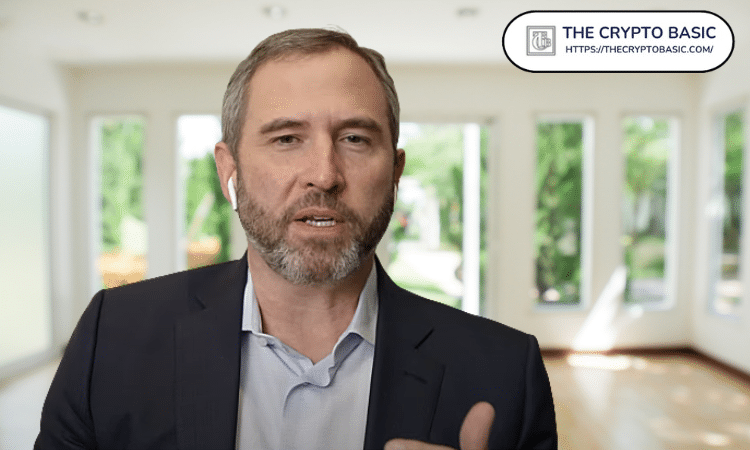
Without going into details, Ripple Chief Executive Officer Brad Garlinghouse has confirmed that the firm has money tied up in the failed Silicon Valley Bank.

The Ripple chief disclosed this in a three-part Twitter thread on Sunday.

“Setting the record straight on SVB Qs: Ripple had some exposure to SVB.”

However, he assured the public and customers that this exposure was not significant enough to disrupt company operations. According to Garlinghouse, the firm had a diversified network of banking partners where it held cash reserves.

“Ripple remains in a strong financial position,” Garlinghouse surmised, despite the uncertainty surrounding SVB customer deposits at the time.

Notably, the Ripple chief pointed out that the SVB collapse highlighted the weaknesses of the traditional financial system. Namely, rumors can spark bank runs that lead to collapse, banks can not process wire transfers around the clock, and money movement remains difficult. 

Over the weekend, the blockchain payments company based in Silicon Valley faced questions over whether it had exposure to the collapsed bank. As reported, Ripple Chief Technology Officer David Schwartz had disclosed that the firm would issue an official statement. 

FDIC To Cover All SVB Deposits

Meanwhile, on the heels of Ripple’s disclosure, the Federal Deposit Insurance Corporation (FDIC) has disclosed that it would cover all SVB deposits regardless of whether or not they are insured.

According to a recent Bloomberg report, depositors would have access to all their money from Monday, March 13. The FDIC can do this through a “systemic-risk exception” rule that allows the Fed to make direct loans.

Initially, the FDIC planned to make insured depositors whole while issuing advanced dividends to uninsured depositors. But as highlighted in a previous report, over 93% of SVB customers were uninsured. Due to this and the difficulty in getting a buyer within the weekend due to the short timing for due diligence, regulators opted to backstop deposits to prevent a potential spillover effect and the collapse of several American tech startups that banked with SVB.

As highlighted in previous reports, SVB experienced a bank run last week that forced regulators to step in on Friday. The bank run started after it disclosed plans to sell significant shares to raise capital after taking losses on previously held securities due to Fed rate hikes. With the bulk of customer deposits placed in long-term securities, it lacked the liquidity to meet the onslaught of withdrawal requests.

While the FDIC processes withdrawals, it will likely start another auction within the week to continue searching for buyers. As reported, Elon Musk had indicated an interest in acquiring the collapsed bank.

Shibarium is Live! Launch of Much Awaited Shiba Inu L2 Solution Announced

0

The development comes nearly two years after Shiba Inu’s anonymous creator, Ryoshi, introduced the layer-2 network.

Shibarium, the highly-anticipated Ethereum layer-2 solution for the Shiba Inu ecosystem, has finally gone live today. Launching the network’s beta phase comes after an elongated period of sustained wait and several teases from Shytoshi Kusama, Shiba Inu’s lead developer.

Kusama announced the bullish development in an official tweet today. Expectedly, the disclosure has elicited excitement within the Shiba Inu community.

Recall that Kusama had asked the community to patiently wait for official announcements on the network shortly after a dubious account pretending to be the lead developer reportedly scammed unsuspecting investors by providing a fake link for registration on the Shibarium beta.

The launch comes barely 48 hours after the official Shibarium Twitter handle confirmed that the beta will be released this week. Moreover, Kusama had assured the community that the network will be launched before May despite failing to give a fixed date.

It is important to note that Kusama has cautioned the community not to purchase anything seen during the Shibarium beta phase, as that would result in loss of funds. He emphasized that all tokens hosted on the network during the beta phase are intended for testing purposes alone.

How is Shibarium Beneficial?

Shibarium is a layer-2 network solution built on the Ethereum network and tailored for the Shiba Inu ecosystem. The project was introduced by Shytoshi, Shiba Inu’s anonymous creator, in May 2021.

As an L2 solution, Shibarium will handle many transactions involving Shiba Inu and its ecosystem tokens, taking many loads off the Ethereum network and helping increase scalability.

By providing greater scalability, Shibarium will help introduce lower gas fees and increase transaction speed for Shiba Inu ecosystem projects.

Another important benefit of Shibarium is its potential to burn a large amount of Shiba Inu tokens. Two months back, Shytoshi Kusama confirmed that one of the goals of Shibarium is to burn trillions of SHIB.

Kusama also mentioned that he expects the L2 solution to introduce more utility to the Shiba Inu ecosystem by attracting investment and bolstering adoption. Projects such as Atomic Wallet, Ledger, and Voxel X Network have already declared support for the network.

RenQ Finance (RENQ) Looking To Replicate The Success of Avalanche (AVAX) And Chainlink (LINK) Has Kept Up With The Expectations Till Now

0

Despite facing significant challenges in the competitive crypto space, RenQ Finance is exceeding expectations and gaining momentum at an impressive pace.

The presale for RENQ tokens has already sold over $2 million worth of tokens in less than a month, a remarkable achievement that many new cryptocurrencies fail to achieve. This success can be attributed to RenQ’s unique value proposition and multi-purpose ecosystem, which is drawing the attention of investors.

RenQ Finance is set to replicate the success stories of other prominent cryptocurrencies such as Avalanche and Chainlink. These two cryptocurrencies have enjoyed a successful run in the market, and RenQ is following in their footsteps. Investors are drawn to RenQ’s innovative solutions and its ability to solve long-standing issues in the crypto space.

Avalanche (AVAX)

The Avalanche blockchain uses smart contracts, like Ethereum to support several blockchain applications, and AVAX is its native coin.

The Avalanche blockchain can offer almost instant execution of transactions numbering up to 6500 TPS (transactions per second).

Avalanche’s native cryptocurrency, AVAX, serves as a fundamental unit of account across blockchains in the Avalanche network and is used for payment of transaction processing fees.

With a spot in the top 20 cryptocurrencies, Avalanche has become a highly regarded player in the crypto space. However, RenQ Finance aims to emulate this success with its own native currency, RENQ.

Through its multi-purpose ecosystem, RenQ is looking to attract investors and establish itself as a valuable asset in the DeFi space.

Chainlink (LINK)

Chainlink is renowned for being a pioneer in supporting the integration of off-chain data into smart contracts, which enables the execution of payments to financial institutions and other payment networks using smart contracts.

The fully decentralized oracle network of Chainlink is powered by its LINK cryptocurrency.

Chainlink stands as one of the top 25 cryptocurrencies based on daily trading volume. Furthermore, LINK has generated returns of up to 60X per dollar invested, a remarkable feat that RenQ Finance aims to emulate.

BUY RENQ TOKENS HERE

RenQ Finance to record massive success

The DeFi industry is being revolutionized by RenQ Finance, which intends to connect isolated blockchain networks while maintaining the platform’s security and transactional speed.

The “liquidity” problem that one-solution networks face, where users are limited to the value (funds) within the ecosystem, is resolved by RenQ Finance by creating a cross-chain asset exchange network that bridges across various chains to ensure that ecosystem users have access to a wide range of resources.

Previously, exchanges faced difficulty in solving liquidity problems in a decentralized model as it was challenging to connect liquidity to potential markets. However, RenQ Finance has overcome this challenge by creating a multi-network approach that connects various decentralized marketplaces and instruments to provide users with a rich liquidity pool to trade from.

RenQ aims to provide an all-inclusive solution accessible to everyone, from seasoned professionals to novice traders. The platform offers a combination of features from both centralized exchanges (CEXs) and decentralized exchanges (DEXs), giving users the best of both worlds.

RenQ adheres to DeFi protocols such as transparency, anonymity, and autonomy. Transactions are public on the blockchain, and users do not need to provide identification or complete any KYC procedures to utilize the site. Users also have full custody of their assets in their wallets, retaining their private keys, unlike centralized exchanges where users do not.

In addition, RenQ provides users with an extra layer of security through Two-factor authentication (2FA). The platform is governed by all active participants in the community, which is in line with the team’s goal of making RenQ Finance a community-based organization. This governance mechanism means decisions are made by the liquidity pool’s shareholders and RENQ token owners.

RenQ Finance also offers other features such as RenQ Swap, NFT launchpad, Aggregate Protocol, and more. With all these features and the successful presale of over $2 million worth of tokens in less than a month, RenQ Finance is poised to replicate the successes of Chainlink and Avalanche.

Click Here to Buy RenQ Finance (RENQ) Tokens.

Visit the links below for more information about RenQ Finance (RENQ):

Presale
Whitepaper

Pro-XRP Attorney Thinks Cramer Owes Americans an Apology After Championing SVB

California state regulators closed the bank yesterday in what is now described as the second-biggest banking failure in U.S. history.

Attorney John E. Deaton has suggested that CNBC Mad Money host Jim Cramer owes viewers an apology after urging them to invest in the failed Silicon Valley Bank.

The CryptoLaw founder, who represents thousands of XRP holders as a friend of the court in the United States Securities and Exchange Commission (SEC) case against Ripple, expressed this view in response to a tweet from David Schwartz, Ripple’s chief technology officer. Notably, Schwartz pointed out that less than a month ago, Cramer had advised viewers of his CNBC program to invest in the bank.

California state regulators closed the bank yesterday in what is now described as the second-biggest banking failure in U.S. history. The bank reportedly held $209 billion in total assets at the end of last year.

A bank run ensued this week after the firm disclosed that it planned to sell over $2 billion in shares to cover losses on previously held securities. 

As explained by Aztec Network’s jonwu.eth (@jonwu_), the bank, failing to anticipate the Fed’s rate hikes, invested customer deposits in long-term securities to earn yield. However, Fed rate hikes lead to increased withdrawals, fewer deposits, and difficulty raising capital. Consequently, it lacked sufficient liquidity to fulfill the rush of withdrawal requests. By Friday, with little hope for a takeover, regulators were forced to step in. 

While the Federal Deposit Insurance Corporation will process withdrawals for insured depositors from Monday, uninsured depositors will receive advanced dividends. Unfortunately, per Bloomberg, over 93% of depositors are uninsured. This is worrisome as the bank served several tech startups in Silicon Valley.

Meanwhile, it will not be the first time Cramer has steered investors in the wrong direction. Crypto community members often argue that the pundit has consistently done so throughout his career. Unsurprisingly, crypto community members, particularly XRP holders, have likened his endorsement of SVB to that of Bear Stearns just before its collapse during the 2008 financial crisis.

Notably, there is no love lost between the XRP community and the CNBC host. Last year, the pundit bashed the altcoin as a scam on multiple occasions.

Main Worrisome Events That Led Global Crypto Market Cap Collapses Below $1T

The last time the global market capitalization for cryptocurrencies traded below the $1 trillion mark was late January.

The global crypto market capitalization has slipped below the $1 trillion mark for the first time since late January. The global market cap plummeted by 9.5% from the value of $1.01 trillion this Wednesday to a two-month low of $914 billion on Friday. This was as a result of an extensive bloodbath triggered by certain worrisome events. 

Silvergate’s Bankruptcy 

Silvergate Capital, the parent company of the crypto-focused Silvergate Bank, announced on Wednesday that the bank would cease operations and file for bankruptcy, citing exposure to FTX. The disclosure came shortly after the bank delayed its annual 10-k filing with the SEC. 

KuCoin Lawsuit and ETH’s Security Label

Another concerning event is the lawsuit against prominent exchange KuCoin. New York Attorney General Letitia James leveled charges against the exchange on Thursday, alleging that it offered unregistered securities to New York residents.

The Attorney General alleged that assets such as Ethereum (ETH), which are offered by KuCoin, are classified as securities. Concerns emerged, as this could set a precedent for ETH and other crypto assets to be labelled as unregistered securities across the U.S.

Huobi Token’s Flash Crash

On Thursday, Huobi Token, the native token of the Huobi exchange, plummeted by over 90% in a flash crash event that got investors talking. As highlighted by DB, the asset sank to a low of $0.91 briefly before recovering.

Voyager’s Selloffs

As previously reported, bankrupt lender Voyager has been persistently selling off millions of assets since the start of the year despite the go-ahead given to Binance to acquire its assets. The lending firm has liquidated $358 million worth of assets since January.

Silicon Valley Bank’s Implosion 

In addition, Silicon Valley Bank (SVB), one of America’s largest banks, collapsed on Friday following a bank run triggered by investor concerns. 

Circle, the issuer of USDC, disclosed earlier today that it has a $3.3 billion exposure to SVB. The assets represent 8% of its $40 reserves. 

Binance had revealed that it would suspend auto-conversion of USDC to BUSD, citing market conditions. The exchange further disclosed that it has no exposure to SVB. Coinbase also decided to temporarily suspend USDC/USD conversions. 

Shortly after these disclosures, USDC depegged from the dollar, collapsing to an all-time low of $0.87 at 07:00 (UTC). Despite a slight recovery, the asset is still trading below the dollar, currently changing hands at $0.90, with a 9.48% decline.

Besides Circle, bankrupt crypto lender BlockFi disclosed a $227 million exposure to SVB in a recent bankruptcy filing. Fox Business journalist Eleanor Terrett also revealed that leading venture capital firm a16z had SVB as a banking partner. The firm has neither confirmed nor denied exposure to SVB.