Home Blog Page 2087

Swapzone Announces Support For Shiba Inu L2 Blockchain

0

Shiba Inu layer 2 solution receives a boost as Swapzone Pledges to Integrate Shibarium on Release.

Yesterday Swapzone expressed its excitement about the Shiba Inu L2 blockchain and pledged to fully support and integrate Shibarium into its platform as soon as it goes live.


It’s worth noting that Swapzone.io has already added support for all three tokens of the Shiba Inu ecosystem, namely SHIB, BONE, and LEASH, amid increasing interest. Formerly, Atomic Wallet has also revealed its plans to support the much-awaited Shibarium after launch.

Shibarium has been causing a stir in the crypto community, with many eagerly anticipating its launch. Shiba Inu’s L2 blockchain is expected to offer fast and secure transactions and low fees, making it an attractive alternative to existing blockchains.

Meanwhile, the exact launch date of Shibarium has not been officially announced by the Shiba Inu team. However, in a recent Telegram chat, the lead developer of Shiba Inu, Shytoshi Kusama, confirmed that the beta version of Shibarium is ready and hinted that the wait might be over before May of this year.

New Play2Earn Game Coming on Terra Classic (LUNC)

0

The team behind the game has also confirmed plans to implement on-chain tax burns.

Garuda the Protector, an upcoming play-to-earn (P2E) game project, will launch on the Terra Classic blockchain in the second quarter of this year. The move is expected to introduce more utility to the network on its journey to revival.

Garuda Nodes recently introduced the upcoming project with a mission to support the Terra Classic community through project building and token burns.


Garuda Nodes has called on community members to mint their Garuda (a playable character in the game) at Miati.io – a notable NFT marketplace and launchpad on the Terra network. The collection has a total of 500 Garuda NFTs, with each piece going for 117,000 LUNC (~$20).

About 201 NFTs have been minted as press time, with 299 pieces left. In addition to the upcoming game, Garuda Nodes also canvassed support from the community in terms of delegation, with a promise to introduce more utility to the network.

The project has received widespread commendation, as several LUNC proponents applaud the validator for the efforts. Notably, prominent LUNC development group TerraCVita called attention to the development, lauding the team and encouraging them to “keep building.”


Fellow LUNC validator BetterLunc expressed excitement over the upcoming project and asked if the community should expect it to contribute to token burns. In response, Garuda Nodes confirmed plans to introduce on-chain tax burns and intentions to burn some of the revenue generated from the game.


It bears mentioning that the Terra Classic community has repeatedly emphasized utility’s significant role in the asset’s journey to ultimate revival. This has triggered the introduction of projects such as Terraport, which promises to introduce utility to the network and concurrently expedite the burn process.

The soon-to-be-launched Garuda the Protector P2E project is another step towards bringing utility to the blockchain, and it highlights the community’s dedication to bolstering the asset’s revival campaign.

ShibaSwap Team Says Shiba Inu Can Reach $1

0

BoneShibaSwap calls for maximum community support for Shibarium and BONE.

Shiba Inu can attain a $1 price. Still, this ambitious goal can only materialize if the community provides maximum support for Bone ShibaSwap (BONE) and Shibarium.

BoneShibaSwap recently shared this statement on their official Twitter account as they sought to rally support from members of the Shib community. “The important question is, what if everyone knows that the way Shib can reach 1$ is maximum support of bone and shibarium?” the tweet reads.


Per the statement, Shibarium and BONE are considered the foundation of the Shiba Inu project. It is worth noting that BONE presently operates as the governance token for the ShibaSwap DEX and is projected to serve as the gas token for Shibarium once it launches.

Notably, BoneShibaSwap considers Shibarium’s capacity to burn SHIB tokens in every transaction as one of the key drivers that could propel the price of SHIB to $1. Furthermore, the BoneShibaSwap views BONE as just as critical as it will serve as the backbone of Shibarium, functioning as the L2 network’s gas token.

One of the most attractive features of Shibarium is its potential to expedite SHIB burns by incinerating tokens at an impressive rate. In a comprehensive introductory article on Shibarium released last month, the Shiba Inu team disclosed that they were developing a dedicated burn portal for the L2 network, providing insight into how the network would incinerate SHIB tokens.

Moreover, in response to the Shiba Inu Telegram group, lead developer Shytoshi Kusama confirmed that the goal of Shibarium is to burn trillions of SHIB. In addition, he noted that the network would likely introduce more development into Shiba Inu, as several projects show an interest in leveraging it. Some of these projects, including Paw Token, have already indicated an interest.

Shibarium’s potential to revolutionize Shiba Inu remains one of the primary triggers of the hype surrounding its imminent launch, which is expected before May.

SEC Says Do Kwon Laundered Over 10,000 Bitcoin From Terra and Luna Foundation Guard (LFG)

0

The SEC accuses Kwon of diverting 10K units of Bitcoin from Terra.

The Securities and Exchange Commission (SEC) has alleged that Terra co-founder Do Kwon and TerraForm Labs (TFL) were involved in money laundering following the ecosystem collapse in May 2022.

SEC’s Complaint Against Kwon

The SEC made this known in a 55-page complaint filed in the Southern District Court of New York, stating that the defendants laundered more than $100 million worth of Bitcoins. 

The SEC cited one transaction, which saw Kwon and TFL move over 10K Bitcoin from the Luna Foundation Guard (LFG) and Terra to a cold wallet. The funds were later transferred to a Swiss bank account and converted to fiat. The Securities and Exchange Commission claims the defendants withdrew over $100 million from the unnamed Swiss financial institution since May 2022 using this process.

“On a periodic basis since May 2022, TFL and Kwon have transferred – and continued to transfer – Bitcoin from [LFG and TerraForm platform] to a financial institution based in Switzerland and have converted the Bitcoin to cash. Between June 2022 and the date of this complaint, over $100 million in fiat has been withdrawn from that Swiss account,” it noted. 

Furthermore, the SEC also alleged that the defendants misled investors by artificially restoring the dollar peg of its algorithmic stablecoin, TerraUSD (UST). According to the SEC, the defendants asked a third party to acquire vast amounts of UST to keep the stablecoin’s price pegged to the dollar. 

“UST’s price falling below its $1.00 ‘peg’ and not quickly being restored by the algorithm would spell doom for the entire Terraform ecosystem, given that UST and LUNA had no reserve of assets or any other backing,” the SEC’s complaint read. 

SEC Officially Charged Kwon

The development comes a day after the SEC charged Kwon and TFL with fraud and conducting unregistered securities offerings. The SEC noted that several crypto assets involved in the Terra ecosystem, including UST, LUNA, and MIR, are securities that fall under its regulatory purview.

Meanwhile, following the collapse of the Terra ecosystem, Kwon’s whereabouts are still unknown. Since South Korean authorities issued an arrest warrant for Kwon, law enforcement agents globally are yet to apprehend him.

Forbes Contributor Thanks XRP Army, Publish Censored Article Criticizing SEC Elsewhere

0

“Time to Unseal the Hinman Documents,” Dr. Layton writes.

Dr. Roslyn Layton, a tech policy contributor at Forbes, has turned to the DC Journal to share her views on the United States Securities and Exchange Commission’s treatment of Ripple and raise questions about Bill Hinman’s 2018 speech.

It comes after Forbes unexplainably took down the same article, sparking outrage within the XRP community, as reported by The Crypto Basic. Notably, at the time of writing, the page remains blocked with a pop-up that shares an editor note saying the page is no longer available.

As reported, the opinion piece raised questions about the SEC’s perceived unfair treatment of Ripple and XRP. It suggested that the SEC, citing Hinman’s controversial speech could be picking the winners and losers in the market contrary to its mandate.

In the speech, which the SEC claims to be sufficient guidance for the emerging market, and, as Dr. Layton points out, is indeed the only thing resembling guidance from the SEC, Hinman asserts that Ethereum is not a security. Consequently, the policy researcher reveals she is perplexed by the agency’s decision to go after an Ethereum competitor, which matches the criteria outlined by Bill Hinman.

Notably, as a result, the Forbes contributor has filed a motion to unseal the Hinman documents. She believes these materials related to the drafting of the controversial speech would clarify if Hinman were motivated by his alleged conflict of interest or if regulators are confused, which could justify confusion among industry participants.

Consequently, Dr. Layton titles the latest version of the piece “Time to Unseal the Hinman Documents.”

Ultimately, the policy researcher posits that the SEC’s stance and the general lack of clarity on crypto in the U.S. is hurting investors and innovation.

“The American failure to create a regime for crypto-only harms investors and innovation, the very things the SEC purports to protect,” Dr. Layton wrote.

While the SEC, after several refusals, has handed over the Hinman documents to Ripple, its lawyers are still seeking to keep them sealed, per Omnibus motions filed in December. The agency’s attorneys argue that opening the documents to public scrutiny could hamper the ability of officials to debate policy freely.

Dr. Layton opposes this stance, citing Congress directives, the First Amendment, and common law precedents.

It remains unclear why Forbes opted to take down the article, as both parties are yet to respond to requests for comment.

XTCOM Lists SHiba Inu’s LEASH After Sudden Price Surge

0

XT.com now supports Shiba Inu’s LEASH.

XTcom, a Dubai-based social-infused cryptocurrency exchange, has announced support for Doge Killer (LEASH), one of Shiba Inu’s ecosystem tokens.

The social-infused exchange opened deposits for Shiba Inu’s LEASH yesterday at around 06:00 AM (UTC), allowing users to transfer the tokens from their external wallets to the trading platform. XTcom also launched trading for the crypto asset an hour later.

Users were not allowed to commence the withdrawal of LEASH immediately. The trading platform highlighted that users can withdraw the tokens today at 07:00 AM (UTC).

It is noteworthy that XTcom listed Shiba Inu’s LEASH alongside other top cryptocurrencies, such as Marinade Finance (MND), VVS-Finance (VVS), FistBump (FIST), Altura (ALU).

Interestingly, shortly after XTcom listed Doge Killer, the token’s price surged tremendously. Data from Coingecko showed that LEASH spiked from a 24-hour low of $430 to a high of $653. Although LEASH’s price has retraced a bit, the crypto asset is still up 30% in the past 24 hours.

The development comes less than two weeks after XTCOM rolled out support for Shiba Inu’s governance token Bone ShibaSwap (BONE). Following the listing of LEASH on XT.com, the cryptocurrency exchange has succeeded in supporting all Shiba Inu ecosystem tokens, including SHIB and BONE.

Earlier this month, SwapZone, a non-custodial cryptocurrency exchange aggregator, listed LEASH for trading on its platform.

For context, XTcom is located in Dubai. The exchange is registered in Seychelles, a move that highlights its transparency. It supports over 500 cryptocurrencies, including popular ones like Bitcoin (BTC) and Ethereum (ETH). XTcom’s supported cryptocurrencies are available under 800 trading pairs. According to Coingecko data, XTcom is ranked as the 15th-largest cryptocurrency exchange, with a 24-hour trading volume of over $1 billion.

Finteria – The High-Leverage Crypto Trading Platform

0

Are you a crypto trader looking for a platform that offers high leverage? Look no further than Finteria! With leverage of up to 1:500, Finteria provides traders with the ability to magnify their gains while also minimizing their risks.

One crypto trader who made the switch to Finteria trading platform found himself in a much better position to trade profitably. Before trading on Finteria, he traded crypto on classical exchanges like Binance, but he always felt he lacked the necessary margin to make significant gains. With Finteria, he was able to increase his buying power and place trades with much larger position sizes.

Trading with 1:500 Leverage on Finteria

For example, let’s say the trader had $1,000 in BTC and wanted to go long on the cryptocurrency against the US dollar. With 1:500 leverage, he would be able to open a position worth $500,000 (500 times the value of his initial investment). If the price of BTC increased by just 1%, the trader would make a profit of $5,000, which is a 500% return on his initial investment.

Of course, trading with such high leverage comes with risks. If the price of BTC had gone down by 1%, the trader would have lost his entire investment. That’s why it’s important for traders to have a solid risk management strategy in place and to never trade with money they can’t afford to lose.

Binary Options Trading: Strategies and Platform

Binary options trading is another popular way for traders to speculate on the price movements of assets. In binary options trading, traders predict whether the price of an asset will rise or fall within a specified time frame. If they are correct, they receive a payout, but if they are wrong, they lose their initial investment.

To trade binary options, traders first need to choose an asset to trade and select a time frame for the trade. They then need to predict whether the price of the asset will rise or fall within that time frame. If they are correct, they receive a payout, but if they are wrong, they lose their initial investment.

To succeed in binary options trading, traders need to have a solid strategy in place. One popular strategy is called the “trend following” strategy, which involves analyzing the current trend of an asset and placing trades in the direction of the trend. Another strategy is the “contrarian” strategy, which involves placing trades in the opposite direction of the trend in the hopes of catching a reversal.

Choosing a Binary Options Trading Platform

When it comes to choosing a binary options trading platform, it’s important to look for a broker that is regulated and trustworthy. Traders should also look for a platform that offers a wide range of assets to trade and competitive payouts.

Conclusion

In conclusion, whether you’re a crypto trader looking for high leverage or a binary options trader looking for a solid strategy and platform, there are plenty of options available. Just be sure to do your research and never trade with money you can’t afford to lose.

Bitcoin of America Launches Utility Bills Payments With BTC

0

The feature was recently introduced by Bitcoin of America, a reputable Bitcoin ATM operator.

Bitcoin of America (BOA), one of the largest U.S.-based Bitcoin ATM (BTM) operators, recently announced the launch of its BillPay service, which will allow users conveniently make utility bill payments with Bitcoin through its ATM kiosks. This makes BOA the first BTM operator to enable utility payments through BTMs.

The firm introduced the feature through an official press release today. It allows customers to easily convert their cryptocurrency to fiat and seamlessly make utility bill payments to their service providers. Notably, the feature is currently available on Bank of America’s ATM kiosks in Illinois and Texas, with plans to extend to more states.

According to the official announcement, some utility service providers currently accepting payment through BillPay include Commonwealth Edison (ComED), the largest electric provider in Illinois, and Naperville-headquartered energy firm Nicor Gas.

The just-introduced feature is another step toward promoting Bitcoin adoption by making it usable for real-world payments.

Founded in 2015, BOA continues to expand its mission of making Bitcoin and crypto payments accessible to the average consumer through its 2,500+ BTMs across several states in the U.S. The firm last April included Shiba Inu in its ATMs after several petitions from the SHIB community, with the company later noting that the asset has been an “amazing addition.”

As global crypto adoption surges to new heights, cryptocurrency ATMs, such as the ones operated by Bitcoin of America, have seen increased adoption. Notably, they allow people to conveniently buy and sell Bitcoin and other cryptocurrencies with cash, promising lower transaction fees than online exchanges while gradually improving to include more features.

Data from Coin ATM Radar reveals that there are currently 33,433 Bitcoin ATMs in the United States as of press time. 

Binance CEO Denies Reports of Exchange’s Plan to End Its Relationship With US Partners

0

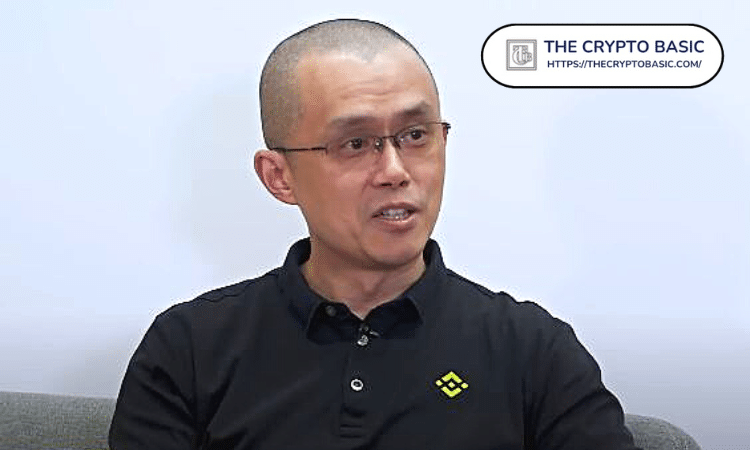
Binance CEO asserts that the exchange is not planning to cut ties with US-based intermediary companies. 

In a tweet today, Changpeng Zhao, Binance CEO, and founder denied reports claiming that the exchange is considering ending its relationship with United States partners. 

CZ’s comment comes a few hours after Bloomberg published a report about the matter. 

Bloomberg Says Binance Is Considering Terminating Relationship With US Firms 

Bloomberg claimed it learned from a source that Binance, the world’s largest exchange by 24-hour trading volume, is reportedly considering terminating its relationship with United States business partners. 

According to the source, the exchange plans to cut ties with US companies after it almost ran into trouble earlier this week due to its relationship with a banking partner and stablecoin issuer. 

The source told Bloomberg that Binance is weighing the option of severing ties with U.S.-based intermediary firms, including banks and services companies, amid increased regulatory scrutiny from the SEC. 

Per Bloomberg, the world’s largest cryptocurrency exchange is also reassessing venture capital investments in the US, according to the unnamed source. The person familiar with the matter also said Binance would likely consider de-listing U.S.-based cryptocurrency projects, including popular Circle stablecoin USD Coin (USDC). 

Although Binance CEO claims the news is false, his previous tweet on Monday signaled the potential retreat. 

“Given the ongoing regulatory uncertainty in certain markets, we will be reviewing other projects in those jurisdictions to ensure our users are insulated from any undue harm,” CZ noted following Paxos Trust’s decision to discontinue the issuance of Binance-linked stablecoins. 

Binance Not Authorized to Serve US Customers

It is noteworthy that Binance Holdings is not authorized to operate in the United States. However, Binance Holdings has a partnership with Binance.US, a smaller U.S.-based crypto trading company, which has stated clearly its plans to continue operating in the country despite an intense regulatory crackdown. 

Reacting to the development, a Binance spokesperson told Bloomberg:  

“Like every other blockchain company, we are conducting a careful cost-benefit analysis and will pivot our business as necessary to protect our global user base.”  

Meanwhile, Binance has recorded tremendous growth amid the crypto winter. Following the collapse of crypto exchange FTX, Binance claimed a huge chunk of the market, accounting for 55% of the global crypto spot trading, according to CryptoCompare. 

SEC-Registered Firm Lists XRP as Non-security in Code of Ethics

0

Deaton says the document is cited in his amicus brief.

Bailard Inc., a United States Securities and Exchange Commission-registered investment adviser and broker, allows investments in XRP which it says is “generally” viewed as a currency.

“In light of the extremely complex nature of the legal analysis regarding cryptocurrencies to determine which ones are securities and which ones are not, Bailard has decided to allow investments in three cryptocurrencies – Bitcoin, Ethereum, and XRP – that are generally accepted to be currencies and are not currently subject to regulation by the SEC,” the firm writes on its Code of Ethics page on the SEC website.

While it is unclear when the firm initially wrote this, it was last updated on Jan. 4, 2021, nearly two weeks after the SEC filed a complaint against Ripple alleging XRP to be an unregistered security.

A member of the XRP community @thestandard_xrp on Twitter shared a screenshot of the page today.

Notably, it is not the first time that Bailard’s code of ethics has come under scrutiny within the XRP community as a possible source of support against the SEC’s claims. @XrpMr previously shared this information in November 2021, attributing the find to popular crypto influencer Ben Armstrong AKA Bitboy Crypto.

Today, Attorney John Deaton noted that the document is cited in his brief filed on behalf of over 75k XRP holders as a friend of the court in the SEC v Ripple case asserting that the Judge has seen it.

Meanwhile, it will not be the first time public documents have referred to XRP as a virtual currency. In a lengthy thread last December, Deaton pointed out several instances where government offices and regulators referred to or implied XRP was a virtual currency. As highlighted by the attorney, the US Government Accountability Office and the Financial Crimes Enforcement Network in 2014 and 2015, respectively, referred to XRP as a virtual currency. 

More to the heart of the SEC case, the SEC itself, through the Hinman speech, disclosed that decentralized network assets do not constitute securities. A year later, as Deaton pointed out, the SEC, in its digital asset framework, says that crypto, which users can readily use for payments, is unlikely to satisfy Howey’s test and, as such, can not be classified as a security.

Deaton, using these facts, argued that even if the SEC wins against Ripple, it is improbable that the regulator will win against its executives. According to the lawyer, the agency has to prove that it was evident to the ordinary person that XRP was a security, as it alleges. However, in light of these records, it is likely to be an uphill task, as Deaton asserts.

After over two years, the SEC case against Ripple awaits a court decision, as both parties have submitted the required briefs.