Home Blog Page 2137

Ripple vs. SEC: Alderoty Says Detractors Should First Understand Ripple Arguments Before Debunking Them

0

Ripple’s general counsel knocked Coindesk over its recent op-ed about the ongoing SEC lawsuit.


Ripple’s legal counsel Stuart Alderoty has slammed cryptocurrency media outlet Coindesk for its recent op-ed about the Ripple lawsuit. Coindesk columnist Preston Byrne said in the article that he expects Ripple to lose its case against the SEC “sooner or later.” 

Bryme noted that Alderoty’s argument is akin to denial. Ripple’s general counsel “argue that there was no investment contract during the sale of XRP because there is no formal contract between Ripple and XRP purchasers and that the tokens were sold for consumptive use,” Bryme said. 

Alderoty Response to Coindesk Op-ed

Reacting to Coindesk’s recent Op-Ed article, Alderoty urged the media outlet, which he described as detractors, to understand Ripple’s legal positions before debunking them. He noted that it was clearly stated in Ripple’s summary judgment reply brief filed on December 2 that the blockchain company does not rely on the conclusion that XRP was purchased for use.

“[…] Though such a conclusion, as shown by amici briefs and the non-speculative evidence, would defeat the SEC’s claims,” he added. 

Alderoty went a step further to summarize Ripple’s “actual arguments” in the ongoing lawsuit in three points. According to Ripple’s chief legal officer, Ripple does not have a contract for investment with any XRP holder. 

He said the Securities and Exchange Commission could not satisfy a single ingredient of the Howey Test in the case, adding that the Silicon Valley tech company does not concede any of the Howey Test’s prongs.

Alderoty asserted that Bryme’s claim about the SEC’s reliance on a garden variety of ICO cases meeting all limbs of the Howey Test does not have a place in the ongoing lawsuit. 

Furthermore, Alderoty said the SEC and other detractors have been trying to recast Ripple’s legal positions because they do not have answers to the company’s arguments. 

Meanwhile, Alderoty said he is glad that Coindesk also recognizes that the SEC’s invitation to crypto companies, asking them to come in and register, is impossible.

“I’m glad even the detractors recognize that the SEC’s invitation to come in and register is like trying to take a Ford Model T into space,” he said. 

 

Terra Founder Accuses SBF Of Attacking UST Peg With $1B UST From Genesis

0


Terra Founder Accuses SBF Of Attacking UST Peg As FTX CEO Faces Market Manipulation Investigations.


TFL founder Do Kwon, emboldened by a New York Times article, has made some serious allegations against SBF with links to Genesis Trading and Voyager.

Terraform Labs founder Do Kwon, in a series of tweets today, has accused Sam Bankman-Fried of intentionally dumping $1 billion TerraUSD (UST) and billions of Bitcoin to de-peg UST and weaken Luna Foundation Guard (LFG) reserves.

Notably, the tweets came in response to a New York Times article that reported that SBF is currently facing market manipulation investigations for a possible role in the Terra collapse.

“U.S. prosecutors in Manhattan are examining the possibility that Mr. Bankman-Fried steered the prices of two interlinked currencies, TerraUSD and Luna, to benefit the entities he controlled, including FTX and Alameda Research, a hedge fund he co-founded and owned,” the New York Times wrote citing anonymous sources with knowledge of the matter.

It bears mentioning that the investigation is still in its early stages, and investigators have not conclusively proven anything, as the New York Times highlighted. Nevertheless, per the report, it is part of a broader investigation into the FTX collapse.

Kwon, on Twitter today, expressed the belief that the report was likely on to something as he suspects that FTX or Alameda took out a $1 billion UST loan from the now embattled Genesis to attack the UST peg. In addition, Kwon claims that at about the same time, Alameda borrowed billions in Bitcoin from Voyager to dump on the market and weaken LFG’s Bitcoin reserves.

Furthermore, the TFL founder asserts that it is not the first time Alameda has targeted UST. For example, Kwon said that in February 2021, UST faced a “currency contraction” due to a rapid 500 million UST dump by Alameda.

“What’s done in darkness will come to light,” the TFL founder surmises.

It is worth noting that SBF is no stranger to arbitrage trades against stablecoins. For example, at the height of the FTX collapse, Alameda opened massive shorts on Tether (USDT), temporarily de-pegging the stablecoin in what many believed to be an effort to make all their losses back in one trade.

Crypto Twitter Responds 

Unsurprisingly, Kwon’s comments attracted a flurry of responses from crypto community members.

Algod (@AlgodTrading), who predicted the UST de-peg and gained notoriety by betting against Do Kwon in response to the TFL founder today, asserted Luna was bound to fail regardless of an attack. “Attack or not, Luna would have collapsed by now,” Algod tweeted.

Gokhstein Media founder David Gokhstein while indicating that he was no fan of Kwon, revealed that he believed the sequence of events highlighted by Kwon was plausible. “I don’t want to believe Do Clown, but I can see this happening,” Gokhstein tweeted.

Meanwhile, others noted that should Kwon’s claims hold up, FTX triggered a series of events that ultimately led to its collapse.

Accusations Run Rampant 

Notably, all of these come within 24 hours of Terra whistleblower FatMan asserting that he had found conclusive proof that TFL triggered the ecosystem collapse. According to FatMan, sharing on-chain data, TFL sold about $450 million UST in the open market weeks before the collapse, weakening UST liquidity. The Terra whistleblower does not believe this is a mistake or coincidence, but Kwon and his allies cashing out as much as possible in anticipation of the collapse.

However, not everyone buys this analogy. The Block’s Tim Copeland poked holes at the argument, wondering why TFL would cash out $450 million only to spend $2.8 billion to try to save the peg. 

Meanwhile, another user, RyanLion (@TheRyanLion), who FatMan promptly blocked, pointed out that contrary to FatMan’s claims, these sales lined up with Bitcoin purchases by the LFG to defend the peg. However, it is worth noting that, like FatMan, he believes it was not wise to sell in the open market. 

“UST’s final death blow could have been struck by anyone,” FatMan asserted as he believes that the TFL sale was “irresponsible” and put UST in a vulnerable position.

No Closure Yet For Terra Investors

The Terra ecosystem collapse in May wiped out at least $60 billion in investors’ funds and triggered a market-wide contagion hurting all crypto investors. 

Even after almost seven months, the actual reason for the collapse remains to be determined. However, following the collapse, many have laid the blame at the feet of Do Kwon, TFL, and the LFG. The fact that South Korean authorities have issued a warrant for Do Kwon’s arrest has also helped strengthen these narratives. 

Meanwhile, Kwon has continued to defy South Korean prosecutors, maintaining that he had no part in any wrongdoing.

Chainlink Staking Now Live On Ethereum Mainnet

0

Chainlink Staking v0.1 Goes Live for Early Access.

The initial version of the Chainlink staking initiative gives interested and eligible proponents an opportunity to stake up to 7,000 LINK in the limited pool.

Chainlink, a blockchain-based decentralized oracle network (DON) built on the Ethereum chain, has introduced LINK staking for its community with the launch of the Chainlink Staking v0.1 on the Ethereum mainnet, which features a staking pool with a limited size for the initial release.

Community members can now stake up to 7,000 LINK in the limited pool as they seize the early access opportunity. Notwithstanding, according to the recent announcement in an official press release Tuesday, the opportunity is exclusive to those community members who meet at least one of the early access eligibility criteria disclosed by Chainlink in October.


Proponents who do not meet the early access criteria will have their chance to also stake as much as 7,000 LINK in the pool from December 8, 12 PM ET (5 PM UTC). According to the press release, each LINK address will be limited to a maximum of 7,000 LINK to accommodate as many community members as possible for the initial pool, which is capped at 25M LINK.

Chainlink disclosed that the staked LINK tokens and the rewards accrued would remain locked until the team releases Staking v0.2. The v0.2 is expected to be released in 9 to 12 months. Additionally, the team would allot 2.5M LINK from the staked 25M LINK to node operator stakers, with 22.5M distributed to the community stakers on a first-come, first-served basis, the press release says.

Chainlink announced its staking program in June, promising rewards of up to 5% in annual percentage yield. As expected, the disclosure led to a 44% increase in active LINK addresses in a matter of days, as The Crypto Basic previously reported.

The introduction of LINK staking will likely drive more investor interest in the asset as several proponents look to amass rewards from helping secure the network. In a tweet following the official announcement on Twitter, Chainlink shared a link to an official blog post with details on how to stake LINK and other important activities.


Chainlink Economics 2.0 

Launched in 2017, Chainlink’s growth path has led it to introduce Chainlink Economics 2.0, which the network is looking to utilize in improving its oracle services, especially in terms of sustainability and long-term utility. Chainlink Staking is one of the initiatives parts of the Chainlink Economics 2.0 development.

In addition to the Staking initiative, Chainlink is also introducing its BUILD program, which would help increase the number of builders on the Chainlink network by providing support and native services to developers who would provide incentives such as fees to stakers and other service providers on Chainlink.

The third Chainlink Economics 2.0 initiative is the Sustainable Chainlink Access for Layer 1 and 2 Enablement (SCALE) program. The initiative will allow layer-1 and layer-2 blockchains to expedite innovation in smart contracts within their respective ecosystems through a contribution in covering Chainlink operating costs for some time. Top blockchains such as Avalanche, Moonbeam, and Metis have indicated an interest in the program.

Top Singapore Crypto Exchange Lists BabyDoge Coin

0

BabyDoge has been listed on another top exchange.


Singapore-based cryptocurrency exchange BingX has listed Baby DogeCoin (BabyDoge) for spot trading. The exchange said in a recent blog post that it chose to list the cryptocurrency due to popular demand.

“Due to popular demand, BingX Spot will add the following pair to its Beta version on 8 December 2022 (UTC+8). Trading pair of Baby DogeCoin (BabyDoge) will be added,” BingX noted in a blog post.

BingX BabyDoge Listing

BingX users will be allowed to deposit and withdraw BabyDoge starting from December 8, 2022 at 00:00 (UTC +8). The cryptocurrency exchange will only support BabyDoge deposits and withdrawals through the BNB Smart Chain (BEP-20).

BabyDoge will initially be available under one spot trading pair BabyDoge/USDT. Since the crypto asset will be listed in BingX’s beta version, users will be limited to $20K worth of BabyDoge per order. Furthermore, a 0.15% fee applies for every BabyDoge spot trading activity on the crypto trading platform.

The listing did not have any positive impact on the price of BabyDoge. Per data on Coingecko, BabyDoge is down 2%, as it currently changes hands at $0.000000001082.

Launched in 2018, BingX is a cryptocurrency social trading exchange that provides spot, derivatives, and copy trading services to users across over 100 countries. The crypto trading platform claims to be the “people’s exchange” by giving its users access to the fast-growing crypto market.

According to data from Coingecko, BingX is ranked as the 25th-largest cryptocurrency exchange by trading volume globally. The exchange has a 24-hour trading volume of $282.3M. BingX has listed 355 crypto assets under 372 trading pairs, including BTC/USDT. Coingecko data shows that BingX has a trust score of 8 on a scale of 10.

BabyDoge Listed on Top Exchanges

Meanwhile, BabyDoge has continued to attract the interest of top exchanges globally. In July, a Singapore-based exchange, dubbed Deepcoin, announced it had listed BabyDoge. The token was also listed on ProBit Global in October.

Uphold Continues To Give 4% Cashback Rewards In XRP

0

The Uphold crypto-linked debit card offers unique and appealing features, including zero transaction fees and an opportunity to spend crypto at several merchant locations.


Uphold has again brought public attention to the attractive offerings presented to clients through its recently-launched crypto-linked debit card. The card presents clients with 4% cashback rewards on their spending. The rewards are paid in XRP and convertible to any currency of the customer’s choice, digital or fiat.

“It’s cold in the UK! Luckily the Uphold Card is Coming in hot with 4% cashback paid in XRP…” Uphold disclosed in a tweet today, reiterating the card’s offerings.


Launched mid-November, Uphold unveiled the crypto-linked card with 4% cashback paid in XRP. According to the Nov media release, the card features ease of use, being readily available on the mobile app for iOS and Android users. Initially available to customers in the United Kingdom, Uphold promised to introduce a United States-based version before long.

Through the card, users can directly spend their cryptocurrencies held on the Uphold app at the over 90M global merchants that accept Mastercard. Uphold also promised an easy integration of the card into users’ Google Pay and Apple Pay accounts.

Furthermore, customer spendings attract zero fees, according to Uphold. This zero-free offering applies even to transactions in foreign currencies. The platform has also promised fair and competitive FX rates when users pay in fiat currencies other than the sterling. With the virtual card readily available on the mobile app, the physical card can be provided for customers upon request, including fees.

Launched in 2013, Uphold provides its clients with a robust financial services offering, including an opportunity to trade, exchange, spend and invest digital assets. The firm has substantially expanded its offerings to accommodate growing trends and assets. Last month, Uphold added seven new tokens to its platform, including Shiba Inu’s governance token, Bone ShibaSwap (BONE).

Crypto Cards are Growing in Number

Uphold was the latest in a long line of digital asset platforms that have launched crypto-linked debit cards. In August, as previously reported, Binance and Mastercard piloted the Binance crypto card in Argentina.

Furthermore, on October 27, London-headquartered crypto platform Blockchain.com announced its crypto Visa card, with 1% cashback rewards on spending. Visa also announced the launch of its crypto card in Latin America through partnerships with several FinTech and IT companies within the region. Platforms such as Crypto.com, Nexo, Coinbase, and many others also offer crypto-linked cards.

Ethereum Developers Confirm Shanghai Upgrade Will Enable Staked ETH Withdrawals

0

Ethereum stakers will be able to withdraw staked ETH.


Ethereum developers, in a recent call, confirmed that they will roll out the Shanghai upgrade without EIP 4844 to eliminate delays in enabling withdrawals for staked ETH.

Ethereum developers, during the 99th Consensus Layer (CL) call held on December 1, have disclosed that they will be rolling out the Shanghai Upgrade without EIP 4844 to eliminate delays in Ethereum staking withdrawals, per a Galaxy Insights report.

Notably, the conclusions from the meeting confirm the previous report by The Crypto Basic, where developers expressed the belief that they could roll out staking withdrawals with the Shanghai upgrade in March. Furthermore, it clears any doubts about a significant delay.

Per the previous report from the All Core Developers (ACD) in November, developers had asserted that enabling staking withdrawals was a top priority. However, they still needed to decide whether to roll out the upgrade with EIP 4844, the proto-danksharding proposal. As highlighted, the inclusion of EIP 4844 risked causing delays.

Danny Ryan, who led the CL call, noted that developers indicated that EIP 4844 is nowhere near as ready as staking withdrawals. Consequently, to avoid significant delays, Ryan felt it only made sense to move ahead with the upgrade without EIP 4844.

“I think crucially what was made clear by Consensus Layer teams is that they believe that EIP 4844 is not nearly in the same readiness as [staked ETH] withdrawals and coupling them would significantly delay withdrawals,” Ryan said per the report. “We will not couple them. We will work full steam ahead on Capella in its current form.”

For context, Capella is the name of the testnet where developers are testing staked ETH withdrawals. Notably, developers plan to roll out the proto-danksharding feature in a later upgrade.

Giving an update on the progress made with enabling staking withdrawals, Barnabas Busa, a DevOps engineer at the Ethereum Foundation, noted that developers were currently carrying out tests in two different environments. Notably, one test environment allows developers to test the feature in a pre-Merge Ethereum state, while the other offers a post-Merge state.

However, according to Busa, at the moment, these networks are yet to support all Execution Layer (EL) and CL clients.

It bears mentioning that while Ethereum developers had assured users of staked ETH withdrawals in 6 to 12 months post-Merge, in recent weeks, the timeline has been shrouded in uncertainty. However, the latest statements from developers could see ETH stakers able to withdraw their tokens as early as March.

The Ethereum staking contract currently holds about 15.56 million ETH worth about $19 billion, according to Etherscan data. It represents an increase of over 200k ETH in the last 12 days.

Leading Swiss Bank Now offers Bitcoin, Ethereum, MATIC and LINK Trading

0

Bank Syz disclosed that its recently-introduced cryptocurrency services would border on custody and trading offerings for the four selected assets.


A leading Swiss private bank with $30B in AuM, Banque SYZ (Bank Syz) recently announced the launch of its “Syz Crypto” offering, which would see the Geneva-based firm provide its Swiss and international clients with digital asset services, including trading and custody.

At the launch of the offering, Bank Syz will support Bitcoin (BTC), Ethereum (ETH), Polygon (MATIC), and Chainlink (LINK), as revealed in an official press release published Monday.

The press release said Bank Syz had picked top platforms with a track record of premium trading services for its crypto trading offering. Its custody services will be powered by Swiss crypto custody provider Taurus which, with its Taurus-Protect custody solution, provides digital asset custody services for several banks and financial entities within Europe. Taurus already provides custody services to top banks such as Caceis and Sygnum Bank.

Bank Syz’s cryptocurrency offerings allow its clients to have exposure to four of the largest crypto assets in a properly regulated atmosphere which triggers a measure of investor confidence. According to the private bank, its expertise and regulatory stance ensure accountability and security for investors lacking in non-bank crypto entities.

“Thanks to our partnership with Taurus, we now offer our clients the convenience of accessing the digital asset world through a regulated custodian with strong investor protection and supervision. Syz Crypto also enables our clients to get a holistic view of their traditional and digital assets in their bank reporting,” Charles-Henry Monchau, Chief Information Officer at Bank Syz remarked, speaking on the development.

Cryptocurrencies Creeping into the Private Banking Sector

Bank Syz’s involvement in cryptocurrencies underlines the growing attention the industry has been receiving of late. Private banks, in particular, have been interested in digital assets since 2018 as they attempt to provide crypto services to their clients.

In July, Itaú, the largest private bank in Brazil, announced plans to introduce a tokenization platform that would convert traditional assets into tokens. Itaú also revealed that it would offer crypto custody services to its clients, as previously reported. In February, Italy’s leading private bank Banca Generali launched a service that provides clients with BTC trading and custody services.

It is worth mentioning that the top Swiss wealth managing entity Pictet Group said, in August, that cryptocurrencies have no place in private banking. Despite the remarks from the firm, digital assets are slowly creeping into the private banking sector, with a rapid surge in adoption, as banks such as Goldman Sachs, LGT, and a host of others show interest.

419 Billion Shiba Inu On The Move By Binance

0

Binance has moved over 419.49 Billion Shiba Inu (SHIB).


Binance, the world’s biggest exchange in terms of daily volume, recently transferred a whopping 419,497,861,322 (419.49B) SHIB, worth $3,825,820 ($3.82M) between its wallets in one significant transaction executed about 2 hours and 30 minutes ago from press time, Etherscan.io reports

Binance Moved 3.82 Million USD Worth of SHIB Between its own Wallets
Binance Moved $3.82 Million Worth of SHIB Between its Wallets

The transfer is most likely executed as part of the proof-of-reserves audit that Binance initiated recently to safeguard retail traders and businesses from mishandling user funds by the exchange. The Proof of Reserves (PoR) enables users to verify that the exchange holds users’ deposits in full and has absolute asset backing while meeting transparency standards, making it difficult for exchanges to engage in questionable or illegal financial activity.

As reported earlier by TheCryptoBasic, Binance holds over 87 trillion SHIB, worth nearly a billion dollars, in seven separate wallets. In contrast, the major Singapore-based exchange, Crypto.com, holds about $558 million worth of Shiba Inu in its reserves.

Following Crypto.com and Binance, the leading Seychelles-based exchange KuCoin, Huobi, and ByBit also disclosed their Proof of Reserves to provide transparency. As per The Crypto Basic research, KuCoin holds a whopping 4,438,701,419,929 (4.43T) SHIB, Huobi holds 1.85 Trillion SHIB, and ByBit holds 366 Billion Shiba Inu in its reserves.

The aforementioned gigantic transfer doesn’t impact Shiba Inu’s price. As of writing, Shiba Inu is trading at the price of $0.000009099, down -2.24% over the last day, with a 24-hour trading volume of $117,676,738 ($117.67M).

Anonymous Whale Withdraws Over 4 Billion XRP From Bittrex

0

Single whale withdraws 4.1B XRP from Bittrex to different unknown wallets.


According to data shared by Whale Alert, there have been massive XRP outflows from prominent cryptocurrency exchange Bittrex.

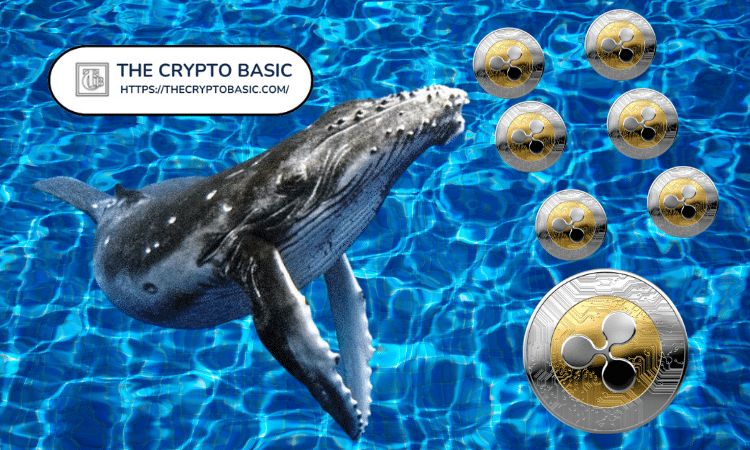
In one hour, an unknown XRP whale withdrew a total of 4,124,254,650 (4.12 billion) XRP from an address on the Bittrex cryptocurrency exchange. Notably, the Bittrex user has transferred huge amounts of XRP coins to different external wallet addresses.

Details of the Transactions

Forty minutes ago, one of the whales transferred 300 million XRP worth $113.13 million to an unknown address.

Two minutes later, the same user sent 500 million XRP ($188.5M) to another unknown wallet from Bittrex.


The transaction kept coming as the same user transferred another 500M XRP to a different address two minutes later. This time, the value of the transaction was worth around $188.59M.

A minute later, the same address also moved another 500M XRP tokens ($189.39M) from Bittrex to an unknown wallet.


Another 500M XRP coins worth $187.81M were withdrawn from the Bittrex address by the same anonymous whale.

Furthermore, the user transferred 500M XRP worth $188.35M to another unknown address minutes later.

Whale Alert further reported that the user transferred 500M XRP to an unknown wallet within the hour, while another 500M XRP coins were sent to an anonymous wallet a few minutes later.

Finally, the last XRP transfer from the Bittrex wallet saw the user move 324,254,650 coins ($123.2M) to an anonymous wallet.

Data from Bithomp shows that the Bittrex address from which the withdrawals were made currently holds only 19.99 XRP coins.

XRP Holders React and Possible Reason for the Huge Transfers

Interestingly, the transactions have drawn the attention of XRP holders, who were amazed by the huge transfer of the crypto asset.

It bears mentioning that one of the factors responsible for the large XRP movement could be linked to the FTX collapse. Recall that the leading crypto exchange suffered a massive collapse due to the alleged mishandling of customers’ funds. The exchange filed for Chapter 11 bankruptcy protection, leaving over one million customers stranded and unable to access their funds.

Following the FTX debacle, crypto users no longer store their assets on exchanges to avoid being victims of future exchange collapses. The Bittrex user could anticipate a win for Ripple in the company’s ongoing lawsuit against the SEC. Several crypto-legal experts, including attorney John Deaton, believe Ripple is better at winning the SEC in the lawsuit.

A win for Ripple would see major U.S.-based exchanges re-list XRP, thus causing the asset’s price to soar tremendously. However, should the blockchain company lose the lawsuit, the XRP price is expected to suffer a massive dip.

Terra Classic Developers Cease Support For Terra Station To Divert Focus To Rebel Station

0

Terra Rebels will no longer perform updates for the Terra Station.


Terra Rebels will no longer be providing support for the Terra Station wallet. Instead, they will be focusing efforts on the Rebel Station wallet.

Community influencer and network validator Classy first disclosed the information in a tweet yesterday, sharing Discord messages for Terra Rebels admin ClanMudhorn. Per the messages, Terra Rebels have handed over the support of Terra Station to TerraCVita, another independent developers group.

Notably, @reXxTerraRebels, AKA reXx, confirmed the report in a tweet today. “Terra Rebels will no longer be updating Terra Station moving forward,” reXx tweeted.


The decision comes after the risks of Terra Classic’s dependence on Terraform Labs’ infrastructure came to the fore as continued TFL support of Terra Station was recently threatened. Notably, plans to transition to an Interchain Station wallet to support the entire Cosmos ecosystem threatened to end Terra Classic’s Station support by December 15. While the Terra Rebels have always planned to make the Classic chain as independent as possible from TFL infrastructure, recent events may have sped up the timeline.

Consequently, the Terra Rebels are also working to make the Rebel Station independent of TFL infrastructure. In a proposal reported yesterday, the developers’ group submitted a budget of $150k to cover two months of work to achieve this fully. Per tweets from the developers yesterday, they have already integrated TFL independent endpoints for the Rebel Station using Terra Rebel LCD clusters instead of TFL LCDs.

Terra Classic Core developer Edward Kim in a Twitter thread yesterday clarifying the situation of things, urged members of the Terra Classic community to avoid vilifying groups within or outside the network. According to the developer, the network should move onward using this time to learn and fix things.

Unsurprisingly, recent developments have left a sour taste in the mouths of several community members, as some believe that the Terra Rebels may be acting maliciously.