Home Blog Page 2211

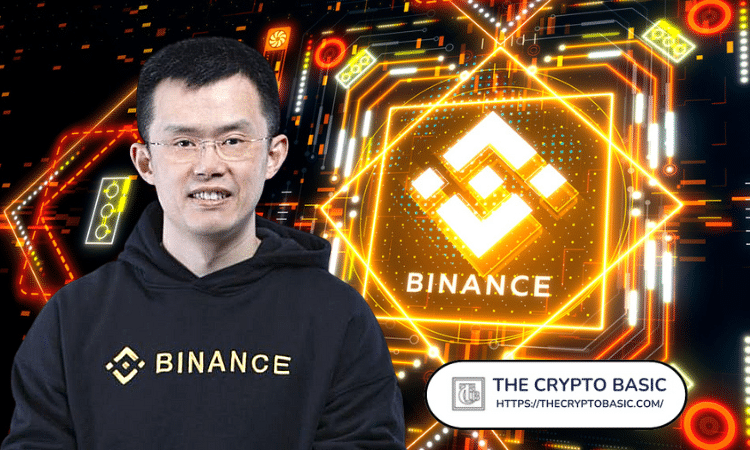
CZ Says Community Trusts Binance, as BNB Dropped by Less Than 5% Following BNBChain Hack

0


CZ remains confident of the community’s trust in Binance, as BNB only dipped by less than 5% despite the recent massive Binancechain hack.


Binance has positioned itself as one of the largest and most trustworthy entities in the cryptocurrency ecosystem. The firm has seen a massive expansion since its inception, building a solid community on its BNBChain network.

Binance CEO Changpeng “CZ” Zhao has reiterated his confidence in the community’s trust in Binance despite the hack a BNBChain-linked bridge recently suffered. According to CZ, BNB dipped by less than 5% after the hack.

CZ’s comments emerged following the hack, as CNBC hosted the 45-year-old Chinese-Canadian business executive on its Squawk Box show Friday. CZ was asked to share his outlook on BNB as it concerns his bullishness on the token, especially considering recent realities. Additionally, he was allowed to share more insight into the token’s utilities.

“BNB has many utility values: you can use it to pay for fees on the BNBChain blockchain network; you can use it to buy airplane tickets, buy food; and you can use it to raise money for your entrepreneur projects; you can use it to sell or buy NFTs,” CZ noted, as he sought to highlight several use cases for BNB.

He further said:

“You can see that even with such a hack that happened overnight, the BNB price dropped less than 5%. So that shows that the confidence on the community that holds BNB are (sic) extremely strong,” CZ added. 


Furthermore, CZ mentioned that he remains a big believer in the BNB token, as he has dedicated most of his time to the project. Speaking further, Zhao expressed his confidence in the developers and the holders of the BNB asset. CZ also shared more insight on prospects following the hack. He noted that the team would learn from the mistakes to ensure that the project’s codes are more secure. 

“We just got to learn how we can learn from these kinds of mistakes and make our code more secure. Software code is never bug-free; we were able to minimize quite a lot of the damage.”

He acknowledged that software codes are oftentimes ridden with bugs. Notwithstanding, he admitted that bugs with blockchain codes induce more pain, as financial losses are experienced when these bugs are exploited. “We were able to minimize quite a lot of the damage to less than $100M now,” CZ remarked regardless.

Addressing the concerns of blockchain security, CZ pointed out that the BNB blockchain itself has “no problem,” as the hack occurred through the exploitation of a bridge. He similarly highlighted previous bridge hacks but noted that each bridge is different, so certain bugs unique to a bridge might not be discovered in time.

The BNBChain-linked Exploit

Recall that hackers recently exploited a bug in a BNBChain-linked cross-chain bridge overnight. The hackers were able to move up to 2 million BNB tokens ($566M) from the chain.

Notwithstanding, due to the Binance team’s swift response, the damage was minimized to an estimate between $100M and $110M. Binance had to temporarily suspend on-chain activities on the BNBChain to control the situation. Network activities are back up as of press time.

Following reports of the hack, BNB tanked by over 3%. The asset is changing hands at $282 as of press time, down 3.98% in the past 24 hours. BNB’s dip does not set it apart from the broader crypto market, as most crypto assets have also seen a dip in the past 24 hours.

What Impact Will Ethereum’s Merge Transformation Have On The Crypto “Wild West”?

0

For more than a decade, one of the pervading views on the world of cryptocurrency has been a “Wild West” mindset. Wonks have declared crypto to be the future of finance, while newcomers continue to approach it with skepticism.

But what would it take for the “Wild West” view to dissipate? One possibility is that the Ethereum blockchain’s Merge, which transitioned it from proof-of-work to proof-of-stake, would bring some much-needed clarity to crypto.

However, while the Merge may be one of the earliest steps, additional efforts will be needed to tame the Wild West.

Regulations are the key to taming the Wild West

Most people see cryptocurrency as “wild” because of the lack of oversight in the space. Thus, regulations would change the industry dramatically, and Europe is taking steps in this direction. Earlier this year, the European Union established new laws requiring crypto-related firms to secure a license and put safeguards in place for customers. Without compliance, companies won’t be allowed to issue or sell digital tokens in the EU.

At this point, cryptocurrency has been around for more than a decade, but little has been done as far as regulation. In the U.S., the various regulatory agencies are vying for control over the crypto market. In particular, the two key agencies sparring for dominance are the Commodity Futures Trading Commission and the Securities and Exchange Commission.

The primary question is whether cryptocurrencies should be declared commodities or securities, with the former requiring less regulation under the CFTC’s authority and the latter requiring more under the SEC. The debate over classification continues for now.

What about Ethereum’s Merge?

While applying regulations to the world of crypto will go a long way toward taming the Wild West, Ethereum’s Merge could also have an impact. The Merge transformed Ethereum from proof-of-work to proof-of-stake by combining the blockchain’s Mainnet with the Beacon Chain.

The shift to proof-of-stake has been widely publicized, with one of the most-touted benefits being a dramatic reduction in the amount of electricity consumed with every ether transaction. Bitcoin, the original cryptocurrency, follows a proof-of-work protocol, which means vast amounts of computing power are required to complete transactions on the blockchain. Powerful mining rigs solve complex mathematical problems, rewarding their owners with newly minted bitcoins.

On the other hand, proof-of-stake blockchains operate through staking, which requires users to lock up a certain number of their tokens for the privilege of receiving more tokens. After the transition to proof-of-stake, ether will require users to stake at least 32 of their tokens in order to validate transactions and earn a fee in tokens for their interest.

The Ethereum blockchain randomly chooses staked users to validate each transaction, giving the priority to the users who have staked the most ether tokens and earning them some additional tokens in the process. Users who stake their cryptocurrency make their tokens available for use in the proof-of-stake process and typically earn what amounts to interest on what is essentially a deposit (although the technical vocabulary terms used are different).

Will the Merge affect the Wild West?

Most writers covering the Merge emphasize the benefits of the PoS transition, but there are risks too. For example, one of the benefits of proof-of-stake blockchains is that they enable users to essentially earn interest on their staked tokens, but a key issue with this is that most cryptocurrency prices are highly volatile.

Staked tokens are unavailable for trade, and some cryptocurrencies have lockup periods that prevent users from trading their staked tokens for a period of time. As a result, users who stake tokens are unable to sell them if an attractive selling price is reached or cut their losses if the price plunges with no sign of coming back anytime soon.

Ethereum users who stake their ether at the time of the Merge are locking their tokens up for six months to a year. Additionally, there is a fee for staking tokens, although it’s usually less than what users earn from staking.

Once all the dust has settled, the Merge probably won’t have any major impact on the “Wild West” nature of cryptocurrency. Of course, it will remain the world’s second-biggest cryptocurrency by market capitalization, so its impact on the overall market is significant.

Making the most of the gold rush

One of the greatest challenges and greatest benefits is the volatile nature of cryptocurrency. On one hand, the volatility offers the opportunity for crypto investors to build sizable wealth by buying and selling tokens at the right times. The adage “buy low, sell high” applies to cryptocurrency just as much as it does to other investments.

However, the extreme volatility means it can be nearly impossible to know when it’s the best time to buy or sell tokens of any particular cryptocurrency. In 2022, cryptocurrency has become highly correlated with U.S. stocks, especially tech stocks, so traders who understand what creates an exceptional environment for buying and selling stocks can do quite well if they learn to read the signals.

Unfortunately, uncertainty continues to rule the market, so it’s even easier to lose vast amounts of wealth than it is to build significant wealth by trading cryptocurrency. Thus, innovative new crypto ecosystems like those created by Seasonal Tokens and Solana, which touts itself as the world’s fastest blockchain, are quite welcome.

Unlike many other blockchains, the Seasonal Tokens blockchain appears to have been created largely for investors, and it’s totally unique. The ecosystem contains four tokens: Spring, Summer, Autumn and Winter.

Of course, all tokens are impacted by macro factors like inflation and interest rates, just as other cryptocurrencies are. However, the developers behind Seasonal Tokens claim investors can trade them with a bit more certainty than with other cryptocurrencies because they are designed to rise and fall in predictable, preset patterns based on their relationships with each other.

Final thoughts

Ethereum’s Merge has highlighted the significant differences between proof-of-work and proof-of-stake protocols. Many people may think that PoS is better than PoW because it is more energy efficient, but a deeper study of both reveals that they are just different with risks and benefits to each.

As things stand now, it appears that PoW blockchains like Bitcoin, Dogecoin, Litecoin, Monero, and Seasonal Tokens will always have a place in the crypto world. However, there’s no denying that PoS blockchains like Ethereum, Solana, Avalanche, and Polkadot have utility too.

For this reason, it’s critical that investors take the time to understand the basics of the technology behind each cryptocurrency they intend to invest in and the market dynamics that affect its price before buying any tokens.

Terra Founder Accepts Podcast Invite to Discuss Why He’s Not Returning To South Korea

0


Kwon agrees to state why he went into hiding.


Do Kwon, the founder, and CEO of TerraForm Labs (TFL), has agreed to disclose in a podcast why he has not returned to South Korea to face the charges against him. The Terra boss made this known in a conversation on Twitter with Laura Shin, a cryptocurrency journalist and the host of Unchained Podcast.

During the lengthy Twitter thread, Shin asked the Terra founder why he had not returned to South Korea to clear his name from the multiple charges slammed against him by the Korean government. In response, Kwon said:

“I see your podcast invite; let’s talk about it there!” 

The date and time of the podcast have not been made public at press time. It is believed that the duo is working on a suitable schedule for the podcast.

Negative Reports Trail Terra Founder

Since the Terra incident, several reports have emerged indicting Kwon of several charges, including fraud, and capital markets laws violation, among others. However, the Terra boss has constantly taken to Twitter to deny all negative reports.

Last month, Korean prosecutors issued an arrest warrant for Kwon for allegedly violating the country’s capital market laws. This came after the Terra boss refused to accept an invitation for questioning from the Korean government. A red notice was also issued for the Terra exec by Interpol.

Shin noted that Zuck Guzman, a CNBC reporter, disclosed that: “Zack Guzman said you had told him you weren’t inclined to return to Korea if the charges were based on the Capital Markets Act, which they eventually were. Is that why you haven’t returned to Korea?”

Kwon replied that he would not return to Korea if the charges slammed against him were capital markets-related. Responding to the comments, Kwon said:

“That’s not exactly what I said – I said if they make up something random e.g., transferring crypto at all violates capital controls, I wouldn’t bother traveling all that way – those phrases sound similar. We were also at a pretty loud bar and 10 cocktails in, so it didn’t help.”

Kwon’s Current Location is Still Unknown

At the time of writing, Kwon’s whereabouts are still unknown, with authorities stating that he is on the run. TFL denied the report in a recent note sent to the Wall Street Journal (WSJ), claiming that Kwon’s location is kept private due to the numerous threats he has received from aggrieved Terra investors.

With the podcast expected to happen soon, the Terra community is hoping that Kwon will clear the negative reports against him and possibly help the value of the ecosystem tokens to rally again.

Ripple Operated Validators On The XRPLF Unique Node List (UNL) Reduced To Two

0

XRPFL makes changes to its UNL, reducing Ripple-owned validators to 2 while welcoming a new validator to the list.


The number of Ripple-operated validators on the XRP Ledger Foundation UNL has been reduced to 2 as the XRPLF announced changes to the list in a tweet on Thursday welcoming xSPECTAR to the list.

The UNL is a list of validators trusted to exhibit high performance and not to collude based on antecedents. Notably, each server operator can choose their own UNL. Usually, this choice is based on a default list provided by a trusted publisher. There are currently 3 main publishers for server operators to choose from, Ripple, XRPLF, and Coil.

Per the blog post accompanying the announcement, xSPECTAR has been added due to its contributions to XRP Ledger infrastructure. Notably, the validator is known for maintaining excellent uptime.

With the latest changes, the XRPLF UNL remains at 35 validators. Per the post, the XRPLF reduced the number of Ripple-operated validators in line with its goal of reducing the number of validators owned by one entity.

“With these changes, our list remains at 35 validators,” wrote the foundation. “Additionally, keeping in line with the reduction of multiple validators by any entity, the Ripple operated validators is now at 2.” 

Is Ripple Becoming More Decentralized?

It bears mentioning that Ripple’s decentralization has always been a subject of intense debates in the crypto ecosystem. While the network currently boasts over 150 validators run by various individuals and businesses, the fact that it publishes a default UNL has always been a cause for concern amongst some groups.

However, it is worth noting that the number of Ripple-operated validators on these lists has continued to decline, and users can always choose a UNL from separate lists. Notably, the number of validators on Ripple’s list operated by the company now sits at only 3 from a previous 6.

Still, it bears mentioning that out of the 150 plus validators; Ripple continues to incentivize many of them financially.

Shocking Results For Bitcoin Price Whenever “Moon” Gets Most Mentions on Twitter

0


Data Shows Bitcoin (BTC) Falls Whenever “Moon” Gets Most Mentions on Twitter.


CryptoQuant believes that trading based on social media sentiment alone is bad.

Many cryptocurrency investors have adopted different tactics to help them decide the perfect buying signal for their favorite coins and tokens. While many rely on well-analyzed Technical Analysis (TA) and Fundamental Analysis (FA) to guide their trading decisions, others have relied on traders’ opinions on Twitter. 

Those who trade crypto based on other people’s sentiments on Twitter usually consider certain mentions as buy or sell signals.

Trading Based on Sentiment Is Bad

According to a recent report by CryptoQuant, a cryptocurrency analytics platform, trading based on sentiment from other traders on Twitter is not a good idea, as things usually end badly.


A CryptoQuant analyst noted that he has been keeping track of Twitter mentions for specific cryptocurrency-related keywords, like the moon, buy, and sell, since the beginning of the year.

The analyst also stated that he usually checks the price of Bitcoin, the world’s largest cryptocurrency, whenever those crypto keywords have the most mentions on Twitter. 

Per the report, on days when the keyword moon (a situation when the market experiences a significant upward movement) had the most mentions on Twitter, the price of Bitcoin slumped massively.

BTC Dips When Moon Gets the Most Twitter Mentions

On January 19, 2022, ‘moon’ had the most mentions on the microblogging platform. However, Bitcoin’s price went opposite to the keyword, as the top asset class dipped a whopping 22.8%.

In a similar development, moon stole the show and became the most-mentioned word on Twitter on July 6, 2022. Bitcoin’s price surged 8.9% in the early hours of the day and slumped 15.38% before the day ended.

The analyst added that on August 10, 2022, ‘moon’ topped the list of the most mentioned words on Twitter and the result was no different from other days when the keyword had the most mentions. The report added that Bitcoin lost 19% of its value the following day.

On September 10, 2022, ‘moon’ also had the most mention on Twitter, and the world’s largest cryptocurrency soared 4% before plummeting 15% later in the day.

It could be a coincidence that Bitcoin usually has a blood bath whenever ‘moon’ mentions the most. However, people mustn’t rely entirely on social media sentiments to buy or sell digital currencies.

Bitcoin Likely To Dump Again From Next Fed Rate Hike Announcement As Institutions Not Buying

0

Institutions Are Yet To Turn Buyers Despite All Dips Bitcoin Had.


The recent rally is unsustainable, and Bitcoin is likely to dump again from the next Fed rate hike announcement, says a CryptoQuant analyst.

In a CryptoQuant Quicktake released on Wednesday, CryptoQuant analyst MAC.D warned of a possible price dump ahead when the Fed announces its rate hike for November as he notes that institutions are yet to turn bulls in the Bitcoin market.

According to the analyst, the latest rally in the asset price is not sustainable. Notably, the analyst bases his assertions on the lack of significant changes in the Coinbase Premium Index and the Fund Volume Index. MAC.D notes that while the former is positive, there have been no significant changes since June, and the latter remains in decline.

“Looking at the above two indicators, it will be difficult to think of it as an upward cycle conversion because there is no clear Institutional investors buying trend,” the analyst writes. “If prices rose without buying by Institutional investors before the FOMC rate announcement in November, it is likely to lose its upward momentum and dump it.”

The fact that Bitcoin has outperformed other equity markets recently and managed to reclaim and hold the $20k price point has sparked bullish sentiment and excitement amongst some investors. Also, among the positives, selling pressure appears to have eased as miners seem to have taken a break from selling. Moreover, as reported by The Crypto Basic on Wednesday, the asset has also seen significant, sustained accumulation.

However, despite these positives, as highlighted by the CryptoQuant analyst, it is too early to get excited. While October is historically seen as a good month for Bitcoin, it bears mentioning that this is not usually the case in bear markets, as highlighted by popular Bitcoin analyst Ali Martinez.

Notably, perceived risk assets continue to suffer from the continuous rate hikes by the Fed, which has made institutions significantly averse to risk. Meanwhile, the resulting dollar strength has also led to a decline in safe-haven assets like gold which is down about 10% year to date.

With continued market uncertainty resulting from persistent macroeconomic concerns, the best chance for a market shift is for the Fed to hit the brakes on raising rates and start economic easing, as Mike Novogratz has continuously iterated.

Bitcoin is trading below the $20k price point at  $19,972.30 but is still up 2.51% in the last seven days.

Confidence Building As Shiba Inu Whale Withdraws 1.72 Trillion SHIB From Huobi

0

An anonymous Shiba Inu whale has withdrawn a large amount of SHIB from the Huobi cryptocurrency exchange.


According to blockchain data, a total of 1,726,855,546,531 (1.72 trillion) SHIB were transferred from an address on the Huobi exchange to an unknown wallet earlier today.

At the time of the transaction, the funds were worth a whopping $19.4 million. Despite the massive amount of Shiba Inu transferred, the user paid a paltry fee of $4.63 to move the funds from the Huobi exchange to its destination.

The transaction details were also shared by Whale Alert, a cryptocurrency whale tracking service, on Twitter.

“1,726,855,546,531 #SHIB (19,398,804 USD) transferred from #Huobi to unknown wallet,” Whale Alert tweeted.

At press time, SHIB is changing hands at $0.00001117, and its value is down 2.5% in the last 24 hours.

Whale Interests in SHIB Intensifies

The development suggests that cryptocurrency whales are still interested in Shiba Inu. TheCryptoBasic has been covering reports involving whale investors’ movement of large amounts of SHIB.

The withdrawals come as Shib yesterday launched its first collectible card game. This withdrawal shows investor interest in keeping his shib holding away from the exchange for the long term.

While the value of SHIB has slumped 87% from its all-time high of $0.00008616, investors are still confident that the cryptocurrency price will rally again. The confidence from the numerous initiatives lined up for the canine-themed cryptocurrency. Interestingly, Shiba Inu, which initially made its debut as a meme coin, has launched several projects that could boost its value.

At the moment, Shiba Inu has a metaverse project, non-fungible tokens (NFTs), decentralized exchange (DEX), and a Play-to-Earn game.

The Shiba Inu team is still working on launching other projects, including a stablecoin and a Layer-2 network, on expanding its utility.

Meanwhile, the development comes less than a day after Shiba Inu officially launched its much-anticipated Play-to-Earn (P2E) game named Shiba Eternity. The game has gained traction since it became available for download on Android and iOS devices.

On the App Store, Shiba Eternity is currently the number one card game on the platform, while over 10,000 downloads have been recorded for the game on the Google PlayStore.

No Agreement Between Kaj Labs And Terra Classic Developers To Burn 2.5T LUNC, Says Terra Rebels

0

As LUNC’s popularity rises and its active community comes to the fore, it is not surprising to see projects name-drop the token to attract its active community.


In a tweet on Thursday, reXx of the Terra Rebels, the LUNC development group, disclosed that despite the continuous mentions by Kaj Labs in the press releases for their play-to-earn (P2E) game, there is no agreement between the group and the company.

According to reXx, there is no affiliation between both parties whatsoever. 

“LUNC community. I’m not sure why @SuperLitho @KaJLabs decided to throw Terra Rebels name into their medium article, but no such agreement between us and Lithosphere was established,” wrote the Terra Rebel. “We have never agreed to any announcements. We are not affiliated with this company in any manner.”

Notably, other members of the development group also corroborated this view. In the comments, Alex Forshaw called the project a scam.

It bears mentioning that, as reported by The Crypto Basic, Kaj Labs had pledged support for LUNC burns in the press release for its P2E game Finesse. Remarkably, the firm projected that the game would burn about 2.5 trillion LUNC by integrating the token into the game over time.

Notably, Kaj Labs released a roadmap yesterday in line with this narrative. Per the roadmap, Terra Rebels are also to make announcements concerning the game, implying contact and agreement between both parties.

The latest development is a blow to LUNC faithful, who may have placed their hope in the project. However, it is a testament to the popularity and influence of the LUNC community. To attract attention and hype, it is not surprising to see projects name-drop the token or the Terra Rebels.

Notably, the community continues to pursue more ways of bringing down the supply of LUNC. Its latest initiative is to repeg TerraClassicUSD (USTC) to burn LUNC faster through algorithmic controls. So far, at least two competing ideas on how the community should achieve this are in the works.

South Korean Authorities Arrest Top TerraForm Labs’ (TFL) Exec Amid Ongoing Investigations into Project’s Collapse

0

South Korea makes its first arrest in connection with Terra ecosystem collapse. 

South Korean authorities have arrested an executive of TerraForm Labs (TFL), the company behind the collapsed Terra tokens, LUNC and USTC. 

A Korean local news outlet reported today that Yoo Mo, TFL’s Head of General Affairs, was arrested recently, following an intensive investigation into the Terra incident. 

It is noteworthy that Mo was among the TFL’s executives that South Korean prosecutors issued with an arrest warrant last month. Since the announcement was made, Mo alongside other key TFL executives, including Do Kwon had been on the run. He ran out of luck recently and was arrested by Korean authorities. 

Charges Slammed Against Mo

According to the report, Mo was arrested for allegedly violating capital market laws, breach of duty, and fraud, among other charges. The authorities claimed that Mo owned malicious bots that manipulated the price of Terra tokens before the collapse, the report noted. 

This fraudulent act gave the public the impression that Terra tokens have a high trading volume, thus luring investors to get involved with the digital currencies. 

Earlier today, Seoul Southern District Court was already making efforts to issue a direct judgment of warrant for Mo, which would be a major factor to determine whether to keep the TFL executive under custody. 

Increased Probe Into Terra Collapse

The recent development adds to the continuous probe of TFL, which began after the Terra ecosystem crashed in May, and wiped off over $40 million. The unfortunate collapse prompted South Korea to rebirth a specialized crime unit that will conduct deep investigations into the actual cause of the incident. 

Since the unit was relaunched, several reports have emerged indicting TFL’s founder Kwon, and other key Terra executives. Kwon was invited for questioning on multiple occasions but failed to show up, prompting the authorities to issue an arrest warrant for him and other top TFL execs. International policing organization, Interpol, subsequently issued a red notice for the Terra boss. 

So far, Kwon’s location is still unknown. However, Kwon has continued to dismiss reports that he is not “on the run” and that he has chosen to keep his current location private due to the severe threats he has received from aggrieved investors. 


LUNC Pundit Advises Terra Classic Community to Spread Delegations Across Validators to Improve Decentralization

0


A Terra Rebels member has advised the LUNC community to distribute delegations proportionately across validators to make the network more decentralized.


The Terra community has shown a renewed interest in LUNC following the asset’s new hope of revival. Consequently, the community and developers seek to eschew past mistakes and enact measures that ensure a more robust decentralized network.

While the project is still on its path to complete revival, it has received attacks and criticisms, which the community is looking to address. One of these is the minimum number of delegations needed for a validator to attain 33% veto power.

Terra Rebels advised the LUNC community to ensure that they spread their delegations proportionately amongst validators. This should mitigate the concentration of delegations on a select few validators, thereby reducing monopoly amongst this select few.

Additionally, the action will help increase the minimum number of delegations a validator will need to attain the 33% veto power on proposals. According to him, a threshold of 10 should be decent for a start. 

“What he is saying in his way is Luna Classic Community spread your LUNC delegations across validators to increase the minimum number needed to reach 33% veto power; 10 would be a good start. Smaller validators like @TerracVita can defend the veto Governance Matters,” Rex noted in a tweet Thursday.


Rex’s remarks came in response to previous concerns of centralization by Terra informant FatMan. 

Recall that a LUNC developer by the name of Tobias “Zarader” Andersen recently insinuated that he was in charge of the LUNC core code in an attempt to quell the community’s fears of further LUNC mints as a way to repeg USTC. 

Zarader’s claim raised concerns about centralization, which Rex sought to address. According to Rex, no individual is in charge of Terra Classic codes but the community. Rex highlighted that the community votes on proposals, and they have chosen to reject a dictatorship and a centralized approach.

Notwithstanding, FatMan attempted to debunk these decentralization claims by highlighting that three LUNC validators have enough power to veto proposals, as he shared a shot detailing the LUNC community voting power distribution. The dashboard indicated a concentration of voting power amongst a select few.


While FatMan’s remarks were an attempt to criticize the LUNC community, Rex chose to leverage the criticism to propagate a crucial piece of advice to the community. 

The LUNC revival plan remains on track despite recent attacks from individuals who believe the asset will crash again, most notably David Gokhshtein, who recently called the community nuts for believing LUNC will rise to $1. Recall that Gokhshtein expressed his excitement over the LUNC roadmap despite his constant criticism.