Home Blog Page 2239

Author Of LUNC 1.2% Tax Burn Proposal Says Terra Classic Is Completely Independent of Do Kwon And TFL

0


Terra Classic Community Assert Independence From Terra Founder Do Kwon.


Terra Classic community says it runs without input from Terra founder Do Kwon.

Several statements have come out in recent days from Terra Classic influencers distancing the blockchain from Terra founder Do Kwon and asserting the independence of the network and its ability to thrive without TerraForm Labs (TFL) input.

LUNC.bet, a betting platform powered by LUNA Classic (LUNC), in a tweet today, shared the thoughts of Edward Kim, the author of the latest 1.2% tax burn rate proposal, on Terra Classic’s dependence on TFL. According to Kim, while collaboration with TFL makes things easier, it is also possible for the network to run without them at the cost of inconveniencing several individuals.

“The blockchain itself is running completely independent of TFL. The validators are the guardians of the blockchain. Interfacing with the blockchain without using the command line requires some tooling that uses TFL resources. We are working on this independence. The reality is if all TFL ‘stuff’ were wiped out, we would be fine. It would just be inconvenient for many people, but assets would be safe, and the blockchain would continue to run,” Kim wrote in the shared Discord message.

Notably, Kim also emphasizes these ideas in a tweet on Wednesday where he asserts that LUNA Classic is community-driven and that no single individual or entity dictates the direction of the network.


Additionally, in a thread on Wednesday, an unofficial LUNA Classic burn tracking account LUNC Burn asserted that Terra Rebels have carried out all recent development activities with zero input for Kwon and Terra Labs. According to LUNC Burn, Kwon has since handed over the reins of the network to the community.

Why These Statements Are Surfacing Now

It is worth noting that these statements come in response to news that South Korean authorities have issued an arrest warrant for Terra founder Do Kwon and five other members of TerraForm Labs. Notably, South Korean law enforcement agents believe LUNA to be unregistered security and plan to arrest and charge Kwon for failing to register it. In addition, the Terra founder remains under investigation for possible foul play leading up to the Terra ecosystem collapse.

While some, like Terra whistleblower FatMan, believe that the arrest warrant is a win for LUNA investors who lost their money in the Terra ecosystem collapse in May, others question whether or not the development is a cause for concern about the crypto ecosystem in South Korea in general.

It bears mentioning that Do Kwon and TFL are facing multiple class action suits in South Korea and the US. Investors who lost money in the Terra debacle hope to get redress in court. Notably, FatMan has joined the lawsuit by Scott+Scott Attorneys, urging others to join as well, while asserting his conviction that Do Kwon was complicit in the events leading up to the Terra collapse.

Terra Classic Remains Resilient 

Terra was once among the top 10 crypto projects by market cap, mostly bucking the overall market trend earlier this year to make new highs. However, it all came crashing down in May following the de-pegging of TerraUSD (UST), now TerraClassicUSD (USTC).

After the incident, Kwon created a new chain dubbed Terra 2.0. Subsequently, the community took the reins of the Terra Classic network, maintaining the belief that the network could recover. Consequently, as reported by The Crypto Basic, the community has revealed an audacious plan to recover the USTC dollar peg and attract utility to the network.

Unification Recent Update Says Shiba Inu’s Shibarium Public Testing Will Launch By The End Of This Month

0

Unification has released a new update for its much-anticipated layer-2 blockchain network Shibarium. 


According to an announcement made by the developers of the L2 network, Unification, the alpha and public testnet of Shibarium are still scheduled to launch by the end of Q3 2022 (September end) or shortly thereafter.

“Unification’s advisory work with Shibarium continues toward the fourth successful alpha and public testnets, still in plans for end of the quarter release or sometime shortly thereafter.”


Per the announcement, the major focus of the public beta testnet of Shibarium will be on the developer and delegator sector. The move will roll out a robust network that will serve the Shiba Inu community after the L2 blockchain is officially launched. 

Additionally, the upcoming public beta testnet of Shibarium will also create a wider opportunity for open testing to enable the identification and fixing of bugs. Thus, making the layer-2 network have a safe and secured mainnet launch at the appropriate time.

“The initial public beta testnet will focus on the developer/delegator sector in order to enable a robust and ready network to serve the Shib Army once ready.

The public beta will also allow a much wider opportunity for open testing and bug fixing, ensuring a secure and streamlined mainnet launch.” Unification said in an announcement. 

Shiba Inu Continues to Shred Its Memecoin Title

It is noteworthy that Shibarium is part of the many ways Shiba Inu intends to shed its memecoin title. The team behind Shiba Inu has been making significant progress toward shredding the title in recent months. Some of the projects Shiba Inu has released to this effect include non-fungible tokens (NFT), metaverse, etc. 

Shibarium is an L2 blockchain that is being built on Ethereum. The network is tipped to match Polygon, an Ethereum-based layer-2 proof-of-stake (PoS) chain, in terms of functionality. Plans are on the way to deploying all of Shiba Inu’s projects, including the NFT, metaverse, and upcoming play-to-earn game on Shibarium. 

Meanwhile, the fact that Shibarium’s public testnet launch date is around the corner did not impact the price of the cryptocurrency. According to data from Coingecko, Shiba Inu’s native cryptocurrency SHIB is currently changing hands around $0.00001210 and is down 0.8% in the last 24 hours. 

New Terra Classic Update Reveals Bold Plan To Regain USTC Dollar Peg, And Bring Utility To LUNC

0


Terra Classic community is yet to give up on the USTC dollar peg.


In a medium post, Terra Classic community members Edward Kim and Alex Forshaw offer a rough roadmap of the community-driven network revealing an audacious plan to recover the TerraClassicUSD (USTC) dollar peg after the implementation of a 1.2% tax burn on September 20.

It bears mentioning that in May, UST now USTC lost parity with the US dollar, failed to reclaim it, and crashed to zero. Consequently, this crash led to an excess minting of LUNA tokens, now LUNA Classic (LUNC), dragging down the value of LUNC. However, TerraForm Labs disabled the swaps between LUNC and USTC to prevent further damage. 

Kim and Forshaw, describing the situation, wrote, “the blockchain ‘defaulted’ (stopped making payments on a loan), and the 10.3 billion remaining USTC in circulation became approximately $9.5 billion bad debt.” The authors compared the Terra Classic network to a developing country with a debt default. They said there is a need for a form of debt restructuring. 

According to the authors, putting in the effort to recover the dollar peg only makes sense if they can ensure USTC is no longer vulnerable to the attack that sent it crashing down. Secondly, if the process would not be overwhelming for the community bound to fund it, and finally, if the stablecoin reserves can prevent a repeat of the death spiral should it come under attack again.

“… by resurrecting — and drastically improving — the decentralized stablecoin, we can turn one of crypto’s biggest defeats into the most stunning turnaround in digital asset history.”

While re-emphasizing their belief in the need for a truly decentralized stablecoin in crypto that is resistant to censorship and scalable, the authors also explain that USTC regaining its peg will more effectively burn LUNC tokens through its original algorithmic controls.

Utility

It bears mentioning that the final stage in the roadmap is to attract utility as almost all projects on the network left following the ecosystem collapse. While talks have been initiated with these projects to get them back with the active community as its biggest selling point, Kim and Forshaw assert that the best bet for the network is to develop to meet the project standards. Additionally, they note that projects built on Terra 2.0 are compatible with the classic chain.

So far, the community has already made significant progress with what the authors see as the first step, the 1.2% tax parameter change. The community believes that the move to collect and burn 1.2% tax from all on-chain and off-chain transactions with the support of centralized exchanges is the first step to making the asset deflationary. 

The parameter change is scheduled to go live in less than six days, following approval from TFL. It has so far attracted the support of several exchanges.

Anonymous Third Party Seeks Changes to Ripple’s Summary Judgment Motion to Protect Its Employees’ Privacy Interest

0

The anonymous third party wants to protect the privacy interests of its employees.


In a bid to protect the privacy interests of its employees, an unidentified third party has requested limited redactions to Ripple’s summary judgment motion filed two days ago.

“We write on behalf of Third Party A, to propose a limited number of targeted redactions to the defendant’s memorandum of law in support of their motion for summary judgment,” the unidentified third party stated in a motion filed yesterday.

Previous Filing of the Unidentified Third party

According to the letter, the anonymous company had made a similar request previously to redact the name of its employees from the exhibits filed in connection with the parties’ Daubert motion. 

The unidentified third party stated at the time that the reason for the request was to protect the privacy interest of all company current and former employees. 

“The [summary judgment] motion, like the Daubert motions, references the names of certain Third-Party A employees. Accordingly, for the reasons articulated in our July 28 letter, we request redaction of the references to Third Party A employees in connection with the [summary judgment] motion,” the unidentified third party said. 

Notably, the party also added a copy of the proposed redaction under seal. 

TheCryptoBasic reported in July that the third party proposed to make limited redactions to the defendants’ Daubert motion and redact the names of its employees. 

The anonymous third party asserted that disclosing the names of its employees would jeopardize their privacy interests. However, the unidentified party did not seek to remain entirely anonymous. 

It only wants its identity to be “redacted in instances where the identity of other similarly-situated third parties are being redacted in the same or adjacent paragraphs,” the party stated in its July letter. 

Parties to Confer Today to Identify Redactions to Summary Judgment Motion

As reported, both Ripple and the SEC filed summary judgment motions under seal on September 13, 2022. The parties are expected to meet and confer today to identify the necessary redactions before the motions are publicly filed on September 19, 2022.

Ethereum Becomes Environmental Friendly, Reducing Worldwide Electricity Consumption by 0.2% As Merge Goes Live

0

Ethereum successfully executes an impressive feat of engineering.


Ethereum has successfully transitioned from the proof-of-work (PoW) consensus mechanism to proof-of-stake (PoS) as The Merge goes live, making the network significantly more sustainable.

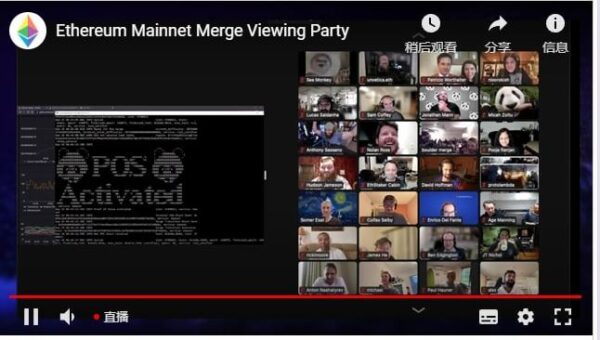
The ETH team discussed merge Live on Youtube.

ETH POS Activated
ETH POS Activated

According to Wu Blockchain: “The first Ethereum PoS block (height is 15537394) is produced, and the package validator is: 0xeee27662c2b8eba3cd936a23f039f3189633e4c8. The last Ethereum POW block was mined by F2pool.”

Several pundits have often described the upgrade as an impressive feat of engineering akin to swapping out a vehicle’s engine while it remains in motion. These statements are tied to the fact that the network transitioned from PoW (what some will describe as the old gas engine) to PoS (largely compared to an electric engine) without any network downtime.


Notably, as highlighted by Polygon and reported by The Crypto Basic, by switching to PoS, Ethereum has cut down its energy consumption by 99.95%. Consequently, it offers added certainty to the network’s sustainability in a world that is moving increasingly toward greener energy sources to save the environment.

Ethereum founder says merge will reduce Worldwide electricity Consumption by 0.2%.


It bears mentioning that in the US and the EU, there has been pressure from some quarters to outlaw PoW digital assets, with the EU coming close to an effective Bitcoin ban in March. Notably, the energy consumption of Bitcoin and Ethereum has often been compared to that of small countries by environmentalists and politicians opposed to crypto assets.

The Ethereum upgrade puts Bitcoin in a precarious position. The leading crypto asset remains the only one running on PoW. The successful Ethereum Merge could also strengthen political pressure for Bitcoin to transition or face very restricting political conditions.

While The Merge does not cut down on gas fees or make transactions faster, it makes Ethereum deflationary by cutting down on the asset’s annual issuance and incentivizing investors to hold on to their bags with the introduction of the staking economy. Consequently, it reduces supply while demand is projected to increase, as explained by crypto pundit Lark Davis.

It is worth noting that Ethereum becoming environmentally friendly and deflationary could be the narrative that brings about the flipping. For the uninitiated, the flipping refers to a hypothetical future where Ethereum surpasses Bitcoin to become the number one digital asset by market cap.

Shibburn Launches New App on iOS, Andriod And Alexa Skill To Help Burn Billions Of Shiba Inu

0

Shibburn Launches New App.


New Burning Protocol Powered By the First Dedicated Burn Project, Shibburn Would Introduce Shiba Inu To Millions of New Investors While Setting Fire to Tens of Billions of SHIB Tokens.

Billions of people would be able to contribute towards Shiba Inu Burn very soon as the well-known SHIB Burn tracking website Shibburn.com announces its plan to launch its official Shibburn Radio app on Alexa Skill, iOS, and Android.

Shibburn.com launched another project named Shibburn Radio, a new online radio station that plays the latest music. As per reports, Shibburn Radio will generate revenues through monthly subscriptions or by running ads in the stream. Later, the Community-led SHIB Burn initiative will utilize these revenues to burn Shiba Inu. However, the project’s clear and detailed financial structure is yet to be revealed.

Shiba Inu Burn rate could increase manifolds with this implication as billions of iPhone and Android users would have simple and easy access to burn Shiba Inu. Besides this, the owners of the official SHIB Burn tracking website believe that the launch of Shibburn Radio on the above-mentioned platforms would also help Shiba Inu get more exposure which will eventually help bring in new money to the Shiba Inu Ecosystem.

Shibburn Radio is already available on TuneIn, the world’s most widely used streaming audio platform, with over 75 million users.

Shibburn.com has been among the top crypto influencers for quite some time and is one of the first projects to support Shiba Inu Burn. The website owners claim to receive over 70 million monthly visits and 4 million unique visitors in one month. Each website visit contributes to burning SHIB.

Attorney Deaton Says “One Factor Alone” Proves Ripple (XRP) Is Not A Security

0

The attorney Deaton always believes XRP is not a security.


Attorney John Deaton, the founder of CryptoLaw, has highlighted a single factor that proves Ripple’s cryptocurrency XRP is not a security. 

According to Deaton, allowing XRP holders to convert the crypto asset into other coins such as Bitcoin, Ethereum on Coinbase, Uphold, Kraken, etc., makes XRP non-security under Howey.  

“If holders of XRP maintain their XRP on an exchange such as Coinbase, krakenfx Uphold, etc., XRP holders can CONVERT XRP into ETH, BTC, LTC, BTH, or many other crypto assets. This factor alone takes XRP out of the classification of security, under Howey,” attorney Deaton said. 

The attorney representing over 72,000 XRP holders in a class action against the SEC made this known, citing an excerpt from a Writ of Mandamus he wrote on January 1, 2021, nine days after the Ripple vs. SEC case was filed. 

He stated that in the Howey case, investors did not own the assets in question – oranges and beavers – and, as such, could not sell nor convert them into other assets. 

“In Howey and its progeny, investors didn’t have possession and control of the orangesor the beavers to sell. And They certainly couldn’t CONVERT the oranges to apples!”

Attorney Deaton noted in his 2021 Writ of Mandamus that the SEC’s lawsuit against Ripple would have been laughable if the case did not have a great economic loss on investors. 

“The SEC’s overbroad claim that XRP is a security today would be laughable if it hadn’t caused catastrophic economic loss to the innocent investors the SEC is supposed to protect,” attorney Deaton added. 

It is common knowledge that the SEC’s lawsuit against Ripple wreaked havoc on XRP holders who saw the value of their crypto holdings plummet massively months after the lawsuit. 

Recall that major cryptocurrency exchanges operating in the United States were forced to delist XRP from their trading platform months after the suit was filed due to fears that the commission may charge them for facilitating the trading of a security. Thus, plunging the value of XRP and causing “catastrophic economic loss” to investors.  

Over 72,000 XRP holders represented by attorney Deaton have filed a class action lawsuit against the SEC for their loss due to the agency’s classification of XRP as a security.

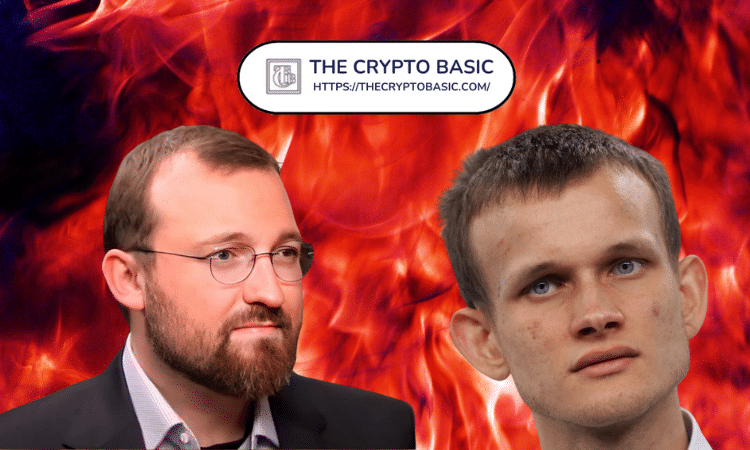
Cardano Founder Says Ethereum’s Vitalik Buterin Following Him, “Never Going To Happen”

0

Charles Hoskinson, the founder of Cardano, has again lamented the massive spike of bots on Twitter. 


In a recent tweet, the Cardano founder shared a screenshot of his Twitter account showing that Vitalik Buterin, the co-founder of Ethereum, is now one of his followers on the microblogging platform. 

Hoskinson shared the screenshot with a caption: “The greatest evidence of bots yet on Twitter. Vitalik following me? Never going to happen.” 

While the bone of contention is about the massive increase in bots on Twitter, crypto enthusiasts have been wondering whether Hoskinson and Buterin have a strained relationship. 

Hoskinson and Buterin’s Strained Relationship

It is noteworthy that Hoskinson and Buterin were co-founders of Ethereum. However, due to diversity in their visions, Hoskinson left Ethereum to establish Cardano. 

While Hoskinson pushed for Ethereum to be a profit-oriented organization, Buterin as well as the other founders of the leading blockchain project wanted a non-profit organization for Ethereum.

Based on the diversity of visions, Hoskinson left Ethereum and went on to create the popular proof-of-stake network, Cardano. 

Last year, it seemed the cryptocurrency experts had put the feud behind them after Hoskinson noted that both he and Hoskinson have grown a lot. 

The Cardano founder also expressed concern for his former colleague earlier this year after Buterin blasted the EOS project. 

Massive Spike in Twitter Bots

The spike in Twitter bots’ activities has been widely condemned by users of the platform. Bots are being used by malefactors to lure unsuspecting cryptocurrency owners into investing in different scam projects. 

These bots have been used to impersonate prominent players in the crypto space, including Binance Changpeng Zhao, Tesla’s Elon Musk, and Buterin, among others 

Top cryptocurrency stakeholders, including Cardano’s founder Charles Hoskinson, have weighed in on the issue of massive Twitter bots’ activities. As reported by TheCryptoBasic, Hoskinson recently asked his followers if they had observed a spike in bots commenting on different tweets. 

Here Is SEC Chairman Gary Gensler Testimony About Crypto At the U.S. Senate Banking Committee Hearing

0


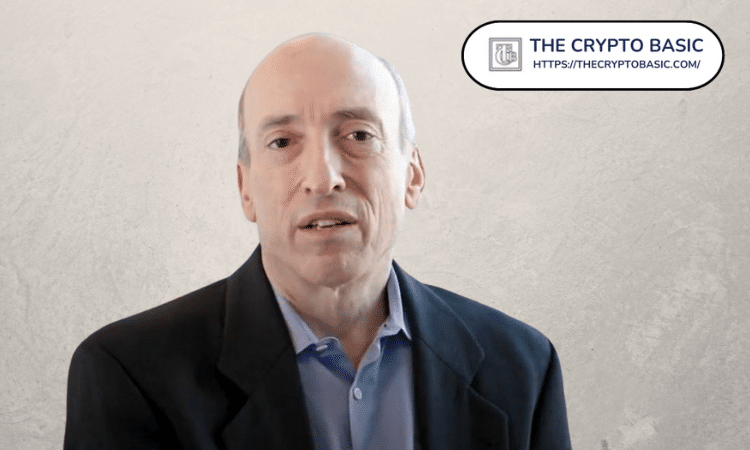
SEC Chairman Testifies In Front Of U.S. Senate Banking Committee.


As reported by The Crypto Basic SEC’s chair Gary Gensler was to testify in front of the U.S. Senate Banking, Housing, & Urban Affairs Committee Majority on September 15, 2022.

Here is what Gary Gensler Said about crypto Before the United States Senate Committee on Banking, Housing, and Urban Affairs:

“The core principles from the securities laws apply to all corners of the securities markets.20. Investors and issuers in crypto markets ought to benefit from the same gold standard that has made our capital markets the most liquid and innovative in the world.

Of the nearly 10,000 tokens in the crypto market, I believe the vast majority are securities. Offers and sales of these thousands of crypto security tokens are covered by the securities laws, which require that these transactions be registered or made pursuant to an available exemption. Thus, I’ve asked the SEC staff to work directly with entrepreneurs to get their tokens registered and regulated, where appropriate, as securities. Given the nature of crypto investments, I recognize that it may be appropriate to be flexible in applying existing disclosure requirements.

Stablecoins have features similar to, and potentially competing with, money market funds, other securities, and bank deposits. Currently, they are primarily used as means to participate in, or as so-called settlement tokens inside of, crypto platforms. Depending on their attributes, such as whether these instruments pay interest, directly or indirectly, through affiliates or otherwise; what mechanisms are used to maintain value; or how the tokens are offered, sold, and used within the crypto ecosystem, they may be shares of a money market fund or another kind of security. If so, they would need to register and provide important investor protections.

Given that most crypto tokens are securities, it follows that many crypto intermediaries whether they call themselves centralized or decentralized (e.g., DeFi) — are transacting in securities and have to register with the SEC in some capacity. I’ve asked staff to work with crypto intermediaries to ensure they register each of their functions — exchange, broker-dealer, custodial functions, and the like — which could result in disaggregating their functions into separate legal entities to mitigate conflicts of interest and enhance investor protections.

I also have asked staff to work with firms that have been operating in other well-regulated markets that want to enter the crypto market. Such traditional financial intermediaries have expressed an interest in providing services to investors in the crypto market and to do so in compliance with time-tested investor protection rules. Existing crypto security intermediaries need to do so in compliance with investor protection rules as well.21 All intermediaries in our capital markets deserve to compete — and comply — on a fair playing field.

As I have stated previously, a small number of tokens likely are crypto non-security tokens, though they may represent a significant portion of the crypto market’s aggregate value. Thus, I have asked staff, in working to register crypto security intermediaries, to recommend a pathway to allow both the crypto security and crypto non-security tokens to trade versus or alongside one another. To the extent that crypto intermediaries may need to one day register with both the SEC and the Commodity Futures Trading Commission (CFTC), I would note we currently have dual
registrants in the broker-dealer space and in the fund advisory space.

I look forward to working with Congress on various legislative initiatives related to crypto markets, while maintaining the robust authorities we currently have. Let’s ensure that we don’t inadvertently undermine securities laws underlying $100 trillion capital markets. The securities laws have made our capital markets the envy of the world.”

Top US Exchange Kraken To Support Terra Classic (LUNC) 1.2% Tax Burn

0

Kraken to Support Terra Classic (LUNC) 1.2% Tax Burn.


Kraken has released an official report showing support for the 1.2% tax burn proposal on LUNC transactions.

Terra Classic (LUNC) has recently caught the attention of the broader crypto community with its latest comeback. In addition to its promising price movements, the asset has received high-spirited support from LUNAtics. 

This support also comes in the 1.2% tax burn proposal aimed at reducing the asset’s massive supply. So far, certain exchanges have shown support for the tax burn. California-based exchange Kraken is the latest in line to do this.

Kraken announced its support for the LUNC 1.2% tax burn through a tweet and on its official website on Wednesday. 


In the official announcement, Kraken informed all users to be conscious of the fact that the platform will incorporate a fee as a means to implement the 1.2% tax burn on LUNC and UST on-chain transactions. Concerning LUNC and UST deposits, Kraken says, “When depositing LUNA or UST on Kraken, the deposit transaction must include the 1.2% tax in its transaction fee.”

Kraken also instructed users to consider an additional “1.2% sweep fee” that it would deduct from the deposited amount.

“When moving LUNA or UST off Kraken, transactions will be taxed by the Terra Classic network before they reach your external address. The balance will be credited to your external wallet, minus the 1.2% tax deduction by the network,” Kraken noted regarding withdrawals.

For now, readers must note that Kraken is not applying Burns on LUNC trading.

Kraken noted that the presented changes would take effect following the submission of the proposal. The exchange puts this at 6 AM (UTC) on September 21, at the LUNC block height of 9,475,200.

Following the recent revival of the tax burn proposal, several top exchanges have indicated support. The Crypto Basic recently reported that Singapore-based crypto exchange platform Bitrue announced its support for the tax burn today in an official blog post. The platform expects the tax burn mechanism to go live on September 20.

Following Kraken’s support, the number of exchanges willing to implement the tax burn now sits at nine. These exchanges include Binance, KuCoin, MEXC Global, Lbank, Huobi, Bitrue, Gate.io, CoinInn, and the latest, Kraken.

Out of these, only Kucoin, MEXC Global, and CoinInn will support burns on LUNC trading.

As more exchanges indicate support for the tax burn, holders of LUNC see the light at the end of the tunnel, with the asset slowly getting back on its feet. Despite the drop of 21.41%, LUNC’s current price of $0.00029 at the time of reporting is a massive increase from the $0.00009 value it consolidated last month.