Home Blog Page 2252

Ethereum Merge 10 Days Away? Over 94,000 New ETH Staked In One Day, The Highest Single Day Value Since May

0


Ethereum investors remain bullish.


In a tweet on Monday, WuBlockchain reported that over 94k ETH was staked on September 1, the highest number staked in a single day since May. A look at Oklink data puts the figure at 94,997 ETH at an average price of $1,543.51. The amount of ETH on the Ethereum 2.0 staking contract has now surged to about 13.522 million.

“On September 1, 94,000 new ETHs were staked in a single day, the largest single-day staked since May this year. At present, the number of staked Ethereum consensus layer contract addresses has increased to 13.522 million, accounts for 11.3%,” WuBlockchain reports in the tweet.


It is worth noting that the spike in staked ETH is a sign of continued investor bullishness in the leading digital asset. In anticipation of The Merge, the digital asset has been the focus of price speculation. Notably, in August, CryptoQuant reported that Ethereum was leading Bitcoin in terms of daily exchange trading volume. Additionally, about 36,000 ETH were added weekly to the staking contract during the month.

While investors appear bullish, price predictions by pundits in recent weeks have not been as positive, at least in the short term. Bloomberg analysts recently reported that they expect the asset price to dip below the $1,000 price point owing to macroeconomic factors despite Merge speculation.

It bears mentioning that excitement around the Ethereum upgrade has not made the asset impervious to hawkish posturing by the Fed. A speech by Fed chair Jerome Powell a couple of weekends ago caused the asset’s price to plunge by 10%.

For the uninitiated, the Ethereum Merge is the transition of the Ethereum network from the proof-of-work (PoW) consensus model to proof-of-stake (PoS). The move is expected to future-proof the blockchain network as it becomes less energy-intensive, cutting its energy consumption by 99.95%. In addition, it also promises to alter Ethereum’s supply and demand dynamics, making it more deflationary.

It bears mentioning that Ethereum stakers will not be able to withdraw their staked ETH till after the Shanghai upgrade, which is believed to be years away. However, they will start receiving liquid ETH rewards on their staked assets post-Merge.

BTC.com data shows that The Merge is just ten days away. Notably, the Bellatrix upgrade of the Beacon chain is expected to go live on Tuesday in preparation for The Merge.

Vitalik Buterin, the founder of Ethereum, stated in July that the Merge would not be fully priced in until it occurs. Ethereum is trading at the $1,560.36 price point, up 7.78% in the last seven days.

A 2013 Dormant Bitcoin Wallet Just Moves 5,000 BTC to Kraken, Causing Panic Among Investors 

0


A Wallet Moves Bitcoin after nine years.


Blockchain data has shown the transfer of a large amount of Bitcoin (BTC) to an address on the Kraken cryptocurrency exchange.

According to Ok Link’s crypto analytics platform, a total of 5,000 BTC was transferred from an old Bitcoin address to Kraken. 

The 5,000 BTC were transferred from a Bitcoin address created as far back as 2013, when the world’s largest cryptocurrency was not as valuable as it is today. 

At the time of the transaction, the 5,000 BTC were valued at around $100 million. Popular crypto media outlet Wu Blockchain also shared the development on Twitter. 

“The Bitcoin whale address (18xGHNrU26w6HSCEL8DD5o1whfiDaYgp6i ) transferred out 5000.01 BTC at 04:50:38 (UTC+8) on September 5th to the Kraken, which is worth about $100m now. The wallet was created, and bitcoins were transferred to this address in 2013.”

It is expected that the owner of the funds could likely sell a huge portion of it, which may plunge the price of the top asset class. The transaction has continued to cause panic in the crypto community, as many fear that a transfer of this sort could wreak further havoc on the value of BTC. 

However, Bitcoin is still changing hands at around $19,872, up 0.3% in the last 24 hours. 

How To Send Faster Crypto Transfers

0

Cryptocurrency has taken the world by storm over recent years, with people from all walks of life investing in digital assets. The technology that underlies cryptocurrency, blockchain, is also being implemented in other industries such as supply chain management and healthcare.

However, one of the biggest criticisms many people have of Bitcoin, the world’s largest cryptocurrency, is its slow speed of transactions. Bitcoin can take 40 to 90 minutes to fully process from end to end. This can be frustrating for users, especially when they’re in a physical store with strict payment rules or are trying to make time-sensitive payments.

Fortunately, there are a few things that you can do to speed up your crypto transfers. In this article, we will share with you some tips on how to send faster cryptocurrency transactions.

How To Send Cryptocurrency

If you’re sending cryptocurrency like Bitcoin from one wallet to another, the process is quite straightforward.

You’ll first need to know your recipient’s Bitcoin address. If you’re dealing with any other type of cryptocurrency, you’ll need to know the appropriate wallet address for that as well.

Once you have this information, simply go to your wallet app and copy the address into the Send To field. Then, select the amount of cryptocurrency you want to send and hit confirm.

The process will then commence, and you’ll simply have to wait for the transaction to be fully processed. Depending on the cryptocurrency you’re using and the network conditions, this could take anywhere from a few minutes to an hour. Bitcoin’s transaction time usually takes the longest.

How to Send Faster Crypto Transfers

The slow speed of Bitcoin transactions is an issue that all crypto traders have to be prepared for when dealing with this digital asset.

But is it truly inescapable?

Turns out, there are a few workarounds that can help you send crypto to your recipients faster. Here are these alternatives.

1) Use Bitcoin Lightning Network

One way to make Bitcoin transactions faster is by using the Bitcoin Lightning Network. The Lightning Network is a second-layer solution that is built on top of the Bitcoin network.

The Lightning Network allows for two participating nodes to create a direct channel between each other. These nodes can then conduct an unlimited number of transactions between one another without having to wait for blockchain confirmations.

The Lightning Network also mitigates the security challenges that come with off-chain solutions. This is because all the transactions conducted on the Lightning Network are still conducted on the mainnet Bitcoin blockchain.

So how does this make crypto payments faster? Well, the Lightning Network features a highly scalable system. This means that the network can handle a large number of transactions and process them in mere milliseconds. Energy costs are also greatly reduced as the network doesn’t require PoW confirmations.

It’s a great concept in theory. However, there are downsides. For one, this network costs fees to open and close a payment channel. There’s also a low routing fee that goes towards the validating nodes. This may push miners away as they are not being incentivized enough to validate these transactions.

Lightning Network is also at risk of malicious attacks. With that being said, if these issues are resolved, Bitcoin Lightning Network can be a potent tool in solving Bitcoin’s slow transaction speeds.

2) Use Other Cryptocurrencies

While little can be done to speed up original Bitcoin transactions, you can always use other cryptocurrencies that offer faster transaction speeds.

Here are some of the altcoins that you can use for faster crypto payments.

Ethereum (ETH)

When it comes to transaction speeds, Ethereum is one of the best alternatives to Bitcoin. Ethereum takes only 5 minutes to process a transaction, which is 10 times faster than Bitcoin.

Cardano (ADA)

Cardano is a Proof-of-Stake altcoin that focuses on delivering fast transaction speeds. ADA transactions take a little longer than Ethereum, but it’s still much faster than Bitcoin. Cardano transactions take around 10 minutes to be confirmed.

Ripple (XRP)

XRP is the fastest crypto to send payments with compared to any other cryptocurrency. It’s fairly cheap too with minimal fees.

A single XRP transaction is instantaneous, leaving little to no room for delays. This is because of its consensus protocol that doesn’t require any mining.

Why is Bitcoin Slow in The First Place?

Bitcoin is slow due to intentional design. To make this clear, it’s critical to note that Bitcoin blockchain confirmations are secured using a Proof-of-Work (PoW) mechanism.

In this system, when someone wants to make a transaction, Bitcoin network validators would need to calculate a complex math problem through a preselected series of nodes. Once the answer is solved and a consensus between the nodes has been reached, the transaction is then recorded on the blockchain and a new block is created.

This procedure is necessary for a few reasons. For one, it helps maintain the privacy and personal information of the person making the transaction. One of crypto’s main appeals is its decentralized nature, which allows users to remain anonymous, so this is a good thing for users.

The PoW algorithm also prevents unwanted tampering with the data and blocks fraudulent activities. This eliminates the risk of vulnerability within the blockchain.

Although PoW algorithms are safe and useful in their own right, they do have their disadvantages. Case in point, long downtimes.

This downtime can also be further compounded by the fact that Bitcoin’s mempool is often congested. The mempool is essentially a holding area for all unconfirmed transactions. 

When too many people are making Bitcoin transactions at the same time, the longer it takes for a transaction to officially be confirmed. This can cause delays of up to an hour and thirty minutes at most.


Should You Be Storing Your NFTs on MetaMask?

0

The NFT industry has quickly grown into a space worth millions in the past year. It is a great way to buy some rare digital pieces and sell them later to make a decent profit. To do so, you must first know where you’re going to store your NFTs. Today we’ll be looking at whether MetaMask is a good fit to store NFTs.

What is MetaMask?

MetaMask is an Ethereum wallet that was designed to hold crypto tokens and NFTs. It is also used to interact with other applications on the Ethereum blockchain called dApps. You can also hold and store ETH and other ERC-20 tokens.

It is important to note that MetaMask is a browser wallet or hot wallet and can be added as a chrome extension for easy access to crypto and NFT marketplaces. 

Once you understand how to use MetaMask, you can finally enjoy the perks of having a decentralized wallet.

Benefits of MetaMask

Now that we’ve got a pretty basic understanding of the history and functioning behind MetaMask, we need to dive in to understand what makes this wallet a popular choice for storing NFTs and coins. 

Here are the top benefits of choosing MetaMask as your wallet:

Easy Interface

Oftentimes, certain crypto and NFT wallets can be very hard to navigate. 

You may have difficulty understanding the user interface if you’re not tech-savvy. 

MetaMask ensures that their users face no difficulty using their platform as they provide a simple user interface that is easy to understand even by the average Joe. 

Reliable Customer Support

One of the biggest concerns when storing their NFTs in a wallet is whether it has a reliable customer support team. 

This is an important question to answer as you never know when you may face problems with your wallet that could be a security concern. 

MetaMask provides you with a reliable customer support team that is always ready to resolve your issues.

No Exchange Fees

So you’ve just bought an NFT. Now what? Where do you store it? 

MetaMask is a great place to store coins and NFTs as they don’t charge any fees whatsoever. 

The entire platform is completely free to use, and you can cash out your earnings with no additional charges. This is why MetaMask is one of the most popular NFT wallets.

Drawbacks of MetaMask

Despite MetaMask having some promising benefits, there are still a few reasons why this wallet hasn’t made it that far in the industry. 

Here are the top drawbacks of MetaMask:

Risk of Hacking

One thing you should know about MetaMask is that it is a hot wallet, also often called a browser wallet. What this means is that your data isn’t completely safe as your choice of browser has access to it as well. 

A much better alternative would be a hardware wallet, as you’d be able to store your data outside the online realm where cybersecurity is always a concern.

No Variety

Although MetaMask is quickly gaining popularity and is one of the biggest wallets in the market, it has yet to provide a decent variety of tokens to choose from. 

Unlike other wallets where you could add any token under the sun, MetaMask is limited to just ETH and ERC-20 tokens. This makes it out to be an inferior wallet when compared to many others.

Slow Transactions

MetaMask has been facing reports that their transactions are super slow. 

People have come out and said that it would take quite a while for their NFTs to show up in their MetaMask wallet, which can be super stressful and frustrating.

MetaMask Alternatives

If you’re planning on buying an NFT on OpenSea, you must also research the best wallets to store this NFT. 

While MetaMask is a great wallet to store NFTs, it is up to you if you want to make that decision based on the benefits and drawbacks we’ve presented.

Coinbase Wallet and Trust Wallet are among the most popular alternatives to MetaMask as an NFT wallet. You may also want to try MyEtherWallet and ZenGo.

Final Verdict

This brings us to the end of this guide on whether or not NFTs should be stored on MetaMask. 

NFTs are a pretty valuable investment to hold as they can make you a lot of money. We’d suggest only using MetaMask to make short-term investments. Any valuable assets should be stored in something more secure, like a cold wallet. 

There are many ways to make money with NFTs, and whether you hold them for a short term or hold them for a long one, it is important to have a strategy in mind so you don’t end up losing money.

Bitcoin Faces Increased Selling Pressure As Miners Sell Over 4,000 BTC

0


Bitcoin price faces increased selling pressure.


In a tweet on Friday, crypto analyst Ali Martinez highlights that Bitcoin miners have sold about 4,586 BTC in just three days, according to data from CryptoQuant.

“Bitcoin miners have sold roughly 4,586 BTC in the last 72 hours, according to on-chain data from @cryptoquant_com!” Martinez wrote.


Notably, Martinez’s tweet comes after Bitcoin Magazine reported on Monday that Bitcoin mining difficulty had increased by 9.26%, the second largest increase since January. The increase results from large public miners implementing long-term expansion plans.


However, this rapid increase in Bitcoin’s difficulty has also strained mining profitability, which has dropped 17% in the last 30 days. Consequently, miners are forced to sell their mining rewards to improve their liquidity. 

In June, miners started selling en masse as Arcane Research revealed that profitability had plummeted 80% from the highs in November. As reported by The Crypto Basic, Bitfarms sold 3000 BTC during the period. 

It bears mentioning that the increased selling pressure from miners could drive the price of Bitcoin even lower. Arcane research estimated that Bitcoin could drop as low as $10,350 before starting a bull cycle.

Bitcoin is trading at the $19,803.43 price point, a 1.4% dip in the last 24 hours.

Ripple CTO Kicks Against Opinion That Non-Mining Nodes On The Bitcoin Network Do Not Matter

0


What purpose do Bitcoin home nodes serve?


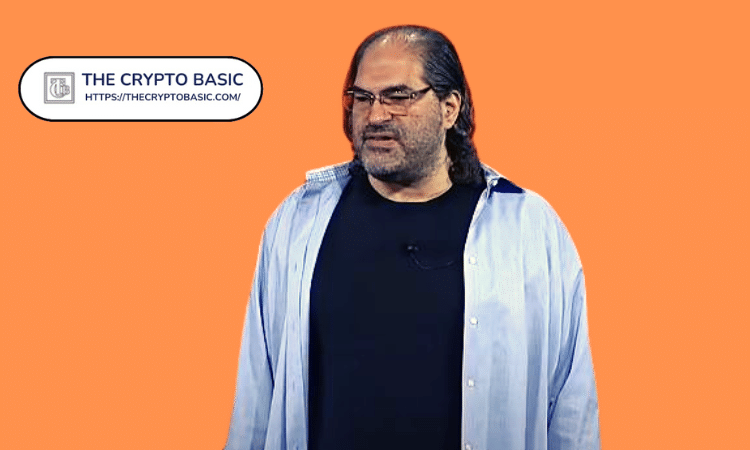
In a tweet today, Ripple Chief Technology Officer David Schwartz rejected arguments by Jerry David Chan that Bitcoin home nodes do not matter to the Bitcoin network, saying “miners won’t mine blocks node operators won’t pay them for.”

“Nonsense. You can refuse to accept any tokens rewarded to miners in that block. Miners won’t mine blocks node operators won’t pay them for,” Schwartz tweeted.


Chan, on his part, retorts that Schwartz’s argument is only valid if all exchanges also reject the transactions. 

However, Schwartz responds by noting that it is irrelevant what exchanges do, as the true purpose of home nodes is for users to decide who they interact with on the network. Furthermore, he notes that with the home node, users can ensure that those who do not meet their criteria do not interact with them.


Notably, the dispute started with a tweet from Kurt, the founder of GorillaPool.com, who asserted that communists had taken over the Bitcoin network. According to Kurt, the idea that mining nodes can not be trusted has pitted the mining class against the non-mining class. According to Kurt, the core Bitcoin ideology has been abandoned for economic policy decided by people that do not contribute to the network.


The banter eventually devolved into an argument about the validity of transaction rejections by home nodes. At this point, Chan pointed out that home nodes do not secure or contribute to the Bitcoin network as they can not produce blocks. Chan noted that an opposite block had to be created to reject an invalid transaction.


These support ideas by Craig Wright, who has openly claimed to be Satoshi Nakamoto, the creator of Bitcoin’s whitepaper. According to Wright, the lack of the ability of home nodes to create blocks or reject transactions meant they served no purpose in securing or distributing transactions on the network. Instead, Wright asserts that they are only important to the point that they allow users to monitor, receive and validate receipt of transactions faster. 

It is worth noting that the relevance of home nodes has been hotly contested for years, and several authors have differing opinions on the matter.

Attorney Jeremy Hogan Says SEC Should Provide Regulatory Clarity By Disclosing Which Top 20 Cryptos Are Security  

0


Hogan is confused about why the SEC has used an ambiguous method to regulate crypto assets. 


Attorney Jeremy Hogan, a partner at Hogan and Hogan law firm, has also joined the list of cryptocurrency enthusiasts calling on the Securities and Exchange Commission (SEC) to provide regulatory clarity for the crypto sector. 

In a recent tweet, attorney Hogan said it would be easier for the SEC to go through the list of the top 20 cryptocurrencies by market capitalization and tell investors which of the assets fall under its jurisdiction. 

He wonders why the SEC adopted an ambiguous approach to regulating the cryptocurrency market. 

“The SEC should be able to go down a list of the top 20 cryptocurrencies and tell us which are (and aren’t) securities. Why not? Why does it CHOOSE ambiguity?

Isn’t it supposed to protect us from these projects that aren’t following the law? Tell us!” attorney Hogan added. 


This is not the first time cryptocurrency enthusiasts have called on the SEC for regulatory clarity for the emerging market. However, the agency has ignored these calls. 

As reported by TheCryptoBasic, Gary Gensler, the chairman of the SEC, recently noted that Bitcoin is the only cryptocurrency he considers to be outside of the security list. 

“In many altcoins, the Public is hoping for a return just like in other financial assets we call securities, and many of these crypto assets have key attributes of security… Bitcoin is the only one I am going to say… is a commodity,” Gensler said. 

Binance Unveils New Changes for Terra Luna Classic (LUNC) and USTC Deposits and Withdrawals

0


The exchange made a few changes to LUNC and USTC deposits and withdrawals.


Binance has announced it will suspend all deposits and withdrawals of Terra Classic tokens, LUNC, and USTC made through the Shuttle Bridge. 

The exchange noted in a recent announcement that it would suspend the deposit and withdrawal of LUNC (Shuttle) and USTC (Shuttle) from September 7, 2022, at 00:00 UTC. 

“Deposits and withdrawals of LUNC (Shuttle) via Ethereum network (ERC20) and USTC (Shuttle) via BNB Smart Chain (BEP20), Ethereum network (ERC20), and Polygon network will be suspended indefinitely from 2022-09-07 at 00:00 (UTC),” the exchange said in a statement. 

Binance noted that she made the decision on the upcoming closure of the Shuttle Bridge. Notably, after the suspension of LUNC (Shuttle) and USTC (Shuttle) deposits and withdrawals, Binance users will be allowed to transfer the tokens using only the Terra Classic network. Terra’s Shuttle Bridge allows users to send their Terra ecosystem tokens between Terra and other supported networks like Ethereum and Binance Smart Chain.

According to Binance, the development will not affect spot and margin trading of Terra Classic tokens.

Binance Launches Zero Trading Fees For Ethereum Before Merge

0

Binance is introducing zero fees for Ethereum.


Today, the world’s top exchange announced that it is launching zero trading fees for ETH/BUSD pairs.

“Introducing zero fees for ETH/BUSD trading.”

Binance further writes:

“Ethereum’s upcoming Merge, taking the network from Proof of Work to Proof of Stake, has raised the network’s profile recently. So, no matter if you want to enter or exit an ETH/BUSD position, you’ll be able to do so without incurring fees.”

Recently as reported by The Crypto Basic, Ethereum founder Vitalik Buterin reminded node operators to upgrade their clients now, noting that while The Merge is scheduled to go live from September 10 to September 20, clients have to be upgraded for the September 6 upgrade on the Beacon chain.

 “Reminder: even though the merge is coming around Sep 10-20, the beacon chain hard fork is on Sep 6. Make sure to update your clients before then!” Buterin wrote.

Last Wednesday, The Crypto Basic reported that the Ethereum team had disclosed that The Merge would happen in two phases. The first phase is the Bellatrix upgrade to be carried out at epoch 144896 on Ethereum’s proof-of-stake (PoS) Beacon chain. The second is the Paris Upgrade which will trigger The Merge after a Terminal Total Difficulty level of 58750000000000000000000 has been achieved.

The Merge is an Ethereum upgrade that will see the network migrate from the proof-of-work (PoW) consensus mechanism to proof-of-stake (PoS). The move will drastically reduce the network’s carbon footprint while also altering its supply and demand dynamics, making it deflationary.

Terra Passes Phoenix Airdrop Proposal For LUNA Holders, Period For Claims Revealed

0


Terra Proposal To Airdrop LUNA Tokens To Users Who Received Incorrect Allocation In May Passes, Period For Claims Revealed.


The Terra Phoenix Airdrop Proposal vote ended on Friday, and Terra Governance Alerts revealed that 99.99% of voters said yes to the plan, with Terra confirming that with the passing of the vote, 19,504,909 LUNA will be made available for the airdrop to users who did not receive the correct amount in the initial airdrop in May.


The Terra team reveals that it will launch a claim website on September 4 for affected users. Notably, users will have from September 4 to October 4 to lay claim to the airdrop. As per a medium blog post, users will be required to connect their wallet from a list of supported wallets, including Terra Station, Terra Station Mobile, Keplr, and Metamask, where they previously held their LUNA Classic tokens before or after the ecosystem collapse. Then, users must create a new wallet with no transaction history to receive the raindrop tokens. Terra will return all tokens not claimed within the period to the community pool.

It bears mentioning that the plan comes after the first airdrop to compensate holders of the sunken LUNA and UST tokens was botched by Terra due to technical constraints and issues associated with indexing. As a result, the new airdrop proposal was launched on August 16. As reported by The Crypto Basic, receivers of the airdrop from the Phoenix Proposal will be bound by a 2-year vesting period.

Notably, Terra 2.0, the new blockchain launched after the collapse in the value of the LUNA Classic and UST tokens on the original Terra chain, has failed to amass the same following as the previous project, as several investors have lost faith in Terra founder Do Kwon.

Kwon and Terraform Labs remain under investigation in South Korea for their potential role in the collapse of the ecosystem.

In a controversial interview with Zack Guzman’s Coinage, Kwon maintains that he in no way intentionally contributed to the downfall of the Terra ecosystem. However, while admitting that he made some mistakes, he subliminally implies that there is a possibility that the company had a mole that allowed bad actors to take advantage of these missteps.

The LUNA token is trading at about $1.84.