Home Blog Page 2262

SEC Doesn’t Oppose Ripple’s Request to Seal Third-Party Information in Motions to Exclude Expert Testimonies, But…

0

The SEC will not object to Ripple’s sealing request for Daubert motions only but reserves its right to oppose the request during summary judgment.


The Securities and Exchange Commission (SEC) has noted in a recent letter that it does not object to Ripple’s request to seal the identities of third parties regarding motions to exclude expert testimonies. 

Ripple Sought to Seal Third-Parties’ Information

It can be recalled that last week, the blockchain company and two of its executives requested to file under seal three categories of information submitted by the parties opposing the motions to exclude expert testimonies. 

The information Ripple sought to seal included the identities of two of its employees, identities of non-parties, and personal financial information for a particular company employee. 

Ripple asserted that its proposed sealing request is narrowly tailored to protect third parties’ privacy interests. 

According to Ripple, the third parties expressed their desire for narrowly-tailored redaction to protect their private interests. 

The blockchain company buttressed its point by stating that the identities of the third parties it seeks to redact are irrelevant to the Daubert motions, adding that the parties are not named as defendants in the suit. 

SEC’s Response to Ripple’s Sealing Request

Commenting on the development, the Securities and Exchange Commission said it does not oppose Ripple’s requests to seal third-party information. 

Per the SEC, this is because Ripple built its proposition on the basis that the applicable sealing standard for Daubert motions is lower than dispositive motions. 

“Based on defendants’ representation that they consider the standard for sealing the Daubert motions to be different than for summary judgment motions, the SEC does not oppose Defendants’ motion,” the commission stated. 

The SEC said it does not agree that Ripple should properly seal the categories of information during the summary judgment briefing, adding that it reserves the right to oppose such requests. 

Meanwhile, the development was shared by attorney James K. Filan, a former federal prosecutor. 

160.54 Million Shiba Inu Burned in One Transaction, 276.28 Million In 24 Hours: Burn Details

0


The Community has burned over 276.28 Million Shiba Inu (SHIB) tokens in the past 24 hours, 160.54 Million burned in one transaction.


The SHIB Burn data tracking platform reports that the Community has sent a total of 276,280,888 (276.28M) SHIB to the “inferno” addresses in 22 separate transactions in the past 24 hours.

The newly emerged token, ShibaBae contributed the major part in burning Shib over the last day as the project has destroyed 160.54 Million SHIB in one transaction.

On August 27, ShibaBae, the newly launched BEP20 token focused on building burn mechanisms for SHIB, organized its 2nd Burn Event and destroyed a whopping total of 160,549,026 (160.54M) SHIB in one significant transaction.

After the Burn Event, the SHIB Burn Project shared a burn transaction link as Proof of Burn.

During the first Burn Event organized on August 10, the creators of ShibaBae tokens burned 139,854,341 (139.85M) SHIB in one transaction. Since its inception, the ShibaBae incinerated a total of 300,403,367 (300.40M) SHIB in two separate transactions.

Launched in April 2022, the ShibaBae token is a BEP20 token on the Binance Smart Chain that comes up with a mission to reduce the gigantic circulating supply of SHIB. On each and every Buy and Sell transaction, the token applies 8% to 20% tax, of this tax, the token contributes 1% – 2% to burn SHIB.

Readers should note that ShibaBae is not the official token of the Shiba Inu Ecosystem and has no official relation with Shiba Inu.

Terra Legal Woes Continue as Third Major Class Action Filed Against Do Kwon In US Over UST Collapse 

0


TerraForm Labs (TFL), the company behind the Terra project, has been slammed with yet another class action by aggrieved investors. 


According to a report by legal news outlet Law360, TFL and two of its executives, including Do Kwon, were charged with violating the Racketeer Influenced and Corrupt Organizations Act. 

Some of the charges include the inflation of the price of TFL’s algorithmic stablecoin UST and publicizing false information in the aftermath of the collapse to cover an alleged money laundering scheme to the tune of $80 million. 

“Defendants touted the stability of the coins and guaranteed 20% annual returns on coins deposited in Terraform Labs’ high-yield savings application on the Terra blockchain — the Anchor Protocol,” an excerpt of the Law360 read. 

The suit was filed in New York federal court by lead Plaintiff Matthew Albright on behalf of all victims of TerraUST (UST) collapse, who purchased the stablecoin between May 1, 2019, and June 15, 2022. Aside from TFL and two of its top executives, the suit also named other top ventures as Defendants.

Plaintiff: Terra’s Ponzi Scheme Activities Crashed the Project

Albright alleged that some of the defendants engaged in different money laundering activities that saw them siphoning millions of dollars to their personal cryptocurrency wallets. 

The lead Plaintiff also claimed that Terra’s flagship stablecoin was a Ponzi scheme, which sustained its value via the demand of Anchor Protocol’s excessive yields. 

“As long as demand for UST remained high, Terra’s UST/Luna exchange mechanism will keep the supply of Luna relatively low and sustain a Luna price that could support UST’s peg,” Albright said, adding: 

“But as soon as the demand for UST fell and users began redeeming UST for Luna in large quantities, Luna could enter a vicious cycle of hyperinflation that would collapse its own price and UST with it.”

The complaint added other evidence in a bid to prove that TFL and its executives were responsible for the collapse of the Terra project. 

Terra Response:

Terraform Labs says it will not comment on pending litigation other than to say it believes the claims are meritless and it intends to defend against them fully.

Terra’s Legal Woes Spike

The recent development adds to the lengthy list of TFL’s legal woes. Recall that Kwon and TFL have been slammed with a series of class actions across various parts of the world. 

As reported by The Crypto Basic, U.S. law firm Bragar Eagel & Squire, P.C., filed a lawsuit against TFL in California federal court, accusing the company of misleading investors and selling unregistered securities. After that, Popular securities and consumer rights litigation firm Scott+Scott Attorneys filed a lawsuit against Do Kwon and TerraForm Labs.

TFL is currently being investigated by the United States Securities and Exchange Commission (SEC) to determine whether the firm violated U.S. laws via its crypto offering. 

South Korean regulators are also considering charging Kwon and TFL for operating Anchor as a Ponzi scheme. 

Bitcoin, Ethereum, And Stocks Slide As Powell Wants To Keep Raising Rates To Combat Inflation

0

The markets reacted as the Fed revealed its intent to raise rates.


The crypto markets going into the weekend have slumped again for the second consecutive week along with the traditional equity markets following statements by Fed chair Jerome Powell which implied that the Fed is fixed on its course to continue raising rates till it achieves price stability.

“… restoring price stability will likely require maintaining a restrictive policy stance for some time. The historical record cautions strongly against prematurely loosening policy,”

Powell said, giving the annual Fed policy speech at Jackson Hole, Wyoming. Notably, the Fed chair admits that the stance will cause some pain for households and businesses, but he expressed the belief that failure to tame inflation will lead to worse outcomes.

Following Powell’s speech, Bitcoin dropped by 4.9% to about $20,579, while Ethereum dropped nearly 10% to trade below the $1,500 price point, with most of the crypto market following suit. Stats reports that over $70 billion has been wiped out from the crypto market cap in the last 24 hours.

Unsurprisingly, the stock markets tanked as well, as Business Insider reports that the Dow Jones fell by 1000 points, the S&P 500 by 3.37%, and the Nasdaq by 3.94% following the speech. In addition, WatcherGuru reports that $1.25 trillion was wiped from the stock market.

For the second consecutive week, the crypto markets are plummeting going into the weekend. Last Friday, the markets plunged as the release of the Federal Open Market Committee (FOMC) minutes for July revealed the Fed’s desire to continue to raise rates. As a result, Bitcoin is on course to print a second consecutive weekly red candle. It is worth noting that this year, the leading digital asset set a new record for consecutive weekly losses. Moreover, several analysts are calling for caution as we enter into September, a historically bad month for Bitcoin.

Cardano founder Charles Hoskinson, responding to the news of Powell’s statements, asserted that the Fed could not be trusted. According to Hoskinson, crypto remains the way out despite the bleeding in the crypto markets.

Meanwhile, Gold bug Peter Schiff noted the divergence in Fed policy with that of the executive as Biden’s administration wants to extend the suspension of loan repayments. According to Schiff, the result will be rising inflation and a shrinking economy.

“Powell claims he wants to put out the inflation fire by raising interest rates to cool demand. Presidant Biden wants to fan the flames of inflation by extending the moratorium on student loan repayments. The conflicting policy results in hotter inflation and a colder economy.”

It is worth noting that Galaxy Digital CEO Mike Novogratz has long noted that for the crypto markets to kick off another bull run, the narrative from the Fed has to change. The Fed has now raised rates for four consecutive months bringing the total to 2.25%.

Binance, Kraken, ByBit And Others To Support Terra Classic Network Upgrade, LUNC Up 13% As Burns Reach 3 Billion

0

Terra Luna Classic (LUNC) Price Soars 13% in 24 Hours Amid Positive Developments.


The value of LUNC is up 13% following an increase in community burn initiative.

Lately, there has been a lot of fuss about the embattled Terra ecosystem tokens Luna Classic (LUNC) and UST Classic (USTC). Crypto investors’ interests have been channeled to the tokens, especially LUNC, which has seen the value of the asset class skyrocket. 

According to data from cryptocurrency aggregator platform Coingecko, the value of LUNC is up 13% in the last 24 hours, 32% in seven days, and 35% in the past month. 

This was made possible as investors have continued to show interest in LUNC due to the recent developments happening around the project. 

Over the last 24 hours, a total of $348.14 million worth of LUNC have been traded across various trading platforms, including Binance and KuCoin.  

These activities pushed the price of LUNC to peak at $0.00013 earlier today. Although the price has retraced to $0.00012 at the time of writing, there is a tendency that LUNC will continue its rally. 

LUNC Burns Fuel Token Price

The spike in LUNC’s value is not surprising to many who have been following updates about the cryptocurrency. It is noteworthy that LUNC burns, an initiative launched by members of the Terra Classic community to reduce the circulating supply of the coin, has gained momentum lately. 

Per a Twitter account dubbed LUNC Burn, a total of 3.08 billion have been permanently sent to an inferno wallet address by members of the Terra Classic community. 

The rationale behind the LUNC burn initiative is to reduce the coin’s circulating supply to boost its value. So far, the initiative has been going smoothly. 

Terra Investors’ Quest to Boost LUNC Value

Recall that after Terra ecosystem tokens plunged in May, the team behind the project created a new chain and tokens as part of an effort to make investors whole. 

However, not all investors saw the plan as the perfect way to get compensated for their losses. These aggrieved investors, alongside Binance CEO Changpeng Zhao, proposed that the Terra team should reduce the circulating supply of LUNC via a burn mechanism to get the prices of Terra classic tokens flying again. 

However, the team did not heed these calls, prompting the community to do the job themselves. An address was created where investors can send their excess LUNC, which cannot be retrieved. 

Furthermore, Terra investors also launched a proposal to implement a 1.2% tax/burn on all LUNC transactions. 

While the proposal has not been implemented, LUNC Burn has constantly kept tabs on the volume of Luna Classic transactions conducted. The Twitter account also reported the number of tokens that could have been eliminated from the circulating supply if the 1.2% tax/burn had been implemented. 

Exchanges Support Terra Classic Chain Upgrade

Meanwhile, the Terra team recently disclosed that it would upgrade the Terra Classic chain later today. According to TerraForm Labs, the upgrade is expected to occur at block height of 9,109,990 or approximately 2022-08-26 22:00 (UTC).  

Top exchanges, Kucoin, Cryptocom, Bybit, FTX, Kraken, Poloniex, Huobi and Binance, have noted that they would support the upgrade. Thus, deposits and withdrawals will be suspended during the upgrade. 


Cardano Founder Reacts to Massive Usage of Node 1.35.3 Ahead of Vasil, Says “Everything Proceeding Exactly As Foreseen” 

0


SPOs favor Cardano node 1.35.3 over previous versions. 


With Vasil’s mainnet launch around the corner, there has been intensive testing of the much-anticipated hard fork. Last week, Charles Hoskinson, the founder of Cardano, announced the release of node 1.35.3, the platform that could likely be used for Vasil. 

Although many controversies ensued after the launch of the new node, the issue appeared to have been fixed. In the latest development, Cardano Explorer shared a link to a platform showing what node Stake Pool Operators (SPO) are using. 

Interestingly, SPOs currently favor the recently released node 1.35.3 over the previous version 1.34. According to data from Cardano Explorer, it is evident that SPOs prefer the new node over others, as 53% of all Cardano Blocks are now Produced By Vasil-friendly 1.35.3 Node.

Hoskinson’s Reaction

Reacting to the development, Hoskinson shared a gif on the microblogging platform with the caption: “Everything is proceeding as I have foreseen.” 

Hoskinson is impressed with the massive usage of node 1.35.3 among SPOs. This comes a week after some SPOs criticized Hoskinson for not being on the same page as them. As reported by TheCryptoBasic, the CTO of ProjectNEWM had advised other SPOs not to upgrade to node 1.35.3 on mainnet because Hoskinson was “not on the same page as his DevOps and test teams.” However, the issue is behind Cardano, as SPOs favor node 1.35.3 over other node versions. 

As The Crypto Basic reports, Input Output Global (IOG) reveals that the world’s largest crypto exchange Binance has started upgrading its Cardano nodes in anticipation of the Vasil hard fork.

Argentina Presidential Candidate Faces Legal Backlash For Promoting A Crypto Ponzi

0


Presidential Candidate In Argentina Sued for promoting scam Crypto project.


A top Argentinian presidential contender has been taken to court over his role in promoting a crypto Ponzi Scheme where investors lost tens of millions of Pesos.

One of Argentina’s current presidential candidates is about to have a rough time in court after a group of investors sued him over his previous actions in the crypto space. Javier Milei is currently ranked among the top 3 presidential contenders in Argentina.

Javier has been known to be an ardent Bitcoin supporter. At one time, he was quoted calling the Central Bank a scam. However, the presidential candidate’s past actions are returning to haunt him.

He Promoted A Potential Ponzi

Apparently, Javier capitalized on his 1.3 million strong fan base on Instagram to promote CoinX. CoinX was an investment platform that promised incredible returns to crypto holders who took a chance to invest in it.  

Back in December 2021, Javier posted on Instagram, seemingly with the intention to promote the platform. His post read,

“They are revolutionizing the way to invest to help Argentinians with inflation. You can now simulate your investment in pesos, dollars, or cryptocurrencies and earn a profit.” 

Argentina has been one of the big countries that have been rated as crypto-friendly.

However, things went south for the investment platform when the Argentinian National Securities Commission (CNV) went after it for operating in the country illegally. The firm was subsequently ordered to cease all operations in the country. Unfortunately, the firm went underground without paying investors their dues.

Candidate Sued By Affected Investors

Now, a group of investors is suing Javier Milei for his role in misleading them into investing in CoinX. It’s estimated that around $40 million pesos ($300,000) of investor funds were lost when CoinX disappeared from the scene.

In his defense, Javier says that he didn’t force anyone to invest in CoinX, and has distanced himself from the failed investment firm.

Recall that, As reported by The Crypto basic, the current president recently intimated that the country was open to adopting cryptos as legal tender.

10K Coinstar ATMs Across US Now Allow Users To Purchase Ethereum, Dogecoin, Polygon, and 3 Other Cryptos 

0


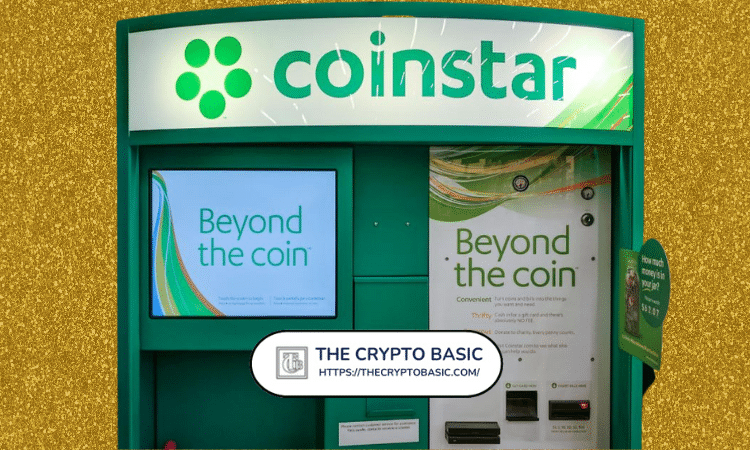
Coinstar Kiosk Adds Support for Ethereum, Dogecoin, Polygon, and 3 Other Cryptos.


Coinstar recently said it has rolled out support for more digital currencies, which can be purchased via its Kiosks globally.

“Coinstar is an American company operating coin-cashing machines. Coinstar’s focus is the conversion of loose change into paper currency, donations, and gift cards. The company has over 60,000 kiosks offering various services in the US, UK, Ireland, Canada, Puerto Rico, and Mexico. Coinstar also produces machines that provide prepaid credit cards and e-payment kiosks.”

The company, which initially supported only Bitcoin (BTC), has decided to add six other top crypto assets, such as Ethereum (ETH), Dogecoin (DOGE), Chainlink (LINK), Litecoin (LTC), Stellar Lumens (XLM), and Polygon (MATIC), Fortune noted in a recent report. 

Jim Gaherity, Coinstar CEO, said its customers requested that the company include other crypto assets alongside Bitcoin in all Coinme and Coinstar-enabled kiosks. 

“We want to make it easy for anyone, regardless of their familiarity with crypto, to get started with digital currencies with cash in their local grocery stores,” Gaherity added. 

Recall that in 2019, Coinstar partnered with Coinme to enable cryptocurrency enthusiasts to exchange cash for BTC via a kiosk. More crypto assets have been added following increased customer demand. 

How to Use the Service

People interested in using the service to acquire digital currencies will be required to select a particular function on the machine to get started. 

Users will be prompted to enter their phone number alongside the cash equivalent of the cryptocurrency they intend to convert. A voucher containing a code will be sent to the user, which can be redeemed on the Coinme website. 

After that, the user will have to complete a compulsory know-your-customer (KYC) verification that requires uploading a selfie and a means of identification. 

Once completed, a crypto wallet will be created for the new user, and the funds deposited into the wallet. Users can subsequently move the funds to any wallet. 

Firms Develop Solutions to Make Crypto Adoption Easier

Interests in cryptocurrencies have continued to be on the increase in recent times. While buying digital currencies may be complicated for non-tech savvy users, several companies, including Coinstar, have been committed to making crypto acquisition easier for everyone. 

Interested cryptocurrency investors can now buy and sell cryptocurrencies directly from ATMs specially made for the nascent asset class. Although the Coinstar and Coinme solution is not a Bitcoin ATM, the duo claims their crypto kiosks are better. 

Bitcoin Enters Into Undervalued Territory Again, But Analyst Says A Bottom Is Yet To Be Formed – Here’s Why

0


Bitcoin drops below the realized price again.


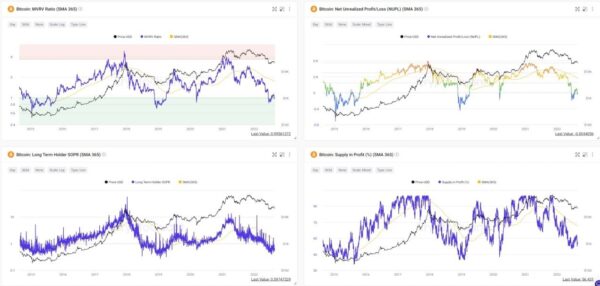
In its weekly highlights, released today, CryptoQuant argues that while Bitcoin is in a good accumulation zone for investors who employ the dollar cost averaging strategy with the asset once again undervalued below the realized price of about $21,700, it is still far from forming a price bottom.

“Unfortunately, a price bottom is still far from being entirely formed as these valuation metrics are still considerably below their 1-year MA,” the analytics firm explained, considering five key metrics.

CryptoQuant Bitcoin Stats
image source: CryptoQuant

Key metrics summary:

  1. “The MVRV ratio is below 1 again, indicating that the average bitcoin holder is at a loss (green area).
  2. Bitcoin holders experience a 1% loss at the current bitcoin price, as shown by the NUPL metric (line in blue).
  3. The long-term bitcoin holders spend their coins at a 44% loss.
  4. The total supply in profit has fallen sharply in the last week, standing at 56% of the total supply.
  5. The Puell Multiple (measures 1-year miner revenue growth) also indicates bitcoin is in the accumulation zone (green area).”

It is worth noting that the Market-Value-To-Realized-Value (MVRV) is a key on-chain metric that has served as an indicator for previous market bottoms. Notably, a negative MVRV usually coincides with the market bottom. However, the time the market forms a bottom after this metric is reached usually varies. 

The MVRV first moved into negative territory on July 20, staying below zero for about 40 days. Meanwhile, another key factor considered is Bitcoin’s realized price. Historically, after the asset drops below its realized price and reclaims it, Bitcoin does not drop below it until it finishes a bull run. Notably, Bitcoin dropped below its realized price in July and reclaimed it.

Following the above metrics alone, Bitcoin should have formed a bottom. However, these appear to have been invalidated as Bitcoin has again fallen below the realized price without first starting a bull run.

CryptoQuant notes that the latest price move results from worsening macroeconomic conditions. Financial analyst John Bollinger in a tweet on Thursday, called for caution in the Bitcoin market as the dynamics continue to evolve. Meanwhile, in July, seasoned price action trader Justin Bennett warned that the present bear market is unlike any before and that old bear market metrics do not apply.

It is worth noting that last weekend, the crypto market experienced a flash crash as the release of FOMC minutes indicated the Fed’s desire to continue to raise rates. At the moment, Bitcoin is trading at the $21,243.03 price point, down 1.93% in the last 24 hours.

Mysterious Wallet Burns 309 Million Shiba Inu In Two Days After Launch

0

Mysterious Wallet Looks Serious to Reduce Circulating Supply of Shiba Inu (SHIB).


The Wallet Burned 309.50 Million SHIB in the two days and 97.54 Million in the past 24 Hours.

More than 168 Million Shiba Inu (SHIB) tokens have been taken out of circulation forever in the past 24 Hours. The mysterious wallet keeps burning millions of SHIB tokens in every transaction. The wallet incinerated 309.50 Million SHIB in the past two days and 97.54 Million in the past 24 hours.

According to Shibburn.com, another 168,824,571 Shiba Inu (SHIB) tokens have been sent to the “inferno” addresses in 13 separate transactions in the past 24 hours, bringing a total of burned tokens to 410,378,316,599,084 (410.37T), which makes up 41.037% of the initial supply of 1 quadrillion.

309 Million Shiba Inu Burnt By Mysterious wallet

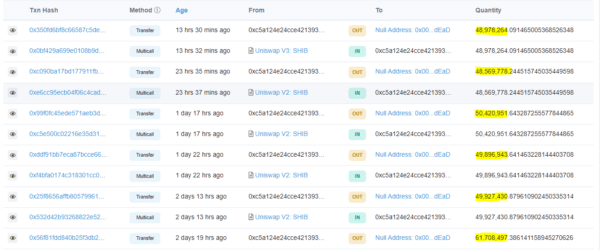
Etherscan.io data confirms that the mysterious wallet that came to life on August 23, 2022, has burnt 309,501,863 (309.50M) SHIB in 6 separate transactions.

The mysterious wallet incinerated a whopping total of 97,548,042 (97.54M) SHIB tokens in two transactions during the last 24 hours.

In the first transaction, the mysterious wallet destroyed 48,569,778 (48.56M) SHIB. After a few hours, the same wallet performed another transaction and wiped out another 48,978,264 (48.97M) SHIB tokens from circulation forever while sending them to the Shib burn address.

On August 23rd, the mysterious wallet sent 111,635,927 (111.63M) SHIB to the dead wallet in two separate transactions. On August 24th, the wallet carried two more transactions and permanently moved out 100,317,894 (100.31M) SHIB from circulation.

Shiba Inu Burn
Shiba Inu Burn

The wallet has burned 309.50M in two days since launch.