
Home Blog Page 444

If Trump Seizes XRP Escrow for U.S. Treasury, Here XRP Price When U.S. Debt Could Vanish

0

Conversations about using XRP to help the United States clear its massive national debt have recently dominated crypto circles. 

While the idea sounds unlikely, several analysts and community figures have explored how Ripple’s escrow holdings could, in theory, help the government tackle its $38 trillion debt burden.

Discussions Around Escrowed XRP Settling US National Debt

For instance, in January 2025, XRP community researcher Dr. Horace Drew shared a scenario where former President Donald Trump could take control of Ripple’s escrowed XRP and assign it to the U.S. Treasury.


Drew estimated the escrow’s value at about $200 billion and suggested that the government could gradually push XRP’s price to $500. At the time, the national debt stood at $34 trillion. He said if this happened, the rising value of the tokens could wipe out the debt.

In the same month, another community figure known as UtilityFTW shared a similar idea. He imagined Ripple donating its escrow holdings to the U.S. government and allowing RippleNet to serve as the main settlement system. 

By October 2025, the discussion resurfaced after Newsmax host Carl Higbie proposed another scenario. He suggested that the government could inject $1 trillion into XRP to drive up its price, sell some of the tokens to pay down part of the debt, let the price drop, and then repeat the process. 

According to him, repeating this cycle could help the government slowly reduce its debt, even though it might cause large price swings in the market.

Interestingly, President Donald Trump has even made a comment about using crypto to pay off the national debt, though he mentioned this with a mildly sarcastic tone.

XRP Price to Settle the $38T National Debt

Right now, Ripple holds 35 billion XRP tokens in escrow, worth about $87.5 billion at the current market price of $2.35 per XRP. Compared to the nation’s $38.11 trillion debt, about $111,559 for every American, this amount hardly makes a dent. Even if the government used all the escrowed tokens, the total value would still fall short by a wide margin.

Notably, to pay off just half of the national debt, the escrow would need to be worth $19.055 trillion. This would require XRP to hit $543 per token, representing a jump of roughly 21,620% from its current price. 

While this sounds far-fetched, some analysts still see a future where XRP trades in the triple-digit range. In October, Rob Cunningham of the KWUL Show said bullish market conditions around large ETF inflows could push XRP between $200 and $500. Also, analysts at Changelly expect XRP to break the $500 level by March 2040. 

XRP Price Prediction Chagnelly
XRP Price Prediction | Chagnelly

Meanwhile, to clear the entire $38.1 trillion debt, the escrow’s value would need to equal the full amount, which means XRP would have to climb to $1,088, marking a 43,420% increase.

Interestingly, Easy A founder Dom Kwok recently encouraged investors to hold onto their XRP until the token reaches $1,000.
“Don’t Sleep on XRP” CoinFund President Perkins Says

0

In a recent episode of the Unchained podcast, Chris Perkins, President of CoinFund, insisted that the industry does not overlook Ripple (XRP).

During the conversation, Austin Campbell, founder of Zero Knowledge Group, called on Perkins to share his thoughts on what he thinks people might have missed about Ripple. 

Notably, Perkins explained that it was a busy week in New York City, featuring industry conferences like Chainlink’s SmartCon and Ripple Swell, both drawing major attention. He focused on Swell, which he said shows the company’s rising momentum.

“Don’t Sleep on Ripple”

Perkins noted that while he wasn’t presenting investment advice, he believed Ripple’s position in the market demanded serious attention. 

“I’m not telling you to buy the token or not buy the token. Do your research. I don’t care. But the point that I was making is you really can’t sleep on Ripple (XRP),” the industry expert said.

Perkins highlighted XRP market cap of above $130 billion, calling it a sign of how strong Ripple’s foundation has become. He mentioned Ripple’s recent move, such as its plans to distribute its stablecoin RLUSD, and its acquisition of Hidden Road, as indicators of an ambitious expansion strategy.

“They have a ton of capital,” Perkins said, adding that Ripple’s ecosystem “could be formidable if they execute.” He compared XRP’s market value to that of major financial giants, noting that CME Group and Intercontinental Exchange (ICE) each stand at around $90 billion, which puts XRP’s valuation well above both. 

Perkins said he was eager to see how Ripple would use its capital, describing the company as “very much on the offense right now.”

“Ripple is ‘Capital in Search of Customers'”

Responding to Perkins’ remarks, Campbell noted that he had previously viewed Ripple as “capital in search of customers,” arguing that the firm’s major challenge rests on distribution. 

He explained that for stablecoins to thrive, strong distribution networks have always been the differentiating factor. “If you look at stablecoins that have succeeded over time, distribution has almost always been the winning thing,” he said.

Campbell noted that the most successful stablecoins, especially those surpassing $20 billion in market value, have some links to major exchanges. He questioned how Ripple plans to reach users and build adoption for RLUSD to succeed.

Meanwhile, he suggested that Ripple seems to have taken a business-to-business (B2B) rather than business-to-consumer (B2C) approach, which aligns with its recent activities and partnerships. 

Campbell added that a central question is whether value from Ripple’s operations will accrue to the XRP token or to other parts of its ecosystem. With this, he emphasized that the comments were not investment advice on whether to buy XRP or not.

Ripple’s Acquisitions

Following up on Campbell’s remarks, Ram Ahluwalia agreed with the distribution question but praised one of Ripple’s recent moves. He described Ripple’s acquisition of Hidden Road, a growing prime brokerage, as one of the smartest decisions the company has made. 

Ahluwalia compared the deal to AOL’s acquisition of Time Warner, saying it represented a moment when a high-value digital company decided to acquire a “real business” with tangible financial infrastructure.

Teddy Fusaro, President at Bitwise, said that having such capital allows Ripple to pursue impactful acquisitions like Hidden Road and to invest in businesses that trade derivatives, futures, options, and swaps. 

According to Fusaro, these moves show Ripple’s intent to bridge the gap between traditional finance and crypto markets, which he described as a major trend influencing the industry.

He emphasized that Ripple’s executive team has the experience to guide the company through transitions between traditional and digital finance. “I wouldn’t be surprised to see them do more and be a leader into the future,” Fusaro said.

XRP Wallets Jump by 21,595 in 48 Hours

0

The XRP Ledger is seeing its largest investor influx in eight months, as thousands of new wallets emerge amid a possible buy-the-dip campaign.

Notably, XRP dumped like the rest of the market, correcting to $2.06 on Tuesday, a price level last seen on June 27. However, what happened next has emphasized the strong interest in XRP, the fourth-largest cryptocurrency by market cap.

XRP Wallets Jump by 21,595 in 48 Hours

Specifically, data from Santiment shows that an impressive 21,595 new wallets were created on the XRP Ledger within 48 hours. The analytical platform highlighted that this represents the largest network growth in eight months.

New XRP Wallet Creation Hits 8-Month High | Santiment

Notably, the network growth deviates from the recent trend featuring massive sell-offs last month. A report from The Crypto Basic shared that long-term holders were selling 260 million XRP per day, ramping up profit-taking.

However, the new wallet creation suggests that retail and institutional investors alike may be buying into the latest dip, reinforcing confidence in XRP’s near and long-term price development. 

Data from a community-driven XRP Rich List resource confirms that following this recent network growth, total wallets now sit at 7.226 million, heading toward the 7.5 million mark. Notably, the last time a similar but milder network growth happened, XRP surged to its yearly high of $3.66. 

Price Rebound Over 12%

XRP has demonstrated strength over the past few days, growing in tandem with the creation of new wallets. From its low of $2.06 on Tuesday, XRP has rallied 13% to its current market price of $2.33.

Those who bought the recent dip are now the major beneficiaries of this rebound. Notably, a $10,000 purchase two days ago would have added $1,300 already.

Meanwhile, analysts continue to project that XRP will see much higher prices, sustaining its current momentum. A recent analysis from EGRAG Crypto suggests that XRP remains in a bullish position and is poised for a rebound to lofty heights.

Specifically, he predicted a breakout from one of its most powerful accumulation zones to the “Macro Wick 1” at $10. However, he noted that a super bullish development on the subsequent “Macro Wick 2” would take XRP to as high as $50 per coin.

Other bullish ecosystem events, like the imminent launch of the XRP spot ETF in the United States, could further support a price rebound. Recent developments in the ETF space suggest that the first XRP spot ETF could launch on November 13, finally opening the asset up to institutional investors.

Robinhood Reviews Bitcoin Holdings as Part of Corporate Treasury

0

Robinhood Markets has not yet decided whether to buy and hold cryptocurrencies such as Bitcoin as part of its corporate assets.

The discussion remains ongoing within the company, said Shiv Verma, Robinhood’s vice president of finance and strategy, during the firm’s third-quarter earnings call on Wednesday.

Verma explained that the company continues to assess the potential advantages and risks of adding crypto to its balance sheet.

“We think a lot about this,” he said, emphasizing that the decision must balance community alignment and shareholder interests.

Balancing Community Alignment and Capital Allocation

According to Verma, purchasing and holding digital assets could strengthen Robinhood’s connection with the crypto community. However, he noted that such a move would require substantial capital investment. 

“While it creates alignment with the community, it also locks up capital,” Verma said. He questioned whether that would be the best use of company resources, given Robinhood’s focus on product expansion, engineering investment, and long-term growth.

Shareholders Can Already Access Crypto

Verma also pointed out that Robinhood’s customers and shareholders can already purchase cryptocurrencies directly on the platform.

“Our shareholders can buy Bitcoin through Robinhood themselves,” he noted, suggesting that the company may not need to make that investment on their behalf.

He added that the internal debate over whether to hold crypto remains active. Meanwhile, the team continues to make a careful assessment of both sides of the issue.

“There are pros and cons, and we’re still thinking about it,” he said.

Crypto Treasury Trend Faces Growing Competition

Across Wall Street, several companies have adopted a crypto treasury model, choosing to hold digital assets as part of their reserves. This approach has attracted billions in investments and boosted share prices for many firms.

However, analysts have warned that the space could face pressure as more companies pursue similar strategies. Some may need to take greater risks or consolidate through acquisitions to stay competitive.

Strong Quarter Driven by Crypto Trading

Robinhood’s debate over holding crypto comes amid a period of strong performance for its trading business. The company’s third-quarter revenue rose to $1.27 billion, doubling from the same period last year.

A major driver of this growth was a 300% increase in crypto-related revenue, which reached $268 million in the quarter.

Ripple CEO Says XRP Is Our North Star: ‘We Care Deeply’

0

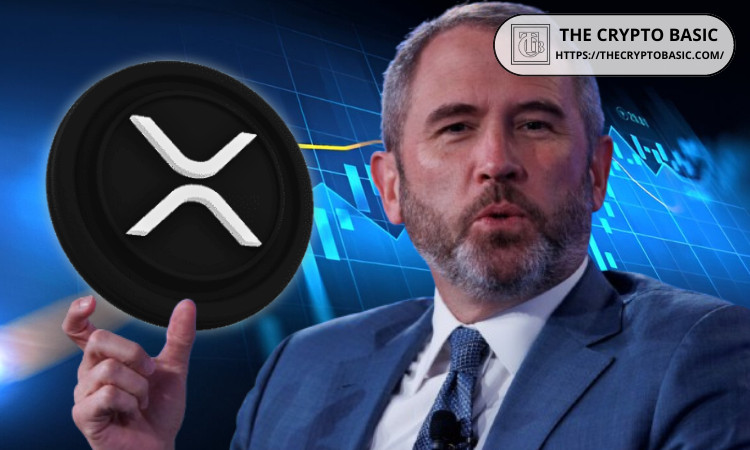
At the just-concluded Ripple Swell 2025 conference, CEO Brad Garlinghouse delivered a clear message about the place of XRP in Ripple’s long-term roadmap. 

Speaking to concerns about shifting priorities following Ripple’s expansion into stablecoins, prime brokerage, and institutional services, Garlinghouse emphasized that XRP remains the company’s guiding focus.

“XRP is at the heart and soul of what Ripple is doing. We care deeply. We call it our north star,” he said. This emphasized that the company’s decisions ultimately center on strengthening the XRP ecosystem.


XRP Still Sits at the Core of Ripple’s Vision

Garlinghouse’s remarks align with statements he made recently after Ripple completed several major acquisitions. These acquisitions include the $1.25 billion purchase of Hidden Road and the billion-dollar purchase of GTreasury.

Amid Ripple’s growing product suite, including RLUSD and its expanding custody arm, he reiterated that XRP rests at the hub of everything the company does.

Ripple President Monica Long also echoed this message. She previously noted that Ripple Prime is exploring ways to incorporate XRP more deeply into institutional workflows. This includes using XRP, alongside RLUSD, as a collateral asset within prime brokerage services.

Response to Community Concerns About XRPL’s Relevance

In recent months, some community members questioned whether Ripple’s new stablecoin and its multi-chain deployment. About 80% of RLUSD are currently on Ethereum, suggesting a shift away from XRP and the XRP Ledger.

Critics argued that Ripple’s cross-border payment system now appears less dependent on XRP than before.

However, Garlinghouse’s Swell comments directly countered this interpretation. By labeling XRP the company’s “heart, soul, and north star,” he made clear that Ripple’s long-term strategic bets remain tightly linked to XRPL liquidity.

Ripple’s Actions Reveal an XRP-Centered Future

Beyond statements, Ripple’s recent initiatives demonstrate a practical commitment to strengthening XRP’s institutional use:

At Ripple Swell, the company announced a collaboration with Mastercard to explore using RLUSD on the XRPL for the settlement of stablecoin transactions using fiat cards.

In October, Ripple joined SBI and Kraken to invest $1 billion into what is now the world’s most significant corporate XRP treasury. Ripple has already contributed over 200 million XRP to the reserve, with Chairman Chris Larsen adding another 50 million.

Moreover, Ripple controls roughly 40 billion XRP across escrow and spendable wallets. In other words, any long-term price appreciation directly amplifies the company’s financial strength.

Ripple Prime’s roadmap includes incorporating XRP into collateral, settlement, and liquidity operations for large institutions.

“Ripple’s Endgame Is Still About XRP”

Analysts and long-time observers note that Ripple avoids discussing XRP price targets for regulatory reasons. Yet the company’s acquisitions, ecosystem investments, and public messaging all point toward a singular conclusion that its long-term ambition is connected XRP’s success.

Trump Adviser David Sacks Says U.S. Crypto Market Bill Making “Great Progress”

0

President Donald Trump’s crypto and AI adviser, David Sacks, said on Thursday that discussions on the U.S. crypto market structure bill are showing “great progress.”

In a post on X, Sacks expressed confidence that a bipartisan draft of the legislation would be ready in the near future. 

His update comes as Congress continues to debate the framework. This debate is unfolding during the longest government shutdown in U.S. history, now in its 37th day. The bill seeks to establish clear trading and regulatory frameworks for digital assets and decentralized finance (DeFi). These provisions are considered fundamental to advancing the country’s crypto policy agenda.

Senators Resume Talks Despite Shutdown Delays

Senator John Boozman, the top Republican on the Senate Agriculture Committee, reportedly discussed the draft legislation with Sacks and Democratic Senator Cory Booker to refine it before presenting it to the full Senate.

The House of Representatives passed its version of the bill in July. However, Senate progress stalled amid partisan disagreements over the oversight of decentralized finance (DeFi). Democrats have pushed for stricter compliance standards, while Republicans caution against excessive regulation that could hinder innovation.

Shutdown Creates Both Obstacles and Opportunities

The ongoing five-week government shutdown has disrupted committee schedules and slowed coordination with key agencies. This includes the SEC and CFTC, which are operating with reduced staff.

However, several lawmakers say the pause has created more space for direct policy dialogue. For instance, Patrick Witt, director of Trump’s Digital Assets Council, confirmed at Ripple’s Swell conference that despite logistical hurdles, senators and administration officials have used the downtime to refine definitions and enforcement language within the bill.

Steady Behind-the-Scenes Negotiations

On Tuesday, Senator Cynthia Lummis, a lead sponsor of the legislation, told Bloomberg that bipartisan talks continue every day. She said these discussions are largely focused on technical revisions aimed at securing broader support of the Senate.

Lummis acknowledged that passing the bill before year-end is unlikely but insisted that staff-level coordination will keep progress steady.

“We’re working every single day,” she said, emphasizing the determination to maintain momentum despite shutdown challenges.

Tight Timeline Before Election Season

Senator Thom Tillis has cautioned that lawmakers have only until January or February to advance the bill before election politics dominate. Early passage, he said, would help sustain bipartisan momentum heading into 2026.

Meanwhile, Senator Chris Murphy emphasized that Democrats plan to prioritize healthcare subsidies and budget negotiations. Consequently, this focus could slow progress on other measures, including the market structure bill.

Optimism Remains as Draft Nears Completion

Despite the obstacles, momentum has begun to return. Lawmakers expect additional meetings with the White House in the coming weeks to finalize the bill’s regulatory framework and trading definitions.

Sacks’s optimism has reenergized the process. This renewed momentum has officials close to the talks anticipating a new draft version in the near future.

While the timeline remains uncertain, the latest bipartisan activity signals that digital asset regulation remains a shared priority across party lines, even amid the longest government shutdown in U.S. history.

Expert Says Not Going All in on XRP is a Mistake You Will Regret for Life

0

Oscar Ramos, an XRP community figure, has argued that market participants who do not go all in on XRP will regret the decision for the rest of their lives.

Interestingly, Ramos, who has remained bullish on XRP, said this at a time when investor sentiment remains low, with XRP joining a broader market downturn. For context, after recovering to $2.55 on Nov. 2, XRP collapsed over 13% within the next two days, reaching a low of $2.2.

However, a recovery push emerged on Nov. 5. Despite this rebound, market sentiments remain low, but Ramos has maintained his bullish disposition. In a recent commentary, the market pundit suggested that investors should not just commit some capital into XRP, but “go all in” on the crypto token.

Not Going All in on XRP

According to him, choosing not to do this would be a financial mistake. He boldly claimed that market participants who fail to invest a substantial amount of their capital into XRP will regret this “mistake” for the rest of their lives.

Oscar Ramos on X
Oscar Ramos on X

Notably, this has been a persistent trend with crypto investments, as crypto assets have often proven to be highly profitable across multiple cycles. For context, an investor who spent $10,000 on Bitcoin (BTC) a decade ago at $311 per token would today be sitting on $3.3 million worth of profit despite the ongoing market dump.

Similarly, a $10,000 investment in XRP a decade ago, when it traded for $0.00558, would today be worth $3.98 million. This historical context has been a source of angst among investors who missed out on early entries despite having the capital to do so.

Today, Ramos is suggesting that market participants could still make such mistakes if they fail to go “all in” on XRP. His optimism comes from the confidence among XRP permabulls that the crypto asset is undervalued and has the potential to reach higher values, with the $100 price target often featuring in such discussions.

Pundits Suggest the Current Dip is an Opportunity 

Amid the ongoing price collapse, other market commentators have insisted that investors regard the dip as an opportunity to buy XRP cheap. Specifically, expert Coach JV recently claimed that meeting XRP under $2 is a blessing. Also, analyst Income Sharks argued that investors who missed XRP below $2 could get the chance to procure it at this level again.

However, these suggestions remain speculative, and investors should not consider them investment advice. Ramos’ recent commentary has triggered varied reactions from community members. For instance, one investor, Blueman, confirmed his investment in XRP, but admitted he had diversified to other tokens.

Meanwhile, some suggest that they bought years back but now regret ever entering the market. Notably, the only long-term investors seeing losses on their investments are those who procured XRP at the top during the 2018 peak. Every other investment before 2025 is currently sitting on varying degrees of profit.

Ripple, Mastercard Team Up to Test Stablecoin Settlements on XRP

0

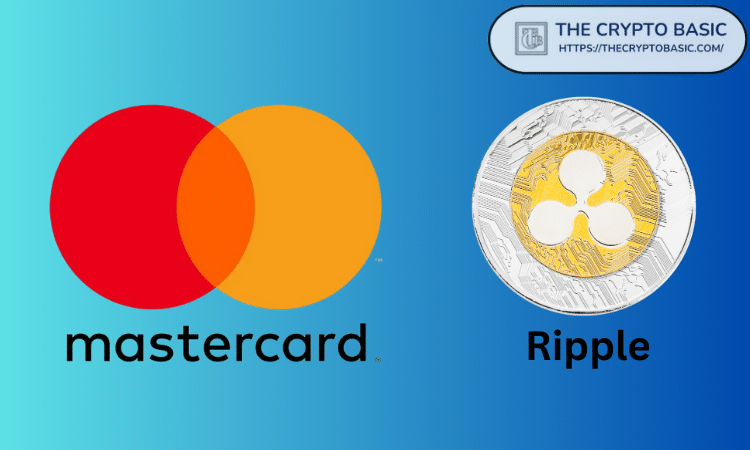
Global payments leader Mastercard is partnering with Gemini and Ripple to explore how RLUSD stablecoins can be used to settle traditional card payments on the XRP Ledger (XRPL). 

The companies announced the initiative on Wednesday, describing it as a first for regulated U.S. banks in blockchain-based transaction settlement.

According to a joint statement, the project aims to integrate regulated stablecoins into Mastercard’s existing payment network. In doing so, it seeks to offer a faster and more transparent alternative to traditional clearing systems.

Stablecoin Settlement on XRP Ledger

Once operational, the pilot will allow a U.S.-regulated bank to complete card transactions using a regulated stablecoin on a public blockchain. Moreover, the settlement process will be conducted on XRPL, an open-source blockchain to optimize payment efficiency.

Ripple, which promotes the global adoption of the XRPL, is supporting the initiative. Through this effort, the company aims to demonstrate how blockchain technology can enhance settlement speed and reduce transaction friction.

Gemini’s Expanding Crypto Credit Card Ecosystem

Meanwhile, crypto trading platform Gemini, founded by Cameron and Tyler Winklevoss, continues to expand its credit card offerings. Its XRP edition card, issued through WebBank, already allows users to earn rewards in digital assets.

Last month, Gemini launched a Solana edition of its credit card, offering up to 4% cashback in SOL tokens. 

According to Dan Chen, Gemini’s Chief Financial Officer, the company’s credit card program aims to make digital assets “a natural part of daily spending.”

WebBank, which issues Gemini’s cards, is also a participant in the RLUSD settlement project, according to the announcement.

Mastercard’s Growing Digital Asset Network

This collaboration builds on Mastercard’s expanding engagement with blockchain and digital asset firms. For instance, in June, the company partnered with Chainlink to enable direct on-chain fiat-to-crypto conversions for consumers.

Additionally, on the same day as the new announcement, Humanity Protocol, a digital identity solutions provider, revealed a partnership with Mastercard to use open finance technology for accessing credit, loans, and real-world financial services.

Crypto companies have increasingly launched debit and credit cards linked to digital assets to attract everyday users and generate additional revenue. Mastercard’s collaboration with Gemini and Ripple represents a significant step toward connecting these innovations with established financial infrastructure. 

These initiatives could pave the way for stablecoin settlements to become a standard feature of global payment systems.

‘On XRP Sounds Better’

In the recent development, Ripple CEO Brad Garlinghouse joined a conversation on X/Twitter where people were discussing whether it’s more appropriate to say “on XRP” or “on XRPL.”

  • “on XRPL” is the technically correct term because XRPL (the XRP Ledger) is the actual blockchain network.

  • “on XRP” is less technical but more natural and recognizable to the broader public since XRP is the token most people associate with Ripple.

By agreeing that “on XRP” sounds better, Garlinghouse showed that he prefers using simpler, community-friendly language instead of being overly technical.


Ripple CEO Says ‘On XRP’ Sounds Better,’ Here’s What he Means

0

Ripple CEO recently joined members of the XRP community in a lighthearted exchange on X about how best to phrase news developments related to XRP and the XRP Ledger.

The discussion centered on whether people should simply say “on XRP” or “on XRPL” when describing activity on the network.

“On XRP” Sounds Better

Notably, the exchange began when prominent XRP community member Mr. Intuitive posted the phrase “On XRPL.”

Validator Vet jokingly replied that saying “on XRP” actually sounds better, though anyone who uses that phrasing risks being corrected by the “terminology police.”

This refers to the long-running community habit of reminding others that XRP is the digital asset, while XRPL (the XRP Ledger) is the blockchain. This distinction is often emphasized in discussions about new projects or launches.

A good example is the June announcement of Circle’s USDC launching on the XRP Ledger. While some simply framed it as USDC launched on XRP, others insisted on the more technically accurate USDC launched on XRPL.

In other words, this subtle difference often sparks pedantic debates among community members.

Ripple CEO Agrees: “On XRP” Sounds Better

Interestingly, Ripple CEO Brad Garlinghouse joined the thread and agreed that “on XRP” sounds better than the more technically correct “on XRPL.”

Brad’s involvement gave the discussion more significance as he acknowledged the community sentiment. In essence, his comment signaled a vote of confidence in the validator’s lighthearted suggestion. Notably, Vet responded by saying, “Let’s do that from now on.”

“Best of Both Worlds”

Community member Krippenreiter later summarized the exchange by noting that the “XRP Ledger” offers the best of both worlds. He believes the simpler phrase “on XRP” performs better in headlines and draws more attention than “on XRPL.”

At the same time, Krippenreiter acknowledged that using the technically correct term “XRPL” still satisfies ecosystem purists.

Ultimately, the exchange highlights how language continues to shape branding and communication within the XRP community.

While “XRPL” is technically correct, even Ripple’s CEO admits that “on XRP” sounds more natural and better fits how people actually talk about the network.

This linguistic blending also shows up in broader conversations about XRP’s role in global payments. At the recent Ripple Swell conference, Canary Capital CEO Steven McClurg illustrated this point when he said the best way to think about XRP is through the XRP Ledger itself—a rising competitor to traditional Wall Street payment systems.

Pundit Identifies 10 Ways the Ripple and Mastercard Partnership Is Good for XRP

0

Ripple recently announced a partnership with global payment giant Mastercard, and pundits insist it could benefit XRP.

Ripple Partners with Mastercard

For context, Ripple revealed the partnership during the Ripple Swell 2025 in New York on Nov. 5, 2025. Notably, the collaboration involves Mastercard; WebBank, a U.S.-regulated financial institution that issues the Gemini Credit Card; and crypto exchange Gemini.

Together, they plan to pilot blockchain settlement for fiat-based credit card payments using Ripple’s stablecoin, RLUSD, which runs on the XRP Ledger (XRPL). According to Ripple, the initiative seeks to replace the conventional, slower financial rails with near-instant blockchain transactions.

Ripple explained that over the next few months, the partners will start the initial onboarding of RLUSD on the XRP Ledger once they secure the necessary regulatory approvals. They will also begin planning how to integrate the system into Mastercard and WebBank’s existing settlement processes.

Following the announcement, which has triggered considerable excitement within the XRP community, the pundit behind the community account XRP Investing shared ten reasons why this development could strongly benefit XRP.

Why This Collaboration is Good for XRP

First, the pundit noted that the partnership directly boosts XRPL adoption by connecting it to real-world finance. As Ripple uses XRPL to process Mastercard settlements, the firm shows how blockchain technology can operate in practical, everyday financial systems rather than remaining a niche experiment.

Second, XRP Investing believes the collaboration also strengthens Ripple’s credibility. Working with established financial leaders like Mastercard and WebBank indicates that Ripple’s technology meets the standards of major global institutions and can integrate with traditional banking.

The pundit noted for his third point that the partnership will likely drive higher transaction activity on XRPL. When Mastercard and WebBank move payments using RLUSD, the number of on-chain transactions could spike, giving XRP greater utility.

For his fourth point, he explained that the growing use of RLUSD, which recently surpassed $1 billion in circulation, will further increase demand for XRP. 

Meanwhile, according to XRP Investing’s fifth point, Ripple achieved a major regulatory win through this partnership. Specifically, Ripple will be creating a blockchain-based payment model that works within the framework of U.S. financial rules.

Five More Ways XRP Could Benefit

His sixth point argues that the collaboration bridges traditional finance systems and decentralized systems, with this development bolstering XRP’s reach. 

For the seventh point, the pundit added that the new partnership builds on Ripple’s earlier successes, such as the Gemini XRP Credit Card introduced in August. Notably, this launch set the stage for deeper cooperation with major institutions and proved XRP’s practical use in payment systems.

The eighth point suggests that the news will lift investor confidence and improve market sentiment around XRP. He also claimed that the development could bolster confidence in Ripple’s roadmap, as the firm persists with strategic acquisitions and useful partnerships.

In his ninth point, the pundit said the partnership may fuel broader ecosystem growth. He believes Ripple’s products, including Ripple Payments, will likely see more adoption.

Meanwhile, his tenth point projects that the partnership could lead to even larger institutional use cases. For context, once Mastercard’s pilot proves successful, other global banks and card issuers may adopt the same model. This will likely increase XRP’s presence in mainstream finance.