Home Blog Page 97

XRP Forms ‘Power of Three’ Pattern After 18% Drop, Analyst Says Expansion Phase Could Be Next

XRP could be preparing for a major move if a widely followed chart pattern plays out as expected, according to CoinvoTrading.

The analyst believes many investors are giving up on XRP at the worst possible time. He pointed to what he described as a textbook “Power of Three” (PO3) pattern forming on the daily chart.

Three-Phase XRP Structure

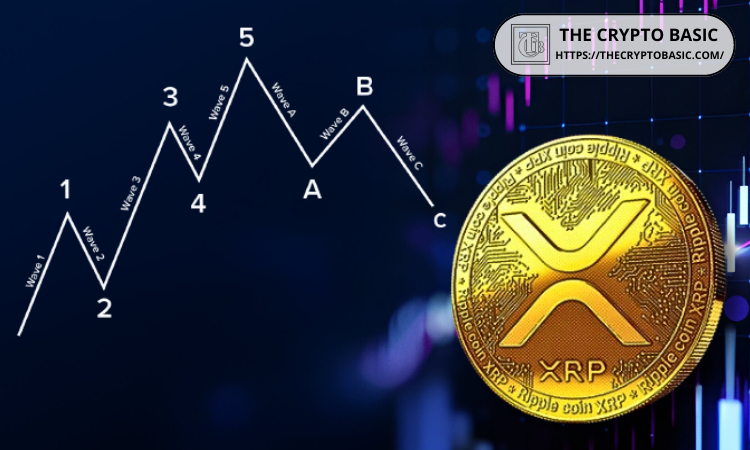
The Power of Three pattern is a popular market structure among technical traders. It consists of three stages: accumulation, manipulation, and expansion.

According to CoinvoTrading’s chart, XRP spent several months trading within a wide range, forming the accumulation phase. The recent break below that range is viewed as the manipulation stage.

This phase typically sees prices move against market expectations. It forces weaker holders out of their positions before the next trend develops.

CoinvoTrading believes XRP is currently in this manipulation phase. If the pattern continues to unfold, the asset could soon enter the expansion stage, which is usually marked by a strong upward move.

The chart projects a rally toward the $2.60–$2.80 range, representing a gain of more than 145% from the current price.

XRP Now Recovering from Steep Pullback

Indeed, XRP has experienced significant volatility in recent weeks. The token traded near $1.33 at the start of the month before falling to a weekly low of around $1.05. That decline represented a drop of roughly 18%.

Despite the correction, XRP’s price has begun to recover. CoinMarketCap data shows the token is trading at about $1.14, up roughly 3% over the past 24 hours. The rebound has helped trim recent losses, though XRP remains below its monthly highs.

The asset remains down approximately 21% over the past month. Moreover, XRP is still down around 38% year-to-date, reflecting the broader bearish trend since the start of the year.

CoinvoTrading argues that the recent weakness may be part of a manipulative move designed to shake out investors. He stressed that, based on historical market behavior, a major uptrend could ultimately follow.

CoinvoTrading's chart
CoinvoTrading’s chart

XRP Buy Signal Emerges

Notably, as The Crypto Basic reported earlier, XRP has flashed a TD Sequential buy signal on its 3-day chart after falling from $1.33 to $1.05. Analyst Ali Martinez noted that similar signals on higher timeframes have historically led to short-term rebounds.

However, on-chain data suggests caution. Whale transactions above $1 million have dropped 57%, from 157 to 67, over the past nine days. This implies that major investors are remaining on the sidelines.

Meanwhile, whale wallets have sold or redistributed about 60 million XRP over the past week, indicating continued selling rather than accumulation.

Martinez believes XRP could see a brief relief rally, but sustained upside may remain limited unless whale buying returns. He also identifies $0.90 as a key long-term support level and a potentially attractive accumulation zone if the price revisits it.

Dogecoin Buy Signal Emerges After 31% Correction, Analyst Sees Rebound Ahead

Dogecoin (DOGE) may be preparing for a recovery after a key technical indicator flashed a fresh buy signal.

Analyst Ali Martinez pointed out on X that the Tom DeMark (TD) Sequential indicator has turned bullish on Dogecoin. Notably, the same indicator issued a sell signal on May 7, which was followed by a 31% decline. During that period, DOGE fell from $0.113 to $0.078.

According to Martinez, the latest signal suggests that a rebound could be approaching. The setup becomes even more significant as Dogecoin tests a major long-term support zone.

At the time of writing, CoinMarketCap data showed DOGE trading at $0.08552, up 0.98% over the past 24 hours. Despite the daily gain, the meme coin remains down 24% over the last month. The decline reflects broader weakness across the crypto market in recent weeks.

Bitcoin Recovery Lifts Market Sentiment

Dogecoin’s recent price action has closely tracked Bitcoin’s movement. Bitcoin rose 0.71% during the same period as investor appetite for risk assets improved.

The positive sentiment across financial markets follow expectations that a potential U.S.-Iran deal could ease geopolitical tensions. That optimism helped Bitcoin reclaim the $63,550 level.

As Bitcoin stabilizes, several altcoins, including Dogecoin, have started showing signs of strength.

DOGE Tests Critical Support Zone

Martinez highlighted that DOGE is currently testing a major support level near $0.081. This area marks the lower boundary of a five-year parallel channel that has historically served as a key support zone for the meme coin.

If DOGE holds above the $0.081 level, traders could begin targeting the $0.096 to $0.10 resistance range. However, Dogecoin’s next move will depend on Bitcoin’s ability to sustain its recovery.

On-Chain Support for Dogecoin Price

Meanwhile, in an earlier post, Martinez noted that more than 30 billion DOGE last changed hands around the $0.081 level, creating a strong support cluster.

He also stated that whales accumulated more than 200 million DOGE over the past few weeks, signaling continued buying interest near current levels.

Martinez views the $0.081–$0.058 range as a favorable dollar-cost averaging zone for long-term investors. A chart he shared suggested that Dogecoin could eventually reach $0.50, advance toward the $1 mark, and potentially move even higher.

Image

For now, Dogecoin remains at a critical technical juncture, and the newly flashed TD Sequential buy signal is giving bulls a reason to watch the market closely.

Reliable Dogecoin Bubble Risk Metric Shows Price May be Near a Bottom

0

Historical data from the Dogecoin Bubble Risk indicator shows that the meme coin’s price could be close to a bottom.

Dogecoin (DOGE) has remained under pressure along with the broader crypto market. The meme coin has fallen by more than 14% this month and is down nearly 27% since the beginning of the year. 

At the time of writing, DOGE trades around $0.08, placing it well below the important $0.1 level. The recent decline follows the latest broader market sell-off that has affected most crypto assets.

Amid the downtrend, market analyst Joao Wedson believes Dogecoin may be getting close to the end of its current downtrend. In a recent analysis, he highlighted on-chain indicators that suggest the cryptocurrency could already be forming a price bottom.

Dogecoin Bubble Risk Indicator

Wedson reiterated that buying Dogecoin below $0.08 could prove to be a strong strategy. To support his thesis, he highlighted the Bubble Risk indicator, a metric designed to measure the chances of a speculative bubble forming in the market.

The indicator combines three major valuation models into a single reading. Specifically, it gives a 30% weighting to the price-to-realized price ratio, another 30% to Alpha Price deviation, and 40% to the CVDD ratio. 

The indicator seeks to identify periods when prices become overly stretched and vulnerable to sharp corrections by bringing these metrics together.

Notably, the model was built to detect unsustainable valuations that come from excessive market optimism. To improve the reliability of its readings, the calculation starts from the sixth record onward, which helps create a more stable data set.

Current Readings Match Previous Bottoming Zones

According to Wedson, the Bubble Risk indicator places emphasis on three of Dogecoin’s most important valuation models. He explained that the metric has now entered a region that has historically been linked to price bottoms. At present, the indicator sits slightly below the key 0.7 level while Dogecoin trades near $0.08.

Dogecoin Bubble Risk Indicator

The analyst also called attention to the Alpha component of the model, noting that investors should pay attention to it. He believes Dogecoin may already be approaching a bottoming phase based on the current readings.

Data from Wedson’s chart supports this. The Bubble Risk indicator has repeatedly identified major Dogecoin bottoms across several market cycles. Each time the metric dropped below the 0.7 threshold, Dogecoin eventually reached a major floor before beginning a recovery.

What Historical Data Says

The first instance on the chart came in May 2015 when Dogecoin fell to a low of $0.000086. During this period, the Bubble Risk indicator moved below 0.7, and this aligned with DOGE’s bottom for that cycle.

The same positioning appeared again in March 2020, when DOGE reached a bottom of $0.001344. Once again, the indicator fell below the 0.7 mark before the market turned higher.

A similar situation played out during the 2022 bear market. In June 2022, Dogecoin dropped to $0.0491, and the Bubble Risk metric once again moved below the same threshold. In all three cases, a recovery followed, although some rebounds took several months to gain momentum.

With the indicator currently sitting slightly below 0.7 and Dogecoin trading at $0.08, Wedson believes the asset may now be trading within an attractive accumulation zone.

Long-Term Dogecoin Reversal in View

Meanwhile, analyst Kamran Asghar also highlighted a potentially bullish setup for Dogecoin. According to his analysis, DOGE is forming a large rounded-bottom pattern on the 1-week chart.

At the same time, the Relative Strength Index (RSI) continues to form higher lows, suggesting that momentum may be improving despite the recent weakness in price.

XRP 1W Chart Kamran Asghar
XRP 1W Chart | Kamran Asghar

Asghar believes that if this chart pattern confirms, Dogecoin could be preparing for a major trend reversal after spending years in an accumulation phase. This supports the theory that the meme coin may be approaching an important long-term bottom.

Analyst Says Crypto Isn’t Dead, Highlights Strength Across Bitcoin, XRP, and Cardano 

0

Crypto influencer Dan Gambardello has pushed back against growing bearish sentiment, insisting that crypto is far from dead.

His remarks come as the broader crypto market attempts to recover from last week’s sharp sell-off. During the downturn, Bitcoin fell to around $59,000, Ethereum dropped to $1,506, XRP slid to $1.05, and Cardano briefly sank below $0.15. 

Crypto Isn’t Dead: Gambardello  

As a result, social media quickly filled with declarations that “crypto is dead.” However, Gambardello strongly disagrees. Instead, he argues that the market continues to show resilience, particularly across several major cryptocurrencies and emerging blockchain sectors.

In his statement, Gambardello maintained that Bitcoin remains on track for a long-term rise toward $1 million. He noted that the leading cryptocurrency is currently forming a higher low despite recent volatility, which he views as a constructive sign for the broader market.

Also, he warned Ethereum bears to remain cautious, suggesting that ETH could surprise skeptics as market conditions improve. Beyond Bitcoin and Ethereum, Gambardello highlighted some of the strongest narratives currently shaping the crypto industry. 

Gambardello Highlights Strong Crypto Projects 

According to him, Sui continues to distinguish itself through rapidly growing stablecoin activity. He pointed to the network’s $2.27 trillion stablecoin volume as evidence of its expanding utility and adoption. He also stressed that Cardano has demonstrated remarkable resilience and remains a significant player despite its recent price weakness.

Additionally, Gambardello described Chainlink as the dominant oracle network and identified Midnight as a promising project within the privacy-focused segment of the market.

He further argued that Solana’s momentum will eventually return, while XRP stands to benefit from increasing regulatory clarity and broader adoption. Meanwhile, he believes Hyperliquid is emerging as a leading force in decentralized finance.

Beyond those sectors, Gambardello identified Bittensor as the frontrunner in the decentralized AI space and highlighted Ondo Finance as a major beneficiary of the growing real-world asset (RWA) tokenization trend.

Overall, Gambardello expressed confidence in the long-term growth of the crypto industry. Rather than viewing blockchain networks as competitors, he emphasized that different projects are collectively driving digital asset adoption and advancing the industry’s broader mission.

Other Proponents Echo Similar Optimism

Meanwhile, Gambardello is not alone in rejecting the latest wave of crypto pessimism. Bark, the Chief Woof Officer (CWO) of Doginal Dogs, argued that predictions of crypto’s demise have surfaced repeatedly throughout the industry’s history. According to Bark, every major crash has eventually given way to a recovery, which is why he views the current downturn as a buying opportunity rather than a reason for concern.

Similarly, other market commentators have pointed out that previous market cycles often followed the same pattern. Periods of widespread pessimism were frequently followed by new technologies, fresh narratives, and renewed investor interest that helped reignite market growth.

Not New 

For many crypto advocates, declarations that the industry is dead have become a recurring feature of every major correction. Bitcoin alone has been declared dead 472 times since 2010, following events such as China’s regulatory crackdown, the Mt. Gox collapse, the Terra and FTX failures, major market crashes, and geopolitical conflicts.

According to the Bitcoin Deaths tracker, the first widely documented claim that Bitcoin was dead appeared on October 15, 2010, when critics argued that the asset could never function as a viable currency. At the time, Bitcoin was trading around $0.11. Despite those early criticisms, the cryptocurrency went on to reach $126,198 in October 2025, delivering extraordinary gains for long-term holders.

With Bitcoin recently retreating to the $63,000 range, fresh claims about its demise have once again begun circulating online. Interestingly, the Bitcoin Is Dead tracker estimates that an investor who purchased $100 worth of Bitcoin every time the asset was declared dead would now hold $65.82 million in BTC. 

Bitcoin Deaths metric

While supporters remain convinced that Bitcoin and the broader crypto market are far from dead, uncertainty still surrounds the market’s short-term direction as investors continue to assess the impact of recent volatility. 

XRP Buy Signal Emerges as Whales Dump 60M XRP, Activity Drops 57%

Amid the week-long price dip, XRP has flashed a new buy signal on a key technical indicator. 

However, declining whale activity and continued selling by large holders suggest traders may need to remain cautious.

In a post on X, analyst Ali Martinez noted that the TD Sequential indicator has printed a buy signal on XRP’s 3-day chart. The signal appeared after XRP fell about 18%, dropping from around $1.33 earlier this month to roughly $1.09.

According to Martinez, TD Sequential buy signals on higher timeframes have historically been followed by short-term rebounds lasting one to four candles. This suggests XRP could see a brief relief rally after recent weakness and price compression.

Whale Activity Drops More Than 57%

While the technical setup looks constructive in the short term, on-chain data tells a less bullish story. Martinez said whale activity on the XRP network has fallen sharply over the past nine days. The number of transactions worth more than $1 million declined from 157 to 67, a drop of 57.3%.

The analyst believes this slowdown shows that major market participants have stepped back from the market. Reduced whale activity often leads to lower volatility and can signal consolidation rather than the start of a strong uptrend.

As a result, Martinez expects XRP to remain in a compression phase, with large investors waiting for clearer price direction before becoming more active.

Whales Offload 60 Million XRP

Additional on-chain data suggests whales are reducing exposure rather than accumulating. Data from Santiment shows that whale wallets sold or redistributed roughly 60 million XRP over the past week. 

Martinez noted that active large holders have been distributing tokens instead of absorbing supply and supporting a breakout.

This ongoing selling pressure suggests institutional investors are not yet positioning for a sustained rally, despite the appearance of the TD Sequential buy signal.

Analyst Identifies $0.90 as Potential Buy Zone

Looking beyond the current setup, Martinez believes a more attractive accumulation opportunity could emerge if XRP revisits the $0.90 level.

He described $0.90 as a major support zone supported by a multi-year rising trendline that has remained intact for nearly eight years. If XRP falls back to that area, Martinez sees it as a potentially compelling long-term entry point.

At the moment, he expects the TD Sequential signal to produce only limited upside unless whale accumulation returns. With large transaction volume declining and whales continuing to distribute tokens, XRP’s price may remain stuck in a consolidation phase before its next major move.

Bitcoin HTF Support Zone Signals Short-Term XRP and Altcoin Rally Before Bear Market

0

Well-known market analyst il Capo believes Bitcoin has entered a support zone that could trigger a brief rally, benefiting altcoins like XRP.

After recovering to $74,000 on May 31, Bitcoin (BTC) began June with renewed bearish pressure, as macro conditions and Strategy’s BTC sale dealt a blow to market sentiments. BTC has since collapsed to around $63,000, dragging the rest of the market with it.

Market Outlook Remains the Same Despite Recent Weakness

Notably, Capo had expected Bitcoin and the broader crypto market to stage a short-term recovery. However, the scenario had not played out at the time of his latest analysis. Nonetheless, he insists that a short-term rally could emerge for now.

During his recent market update, the analyst openly admitted that his timing had been off. He explained that high-time-frame analyses often take longer to develop, and predicting the exact timing of a move is rarely easy. 

To him, understanding the broader trend and overall market direction is more important than getting every short-term move right. For this reason, he said his main outlook remains unchanged despite the recent weakness in price action.

Bitcoin in a Key Support Area

According to Capo, Bitcoin has returned to what he considers a strong high-time-frame support zone. Notably, this represents the same support area from February, when BTC crashed to $60,000. Capo believes this level could again act as a foundation for a market rebound.

Bitcoin Returns to Key Support Area il Capo
Bitcoin Returns to Key Support Area | il Capo

He pointed out that market sentiment has become even more negative than before. According to him, as most traders expect prices to fall further, the current environment shows the type of fear often seen near important accumulation periods.

Capo also highlighted several factors that could help support risk assets. First, he believes the conflict in the Middle East is unlikely to escalate further in the near term and instead could move toward a temporary ceasefire. 

In addition, he mentioned bearish short- and medium-term signals in the oil market, the 2026 football World Cup, and typical summer market conditions as factors that could help a broader market rebound.

Possible Rotation from Stocks to Crypto

Notably, while crypto has declined, stocks have posted strong gains over the past several months and may have led the broader risk-asset rally. As a result, capital could begin moving from stocks into crypto during the final stage before a larger bear market develops.

Capo noted that he is already seeing encouraging signs in the altcoin market. According to him, many altcoins have held up better than Bitcoin during recent weakness, and this is a sign of underlying strength.

Meanwhile, other altcoins remain between 90% and 99% below their previous highs. Capo suggests some of these altcoins have not yet gone through proper distribution and capitulation phases. As a result, the current market could represent a buying opportunity, not a time to sell.

XRP and Other Altcoins Could Benefit

Capo also believes upcoming regulations could bring better attention to digital money and blockchain-based payment systems. He suggested that cryptocurrencies with narratives related to the ISO 20022 standard may benefit the most from this.

The market analyst specifically mentioned XRP, XLM, QNT, and HBAR. He suggested that increased regulatory focus and growing adoption of digital financial infrastructure could create favorable conditions for these projects.

Moreover, privacy-focused cryptocurrencies could perform well for a different reason, as Capo mentioned XMR and ZEC as examples of assets that could benefit from an alternative narrative within the crypto market.

Rally May Come Before a Larger Downturn

Despite his positive outlook for the coming weeks and months, Capo clarified that he does not expect the next push higher to mark the beginning of a new bull market. Instead, it may represent a final rally before a broader bear market affects several major asset classes.

He also believes stocks and housing could face major challenges in the years ahead, while areas such as precious metals and rare earths may perform differently from the broader market.

Looking further ahead, he expects another event to trigger a wider economic crisis. While most investors continue to monitor the situation around the Strait of Hormuz, il Capo believes the Strait of Taiwan could pose a higher risk to the market.

Binance Sees Biggest XRP Whale Outflow Since February as 58 Million Tokens Exit

0

Binance recently recorded its largest intraday XRP whale outflow since February, as transactions worth at least 1 million XRP pulled out 58 million tokens.

XRP has continued to face selling pressure, down 16% this month and a massive 37.7% year-to-date, as prices recently collapsed to $1.11 amid the latest market-wide selloff.

However, during this renewed downward price action, investors appear to be pulling out more tokens from leading exchanges such as Binance. This trend could help reduce immediate selling pressure and support long-term price stability.

XRP Sees Largest Whale Outflow Since February

According to data provided by market resource CryptoQuant, whale transactions worth at least 1 million XRP pulled more than 58 million XRP tokens from Binance on June 10, representing the largest outflow volume for any value band on that day.

Moreover, this marked the biggest XRP whale outflow from Binance since Feb. 27, 2026, when transactions valued at 1 million XRP or more resulted in the withdrawal of 87.15 million tokens from the exchange platform. 

Meanwhile, CryptoQuant data shows that besides the whale transactions recorded during the recent June 10 event, traders also initiated massive withdrawals within other value bands. 

XRP Exchange Outflow Value Bands on Binance CryptoQuant
XRP Exchange Outflow Value Bands on Binance | CryptoQuant

Specifically, transactions valued at 100,000 to 1 million XRP pulled out 16.34 million tokens from Binance that day, representing the second-largest outflow for any value band. 

Those involving 10,000 to 100,000 XRP withdrew over 12 million tokens, while traders pulled out nearly 3 million tokens through transactions worth between 1,000 and 10,000 XRP.

Overall, on June 10, Binance traders withdrew around 90 million XRP tokens from the platform through transactions valued at 1,000 to more than 1 million XRP. Importantly, this marked the largest single-day outflow for these cohorts since Feb. 28.

XRP Binance Supply Ratio Crashes to Lowest Level Since February

Notably, amid these withdrawals, the XRP exchange supply ratio on Binance has crashed to its lowest level since February. 

For the uninitiated, the exchange supply ratio is a measure of the share of XRP’s total supply that sits in specific exchanges. When this metric rises for a particular exchange, it indicates that the exchange holds more XRP tokens in relation to the overall supply. A drop indicates that the exchange holds less.

XRP Exchange Supply Ratio on Binance CryptoQuant
XRP Exchange Supply Ratio on Binance | CryptoQuant

Today, the exchange supply ratio on Binance has dropped to 0.0269, representing the lowest reading since Feb. 26. This figure had surged to 0.0278 in mid-May before collapsing to 0.0270 toward the end of May and now to the current lows, as traders continue to pull funds out of Binance.

Possible Impact on XRP Price Action

When traders withdraw large amounts of XRP from Binance, this is typically a positive sign because fewer tokens remain available for immediate sale on the exchange. 

If these holders move their XRP to private wallets, custody platforms, or long-term storage, it often indicates a lower intention to sell in the short term. As a result, selling pressure can decrease over time.

However, exchange outflows alone cannot push prices higher, as XRP’s long-term performance still depends on demand. 

If demand continues to grow while more XRP leaves exchanges, the available supply for trading shrinks, which can support stronger price gains. Nonetheless, if demand falls, even massive exchange withdrawals may do little to influence the asset’s overall price trend.

Hoskinson Plans Major Cardano Community Migration From X to Discord

0

Cardano founder Charles Hoskinson has signaled a shift in how he wants the Cardano community to interact online. 

In a recent statement on X, Hoskinson revealed that he is working with EMURGO CEO Phillip Pon to create a dedicated Discord platform that could become a new hub for Cardano discussions.

According to him, the initiative aims to encourage a large-scale migration of community members from X to a more structured and moderated environment.

A Push for More Constructive Discussions

Hoskinson argued that the proposed Discord server would provide a healthier atmosphere for Cardano supporters. He described it as a space with well-moderated channels where members can focus on meaningful discussions instead of the conflicts he believes now dominate X.

His comments reflect growing frustration with the platform, which he characterized as being filled with drama, misinformation, constant outrage, and negativity. In his view, moving the Cardano hub from X to Discord would help the community focus more on collaboration, governance, ecosystem development, and productive dialogue.

Not Leaving X Completely

Despite advocating for the migration, Hoskinson clarified that he is not abandoning X entirely. He noted that he still has over a million followers on the platform and will continue to use it to broadcast livestreams and share important updates. However, he plans to change how he engages with the community.

Under the proposed arrangement, AMA sessions would no longer source questions from X. Instead, Hoskinson said he would only accept AMA questions from the new Cardano Discord server and the existing Midnight Discord community. 

Recent Ecosystem Controversies 

The development follows Hoskinson’s temporary exit from X after controversy surrounding the shutdown of TapTools and the cancellation of the 2026 Cardano Summit. At the time, many users interpreted his message as a sign he was leaving the ecosystem entirely. 

However, during an X broadcast on June 4, he dismissed those claims, reaffirmed his commitment to Cardano, and indicated that his frustrations were directed at X rather than the ecosystem itself.

In his latest remarks, Hoskinson also addressed criticism from users who interpreted his continued livestreams on X as evidence that he had reversed plans to distance himself from the platform. Responding to those claims, he stressed that broadcasting on X does not mean he intends to participate in discussions there.

Community Reaction Remains Divided

Meanwhile, the proposal has sparked mixed reactions within the community. Supporters praised the move and expressed interest in joining the Discord server once it launches. However, critics argued that the transition could reduce open debate and limit broader adoption.

In the meantime, Hoskinson is hosting a surprise AMA session on X to address community questions regarding the proposed migration of the Cardano hub from X to Discord.  

New Cardano Analysis Reignites Allegations of Hoskinson’s 1.5B ADA Sale in 2021 

0

Fresh on-chain research from NFT creator and blockchain analyst Masato Alexander has reignited allegations that Cardano founder Charles Hoskinson sold ADA during the 2021 bull rally.

The analysis revisits longstanding allegations that Hoskinson may have disposed of approximately 1.5 billion ADA while publicly promoting the asset during Cardano’s historic run to its all-time high. 

Alexander initiated the latest investigation after reviewing a May 2025 social media claim alleging that Hoskinson sold roughly 1.5 billion ADA between $1 and $3 during the 2021 market cycle. The claim also alleged that he facilitated 10 separate 20 million ADA payments to Ethereum and Polkadot co-founder Gavin Wood. 

A year after the allegations surfaced, Alexander said he independently examined Cardano’s public blockchain data to verify the claims. He focused on the alleged 20 million ADA transfers because they offered a clear and traceable starting point for analyzing the funds’ movement. 

Image

Details of the Flows 

According to Alexander’s findings, the blockchain records show nine separate transfers of approximately 20.2 million ADA between April and November 2021. Together, the transactions totaled about 185 million ADA.

The payments reportedly followed a near-monthly schedule and all flowed into a single address that showed no activity outside that period.

Image

Alexander further claimed that tracing the largest transaction inputs backward linked all nine payment chains to a Byron-era genesis output containing more than 2.46 billion ADA, an amount that matches Input Output Global’s (IOG) publicly known genesis allocation. 

ImageHe also identified a separate burst of approximately 925 million ADA transferred between February and March 2021 that appeared to originate from the same source.

Moreover, Alexander’s updated analysis argues that both the 925 million ADA transfers and the recurring 20 million ADA payments share a closer connection to ADA pledged in IOG-operated stake pools. 

Timing Coincides With 2021 Market Speculation

Alexander also highlighted a notable timing correlation. According to his analysis, the 925 million ADA transfer burst began around the same time that the so-called “birds” rumors started circulating within crypto communities. 

Image

Meanwhile, the recurring 20 million ADA transfers continued throughout much of 2021 as ADA surged toward its all-time high of roughly $3.10. 

Despite not drawing definitive conclusions, he argued that the timing closely aligns with the original allegations concerning the movement of large amounts of ADA during the bull market. 

Despite the findings, Alexander stressed that blockchain analysis alone cannot prove that any ADA was sold. Instead, the tracing only reveals fund movements and wallet relationships. It cannot determine whether the tokens were transferred to exchanges, liquidated, or otherwise sold through off-chain transactions.

Cardano Foundation Responds

So far, Hoskinson has not publicly commented on either the allegations or Alexander’s latest analysis. However, the Cardano Foundation addressed the claims in an emailed statement to The Defiant. The organization emphasized that Cardano operates through three separate founding entities: IOG, EMURGO, and the Cardano Foundation.

While the Foundation stated that it has no direct knowledge of the transactions highlighted in Alexander’s research, it expressed confidence in the professionalism and intentions of the other founding entities, including Hoskinson.

Scrutiny Intensifies Amid Ecosystem Tensions

The allegations arrive at a time of heightened tension within the Cardano ecosystem. Governance disputes and the shutdown of projects such as TapTools have increased scrutiny of both Hoskinson and IOG in recent months.

Notably, Hoskinson has repeatedly stated that he remains one of the largest holders of ADA. During the February market crash, when ADA fell to around $0.26, he disclosed that the token’s 92% decline from its previous peak had reduced the value of his holdings by more than $3 billion.

He has also consistently expressed support for Cardano, describing the blockchain as his life’s work and emphasizing his commitment to its long-term success. 

Cardano Nears Key ETF Eligibility Milestone

0

Cardano is approaching a major regulatory milestone that could significantly strengthen its prospects for a U.S. spot exchange-traded fund (ETF).

Mintern, a prominent community figure and self-described CMO of Minswap DEX, drew attention to the development. According to Mintern, Cardano is on track to satisfy an important requirement under the U.S. SEC’s updated ETF listing framework.

ADA Futures Set to Meet SEC’s Six-Month Requirement

Under the SEC’s Generic Listing Standards (GLS) for spot crypto ETFs, a prospective asset must maintain an active and regulated futures market for at least six months before it can qualify for a streamlined ETF review process. Exchanges such as the CME play a crucial role in meeting this requirement.

For Cardano, the timeline is rapidly approaching. CME launched ADA futures on February 9, 2026, giving institutional and retail traders access to micro-sized contracts representing 10,000 ADA and larger contracts covering 100,000 ADA.

Since then, CME has continued to expand support for its crypto derivatives offerings. Most recently, the exchange introduced 24-hour trading for Cardano futures alongside several other digital assets.

As a result, ADA is expected to satisfy the SEC’s six-month futures-market requirement on August 9, 2026. Once it crosses that threshold, Cardano will meet a key benchmark that Mintern believes brings the asset one step closer to spot ETF eligibility.

Grayscale Cardano ETF Decision Looms

In the meantime, regulators continue to review the Grayscale Cardano Trust ETF application. According to Mintern, the SEC could issue a decision on the proposed fund in October 2026. 

While approval remains uncertain, Cardano’s progress toward meeting the futures-market requirement could strengthen its overall ETF case.

Institutional Exposure to Cardano Continues

Although Cardano still lacks a standalone spot ETF, institutional investors already gain exposure to ADA through several crypto investment products.

For example, Cardano is included in the Bitwise 10 Crypto Index ETF (BITW). The asset also maintains a position in Grayscale’s Smart Contract Fund, which provides investors with diversified exposure to leading smart contract platforms. Despite its continued presence in institutional products, Cardano’s allocation within Grayscale’s Smart Contract Fund has fallen in recent months.

The asset manager increased ADA’s weighting to 20.2% in February. However, that figure has since declined to 15.84% at press time. 

Analysts largely attribute the reduction to Cardano’s recent price weakness, which has pushed ADA below $0.20. Consequently, the asset now represents a smaller share of the fund despite remaining one of its core holdings.