Despite recent setbacks witnessed by Cardano, market analysts believe the asset could be poised for a measured upward move.
Cardano (ADA) is consolidating near support after recent price swings stalled at a familiar price level. The asset attempted to break above the resistance near $0.288 in the previous week, but selling pressure around this region proved too strong, forcing a pullback to the $0.250 support. Still, a big move could be on the horizon for Cardano, according to a recent outlook.
Key Point
Cardano could be set for a massive move higher amid a descending trendline breakout.
A measured move to the golden pocket Fibonacci level would not be a big deal for ADA.
The 0.618 Fib. level is at $0.67, and the 0.65 Fib. level is at $0.71, bringing the target near $0.70.
Analysts do not see Cardano reaching $1 in the near term, calling it a “long way” from here.
Cardano Weekly Breakout
Specifically, Tim Warren predicted a massive move higher for Cardano in his YouTube podcast, citing a breakout from a descending trendline.
The analysis shows that ADA broke out of this downward-sloping resistance line in early May when it rallied 13% in a single week. Notably, this supply zone had capped upward moves since the February high of $0.313 until the breakout in the week of May 4.
The analyst identified potential targets for this imminent rally using a larger ascending resistance level on the weekly timeframe.
This key dynamic resistance dates back to January 2023, with ADA peaking every time it touches it. Some instances include the April 2023 high of $0.46, the December 2023 high of $0.68, the March 2024 high of $0.81, and the December 2024 peak of $1.32.
Breakout Target and $1 Possibility
The analyst drew the Fibonacci retracement tool from the line and discussed possible targets if breakout momentum persists. According to him, a measured move to the golden pocket Fibonacci level would not be a big deal for ADA.
Cardano Fibonacci Targets/Tim Warren
Notably, the golden pocket is the price level between the 0.618 and 0.65 Fibonacci levels. The chart shows that the 0.618 Fib. level is at $0.67 and the 0.65 Fib. level is at $0.71. This brings the target to around $0.70, representing a 181% increase from the current price of $0.249.
However, Warren does not see Cardano reaching $1 in the near term, calling it a “long way” from here. Nonetheless, he sees the coin currently standing at a good opportunity point for a substantial move.
Cardano Bullish Confirmation
In a parallel analysis, CryptoLifer also confirms bullish possibilities for Cardano. His analysis featured a possible breakout from a descending channel on the daily chart. This wedge pattern began forming at the high of $0.288 on May 10, with the price compressing between its upper and lower bands.
This formation looks bullish to the analyst, who insisted that a continued trend above the previous resistance-turned-support near $0.245 would confirm upward momentum. Under these circumstances, ADA could surge to $0.31, representing a 24% increase from the current price.
Market watchers and industry leaders are shifting the discussion around XRP away from short-term price action.
Instead, they are focusing on its role in the next phase of institutional financial infrastructure. According to Alexis Sirkia, chairman of Yellow Network, the bigger story unfolding around XRP may not be visible in daily market charts at all.
“The real story of XRP in mid-2026 will not be its consolidating price, but the quiet, almost imperceptible rewiring of global finance,” Sirkia said. The remarks came in a recent commentary discussing the future direction of the XRP ecosystem.
Key Points
XRP narrative shifts from price action to long-term global finance infrastructure transformation, says Yellow chairman.
XRP Ledger is evolving into a compliance-grade tokenization and settlement layer for institutional financial systems.
Regulatory clarity like the CLARITY Act could drive $4–8B in XRP ETF inflows and boost institutional demand.
Despite adoption momentum, XRP faces rising competition from stablecoins, CBDCs, and tokenization platforms.
Sirkia said the XRP Ledger is evolving beyond its original role as a cross-border payments network. He described it as becoming a “compliance-grade tokenization and settlement layer” for institutional finance.
Notably, Sirkia said institutions are now evaluating whether blockchain networks can support regulated financial services, tokenized assets, settlement systems, and integration with traditional banking infrastructure.
This trend comes as tokenized real-world assets and stablecoins continue to expand globally. Financial firms are paying closer attention to compliance, custody solutions, accounting standards, and faster settlement systems instead of relying mainly on retail investor hype.
According to Sirkia, XRP’s relatively stable price despite the network’s growing utility is not a negative sign. He suggested it could indicate the market is still in an early transition phase, where infrastructure growth occurs before major price movement.
Regulatory Clarity Could Boost XRP ETF Demand
The commentary also highlighted improving crypto regulations in the United States as a possible driver of stronger institutional interest in XRP products.
Specifically, Sirkia pointed to potential progress on the CLARITY Act. He said clearer digital asset regulations could attract more capital into XRP exchange-traded funds (ETFs).
According to estimates referenced in the commentary, regulatory clarity could bring between $4 billion and $8 billion in additional ETF inflows into the XRP ecosystem.
Competition in Digital Settlement Is Growing
Despite the positive outlook for institutional adoption, Alexis Sirkia said significant challenges remain before blockchain settlement systems can achieve widespread adoption among major financial institutions.
Banks and institutions still require secure custody solutions, seamless integration with existing payment systems, risk management tools, and clear accounting standards before adopting blockchain-based settlement technology at scale.
At the same time, XRP faces increasing competition from stablecoin providers, bank-backed payment networks, tokenization platforms, and central bank digital currency (CBDC) projects. All are competing to become the core infrastructure for the future of digital finance.
Ultimately, whether the XRP Ledger can secure a long-term role in this transition may become one of the defining stories in the next phase of digital asset infrastructure development.
Bitcoin author Adam Livingston highlights a recurring pattern between Bitcoin and gold that he believes reveals when Bitcoin may reach its next all-time high.
Livingston said the BTC/XAU ratio has followed identical cycle structures since 2017, with gold outperforming Bitcoin after each ratio peak before BTC later reaches a new all-time high. Citing this, he believes BTC could reach its next peak between April and December 2027.
Key Points
Livingston said Bitcoin cycles repeatedly show gold outperforming BTC before a new all-time high appears.
He estimates Bitcoin could reach its next all-time high between April 2027 and December 2027.
Bitcoin’s recovery gains have become smaller with each market cycle.
BTC now needs a 95% gain from the February 2026 low to set a new all-time high.
Bitcoin-to-Gold Ratio Suggests Another Bitcoin Cycle
Livingston explained that the BTC/XAU ratio usually climbs during Bitcoin bull markets before gold starts quietly outperforming Bitcoin for about 14 months.
He said the ratio then reaches a bottom, after which Bitcoin eventually goes on to hit a new all-time high against the U.S. dollar. He noted that this pattern has already appeared twice and now seems to be playing out a third time.
According to the market commentator, the pattern is unusually consistent, especially considering the regular timing between each cycle peak and bottom.
Historical Data Confirms Consistent Pattern
In the first instance, Livingston called attention to the 2017 cycle, when Bitcoin started outperforming gold in January 2015 and continued doing so for around two years. Bitcoin eventually climbed to 16 ounces of gold per BTC in December 2017, which marked the top of that cycle in the BTC/XAU ratio.
Bitcoin to Gold Ratio Reversion | Adam Livingston
After the December 2017 peak, gold began gaining strength against Bitcoin. BTC continued losing ground to gold throughout 2018 and into 2019, pushing the BTC/XAU ratio down to a bottom of 3 ounces of gold by January 2019. During this cycle, gold outperformed Bitcoin for 416 days.
Livingston then compared this period with the next cycle. Notably, after bottoming at 3 ounces of gold in January 2019, Bitcoin recovered and later reached a new peak of 37 ounces of gold by October 2021.
From there, gold once again moved ahead of Bitcoin until the BTC/XAU ratiofell to the cycle bottom of 9 ounces in January 2023. Livingston pointed out that this period lasted 440 days.
According to Livingston, the current cycle has followed the same pattern. Specifically, Bitcoin rebounded from the January 2023 low and again outperformed gold until it reached a fresh peak of 41 ounces of gold per Bitcoin in December 2024.
After that, gold started outperforming Bitcoin once more and pushed the BTC/XAU ratio down to 12 ounces by February 2026, marking the bottom. Livingston said this latest period lasted 433 days before Bitcoin started gaining strength against gold again.
Bitcoin’s Dollar Price Reacts Later
Livingston pointed out that the timing has been consistent in all three cycles. However, he noted that during the latest cycle, the BTC/XAU ratio peaked around 10 months before Bitcoin reached its dollar-denominated top.
According to him, gold had already started outperforming Bitcoin before the wider market noticed the change through fiat prices.
He then mentioned what happened after previous BTC/XAU bottoms. Livingston noted that Bitcoin reached a new all-time high in U.S. dollar terms 711 days after the 2019 bottom and 469 days after the 2023 bottom. Following the February 2026 bottom, he said the market now appears to be in the early stages of another recovery period.
Using the average length of the previous recovery phases, Livingston estimated a timeline of 590 days between a BTC/XAU bottom and Bitcoin reaching a fresh dollar all-time high. Notably, only 83 days have passed since the February 2026 bottom, meaning the market is still roughly 14% into the expected recovery window.
Based on that timeline, Livingston projected that Bitcoin could reach its next all-time high sometime between April 2027 and December 2027. At the same time, he also pointed to a slowing trend in the size of each recovery rally.
Bitcoin Could See Smaller but Easier Recoveries
Livingston explained that Bitcoin needed a 500% gain from the 2018 low to set a new all-time high during the next cycle. From the 2022 low, Bitcoin required a 328% increase to move past its previous peak. Meanwhile, from the February 2026 low of $64,049, Bitcoin now needs only a 95% rise to reach another all-time high.
He argued that these recovery moves become easier with each cycle because Bitcoin’s monetary base continues to strengthen over time.
Meanwhile, Bitcoin commentator Sminston With shared a separate commentary based on what he called the Bitcoin Decay Channel.
Bitcoin Decay Channel | Sminston With
With said the model currently shows a conservative Bitcoin price range between $90,000 and $255,000 by the end of 2026. He also said the same model projects a range between $128,000 and $308,000 by the end of 2027.
Charles Hoskinson has reaffirmed his commitment to the Cardano ecosystem, stating that he remains one of the largest holders of ADA.
The Cardano founder made the remarks during a recent X Spaces session dubbed Da Waffle Hoüse (Dream Edition).
Key Points
Cardano founder Charles Hoskinson confirmed he remains among the largest holders of ADA.
While the exact size of his holdings is undisclosed, industry observers believe he maintains a substantial position.
Hoskinson described Cardano as his life’s work, emphasizing his commitment to the project’s long-term success.
Earlier this year, he revealed experiencing an unrealized loss of over $3 billion as one of ADA’s top holders.
I’m Still Among ADA’s Largest Holders, and Cardano Remains My Life’s Work: Hoskinson
Speaking during the X Spaces session, Hoskinson emphasized his deep personal and financial connection to the blockchain network he co-created. He stated that he remains one of the largest ADA holders and described Cardano as his life’s work.
Hoskinson’s comments aimed to strengthen confidence in the ecosystem by showing that his interests remain aligned with Cardano’s success. Although he has not publicly disclosed the exact size of his ADA holdings, he acknowledged owning a substantial amount of the token.
Due to his large ADA position, Hoskinson stands to benefit significantly from increased adoption, ecosystem growth, and stronger network utility. Notably, broader adoption and ecosystem expansion could positively impact ADA’s price and boost his overall net worth.
Conversely, a prolonged decline in ADA’s value could substantially reduce his wealth. For example, Hoskinson previously revealed that he lost more money than anyone else in the Cardano community during the broader crypto market downturn. Earlier this year, he disclosed that his ADA holdings suffered an unrealized loss exceeding $3 billion after the token fell more than 90% from its ATH.
Hoskinson Wants Cardano to Succeed
Despite those losses, Hoskinson reiterated his confidence in the project and stressed that he wants Cardano to succeed, calling that reality “an undeniable fact.” His latest remarks also align with previous statements in which he expressed his desire for ADA to become the top-ranked cryptocurrency on CoinMarketCap.
As CEO of Cardano’s development arm Input Output Global, Hoskinson has continued to lead the expansion of the blockchain’s infrastructure. His primary focus includes scalability, decentralized governance, and research-driven blockchain development.
Moreover, he is one of Cardano’s most vocal public advocates, offering regular commentary, ecosystem updates, and strategic discussions about the network’s future. Although some of his statements often spark controversy, supporters believe they help keep Cardano at the center of major crypto conversations.
In the meantime, Hoskinson and IOG are still working to improve Cardano’s performance and long-term competitiveness. Recently, the company submitted nine treasury proposals outlining its 2026 funding and development roadmap for the blockchain.
Nvidia (NVDA) is having a breakout year that both Wall Street and the crypto world will talk about for a long time. As the backbone of the global AI revolution, Nvidia’s dominance directly fuels the rise of AI-powered crypto tokens like Bittensor (TAO), Render (RNDR), and Fetch.ai (FET) making this a story every crypto investor needs to follow.
The company that once made graphics cards for gamers is now the infrastructure layer of the artificial intelligence revolution, and its stock price reflects that reality. With shares hitting all-time highs in May 2026 and a massive earnings report due this week, investors everywhere are asking the same question: how much higher can Nvidia go? Some analysts see the stock reaching the $276 to $300 range and beyond, representing up to 35% upside from current levels.
Here is a breakdown of where the stock stands, what analysts are saying, and what it all means for the AI crypto sector and what top AI crypto coins to invest for the rest of the year.
Where NVIDIA Stock Stands Today
Nvidia is in the middle of a historic run. As of May 19, 2026, shares are trading around $222 to $230 after recently hitting an all-time closing high of $236.74 on May 14, 2026.
The stock’s 52-week high at $236 is a level that would have seemed extraordinary just a year or two ago. Nvidia’s market capitalization has climbed into the $5.3 trillion range, making it one of the most valuable companies ever created.
top assets by market cap
What is driving this surge?
Simply put, the AI spending boom. It has not slowed down; it only keeps accelerating. Hyperscalers like Microsoft, Amazon, Google, and Meta are committing hundreds of billions of dollars to AI infrastructure, and Nvidia’s chips remain the hardware of choice for virtually all of it. Investors have responded accordingly, pushing the stock to record levels.
nvidia price surge
The timing is also important. Nvidia is set to report its Q1 fiscal 2027 earnings on May 20, 2026, and expectations are sky-high. Analysts are forecasting roughly 80% revenue growth year over year and approximately 120% earnings-per-share growth.
Options markets are pricing in a potential swing of around 8.65% in either direction following the report, a sign of just how much is riding on what Nvidia says next.
What NVIDIA’s Growth Means for AI Crypto Tokens
Nvidia’s explosive growth is not just a stock market story, it has direct implications for the entire crypto ecosystem. Projects like Bittensor (TAO), which builds decentralized AI infrastructure, and Render Network (RNDR), which distributes GPU computing power on-chain, are directly tied to the same AI spending wave that is powering Nvidia’s rise.
As hyperscalers pour $660 billion into AI infrastructure in 2026, demand for decentralized compute, AI agents, and on-chain data networks grows alongside it. When Nvidia wins, AI crypto tokens tend to follow.
Think of it this way: Nvidia supplies the hardware layer of the AI revolution. AI crypto projects are building the decentralized software and compute layer on top of it. Both are riding the same wave, and understanding one helps you understand the other.
What Analysts are saying about NVDA’s Price Target
According to data compiled from dozens of analysts, the consensus 12-month price target for Nvidia now sits between $275 and $285.
Morgan Stanley has raised its price target to $285, up from $260. Bank of America and Wedbush both have targets of $275. Meanwhile, Cantor Fitzgerald holds the most bullish view among major firms, with a $300 target.
KeyBanc analyst John Vinh has set a target of $275, writing that Nvidia faces limited competitive risks given the strength of its software ecosystem.
Among 30 analysts tracked by one major financial platform, the average 12-month target is around $280, with the most bullish forecasts reaching $360.
nvidia price prediction
With Nvidia already trading above $222, these targets represent more modest upside than they did just a few months ago. A $276 target now implies roughly 20% to 25% upside from today’s price.
Wedbush analyst Dan Ives has called 2026 “an inflection point for the AI buildout,” arguing that Wall Street is still significantly underestimating the strength of Nvidia’s demand drivers.
Jensen Huang, Nvidia’s CEO, recently told Bloomberg that Vera CPUs, Nvidia’s next-generation processors, have already arrived at leading AI labs, including Anthropic, OpenAI, SpaceX, and Oracle. That kind of real-world deployment news is exactly what investors — and crypto token holders — want to hear heading into an earnings report.
The Bull Case: Three Catalysts That Could Drive NVDA Higher in 2026
Nvidia’s Rubin GPU: A Game-Changer
Every year or two, Nvidia rolls out a new generation of chips that raises the bar for what AI hardware can do. The next major leap is the Rubin GPU architecture, which Nvidia CEO Jensen Huang unveiled at GTC 2026 in San Jose, promising it would “surprise the world.”
Rubin brings significant improvements in performance and efficiency over the current Blackwell generation. It is designed to handle the most demanding AI workloads, from training massive language models to running fast, real-time inference — meaning the instant responses generated by AI assistants and chatbots.
Nvidia has already confirmed that Vera CPUs are being tested at top AI research labs, suggesting the product rollout is on track or even ahead of schedule. One particularly compelling detail is Nvidia’s integration of Groq chip technology into Vera Rubin systems, which could add roughly 25% to compute revenues for the highest-value workloads.
For AI crypto investors, this matters because more powerful Nvidia chips mean faster, cheaper AI model training — which directly benefits decentralized AI networks like Bittensor that rely on efficient computation to reward miners and grow their ecosystems.
The biggest buyers of Nvidia’s chips are the tech giants: Microsoft, Amazon, Google, and Meta. These companies are set to collectively invest $660 billion in AI infrastructure in 2026 alone.
Jensen Huang recently stated that he can see “at least $1 trillion” in purchase orders for Blackwell and Vera Rubin chips stretching through 2027. This is double the figure he cited at the same event just a year earlier.
Nvidia’s data center segment now accounts for roughly 91% of the company’s total revenue. In the fourth quarter of fiscal 2026, overall sales rose 73% to $68 billion. Analysts expect Q1 revenue to come in around $78 billion to $79 billion, representing growth of roughly 80% year over year.
For crypto investors, this spending surge has a direct parallel. Decentralized GPU networks like Render (RNDR) and compute marketplaces like Akash Network (AKT) are positioning themselves as cost-effective alternatives to centralized cloud infrastructure. The bigger the AI boom gets, the more relevant these on-chain solutions become — especially for smaller AI developers who cannot afford hyperscaler pricing.
In the fourth quarter of fiscal 2026, which ended in January, Nvidia reported that overall sales rose 73% to $68 billion. Analysts expect Q1 revenue to come in around $78 billion to $79 billion, representing growth of roughly 80% year over year.
Nvidia’s Vertical Integration
Nvidia is not just a chip company. It sells an entire ecosystem of chips, networking hardware, and software that work together seamlessly. The software component, called CUDA, is particularly powerful. CUDA is the programming platform developers use to write code that runs on Nvidia GPUs.
There are now more than six million developers building AI applications with CUDA. Because the platform is so widely used and deeply embedded in AI research and development workflows, switching away from Nvidia hardware becomes expensive and complicated for customers.
Nvidia currently controls approximately 86% of data center GPU revenue, an almost unheard-of market share in a sector this large and competitive. Morningstar has explicitly confirmed that Nvidia has a “wide economic moat,” citing its leadership in GPUs, hardware, software, and networking tools needed to run AI at scale.
In the decentralized world, a similar moat is forming. Bittensor’s subnet ecosystem and Fetch.ai’s agent framework are building developer communities that mirror CUDA’s stickiness — but on open, permissionless blockchain infrastructure. Six million CUDA developers is a reminder of just how powerful a developer ecosystem can become, and AI crypto projects are racing to build their own versions of that lock-in.
Beyond CUDA, Nvidia is now investing $26 billion in open-source AI models, making them freely available so developers worldwide can build on them while optimizing each model specifically for Nvidia hardware. Every developer who builds on Nvidia’s open models creates another reason to keep buying Nvidia chips — a flywheel that continues to spin faster each quarter.
AI Crypto Tokens Riding Nvidia’s Wave
As Nvidia’s AI dominance grows, a new class of crypto tokens is benefiting directly from the same tailwinds. Here are the key AI crypto projects worth watching:
Bittensor (TAO)
The largest AI crypto by market cap, Bittensor is an open-source, decentralized AI network where miners earn TAO tokens by running machine learning models. Like Bitcoin, TAO has a hard cap of 21 million tokens and a halving cycle, creating built-in scarcity. The token is up roughly 47% in 2026, driven by growing demand for decentralized AI infrastructure. As Nvidia makes AI more powerful and accessible, networks like Bittensor become more valuable.
Render Network (RNDR)
Render connects GPU owners with artists, developers, and AI builders who need computing power. As Nvidia’s GPUs become more in demand and cloud GPU costs rise, Render’s decentralized marketplace becomes an increasingly attractive alternative. Every leap in AI capability that Nvidia announces is a potential demand driver for Render’s network.
Fetch.ai (FET / ASI)
Fetch.ai develops autonomous AI agents that can automate digital tasks ranging from trading to logistics. Following its merger with SingularityNET and Ocean Protocol under the Artificial Superintelligence Alliance (ASI), the project has become one of the leading AI narratives in crypto for 2026. As the Nvidia-powered AI boom drives demand for intelligent automation, ASI-based agents are well positioned.
Akash Network (AKT)
Akash is a decentralized cloud compute marketplace that made waves at the start of 2026 when traders began treating it as a serious AI compute alternative. A high-profile Razer project built on Akash generated over eleven thousand AI visuals without using standard data centers, demonstrating the network’s cost efficiency. As hyperscaler GPU costs rise, Akash becomes a compelling option for lean AI teams.
Chainlink (LINK)
While not a pure AI token, Chainlink is essential infrastructure for the AI-meets-blockchain ecosystem. It currently secures over $66 billion in value and has enabled over $29 trillion in transaction value. Chainlink recently began working with the U.S. Department of Commerce to bring government economic data to public blockchains, and Amazon Web Services listed Chainlink Data Feeds on its marketplace. Every AI-powered DeFi application that needs real-world data needs an oracle — and Chainlink is the market leader.
The Bear Case: Key Risks That Could Stall NVIDIA and AI Crypto in 2026
No investment story is complete without an honest look at what could go wrong. The risks for Nvidia are real, and they carry implications for AI crypto tokens as well.
The biggest long-term threat is coming from an unexpected direction: Nvidia’s own best customers. Microsoft, Amazon, Google, and Meta are all building their own custom AI chips to reduce their dependence on Nvidia.
Google has TPU v6, Amazon has Trainium2, and Meta has MTIA v2. Analysts project that these custom chips could make up nearly 45% of the AI chip market by 2028. Some reports suggest that Amazon’s and Google’s chips can cut costs by 50% to 65% for certain AI tasks, giving companies a strong reason to shift spending away from Nvidia over time.
Ironically, this shift away from Nvidia could actually benefit decentralized GPU networks. As Big Tech builds proprietary chips for internal use, independent AI developers and startups may increasingly turn to decentralized compute platforms like Render and Akash — potentially accelerating adoption of AI crypto infrastructure.
Nvidia’s software advantage, CUDA, is also facing increased competition. Open-source tools like vLLM and SGLang work across different hardware platforms, reducing dependence on Nvidia. The company’s data center GPU share has reportedly slipped from about 90% in 2024 to around 86% today — still dominant, but a trend worth watching.
There is also short-term risk surrounding Nvidia’s May 20 earnings report. Expectations are already extremely high. Even a strong report could disappoint investors if it fails to exceed lofty expectations, and any selloff in Nvidia stock has historically triggered a pullback in AI crypto tokens as well.
Finally, geopolitical risk remains. U.S. restrictions on exporting advanced chips to China continue to limit Nvidia’s access to a massive market. CEO Jensen Huang has expressed hope that restrictions could ease, but for now, China remains an important missing piece of Nvidia’s growth story.
Is $276 a Floor or a Ceiling for NVIDIA in 2026?
With Nvidia already trading above $222 and recently hitting a high near $236, the $276 price target many analysts cite no longer seems far away. If Nvidia delivers another strong earnings report, that target could become a starting point rather than a ceiling.
Morgan Stanley raised its target to $285. Cantor Fitzgerald is targeting $300. If Nvidia reports another strong beat-and-raise quarter, even higher targets could follow, and historical data suggests AI crypto tokens like TAO and RNDR tend to rally in sympathy when Nvidia surprises to the upside.
Conclusion
What is clear is that Nvidia remains at the center of the AI boom and the ripple effects reach far beyond traditional stock markets. For crypto investors, Nvidia’s trajectory is a leading indicator. When AI infrastructure spending grows, demand for decentralized compute, AI agents, and on-chain data networks grows with it.
Nvidia also believes annual AI infrastructure spending could reach $3 trillion to $4 trillion by 2030. If that projection proves accurate, the decentralized AI layer built on top of Nvidia’s hardware tokens like Bittensor, Render, and Fetch.ai may still be in the very early stages of their growth stories.
Tokens like Bittensor, Render, and Fetch.ai are not just riding the AI hype. They are building the decentralized infrastructure layer that sits on top of the very hardware Nvidia is powering. Watching Nvidia closely may be one of the smartest moves an AI crypto investor can make in 2026.
Risks remain, including custom AI chips from major tech companies, growing competition to CUDA, and U.S.-China export restrictions. But those threats may take years to seriously weaken Nvidia’s position — and in the meantime, the AI spending wave keeps rising.
For current holders of AI crypto tokens, Nvidia’s earnings this week could be a major catalyst. For those on the sidelines, it may be worth understanding that the line between AI stocks and AI crypto is getting thinner every quarter.
Bitcoin has shown a strong correlation with the 10-year US Treasury bond, and analysts suggest rising debt could trigger a major price move.
The correlation dates back to Bitcoin’s early days, with a rise in US 10-year bond yields (US10Y) aligning with a notable price move in the asset. As debt security yields have started to tick up again, optimism of a consequent Bitcoin (BTC) increase is making the rounds.
Key Points
Bitcoin has shown a strong correlation with the 10-year US Treasury bond.
The largest BTC moves have historically correlated with rising US 10-year bond yields.
The alignment of the rising US debt yields with the business cycle expansion has played a major role.
A new phase started in March and could take Bitcoin to much higher prices, as in previous instances.
US Debt Yields’ Growth Marks Bitcoin Rise, Not Top
Specifically, market veteran Sykodelic shared this analysis, highlighting the relationship as often misunderstood. Typically, rising long-term bond yields suggest that the US government is paying investors a higher interest rate to borrow money. This often drives inflation and reduces appetite for exposure to risk assets.
However, the analysis shows why this is not the case for Bitcoin. In fact, the market watcher stated that the largest BTC moves have historically correlated with rising US 10-year bond yields. As such, it enables an expansion phase and not the asset’s top, as some analysts claim.
One factor that Sykodelic mentioned as an enabler for the Bitcoin rally is the alignment of the rising US debt yields with the business cycle expansion. For the uninitiated, the expansion phase of the business cycle is marked by growth in production, GDP, and employment, which encourages investment.
This phase is conducive to risk assets like Bitcoin, often catalyzing a strong price increase. If they continue to align with the US 10-year Treasury bond yields, the crypto asset could be entering another expansion phase.
Historical Price Correlation
An accompanying chart further shows how Bitcoin has grown alongside the US government’s 10-year bond yields. The first instance was in January 2013, when yields grew from 1.75% to 3.04% in January 2014. During this window, BTC surged from $13.50 to $1,240 before a considerable retracement.
Bitcoin vs US10Y/Sykodelic
From November 2016 to November 2018, the US10Y increased from 1.82% to 3.25%. Again, Bitcoin exploded 2,740% from $697 to $19,800. Meanwhile, the last occurrence was from July 2020 to October 2023, during which the long-term debt yields rose from 0.65% to 5.02%. BTC rallied from $9,135 to trade at $35,194, having peaked at $69,000 in November 2021.
Sykodelic believes a new phase started in March and could take Bitcoin to much higher prices, as in previous instances. So far, the US10Y has risen from 3.93% to 4.65%, and BTC by over 11%. If history is anything to go by, this could be just the start of a massive price move for the premier asset.
In the meantime, BTC trades at $77,240, dropping 4.7% in the past seven days. The asset failed to break past $82,000 in the previous week amid inflation concerns and renewed geopolitical tension. Nonetheless, long-term holders have accumulated at a staggering rate, with their market share reaching levels not seen before.
The XRP Ledger Foundation says the XRP Ledger is already structurally set for the “Quantum Era.”
It highlighted built-in key rotation and its native account-based architecture as major advantages in the transition toward quantum-resistant cryptography.
In a post on X, the foundation explained that XRPL users and businesses would be able to migrate to quantum-resistant signatures while keeping the same XRP wallet addresses, known as “r-addresses,” that customers already recognize and trust.
The organization also revealed that a full audit of the XRP Ledger’s network, wallet, and validator infrastructure by Project Eleven is underway ahead of a more comprehensive quantum-security deployment.
The comments followed a new announcement from Project Eleven confirming a collaboration with Ripple to strengthen post-quantum readiness across the XRP Ledger ecosystem.
Key Points
Ripple and Project Eleven are working to prepare the XRP Ledger for future quantum security threats.
XRPL can upgrade to quantum-safe signatures without changing existing XRP wallet addresses.
Project Eleven is auditing XRPL wallets, validators, and custody systems for quantum risks.
Ripple says XRPL already supports key rotation and validator upgrades for smoother migration.
Ripple and Project Eleven Push XRPL Quantum Readiness
Project Eleven described the partnership as one of the industry’s first major efforts to move post-quantum blockchain security from theory to real-world implementation.
According to the company, the cryptography securing major blockchains such as Bitcoin, Ethereum, XRP, and Solana could eventually become vulnerable to sufficiently advanced quantum computers.
The firm pointed to growing urgency around the issue. For instance, the U.S. government has established a 2035 deadline for federal systems to migrate away from vulnerable encryption standards.
Moreover, major technology companies, including Google and Cloudflare, have also targeted 2029 for their own transitions toward quantum-safe systems.
Alex Pruden, CEO of Project Eleven, said most blockchain discussions around quantum risk have remained at the research stage. On the other hand, Ripple is approaching the challenge as a practical engineering problem.
XRP Ledger Already Has Key Infrastructure in Place
RippleX Head of Engineering J. Ayo Akinyele said the XRPL ecosystem is not starting from zero because the network already supports capabilities such as key rotation and coordinated validator upgrades.
According to Akinyele, the goal is to ensure XRPL becomes production-ready long before quantum threats become critical.
As part of the collaboration, Project Eleven will conduct a full audit covering XRPL validators, custody systems, wallets, and networking layers to identify possible quantum vulnerabilities.
The initiative will also include development of hybrid signature systems that combine existing cryptographic standards with quantum-resistant protections, alongside a prototype quantum-secure custody wallet.
Project Eleven said the collaboration will deliver working code, real-world performance testing, and a roadmap toward production deployment.
Project Eleven Expands Quantum Security Push
Founded in 2024, Project Eleven has emerged as a major player in post-quantum cryptography. The company raised $20 million in January 2026 in a funding round led by Castle Island Ventures.
It also operates the Bitcoin Risq List, which tracks potentially quantum-vulnerable Bitcoin holdings, and Quantum Vault, a reference implementation for post-quantum wallet security.
According to the company, the Ripple collaboration represents its most comprehensive blockchain security engagement so far.
Daniel Keller explains why he remains bullish on XRP Ledger and XRP despite a 26% drop this year, citing real-world use and ecosystem growth.
Keller, who is CTO at Eminence, recently explained why he still believes in the XRP Ledger in an article on X. He shared his comments at a time when the crypto market remains under pressure, leading to sour investor sentiment, with XRP down nearly 26% this year.
Key Points
Keller became bullish in 2020 due to XRPL’s speed, low cost, and real-world utility.
His view turned cautious during the 2022 bear market as he questioned whether strong technology alone guarantees real-world success.
XRPL expanded between 2023 and 2024 with NFTs, Ripple’s SEC progress, AMMs, and RLUSD stablecoin integration.
Keller now bases his bullish outlook on proven product performance and XRPL’s growing ecosystem strength.
His recent bullish stance comes despite XRP dropping 26% this year amid a broader market downturn.
How Keller’s Perspective of XRPL Changed
Keller said his belief in the XRPL started back in 2020, when he saw it as a simple and effective blockchain. He mentioned its speed, low cost, and ability to handle real-world use without unnecessary complexity.
According to him, the network worked well for moving value, issuing assets, and settling transactions, which made it useful for developers building practical products.
Keller explained that his views changed over the years as he gained more experience. Notably, he moved from being strongly bullish to more cautious, and then back to being bullish again. This time, however, his confidence comes from real experience, not expectations.
He said the period between 2020 and 2021 was an “easy” time to be bullish, as market sentiment supported his views. However, he pointed out that the reality behind the scenes was different.
Much of the work involved fixing issues, handling unexpected problems, and keeping products running smoothly. As the market focused on price, he dealt with daily challenges and a lack of recognition for the XRPL outside its main community.
By 2022, the bear market changed the situation. Keller said he stopped assuming that good technology would automatically lead to success.
Notably, he became more critical of the ecosystem and questioned the idea that strong infrastructure alone could deliver results. While he continued to defend XRPL publicly, the market pundit began to see the limits of that belief as market conditions worsened.
XRP Ecosystem Growth
Speaking further, Keller noted that from 2023 to 2024, the XRPL ecosystem saw observable growth. He mentioned the launch of native NFTs in late 2022, which expanded the network beyond payments into areas like collectibles and digital identity.
He also mentioned Ripple’s partial win against the U.S. Securities and Exchange Commission (SEC) in July 2023, which helped improve confidence around XRP.
In 2024, XRPL introduced AMM features and later added the stablecoin RLUSD. Keller said these changes made the ecosystem more useful and harder to ignore. At the same time, his own approach changed. Specifically, he began to focus less on ideas and more on results.
He stressed that the real opportunity now is in building systems that bring users back repeatedly.He called attention to areas like user retention, competition design, affiliate systems, and reward structures as important parts of successful products.
Why Keller Remains Bullish on XRPL
Keller clarified that his current bullish view is more focused than before. According to the Eminence CTO, he no longer believes every project will succeed, or that hype can lead to results. Instead, his confidence is now based on what he has seen work in practice.
The community pundit believes XRPL still boasts strong fundamentals, including fast and low-cost transactions, while also supporting a wider range of applications through NFTs, AMMs, stablecoins, and new developers entering the space.
In the end, Keller said his belief in XRPL and XRPcomes from experience. He now values systems that work, retain users, and grow over time. Considering these lessons, he sees XRPL as a platform that has improved over the years and is better prepared to support real, lasting products, which is why he remains bullish today.
Popular crypto payments company Ripple has ranked among the top firms on CNBC’s 2026 Disruptor 50 list.
Key Points
Ripple ranked No. 16 on CNBC’s 2026 Disruptor 50 list, with the company categorized under the New Money theme.
Ripple described the recognition as proof that crypto infrastructure is bridging traditional finance with blockchain technology.
This year’s list featured 22 new entrants alongside emerging themes such as prediction markets and vibe coding.
Most featured companies operate in the United States, while California alone hosts 23 firms on the list, including Ripple.
Ripple Secures No. 16 Spot on CNBC Disruptor 50 List
In a notable development, Ripple secured the No. 16 position on CNBC’s 2026 Disruptor 50 list. The recognition highlights the company’s growing role in transforming global finance through blockchain infrastructure.
CNBC placed Ripple under the “new money” category, emphasizing the shift toward a new infrastructure era in which blockchain technology is becoming integrated into mainstream financial operations.
Ripple also celebrated the milestone on X. The company stated that the recognition reflects the growing integration of traditional finance with blockchain technology. Consequently, Ripple declared that the infrastructure era of crypto has arrived.
2026 CNBC Disruptor 50 Ranking
For context, CNBC’s annual Disruptor 50 ranking recognizes private companies whose technologies and business models are reshaping industries worldwide. CNBC launched the list in 2013. This year’s edition featured 22 new entrants and introduced emerging themes such as prediction markets and vibe coding.
Notably, artificial intelligence remained the dominant sector on the list. Around 43 featured companies recognized the potential of AI in their business models. In particular, AI-focused firms, including Anthropic, OpenAI, and Databricks, claimed the top three positions.
Most companies on the list operate in the United States. California alone hosts 23 of the featured firms, including Ripple. Furthermore, total funding for the 2026 Disruptors surged 2.5x year over year, rising from $127 billion to $337 billion. In addition, their combined valuation jumped from $798 billion to $2.4 trillion.
Modernizing the Financial Sector
Meanwhile, Ripple’s recognition under the new money theme did not surprise many observers due to the company’s ongoing efforts to modernize the global financial sector.
Ripple develops enterprise blockchain solutions for banks, payment providers, fintech companies, and financial institutions. Its network enables faster and cheaper international transfers by leveraging blockchain technology to reduce settlement times and improve liquidity efficiency.
The company also maintains close ties with XRP, the digital asset used within Ripple’s cross-border payment solutions. XRP functions as a bridge asset that facilitates near-instant international transactions without relying heavily on traditional correspondent banking systems.
Over the years, Ripple has expanded its operations beyond payments into broader institutional blockchain infrastructure, including tokenization, custody, and stablecoin-related services. As a result, the company’s strong focus on blockchain-powered financial infrastructure contributed to its classification under CNBC’s “New money” category.
Interestingly, Ripple’s latest recognition came just a month after the Harvard Business School Association of Northern California honored Ripple CEO Brad Garlinghouse as the Business Leader of 2026.
Solana is one of the most closely watched cryptocurrencies since emerging as a major rival to Ethereum during the previous market cycle.
Although the network has faced multiple setbacks over the years, including outages and periods of declining activity, it has consistently recovered and attracted renewed attention from developers, institutions, and retail participants.
Today, Solana has positioned itself as one of the fastest and most active blockchain ecosystems in crypto. Its role in decentralized finance, meme coin activity, NFTs, gaming, and payments has kept the network relevant even during weaker market conditions.
As a result, discussions about the potential of its native token, SOL, remain an attractive discussion in the crypto community. This article explores Solana’s long-term outlook from 2026 through 2040, including the factors that could shape its future valuation.
Solana at a Glance
Solana launched on mainnet in March 2020 as a high-performance blockchain designed to support decentralized applications at scale. Unlike older blockchains that often struggle with speed and transaction costs, Solana focuses heavily on throughput and low fees.
However, its origin dates back to 2017, when co-founder Anatoly Yekovenko first developed a system that improves on the speed and cost of Ethereum and Bitcoin transactions. He arrived at the Proof-of-History consensus mechanism, as documented in Solana’s first whitepaper.
The network uses the Proof-of-History system, enabling rapid transaction processing while maintaining synchronization among validators. This structure helped Solana become known for its speed, often handling thousands of transactions per second with minimal costs.
SOL functions as the native token of the ecosystem. It powers transaction fees, validator staking, governance participation, and decentralized application activity across the network.
Despite periods of volatility, Solana remains one of the leading blockchain ecosystems outside Bitcoin and Ethereum, and it continues to compete directly with other smart contract platforms.
Solana Price History
SOL experienced one of the strongest rallies of the previous crypto cycle. After launching at prices below $1, Solana surged dramatically during the 2021 bull market as developers and users migrated to its faster, cheaper blockchain infrastructure.
The token eventually climbed to $259 during its peak bull phase in November 2021. However, the broader crypto market collapse that followed had a significant impact on Solana.
The FTX implosion in November 2022 created additional pressure because of the exchange’s deep ties to the Solana ecosystem. As a result, SOL plunged to $8 in December 2022, raising questions about whether the network could recover in the long term.
However, Solana gradually regained momentum as ecosystem activity returned. Meme coin speculation, renewed DeFi usage, stablecoin expansion, and rising developer participation all contributed to the rebound.
By January 2025, SOL had reached a new all-time high of $295, marking a staggering 3,587% increase from the December 2022 lows. Meanwhile, data from CoinMarketCap shows that SOL has an all-time increase of 10,131% at its current price near $85. The coin has also increased 16,771% from its all-time low of $0.50 in May 2020.
Currently, Solana is the seventh-largest cryptocurrency by market cap, just below Bitcoin, Ethereum, USDT, BNB, XRP, and USDC.
What Will Drive Solana’s Price in the Future?
Several factors could influence Solana’s long-term trajectory over the coming years. First, ecosystem adoption remains one of the most important drivers. Currently, the network has 50 million monthly active users, processes 3.5 billion transactions per month, and has over $3.4 billion in app revenue.
If developers continue to launch decentralized applications on Solana while users remain active across DeFi, gaming, NFTs, and payment systems, network demand could strengthen further.
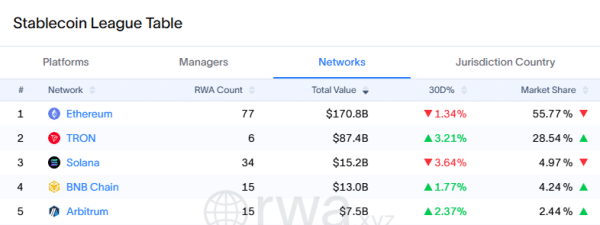
Institutional participation may also become increasingly important. Solana has already attracted interest from financial firms exploring tokenization, stablecoins, and blockchain settlement infrastructure. Currently, Solana’s stablecoin market has exceeded $15 billion, with $2.8 billion worth of real-world assets (RWAs) tokenized on the network.
solana price prediction table
If traditional finance expands deeper into crypto markets, Solana could benefit from higher usage across institutional applications.
At the same time, scalability improvements and network reliability will remain critical. Earlier outages damaged confidence in Solana during previous cycles. Although stability has improved significantly, investors still closely monitor whether the network can maintain strong uptime during periods of heavy activity.
Meanwhile, competition across the smart contract sector continues to intensify. Ethereum, Avalanche, Sui, Aptos, and several emerging blockchains are all competing for developers, liquidity, and market share.
Broader crypto conditions will also shape SOL’s future. Bitcoin liquidity cycles, interest rates, ETF inflows, and global macroeconomic conditions historically influence the entire digital asset sector, including Solana.
Solana Price Prediction 2026
By the end of 2026, Solana could continue benefiting from broader institutional adoption and ongoing blockchain integration across financial markets. If crypto market conditions improve and risk appetite returns, SOL may once again emerge as one of the strongest-performing large-cap assets.
Under a conservative scenario, SOL could reach $105 if adoption expands steadily, but broader market conditions remain mixed. On a base case, SOL could hit $250 before the end of 2026.
Meanwhile, a stronger bullish scenario could push SOL toward $350 if decentralized finance activity accelerates and institutional demand increases significantly.
Several analysts also believe Solana may continue to benefit from growing stablecoin activity, particularly as blockchain settlement infrastructure becomes increasingly important in digital finance.
However, volatility will likely remain elevated throughout this period, especially if macroeconomic uncertainty or regulatory pressures intensify globally.
Solana Price Prediction 2030
Looking further ahead, 2030 could represent a major turning point for Solana if blockchain adoption expands beyond speculative activity into mainstream financial infrastructure.
By then, tokenized assets, blockchain-based payments, gaming ecosystems, AI integrations, and decentralized financial systems may operate at a much larger scale than they do today. If Solana successfully positions itself as one of the leading settlement layers for these applications, SOL could experience significant long-term appreciation.
A moderate outlook places SOL at $450 by 2030 if ecosystem activity continues expanding steadily. A base case could see the coin trade near $750.
Meanwhile, stronger adoption across institutional finance and global blockchain infrastructure could potentially push SOL closer to the $2,500 region during peak market conditions.
Still, maintaining this type of valuation would likely require sustained developer activity, reliable network performance, and continued user growth over several market cycles.
Solana Price Prediction 2040
By 2040, Solana’s trajectory will largely depend on whether the network remains relevant within a rapidly evolving technological landscape.
If blockchain technology becomes deeply integrated into global finance, commerce, gaming, AI systems, and machine-to-machine transactions, networks like Solana could potentially handle enormous transaction volumes.
Under this scenario, SOL may evolve beyond a speculative crypto asset into a foundational component of digital infrastructure.
Long-term bullish projections place SOL around $10,000 by 2040, assuming global adoption expands, and blockchain technology becomes deeply embedded across multiple industries.
However, this outlook assumes Solana successfully navigates competition, regulation, and technological evolution over the next 15 years.
More conservative scenarios place SOL around $1,200 if adoption remains steady, but competitive pressures limit market dominance. In a realistic case, Solana could reach $4,000.
Expert Opinions on Solana
A recent Messari report suggests that Solana is transitioning from its reputation as a meme-driven network to one attracting Wall Street and prominent payment firms.
The firm noted that Solana continued to deepen its role in institutional finance during the first quarter of 2026, even as the broader crypto market faced weaker momentum. In Q1 2026, Solana’s real-world asset market expanded 43% quarter-over-quarter to $2.01 billion, driven largely by BlackRock’s tokenized money market fund BUIDL and rising payment integrations across the network.
At the same time, firms such as Ondo Finance, Franklin Templeton, Citigroup, and PwC have expanded tokenization initiatives tied to Solana. In addition, Visa, Stripe, PayPal, Worldpay, and Western Union either integrated Solana for stablecoin settlement or launched related payment infrastructure.
With institutional traction accelerating, it would not be long before Solana becomes a crypto powerhouse. These adoptions reduce fears over its long-term trajectory and reassure users of its scalability and real-world use case.
Ultimately, it creates demand for the SOL token and drives the ambitious price projections by several market analysts. Recall that Bitwise projects that SOL could hit $6,600 by 2030, while VanEck predicts $3,211.
Solana vs. Competitors
Compared to Ethereum, Solana offers significantly faster transaction speeds and lower fees. This has made it especially attractive for retail-focused applications, meme coin ecosystems, and high-frequency decentralized finance activity.
Avalanche and Aptos also compete within the same broader sector, focusing on scalability and application performance. However, Solana currently maintains stronger ecosystem activity and broader user participation than many newer competitors.
Nonetheless, Ethereum still dominates institutional adoption and overall decentralized finance liquidity. Nonetheless, Solana continues to narrow the gap in certain sectors, particularly in retail applications and consumer-focused blockchain products.
Can Solana Hit $1,000?
A move toward $1,000 remains possible over the long term, but reaching that level would require substantial ecosystem expansion and broader crypto market maturity.
At a $1,000 valuation, Solana’s market capitalization would reach around $578.2 billion, based on its current circulating supply of 578.27 million. Achieving this 1,076% growth from the current price would require massive institutional participation, global blockchain adoption, and continued network relevance across multiple industries.
While ambitious, several analysts view the target as possible, particularly if blockchain technology becomes integrated into mainstream financial systems over the next decade.
Still, such projections remain highly speculative and depend heavily on long-term market conditions.
Risks to Watch
Despite Solana’s strong ecosystem expansion, several risks remain important. Network outages remain a major concern because reliability is critical to institutional adoption.
Competition also remains intense. New blockchain ecosystems continue to emerge rapidly, and maintaining developer attention over the long term may become increasingly difficult.
Regulatory uncertainty presents another challenge. While progress has been made, governments worldwide are still developing crypto regulations, and future policies could affect blockchain use, stablecoins, and decentralized finance.
Finally, broader macroeconomic conditions will continue influencing crypto liquidity cycles. Rising interest rates, declining risk appetite, or financial instability could pressure digital assets for extended periods.
Is Solana a Good Long-Term Investment?
Solana remains one of the most established blockchain ecosystems in crypto today. Its combination of speed, low costs, active development, and strong community participation has helped it remain relevant despite multiple market cycles and setbacks.
If crypto adoption continues expanding globally, Solana could remain one of the major beneficiaries in the long run.
However, long-term success is far from guaranteed. Competition, regulation, and technological evolution will all shape the network’s future.
For now, Solana sits at the center of many long-term crypto discussions, especially as institutional investors look for blockchain ecosystems capable of supporting large-scale real-world applications in the years ahead.
For more on Solana (SOL) news today and the latest Solana price market updates, visit our dedicated coverage hub