Home Blog Page 1635

25 Billion XRP Transaction? Here Are Facts

0

Whale Alert recently spotlighted the movement of 25 billion XRP, nearly half of XRP’s circulating supply, to crypto exchange Bitfinex, in an attempt to exploit the exchange.

Touted as the most advanced on-chain whale tracking resource in the industry, Whale Alert might have unknowingly caused a stir in the XRP community with a recent erroneous disclosure.

25B XRP Reportedly Moves to Bitfinex

The whale tracking tool revealed in a post on X that an unidentified wallet had moved 25,601,477,777 (25.6 billion) XRP worth $14.85 billion to prominent cryptocurrency exchange Bitfinex. According to the disclosure, the transaction occurred yesterday 19:32 (UTC).

Whale Alert Disclosure

This alert caused a stir within the XRP community, as it represented the single largest XRP transaction of all time. In addition, the transaction involved nearly 50% of all the XRP tokens currently in circulation. Note that XRP has a circulating supply of 54.26 billion tokens.

A transaction of this magnitude would without doubt cause a massive impact on the price of XRP. The fact that it purportedly involved an inflow to an exchange compounded investor angst, as market participants typically send assets to exchanges for selloffs.

However, shortly after the disclosure, the Whale Alert X account deleted its post on the movement. The team then sent out a statement an hour after the reported transaction occurred, confirming that it encountered an issue while attempting to read the XRP Ledger node response.

They noted that, as a result of this issue, the Whale Alert bot sent out some wrong posts regarding XRP movements. The reported 25.6 billion XRP transaction was one of these erroneous posts.

Here are the Facts

Interestingly, an investigation carried out by The Crypto Basic confirms that a market participant did initiate the 25.6 billion XRP transaction last night. Data from XRPL explorer Bithomp suggests that the address in question was activated by ChangeNOW yesterday.

The address initiated a 25.6 billion XRP transaction shortly after creating a trust line of $1 billion. However, the transaction failed, as its balance was not up to the specified amount. 

25 Billion XRP Transaction

Nonetheless, due to the technical issues with reading the XRPL node response, the Whale Alert bot flagged the transaction as successful, and erroneously made a disclosure on it. As of press time, the address is currently inactive, having been deleted today at 04:27 (UTC).

Attempted Hack

Paolo Ardoino, the CTO of Bitfinex, shed light on the purpose of the transactions in a recent post on X. According to Ardoino, an attacker attempted to hack Bitfinex with a partial payments exploit.

Notably, on the XRP Ledger, when a network participant is making a payment, there is an option called “Partial Payment” that allows the sender to send less money than what is stated in the “Amount” field. 

A partial payments exploit seeks to take advantage of this XRPL flag by inputting a large amount in the “Amount” field, but instead sending a much smaller amount. The exploiter then hopes that the recipient’s system is programmed to primarily focus on the “Amount” field instead of the “Delivered Amount” field.

However, Ardoino confirmed that the attempted attack failed because the Bitfinex system focuses on the “Delivered Amount” field. As a result, the transaction was rejected.

XRP Hack Attempts on Bitfinex and Binance

Interestingly, The Crypto Basic discovered that another address attempted a similar exploit on Bitfinex, involving multiple 50 billion XRP and 14 billion XRP transactions yesterday. They also attempted to exploit Binance with a similar hack involving 50 billion XRP transactions.
Ethereum And The Smart Contract Revolution Explained

0

Staying informed and educated about the latest developments in blockchain technology has become more important than ever, and that is precisely where The Crypto Basic plays a crucial role.

Dedicated to providing insightful and up-to-date information on all things crypto, we stand as a beacon for both novices and experts navigating the multifaceted panorama of cryptocurrencies.

In this comprehensive article, we delve deep into one of the most groundbreaking aspects of blockchain technology: Ethereum’s smart contract revolution; our aim is to demystify the concept of smart contracts, explain their significance in the Ethereum ecosystem, and explore how they are reshaping the world of digital transactions and contracts.

Join us on this informative journey with The Crypto Basic, your trusted source for crypto news, as we unravel the intricacies of Ethereum and its pioneering smart contract technology.

What is a Smart Contract?

A smart contract is a revolutionary concept in the blockchain and cryptocurrency world; it is essentially a computer program stored on a blockchain that automatically executes, controls, or documents legally relevant events and actions according to the terms of a contract or an agreement.

The concept of smart contracts was proposed by Nick Szabo in 1994, long before Bitcoin was created; his idea was to use a decentralized ledger to store contracts, which would then self-execute and self-maintain, ensuring that all parties involved adhere to the contract terms.

How is Ethereum Related to Smart Contracts?

Ethereum, launched in 2015 by Vitalik Buterin and his team, was the first blockchain platform designed specifically for creating and executing smart contracts.

It’s not just a cryptocurrency like Bitcoin – Ethereum is a platform for decentralized applications (dApps) where smart contracts are used as the building blocks; these contracts are written in Ethereum’s native programming language, Solidity, and are compiled into bytecode, which the Ethereum Virtual Machine (EVM) can read and execute.

This technology has enabled Ethereum to become a leader in decentralized finance (DeFi) and other blockchain-based applications.

Benefits of Ethereum Smart Contracts

Ethereum smart contracts offer several key benefits:

1.      Automated Enforcement

They automatically execute the terms of the contract when predefined conditions are met.

2.      Increased Security

Ethereum smart contracts are secure and immutable, reducing the risk of fraud and tampering.

3.      Cost-Efficient

By eliminating intermediaries, these contracts reduce transaction costs.

4.      Transparency

All transactions are visible on the blockchain, ensuring transparency and trust among parties.

5.      Speed

Smart contracts automate processes and significantly reduce transaction times.

How Ethereum Works and Its Security Features

The core of Ethereum’s functionality lies in its ability to execute smart contracts securely – this is achieved through the EVM, which serves as the runtime environment for smart contracts in Ethereum.

The EVM is isolated from the main network, providing a sandboxed environment where smart contracts can run without affecting other operations on the blockchain.

Security is a paramount concern in Ethereum’s design: the decentralized nature of the blockchain ensures that the contracts are resistant to hacking, and the use of cryptographic techniques provides additional layers of security; however, it’s crucial to note that the code quality of a smart contract determines its security, making thorough testing and auditing essential.

What are the Advantages of Using Ethereum over Normal Contracts?

Ethereum smart contracts offer several advantages over traditional contracts:

1.      Trustless Environment

They operate in a trustless environment, meaning parties do not need to trust each other for the contract to be executed.

2.      Global Accessibility

Ethereum’s decentralized nature allows smart contracts to be accessed and executed from anywhere in the world.

3.      Reduced Fraud Risk

The immutability of smart contracts minimizes the risk of fraud and manipulation.

4.      Streamlined Processes

They streamline business processes by automating tasks that are traditionally done manually.

Ethereum Price and Market Trends

The Ethereum price and its prediction are crucial for investors and users alike: as Ethereum continues to develop, especially with the upcoming transition to Ethereum 2.0, its value is expected to reflect the growing utility of its network.

The platform’s ability to support a wide range of applications, including DeFi, Non-Fungible Tokens (NFTs), and various dApps, contributes to its standing in the crypto market; however, like all cryptocurrencies, Ethereum’s price is subject to market dynamics and can be volatile.

Future of Ethereum and Smart Contracts

The future of Ethereum and its smart contracts looks promising – with advancements like Ethereum 2.0, which aims to increase scalability, security, and sustainability, the platform is poised for further growth.

The ongoing development in areas such as DeFi and NFTs will likely continue to drive innovation and adoption of Ethereum smart contracts.

Additionally, the increasing interest from enterprises in blockchain technology suggests a bright future for Ethereum in various sectors beyond finance.

In Conclusion

Ethereum’s contribution to the blockchain space, particularly through its smart contract technology, is undeniably transformative.

As a pioneer and leader in this field, Ethereum has set the standard for decentralized applications and has opened the door to a range of possibilities across various sectors – from creating new financial instruments in DeFi to facilitating unique digital ownership through NFTs, Ethereum’s impact is widespread.

As the platform continues to develop, particularly with the anticipated Ethereum 2.0 upgrade, its role in shaping the future of blockchain technology and digital transactions is expected to grow even more significant.

For anyone interested in crypto news concerning the intersection of technology, finance, and innovation, Ethereum’s journey is one to watch closely, as always, via The Crypto Basic.

Bitcoin Price Fluctuations And The Factors That Influence Them

0

When it comes to discussing the status of the cryptocurrency world, Bitcoin inevitably stands as a towering figure, capturing the imagination of investors and enthusiasts alike; however, its journey is marked by dramatic price fluctuations, making it a subject of intense scrutiny and speculation.

Throughout this article, by The Crypto Basic, your top-tier source of crypto news, we delve into the vibrant domain of Bitcoin’s price movements, unraveling the complex array of factors that drive its value: from market dynamics to global economic trends, regulatory landscapes to technological advancements, we explore the multifaceted influences that make Bitcoin a unique yet challenging asset to understand and invest in.

Whether you’re a seasoned trader or a curious observer, this exploration offers insights into the simultaneously volatile and fascinating world of Bitcoin.

Why is Bitcoin’s Price Always Changing?

1.      Supply and Demand Dynamics

The price of Bitcoin, like any other traded asset, is significantly influenced by supply and demand dynamics: the limited availability of Bitcoin (with a cap of only 21 million coins) heavily impacts its perceived value.

Notably, “halving” events, occurring approximately every four years, reduce the rate of new Bitcoin creation, often leading to price surges due to increased scarcity and heightened investor interest.

2.      Economic and Global Events

Economic conditions play a pivotal role in influencing Bitcoin’s valuation – fluctuations in the global economy, including inflation rates, recessions, and stock market shifts, often correlate with changes in Bitcoin’s price.

In times of economic instability, Bitcoin may be viewed as a safe-haven asset, leading to increased demand and higher prices.

3.      Regulatory Environment

The regulatory situation surrounding cryptocurrencies greatly affects their market value – governmental policies, both supportive and restrictive, can have a substantial impact on Bitcoin’s price volatility.

Positive regulatory frameworks can enhance investor confidence and stimulate market growth, while harsh regulations or bans can lead to increased uncertainty and price fluctuations.

4.      Technological Advancements

Developments in blockchain technology and improvements to the Bitcoin network can significantly influence its market value.

Innovations that enhance the efficiency, scalability, and security of Bitcoin tend to impact investor sentiment positively, leading to potential price increases.

Conversely, technological setbacks can result in diminished confidence and price declines.

Is Bitcoin Safe to Buy?

Investing in Bitcoin entails a balance of risk and reward – the cryptocurrency’s inherent volatility provides opportunities for gains, especially for those adept at navigating the market’s highs and lows.

For long-term investors, understanding and mitigating the risks associated with Bitcoin’s price swings is crucial; the decision to invest in Bitcoin should be based on individual risk tolerance, market knowledge, and a thorough understanding of the cryptocurrency paradigm.

How High (and Low) Can Bitcoin Go?

Predicting Bitcoin’s future price is a complex task, given its volatile nature – various experts have made projections, ranging from conservative to highly optimistic:

  • Cathie Wood (CEO of Ark Invest) predicts a potential rise to $650,000 by 2024;
  • Mike Novogratz (CEO of Galaxy Digital) maintains a long-term bullish view, though he does not expect Bitcoin to reach $500,000 within the next five years;
  • Tim Draper (Billionaire Investor) believes Bitcoin could hit $250,000, albeit possibly delayed until 2025;
  • Projections by other experts, like Max Keiser and Fundstrat, suggest possible highs of $220,000 and $180,000, respectively.

Additional Considerations

●       Investor Sentiment and Market Manipulation

Investor sentiment and actions, including market manipulation, can cause significant price fluctuations.

Large-scale buying or selling by ‘whales’ or institutional investors can create ripple effects across the market; speculative trading also plays a role in driving Bitcoin’s price volatility.

●       Media Influence

Media coverage significantly impacts Bitcoin’s price: positive news can drive up demand, while negative reports or fear, uncertainty, and doubt (FUD) can lead to sharp price drops.

The influence of media on public perception and investor behavior cannot be understated in the context of Bitcoin’s price movements.

●       Energy Consumption and Security Concerns

The energy requirements for Bitcoin mining and concerns over network security are factors that investors consider; increased regulatory scrutiny on Bitcoin’s environmental impact or news of security breaches can negatively affect its value.

Sustainable mining practices and robust security measures are essential for maintaining confidence in Bitcoin’s ecosystem.

●       Competition from Other Cryptocurrencies

The rise of alternative cryptocurrencies can also impact Bitcoin’s market dominance – newer, potentially more technologically advanced or niche-focused cryptocurrencies can divert investor attention and funds from Bitcoin, influencing its market value.

In Conclusion

Bitcoin’s price is shaped by a complex interplay of factors, including market demand and supply, economic conditions, regulatory environment, technological advancements, investor sentiment, media coverage, and competition from other cryptocurrencies; understanding these factors is vital for anyone engaged in the Bitcoin market, whether as a trader, investor, or enthusiast.

Navigating this volatile setting requires a blend of informed decision-making, risk management, and staying up to date with current market news and technological developments; the volatile nature of Bitcoin makes it both a potentially lucrative investment and a risky one.

Therefore, staying informed (especially while relying on sources specialized in crypto (such as The Crypto Basic), conducting thorough research, and approaching the market with caution are key strategies for anyone involved in the Bitcoin space.

Simply remember that, while the potential for high returns exists, so does the risk of significant losses, which is why, as with any investment, a balanced and well-researched approach is essential for success in the volatile domain of Bitcoin and cryptocurrencies.

5 New Technological Innovations In The Cardano Blockchain

0

In the cryptocurrency world, the Cardano blockchain has always been a beacon of innovation. Cardano distinguishes out among crypto platforms due to its rigorous academic approach and emphasis on sustainability, security, and scalability. In this piece, we’ll look at 5 of its most recent technological advances, which are laying the groundwork for Cardano’s future. These advancements are not only critical for Cardano, but they also provide insight into where the world of cryptocurrencies may be heading.

Alonzo Hard Fork

The Alonzo Hard Fork is an important step forward in the Cardano plan. The Cardano blockchain now supports smart contracts, allowing it to host a diverse set of decentralized applications (DApps) and services. What distinguishes Alonzo is its incorporation of Plutus, a smart contract development language that enables more powerful and secure applications. This development provides new opportunities for developers and may result in an infusion of new initiatives and investments into the Cardano ecosystem. The Alonzo Hard Fork is a step toward making Cardano a more adaptable and competitive player in the cryptocurrency market.

Ouroboros Praos

Cardano’s Ouroboros Praos protocol addresses security and scalability challenges, which are at the forefront of blockchain concerns. This breakthrough is a proof-of-stake (PoS) algorithm that is one of the most environmentally friendly and energy-efficient consensus processes in the cryptocurrency market. Unlike many cryptocurrencies’ energy-intensive proof-of-work (PoW) methods, Ouroboros Praos drastically minimizes energy consumption. Furthermore, it improves security and decentralization by adopting a novel way of picking block validators, ensuring that the network is safe from assaults and manipulations.

Shelley Upgrade

Cardano’s Shelley upgrade takes a significant step toward more decentralization. This stage of Cardano’s development roadmap sees the network migrate from a federated to a fully decentralized form. The number of stake pools has grown with Shelley, allowing more users to participate in the network’s consensus process and gain rewards. This decentralization of network control not only makes Cardano more secure and resilient, but it also encourages greater community participation. The Shelley upgrade demonstrates Cardano’s commitment to a decentralized future in which the community is vital to network governance and operation.

Voltaire’s System of Governance

Governance is crucial in blockchain, and Cardano’s solution via Voltaire’s method is novel. This system implements a self-sustaining approach in which network members can propose, fund, and vote on projects and changes. This democratic governance strategy empowers the community, ensuring that Cardano’s development matches with its users’ interests and requirements. The implementation of a treasury system, funded by transaction fees and other ways, guarantees that resources are available for the network’s ongoing development. Voltaire sees Cardano as a forward-thinking, community-driven blockchain that is ready to adapt and evolve with its users.

Basho Upgrade

The Basho upgrade is all about improving the scalability and interoperability of the Cardano blockchain. This phase focuses on optimizing the network’s infrastructure to handle a higher volume of transactions without compromising on speed or security. One of the key components of Basho is the introduction of side chains, which are parallel blockchains that can interact with the main Cardano chain. This allows for efficient handling of specific tasks and applications, reducing the load on the main chain and improving overall performance. The Basho upgrade is crucial in preparing Cardano for a future where it can seamlessly interact with other blockchains and support a wide range of applications and services.

Key Takeaways

These 5 technological developments — the Alonzo hard fork, the Praos Ouroboros, the Shelley upgrade, the Voltaire governance structure and the Basho upgrade — are paving the way for Cardano’s future. They are representative of a blockchain that is not only technologically advanced, but also committed to sustainability, security and community-driven development. Cardano is positioned as a world-class blockchain platform capable of adapting and creating the future of cryptocurrencies. Keeping an eye on Cardano news and developments is critical for investors, developers and enthusiasts as blockchain continues to break new ground, so, to stay up to date with your crypto news, don’t forget to check out The Crypto Basic.

XRP to $5: Here is a Projected Timeline from Analysts, Google Bard and ChatGPT

0

XRP has faced significant hurdles on the journey to $5, with analysts and AI chatbots such as Google Bard and ChatGPT predicting a potential timeline for the token to reach the price point.

Notably, XRP currently trades for $0.5763, up 1.18% over the past 24 hours, as the broader market looks to recover. Nonetheless, the token is still down 6.43% this month. At this price, clinching $5 would require a 767% surge in XRP’s value.

Many proponents continue to wonder when XRP will reach the elusive $5 mark. To answer this question, we gathered the opinions of four entities: ChatGPT, the prominent AI chatbot from Open AI; Google Bard, Google’s AI chatbot; EGRAG, a notable crypto market analyst; and Mr. Huber, an on-chain sleuth. 

XRP Could Hit $5 from 2024 to 2030

They all offer different perspectives and timelines for XRP’s potential growth, based on various factors and assumptions.

ChatGPT predicts that XRP will hit $5 by the end of 2024. The chatbot cites a revolutionary upgrade and widespread adoption in major financial institutions as the main drivers of this surge.

ChatGPT Predicts Timeline for XRP to $5

It expects the market to react positively to these transformative developments and push the price up rapidly.

Mr. Huber’s response, also from a ChatGPT reply, was the most bearish of the four, projecting that XRP will reach $5.17 in 2030.

Data from an accompanying image shows that the chatbot bases this estimate on the historical trend from 2013 to 2024, where the price of the coin increased from $0.01 to $0.57. 

XRP Could Hit $5 in 90 Days to 3 Years

EGRAG is the most bullish, forecasting that XRP will reach $5 in 90 days. He believes that XRP is in the initial wave 1 of a prolonged bull market, which will last for several months. 

The prominent analyst attributes this prediction to a bear market bounce versus a bull market bounce, implying that XRP has bottomed out and is ready to soar.

Google Bard was rather cautious, stating that predicting the future price of any cryptocurrency is notoriously difficult, and XRP is no exception. The AI chatbot acknowledges that several factors can influence its price, making any specific timeline for reaching $5 highly speculative. 

It identifies three positive factors that could boost XRP’s price: the resolution of the SEC lawsuit; increased adoption, which could increase the demand and utility of XRP; and the general market sentiment, a factor that could lift the entire crypto market.

Bard also identifies three negative factors that could hinder XRP’s growth. These negative factors include competition from other assets like Stellar (XLM), regulatory pressure, and unforeseen events.

Google Bard Predicts Timeline for XRP to $5
Google Bard Predicts Timeline for XRP to Hit $5

Based on these factors, Bard proposes three possible timelines for XRP reaching $5: short term (within 1 year), mid-term (1-3 years), and long term (3+ years). It emphasizes that these are only scenarios, not predictions, and that they depend on various factors aligning perfectly.

Five Memecoins Under $0.00001 to Watch Out For

0

The memecoin market is fast attaining maturation and here are 5 tokens in this asset class to watch out for.

Since the success of Shiba Inu (SHIB) became visible, many crypto innovators believe they can follow the same template for growth to create new projects with community backing. This underlying motivation to make a difference has led to the launch of numerous memecoin on different blockchain networks today.

To help potential investors get started with exploring the memecoin world, here is an overview of 5 of these tokens with prices under $0.00001 to watch out for.

PAWSWAP (PAW)

PAWSWAP is a memecoin built on the Ethereum network using the ERC-20 token standard. The token powers the PawChain ecosystem, aiding transactions and serving as a governance token for its ecosystem.

PAW is one of the memecoins that boasts of relatable utility, making it a viable asset to watch in the long term. At the time of writing, PAW is priced at $0.00000002386 with a market capitalization of $10,238,185.

Kin (KIN)

Kin made its emergence in the crypto ecosystem as a token that can integrate easily across mobile and web applications. Kin’s core ideology centers on shared economic benefits and in its evolutionary drive, it has moved from the Ethereum blockchain to Solana to enable swifter and cheaper transactions.

Trading for $0.00001523, Kin has seen its market cap jump to $44,698,641. The token’s prospects place it on the top of memecoins to watch out for in the long term.

Bad Idea AI (BAD)

Bad Idea AI is closely associated with the Shiba Inu ecosystem. Despite being an independent project with a dedicated team, many believe its potential growth outlook is tied to that of SHIB. Bad Idea AI’s value proposition hinges on merging the values of blockchain, AI, and decentralized governance to bring a new highlight to the user experience.

BAD’s price comes in at $0.00000002959 with market capitalization pegged at $15,695,489.

Volt Inu (VOLT)

Volt Inu is a memecoin with a very low price pegged at $0.0000003778 but with a dedicated community. With a total supply of 69,000,000,000,000 VOLT, Volt Inu is hyper-deflationary with a defined revenue generation model to chart a unique growth course.

Among the offerings Volt Inu offers its community include stablecoin staking, blue-chip NFTs and yield farms amongst others. 

Hosky Token (HOSKY)

Hosky Token is a Cardano-based memecoin built as a doggo-themed asset. It has a total supply of 1,000,000,000,000,000 HOSKY and a price of $0.00000002961. With a market capitalization of $6,751,573, HOSKY ranks as one of the cheapest on this list.

Memecoins have a high volatility and investment in them might lead to loss of funds. While these listed alternatives have good fundamentals and community, personal research is advocated before any decision to invest in these assets is made.

Here Are Factors That Can Help XRP Breach $0.6 Resistance Mark

0

XRP’s long-awaited move beyond the $0.6 resistance level could be on the horizon. 

Several XRP community members are frustrated with the coin’s inability to break the $0.6 resistance level. Despite receiving legal clarity in the SEC v. Ripple lawsuit, XRP has traded around the $0.6 mark since November.  

Enthusiasts Blame Ripple For XRP Low Performance

Notably, some enthusiasts have attributed XRP’s low performance to Ripple’s monthly sales of XRP, where hundreds of millions of XRP are sold on secondary markets. 

It is no longer news that Ripple releases 1B XRP coins on the first day of every month. While 80% (800 million) of the tokens are locked back in escrow, Ripple dumps the remaining 20% (200 million) XRP in the market. 

Many enthusiasts believe Ripple’s monthly XRP sales have hindered the coin from breaking the $0.6 resistance level. On the contrary, several analysts have dismissed this speculation, emphasizing that the forces of demand and supply determine XRP price movement. 

3 Reasons How XRP Can Break the $0.6 Resistance Level  

That said, we’ve highlighted three data-driven reasons showing how XRP can potentially break the $0.6 resistance level, irrespective of whether Ripple halts its monthly sales. 

XRP Consistency Above EMAs 

The XRP/USDT charts show that the coin is currently squeezed between the 50-day and 100-day Exponential Moving Averages (EMA). Historically, these EMAs serve as a bullish indicator of underlying strength. 

Specifically, the 50-day EMA has consistently offered vital support, with the price of XRP bouncing off this line several times. The consistency indicates that there is strong buyers’ interest in XRP. This interest could help XRP break through the $0.6 resistance level if each rebound weakens the resistance overhead. 

Appearance of Descending and Symmetrical Triangle on XRP Charts

The XRP chart shows a descending triangle as well as the formation of a symmetrical triangle. These two trends suggest that XRP could be preparing for a decisive move. Here, the crucial point to look out for is where the converging lines meet. 

The combination of a surge in volume and a major breakout could take XRP beyond the $0.6 resistance level. Interestingly, as the sixth-largest cryptocurrency by market cap approaches the symmetrical triangle, the likelihood of a breakout increases significantly. 

Historical Recovery and Resilience 

XRP has a track record of overcoming significant resistance levels during recovery. The cryptocurrency can replicate the same pattern in the current market dynamics. 

This important feat offers psychological benefits for XRP, which can help the coin to break through the $0.6 resistance level. In the meantime, XRP was changing hands at $0.574, down 4% over the past 24 hours. 

Google Bard and ChatGPT Predict Shiba Inu Price After Bitcoin ETF Approval

0

Shiba Inu could see its price soar or sink depending on the market impact of the recent Bitcoin ETF approval, according to AI chatbots Google Bard and ChatGPT.

The crypto community is buzzing with excitement following the approval of all 11 spot BTC ETFs by the US Securities and Exchange Commission (SEC). The historic decision is expected to have a significant impact on the price of Bitcoin and other cryptocurrencies, including SHIB.

However, the extent and direction of this impact remains to be seen. We asked AI chatbots Google Bard and ChatGPT for their opinions on this. In response, they shared their predictions and analysis on the possible scenarios for Shiba Inu.

Google Bard Predicts Shiba Inu Price Post BTC ETF Approval

Google Bard offered a range of price targets for Shiba Inu and the factors that could influence them. According to the chatbot, Shiba Inu could surge to $0.000015 – $0.000020 if the Bitcoin ETF approval sparks a strong rally and optimism across the crypto market. 

This scenario would be driven by increased Bitcoin prices, increased demand for Shiba Inu, and positive sentiment among investors.

Alternatively, Shiba Inu could remain stable around $0.000010 – $0.000012 if the Bitcoin ETF approval has a moderate impact on the market. The possible trigger for this outcome would be influenced by profit-taking, uncertainty, and limited utility of Shiba Inu. 

However, Google Bard also warned of a bearish scenario, where Shiba Inu could dip to $0.000008 – $0.000009 if the Bitcoin ETF approval fails to boost the market or triggers a correction. Notably, the market recently slumped after an upsurge, with SHIB down 3% over the past 24 hours.

Google Bard emphasized that these are only possible scenarios, and the actual price of Shiba Inu will depend on many factors beyond the Bitcoin ETF approval. Google Bard advised investors to do their own research and seek professional financial advice before making any investment decisions.

ChatGPT Predicts Shiba Inu Price Post BTC ETF Approval

ChatGPT had a more optimistic outlook for Shiba Inu. The chatbot predicted that Shiba Inu could reach an astonishing $0.001 price by the end of the year, thanks to advancements in blockchain technology and increasing mainstream acceptance. 

ChatGPT cited the growing adoption of decentralized finance (DeFi) and the coin’s strong community support as key drivers behind this forecast. The AI chatbot acknowledged that the crypto market is highly dynamic, and unforeseen events could influence Shiba Inu’s journey. 

Ripple CTO Cites “Lack of Liquidity” as Reason for Ripple Massive Buyback

0

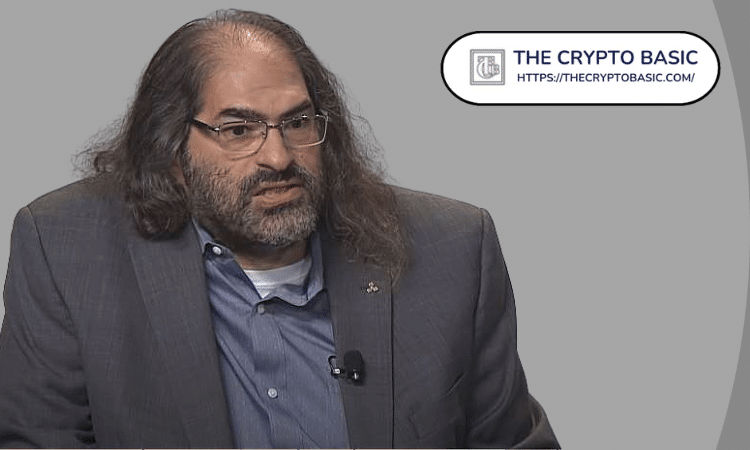
Ripple’s Chief Technology Officer, David Schwartz, has shared his perspective on the ongoing discussion regarding Ripple’s proposed buyback. 

For context, The Crypto Basic has uncovered that Ripple plans to repurchase company shares from initial investors and employees. The total figure is estimated at $285 million.

Expectedly, the development has sparked diverse reactions within the XRP community. The concern was especially considering that the buyback decision arose from Ripple’s decision to step back from its initial public offering (IPO) plans in the United States.

Ripple Needs No IPO?

Crypto vlogger “Jungle Inc” contended that Ripple’s actions appear to carry a negative tone. This prompted Matt Hamilton, Ripple’s former director, to inquire about the usefulness of an IPO for Ripple.

Jungle Inc stated an IPO would demonstrate Ripple’s robust and expanding business performance. This perspective relies on the fact that a significant portion of Ripple’s business revolves around cross-border services, where the utility of XRP plays a crucial role.

Meanwhile, Hamilton argued that an initial public offering would make no functional difference for Ripple. He pointed out that, typically, companies pursue IPOs to raise additional funding. In contrast, given its buoyancy, Ripple has no pressing need for such financial infusion.

The Crypto Basic has recently disclosed that Ripple’s valuation has crossed $11 billion. Also, the firm holds over $25 billion worth of crypto.

Meanwhile, the crypto vlogger countered by suggesting that, even if not for capital, opting for an IPO could still be beneficial in attracting skilled developers and retaining key employees. 

Ripple CTO Reacts

In response, Ripple CTO David Schwartz stated that employees are concerned about having a pathway to liquidity for their stock options. He emphasized that they do not necessarily have to be publicly traded shares. 

Furthermore, Jungle Inc asked Schwartz the rationale behind Ripple’s share buyback if a liquid market exists. Ripple CTO clarified that there is no liquid market, highlighting that the market for equity in privately held companies is predominantly illiquid. 

Ultimately, this explanation sheds light on the motivation behind Ripple’s decision to repurchase shares.

XRP Fair Value Ranges from $9.81 to $513,000, Research Finds

0

A research paper from Valhill Capital contends that the XRP fair value is much higher than its current market price, ranging from $9.81 to $513,000 based on six valuation models.

Currently trading for $0.5759, XRP is 82% down from its all-time high price of $3.31 in January 2018.

Despite its role in cross-border settlements and a potential to disrupt TradFi domination of the industry, XRP has continued to trade at low prices while other crypto assets record massive surges.

XRP Price Under Suppression?

For instance, amid the ongoing pre-bull market phase, assets such as Bitcoin (BTC), Ethereum (ETH) and Solana (SOL) have largely outperformed XRP. Most market watchers argue that XRP’s unimpressive performance is due to age-long price suppression.

Before now, some pundits contended that the legal battle between Ripple and the SEC contributed to this price suppression. Now, with XRP having attained legal clarity in July 2023, others have pointed to Ripple’s consistent XRP escrow releases and sales. 

Regardless of the reason behind it, the general consensus is that XRP is a victim of price suppression, resulting in the asset trading below its fair market value. As a result, to ascertain this fair market value, several models have sprung up. 

A Quest to Determine XRP Fair Market Value

Valhill Capital, a private equity investment firm, published a research paper that consolidates six of these valuation models. The paper aimed to provide insights into differing opinions on the fair market value of XRP. 

These valuations put XRP fair market value at a minimum of $9.81 and a maximum of $513,000. However, should the two outliers at $9.81 and $513,000 are removed, the fair market value of XRP ranges from $3,500 to $22,000. The models also had their drawbacks.

Each model employed a different basis for calculating XRP’s fair market value. The models include the Pipeline Flow, the Athey & Mitchnick Model, the 99-Year Golden Eagle Model, the Discounted Cash Flow, the Collateralization Model and the Quantum Liquidity Model.

XRP to $3,541: The Pipeline Model

The Pipeline Flow model envisions a scenario where a large portion of the global foreign exchange volume shifts to the XRP Ledger, due to its superior features and benefits. The model calculates that XRP’s price would be $3,541 in this case.

XRP Fair Market Valuation Pipeline Model

XRP to $4,813: Athey & Mitchnick Model

This model projects that XRP will capture 10% of the global market for cross-border payments and foreign exchange transactions by 2030. 

The model also assumes that XRP will become a preferred store of value, with its demand hitting $530 trillion by 2030. This model predicts that XRP’s price would be $4,813 by then.

XRP Fair Market Valuation Athney and Mitchnick
XRP Fair Market Valuation Athey and Mitchnick

XRP to $13,386: 99-Year Golden Eagle Model

The 99-Year Golden Eagle model focuses on XRP’s role as a medium of exchange, rather than a store of value or a speculative asset. Notably, it assumes that XRP will be used mainly for transactions, with no holding or hoarding behavior. 

The model estimates that XRP’s price would increase to $13,386 in 99 years, based on the expected growth of the XRPL network and the global economy.

XRP Fair Market Valuation 99 Year Golden Eagle Model
XRP Fair Market Valuation 99 Year Golden Eagle

XRP to $18,036: Discounted Cash Flow

This model values XRP as a cash-generating asset, based on the expected future cash flows from its use cases and applications. It also assumes XRP’s utility as a means of transaction, and not its store of value.

The model discounts the future cash flows to their present value, using an appropriate discount rate. It determines that XRP’s price would be $18,036, based on the current and projected cash flows from XRP.

XRP Fair Market Valuation Discounted Cash Flow

XRP to $122,580: Collateralization Model

The Collateralization model assumes the tokenization of global money, with the resulting tokens finding their way to the XRP Ledger. 

This model, considered an extreme approach, talks about all the money in the world denominated in tokens on the XRPL. Based on this assumption, it puts XRP’s fair market value at $122,580.

XRP Fair Market Valuation Collateralization

XRP to $513,158: The Quantum Liquidity Model

This model values XRP as a liquidity asset boasting a high enough value to uphold financial stability for an extended period of time.

It considers XRP as a store of value rather than a means for transactions. The model evaluates that XRP’s price would be $513,158 at the satisfaction of these conditions.

XRP Fair Market Valuation Quantum Liquidity