Home Blog Page 1794

Top Researcher Highlights Major Reason the SEC Targeted XRP

0

Prominent digital asset researcher Anders highlights the major reason why the Securities and Exchange Commission (SEC) chose to go after XRP.

In a startling development, a prominent digital asset researcher, Anders, has taken to X (formerly Twitter) to highlight why the SEC chose to go after XRP.

For context, the SEC, in December 2020, charged Ripple with violating federal laws by selling XRP as an unregistered securities offering.

Following the lawsuit, the crypto community, especially XRP enthusiasts, has been speculating on the primary intent behind the case. The matter recently stirred reactions from XRP supporters after an old X thread from Crypto-Law founder Attorney John Deaton resurfaced.

Deaton Questions Why SEC Chose XRP

In the thread, Deaton raised a series of questions regarding why the SEC chose to go after XRP.

“If the SEC wanted to pick a top 10 Token to go after, why would it choose the much more difficult case?” said Deaton.

He compared ETH and XRP early sales, emphasizing that the Ethereum team conducted a “pure ICO” for ETH while Ripple sold XRP without going through the ICO route.

Furthermore, Attorney Deaton highlighted some possible conflicts at the SEC under the administration of former chairman Jay Clayton. One of these conflicts includes the controversies surrounding William Hinman’s 2018 speech, where the former SEC exec declared BTC and ETH as non-securities.

Deaton also mentioned how top officials left the SEC immediately after the Ripple case was filed, raising further questions about the intent.

Ripple’s Use of XRP Attracted SEC

Interestingly, Anders noted that the SEC chose XRP because of how Ripple used XRP in cross-border settlements.

According to Anders, Ripple’s use of XRP destroys “nostro/vostro accounts” and the corresponding banking model. The researcher noted that these banking models have been a huge cash flow for several mega banks.

Notably, Anders attached a screenshot to the tweet, highlighting why traditional financial institutions have kept innovation at a minimum.

The screenshot indicates that cross-border payments are lucrative, with Business-to-Business (B2B) settlements alone raking in over $240 billion in revenue from payments worth $135 trillion.

Ripple’s Cross-border Payments Prowess

It is worth noting that Ripple Labs focuses on blockchain payments, with XRP being at the center. Ripple’s use of XRP in cross-border settlement helps eliminate intermediaries, thus reducing delay and lowering transaction costs.

Several businesses and financial institutions have leveraged Ripple’s solutions for payments, including On-Demand Liquidity (ODL), due to the unlimited advantages associated with XRP.

As reported earlier, Tranglo, a Malaysian-based payments company, enabled businesses to process nearly $1B using ODL. The company noted that the value of its ODL-related transactions surged 1,729% from a mere $52 million to a whopping $970 million.

Notably, ODL leverages XRP as a bridge currency to fiats. The leading blockchain company reiterated XRP use in ODL after a federal court declared the coin as non-security.
Ripple CTO Shares Details of 1 Million XRP Buy At $0.005

0

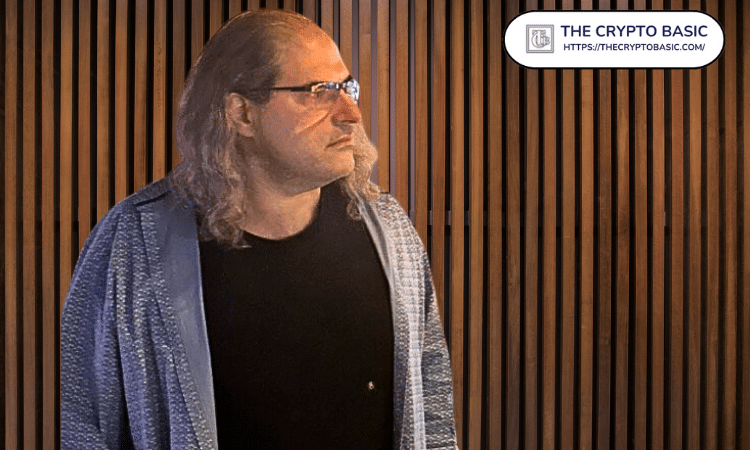
The Ripple CTO David Schwartz recently revealed that his father bought over 1 million XRP in 2014 when the asset was trading for $0.005.

The disclosure came as a response to a question posed by Alex Cobb, a notable XRP community figure and trader. Cobb had taken to X to ask members of the XRP community the lowest prices at which they purchased the asset.

While some community members mentioned $0.11, $0.13, and $0.17, David Schwartz engaged the post to make the mind-blowing disclosure. He said his father procured over 1 million XRP tokens in April 2014 for $0.005 per XRP.

The revelation triggered a wave of reactions from the XRP community due to the massive returns the investment would bring if bought and held over the years. Notably, this price represents one of XRP’s lowest prices, and historical data confirms the asset did trade at this level in April 2014.

Notably, XRP surged to a high of $0.0614 on Dec. 5, 2013 shortly after it started trading in the market. However, the asset corrected this rally over the following months, retracing to a low of $0.00538 in the last week of April 2014. Schwartz’s father must have purchased the tokens at this time.

An Impressive 10,048% ROI

For context, supposing he bought 1 million XRP, the tokens at the time would be worth $5,000 at $0.005 per XRP. If these tokens were held through to XRP’s ATH of $3.3 in January 2018, they would have been valued at a whopping $3.3 million, representing a profit of over $3.2 million.

Regardless, if he continued to hold onto these assets until now, they would be worth $507K at XRP’s current price of $0.5074. While the tokens’ worth might have dropped from January 2018 until now, the investment would still see a massive 10,048% increase if held.

This disclosure from Schwartz serves as a reminder of the allure of getting into a market early. Like most cryptocurrencies, XRP has stood the test of time, delivering massive returns to early adopters. The asset is currently 18,126% up from its all-time low despite the latest market turmoil.

The burning question on most investors’ minds now is whether the asset still has another massive upswing. Several analysts have projected astronomical rallies to prices such as $39, $90, and even $249. 

Bitcoin Shorts Take Beating as Price Breaks Past $28k, with 29,282 Traders Liquidating

0

After weeks of passive trading, the largest market cap crypto, Bitcoin, took a significant leap, putting negative speculators at substantial losses.

According to data from the market tracking platform CoinMarketCap, Bitcoin now trades at $28,442, up from the $26k zone it took forever to overcome. 

Given that the crypto arena is a fierce struggle between the bullish and bearish forces, the sudden ascent of Bitcoin’s price above $28,000 has placed numerous traders in a dire position.

Bitcoin Liquidations 

Specifically, market statistics from Coinglass, a prominent tracker of derivative contracts, indicated that Bitcoin worth over $51.3 million was lost in the past day amid Bitcoin’s $28k shot. 

Notably, the market participants betting on the prices of digital assets crashing, otherwise called shorters, faced the lion’s share of the market losses. The largest single-order liquidation on Bitcoin was worth $8.39 million on the Huobi exchange. 

Interestingly, Coinglass data suggested that 97% of derivative traders on Huobi are at a loss as their overwhelming majority bet against the price of Bitcoin. In figures it implies Bitcoin shorters lost $17.25 as against $472.99 lost from the other side.

Bitcoin liquidation exchanges
Bitcoin liquidation exchanges | Coinglass

Similarly, 84.37% of the futures traders on the largest exchange, Binance, incurred losses, with $10.72 million evaporating.

On a broader scale, Coingalss data reveal that 29,282 traders have lost over $119 million in the last 24 hours. Emphatically, traders who envisaged a broader market decline took the most significant hit.

In particular, shorters have liquidated more than $90 million in their crypto investment. In contrast, traders who bet on the positive side of the market lost only $28 million.

Meanwhile, these significant losses on the sides of Bitcoin shorters coincide with BTC’s positioning for the fourth quarter. Experts have argued that Q4 has historically been the period in which Bitcoin pulls its best performance of the year.

Bitcoin Market Dominance

Besides, Benjamin Cowen, the founder of ITC_Crypto, spotlighted that Bitcoin’s dominance had backtested the breakout point at around 49%. 

In other words, the prominent analyst argued Bitcoin’s supremacy rating in the market recently tested and held a significant level at approximately 49%. He noted the dominance has been steadily increasing over the past six weeks, which may suggest a strengthening position for Bitcoin in the overall market.

Grayscale Seeks SEC Permission to Convert Largest Ethereum Investment Product to Spot ETF

0

Crypto asset manager Grayscale Investments has applied with the SEC to convert its Ethereum Trust to a spot Ethereum ETF.

Leading crypto asset manager Grayscale Investments is seeking to convert its Ethereum Trust (ETHE) to a spot ethereum exchange-traded fund (ETF).

According to an announcement today, Grayscale partnered with the New York Stock Exchange (NYSE) Arca to file for the conversion with the SEC.

“We are proud to partner with NYSE Arca on this filing and look forward to engaging with the SEC on the next steps,” said David Lavalle, Grayscale’s Head of ETFs.

Commenting on the development, Grayscale’s CEO Michael Sonnenshein noted that the company is focused on giving its users regulated and transparent access to crypto. He added:

“As we file to convert ETHE to an ETF, the natural next step in the product’s evolution, we recognize this as an important moment to bring Ethereum even further into the U.S. regulatory perimeter.”

Grayscale Ethereum Trust (ETHE)

Launched in March 2019, ETHE is a Grayscale trust that gives institutional investors indirect exposure to Ethereum. Per Grayscale, the trust voluntarily became an SEC reporting company in October 2020.

In addition, the trust has grown tremendously over the years, with a holding of $4.9 million in assets under management (AUM).

Interestingly, the Grayscale Ethereum Trust is now the largest ether investment product globally, accounting for 2.5% of all ETH in circulation. Furthermore, Grayscale claims over 250,000 American investors hold the product in their accounts.

Grayscale Aims to Convert Its Crypto Investment Products to ETFs

It is worth noting that the Ethereum Trust is one of 17 different crypt investment products offered by Grayscale. The company revealed that it plans on taking these digital asset products via an intended four-phase cycle, with the ultimate goal of converting each of them to an ETF.

Recall that Grayscale had initially attempted to convert its Bitcoin Trust (GBTC) to a spot bitcoin exchange-traded fund. However, the SEC rejected the request, prompting Grayscale to take legal action against the agency.

As reported earlier, the U.S. Court of Appeals for the District of Columbia Circuit ruled in favor of Grayscale, ordering the SEC to review its decision.

Since the ruling, the SEC has not decided whether to approve Grayscale’s request to launch a spot Bitcoin ETF.

Top Market Analyst Flags Potential Chainlink (LINK) Correction as MVRV 30D Hits 20%

0

Top crypto market analyst Ali Martinez has spotted a rare trend in the price performance of Chainlink (LINK), leaning on data from Santiment.

Taking to the X platform, Ali shared his observation, noting that the decentralized oracle protocol might soon witness a steep correction.

Chainlink and Historic MVRV Data Trends

The analyst pointed out that the Market Value to Realized Value (MVRV) trend of Chainlink suggests that a correction typically follows once this ratio exceeds 19%. Ali noted that this trend was captured on two occasions with similar responses from LINK.

The MVRV ratio is as an asset’s market capitalization divided by realized capitalization. In the case of LINK, the current market cap is pegged at $4,328,357,817 with the realized cap pegged at $8,447,387,997.

Riding on this data, Santiment shows the current MVRV ratio on the 30-day timeframe is now pegged at 20%. Should history repeat itself, Chainlink is expected to give up some of its recently accrued gains.

This bearish call is already manifesting according to LINK’s current price outlook. Data from CoinMarketCap shows that the token is trading at a price of $7.78 at the time of writing, down 3.27% over the last 24 hours. This slight slump in the price of LINK contrasts with the general market trend, further affirming the MVRV’s prediction.

While LINK is down, the general crypto market cap is up by 2.82% to $1.11 trillion. Generally, altcoins are showing short-term potential when their price performance outranks that of the broader market. With Chainlink showing opposing trends, trader’s expectations should now be backed with defined risk management.

Is Chainlink Witnessing a Temporary Price Defect?

Chainlink is one of the pioneering Oracle service providers in the industry and one of the most utilized protocols in Web3.0 today. Judging by the positivity surrounding the network as it concerns the rapid adoption of its solutions, we might be forced to assume the current downturn is temporary.

One of the notable trends in the Chainlink ecosystem is the rapid adoption and integration of the Cross-Chain Interoperability Protocol (CCIP). The CCIP seeks to take the blockchain interoperability agenda among protocols to a whole new level. As such, it is being adopted by top DeFi protocols across the board.

From the partnership with SWIFT to the growing accumulation of LINK by retail buyers, the fundamentals are evident. These can notably help boost the resilience of LINK in the mid to long-term despite the on-chain indicators.

Here is How Shiba Inu Evolves into a Serious Blockchain Contender

0

Shiba Inu, initially a meme coin, is now evolving into a serious blockchain contender with the launch of Shibarium.

The Shibarium blockchain is a Layer 2 network for the Shiba Inu ecosystem. Amid the hype surrounding its recent launch, CoinRabbit, a crypto lending protocol, has spotlighted the layer-2 network, highlighting its attractive benefits.


The Shibarium blockchain has been in the works for some time, with a beta version released for testing earlier this year, and the live version started running in August. The Shibarium developers have stated that the network’s main focus is on gaming applications, particularly as the non-fungible token (NFT) sector, which continues to grow.

Benefits of Shibarium

Adding to its list of advantages, Shibarium’s integration of Layer 2 technology is set to significantly enhance throughput, enabling seamless scalability for the project. While precise details on the boost in transaction speed are yet to be revealed, the expectation is that users can look forward to considerably faster transactions compared to traditional Layer 1 solutions.

Shibarium provides a platform for developers to unleash their creativity by building innovative Decentralized Applications (DApps) within its ecosystem. It offers an expansive SHIB metaverse, inviting users to embark on journeys through immersive digital realms. Additionally, ShibaSwap, a decentralized exchange (DEX), enhances liquidity options for users within the Shiba Inu ecosystem.

The Future of Shiba Inu and Shibarium

The launch of Shibarium represents a significant milestone for Shiba Inu. It enhances the scalability and utility of the network and helps position Shiba Inu as a serious project in the blockchain space, shedding its meme coin tag.

As Shibarium continues gaining momentum, seeing how it impacts the Shiba Inu ecosystem and the broader blockchain space will be interesting. With its focus on gaming applications and its potential to enhance scalability and reduce transaction fees, Shibarium could be a game-changer for Shiba Inu and its community.

Ripple CTO and Deaton Give 4 “Actual Legal Advice” to US Crypto Projects 

0

Ripple’s CTO David Schwartz and Attorney John Deaton highlight four pieces of legal advice the SEC is indirectly giving US-based crypto projects.

Schwartz made this known following a recent discussion about SEC chairman Gary Gensler’s stringent regulatory policies within the crypto space.

Notably, pro-XRP lawyer John Deaton started the discussion by slamming Gensler for having no clue about what constitutes a security.

Per Deaton, Gensler believes that if someone promotes an asset, it automatically becomes a security. He added that Gensler ignores the fact that the securities laws do not apply to purchases made for non-investment purposes.

Interestingly, an XRP enthusiast pointed out that the SEC used the same tactic to “bully” Stoner Cats 2 LLC into a settlement. The user said the SEC cited three “solitary tweets” as evidence against the company behind Stoner Cats non-fungible tokens (NFTs).

Ripple CTO Shares 3 Legal Advice

Reacting, Schwartz highlighted three pieces of legal advice that the SEC’s enforcement action is indirectly giving to crypto projects.

Schwartz noted that the SEC is forcing crypto projects not to give U.S. regulators jurisdiction.

In addition, the Ripple CTO said the SEC is indirectly advising crypto businesses not to be honest about their future plans. 

Furthermore, he stated that crypto projects may avoid giving any perception that suggests they are making efforts. He questioned how these pieces of advice tend to protect U.S. investors.

Deaton Adds Another   

Commenting, Attorney Deaton referred to Schwartz’s instructions as the “actual legal advice in the U.S.”

Notably, Attorney Deaton added a fourth piece of advice, warning crypto projects not to communicate or cooperate with anyone at the SEC without first speaking with their attorney.

“If they [SEC] ask for your business name or address, refer them to your attorney. If you get a subpoena, don’t immediately comply – instead, call your attorney,” Deaton added. 


Crypto Actors Slam SEC Enforcement Actions 

Crypto players have criticized the SEC for its continuous enforcement actions against crypto businesses. For many, the SEC prefers to regulate the industry using enforcement actions instead of establishing clear rules.

However, the SEC has maintained that the securities laws are clear while inviting crypto businesses to “come in and register.”

As reported earlier, Ripple’s Chief Legal Officer Stuart Alderoty described the invitation as a bait-and-switch trap. He noted that while the SEC knows there is no path to registration, it uses enforcement actions to bully and bulldoze responsible actors.

Top Trader Unveils Key Template to Become Millionaire With Verasity (VRA) Following Landmark 50% Supply Burn

0

Verasity (VRA), a unique open-ledger ecosystem, has welcomed a major protocol revamp, setting the stage for its imminent growth.

According to an official announcement from Verasity, it has just implemented a major burn event. With 10 billion VRA tokens taken out of circulation, community members are now optimistic a new growth path has been unlocked for the coin.


The New Verasity (VRA) Tokenomics

As detailed by Verasity, the entire 10 billion warchest burnt represents 50% of its maximum supply. The protocol said the burning was a result of one of the biggest community consultations in crypto history featuring over 500,000 community members.

According to the protocol, besides the supply cut, it has also been decided that the reserved 90 billion tokens earmarked for data circulation will also be moved to a different blockchain.

These drastic steps were made as the Verasity protocol is attaining self-sufficiency in adoption through its proprietary technology. With the Proof-of-View solution, which powers an anti-bot ads technology currently in use, Verasity noted it can now scale using the revenue from its technology.

As a community-focused project, the move from Verasity has underscored its true commitment to decentralization. This decentralization factor has been tagged as vital for growth and is embodied by competing chains like Cardano (ADA) and XRP, amongst others.

Becoming Millionaire With Verasity

The news of the token burn immediately impacted the price of VRA. Data gleaned from CoinMarketCap at the time of writing shows the altcoin is changing hands at a price of $0.00572, up by 15% in the past 24 hours.

With the growth notably complemented by a corresponding surge in trading volume by over 25%, it might be assumed that the community is happy with the current outlook. The top crypto account on X @egragcrypto is highly bullish about this new tokenomics.

In a dual post shared earlier today on the social media platform, Egrag said VRA’s tokenomics has jumped from a 7/10 score to 10/10.


He noted that the implication of this is that there is a good chance the coin will jump from its current price to $1 in the next bull run.

Eager stated that VRA only needs 10X to reach $1 from its all-time high of $0.085. He further said that to become a millionaire, consider purchasing a million VRA tokens at the current price, which would amount to approximately $4,000 to $5,000. Then, exercise patience and hold onto these tokens until the opportune time arrives to sell, potentially yielding a substantial return.

Egrag is convinced that investors who bag the token now have a higher chance of hitting massive returns in a couple of years. Atop all the utility outlook and fundamentals, Egrag is convinced future burns will ultimately lead to a growth in price overall.

How Will XRP Price React If Ripple Share Hits $600 After IPO?

0

Recently, the XRP community has been abuzz about how XRP’s price would react in the eventual situation that Ripple goes public via an initial public offering (IPO).

The Ripple IPO anticipation intensified amid Ripple’s celebration of XRP’s non-security judgment in New York last week. The community had hoped Ripple would make an IPO announcement at the party.

However, what captivates the XRP Army is the speculation regarding Ripple’s shares once it is public. The community resurrected a video featuring Wall Street financial veteran Linda Jones discussing Ripple’s potential valuation.

Jones proposed a $5.7 billion valuation for a potential stock, setting the individual share price at $35 each based on Linqto platform data. Meanwhile, she believed $5.7 billion is a greatly conservative figure. The expert argued with a $107 billion valuation stemming from Ripple’s XRP holdings and the value with which Coinbase debuted.

In this scenario, Ripple stocks would be 20 times higher than their value during the interview. Besides, this projection would position Ripple’s stock around $600. Moreover, Jones asserted that Ripple possessed the qualities to be a high-value entity akin to Amazon or Apple.

How Will XRP’s Price React?

Should Ripple launch a stock that attains the levels the Wall Street expert forecasted, it provides ample grounds for the XRP price to surge in tandem with the stock price. 

However, Ripple would be the pioneer among publicly traded companies with an associated digital asset. This may imply the absence of historical precedents to gauge the potential impact of the XRP digital asset. 

Nevertheless, parallels can be drawn from Bitcoin’s relationship with the stock prices of Bitcoin mining firms. Historically, when the price of Bitcoin experienced an upsurge, the stock prices of Bitcoin mining companies mirrored the trend. 

Applying this rationale to Ripple, a surge in its stock price would likely generate more interest in its underlying crypto, XRP. Such a scenario could lead to an upswing in XRP’s value.

Should the stock price eventually breach the $600 threshold, XRP’s price breaking into double-digit values could be within reality, experts suggest.

Moreover, a correlation between the performance of Ripple’s stock and XRP would likely exist. Therefore, a decline in Ripple’s stock could signify a crash in XRP’s price and vice versa.

Shiba Inu Community Warned of 5 Distinct Scam Channels

0

The Shiba Inu community-driven scam alert channel issues alerts on several unique formats leveraged by scammers to target unsuspecting users.

With a lot of scams making their way into the broader Web 3.0 ecosystem, the Shibarmy Scam Alerts account on X has shared five distinct ways members of the community can be exploited by mischief makers today.


The Potential 5 Scam Avenues

According to the list, users can be exploited through Phishing DApps. This occurs when scammers create another decentralized application closely identical to the legitimate platforms associated with Shiba Inu, Bone ShibaSwap, Leash, Shiboshis, and other assets within the ecosystem.

With the prevalence of these Phishing DApps, the caution lies in double-checking to ensure the DApp visited is legitimate.

Another subtle way scammers can exploit users is to create a fake DApp account on social media platforms like X, Telegram, and Discord, among others.

With these fake online profiles, the scammers can attempt to represent officials from a legitimate protocol. To prevent being swindled this way is easy, as most social media platforms provide verification to the official accounts of all key entities within the Shiba Inu ecosystem.

In addition, the incidence of impersonation has also been flagged by the Shibarium Scam Alerts account as one major tool that scammers use to offer fake airdrops through unsolicited messages.

The fourth scam model is the use of token name variations. This format involves the use of names similar to legitimate projects in the ecosystem. Scammers use this to exploit users who do not employ vigilance.

To cap it all, the challenge of Unofficial Channels was also flagged, and users are advised to avoid making transactions through these channels.

Shiba Inu is Ripe for Scammers

The Shiba Inu ecosystem is particularly a ripe ground for scammers following the launch of its Ethereum-based layer-2 scaling solution, Shibarium.

The emergence of Shibarium is expected to draw in a number of new DApps, and these can be easily manipulated by scammers to defraud unsuspecting users and investors.

Shibarium has already been facing these attacks across the board, with The Crypto Basic reporting related attacks earlier in September.

Shiba Inu is evolving in unique ways, and core developers in the ecosystem, including Shytoshi Kusama, have always warned of exploits coming from unverified projects that are claiming to be associated with the protocol.