Home Blog Page 1795

Ripple CTO Shares Insights on ‘Clawback,’ A New XRPL Feature

0

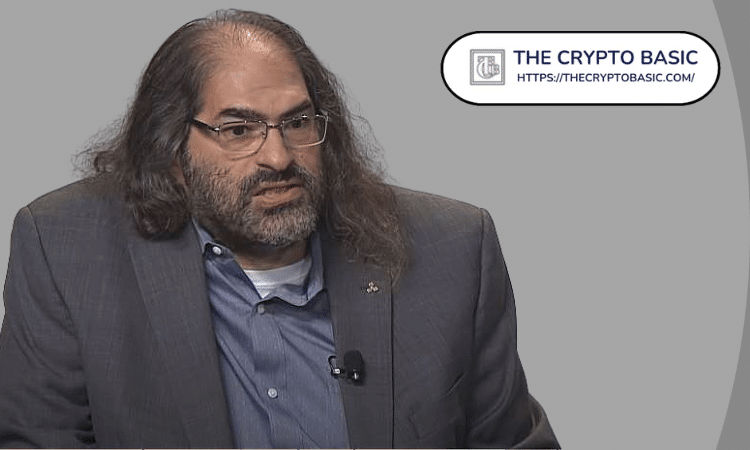
Ripple CTO Schwartz recently shared some insights into the new Clawback feature on the back of a recent disclosure from RippleX developers.

Notably, RippleX revealed that the XLS-39 ‘Clawback’ feature, billed to go live on the XRPL, is up for voting. With the announcement trailed by doubts from community members, Ripple CTO David Schwartz came up to share his thoughts.

Schwartz has tried to allay fears attached to this new feature. He first explained that the Clawback feature will enable token issuers to retrieve a specific quantity of the issued tokens from current holders.

He revealed he was against the feature initially since the XRPL already has the Freeze feature, similar to Clawback. 

Ripple CTO: Clawback Feature Enables’ Surgical Strikes’

However, he said the apparent difference between Clawback and the freeze feature made him change his mind. In his analogy, Schwartz noted the clawback feature will find a primary use case in legal disputes.

Specifically, he believes that the ability to claw back some funds when there is a dispute takes off the legal burden from the token issuer. 

Schwartz noted that this safeguard is critical to comply with court orders. He believes with the current model without the Clawback feature, auditing protocols on the XRPL will be difficult.

The Ripple CTO also described the feature as a tool that allows for surgical strikes to keep the XRPL whole, as opposed to Freeze, which is a more nuclear option.

In all, Schwartz highlighted that this new feature is currently present in blockchains with stablecoins residents. He noted that if the proposal fails to pass, token issuers will need to go through the hassle of enabling the feature one way or the other.

Besides Schwartz, other top leaders within the XRP ecosystem, including WrathofKahneman (WoK), have also attempted to dispel wrong myths about the Clawback feature. In his words, there is no secret amendment in the XRP Ledger (XRPL) ecosystem.

With the concerns alleviated, the Clawback feature will be passed once 80% of current validators vote Yes to the proposal. The minimal threshold will also have to be held for at least two weeks for the proposal to fly.

Setting the Stage for DApp Growth

Over the past few months, the XRPL has faced a significant overhaul with a series of innovations being proposed. As reported earlier by TheCryptoBasic, the team behind the Xumm wallet proposed an overhaul of the XRPL infrastructure to promote participation through incentives.

The efforts of the core developers are being acknowledged globally as SpendTheBits, a payment protocol on the XRPL, bagged the top spot in the Ripple CBDC Innovate award, a showcase of the ledger’s good work.

Shiba Inu Admin Alerts Community to Potential Threat from Compromised Satoshi Account

0

In a recent statement, DaVinci, an admin on the Shiba Inu Discord channel, apologized for a prior notification pertaining to a compromised Satoshi account that generated excitement within the community.

Shiba Inu enthusiast with the username Sand_ShibArmy on the X platform shared a screenshot of the apology note. In the statement, DaVinci expressed regret, saying, “Dear Shibizens, We apologize for the previous notification.”


Shiba Inu Community Alerted on Potential Threat

For context, the initial notification from the Shiba Inu admin came following a recent tweet from Satoshi Nakamoto, the mysterious creator of Bitcoin. Satoshi broke the silence on the X platform for the first time in five years.

In response to the tweet, the Shiba Inu admin raised hopes of Satoshi Nakamoto possibly initiating a bull run in the crypto market, positioning Shiba Inu investors for significant returns. 

However, DaVinci disclosed that he had received a warning suggesting that the account associated with Satoshi Nakamoto on X might have been compromised. The situation raised doubt about the veracity of the Satoshi tweet.

Furthermore, the Shiba Inu admin mentioned a looming threat of a phishing link in the coming days. The statement read:

“There is a possibility that a phishing link will be posted in the coming days, although this has not been confirmed.”

In response to this potential security threat, DaVinci urged caution among Shiba Inu enthusiasts, advising them to be alert. Also, the admin emphasized the importance of being prudent when clicking on any links from the said compromised Satoshi account.

Ultimately, DaVinci concluded the statement by expressing gratitude for the understanding and vigilance of the SHIB Army.

Notably, the Satoshi Nakamoto X account tweeted on Monday describing Bitcoin as a predicate machine. The tweet outlined plans to explore other aspects not captured in the Bitcoin whitepaper in the coming months. 

It claimed: “These aspects are all parts of Bitcoin and are important.”

The statement attracted significant attention, with over 4.8 million engagements in under 24 hours. Meanwhile, the X platform itself provided cautionary notes suggesting the statement may be from bad actors.

Despite Promoting XRP, CNBC Skips Reporting SEC Attack Against XRP Retail Investors

0

Attorney John Deaton questions CNBC’s decision to ignore the SEC’s attack against XRP investors despite previously promoting the coin as a non-security.

John Deaton, the lawyer representing over 75K XRP investors, has raised pertinent questions regarding CNBC’s refusal to report how the SEC attacked retail investors following its lawsuit against Ripple Labs.

Deaton Sheds Light on CNBC Coverage of SEC v. Ripple Case

In an X post yesterday, Attorney Deaton pointed out that CNBC promoted XRP before the lawsuit. He added that Brian Kelly, one of CNBC’s reporters, stated in 2018 that XRP is not a security and showed viewers how to purchase the fifth-largest cryptocurrency by market cap.

Furthermore, Deaton stressed that CNBC also had guides on its website showing the public how to purchase XRP. Notably, Deaton questioned CNBC’s decision to ignore the plight of retail investors it previously promoted XRP to in the first place.

“After showing retail investors how to buy XRP, and assuring them it wasn’t a security, why has CNBC not reported on how the SEC not only sued @Ripple but attacked retail investors, claiming the asset that they owned in digital wallets and in retirement accounts were illegal securities?” Deaton quizzed.

Former SEC Chair Can Handle Objective Reporting

He asked whether the decision stems from the fact that former SEC Chairman Jay Clayton, who authorized the lawsuit against Ripple, is a CNBC contributor.

Deaton speculated that Clayton could handle objective reporting on something that has never happened in the industry – thousands of retail investors requesting to be named as defendants in the Ripple lawsuit.

“Certainly, someone who’s served as Chairman of the SEC, over the largest and greatest capital market in the world, could be subject to unbiased reporting over FACTS, not opinions,” Deaton added.

SEC v. Ripple Rages On

Meanwhile, the SEC v. Ripple lawsuit has been ongoing for nearly three years. The SEC, which charged Ripple in 2020, claimed that the company sold XRP as an unregistered securities offering.

As a result, several US-based crypto exchanges, including Coinbase, delisted XRP, thus wreaking havoc on the price of XRP.

Interestingly, 12,600 XRP holders, which later surged to over 75K, joined Deaton to file a motion to intervene and have them named as actual defendants in the case. Although the court denied the motion, it conferred them with an Amicus Curiae (friends of the court) status.

Their role in the lawsuit was instrumental, as they helped dismiss an SEC’s expert testimony. Additionally, the court also cited the 3K affidavits submitted by XRP holders as one of the pieces of evidence proving Ripple’s programmatic sales are non-securities.

Despite the court’s ruling, a portion of the lawsuit, the SEC’s case against Ripple execs, has been scheduled for trial by Q2 2024.

In addition, the SEC is pursuing an interlocutory appeal to challenge the court’s decision on Ripple’s XRP programmatic sales and other distributions.

Here is How XRP is Designed to Revolutionize Global Payment with 293M+ Txns a Day

0

In a recent tweet, prominent XRP influencer Alex Cobb revealed some impressive statistics about the capabilities of the XRP Ledger (XRPL) blockchain.

Cobb spotlighted that XRP can process 3,400 transactions per second (TPS). He further broke down the figure into minutes, hours, and days to help the crypto community visualize the XRP blockchain capability better.

In particular, Cobb highlighted that the XRP 3,400 TPS translates to 204,000 transactions per minute, which in turn implies a remarkable 12.24 million transactions per hour. And on a 24-hour scale, Cobb stated the XRP token can facilitate over 293 million transactions per day.


Furthermore, Cobb pointed out that the staggering figures highlight XRP’s suitability as a global utility asset, particularly for the banking sector worldwide. 

“XRP is truly designed to be a global utility asset for banks all around the world,” the XRP influencer remarked. 

The assertion underscores the potential for XRP to be an attractive choice for financial institutions seeking to harness the power of blockchain technology. A comment to Cobb’s tweet humorously likened XRP’s transaction capability to the legendary marathon runner Usain Bolt.

Expert Disagrees 

Meanwhile, Daniel Keller, an XRPL ambassador and the Chief Technology Officer (CTO) at Eminence, provided a dose of reality to the XRP 3,400 TPS boast. Note that this figure is on the official XRP page on the Ripple website.

Keller clarified that the 3,400 TPS is merely a theoretical figure obtainable in a controlled lab environment under perfect conditions. According to Keller, in the real world, where conditions are imperfect, XRP can not hit 3,400 TPS.

When asked about the realistic TPS of XRP in practical scenarios, Keller explained it based on experience and available data. Specifically, he mentioned that the real-world XRP transaction speed typically ranges between 500 and 700 TPS.

Besides, Ripple’s CTO recently confirmed this claim, as The Crypto Basic reported. Until recently, the XRP development team has advertised that XRP can facilitate 1,500 TPS. The Crypto Basic reported that the XRP blockchain’s capability increased from 1,500 to 3,400 early last month.

Top Researcher Highlights Major Reason the SEC Targeted XRP

0

Prominent digital asset researcher Anders highlights the major reason why the Securities and Exchange Commission (SEC) chose to go after XRP.

In a startling development, a prominent digital asset researcher, Anders, has taken to X (formerly Twitter) to highlight why the SEC chose to go after XRP.

For context, the SEC, in December 2020, charged Ripple with violating federal laws by selling XRP as an unregistered securities offering.

Following the lawsuit, the crypto community, especially XRP enthusiasts, has been speculating on the primary intent behind the case. The matter recently stirred reactions from XRP supporters after an old X thread from Crypto-Law founder Attorney John Deaton resurfaced.

Deaton Questions Why SEC Chose XRP

In the thread, Deaton raised a series of questions regarding why the SEC chose to go after XRP.

“If the SEC wanted to pick a top 10 Token to go after, why would it choose the much more difficult case?” said Deaton.

He compared ETH and XRP early sales, emphasizing that the Ethereum team conducted a “pure ICO” for ETH while Ripple sold XRP without going through the ICO route.

Furthermore, Attorney Deaton highlighted some possible conflicts at the SEC under the administration of former chairman Jay Clayton. One of these conflicts includes the controversies surrounding William Hinman’s 2018 speech, where the former SEC exec declared BTC and ETH as non-securities.

Deaton also mentioned how top officials left the SEC immediately after the Ripple case was filed, raising further questions about the intent.

Ripple’s Use of XRP Attracted SEC

Interestingly, Anders noted that the SEC chose XRP because of how Ripple used XRP in cross-border settlements.

According to Anders, Ripple’s use of XRP destroys “nostro/vostro accounts” and the corresponding banking model. The researcher noted that these banking models have been a huge cash flow for several mega banks.

Notably, Anders attached a screenshot to the tweet, highlighting why traditional financial institutions have kept innovation at a minimum.

The screenshot indicates that cross-border payments are lucrative, with Business-to-Business (B2B) settlements alone raking in over $240 billion in revenue from payments worth $135 trillion.

Ripple’s Cross-border Payments Prowess

It is worth noting that Ripple Labs focuses on blockchain payments, with XRP being at the center. Ripple’s use of XRP in cross-border settlement helps eliminate intermediaries, thus reducing delay and lowering transaction costs.

Several businesses and financial institutions have leveraged Ripple’s solutions for payments, including On-Demand Liquidity (ODL), due to the unlimited advantages associated with XRP.

As reported earlier, Tranglo, a Malaysian-based payments company, enabled businesses to process nearly $1B using ODL. The company noted that the value of its ODL-related transactions surged 1,729% from a mere $52 million to a whopping $970 million.

Notably, ODL leverages XRP as a bridge currency to fiats. The leading blockchain company reiterated XRP use in ODL after a federal court declared the coin as non-security.

Ripple CTO Shares Details of 1 Million XRP Buy At $0.005

0

The Ripple CTO David Schwartz recently revealed that his father bought over 1 million XRP in 2014 when the asset was trading for $0.005.

The disclosure came as a response to a question posed by Alex Cobb, a notable XRP community figure and trader. Cobb had taken to X to ask members of the XRP community the lowest prices at which they purchased the asset.

While some community members mentioned $0.11, $0.13, and $0.17, David Schwartz engaged the post to make the mind-blowing disclosure. He said his father procured over 1 million XRP tokens in April 2014 for $0.005 per XRP.

The revelation triggered a wave of reactions from the XRP community due to the massive returns the investment would bring if bought and held over the years. Notably, this price represents one of XRP’s lowest prices, and historical data confirms the asset did trade at this level in April 2014.

Notably, XRP surged to a high of $0.0614 on Dec. 5, 2013 shortly after it started trading in the market. However, the asset corrected this rally over the following months, retracing to a low of $0.00538 in the last week of April 2014. Schwartz’s father must have purchased the tokens at this time.

An Impressive 10,048% ROI

For context, supposing he bought 1 million XRP, the tokens at the time would be worth $5,000 at $0.005 per XRP. If these tokens were held through to XRP’s ATH of $3.3 in January 2018, they would have been valued at a whopping $3.3 million, representing a profit of over $3.2 million.

Regardless, if he continued to hold onto these assets until now, they would be worth $507K at XRP’s current price of $0.5074. While the tokens’ worth might have dropped from January 2018 until now, the investment would still see a massive 10,048% increase if held.

This disclosure from Schwartz serves as a reminder of the allure of getting into a market early. Like most cryptocurrencies, XRP has stood the test of time, delivering massive returns to early adopters. The asset is currently 18,126% up from its all-time low despite the latest market turmoil.

The burning question on most investors’ minds now is whether the asset still has another massive upswing. Several analysts have projected astronomical rallies to prices such as $39, $90, and even $249. 

Bitcoin Shorts Take Beating as Price Breaks Past $28k, with 29,282 Traders Liquidating

0

After weeks of passive trading, the largest market cap crypto, Bitcoin, took a significant leap, putting negative speculators at substantial losses.

According to data from the market tracking platform CoinMarketCap, Bitcoin now trades at $28,442, up from the $26k zone it took forever to overcome. 

Given that the crypto arena is a fierce struggle between the bullish and bearish forces, the sudden ascent of Bitcoin’s price above $28,000 has placed numerous traders in a dire position.

Bitcoin Liquidations 

Specifically, market statistics from Coinglass, a prominent tracker of derivative contracts, indicated that Bitcoin worth over $51.3 million was lost in the past day amid Bitcoin’s $28k shot. 

Notably, the market participants betting on the prices of digital assets crashing, otherwise called shorters, faced the lion’s share of the market losses. The largest single-order liquidation on Bitcoin was worth $8.39 million on the Huobi exchange. 

Interestingly, Coinglass data suggested that 97% of derivative traders on Huobi are at a loss as their overwhelming majority bet against the price of Bitcoin. In figures it implies Bitcoin shorters lost $17.25 as against $472.99 lost from the other side.

Bitcoin liquidation exchanges
Bitcoin liquidation exchanges | Coinglass

Similarly, 84.37% of the futures traders on the largest exchange, Binance, incurred losses, with $10.72 million evaporating.

On a broader scale, Coingalss data reveal that 29,282 traders have lost over $119 million in the last 24 hours. Emphatically, traders who envisaged a broader market decline took the most significant hit.

In particular, shorters have liquidated more than $90 million in their crypto investment. In contrast, traders who bet on the positive side of the market lost only $28 million.

Meanwhile, these significant losses on the sides of Bitcoin shorters coincide with BTC’s positioning for the fourth quarter. Experts have argued that Q4 has historically been the period in which Bitcoin pulls its best performance of the year.

Bitcoin Market Dominance

Besides, Benjamin Cowen, the founder of ITC_Crypto, spotlighted that Bitcoin’s dominance had backtested the breakout point at around 49%. 

In other words, the prominent analyst argued Bitcoin’s supremacy rating in the market recently tested and held a significant level at approximately 49%. He noted the dominance has been steadily increasing over the past six weeks, which may suggest a strengthening position for Bitcoin in the overall market.

Grayscale Seeks SEC Permission to Convert Largest Ethereum Investment Product to Spot ETF

0

Crypto asset manager Grayscale Investments has applied with the SEC to convert its Ethereum Trust to a spot Ethereum ETF.

Leading crypto asset manager Grayscale Investments is seeking to convert its Ethereum Trust (ETHE) to a spot ethereum exchange-traded fund (ETF).

According to an announcement today, Grayscale partnered with the New York Stock Exchange (NYSE) Arca to file for the conversion with the SEC.

“We are proud to partner with NYSE Arca on this filing and look forward to engaging with the SEC on the next steps,” said David Lavalle, Grayscale’s Head of ETFs.

Commenting on the development, Grayscale’s CEO Michael Sonnenshein noted that the company is focused on giving its users regulated and transparent access to crypto. He added:

“As we file to convert ETHE to an ETF, the natural next step in the product’s evolution, we recognize this as an important moment to bring Ethereum even further into the U.S. regulatory perimeter.”

Grayscale Ethereum Trust (ETHE)

Launched in March 2019, ETHE is a Grayscale trust that gives institutional investors indirect exposure to Ethereum. Per Grayscale, the trust voluntarily became an SEC reporting company in October 2020.

In addition, the trust has grown tremendously over the years, with a holding of $4.9 million in assets under management (AUM).

Interestingly, the Grayscale Ethereum Trust is now the largest ether investment product globally, accounting for 2.5% of all ETH in circulation. Furthermore, Grayscale claims over 250,000 American investors hold the product in their accounts.

Grayscale Aims to Convert Its Crypto Investment Products to ETFs

It is worth noting that the Ethereum Trust is one of 17 different crypt investment products offered by Grayscale. The company revealed that it plans on taking these digital asset products via an intended four-phase cycle, with the ultimate goal of converting each of them to an ETF.

Recall that Grayscale had initially attempted to convert its Bitcoin Trust (GBTC) to a spot bitcoin exchange-traded fund. However, the SEC rejected the request, prompting Grayscale to take legal action against the agency.

As reported earlier, the U.S. Court of Appeals for the District of Columbia Circuit ruled in favor of Grayscale, ordering the SEC to review its decision.

Since the ruling, the SEC has not decided whether to approve Grayscale’s request to launch a spot Bitcoin ETF.

Top Market Analyst Flags Potential Chainlink (LINK) Correction as MVRV 30D Hits 20%

0

Top crypto market analyst Ali Martinez has spotted a rare trend in the price performance of Chainlink (LINK), leaning on data from Santiment.

Taking to the X platform, Ali shared his observation, noting that the decentralized oracle protocol might soon witness a steep correction.

Chainlink and Historic MVRV Data Trends

The analyst pointed out that the Market Value to Realized Value (MVRV) trend of Chainlink suggests that a correction typically follows once this ratio exceeds 19%. Ali noted that this trend was captured on two occasions with similar responses from LINK.

The MVRV ratio is as an asset’s market capitalization divided by realized capitalization. In the case of LINK, the current market cap is pegged at $4,328,357,817 with the realized cap pegged at $8,447,387,997.

Riding on this data, Santiment shows the current MVRV ratio on the 30-day timeframe is now pegged at 20%. Should history repeat itself, Chainlink is expected to give up some of its recently accrued gains.

This bearish call is already manifesting according to LINK’s current price outlook. Data from CoinMarketCap shows that the token is trading at a price of $7.78 at the time of writing, down 3.27% over the last 24 hours. This slight slump in the price of LINK contrasts with the general market trend, further affirming the MVRV’s prediction.

While LINK is down, the general crypto market cap is up by 2.82% to $1.11 trillion. Generally, altcoins are showing short-term potential when their price performance outranks that of the broader market. With Chainlink showing opposing trends, trader’s expectations should now be backed with defined risk management.

Is Chainlink Witnessing a Temporary Price Defect?

Chainlink is one of the pioneering Oracle service providers in the industry and one of the most utilized protocols in Web3.0 today. Judging by the positivity surrounding the network as it concerns the rapid adoption of its solutions, we might be forced to assume the current downturn is temporary.

One of the notable trends in the Chainlink ecosystem is the rapid adoption and integration of the Cross-Chain Interoperability Protocol (CCIP). The CCIP seeks to take the blockchain interoperability agenda among protocols to a whole new level. As such, it is being adopted by top DeFi protocols across the board.

From the partnership with SWIFT to the growing accumulation of LINK by retail buyers, the fundamentals are evident. These can notably help boost the resilience of LINK in the mid to long-term despite the on-chain indicators.

Here is How Shiba Inu Evolves into a Serious Blockchain Contender

0

Shiba Inu, initially a meme coin, is now evolving into a serious blockchain contender with the launch of Shibarium.

The Shibarium blockchain is a Layer 2 network for the Shiba Inu ecosystem. Amid the hype surrounding its recent launch, CoinRabbit, a crypto lending protocol, has spotlighted the layer-2 network, highlighting its attractive benefits.


The Shibarium blockchain has been in the works for some time, with a beta version released for testing earlier this year, and the live version started running in August. The Shibarium developers have stated that the network’s main focus is on gaming applications, particularly as the non-fungible token (NFT) sector, which continues to grow.

Benefits of Shibarium

Adding to its list of advantages, Shibarium’s integration of Layer 2 technology is set to significantly enhance throughput, enabling seamless scalability for the project. While precise details on the boost in transaction speed are yet to be revealed, the expectation is that users can look forward to considerably faster transactions compared to traditional Layer 1 solutions.

Shibarium provides a platform for developers to unleash their creativity by building innovative Decentralized Applications (DApps) within its ecosystem. It offers an expansive SHIB metaverse, inviting users to embark on journeys through immersive digital realms. Additionally, ShibaSwap, a decentralized exchange (DEX), enhances liquidity options for users within the Shiba Inu ecosystem.

The Future of Shiba Inu and Shibarium

The launch of Shibarium represents a significant milestone for Shiba Inu. It enhances the scalability and utility of the network and helps position Shiba Inu as a serious project in the blockchain space, shedding its meme coin tag.

As Shibarium continues gaining momentum, seeing how it impacts the Shiba Inu ecosystem and the broader blockchain space will be interesting. With its focus on gaming applications and its potential to enhance scalability and reduce transaction fees, Shibarium could be a game-changer for Shiba Inu and its community.