Home Blog Page 1839

Ethereum Wallets: How Do They Work?

0

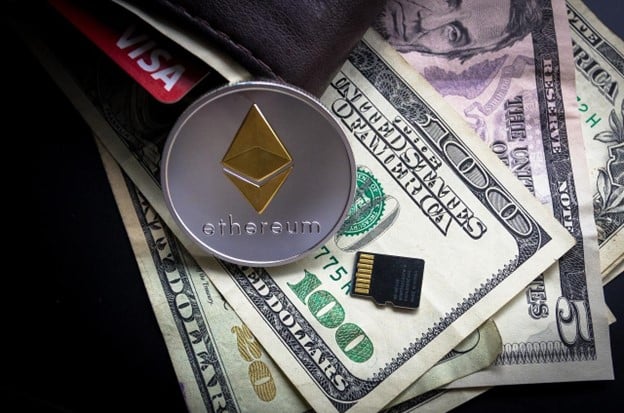
Ethereum is currently one of the most valuable digital assets in the world, although only six years have passed since its launch. Given its popularity, it’s not surprising that so many individuals want to participate in the Ethereum ecosystem. However, in order to buy and sell ETH safely, investors need to get an Ethereum wallet first.

A digital wallet, or an e-wallet, is a computer program or an app that enables you to safely store the information required to access your ETH. While it is possible to buy Ethereum on an exchange, this can be unsafe because the platform can get hacked. A wallet is safer because it is based on a private key, giving you full control over your funds.

Ethereum wallets

An Ethereum wallet allows you to manage your account on the Ethereum network. This account works similarly to an email account, only that it has some balance, and you can use it for different operations like sending transactions or creating dApps and smart contracts. Ethereum wallets are available in various sizes and shapes, and their features vary. For instance, some wallets can be solely used for the purpose of sending ETH, while others provide multiple functionalities, enabling users to create smart contracts as well.

To set up an Ethereum wallet, you must download or write down a seed phrase or a private key, which are both crucial for ensuring your funds are safe. Think of a crypto wallet as a password manager for your crypto holdings – as long as you know your seed phrase, you can easily access your funds. This is probably evident, but it’s essential not to forget your password, so consider writing it in a book to ensure it is kept safe.

While storing private keys via third-party programs can be tempting, that’s not a good idea, as malicious actors could easily access your keys if the service gets compromised.

What are the different types of Ethereum wallets?

Multiple types of Ethereum wallets are available, with some being more secure than others. Let’s look at them so you can choose the right solution to store your ETH.

  • Online wallets. These wallets are available on crypto exchanges, and although they may be appealing due to their ease of use, it’s important to be aware that they involve risks, meaning that you can lose your funds if there’s a cyberattack. When using an online Ethereum wallet, users must be very careful and avoid phishing websites that can look legitimate but enable hackers to steal your crypto.
  • Hardware wallets. These wallets are considered very safe because they store your private keys offline. Users must plug them into a computer and enter a password in order to access their funds. This makes it challenging for malicious actors to steal your assets. Avoid purchasing a hardware wallet from a third party, as it can be compromised.
  • Desktop wallets. They run on systems like Linux, macOS, and Windows, enabling you to send and receive Ethereum, build smart contracts, etc. Generally, desktops keep keys locally, so users must use their PCs to access their Ethereum wallets. Because of this, private keys are prone to hacking. Desktop wallets rely on an Internet connection, so you must be careful and protect your computer from malicious software.
  • Browser wallets. They are utilized on desktop browsers to store ERC-20 tokens, as well as ETH. More advanced users can also utilize them to interact with other digital ledgers. Browser extensions are considered a safer option than web interfaces, encrypting users’ private keys on the browsers. A password is required to access the wallet.
  • Paper wallets. Just as the name suggests, a paper wallet is a piece of paper with private keys written on it. This type of wallet is accessible to anyone, given that all you need is a piece of paper and a pen. However, they may not be ideal in the long run, as they can get thrown out or destroyed.

How can you fund your Ethereum wallet?

After selecting an Ethereum wallet, the next step is to add ETH to it, of course. You can use a centralized exchange to purchase Ether and then withdraw the funds to your wallet. This involves transferring funds to a public wallet address, which is similar to the traditional financial system’s IBAN.

In order to complete a transaction, you must pay a fee to network validators. There’s no fixed amount of the fee, as it depends on the demand for the blockchain’s block space (which is the space available in each data block on the network).

Storing your ETH safely: essential aspects to keep in mind

When funds are stored in a bank account, there’s nothing to worry about in terms of their safety, as it’s improbable that a third party will access the account to steal cash. But that’s not the case for crypto wallets, as there is a significant risk of your funds being stolen. Hence, it is recommended to triple-check everything to ensure you transfer your ETH to the right address and interact with the proper apps.

You should use mobile crypto wallets only on trustworthy wireless networks, not in public spaces like shopping malls or airports. If you use a hardware wallet, make sure to store your seed phrase safely and don’t share it with anyone. On the other hand, if you have a paper wallet, you want to keep it safe from fire and water damage.

Also, remember that if your gut tells you something looks too good to be true, you should probably trust that feeling. Bad actors often promote fake giveaways and use other similar schemes to get users to send them ETH. You can avoid falling victim to such a threat by researching when you’re interested in a specific project.

Conclusion

If you’re looking to diversify your portfolio, Ethereum is a good idea, but you need to use a safe wallet to ensure no one can access your funds but you. Each Ethereum wallet has its own pros and cons, so you want to take the time to review them before selecting one. Some factors to consider are security, ease of use, compatibility with various operating systems, and other useful features.


Triple Bottom Suggests Shiba Inu On Verge of Setting New ATH Above $0.00008845

0

A notable crypto analyst and community influencer believes Shiba Inu (SHIB) might be on the verge of setting new all-time highs, citing historical data.

Shiba Inu (SHIB) is currently 91% down from the all-time high (ATH) of $0.00008845 in October 2021. Despite the bearish atmosphere, crypto analyst and community influencer Javon Marks believes SHIB is on the verge of hitting new ATHs.

Marks revealed this bullish yet ambitious projection in an analysis of Shiba Inu’s price movements today. The prediction stems from an observation of SHIB’s historical price movements, particularly during the period leading to the previous ATH.

First Triple Bottom 

The analyst cited data from a 4-day chart. The chart confirmed that Shiba Inu previously formed a triple bottom pattern before embarking on the rally that saw it claim the ATH of $0.00008845 in October 2021.

A triple bottom pattern forms when the price of an asset drops to a certain level three times and then rebounds. This creates a distinct pattern of three troughs or lows at roughly the same price level. 

This pattern suggests that the asset’s price has reached a support level and is likely to reverse its downtrend. The reversal could lead to a massive upward price movement, as in Shiba Inu’s price actions two years ago.

Notably, SHIB reached the first bottom when it plummeted to the $0.00000628 region in June 2021. A recovery ensued but was short-lived, leading SHIB to drop again to the second bottom of $0.00000631 in August 2021.

Shiba Inu staged a second recovery after this second bottom. However, like the first recovery campaign, this recovery campaign also faced resistance. Accordingly, SHIB formed the third bottom at $0.00000606 in September 2021.

After forming these three bottoms, the next recovery campaign skyrocketed Shiba Inu to $0.00008845 ATH. This rally represented a 1,359% increase from the bottom of $0.00000606 in September 2021.

Shiba Inu Forms Another Triple Bottom

Interestingly, Javon Marks’ chart data shows that Shiba Inu has formed another triple bottom pattern. SHIB formed the first bottom of this cycle when it dropped to the $0.00000818 zone in June 2022.

The second bottom came from a drop to $0.00000791 in December 2022. However, the third bottom occurred this year, as Shiba Inu plummeted to a shocking low of $0.00000543 in June 2023.

Following these three bottoms, Marks suggests that the next recovery campaign could result in substantial gains. These gains could skyrocket Shiba Inu to new highs. Shiba Inu is trading for $0.00000808 as of press time, up 1.51% over the past day.

Should SHIB establish a fourth bottom after the triple bottom pattern, it might diminish the pattern’s importance by implying that the support level isn’t as robust. This doesn’t nullify the pattern but does cast uncertainty.

Whales Moved 1,737,887,028 XRP worth $899M in August

0

XRP whales have moved over 1.7 billion XRP worth $899 million in August, most of which went to Bitvavo and Bitstamp exchanges.

In the last 24 hours, XRP’s trading volume grew 6.89% after traders bought and sold over $770 million XRP. This growth in trading volume coincided with the significant movements of the digital asset by major crypto investors.

Specifically, Whale Alert, a well-known tracker of whale activities, revealed that over 29 million XRP are on the move. Whale Alert informed the crypto community that 29,200,000 XRP left an unknown wallet to a prominent exchange in the last 12 hours. Per the update, the exchange was Bitstamp. The moved coins hold a market value of $15,202,278.

XRP Whale Movement for August

Notably, this 29 million XRP transfer comes within two days after two whales moved a more significant amount of XRP. In particular, Whale Alert reported that market participants transferred 453,518,503 XRP in and out of two exchanges on Sunday.

These figures imply crypto whales have already moved over $255 million worth of XRP this week. Over the previous week, these XRP investors transferred 455,168,525 XRP to and fro crypto exchanges Bitvavo and Bitstamp.

Throughout this month, 937,887,028 XRP have been moved in and out of unknown wallets to Bitvavo and Bitstamp. These tokens have a market value of nearly half a billion dollars.

Meanwhile, it is worth noting that Whale Alert also captured Ripple’s monthly XRP unlock schedule. Per the report from The Crypto Basic on the first of August, 800 million XRP tokens left Ripple’s wallet in an escrow account.

Cumulatively, XRP whales have transferred over 1,737,887,028 XRP tokens worth $899,530,325 his month. Interestingly, Whale Alert reported no significant XRP movement in July despite the XRP regulatory win.

The recent trend of XRP through exchanges got the crypto community’s attention. Many people pondered the motive behind moving XRP to unknown wallets. Some see it as a bearish signal for the XRP’s price.

Meanwhile, an XRP enthusiast claims to have traced the large transfers on the Bitvavo exchange. The commenter argued the coins have been moved back and forth the exchange many times since 2020.

Notably, XRP is one of the top traded digital assets on Bitvavo and Bitstamp exchanges after Bitcoin. Both exchanges command $26,306,675 of the global XRP trading volume. However, it bears mentioning that this figure represents trades within these exchanges and not the aforementioned whale transfers.

Deaton Predicts SEC Interlocutory Appeal Outcome 

0

Attorney Deaton speculates that the court will deny the SEC’s interlocutory appeal motion, forcing the regulator to wait until 2024 ending to file a full appeal.

Renowned crypto advocate and lawyer John Deaton has predicted the outcome of the SEC’s motion for an interlocutory appeal.

In his prediction, Attorney Deaton said Judge Analisa Torres, the presiding judge of the Ripple lawsuit, would deny the SEC’s request. According to him, her decision will prompt the SEC to wait until 2024 ending to file a full appeal in the Second Circuit.

“I predict she denies it [SEC interlocutory appeal request], and then when she denies it, they have to wait for a full appeal, which, after the case, will be sometime in late 2024, which would take another 18 months,” he said.

Notably, Deaton made the prediction during his appearance at the onXDC Live blockchain industry conference. The event was held in Texas from August 25 to August 26, 2023.

SEC Requests Interlocutory Appeal

It bears mentioning that the SEC filed a motion for an interlocutory appeal challenging Judge Torres’ decision on Ripple’s programmatic sales of XRP on digital exchanges and other distributions.

The SEC argued that the decision involves controlling questions of law, creating room for different opinions. The commission highlighted Judge Jed Rakoff’s disagreement with the ruling as a legal precedent to back up its argument.

Deaton Addresses Misconception About SEC Appeal 

Meanwhile, there have been several misconceptions since Judge Torres approved the SEC’s request to file a motion for an interlocutory appeal.

Many claimed that the SEC had already appealed her decision on Ripple’s programmatic sales and other distributions, given Judge Torres’ recent order regarding the issue.

Reacting, Deaton clarified that the Ripple case does not currently have an appeal. 

“There is no appeal right now, all the judge did was allow them to write a motion for an appeal for an interlocutory appeal,” Deaton said.

Ripple May Oppose SEC’s Request Again

Notably, Ripple has a deadline of September 1 to file its response to the SEC’s interlocutory motion. It is expected that Ripple will oppose the motion. As reported earlier, Ripple asked Judge Torres to deny the request when the regulator first signaled plans to appeal. Ripple may file a similar response on or before September 1.

After Ripple files the response, the SEC has a period of one week to address any issues raised by the company.

Court to Explain Why Ripple’s Ruling Is Sound

Meanwhile, Attorney Deaton had previously speculated that Judge Torres would deny the SEC’s motion. Per Deaton, Judge Torres only gave SEC the green light to file a motion for an interlocutory appeal to demonstrate why her July 13 ruling is sound and based on evidence.

Consequently, he speculated that the judge would still deny the motion after clarifying her July 13 ruling.

XRP at a Critical Decisive Point Amid Reduced Volatility and Mixed Signals at $0.51

0

XRP is currently trading at a decisive point as it witnesses a drastic reduction in volatility, which could trigger a massive momentum to the up or downside.

The crypto market is facing a period of extensive consolidation, as most assets trade within close ranges. Amid this consolidation, XRP observes reduced volatility, which could subsequently trigger upward or downward momentum.

Since dropping from the $0.55 territory on August 20, XRP has failed to make any substantial price swings due to the declining volatility. The asset has continued to consolidate between $0.5030 and $0.5398.

XRP Faces Reduced Volatility

For over one week, XRP has neither breached the $0.54 territory nor broken below the $0.50 point. This pattern suggests a prevalence of uncertainty among investors and market participants.

The reduced volatility is not unique to XRP alone, as the entire crypto market faces the same trend. Despite a generally green market, assets such as Bitcoin (BTC) and Ethereum (ETH) have failed to break above or below crucial territories.

While XRP remains below the 50-day EMA ($0.5828), the asset is battling to reclaim and stay above the 200-day EMA ($0.5171). However, XRP has been consolidating at the 200-day EMA for the past eight days with no clear direction.

XRP 24 Hour Chart 3~2
XRP 24H Chart | TradingView

Interestingly, this period of decreasing volatility is a critical point for XRP. Its next move from here would determine the general direction for the next few days. The trend is usually a precursor for a massive run to the upside or downside as market participants begin to make decisive trades.

If participants troop into the market with purchases, it could lead to a price pump. However, if their re-entry is marked with a dominance of selloffs, this could trigger further selling pressure, leading to a downturn.

Mixed Signals

XRP faces mixed signals on varying timeframes to add to the market uncertainty. The asset witnessed a bullish golden cross on the 4-hour chart last month. This pattern occurred when the 50-day EMA crossed above the 200-day EMA on July 13.

A golden cross is a bullish pattern that signals imminent bullish momentum. The 50-day EMA remained above the 200-day EMA until August 9, facing a drop on that day.

XRP 4 Hour Chart~3
XRP 4H Chart | TradingView

Currently, the 50-day EMA is below the 200-day EMA on the 4-hour chart. This pattern is a bearish signal, indicating that XRP’s price is correcting downwards, and the market could witness an extensive downtrend.

However, on the daily timeframe, the 50-day EMA remains above the 200-day EMA after crossing above it in March. These contrasting patterns in the 4-hour and 24-hour charts show mixed signals, compounding the market uncertainty.

Meanwhile, XRP is changing hands at $0.5168 as of press time, down 1.17% over the last 24 hours. Notably, the 50-day EMA has continued to drop, suggesting downward momentum for XRP.

Shibarium Hits New Milestones, Wallets Surpass 100,000 As Staked BONE Hits 21M

0

Staked Bone ShibaSwap (BONE) and wallet addresses on Shibarium attain new milestones as the Shiba Inu development team relaunches the network for public use.

The Shiba Inu community has regained momentum, with activities within the project ecosystem hitting new highs. 

Similarly, investor interest in SHIB has heightened, as evidenced by the token’s boosted social dominance. These positive developments come shortly after the Shiba development team confirmed that Shibarium is back online and functioning properly.

Staked BONE and Shibarium Wallets 

Following the highly anticipated public relaunch of Shibarium, the network’s explorer showed that wallet addresses connected to the network had exceeded the 100K threshold. 

With Shibarium wallets sitting at exactly 101,545 at the time of writing, total transactions on the network have risen to 445,255.

Wallets addresses 100K

This impressive transaction volume on Shibarium coincides with 348,734 total blocks produced at an average block time of 5 seconds. Shibariumscan further showed that 66,058 transactions were executed on Monday alone. 

Moreover, staked Bone Shibaswap (BONE) on the Shiba Inu layer-2 scaling network continues to increase. Currently, 12 validators exist on the L2 blockchain, with exactly 21,017,817 (21 million) BONE now staked on Shibarium. 

Shiba Inu BONE Staked on Shibarium
Shibarium

Recall that the Shiba Inu community staked nearly 20 million BONE tokens on Monday, as reported by The Crypto Basic. The current figure shows that investors have staked an additional one million+ BONE within 24 hours. 

However, amid this massive growth, Bone ShibaSwap’s price has dropped over 4.77% in the past 24 hours. Notably, BONE is exchanging hands at $1.28 at press time.

Deaton Asks SEC to “Read Howey Again,” Following its Claim That XRP Has No Intrinsic Value

0

Attorney John Deaton has asked the SEC to reread the Howey test following its claim that XRP has no intrinsic value.

Crypto-Law.US founder John Deaton has once again slammed the SEC for losing sight of its mission and purpose.

According to Attorney Deaton, the securities regulator ignores the law in its quest to achieve its desired goal. The pro-XRP lawyer cited the Ripple case as an instance where the SEC has ignored the law.

Deaton Urges SEC to Reread Howey

Attorney Deaton’s comment came after Australian-based lawyer Bill Morgan criticized the SEC for arguing that XRP has no intrinsic value.

Morgan stated that the SEC had made this claim during the summary judgment stage of the Ripple case. He added that the regulator made the same argument in its motion for leave to file an amicus curiae brief.

Reacting, Attorney Deaton urged the SEC to read the Howey test- a longstanding securities test in the US- again. The pro-XRP lawyer quoted a portion of the test, which read:

“The test is whether the scheme involves an investment of money in a common enterprise with profits to come solely from the efforts of others. If that test be satisfied, it is immaterial whether the enterprise is speculative or non-speculative or whether there is a sale of property with or without intrinsic value.” 

Did Hinman Lie Under Oath? 

Furthermore, Deaton recounted the deposition of former SEC director Bill Hinman in the Ripple case. According to Deaton, Hinman testified under oath that the SEC does not have to satisfy all prongs of the Howey test to prove a sale qualifies as an investment contract.

Interestingly, Deaton highlighted two major reasons that could have prompted Hinman to make such comments. Firstly, Deaton said Hinman could have remarked because he was unqualified and incompetent to head the SEC’s Corporation of Finance division at the time.

Secondly, he noted that the former director of SEC’s Corporation Finance could have lied under oath. Meanwhile, Attorney Deaton believes Hinman lied under oath, as he seems too qualified to claim the SEC does not have to satisfy all Howey factors to prove a sale of an investment contract.

Deaton pointed out that Hinman led the Alibaba IPO in 2014. Thus, Hinman cannot be incompetent.

To buttress his argument, Deaton referenced a portion of Hinman’s deposition, where the former SEC director claimed he never discussed the substance of his infamous June 14, 2018 speech.

However, the drafts of the speech showed that Hinman met with Ethereum’s co-founder Vitalik Buterin a week before the remark. Consequently, there have been speculations that Hinman was influenced to declare ETH as a non-security.

Ripple VP Says Next 2 Years Could Be Tipping Point for Mass Crypto Adoption

0

A Ripple executive has given a projected timeline for the widespread adoption of crypto and blockchain solutions.

Recently, Emi Yoshikawa, the Vice President of Corporate Strategy at Ripple, said the next two years could be a tipping point for the mass adoption of crypto. Yoshikawa expressed this sentiment while fielding questions from panelists at Ripple Consensus.

Prominent XRP influencer Crypto Eri shared a snippet of the interview with the crypto community.

300 Professionals Agree to Crypto Payments

During the interview, Yoshikawa shed key insights about the state of blockchain in the payment industry. Particularly, she shared data points from a payment report Ripple recently published in collaboration with the US Faster Payments Council.

According to the VP, Ripple surveyed 300 payment professionals across 45 countries. The aim was to gauge the present state of blockchain payments from the professionals’ perspective. The survey also aimed to get insights into the advantages and challenges of blockchain.

Interestingly, the report unveiled that 100% of the respondents acknowledged the benefits of utilizing blockchain and cryptocurrencies in payment processes. 

Also, according to Yoshikawa, 97% of the professionals believed that blockchain and crypto would substantially influence payment systems over the next three years.

Based on the data, the Ripple VP emphasized the industry is no longer questioning the use of blockchain and crypto. Instead, the focus has shifted to determining the “when” and “how” of crypto integration.

“So clearly, it is no longer a question of if, right. It’s more of a question of when, how,” she remarked.

Moreover, Yoshikawa underscored the evolving sentiment within the payment industry. She recalled that doubts prevailed seven years ago regarding the relevance of blockchain and cryptocurrencies in the payments sector.

However, according to her, the skepticism no longer exists. In her words:

“When I started working at Ripple seven years ago, there was still a lot of skepticism and question of does the payments industry really needs blockchain or crypto. But we no longer hear that question.”

Ultimately, Yoshikawa highlighted that the next two to three years will mark a pivotal tipping point for widespread adoption.

Xahau: A New XRP Ledger Sidechain Coming With Native Token XRP+

0

The Xumm development team, XRPL Labs, is set to launch a new XRPL sidechain called Xahau Ledger, which will feature XRP+ as its native token.

XRPL Labs, the development team behind Xumm wallet, is set to launch Xahau, a new XRPL sidechain with a native token dubbed Xahau XRP (XRP+). The team recently released the Xahau Whitepaper in collaboration with other notable entities.

Wietse Wind, founder of XRPL Labs, called attention to the planned development in a recent post upon the release of the Whitepaper. 

This initiative is a collaborative effort with GateHub, Alloy Networks, Evernode, and other prominent names that have made their unique mark on the XRP Ledger (XRPL).

Features of Xahau Ledger

Xahau will incorporate Hooks, lightweight smart contracts for the XRPL Protocol. While smart contracts are yet to find their place on the XRPL, Hooks, a crucial amendment, seeks to change that.

However, the Hooks Amendment has yet to reach the XRPL. Xahau helps users get access to it before the XRPL Mainnet launch. Xahau will combine the proven resilience of the XRPL Mainnet with the innovation of Hooks. 

Accordingly, the Xahau Ledger will be the smart contract-enabled sidechain for the XRP Ledger. The Whitepaper confirmed that it is a fork of the XRPL.

Wind noted that the XRPL Labs team will upgrade Xumm Wallet to support multiple XRPL protocols when Xahau goes live. As a result, the non-custodial wallet will be able to support the XRPL Mainnet and Xahau Ledger.

While there is no fixed timeline, Wind assures that all final audits will conclude before the year’s end. The network will feature dedicated validators, initially managed by Xahau Alliance members. This alliance will spearhead the development.

Members of the Xahau Alliance are XRPL Labs, GateHub Limited, Titanium OU (Alloy Networks), Evernode Labs, and Digital Governing OU.

Per the Whitepaper, Xahau incorporates the strengths of XRPL while introducing innovative changes. Core features include retaining the XRP Ledger Consensus Protocol, the native DEX, and a mechanism to safeguard the ledger from spam through token fees. 

Xahau XRP (XRP+)

Central to Xahau’s architecture is its native token, Xahau XRP (XRP+), designed with improved tokenomics for facilitating smart contracts and rewarding validators. XRP+ will have an initial supply of 600 million tokens.

The team will distribute the 600 million XRP+ tokens among the members of the Xahau Alliance. There will be no ICO, and the supply of XRP+ will be uncapped. Users can get XRP+ by burning their regular XRP tokens at a 1:1 ratio. 

Xahau will link to the XRPL mainnet through a Burn2Mint liquidity portal. This will enable users to clone their XRPL accounts onto Xahau. Additionally, a unique Genesis Hook Governance Game will govern Xahau’s emission and operation.

Xahau’s launch promises full functionality and decentralization, with over ten independent validators representing a diverse mix of XRPL stakeholders.

According to Wind, the development of Xahau does not invalidate their plans to rebrand as Xaman. However, he emphasized that the team wishes to inform Xumm users of the rebrand through the Xumm v2.6 upgrade. This move will help curb confusion.

Ripple to Officially Celebrate XRP Win Against SEC in New York “As Promised”

0

Ripple has announced an official date to celebrate its legal victory against the SEC.

Leading blockchain company Ripple Labs has announced plans to host a celebratory victory party following its legal win against the Securities and Exchange Commission (SEC).

In a tweet yesterday, Ripple said the anticipated event will occur on September 29, 2023, in the heart of New York City. Ripple promised to provide further details about the event this week.

In a similar development, Ripple CEO Brad Garlinghouse also took to X to announce the event. 

“As promised – it’s time for that proper victory party,” he said.

Furthermore, Garlinghouse acknowledged the challenges the company faced throughout the legal battle.

“I look forward to sharing a celebratory toast on Sept 29 in NYC!” Garlinghouse added.

Ripple Wins Big Against SEC

It is worth noting that Ripple recorded a partial victory against the SEC in the multi-year legal battle. Recall that in December 2020, the SEC alleged that Ripple violated federal laws by offering and selling XRP as an unregistered security. 

After an intense legal battle lasting over two years, Judge Analisa Torres finally issued the summary judgment. In her ruling, she found that Ripple sold XRP as an investment contract to institutional investors.

However, she ruled that the company’s programmatic and other distributions of XRP do not constitute securities. Additionally, the judge also ruled that XRP itself is not a security but a digital asset. 

Although the SEC seeks to appeal the ruling on programmatic sales and other distributions, the blockchain company has scheduled a victory party to celebrate the summary judgment.

For Ripple, the lawsuit has always been about getting clarity for XRP, and the judge declared the coin a non-security.

Upcoming Trial 

Meanwhile, the SEC v. Ripple lawsuit still has a pending issue. The court has scheduled a trial to resolve the SEC’s case against Ripple’s execs- Garlinghouse and Chris Larsen.

The securities regulator charged Garlinghouse and Larsen with aiding and abetting Ripple in distributing XRP as an unregistered security. Notably, the trial is expected to commence in Q2 2024.